5 min read

Israel's Dove Will Not Be Sent Out Again

Noah released the dove and she did not return. The sages heard every exile in that flight, and a last homecoming after which wandering ends.

Curated by Arthur · Told by Maggid ·
Table of Contents
  1. Seven Days, Seven Nations
  2. When the Flight Finally Ends
  3. One from a Town, Two from a Family
  4. The Dreamer and the Soil

Noah opened his hand and the dove went out over water that still held the shape of a drowned world. She did not come back. The old man waited longer than hope usually waits, then understood. The earth had finally taken her. Rest had a place again.

Israel's Dove Will Not Be Sent Out Again Click for full size

He did not cheer. He sat with the empty window and felt the weight of a bird that no longer needed wood. The sages who later sat over that verse did not leave the bird in the flood alone. They heard Israel in her wings, sent out from among the nations, flying exile after exile without a branch that would hold.

Seven Days, Seven Nations

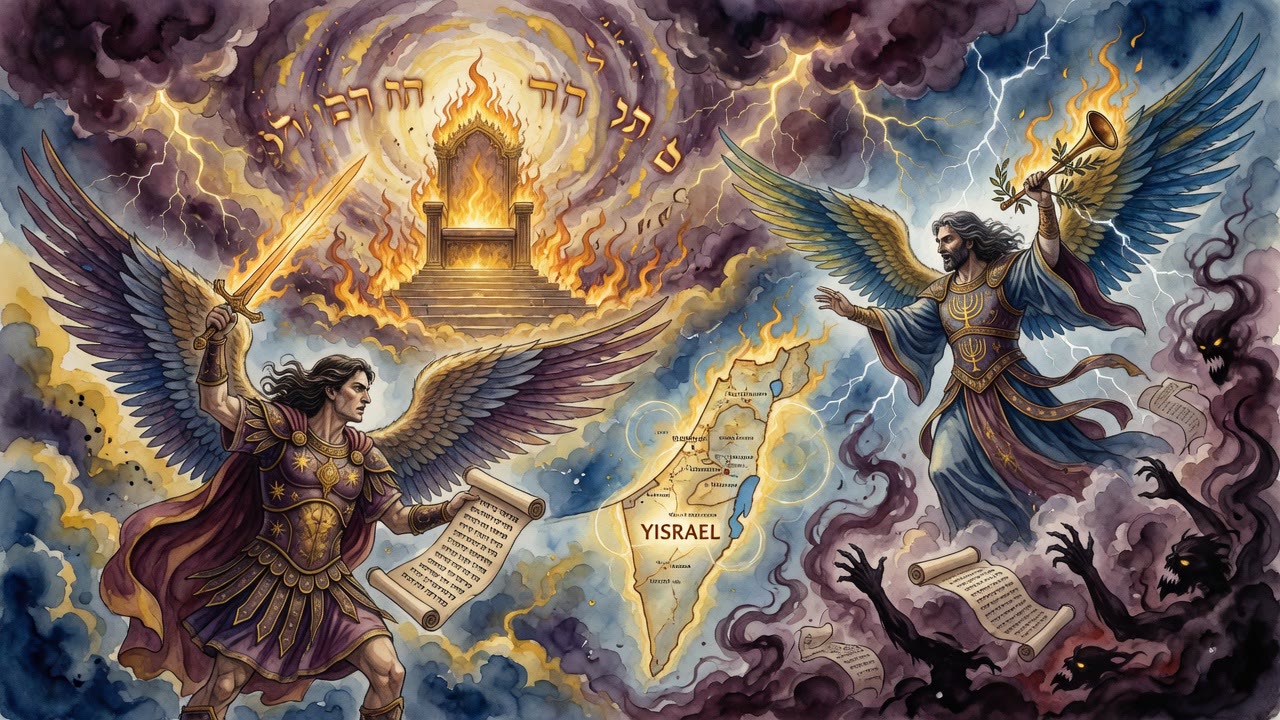
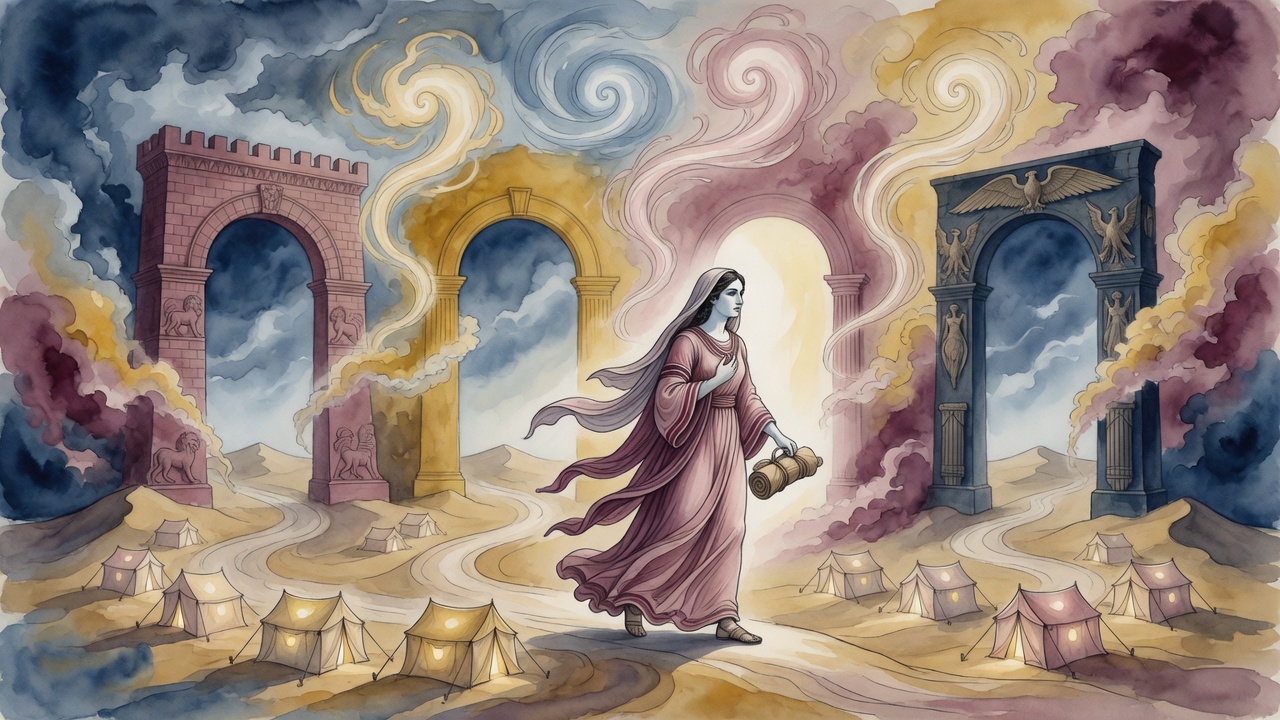
Noah had waited seven days between sendings. In those seven the teachers counted oppressors destined to fall into Israel's hand. Egypt, Sennacherib's line, Babylon, Media, Greece, Edom, Ishmael, and at the edge of days, Gog. The pauses between flights became a map of history. Each wait was an empire. Each release was another leaving.

The dove is not only a scout for dry ground. She is the people itself, driven out as the prophet said, "Send them away from My presence, and let them go forth." Out and out. Never settling. Finding no rest among the roofs of strangers. Children in later captivities would draw the bird in ash on prison walls and call her by their own names.

A teacher in Babylon once told his students to count the waits on their fingers until they ran out of fingers and still had Gog left. That leftover finger, he said, is the fear that keeps the dove flying even when the olive leaf has already been found once.

When the Flight Finally Ends

The verse that breaks the heart also heals it. "And she returned not again unto him any more." After deliverance from the war of Gog, there is no further exile. No more going out. Jeremiah's promise stands. They shall not languish any more. The dove that circled an unsettled earth comes home and stays. The ark's window closes on wandering forever.

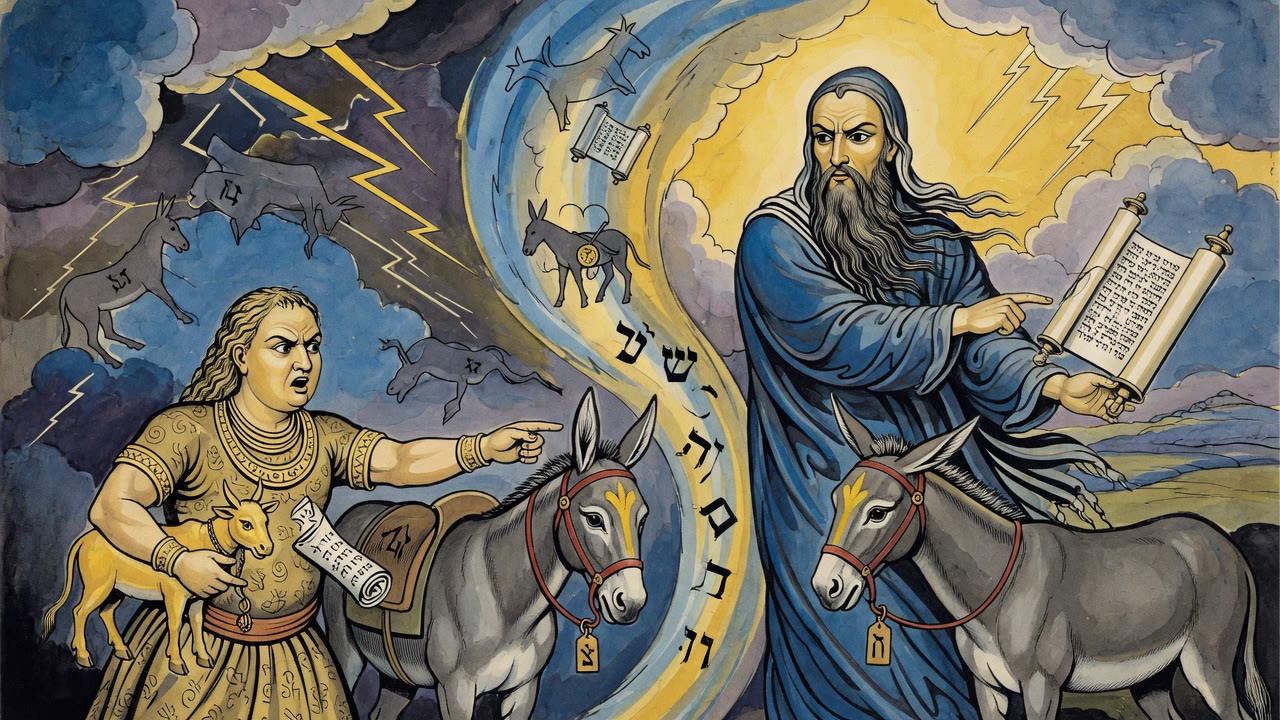
That home is not optional scenery. Teachers of Deuteronomy's midrash drew a hard line. Descent into Egypt had been a choice under pressure. Coming to inherit the Land is a command. Egypt remains Egypt whether Israel does God's will or not. The Land of Israel answers differently. Do the will, and it is yours. Refuse, and exile opens again. Relationship, not mere real estate.

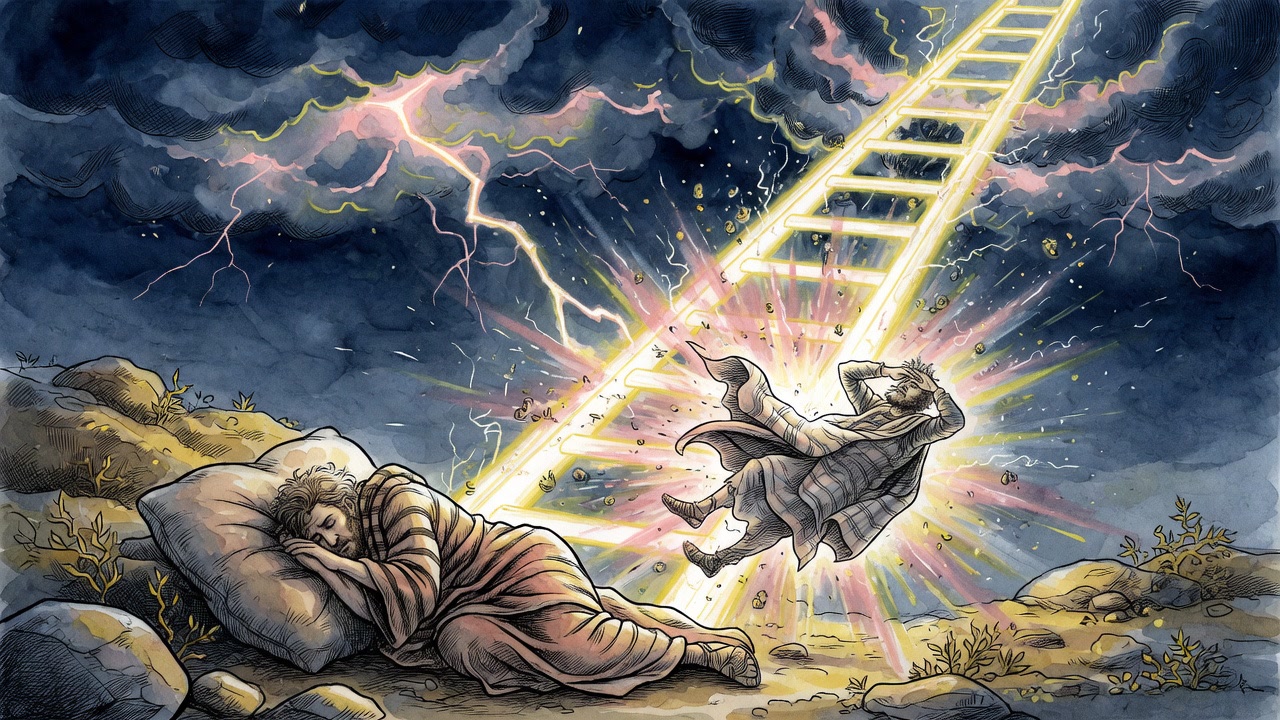
A dreamer in a foreign bed wakes with soil under his nails that is not there. He has been counting sabbatical years in his sleep, years Egypt never required. The Land's clock ticks in the blood even when the body is rented to empire.

One from a Town, Two from a Family

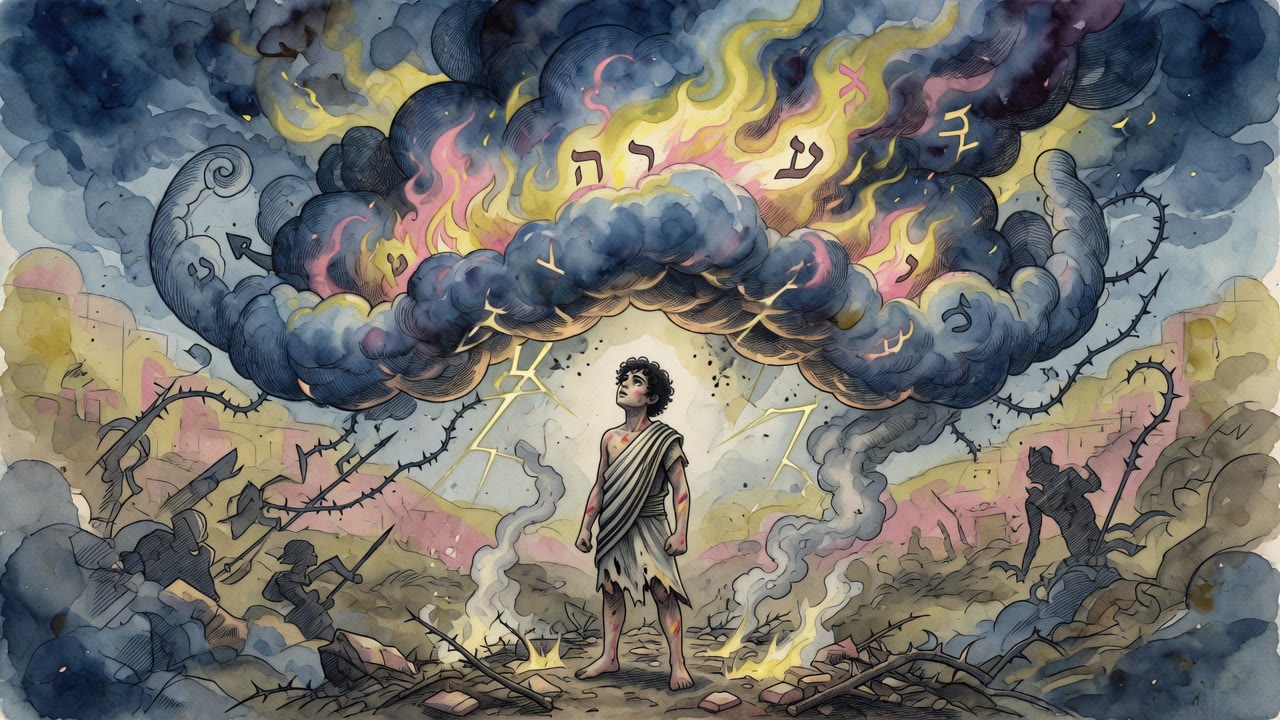
Another current of teaching darkened the picture before it brightened. Jeremiah's "one from a town and two from a family" was set beside Noah himself, a remnant small enough to fit a wooden house on water. Shem and Japheth as the two. The mass of flesh that boarded in pairs and sevens was read as the people of the land, crowded in, less awake, still carried through by mercy that sorts as it saves.

Redemption in that reading is not a parade of every name. It is a winnowing. The festivals themselves, two and seven days of appointed times, were pulled into the same counting, as if the calendar trained a people to enter holiness in measured groups, not as an uncounted throng. Rosh Hashanah's two days, Shavuot's two, Pesach's seven, Sukkot's seven. Doors sized for those who have learned to enter.

A woman hearing that remnant-reading for the first time gripped her son's sleeve. Then we must be the kind of family that fits through a narrow mercy, she said. Not the kind that assumes the ark has infinite rooms.

The Dreamer and the Soil

Israel in foreign beds dreams of fields that answer to sabbatical and jubilee. The Land demands a rhythm the empire never knew. A person can sleep under brick and still wake with the Land's clock in the blood. The dove's final refusal to return to the ark is the people's final refusal to treat exile as home.

Children ask why the bird did not come back with another leaf. The answer is older than the question. She found ground that would hold her weight. So will the people, when the last empire has spent its strength. Until then the window stays a habit of the heart. Send out hope, wait seven days of history, send again.

Noah sealed the story with silence. No trumpet. Only an empty sill and a world that had, at last, somewhere to land. Israel tells that silence forward as a promise with teeth. The last flight ends in staying.


← All myths
From the tradition

Sources

3 sources

The texts behind this telling. Some cards carry a translation of the source; others are our own retelling of it, and each card says which. Every card links out to the original.

Midrash Aggadah, Genesis 8:12Midrash Aggadah

Translation of the source text.Midrash Aggadah (Buber), Public Domain, on Sefaria · CC-BY-SA

"And he stayed yet another seven days" (Genesis 8:12). These are the seven nations that were delivered into the hand of Israel, and these are they: Egypt, and Sennacherib, and Babylon, and Media, and Greece, and Edom, and Ishmael, and Gog.

"And he sent forth the dove", that Israel was sent forth from among them, as it is said, "Send them away from My presence, and let them go forth" (Jeremiah 15:1).

"And she returned not again unto him any more", after Israel is delivered from the war of Gog, they will not go into exile again, as it is said, "they shall not languish any more" (Jeremiah 31:12).

Full source
Tikkunei Zohar 107:16Tikkunei Zohar

Retold in our words. Read the original at the link below.Sefaria-hosted English translation · CC-BY

A world where emerging from exile might mean… utter annihilation for most. Scary. That's the picture painted in Tikkunei (spiritual repair) Zohar 107. The Tikkunei Zohar, a later expansion and commentary on the foundational Zohar, dives deep into the mystical undercurrents of the Torah. Here, it wrestles with the idea of a redemption so incomplete, so conditional, that only a tiny remnant would survive. What if the Messianic Age arrived, but you weren't… ready?

The text draws on a verse from Jeremiah (3:14): "...one from a town, and two from a family." This isn’t a triumphant return of the masses. This is a sifting, a winnowing. The Tikkunei Zohar equates "one from a town" with Noah, a solitary figure tasked with preserving life amidst destruction. And "two from a family" becomes Shem and Japheth, his sons, accompanying him on the Ark. A family, yes, but a drastically reduced one.

What about everyone else?

Here's where it gets even more unsettling. The text continues by referencing Noah's Ark again, this time drawing on Genesis (7:9 and 7:2) which tells us that animals entered the ark “two, two…” and “seven, seven…” And the Tikkunei Zohar equates these pairs and groups of seven with the “people of the land,” those seemingly less attuned to the spiritual currents, likened to animals, birds, and beasts. Ouch.

What does it mean? It suggests that only those who have cultivated inner spiritual awareness, those who have truly strived for connection with the Divine, will be able to withstand the transformative energies of redemption.

But there's more. The passage then shifts to holidays and festivals. It connects the "two, two" to the two days of Rosh Hashanah (New Year) and the two days of Shavuot (Festival of Weeks). It links the "seven, seven" to the seven days of Pesach (Passover) and the seven days of Sukkot (Tabernacles).

So, what’s the link? These festivals, the Tikkunei Zohar implies, offer us opportunities for spiritual refinement. They are chances to elevate ourselves, to move beyond a merely instinctual existence (the "animals, birds, and beasts") and become beings capable of embracing the full potential of redemption. Note that the text references the Talmud (BT Megillah 16b) concerning the two days of Purim.

In other words, how we approach these sacred times matters. Do we simply go through the motions? Or do we actively engage with the deeper meaning, striving to connect with the Divine spark within ourselves and the world around us?

The Tikkunei Zohar isn't just offering a historical or prophetic statement. It's presenting a challenge. It's asking us: Are you ready? Are you cultivating the inner qualities that will allow you to not only survive redemption, but to thrive in it? Are you becoming the "one from a town" or the "two from a family" through conscious spiritual work?

It’s a powerful, even unsettling, thought. But perhaps that discomfort is the point. Perhaps it's a wake-up call, urging us to make the most of every moment, every holiday, every opportunity to connect with something larger than ourselves. Because, according to this ancient wisdom, our very survival, our very spiritual survival, may depend on it.

Full source
Sifrei Devarim 38:11Sifrei Devarim

Retold in our words. Read the original at the link below.Sifrei by Rabbi Shraga Silverstein · CC-BY

It grapples with the very nature of our connection to the land, specifically Egypt and Eretz Yisrael, the Land of Israel.

The passage begins by questioning the intent behind a particular verse. Is it suggesting a parallel between two "comings" – the descent into Egypt and the ascent to the Land of Israel? The text poses a powerful question: Maybe just as going to Egypt was a choice, so too is going to Eretz Yisrael?

The Sifrei quickly dispels that notion. It counters with the phrase “to inherit it.” The coming to the land is to inherit it. The text emphatically declares: there’s a crucial difference. Going to Egypt was optional. But the coming to Eretz Yisrael? That’s mandatory. It's a commandment, a call to destiny.

That's not the only difference. In Egypt, the Israelites didn't count shemitot and yovlot – the sabbatical and jubilee years that dictate agricultural rest and societal reset. But in Eretz Yisrael, they absolutely did. These observances are inextricably linked to the land itself, a recognition of a divine rhythm.

Here’s where it gets really interesting. The Sifrei Devarim contrasts the permanence of Egypt with the conditional nature of Eretz Yisrael. "The land of Egypt, whether or not they did the will of the L-rd, here is the land of Egypt for you!" In other words, Egypt was just… there. Its fate wasn't tied to the Israelites’ behavior.

But Eretz Yisrael is different. It’s not just a piece of land. It’s a relationship.

“If you do the will of the L-rd, here is the land of Canaan for you. If not, you will be exiled from it.” It’s a promise, yes, but also a warning. Our actions have consequences, shaping our bond with the land.

The passage then quotes (Deuteronomy 7:12), "And it shall be, if you hearken… then the L-rd will keep for you His oath," reinforcing the idea of covenant and reciprocal responsibility. And (Leviticus 18:28) provides a stark image: "So that the land not vomit you out by your making it unclean." A powerful metaphor for the land's rejection of those who defile it.

So, what does this all mean? It suggests that our relationship with the land, particularly with Eretz Yisrael, is not passive. It requires active participation, a commitment to living in accordance with divine will. It's a partnership, a sacred trust. The land isn’t just a place; it's a reflection of our own actions, a mirror reflecting our spiritual state. And that's a powerful thought to carry with us.

Full source