3 min read

Issachar Wrapped Silk and Lost Both His Hands

A priest spared his skin with silk gloves at the altar, then lost both hands after mocking a king's question about lamb and kid.

Curated by Arthur · Told by Maggid ·
Table of Contents
  1. Hands That Must Press Down
  2. Lamb and Goat Are Equals
  3. The Court That Named Him
  4. What Remains Without Hands

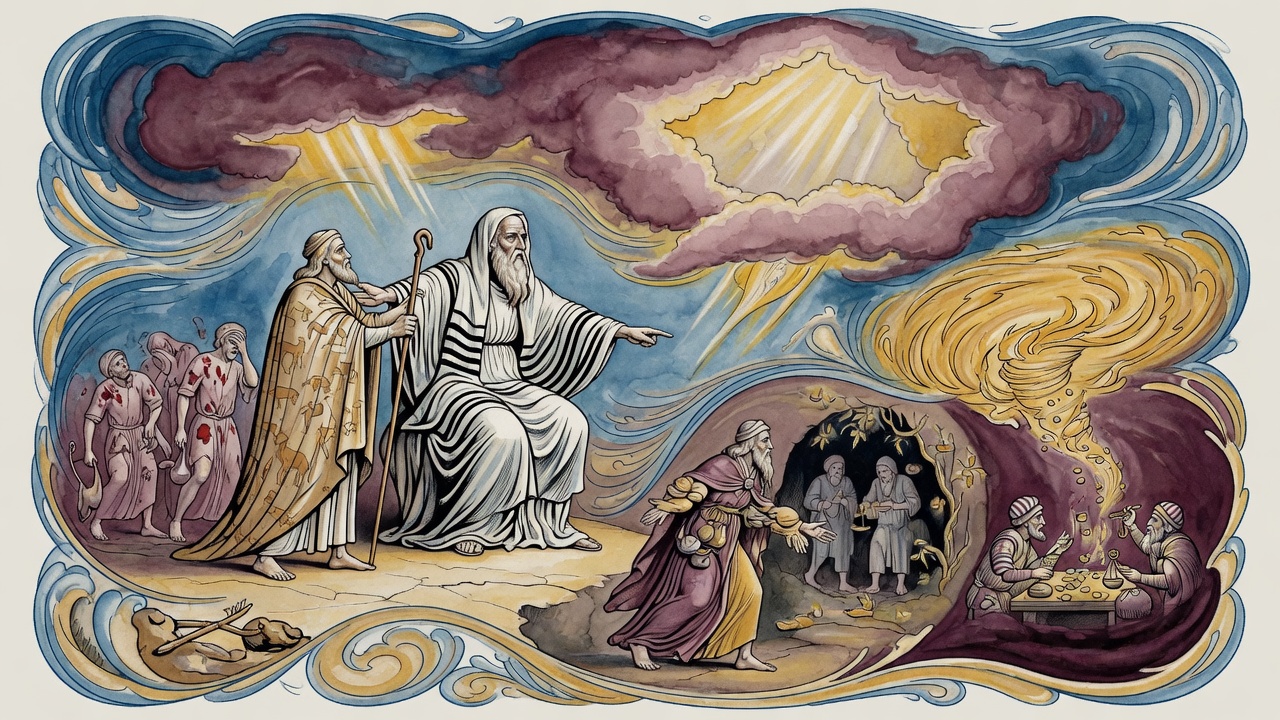
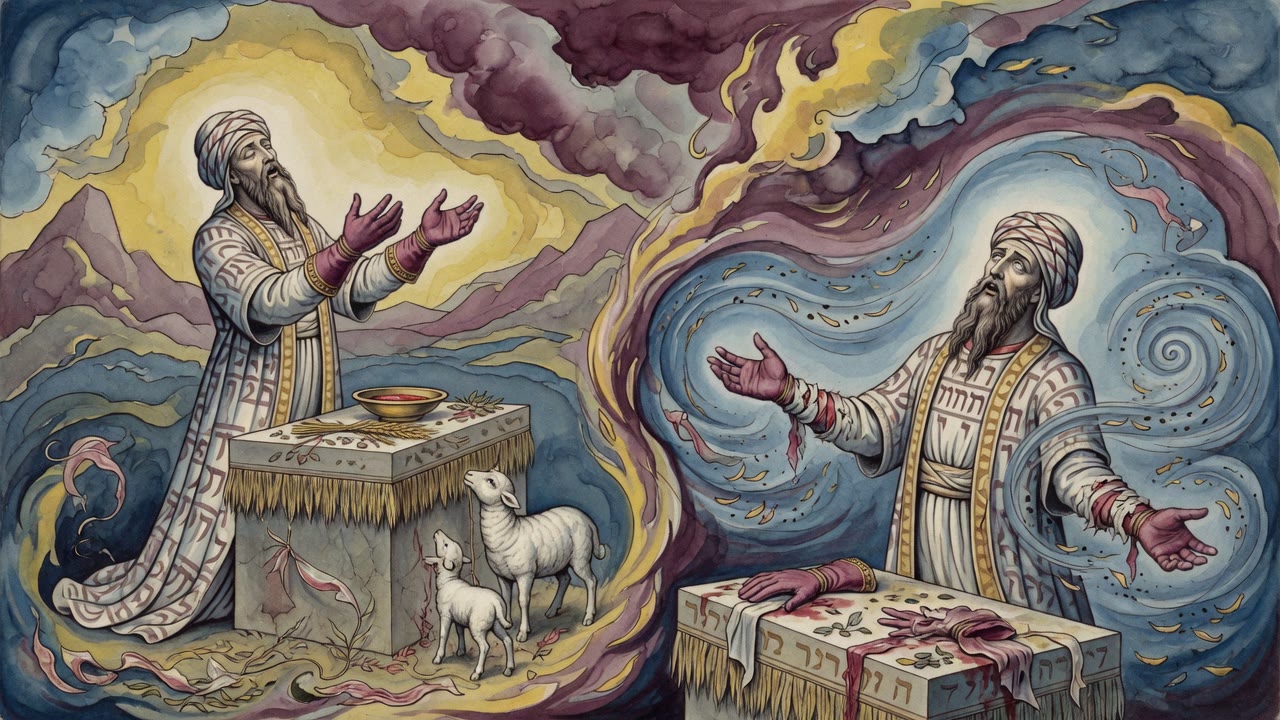
Issachar of Kfar Barkai wrapped silk around his hands before he touched the holy service.
Issachar Wrapped Silk and Lost Both His Hands Click for full size

He would not let the work roughen his skin.

He preened while the altar demanded weight, blood, and heat.

Hands That Must Press Down

Issachar of Kfar Barkai wrapped silk around his hands before he touched the holy service. He would not let the work roughen his skin. He preened while the altar demanded weight, blood, and heat. The Temple court cried out against him. He honored himself and profaned the name of Heaven. Other priests leaned full strength onto animals' heads.

The sources fix the moment with a name, a number, a place, or a law that will not bend for convenience or for fear.

Lamb and Goat Are Equals

The hand pressed on a beast is one of the most physical gestures in the system. Touch seals the transfer of sin. The sages argue whether laying hands reaches the Yom Kippur bull; Scripture stretches wide enough to include it. Slaughter is before the LORD, north of the altar. Against that seriousness, silk gloves look like a joke in the wrong room. Rabbi Shimon notes lambs precede goats in the Torah, unlocking Issachar's fall.

The Court That Named Him

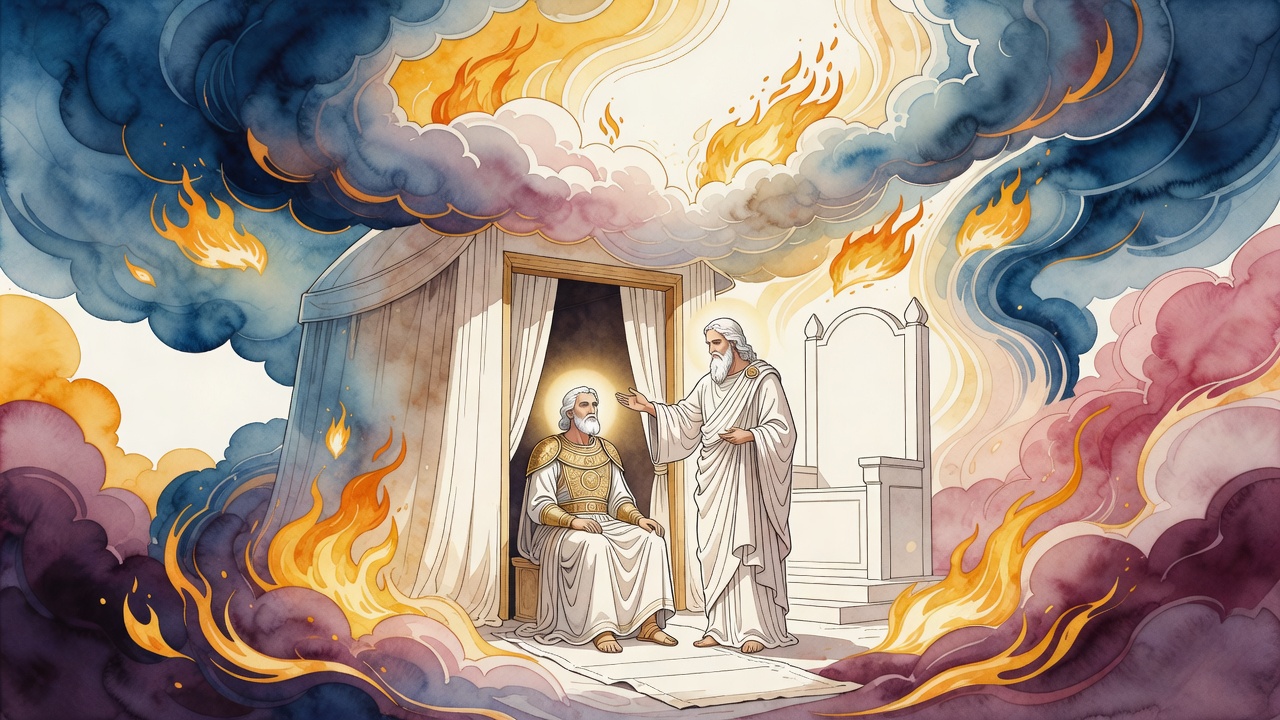
A king and queen argue whether kid or lamb tastes better and summon the high priest. Issachar gestures that if the kid were superior it would be the daily offering. The king orders his right hand cut off. Issachar bribes to lose the left instead; the king learns and takes the right after all. Both hands gone. Rav Yosef blesses God for paying him in this world.

What Remains Without Hands

Lamb and goat are equals; the choice belongs to the bringer. Issachar answered a kitchen dispute like a courtier and lost the tools of his trade. Before the quarrel, the court had already named his disgrace. After the sentences he cannot lean on a bull. One set of hands does the covenant's hard work. The other set is taken away.


← All myths
From the tradition

Sources

2 sources

The texts behind this telling. Some cards carry a translation of the source; others are our own retelling of it, and each card says which. Every card links out to the original.

Yalkut Shimoni on Torah 469:39Yalkut Shimoni on Torah

Translation of the source text.Torat Emet (Yalkut Shimoni) · CC-BY-NC

"And all its fat he shall remove, as the fat was removed from off the sacrifice of peace offerings" (Leviticus 4:31): just as is specified for the peace offering - the fat that covers, the membrane that is peeled off, the two kidneys and the lobe of the liver - so too here. "And he shall make atonement for him" - that his atonement be for his own sake, that one not atone for two as one, and that a priest atone for himself. "And he shall be forgiven" - that one not leave anything over for him until the Day of Atonement; one might think even if he sat and did not bring, the verse teaches "for him." "And if he bring a lamb as his offering for a sin offering" (Leviticus 4:32) - Rabbi Shimon says: lambs precede goats in every place. One of four cries that the Temple court cried out: "Get out of here, Issachar man of Kfar Barkai, who honors himself and profanes the name of Heaven" - for he would wrap his hands in silk and perform the service. And what befell him? A king and queen were sitting at a meal. The king said, "The kid is better," and the queen said, "The lamb is better." They said, "Who shall decide? Let the high priest decide, for he offers sacrifices before the Holy One, blessed be He, every single day." He came and gestured with his hand: "If the kid were better, it would be offered as the daily offering." The king said, "Since he has no fear of royalty, let his right hand be cut off." Issachar gave a bribe and they cut off his left. The king heard and said, "Let them go back and cut off his right." Rav Yosef said: Blessed is the Merciful One, who gave Issachar his recompense in this world. Rav Ashi said: Issachar man of Kfar Barkai did not study the Mishnah, for we learned: Rabbi Shimon says lambs precede goats in every place. One might think it is because they are choicer; the verse teaches "and if he bring a lamb as his offering," teaching that the two are weighed as one. Ravina said: he did not even read Scripture, for it is written "and if a lamb" and it is written "and if a goat be his offering" - if he wishes, let him bring a lamb; if he wishes, let him bring a goat. Why does the verse say "he shall bring," "he shall bring" [twice]? From where do you say that one who set aside his sin offering and it was lost, and set aside another in its place, and did not manage to offer it until the first was found, and now both stand - from where that he brings whichever he wishes? The verse teaches "he shall bring." One might think he brings both; the verse teaches "he shall bring it" - he brings one and not two. "And he shall lay his hand upon the head of the sin offering" (Leviticus 4:33) - to include the nazirite's sin offering, the leper's sin offering, and the sin offering of one who defiles the Sanctuary in the laying on of hands.

Full source
Yalkut Shimoni on Torah 469:3Yalkut Shimoni on Torah

Translation of the source text.Torat Emet (Yalkut Shimoni) · CC-BY-NC

"And he shall lay his hand upon the head of the bull" (Leviticus 4:4), to include the bull of the Day of Atonement for the laying on of hands. And is this not a matter of logic? If this one [the anointed priest's bull], which does not require two confessions and does not require the "Please" [formula], requires the laying on of hands, then the bull of the Day of Atonement, which requires two confessions and requires the "Please," is it not right that it should require the laying on of hands? No: if you have said this concerning this bull, which comes for the transgression of a known commandment, would you say the same of the bull of the Day of Atonement, which does not come for the transgression of a known commandment? Since it does not come for the transgression of a known commandment, let it not require the laying on of hands. Therefore Scripture teaches, "And he shall lay his hand upon the head of the bull", to include the bull of the Day of Atonement for the laying on of hands. "And he shall slaughter the bull before the LORD" (Leviticus 4:4), in the north.

Full source