Jacob Kept Rachel's Oath All the Way to Machpelah
Rachel died between towns, close enough to Bethlehem that the family could have turned. Jacob set a pillar in the dust and kept walking.
Table of Contents
 Click for full size
Rachel Died Between Towns
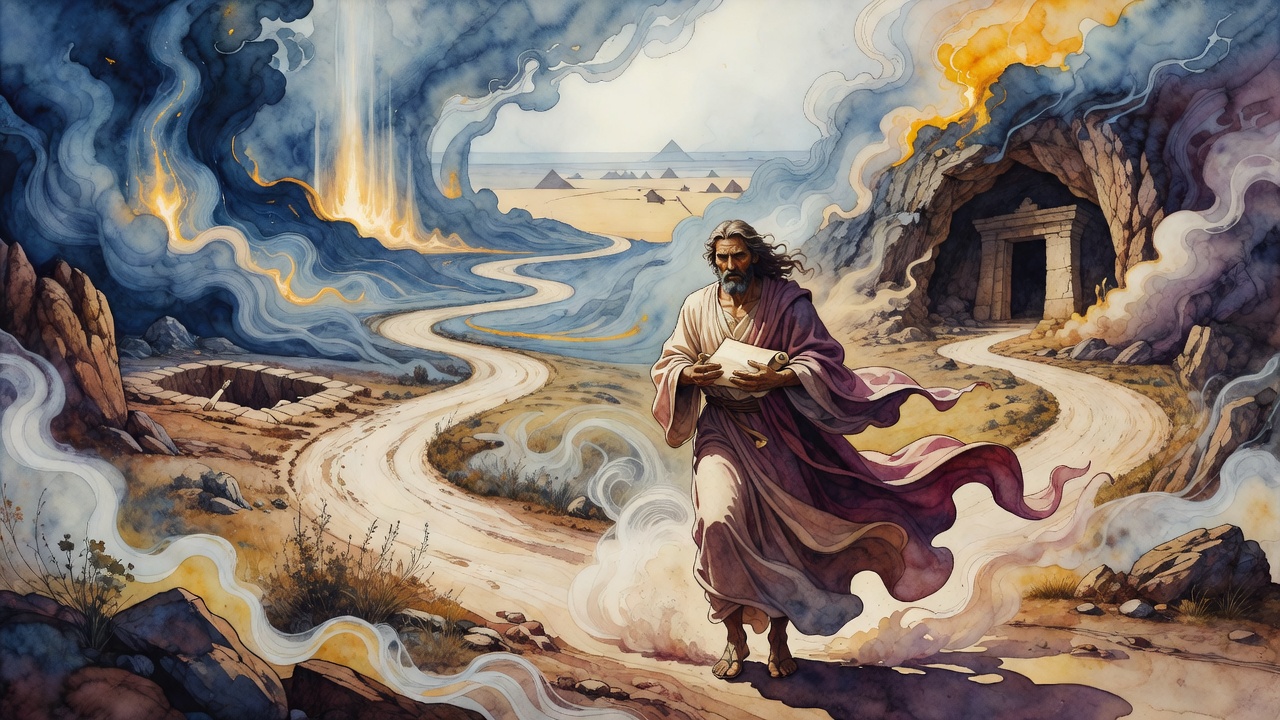
Rachel died on the road, and Jacob kept walking.
Bethlehem was near. The family was moving. Labor seized her between towns, and the child who came out alive cost his mother her life. Jacob named him Benjamin. He did not turn the camp around. He did not carry her to Machpelah, the cave where Abraham, Sarah, Isaac, Rebekah, and Leah would lie. He set a pillar over the roadside grave and moved on with the living.
Part of him stayed in the dust outside Bethlehem. The rest of him had a household to keep on the road.
The Vow That Outlived Both Wives
Years earlier, in Laban's house, Jacob had made a vow. He would marry only Laban's daughters. Leah and Rachel became his wives through deception, labor, love, rivalry, and a household that never rested. When Rachel died, the vow did not die with her.
He could have reasoned differently. Death ends many obligations. A widower may seek comfort. A patriarch with tribes to raise could defend another marriage as practical. Jacob did not take that road. In his mind, Rachel remained his wife. Leah remained his wife. The oath still stood guard over his future.
So he did not remarry. The tent changed around him. Children grew. Leah died too. Then Joseph disappeared, and the grief for Rachel found a second wound in the son who had her face. God had told Jacob that if none of his sons died in his lifetime, he could take it as a token he would not be put in Gehinnom (גיהנם), the place of purification, after his own death. Thinking Joseph dead, Jacob mourned the boy and mourned his own soul. He sat in that sorrow twenty-two years, one year for each year he had lived apart from Isaac and Rebekah without honoring them as a son.
A Pillar on the Road, Not in the Cave
Rachel's grave was not a failure of affection. The roadside became its own sanctuary. Jacob would later be buried in Machpelah, where covenant settled into stone. Rachel remained outside the family tomb, placed on the road her children would one day travel in sorrow. Exiles would pass her grave. The broken would move by her pillar. Her weeping would belong to the road, not the cave.
Jacob could not have known every future grief that would gather there. He knew enough about roads. He had fled along them with a staff. He had returned along them with wives, children, servants, flocks, fear, and a limp. He knew that a promise sometimes needs a witness beside the path, not hidden in a tomb.
Joseph Had to Swear About Bones
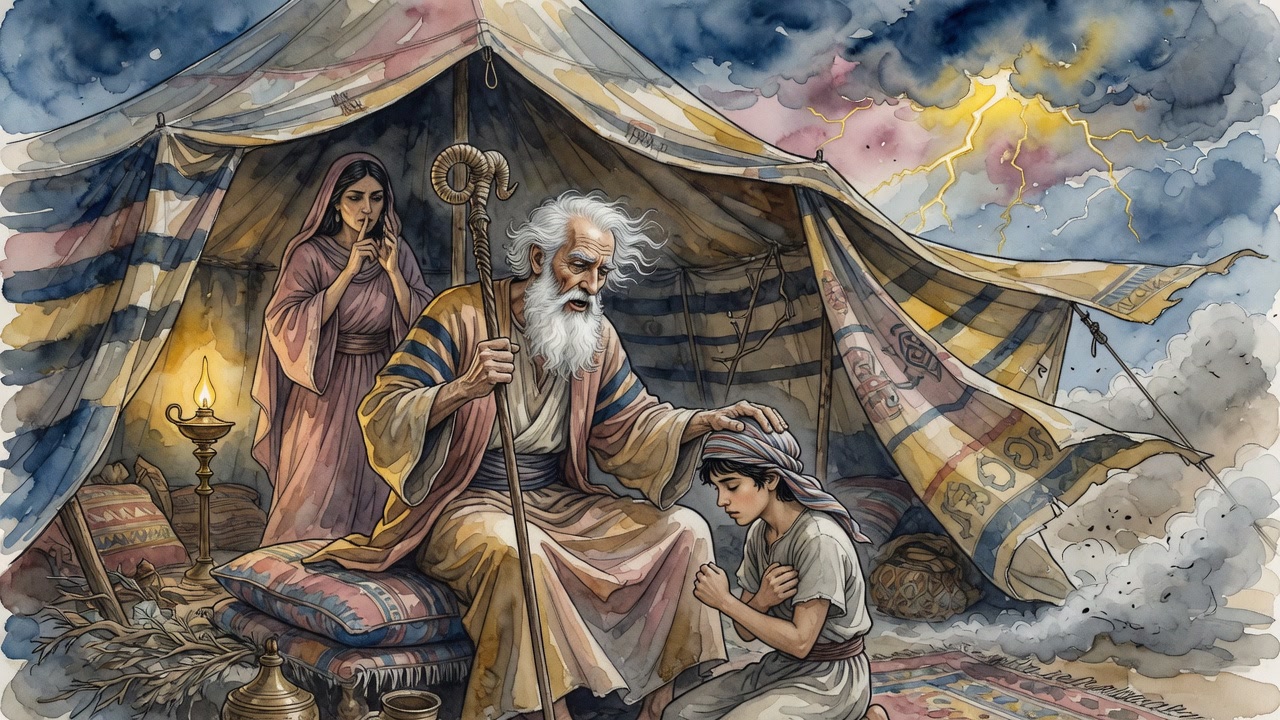
Egypt gave Jacob seventeen final years with Joseph. The years were mercy, but Egypt was not home. When his body began to fail, Jacob called Joseph close and made him swear. Not a request. An oath. Do not bury me in Egypt. Carry me back to Canaan. Lay me with my fathers in the cave of Machpelah.
He blessed the grandchildren first, asking that God's mercy stay on them and that the covenant of Abraham be renewed in their seed. The next day he blessed his sons, each according to his blessing, and set Judah to teach his boys the bow. Then he arranged the bier. Judah, Issachar, and Zebulun on the east. Reuben, Simeon, and Gad on the south. Ephraim, Manasseh, and Benjamin on the west. Dan, Asher, and Naphtali on the north. Levi would not carry him. Levi's children would carry the Ark. Joseph, as a king in Egypt, would not carry him either. His sons would stand in his place.
"O my son," he said to Joseph, "leave not thy brethren to the inhabitants of Egypt, neither hurt their feelings." He was arranging the map one last time. Rachel at the road. Leah in the cave. Jacob with the fathers. Joseph under oath. The family could live in Egypt for a time, but its bones had to remember where they belonged.
The Cry That Used the Fathers' Names
Generations later, the king of Egypt was counted as dead while he still sat on the throne. Leprosy had taken him, and a leper is reckoned as a corpse. His magicians told him the cure. Slaughter from among the Israelite young, one hundred and fifty in the evening and one hundred and fifty in the morning, and bathe in their blood twice a day. When Israel heard the decree, they groaned. The cry that rose was the cry of the slain.
Heaven heard not only the pain but the names inside it: Abraham, Isaac, Jacob. Israel was not worthy on its own account. God remembered His covenant. The fathers were not decorations in the prayer. They were the channel by which the cry knew where to go.
Jacob's sons carried his body out of Egypt because he had taught them that promises need weight. Words alone can thin with time. A grave does not. A pillar beside Bethlehem does not. A cave in Hebron does not. An oath spoken to a dying father does not. Rachel remained where the children would pass. Jacob returned where the fathers slept. Between them stretched the road Israel would keep walking, even when the road ran through a house of blood.
← All myths