Jacob Left Gaps Between the Herds He Sent to Esau
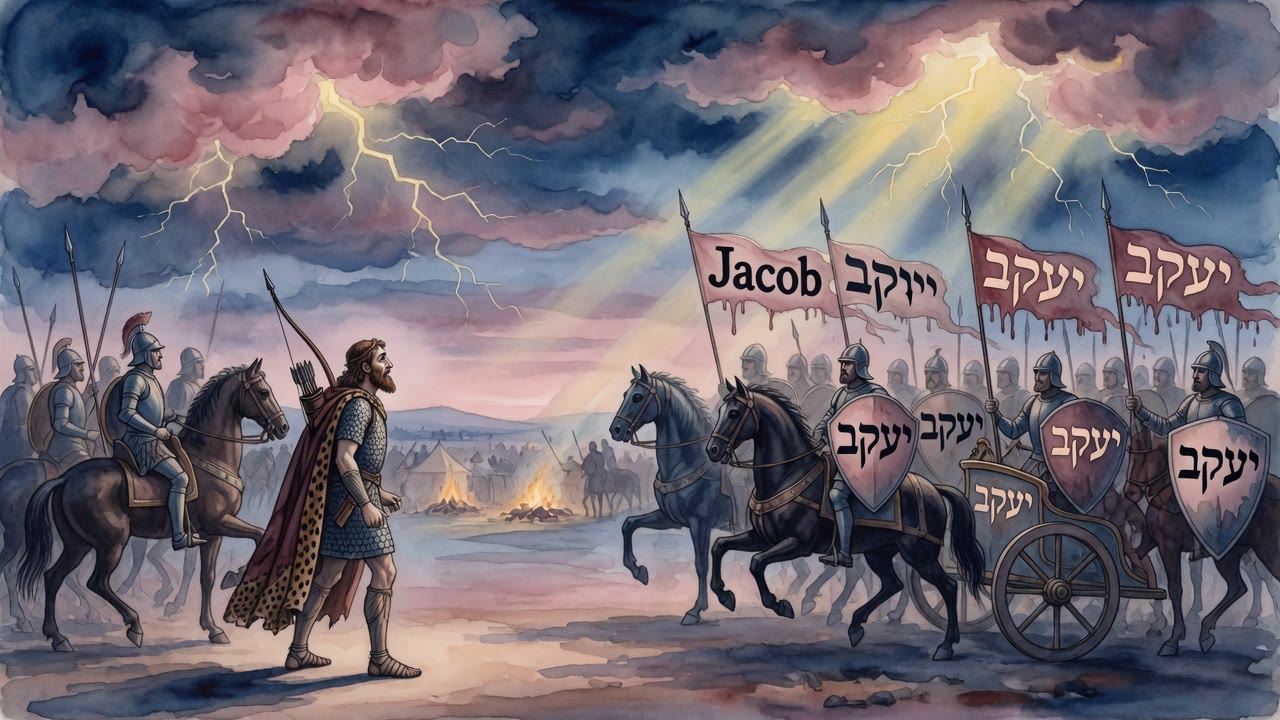
Four hundred men were coming up from Seir. Jacob put the camels in the middle of the gift. Then he locked Dinah in a chest by the ford.
Table of Contents
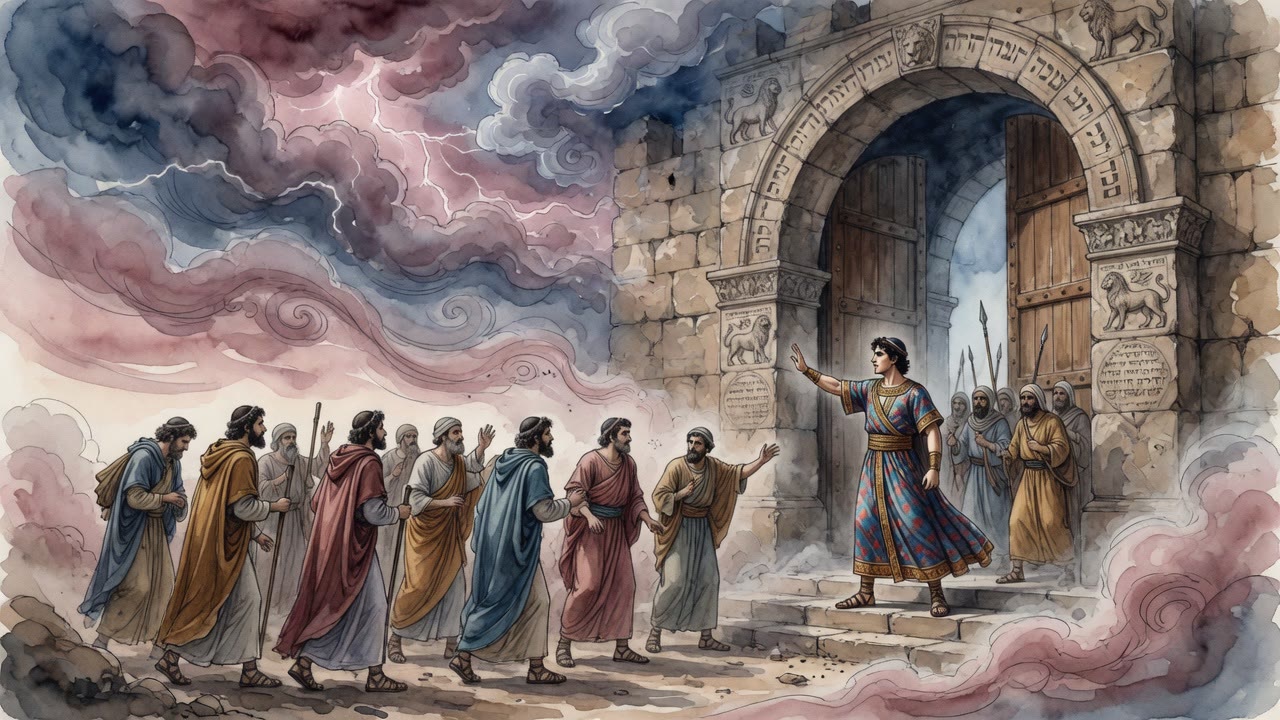
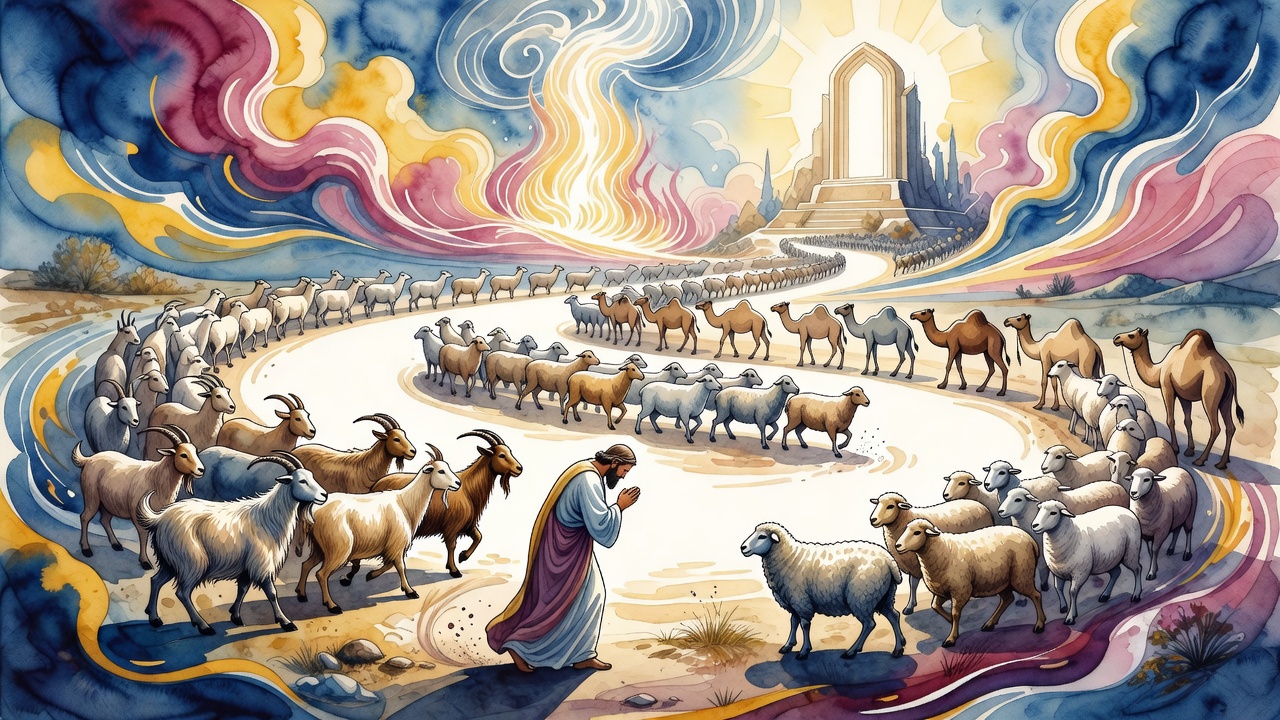
Jacob did not send the gift in one column. He put the animals into his servants' hands in separate groups, goats here, ewes there, camels behind them, and he told the men to keep the groups apart on the road. A gap of empty dust between each herd and the next.
 Click for full size
He Would Not Send Them All at Once
Esau was coming up from Seir with four hundred men. A man like that has an eye that fills and empties. One herd walks up and the servant says, "Accept it." The dust settles. Esau has almost finished being impressed when the next herd comes over the rise, and another servant says, "Accept it." Then another. Each arrival lands on a man whose anger has just started to cool, and starts the cooling over again.
Jacob was not buying affection. He was wearing a grudge down by installments. His household stood behind him watching the herds walk away, one wave at a time, into the gap where their uncle was.
Thirty Nursing Camels and the Stones
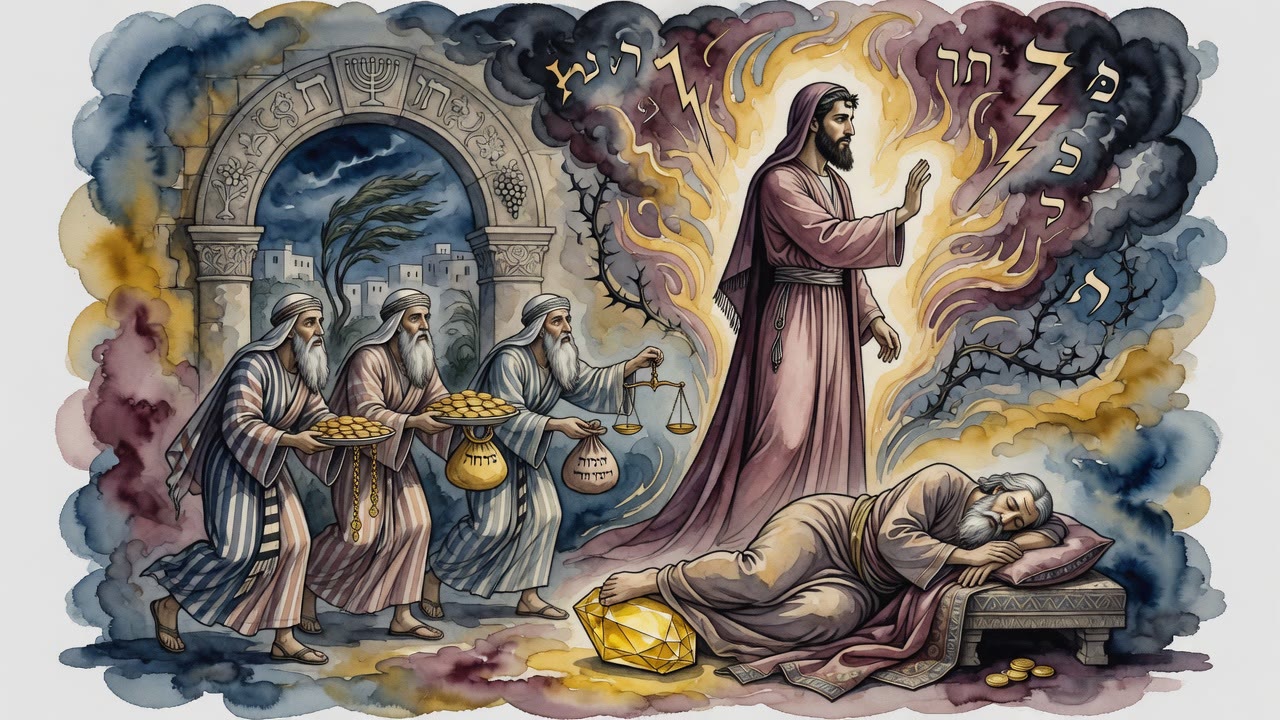
Thirty nursing camels with their calves. Comb through every tent in the desert of Kedar and you will not turn up a string like that. One man owned them and sent them away in an afternoon. He took of what came to hand: not the herd he could spare. The sealed bags. Precious stones. Pearls. Jacob emptied the strongbox onto the back of a caravan and pointed it at a brother who might kill him anyway.
He set the camels in the middle of the procession on purpose, and while he arranged them he was talking past Esau altogether. Picture Yourself, he said, seated on the tribunal, hearing my case, and the mercy filling You while You listen. The livestock were laid out on the road the way a man lays out an argument he cannot afford to lose.
Leave Room Between the Troubles
The gaps were not only about Esau. Put a space between drove and drove, Jacob had said to his servants, and while he said it he was also saying something else, upward, in the same breath.
Master of the world. If troubles have to come on my children, do not send them one behind the other. Leave them room between one and the next.
He did not ask to be spared. He was too far into his own life for that, with a limp coming and a brother on the road and a father he had deceived. He asked for pacing. For a generation to be able to stand up and get its breath between blows, the way a herdsman lets the dust settle before the next herd comes over the hill. The smallest request a man ever made on behalf of people who would not be born for a thousand years, and it was built into the arrangement of a bribe.
He Lifted His Eyes and Wept
The present went on ahead of him and he stayed behind, and the distress got into him. He raised his eyes and there was Esau, far off, coming. Everything he had sent was already gone up the road and it had bought him nothing he could see. He raised his eyes higher, past the dust and the four hundred, and he wept.
Heaven heard it and promised him rescue. That night is where the line comes from that Israel would carry into every bad century afterward, the one about the Lord answering in the day of trouble and the name of the God of Jacob lifting a frightened man out of reach (Psalms 20:2).
He had engineered everything he could engineer. The weeping was the part he could not.
Dinah Locked in the Chest
He got up in the night and took his two wives and his two handmaids and his eleven children over the Jabbok. Eleven. He had twelve.
Dinah was in a chest with the lid shut and locked from the outside, and her father was the one who had turned the key. The eye of that man is haughty, he said. He will look up and see her and take her from me.
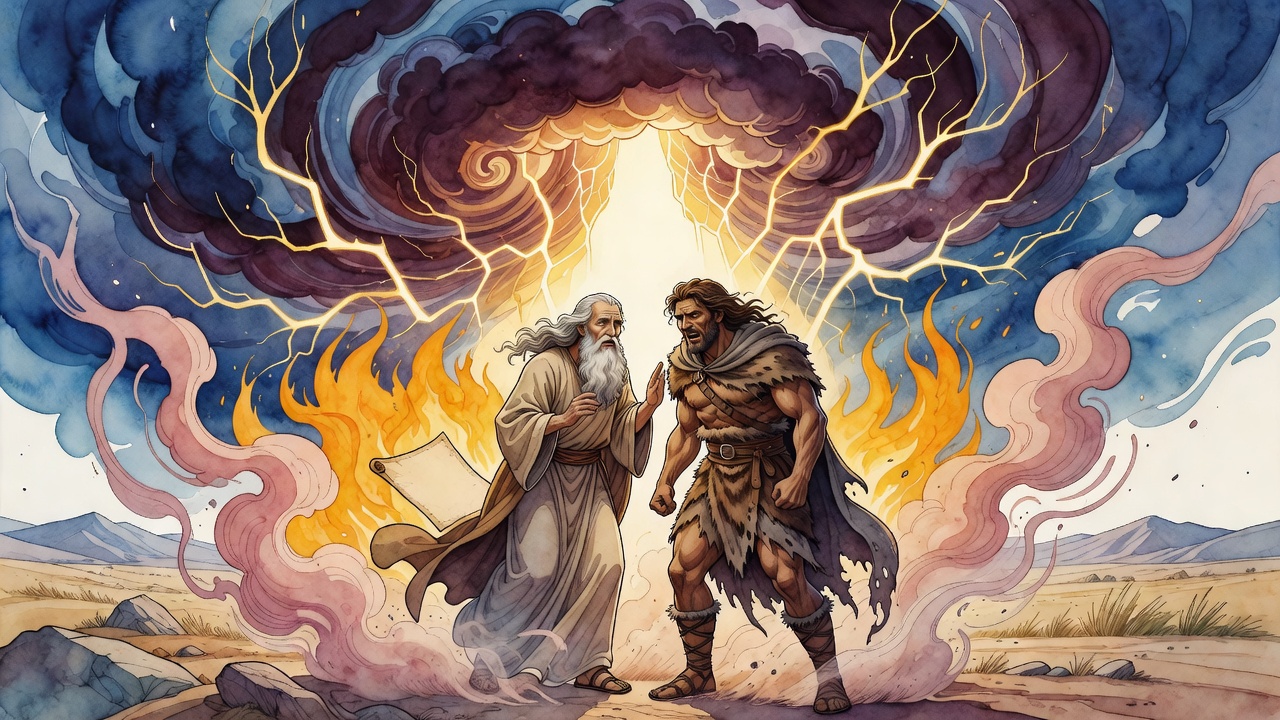
The rebuke came from above him while he was still standing at the water. Kindness is owed to a man who is failing, and you kept yours back from your own brother. She might have turned him. She might have brought him in under the wings of the Presence. You would not give her to him in a permitted way, and so she went out, and what happened at Shechem happened.
Every herd he sent was calculated to the hour. The one thing he locked away was the one thing he lost. The gaps on the road were a prayer. The chest was a refusal. Both traveled with him into the night, and only one of them was answered the way he hoped.
← All myths