6 min read

Jacob Lost the Vision When He Tried to Speak the End

Jacob gathers his sons to reveal the End of Days. The moment he opens his mouth, the holy spirit lifts and the words freeze.

Curated by Arthur · Told by Maggid ·
Table of Contents
  1. The Gathering at the Deathbed
  2. The Silence That Fell
  3. The Question He Asked
  4. Why the Secret Was Sealed
  5. What Jacob Gave Instead

The Gathering at the Deathbed

Jacob had survived more than most men: the flight from Esau, twenty years of labor under Laban, the wrestling at the ford, the grief of Joseph's disappearance, the years of famine. He was one hundred and forty-seven years old and he knew he was dying. He called his sons to him, all twelve, and told them to draw close.

He had something to give them that no amount of inheritance could contain. The End of Days. Not an exhortation or a blessing in the ordinary sense, but the actual future, the shape of what was coming, the last things. He had been shown this knowledge or believed himself to have access to it. He would speak it now, while he still had breath, and his sons would carry it out of Egypt into whatever came next.

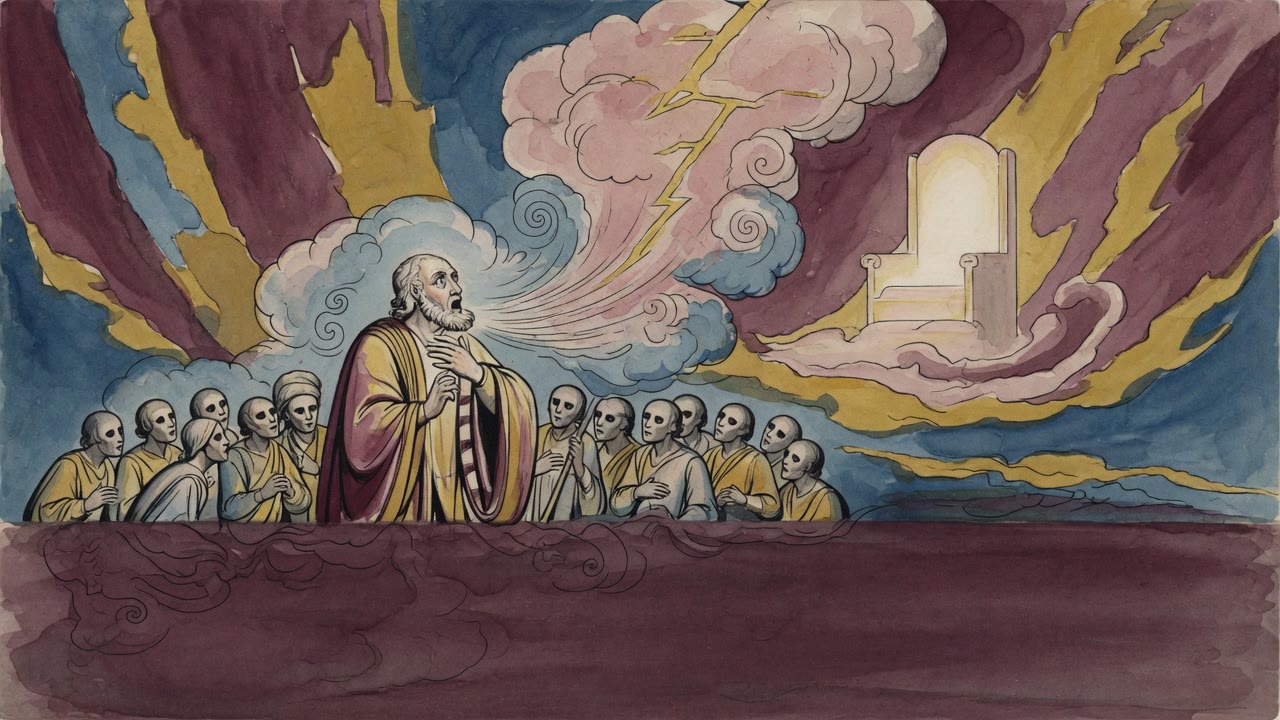
He opened his mouth. The holy spirit lifted away.

The Silence That Fell

The moment he tried to speak the End, the words froze on his tongue. The rabbis do not describe this as God blocking a prophecy out of arbitrary will. They describe it as Jacob's own condition causing the spirit to withdraw. Something in him was not right. The channel had closed.

Jacob searched his own conscience with the searching of a man who knows how to examine himself honestly, because he had spent decades doing it. He looked at his twelve sons standing around the bed and felt a sudden terror: what if the problem was one of them? What if the unworthiness was not in him but in his house?

He had seen this before. Abraham, his grandfather, had fathered Ishmael, who went wrong. Isaac, his father, had fathered Esau, who sold his birthright for soup and spent his adult life planning to kill his brother. Jacob himself had wrestled an angel and survived. But had he produced sons worthy of the covenant?

The Question He Asked

He asked them directly. Can it be that there is some reservation in your hearts about Him who spoke and brought the world into being? Is there doubt among you? Is one of you divided?

The twelve sons answered together, in a single voice. The text says they raised their voices as one and spoke the line that has anchored Jewish prayer ever since: Shema Yisrael. Hear, O Israel. Just as there is no division in your heart, no uncertainty in you about God, so in our hearts there is no division.

They called him Israel, the name God had given him at the ford. They were addressing the patriarch and the struggle and the covenant all at once in two words.

Jacob answered what he always answered, the line that completes the Shema: Blessed is the name of His glorious kingdom forever and ever.

Why the Secret Was Sealed

The tradition compared what happened to Jacob to what had happened to Isaac. Isaac, too, had tried to whisper the End of Days into a son's ear. He had called Esau to him for that purpose, and the Holy One had sealed his lips before the secret could pass. The knowledge of what is coming at the end of time was not something the divine economy wanted circulating in human mouths.

The image the sages used was precise: a trusted servant who knows where a treasure is buried, dying and trying to tell his children so they could inherit it, when suddenly the master appears over the bed. The secret belongs to the master. It was never the servant's to give. Jacob had been mistaken about what he was permitted to reveal.

But the rabbis also noted that what replaced the secret was not nothing. Jacob gathered his sons, rebuked each one individually where rebuke was warranted, addressed them all together, and then gave them the blessings that the rest of Genesis preserves. What he gave was not the End of Days. It was a more intimate thing: his assessment of each son, his reading of each tribe's character and destiny, the father's last honest words about the children he had raised.

What Jacob Gave Instead

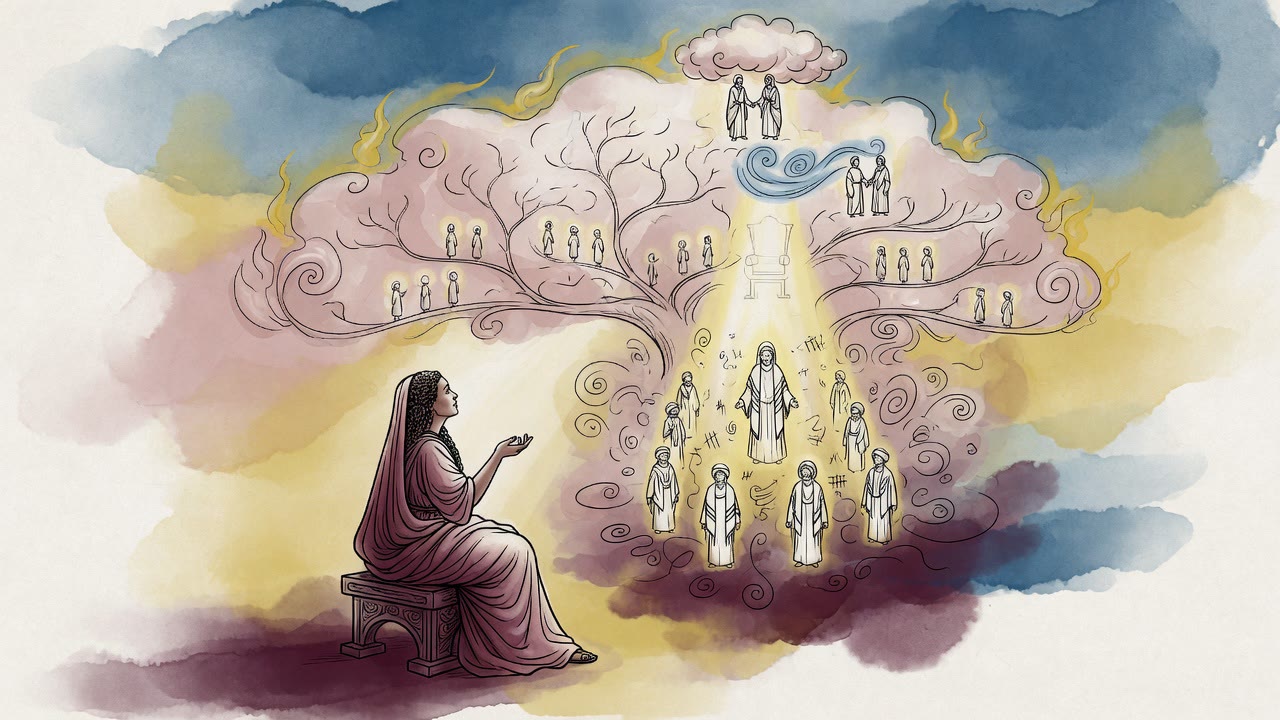
The Book of Jubilees, retelling the deathbed scene, preserves Jacob addressing his sons with a final powerful message about solidarity. The blessings of each tribe were not meant to be hoarded. Judah's wheat was for Benjamin too. The fertility of one tribe was the inheritance of all. He told them that a prophet would come after him, Moses, who would continue the work of blessing and instruction that he was not living long enough to complete. He was passing a torch in the direction of someone who had not yet been born.

He asked his sons whether they would keep faith with God and with each other after he was gone. They answered him as they had answered the question about the Shema: together, without division, with the confession that had unlocked his voice in the first place.


← All myths
From the tradition

Sources

7 sources

The texts this telling draws on, in full. Open a card to read inline, or expand it for a wider, quieter read.

Book of Jubilees 36:4Book of Jubilees

Some consider it pseudepigrapha – writings ascribed to biblical figures but not part of the accepted canon. Others see it as a vital window into the beliefs and practices of ancient Judaism, especially during the Second Temple period. It retells the stories of Genesis and Exodus, but with some interesting additions and interpretations. And Chapter 36 gives us Jacob's deathbed scene.

Jacob, old and nearing his end, surrounded by his sons. What are his final thoughts? What wisdom does he impart?

First, he's very specific about his burial. "Bury me near Abraham my father," he instructs, "in the double cave in the field of Ephron the Hittite, where Abraham purchased a sepulchre to bury in; in the sepulchre which I digged for myself, there bury me." He wants to be with his ancestors, in the place Abraham himself had secured. This double cave, the Cave of Machpelah in Hebron, is incredibly significant. It's a place of heritage, a physical link to the covenant God made with Abraham. He is reinforcing that he is a part of this legacy.

Beyond the practical details of burial, Jacob imparts something far more profound: a moral and ethical charge to his sons. "And this I command you, my sons," he says, "that ye practise righteousness and uprightness on the earth, so that the Lord may bring upon you all that the Lord said that he would do to Abraham and to his seed." This isn't just about following rules; it's about living a life of tzedek and mishpat – righteousness and justice. It's about upholding the values of the covenant, ensuring that God's promises to Abraham will extend to their descendants. Their actions determine their destiny, and the destiny of their people.

And then comes the heart of it all: "And love one another, my sons, your brothers as a man who loveth his own soul, and let each seek in what he may benefit his brother, and act together on the earth; and let them love each other as their own souls." He emphasizes unity, brotherly love, and mutual support. It’s a powerful call for them to care for one another as much as they care for themselves. Can you imagine the weight of that instruction? To love your brother as your own soul. It speaks to a profound level of empathy, responsibility, and collective identity. This unity is not just a nice sentiment; it's presented as essential for their survival and success as a people.

So, what do we take away from Jacob's final words? It's not just about where we come from or where we're buried. It's about how we live, how we treat each other, and the legacy we leave behind. His command to his sons echoes through the ages, reminding us that righteousness, justice, and brotherly love are the foundations of a meaningful life and a thriving community. It's a message that resonates just as powerfully today as it did millennia ago. What is the legacy we will choose to leave?

Full source
Midrash Aggadah, Deuteronomy 6:4Midrash Aggadah

"Hear, O Israel" (Deuteronomy 6:4). At the hour when Jacob came to reveal the End, as it is written, "Gather together, that I may tell you" (Genesis 49:1), and when he wished to reveal the End the Holy Spirit departed from him, immediately he began to be distressed. He said: My sons, perhaps there is some unfit one among you, or there is some unfit one in my bed, just as there was a wicked son to Abraham, namely Ishmael and the sons of Keturah, and likewise with Isaac, Esau and Eliphaz; and that is why the Shekhinah has departed from me. Immediately his sons said to him, "Hear, O Israel, the LORD is our God, the LORD is One." The old man began and said, "Blessed be the name of the glory of His kingdom forever and ever."

Another interpretation: "Hear", to make your ears hear the commandment.

"The LORD is One", and one must prolong the dalet, in order to enthrone Him above and below and in the four directions of the world; only let one not snatch the chet. And the dalet of "Echad" must protrude outward, that is, the point of the dalet, so that it does not appear like a resh.

Full source
Sifrei Devarim 31:7Sifrei Devarim

Before Jacob's passing, he gathered his sons. But it wasn’t just a sentimental family reunion. First, he rebuked them, each individually, and then he addressed them all together. What was on his mind? He asked them a powerful question: "Can it be that there is some reservation in your hearts about Him who spoke and brought the world into being?" In other words, did they doubt God?

Their response is incredibly moving. They answered, "Shema Yisrael" – "Hear, O Israel (Jacob)!" Just as there is no reservation in your heart, so there is none in ours, but (Devarim 6:4) "The L-rd our G-d, the L-rd is One!" In that moment, they affirmed their unwavering faith in God, echoing the most central declaration of Jewish belief, the Shema.

Jacob, hearing this powerful declaration from his sons, responded with "Baruch Shem K'vod Malchuto L'olam Va'ed" – "Blessed is the Name of the glory of His Kingdom for ever and ever!" This phrase, recited silently during the Shema in many traditions, became associated with this very moment.

The text then connects this scene to a verse in Genesis (Bereshith 47:31): "And Israel bowed at the head of the bed." But the Sifrei asks, is this to be taken literally? Of course not! The intent, we're told, is that Jacob expressed thanks and praise to God that "base matter" had not issued from him. This rather delicate phrasing refers to the hope that his descendants would remain righteous. Essentially, he was grateful that his lineage was secure in its devotion to God.

Another interpretation offered suggests that Reuven, Jacob's eldest son, had repented for a past transgression. The Holy One, Blessed be He, then said to Jacob: "This is what you desired all of your days, that your sons 'awake and retire' with the recitation of the Shema." In other words, Jacob yearned for his children to live lives grounded in faith, beginning and ending each day with a declaration of God's oneness.

The text concludes with a practical, halakhic point: "Hear, O Israel": From here it was ruled that if one recited the Shema but did not make it audible to his ear, he did not fulfill his obligation. You have to hear yourself saying the words!

So, what do we take away from this glimpse into Jacob's final moments? It's a powerful reminder of the importance of faith, family, and the enduring legacy we leave behind. It's a story about a father's love, a family's commitment, and the eternal bond between the Jewish people and God. It's also a reminder that even in our most private moments, our connection to something greater than ourselves can shine through.

Full source
Midrash Tanchuma Buber, Vayechi 9:1Midrash Tanchuma Buber, Vayechi

[(Genesis 49:1:) And Jacob called to his sons.] This is what is written (Job 12:20): "He removes the speech of the trustworthy, and takes away the discernment of the elders." This refers to Isaac and Jacob, for both of them sought to reveal a mystery of the Holy One, blessed be He (that is, His secret). Isaac called for Esau, seeking to reveal to him the End, but the Holy One, blessed be He, concealed it from him, as it is said (Genesis 27:1): "And he called Esau his elder son, etc." And Jacob too sought to reveal to his sons the End, as it is said (Genesis 49:1): "Gather together and I will tell you, etc."

To what is the matter comparable? To a servant whom the king had entrusted with all that he had. When that servant came to die, he called for his sons in order to make them free men, and to tell them where their deed of trust (deyateki) was. The king stood above him. When that servant saw him, he set aside the matter that he had been seeking to reveal to them. He began and said to them: "I beg of you, you are the servants of the king; honor him in the way that I have honored him all my days." Likewise Jacob called for his sons to make known to them when the End would be. Immediately the Holy One, blessed be He, was revealed over him. He said to him: "You call for your sons, yet to Me you did not call! 'And you have not called upon Me, O Jacob' (Isaiah 43:22)." When he saw the Holy One, blessed be He, revealed over him, immediately he began to say to them: "I beg of you, honor the Holy One, blessed be He, just as my fathers honored Him, as it is said (Genesis 48:15): 'The God before whom my fathers walked, etc.'" They said to him: "Hear, O Israel, the Lord is our God, the Lord is One" (Deuteronomy 6:4). Immediately, "Israel bowed himself upon the head of the bed" (Genesis 47:31). He began to say in a whisper: "Blessed be the name of the glory of His kingdom forever and ever." The Holy One, blessed be He, said to him (Proverbs 25:2): "It is the glory of God to conceal a matter."

Full source
Bereshit Rabbah 99:5Bereshit Rabbah

In Jewish tradition, there are stories about those who tried, and what happened when they did.

Our story today comes from Bereshit Rabbah, a classic collection of rabbinic interpretations on the Book of Genesis. Specifically,

The Torah tells us, "Jacob called to his sons, and he said: Gather, and I will tell you what will befall you at the end of days. Assemble and hear, sons of Jacob, and listen to Israel your father" (Genesis 49:1–2). So, what was Jacob about to reveal? The midrash – the interpretive tradition – believes he was trying to reveal the End of Days, the ultimate future.

Here's the fascinating twist. He couldn't. Why?

The midrash quotes (Job 12:20): "He removes speech from the trusted, and takes the sense of elders." Who are these "trusted" and "elders"? According to the rabbis, they represent some of the most pivotal figures in Jewish history: Isaac, Jacob, Aaron, and Moses.

Think about Moses. (Numbers 12:7) says, "In all My house he is trusted." And of Aaron, (Malachi 2:6) states, "The Torah of truth was in his mouth." They were the ultimate truth-tellers. But remember the story in (Numbers 20:10), where they strike the rock and say, "Hear now, you defiant ones"? Because of that moment, because of their speech, they were denied entry into the Promised Land. As (Numbers 20:12) says, "therefore, you will not bring this assembly [into the land that I have given them]." The midrash interprets Job to mean that God removed the "trusted" due to speech.

What about the "elders," Isaac and Jacob?

Isaac, as we know, favored Esau, whom, the text reminds us, God hated. Isaac, wanting to bless Esau, asked him to prepare delicacies, as we read in (Genesis 27:4). He wanted to reveal the End to him. But what did God do? He stripped Isaac of his sense. The divine spirit was removed. Isaac began trembling, as (Genesis 27:33) says, "Isaac was overcome [with very great trembling]." He couldn't find the words. All he could manage was, "Indeed he shall be blessed" (Genesis 27:33).

And then there's Jacob. He gathers his sons, ready to reveal the End of Days, just as the Torah says: “Gather, and I will tell you what will befall [you at the end of days].” But the Holy One concealed it from him. Instead of prophecies, he starts talking about Reuben, his firstborn, and the blessings and failings associated with him. “Reuben, you are my firstborn,” he says (Genesis 49:3). That, says the midrash, is the meaning of "and takes the sense of elders."

So what does this all mean? Why couldn't these giants of faith reveal the future, even on their deathbeds? The midrash suggests a profound truth: that the future is not ours to know, or perhaps, not ours to prematurely reveal. That there is a divine wisdom in keeping certain things hidden. Maybe, just maybe, the very act of trying to grasp the "end of days" can lead us astray, preventing us from focusing on the present, on the very real blessings and challenges right in front of us. It is a reminder that even the most trusted and wise among us are ultimately human, and that some mysteries are best left in the hands of the Divine.

Full source
Yalkut Shimoni on Torah 157:2Yalkut Shimoni on Torah

"And Jacob called to his sons" (Genesis 49:1). It should have said only "And Esau called to his sons," for he was the elder. Why? Because Scripture says, "For Sheol cannot thank You, death cannot praise You" (Isaiah 38:18); and who is it that gives thanks? One who bows to the Living One, as it is written, "the living, the living, he shall thank You as I do this day" (Isaiah 38:19). Rabbi Hanina said: It is the way of the world that a slave does not make a testament; and who makes a testament? A free man. So Esau the wicked makes no testament, for Esau did not die upon his bed; and who makes a testament? Jacob. Therefore it is written, "And Jacob called to his sons."

Our Rabbis taught: The people of Jericho would fold the Shema. How did they say it? "Hear, O Israel, the LORD our God, the LORD is One," and they would not pause, the words of Rabbi Meir. Rabbi Judah says: They did pause, but they did not say "Blessed be the name of the glory of His kingdom" and so on. And we, what is our reason for saying it? In accordance with Rabbi Shimon ben Pazzi: "And Jacob called to his sons", Jacob wished to reveal to his sons the End of Days, and the Divine Presence departed from him. He said: Perhaps there is some unfit one in my bed, like Abraham my father's father, from whom Ishmael went out, and like Isaac my father, from whom Esau went out? They said to him: "Hear, O Israel", just as in your heart there is none but the One, so in our heart there is none but the One. Immediately he opened and said, "Blessed be the name of the glory of His kingdom" and so on. The Rabbis said: How shall we act? If we say it, Moses did not say it; if we do not say it, Jacob said it. They ordained that it be said in a whisper. A parable: like a princess who smelled the savory pot. If she speaks, it is a disgrace to her; if she does not speak, she suffers. Her servants began to bring it to her in secret.

This is what Scripture says: "He removes the speech of the trusted ones" (Job 12:20), this is Isaac and Jacob, both of whom wished to reveal the End. He called to Esau and wished to reveal the End, and the Holy One, blessed be He, hid it from him, as it is said, "And he called Esau his elder son" (Genesis 27:1). And Jacob too wished to reveal the End, as it is said, "Gather yourselves and I will tell you" (Genesis 49:1). A parable: to what is the matter like? To a slave whom the king entrusted with all he had. That slave inclined to die and called his sons and wished to make them free and to tell them where their testament and their deed of inheritance were. The king came to know. The king went up above him. The slave lifted his eyes and saw the king and put aside the matter he wished to reveal to them. He began to say to them: My sons, you are the servants of the king; honor him as I honored him all the days of my life. So Jacob wished to reveal the End to his sons; immediately the Holy One, blessed be He, revealed Himself to him and said: To your sons you call, and to Me you do not call, as Isaiah said, "And you have not called upon Me, O Jacob" (Isaiah 43:22). When Jacob saw Him, he began to say: My sons, I beg of you, honor the Holy One, blessed be He, as I and my fathers honored Him, as it is said, "the God before whom my fathers walked" (Genesis 48:15). They said: We know what is in your heart, "Hear, O Israel, the LORD" (Deuteronomy 6:4) and so on; just as in your heart there is none but the One, so in our heart there is none but the One. When Jacob heard this, immediately he bowed, as it is said, "And Israel bowed himself" (Genesis 47:31), and he began to say in a whisper, "Blessed be the name of the glory" and so on. The Holy One, blessed be He, said to him, "It is the glory of God to conceal a matter" (Proverbs 25:2), these traits are not yours, as it is said, "A talebearer reveals a secret" (Proverbs 11:13).

"I will call to God Most High" (Psalms 57:3) speaks of Jacob: at the hour his sons entered for blessing, he began to apportion gifts to them. And how do we know the Holy One, blessed be He, agreed with him? You find that all that Jacob blessed the tribes, so did Moses bless them. When? At the hour he was departing from the world. Thus, "And Jacob called to his sons." What is "Gather yourselves"? Purify yourselves, just as you say, "Let Miriam be shut up... and afterward let her be gathered in" (Numbers 12:14).

Full source
Midrash Tanchuma, Vayechi 8Midrash Tanchuma

And Jacob called unto his sons (Gen. 49:1). Scripture states elsewhere in allusion to this verse: He removeth the speech of men of trust, and taketh away the sense of the elders (Job 12:20). This verse refers to Isaac and Jacob, for both of them desired to disclose the secrets of the Holy One, blessed be He. Concerning Isaac it is written: And he called Esau, his eldest son (Gen. 27:1), to reveal to him what was to transpire in the Messianic age. That was the reason the Holy One, blessed be He, withdrew the knowledge of it from him. Jacob likewise wanted to reveal to his sons what would occur in the Messianic age, as it is said: He called unto his sons and said: “Gather yourselves together that I may tell you” (ibid. 49:1).

This may be compared to a slave to whom a king entrusted all his possessions. When the slave was about to die, he summoned his sons to tell them where the will and writ of manumission were to be found so that they could become free men. The king discovered this and remained at his bedside. When he saw the king, he set aside the thing he wished to reveal to them, and admonished them instead, saying: “You are the king’s slaves, honor him as I have all my life.” Similarly when Jacob summoned his sons to reveal to them what would transpire in the Messianic age, the Holy One, blessed be He, appeared before him and said: You have summoned your sons, but you did not summon Me. And thus Isaiah said: Yet thou hast not called me, O Jacob; neither hast thou wearied thyself about Me, O Israel (Isa. 43:22). When Jacob saw Him, he began to tell his sons: I implore you to honor the Holy One, blessed be He, just as my ancestors honored Him, as is said: The God before whom my fathers Abraham and Isaac did walk (Gen. 48:50). They replied: We know what is in thy heart, and they declared together: Hear, O Israel, the Lord our God, the Lord is One (Deut. 6:4). Upon hearing this, Israel bowed down upon the bed’s head (Gen. 47:31), and began to say in a whisper: Blessed be the name of His glorious kingdom for ever and ever. The Holy One, blessed be He, said: It is the glory of God to conceal a thing; but the glory of kings is to search out the matter (Prov. 25:2). Apparently you do not possess this attribute, For he that goeth about as a talebearer revealeth secrets; but he that is of a faithful spirit concealeth a matter (Prov. 11:13).

And Jacob called unto his sons. Scripture states elsewhere in allusion to this verse: I will cry unto God Most High; unto God that accomplisheth it for me (Ps. 57:3). R. Joshua the son of Levi said: The earthly court promulgated three decrees. And these are they: the first occurred during the time of Ezra. After their return from Babylon, the Holy One, blessed be He, desired them to release the Israelites from the obligation of giving tithes. What did the Israelites do? They arose and decreed that they would pay their tithes, as it is said: And that we should bring the first of our dough, and our heave-offerings, and the fruit of all manner of trees, the wine and the oil, unto the priests, to the chambers of the house of our God; and the tithes of our land unto the priests (Neh. 10:38). What did they do after that? They recorded this decree in a book, signed it, and placed it in the Temple. When they entered the Temple the next day, they found that it had been sealed. Whence do we know this? It is written: And yet for all this we make a sure covenant, and subscribe it, and seal it (ibid., v. 1). Because it had been sealed they knew that the Holy One, blessed be He, approved their decision.

The second occurred in the days of Mordecai and Esther. What is written there? The Jews ordained, and accepted it upon them and their seed (Est. 9:27). How do we know that the Holy One, blessed be He, concurred? Because it is written: the Jews ordained and accepted. The word accepted (kibal) is written in the singular form, thereby indicating that the Master of the Jews concurred.

The third episode took place in the days of Joshua after the Israelites had entered the Land. Joshua told them: And the city shall be devoted, even it and all that is therein (Josh. 6:17). You find here that it was not the people but Joshua who issued this decree. But how do we know that the Holy One, blessed be He, approved it? Because it is written: Israel hath sinned, yea, they have even transgressed My covenant (ibid. 7:11). Hence the Holy One, blessed be He, must have agreed with him. And thus it is written: I will cry unto God Most High; unto God that accomplisheth it for me (Ps. 47:3).

Another explanation of I will cry unto God Most High. This refers to Jacob. When his sons entered to receive their blessing, he began to distribute the honors among them. Whence do we know that the Holy One, blessed be He, agreed with him? From the fact that you find that every blessing Jacob conferred upon each of the tribes, Moses invoked upon them later on. Therefore the Holy One, blessed be He, must have approved each blessing. When did he bless them? As he was about to depart from this world. Hence, And Jacob called unto his sons and said: “Gather yourselves together, that I may tell you” (Gen. 49:1).

R. Phinehas the priest, the son of Hama and R. Judah the son of Shalum asked: What is meant by gather yourselves together (he’asfu)? It means purify yourselves, as stated in the verse: Let her be shut up within the camp seven days, and after that she shall be purified (te’asef) (Num. 12:14). Another interpretation of gather yourselves. He counted them as elders, as is said: Gather unto me the seventy of the elders of Israel (Num. 11:16).

Why did he say to them Gather yourselves together, assemble yourselves (Gen. 49:1–2)? He did so to let them realize that they would be exiled twice. After he had designated the elders among them, he began to rebuke them, saying: Reuben, thou art my firstborn (Gen. 49:3). From that very moment Israel merited reciting the Shema. Why? When Jacob was about to depart from this world, he reflected upon it and said: “My grandfather Abraham begot Isaac and Ishmael, and my father, Isaac, begot me and Esau; perhaps there is a blemish in my family.” When they heard this, they proclaimed in unison: Hear, O Israel, the Lord our God, the Lord is one (Deut. 6:4). Hence it is written: Hearken to Israel, thy father (Gen. 49:2).

Full source