6 min read

Jacob Refused Dinah to Esau and Heaven Chose Her Husband

Esau was riding in with four hundred men, so Jacob shut his daughter in a chest. God told him exactly what the lid would cost him.

Curated by Arthur · Told by Maggid ·
Table of Contents
  1. The Wage Jacob Set at Laban's Table
  2. The Chest at the Ford
  3. The Answer From Above the Lid
  4. The Dancing in the Streets of Shechem
  5. Twelve Servants at the Prince's Door
Jacob Refused Dinah to Esau and Heaven Chose Her Husband Click for full size

The Wage Jacob Set at Laban's Table

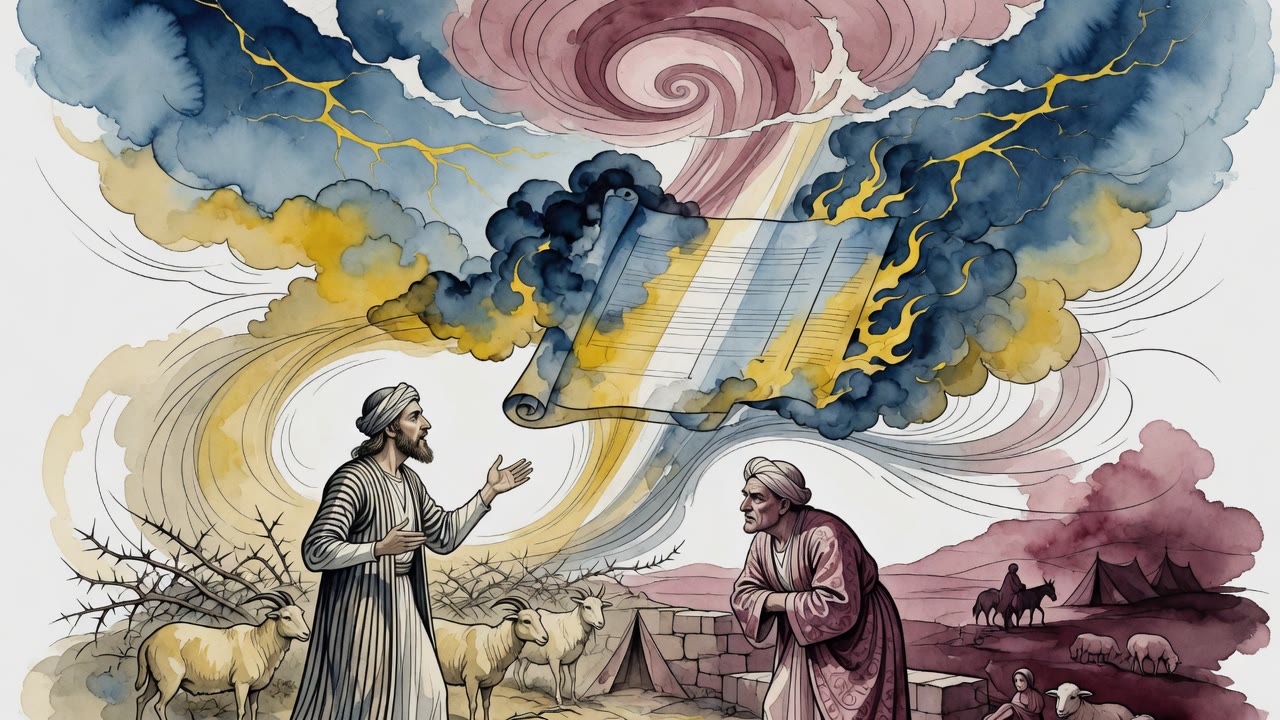
Jacob was still working for his keep when he said it. He and Laban sat over the terms of the flocks, speckled against solid, streaked against plain, and Laban had already moved the arrangement once and would move it again. Jacob laid down a rule to settle every count that came after. "My righteousness shall answer for me hereafter."

It was a good line and an honest one. A man who deals straight can let the ledger speak for him. Laban agreed to the terms. The flocks were divided. Nobody in the room thought about the words again.

Heaven kept them.

The Chest at the Ford

Twenty years later Jacob came back toward Canaan with two wives, two handmaids, eleven sons, one daughter, and a report from his own scouts that Esau was riding to meet him with four hundred armed men.

He worked through the night. He split the camp in two so that half might escape if the other half fell. He sent droves ahead as a gift, goats and ewes and milk camels and their colts, each drove spaced apart on the road so the size of the tribute would land on Esau slowly. He crossed his family over the ford of the Jabbok. He prayed.

Then he looked at Dinah.

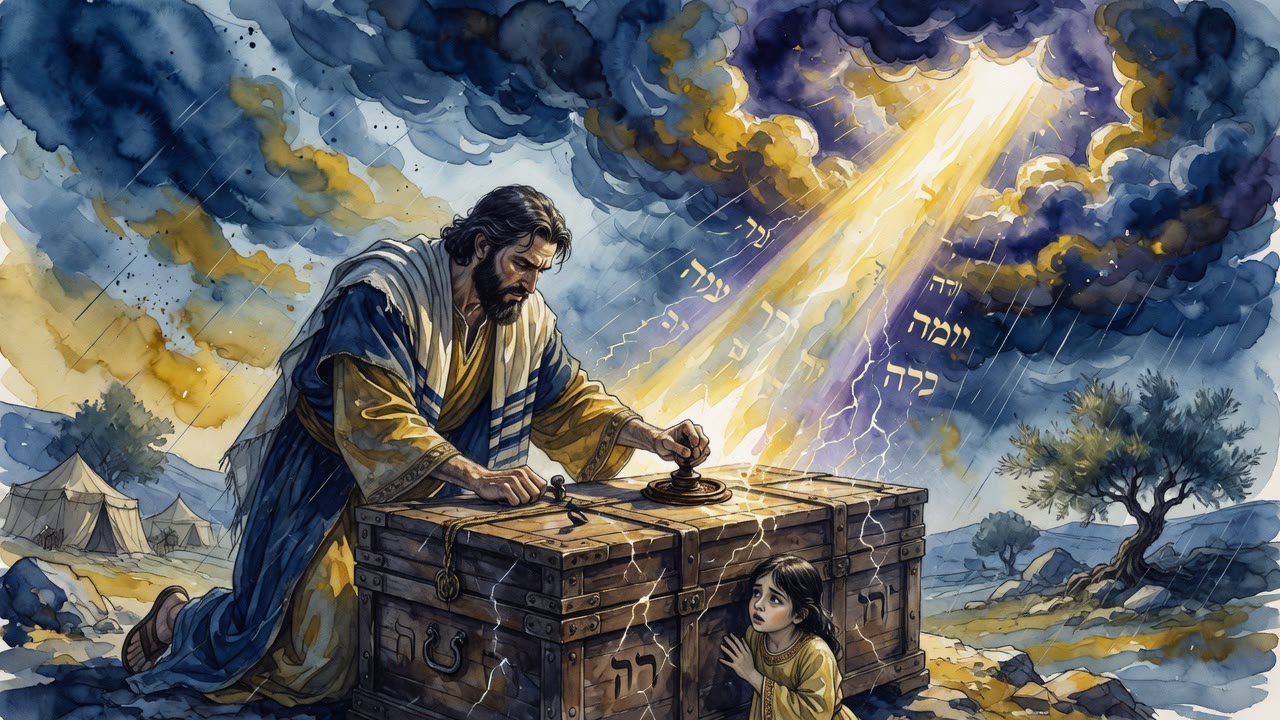
She was the only daughter in the camp, and she was beautiful, and Esau was a man who took what his eye settled on. A brother who arrives with four hundred swords does not ask twice. Jacob found a chest, put his daughter inside it, and shut the lid over her.

Esau came. The two men met on the road and embraced and wept and parted without a drop of blood between them. Then the lid came up and Dinah climbed out, and nothing at all had happened to her. By every reckoning Jacob knew how to make, he had been right.

The Answer From Above the Lid

God did not agree that nothing had happened.

"In this you have acted unkindly toward your brother."

The charge was not that Jacob had feared for his daughter. It was that he had settled his brother's whole future by himself, in the dark, with a lid. Esau was violent and Esau was crude, and Esau was not yet finished. A righteous wife might have turned him. Jacob had decided the case without hearing it and hidden the one person who could have argued the other side.

Then came the terms of the payment. Dinah would marry Job, a man neither circumcised nor a proselyte. "You refused to give her to one that is circumcised, and one that is uncircumcised will take her. You refused to give her to Esau in lawful wedlock, and now she will fall to a ravisher's illicit passion."

Two halves to the debt. The second half came due first.

The Dancing in the Streets of Shechem

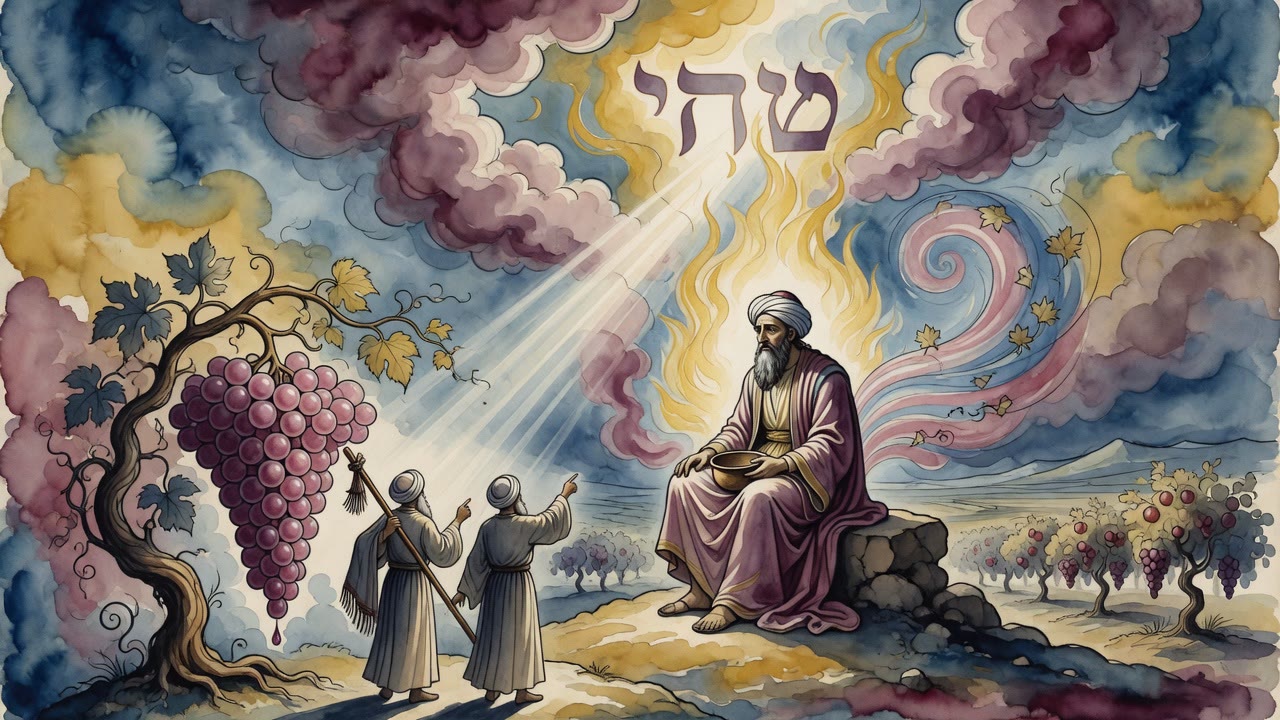
Jacob moved on and settled in front of the city of Shechem, in the land of Canaan. He bought a parcel of the field there from the children of Hamor for five shekels. He built a house, pitched his tent, and made booths for his cattle, and because of the booths he called the place Succoth. He stayed a year and six months.

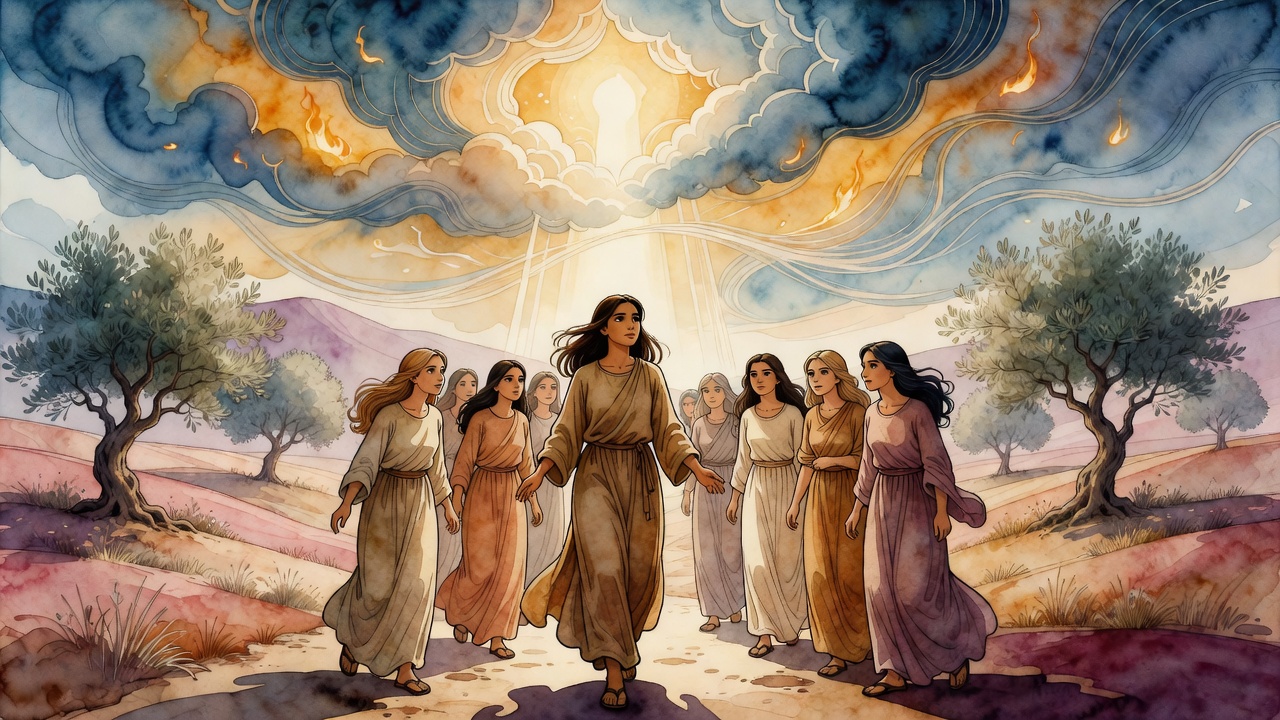
Then the women of the countryside went into the city to dance and rejoice with the daughters of Shechem. Rachel and Leah went out with their households to watch. Dinah went with them, and she sat among the young women of the city while the whole town crowded around to see the dancing, the great men of the place standing in front.

Shechem son of Hamor, prince of the land, was standing there too. He watched her for a while, then turned to the men beside him. "Whose daughter is that, sitting among the women? I do not know her in this city."

They told him. The daughter of Jacob the Hebrew, who has lived here a while now, and when word went out that the daughters of the land were going forth to rejoice she came with her mother to sit among them.

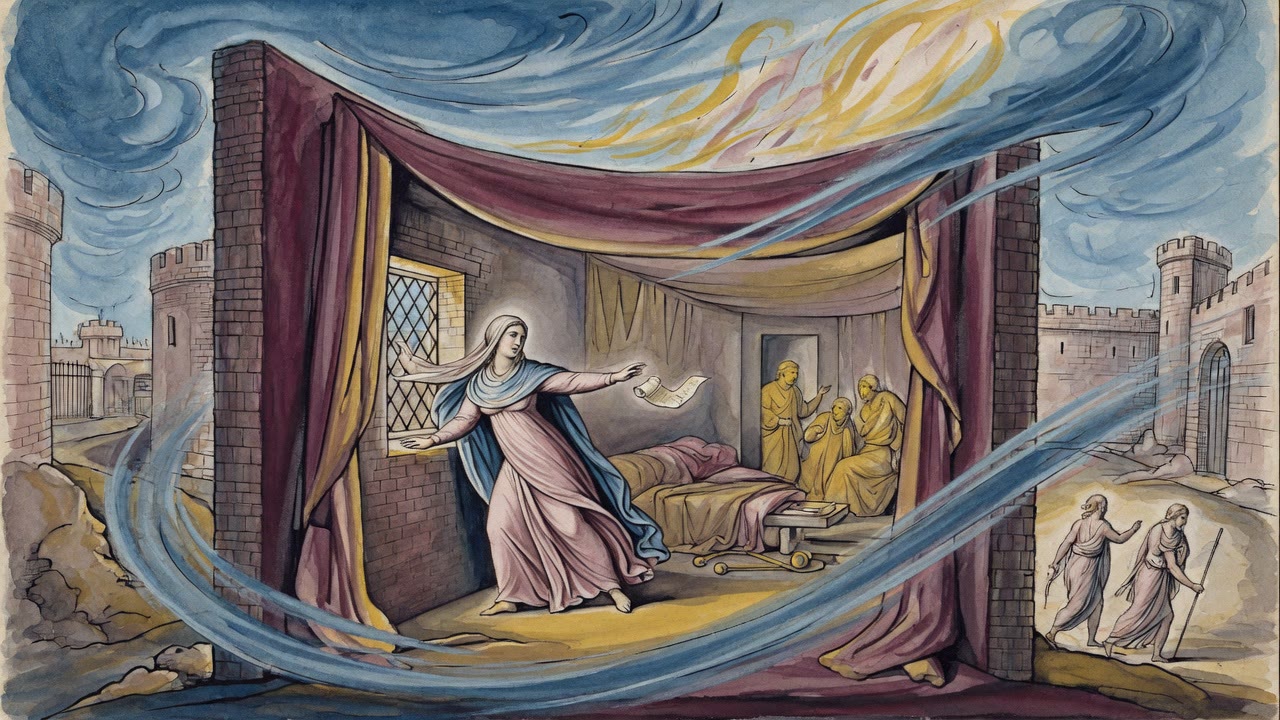
He looked at her until his soul fixed on her. Then he sent men, and they took her by force, and he brought her into his house and kept her there.

Twelve Servants at the Prince's Door

Word reached Jacob's tent while his sons were still out in the fields with the herds. He picked twelve of his servants and sent them into the city to bring his daughter home.

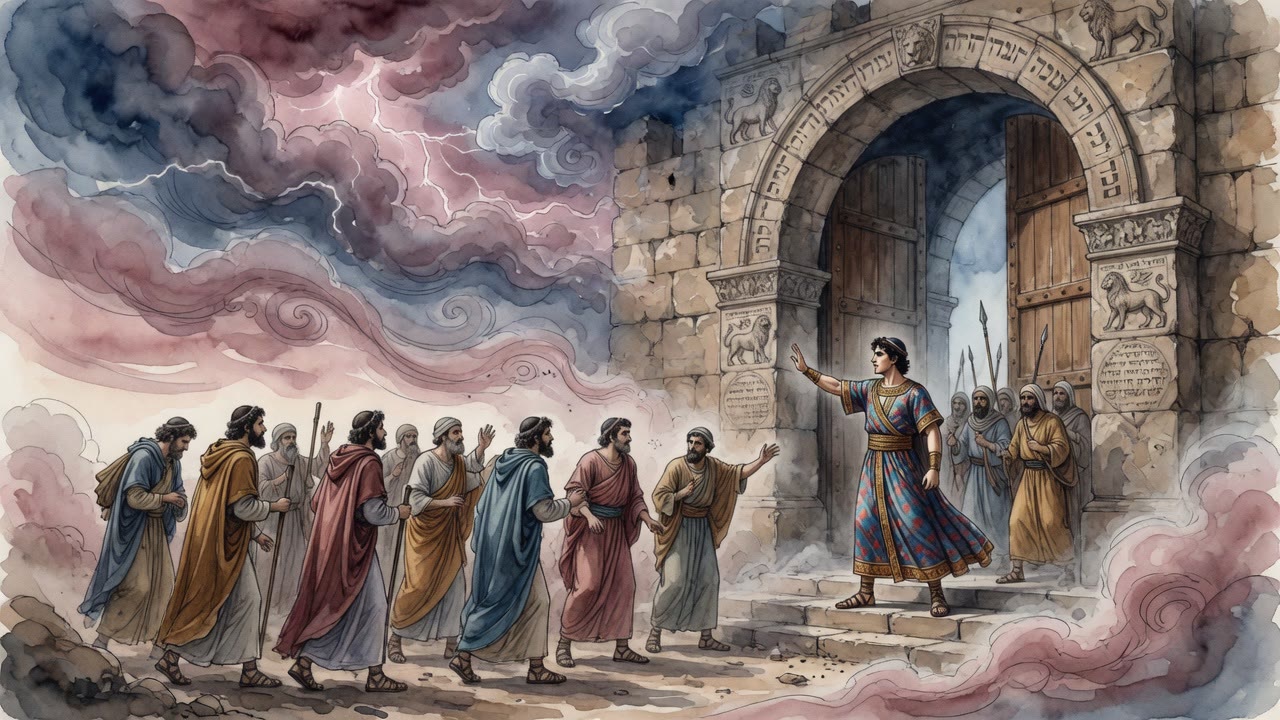
Shechem came out with his own men and drove them off the step. Then he walked back inside where they could still see him, sat down with Dinah, and kissed her and held her in front of them, so that they would have to carry the picture back to her father with their own mouths.

They carried it back. Jacob heard them out and said nothing.

He sent two of his servants' daughters into the prince's house to stay beside Dinah and care for her. It was the farthest his hand reached. Then he sat down in his tent to wait for his sons to come in from the field, and the righteousness he had named at Laban's table went on answering for him, exactly as he had asked it to.


← All myths
From the tradition

Sources

2 sources

The texts behind this telling. Some cards carry a translation of the source; others are our own retelling of it, and each card says which. Every card links out to the original.

Legends of the Jews 6:215Legends of the Jews

Retold in our words. Read the original at the link below.The Legends of the Jews by Louis Ginzberg (1909) · Public Domain

Jacob, our patriarch, knew that feeling all too well. But what if that misfortune wasn't just random chance? What if it was… a consequence?

See, according to some traditions, Jacob's troubles stemmed from a bit of overconfidence, a little too much faith in his own abilities. Remember his dealings with Laban? He boldly declared, "My righteousness shall answer for me hereafter" (Genesis 30:33). It's in Legends of the Jews, Ginzberg's masterful compilation of rabbinic lore, that we find this wasn't necessarily seen as a display of piety. Instead, it reads as a touch… arrogant.

Then there’s the story of Dinah. As Jacob prepared to reunite with his brother Esau after so many years, he took a precaution. Fearing Esau might desire Dinah as a wife – and perhaps feeling he would then be obligated to give her to him – Jacob hid her away in a chest. A protective act, surely?

In the story, God saw it differently. The divine rebuke is pretty stark: Jacob had been unkind to his brother. And the consequence? Dinah's fate would be… complicated. She would end up marrying Job – yes, that Job, the one from the famous book of suffering – who, in this telling, is described as neither circumcised nor a proselyte (a convert to Judaism).

Ouch.

"Thou didst refuse to give her to one that is circumcised, and one that is uncircumcised will take her." Jacob refused to give Dinah to Esau in lawful wedlock, and therefore she fell victim to the ravisher's illicit passion. This interpretation, as related in Legends of the Jews, paints a harsh picture. Jacob's attempt to control the situation, to manipulate events for what he thought was the best outcome, backfired spectacularly.

Sometimes, our attempts to orchestrate our lives, to shield ourselves and our loved ones from potential harm, can inadvertently lead to the very thing we were trying to avoid. It's a challenging thought – that even with the best intentions, our actions can have unforeseen and even painful consequences.

So, what do we take away from Jacob's story? Perhaps it’s a call for humility, a reminder that we're not always the best judge of what's right, and that sometimes, the most carefully laid plans can go awry. It's a call to trust in something larger than ourselves, even when – especially when – we can't see the path ahead. And maybe, just maybe, to be a little less certain that our own righteousness will always see us through.

Full source
Jasher 33Book of Jasher

Retold in our words. Read the original at the link below.The Book of Jasher, J. H. Parry edition (1887) · Public Domain

Jacob, after leaving his previous location, arrives in the land of Shalem, near the city of Shechem – a place in Canaan. He buys a piece of land for five shekels (a type of ancient currency), builds a house, sets up his tent, and makes booths for his livestock. He even names the place Succoth (סֻכּוֹת), meaning "booths" in Hebrew. Jacob and his family settle in for a year and a half.

One day, the women of the land head to Shechem to celebrate with the local girls. Rachel and Leah, Jacob's wives, and their families decide to join them. Their daughter, Dinah, goes along, too. She ends up catching the eye of Shechem, the son of Hamor, the prince of the land.

That Shechem sees Dinah sitting with her mother among the daughters of the city, and he's immediately smitten. He asks his friends who she is, and they tell him she's the daughter of Jacob the Hebrew. in the story, Shechem is so captivated by Dinah that he sends for her, takes her by force, and, well, "humbles her." The text is pretty direct. Afterward, though, he falls deeply in love with her and keeps her in his house.

Can you imagine how Jacob must have felt when he heard about this? The text says he sends twelve servants to retrieve Dinah from Shechem's house, but Shechem and his men drive them away. The servants return to Jacob with the news. Jacob, knowing what has happened, remains silent, waiting for his sons to return from tending the cattle.

Before the sons arrive, Jacob sends two maidservants to care for Dinah in Shechem’s house. Meanwhile, Shechem sends three friends to his father, Hamor, to ask him to get Dinah for him as a wife. Hamor questions his son's desire for a Hebrew woman, but Shechem insists, saying, "Her only must thou get for me, for she is delightful in my sight." Hamor, being a devoted father, agrees to help.

Hamor goes to Jacob to discuss the matter, but before he can reach him, Jacob’s sons arrive, furious about what Shechem has done to their sister. They see it as a grave violation, reminding their father that the Lord God commanded Noah and his children against robbery and adultery. They argue that Shechem deserves death for his actions.

Just then, Hamor arrives and proposes a deal: give Dinah to Shechem in marriage, and they'll intermarry, becoming one people living together in the land. He says, "Our land is very extensive, so dwell ye and trade therein and get possessions in it, and do therein as you desire, and no one shall prevent you by saying a word to you." Shechem himself then appears, pleading for Dinah and offering any dowry or gift they desire.

Simeon and Levi, Dinah's brothers, respond deceptively. They say they need to consult their father, Isaac, before agreeing to anything, as they can’t act without his consent, as he knows the ways of their father, Abraham. This is all a ruse, of course, as they’re already plotting revenge.

After Shechem and Hamor leave, Jacob's sons discuss their options. They believe death is due to Shechem and his city because they violated God's commandments and defiled their sister. Simeon suggests a cunning plan: they will tell Shechem and Hamor that they can only marry Dinah if every male in their city gets circumcised. If they refuse, the brothers will simply take Dinah back. But if they agree, then while they're recovering from the procedure, Simeon and Levi will attack the city and kill every male.

But that's the world they lived in, or at least as the Book of Jasher portrays it.

The next morning, Shechem and Hamor return to hear Jacob's sons' answer. The brothers deceitfully tell them that Isaac agreed to the marriage, but only on the condition that every male in the city be circumcised, as Abraham commanded. The brothers emphasize that they can’t give their sister to an uncircumcised man, as it would be a disgrace. If they agree, they can intermarry and become one people. If not, they will take Dinah and leave.

Shechem and Hamor, blinded by Shechem's love for Dinah, agree to the condition. They rush back to the city and convince all the men to undergo circumcision, promising them that they will become one people with Jacob's family and that their land will prosper.

The next day, Shechem and Hamor gather all the men of the city, and Jacob's sons circumcise every male, including Shechem and Hamor themselves, and Shechem's five brothers. The deed is done. The text then concludes by saying that "this thing was from the Lord against the city of Shechem, and from the Lord was Simeon's counsel in this matter, in order that the Lord might deliver the city of Shechem into the hands of Jacob's two sons."

Wow.

What do we make of a story like this? It's a complex narrative filled with love, lust, deception, and violence. It raises questions about honor, revenge, and the lengths people will go to for family and love. It's a reminder that the stories we inherit are rarely simple, and often challenge us to confront difficult moral questions. And perhaps, it’s a reminder that human nature, in all its complexity, hasn't changed all that much over the millennia.

Full source