Parshat Vayishlach5 min read

Jacob Roused the Sleeping Dog Called Esau

Jacob sent messengers toward Seir though God had already pledged safety. The bribe, the split camps, and a trampled spring followed that choice.

Curated by Arthur · Told by Maggid ·
Table of Contents
  1. A Quarrel That Was Not His to Wake
  2. Two Camps and a Mother in the Math
  3. The Bribe That Bowed a Warrior
  4. The Spring Trampled by Too Many Mouths

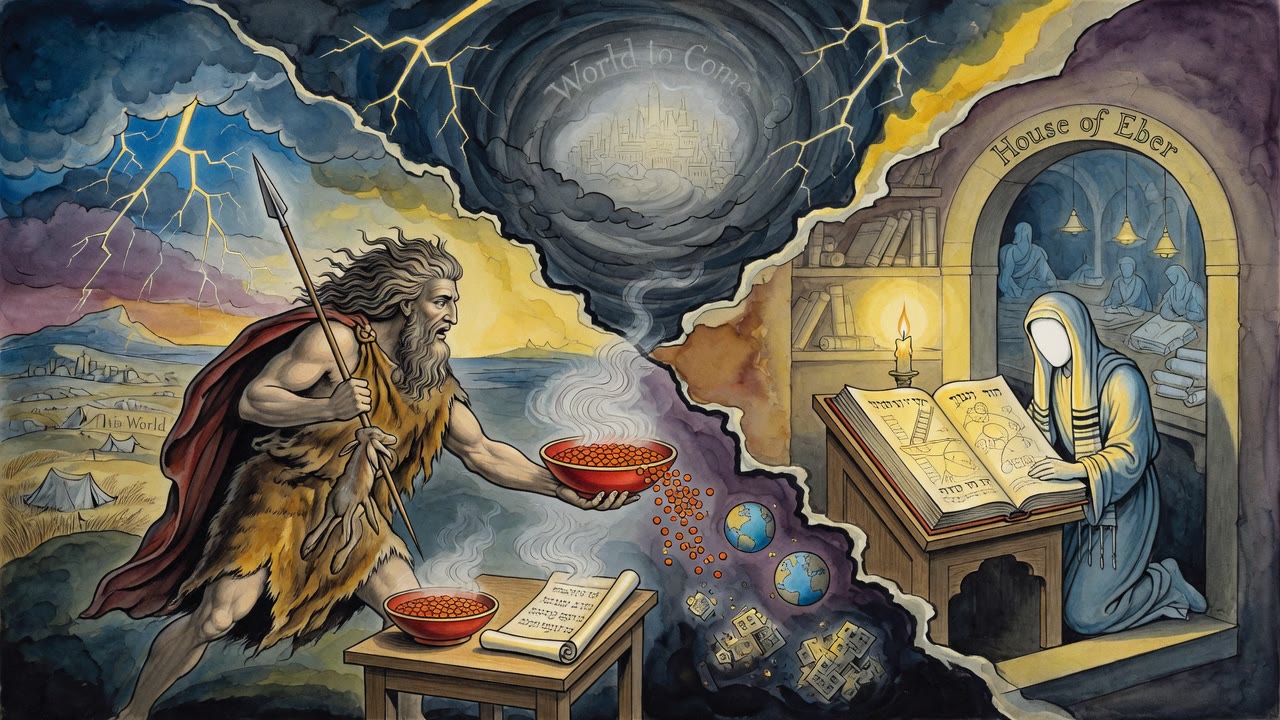
Jacob stood on the near side of the Jabbok with flocks enough to darken a valley and a brother somewhere in Seir whose last recorded wish had been murder. God had already said, "Behold, I am with you." God had already said, "I will bring you back." Every demand Jacob once whispered at Bethel had been met. He still sent messengers ahead to Esau (Genesis 32:4).
Jacob Roused the Sleeping Dog Called Esau Click for full size

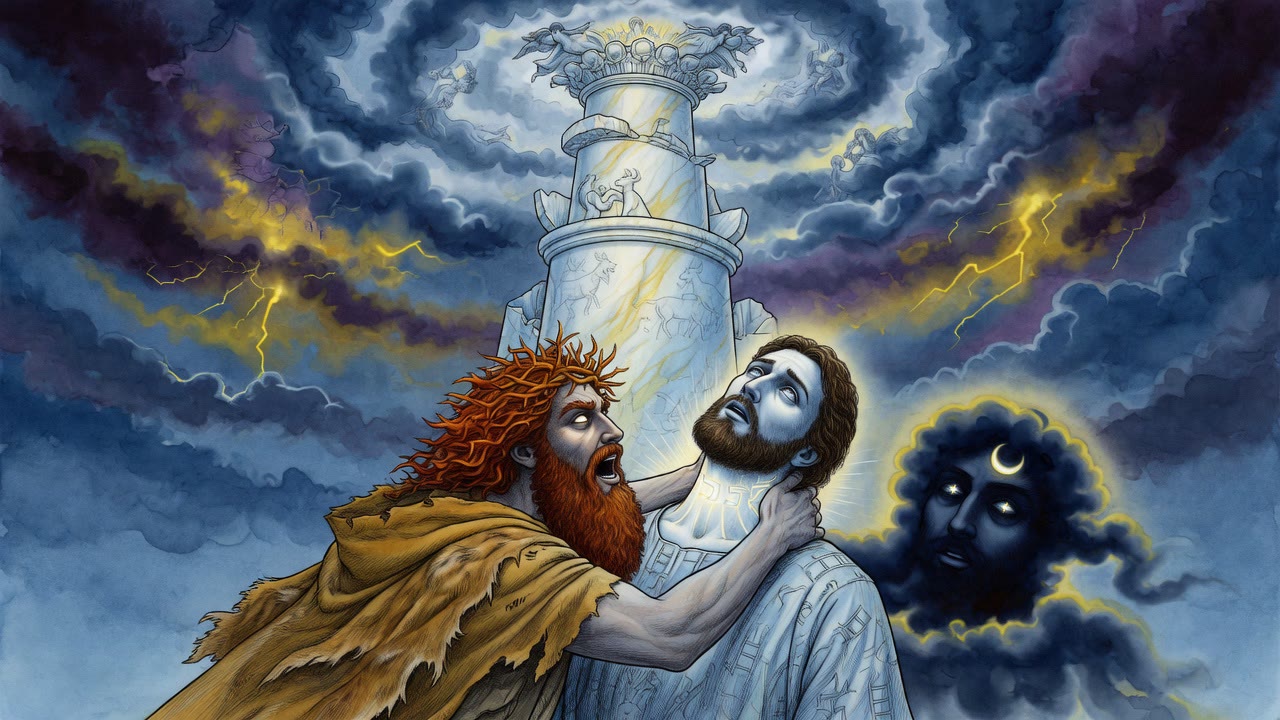
The midrash calls that choice grabbing a sleeping dog by the ears.

A Quarrel That Was Not His to Wake

Proverbs warns the passer-by who meddles in a fight that is not his own. The sages set Jacob in that verse without flinching. Esau had not been charging the road. Time and distance had done quiet work. Jacob, whole and rich, reached toward the old heat and stirred it. Rabbi Hanina heard heaven's earlier pledges as almost too much kindness for flesh to bear. Happy the one born of woman who hears such promises. Jacob heard them and still prepared for war with gifts, camps, and fear.

He asked to return "in peace." He was answered. He asked for bread and covering. He was covered. The doubled words of divine promise, the midrash says, carried joy on both sides, God's and Jacob's. Against that backdrop the embassy to Seir looks like nervous hands undoing a knot heaven already loosed.

The messengers went anyway. Some errands are born from memory of a brother's voice promising death, not from a fresh threat on the path. Trauma can invent a war and then call the invention prudence.

Two Camps and a Mother in the Math

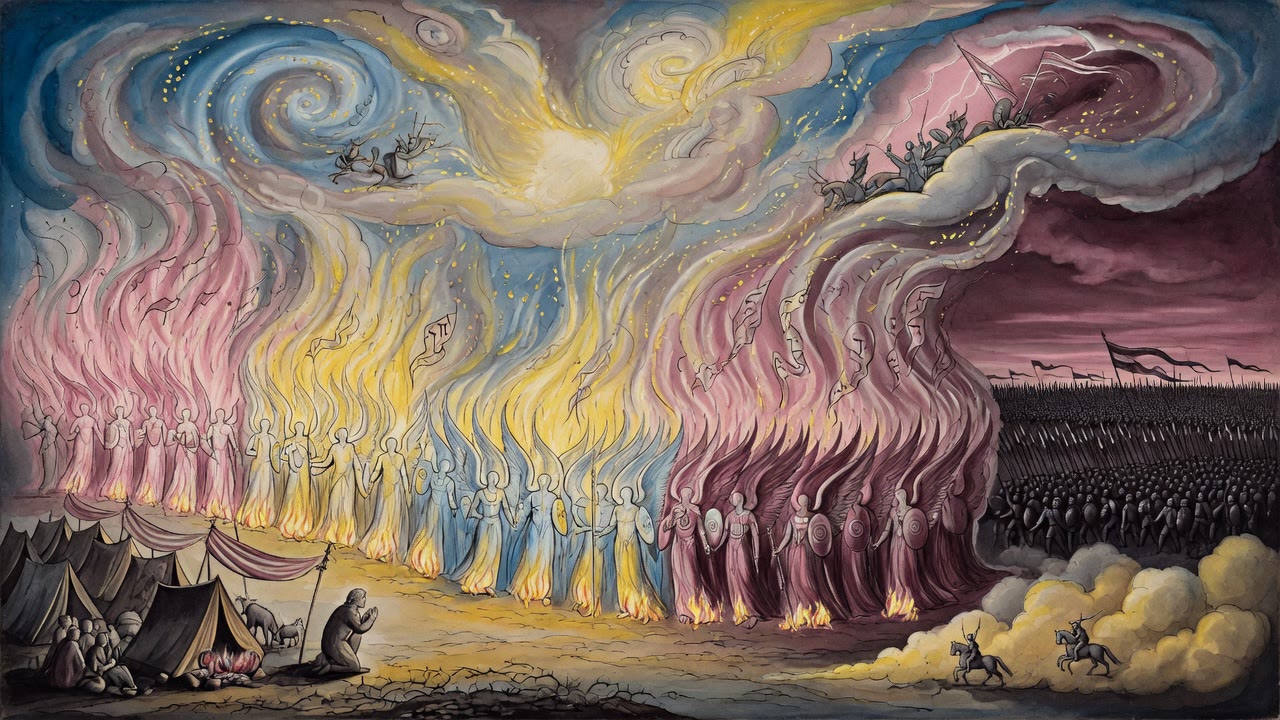
Word came back hard. Esau was coming, and four hundred men with him. Jacob split the people into two camps so that if one fell the other might escape (Genesis 32:8). The fear that climbed into his prayer was not abstract. He named it. Esau might strike mother with children. The whole household could become one blow, a single cruel efficiency.

That is why he arranged the caravans with such careful triage, the least loved more exposed, Rachel and Joseph furthest back. Love and calculation shared the same road. A man who trusts a promise can still count spears in the dust cloud to the south. The midrash does not mock the fear. It questions the awakening. The dog was sleeping. Jacob shook the collar, then screamed when it barked.

Related midrash keeps that maternal image sharp. The nightmare is not only Jacob's own death. It is the sight of mothers and children falling together, the line of the future cut in one hour.

The Bribe That Bowed a Warrior

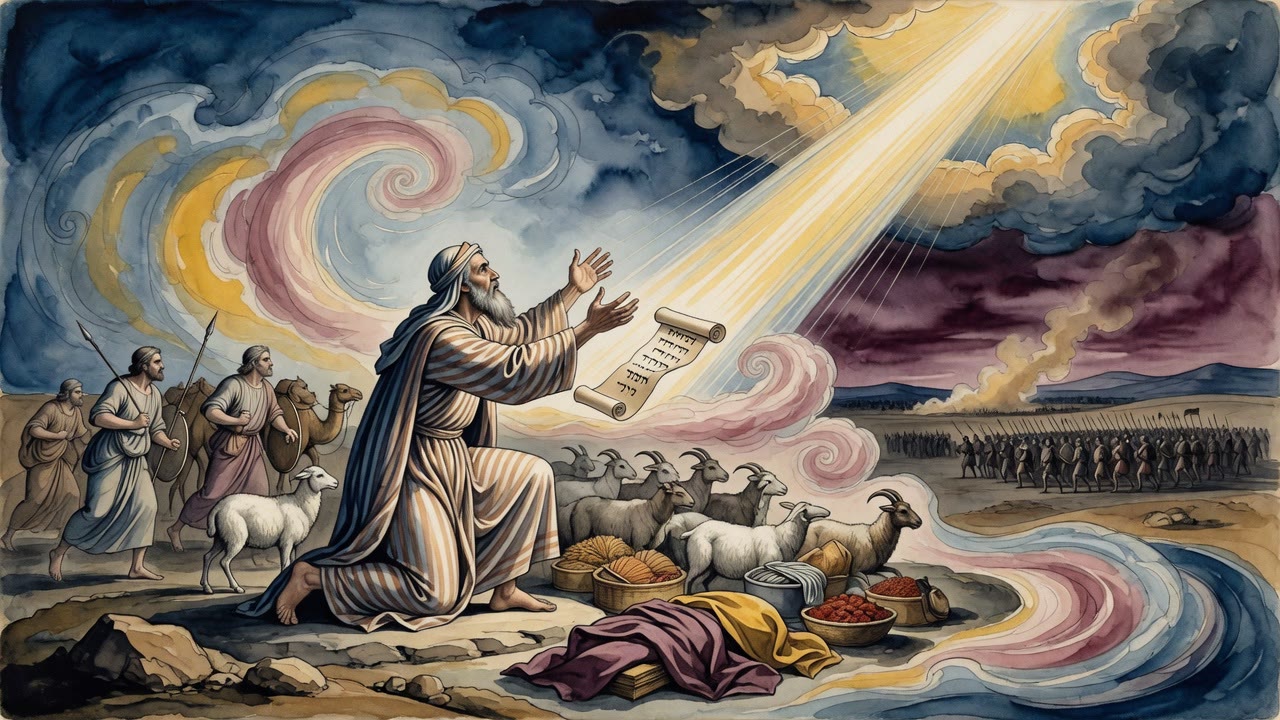
Then came the gift so large it reads like a second flock. Goats, ewes, camels, bulls, donkeys, wave after wave, each servant coached to say the animals were Jacob's tribute to my lord Esau. The midrash treats the bribe as power, not shame. A present in secret pacifies anger. Jacob had learned the tool in Laban's house and used it without apology on the road home.

He came whole, the verse had said, yet not unworried. Wholeness of body is not wholeness of nerve. The man who would wrestle until dawn still paid in livestock for a daylight meeting. When Esau finally ran to embrace him, the midrash lets both truths stand. Tears can follow a road paved with goats. Reconciliation can arrive on the back of strategy.

Some later readers hear only the kiss. The gift story keeps the older cunning visible. Jacob does not arrive empty-handed into his brother's arms. He arrives as a strategist who has already spent a fortune to bend the hour, and the midrash will not call that fortune wasted even while it rebukes the embassy that made it necessary.

The Spring Trampled by Too Many Mouths

Another image sticks to the embassy. A spring of clear water, small and sufficient for a traveler, becomes a trampled mire when the whole camp presses in. Jacob sending troop after troop of messengers and droves is that spring ruined by volume. One quiet return might have kept the water clean. The crowd of tactics muddied what heaven had already made drinkable.

Esau's four hundred still came. The embrace still happened. The midrash's rebuke remains a scar on the victory. You did not need to seize the dog's ears. You did it. The mud on the banks is yours. Craft remains useful: the gift that softens a face. Caution remains wiser: do not invent a war out of an old grudge when the road was open and the promise still warm.

Years later, when Israel remembers how to approach a dangerous brother-nation, this scene teaches both tools without letting either cancel the other. Pay if you must. Do not wake what heaven has put to sleep if you can help it. Jacob did both, and the midrash records the cost in mud and fear and livestock before it records the kiss.

The kiss on the road does not cancel the midrash's earlier charge. A man can embrace his brother and still have been wrong to summon him. The story holds craft, fear, promise, and rebuke in one camp without forcing a single clean moral that erases the mud of the spring.


← All myths
From the tradition

Sources

4 sources

The texts behind this telling. Some cards carry a translation of the source; others are our own retelling of it, and each card says which. Every card links out to the original.

Midrash Tanchuma Buber, Vayishlach 2:1Midrash Tanchuma Buber, Vayishlach

Translation of the source text.Midrash Tanchuma (Buber), Public Domain, on Sefaria · CC-BY-SA

"And Jacob sent, etc." (Genesis 32:4). This is what Scripture says: "One who seizes a dog by the ears is a passer-by who meddles in a quarrel that is not his own" (Proverbs 26:17). Who is this one? This is Jacob. When he went out from his father's house, what is written? "And Jacob vowed a vow" (Genesis 28:20). What did he say? "If God will be with me" (ibid.). Thus did the Holy One, blessed be He, answer him: "And behold, I am with you" (ibid. 28:15).

Our Rabbis said: He answered him concerning everything except sustenance. Rabbi Oshaya said: He answered him even concerning sustenance, as it is said: "For I will not forsake you until I have done that which I have spoken to you" (Genesis 28:15). Why did he say twice "until" "that which"? It was, as it were, a hard matter. Rabbi Oshaya said: The Holy One, blessed be He, said to him: Happy am I and happy are you when I do this thing for you.

Again he demanded: "And I return in peace" (ibid. 28:21). He said to him: "And I will bring you back" (ibid. 28:15). Rabbi Hanina son of Rabbi Isaac said: Happy is one born of woman who has heard such a thing from his Creator. See, everything that he demanded from his Creator, He promised him. And yet, with all these promises, he sends and says: "Thus shall you say to my lord, to Esau" (Genesis 32:5). Therefore it is well said: "One who seizes a dog by the ears", when? When Jacob sent to Esau.

Full source
Midrash Tanchuma Buber, Vayishlach 11:1Midrash Tanchuma Buber, Vayishlach

Translation of the source text.Midrash Tanchuma (Buber), Public Domain, on Sefaria · CC-BY-SA

"And Jacob came whole" (Genesis 33:18). And was he then lacking anything? Indeed, at the moment when they said to him, "And moreover he is coming to meet you, and four hundred men are with him" (Genesis 32:7), he arose and prepared a gift. He began by giving she-goats, for they are tender; afterward he-goats, ewes, rams, and thirty milch camels with their young. [Rabbi Levi said: If I were to go around among all the tents of Kedar, you would not find thirty milch camels, them and their young.] See the wealth of Jacob! Again he gave forty cows and ten bulls. Rabbi Isaac said: This was apart from precious stones and pearls, as it is stated, "And he took from that which came to his hand" (Genesis 32:14), things that are taken up in the hand: these are precious stones and pearls. Rabbi Judah son of Rabbi Shalom said: All twelve months that he spent with him, thus he would honor him every day, for so said Jacob, "For the bribe blinds the eyes of the wise" (Deuteronomy 16:19), how much more so the wicked! Rather, I will honor him so that he will not touch me.

Full source
Midrash Tanchuma Buber, Vayishlach 1:1Midrash Tanchuma Buber, Vayishlach

Translation of the source text.Midrash Tanchuma (Buber), Public Domain, on Sefaria · CC-BY-SA

(Gen. 32:4:) "And Jacob sent messengers." This is what Scripture says (Prov. 25:26): "A trampled spring and a corrupted source, a righteous one tottering before a wicked one." Rabbi Yehudah son of Rabbi Simon said: Like a trampled spring and like a corrupted source, so it is when a righteous one totters before a wicked one.

Another interpretation: It is possible for a spring to be trampled and for a source to be corrupted; it is possible for a righteous one to totter before a wicked one. And who is this? This is Jacob, when he came from Paddan-aram. What does he do? He sends and says to Esau (Gen. 32:5): "Thus you shall say to my lord Esau," etc. Hence (Gen. 32:4): "And Jacob sent messengers," etc.

Full source
Targum Pseudo-Jonathan on Genesis 32:12Targum Pseudo-Jonathan on Genesis

Retold in our words. Read the original at the link below.The Targum of Jonathan ben Uzziel, trans. J. W. Etheridge, London, 1862 · Public Domain

"Save me from the hand of my brother, from the hand of Esau, for I fear him." Jacob's plea in Targum Pseudo-Jonathan (Genesis 32:12) names two things most ancient prayers leave implicit: the specific enemy and the specific fear.

Jacob's fear is not that Esau hates him, that much is obvious. His fear is more subtle and more terrible: "He has been mindful of the glory of his father." Esau has been carrying, for twenty years, the weight of his father Isaac's honor. Every day Esau has thought about what he owes the old man. And the Targum names the unspeakable possibility that follows: "lest he come and smite the mother with the children."

Why this phrase matters

The phrase "mother upon children" (em al banim) is the same phrase the Torah uses later to forbid taking a mother bird with her chicks (Deuteronomy 22:6). Jacob fears Esau will violate the most basic decency the Torah would one day legislate. He fears annihilation root and branch.

The takeaway: real prayer names the real fear. Jacob does not pretty up his terror for the Holy One. He lays it down plainly and waits to be answered.

Full source