David Walked Jacob's Rope That Binds God's Portion
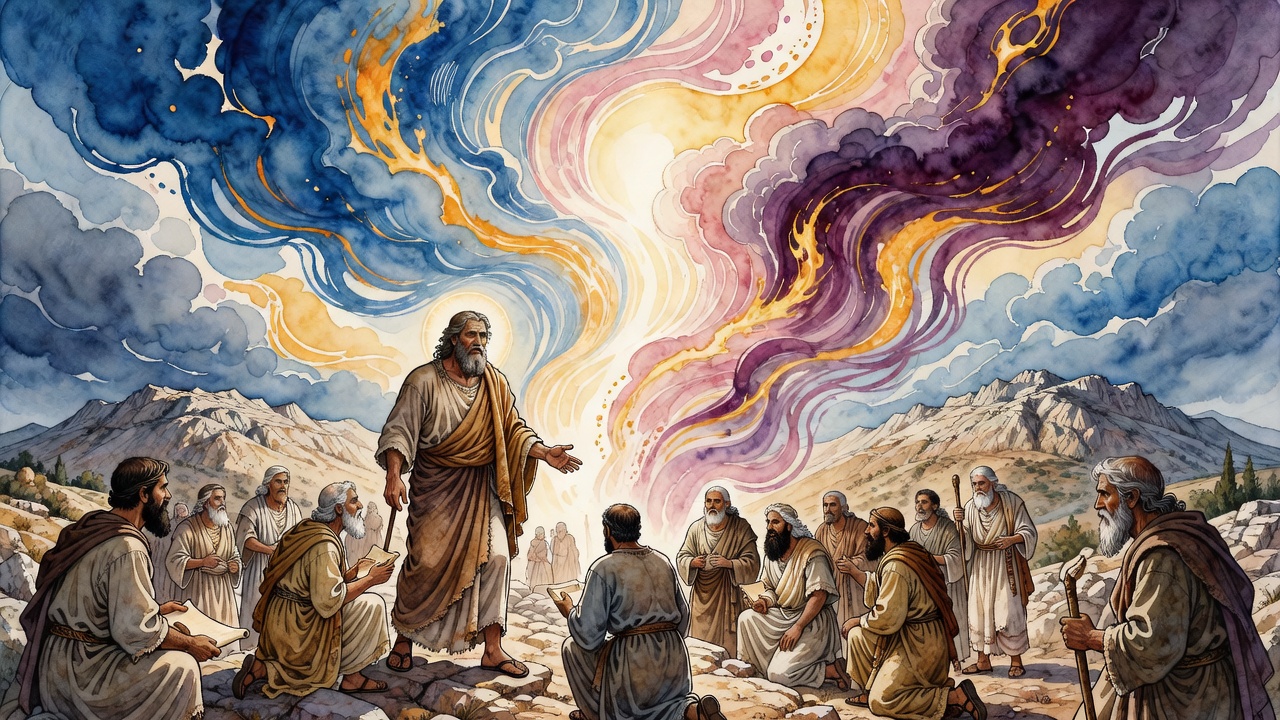
The cedar house was finished. David still would not lie down. The hill God wanted had no name yet, and no prophet would give it one.
Table of Contents
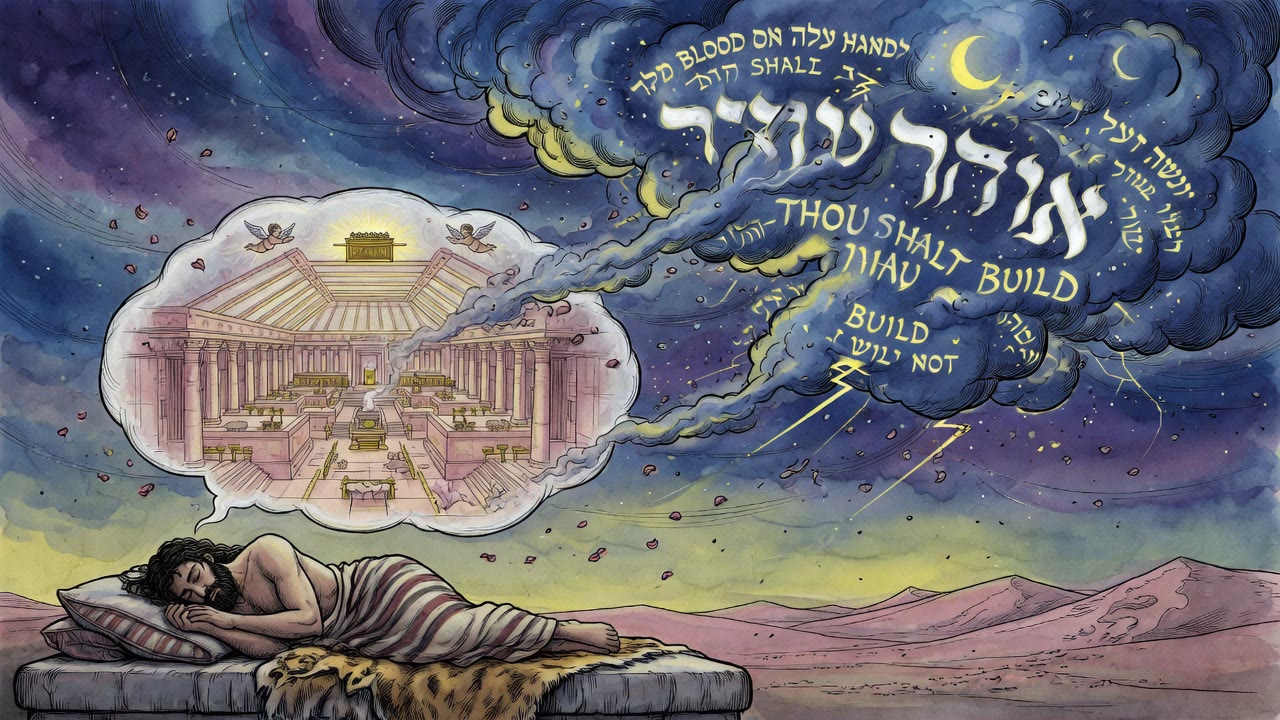
The cedar house was finished, and the bed was made, and David would not go into either. He swore it standing, with witnesses, the crown already on him. He would not give sleep to his eyes or let his eyelids close until he found a place for the Lord, a resting place for the Mighty One of Jacob.
 Click for full size
Kings sleep. That is most of what the office is for when the wars are over. David had taken the city. He had buried the men who wanted him dead. He had brought the Ark up with shouting and horns. Then he stood in the middle of the noise and took his own bed away from himself.
He did not know the hill. That was the whole trouble.
Heaven Would Not Name It First
God had promised a place. The promise named no ridge, no valley, no town, no tribe. Seek out His dwelling and come there. A man looks first. A prophet tells him afterward whether he has found it. Nobody was going to hand a king a map.
David walked. Through Ephrathah. Out in the fields of the wood. He had spent his boyhood on those hills with sheep, and he knew the look of the country, and still the ground would not identify itself.
The Rope Was a Man
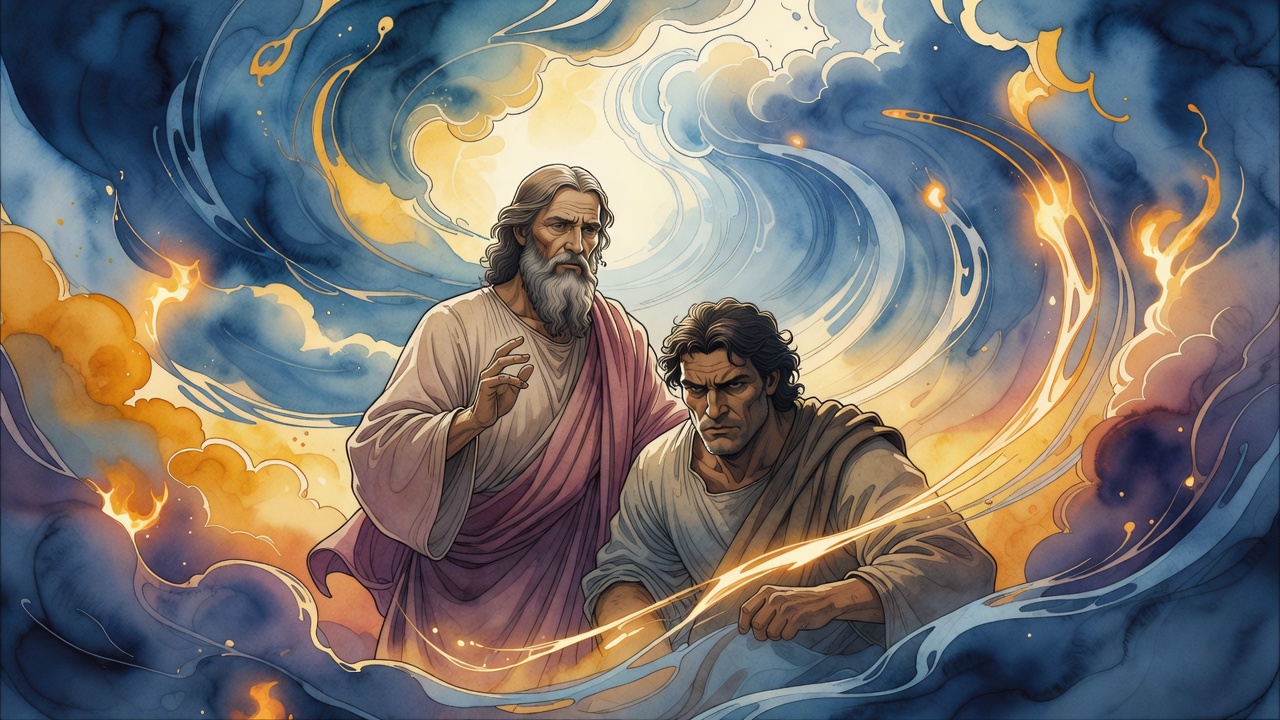
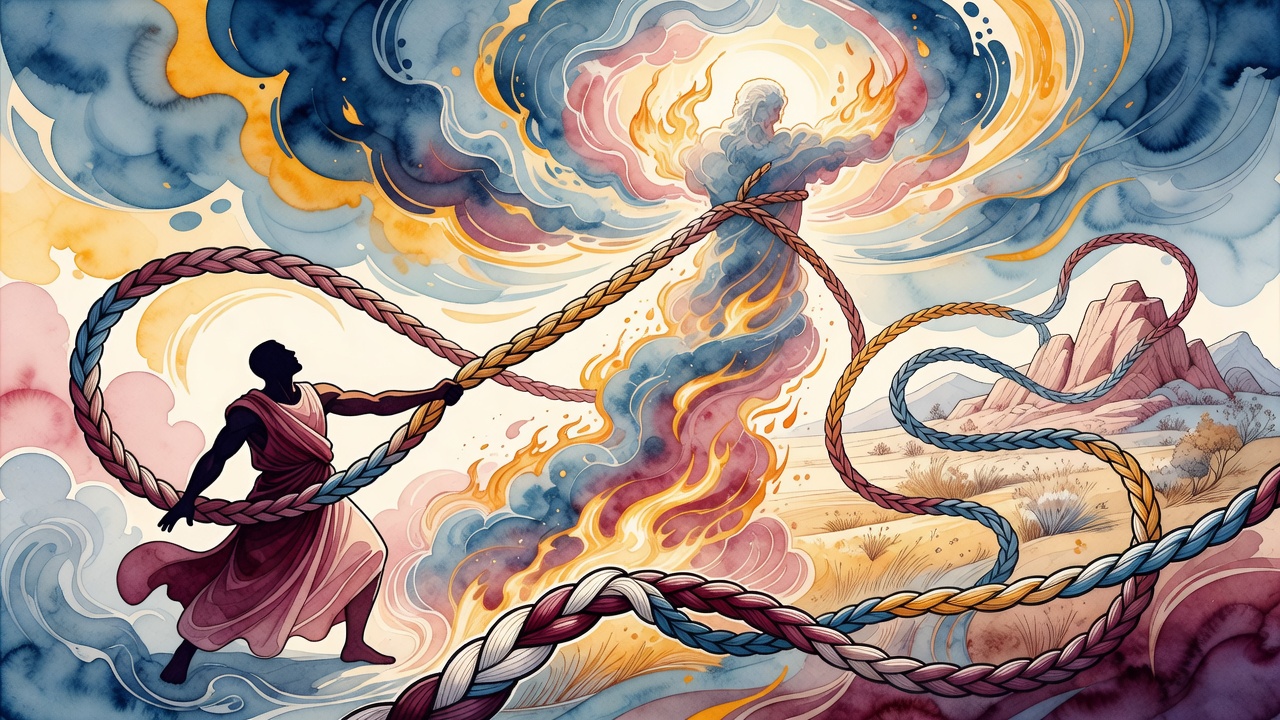
There was a rope running through the world for anyone who knew how to look. When God parcelled out the nations He kept one portion for Himself, and the measuring line He used was a person. Abraham was one strand of it, walking the ridge road with an unnamed mountain somewhere ahead of him. Isaac was the second, digging wells, being driven off them, digging again. Jacob was the third. A rope of three strands does not snap easily.
The Hebrew is chevel (חבל). Rope. Also portion. Also the surveyor's line that falls across a plot and says this much is yours. David had already sung it. The lines have fallen for me in pleasant places. He had sung it before he knew he would have to walk the line with his own feet.
The rope binds the portion to whoever stretched it, and this portion belonged to God. David was only the latest man on the rope. He followed it the way a shepherd follows a stray, through the same hills, looking for a patch of dirt that was already claimed and would not say so.
He Counted What Was Not His
Then he numbered the people.
He sent Joab out to walk the whole country and bring back a figure. Joab argued with him and lost. Nine months and twenty days later the number came in. Eight hundred thousand men who could draw a sword in Israel. Five hundred thousand in Judah. David heard the total and his own heart hit him in the chest.
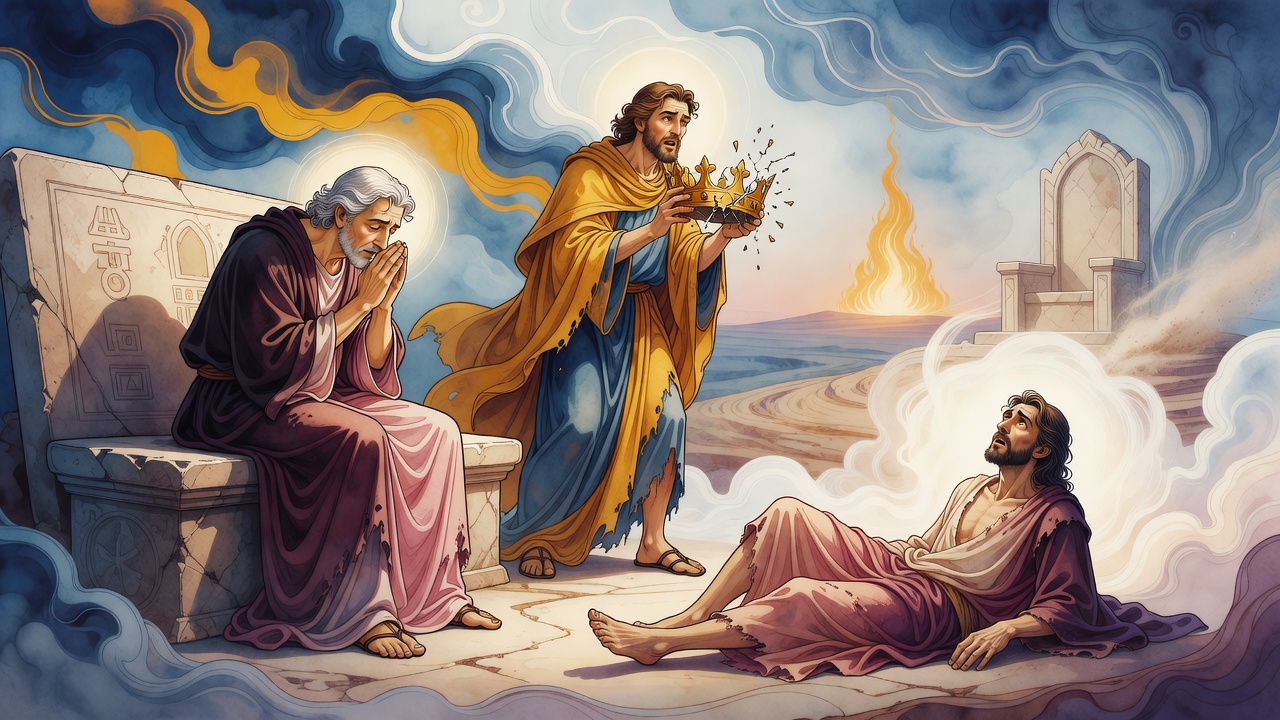
He had counted what was not his to count. The people were God's. The rope was God's. He had put a number on a flock as if he owned it.
Gad the prophet came in the morning with three choices. Famine for years. Flight before enemies for months. Three days of plague. "Let me fall into the hand of God," David said, "and not into the hand of men."
Seventy thousand died between Dan and Beersheba before the plague was called off.
The Sword Stopped Over Wheat
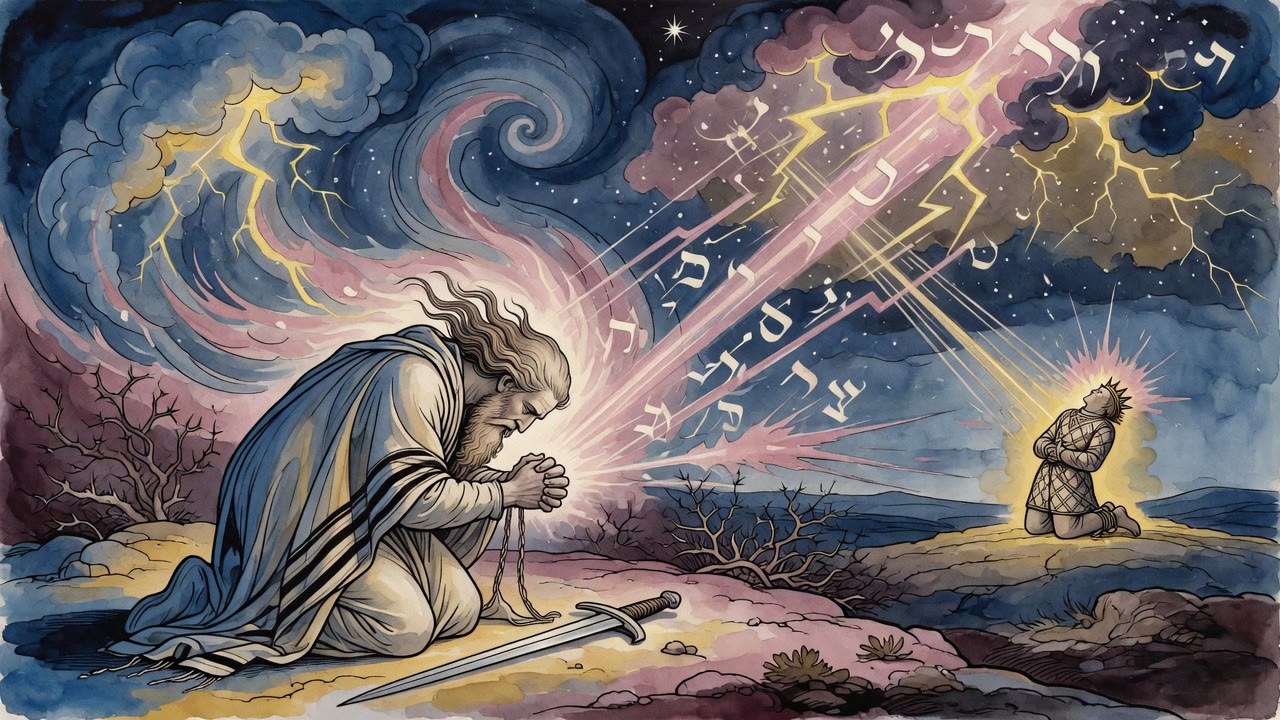
The angel came on toward Jerusalem with his hand still out. God said enough. The hand stopped.
It stopped over a threshing floor on the ridge above the city, a flat circle of packed rock where a Jebusite named Araunah was beating out wheat with his four sons. David looked up. A drawn sword hung above the roofs of his own capital. He went down on his face.
"I am the one who sinned," he said. "I am the one who did wrong. These are sheep. What have they done? Let your hand be against me and against my father's house."
Gad reached him that same day, out of breath, with the sentence David had waited half his life to hear. Go up. Build an altar to the Lord on the threshing floor of Araunah the Jebusite.
He had walked the whole length of the rope. It ended here, on a farmer's stone floor, on the worst morning of his reign.
Fifty Shekels and a Fire of Farm Tools
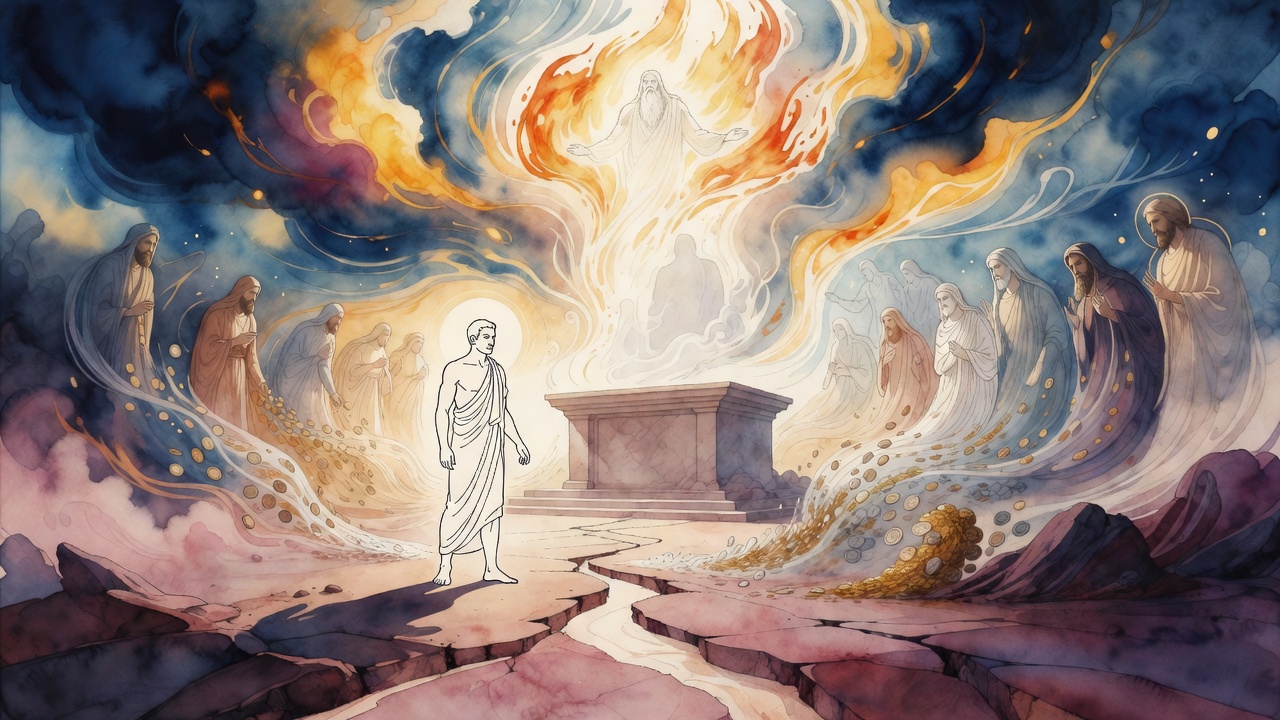
Araunah saw the king coming up the hill and bowed with his face to the ground and tried to give the place away. Take it. Take the oxen for the offering. Take the threshing sledges for firewood, take the yokes, take the wheat. All of it, free.
"No," David said. "I will buy it from you for a price. I will not bring the Lord my God an offering that cost me nothing."
He weighed out fifty shekels of silver into the hands of a Jebusite farmer. Then he broke up the man's threshing sledges and stacked them and lit them and roasted an ox on the fire of the tools that had worked that floor.
The plague stopped.
The words that rejoice the heart had sat in him for years, older and better the longer he carried them, the way wine deepens in a clay jar and is ruined in gold. He had not seized a palace site. He had paid for a floor where wheat was beaten. A humble vessel. That was what could hold the thing he had been hunting.
Years later his son Solomon laid the foundations of a house on that same rock on Mount Moriah, on the spot where the sword had halted, on the ground a shepherd boy had been walking toward since before he knew there was anything to find.
← All myths