Jericho Fell on Shabbat by Heaven's Own Design
Six days of silent circuits, then seven on the seventh. The wall falls on Shabbat, and one kept Sabbath spans all of time.
Table of Contents
 Click for full size
Dust Around a Closed City
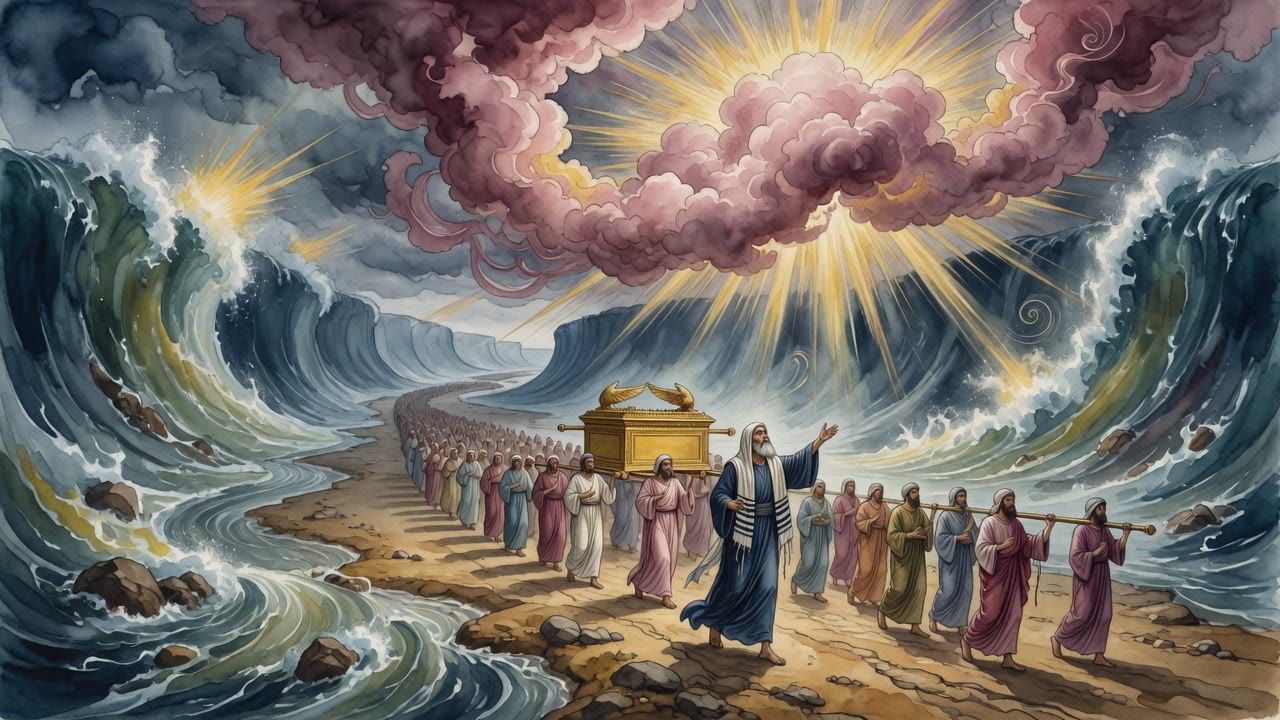
Joshua walked the circuit with a nation that did not shout. Jericho's walls stood sealed. For six days Israel marched once around the city, the ark ahead, priests with horns, feet measuring stone that would not yet fall. On the seventh day they rose early and wound the city seven times (Joshua 6:3-4).
Soldiers felt the strangeness in their calves. War usually means rush and fire. This war meant silence, counting, and a seventh-day climax no general would invent.
Somewhere in that seven-day span, a Shabbat had to fall. No stretch of seven days is free of one. The city was appointed to fall on holy time.
Obligatory War Does Not Wait
The sages drew a line in the laws of siege. Ordinarily a campaign against a gentile city may not begin within three days of Shabbat, so soldiers are not yanked into desecration the moment battle joins. That rule governs optional war, expansion chosen by kings.
Obligatory war, the conquest God commanded for the Land, follows another rule. It may be pressed even on Shabbat. Jericho is the proof. The phrase "until it falls" is read as a command to press the siege until the city falls, even if the day of falling is the seventh day.
Sacred conquest does not pause for the calendar. The calendar is bent around the vow.
One Forced Lapse Never Licenses Two
Elsewhere the sages guard Shabbat with a different hardness. The day is "a Sabbath of complete rest," so Israel adds a fence of time, beginning early and ending late. Rabbi Yehudah ben Beteira faced a cruel case. Enemies besiege a Jewish town and force Sabbath labor for defense. A person might reason that the day is already broken, so why not abandon it entirely?
The verse answers that profaning Shabbat is capital even for the blink of an eye. One forced lapse never licenses a second freely chosen one.
Jericho's Shabbat fall is not license for casual breach. It is a command-war exception under a specific vow. The same tradition that lets walls fall on the seventh day refuses to let panic turn every Sabbath into a workday.
One Perfect Day Across All Time
Rabbi Elazar ben Perata read "the children of Israel shall keep the Sabbath" to mean that whoever guards the day is credited as though he himself had made it, a partner in the work of rest. Rabbi went further. One who keeps a single Sabbath in its full beauty is counted as if he had kept every Sabbath from the day the Holy One first set them in motion until the dead rise again. One perfect day reaches across all of time.
Rabbi Levi Yitzchak of Berditchev found Shabbat denser than the building of the Tabernacle itself. The mind and mouth on the seventh day, prayer, study, Kiddush, accomplish a repair the hands cannot match in six days of craft. Even the "for you" of eating and resting is made holy. The day is a taste of the world to come pressed into twenty-five hours.
When the Horns Finally Sound
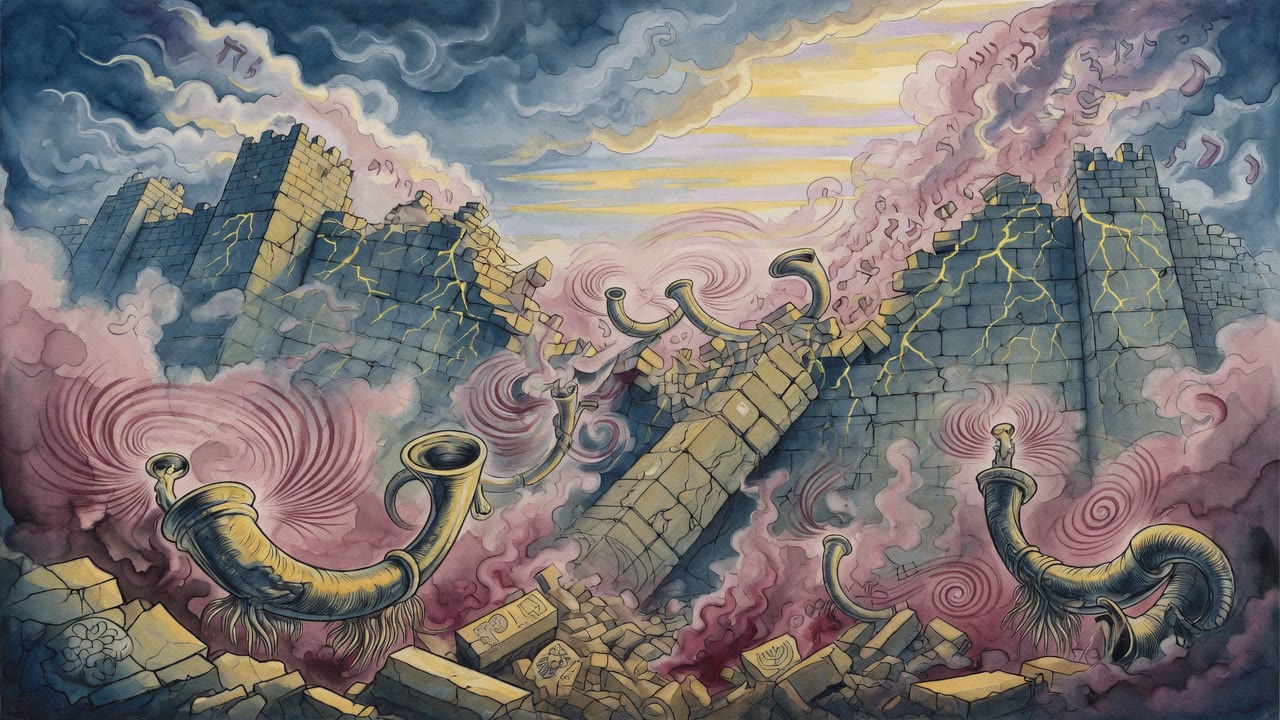
On the seventh circuit the people shout. Horns break the silence. The wall collapses outward, not by engine but by appointed time. Dust rises. Feet that marched in quiet now run through a breach opened on a day that usually forbids the hammer.
The paradox stands. Shabbat can host a commanded fall of stone, and Shabbat can also host a single kept day that outranks a lifetime of half-measures. The same holiness that stops ordinary labor can, under vow, finish a war, and under loyalty, finish a soul's claim on eternity.
Jericho's rubble cools. Somewhere a family lights the next week's candles and keeps one day as if it were all days.
A young soldier counted circuits under his breath and wondered whether the seventh day would feel different under armor. It did. The air itself seemed to hold its breath with them. Priests lifted horns that had been quiet for six days of marching. The ark's poles creaked. Someone's sandal strap broke and was tied without a word, because the vow was larger than comfort.
When the wall fell, dust entered every mouth. Men who had kept silence now shouted because silence had done its work. The exception of obligatory war does not make Shabbat small. It makes the command large enough to reorder the week. Later, in towns under siege, the other teaching would save the day from total collapse: one forced labor does not free a hand for chosen labor.
In Berditchev centuries later, a rebbe would still insist that words and rest on the seventh day rebuild more than hammers rebuild. Jericho's stones and the Shabbat table are not enemies. Both answer a voice that sets times and ends. One perfect kept day still stretches, in the sages' math, from the first rest to the rising of the dead.
← All myths