Job Gave the Accuser a Piece of Burnt Bread
Job locked his gate against the Accuser, then sent burnt bread. The servant swapped it. Satan took the threat home to Job's flesh and his wife's hair.
Table of Contents
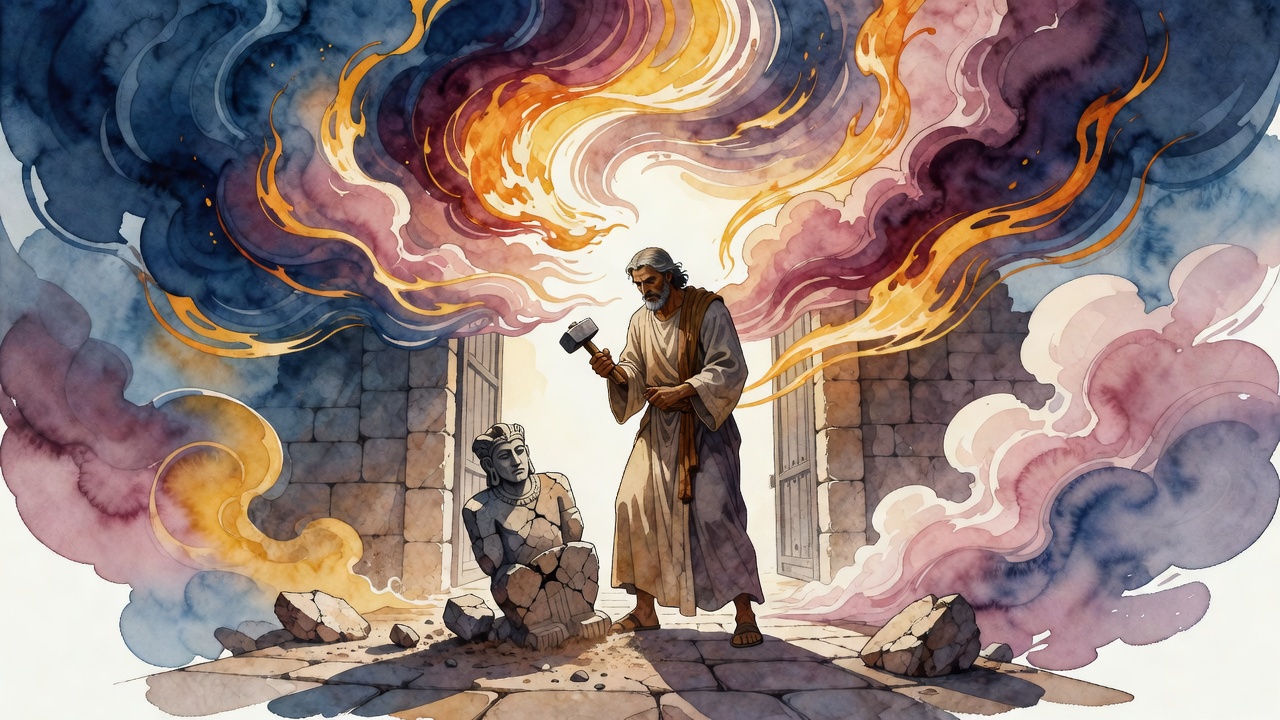
Job locked the outer court before the Accuser could cross it. He ordered the guards to turn every visitor away, then shut himself in a private chamber and waited with the door barred. He knew who would come. The Accuser always came when a house was full of feasts and clean garments, hunting for a crack in a righteous name.
 Click for full size
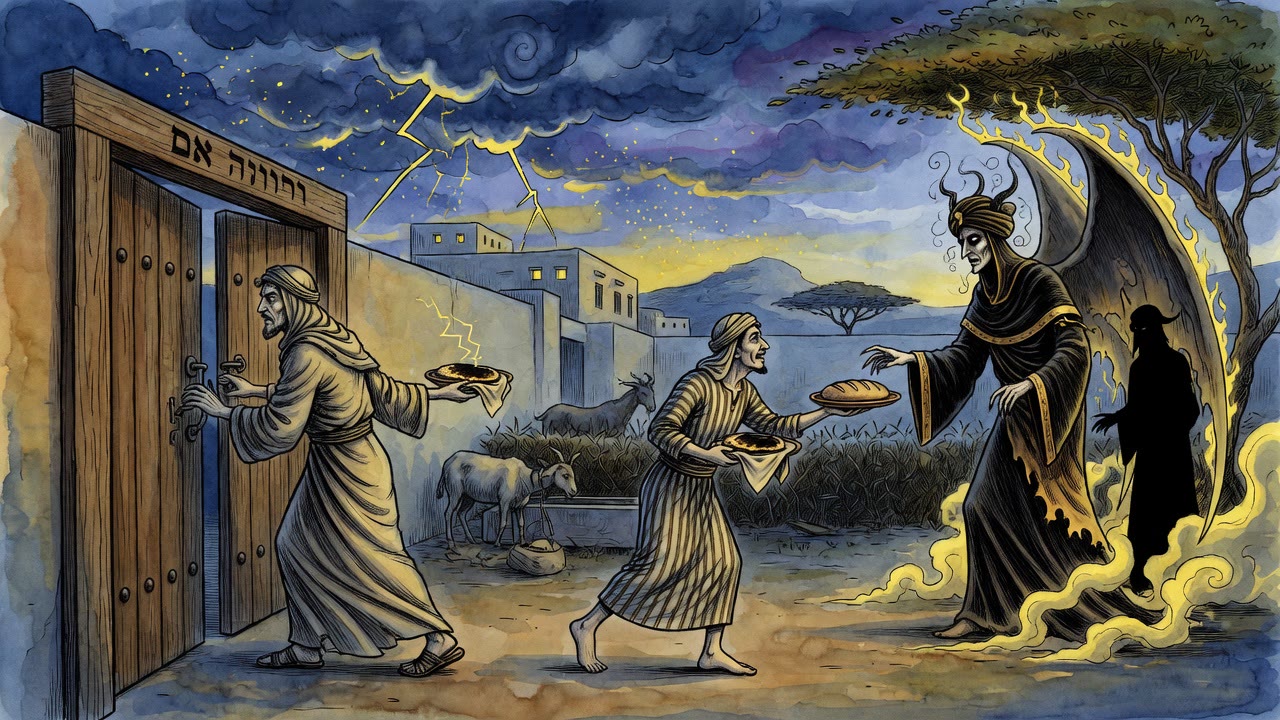
Almost at once a beggar stood at the gate and demanded speech with the master. Dust coated his cloak. His voice carried the thin edge of need. The guard refused and set his spear across the gap. The mendicant asked only for a piece of bread, and begged the guard to carry the plea inside. Job sent his answer without rising from the chamber: the beggar would not eat of his bread, for it was prohibited to him.
Burnt Crust at the Gate
To drive the point home, Job gave the guard a piece of burnt bread for the man outside. The crust was black at the edge, hard as clay, the kind of scrap a house throws toward the fire rather than toward a guest. The servant looked at it and felt shame heat his neck. He swapped it for a good loaf, soft and whole, and held it out as if the house still knew mercy.
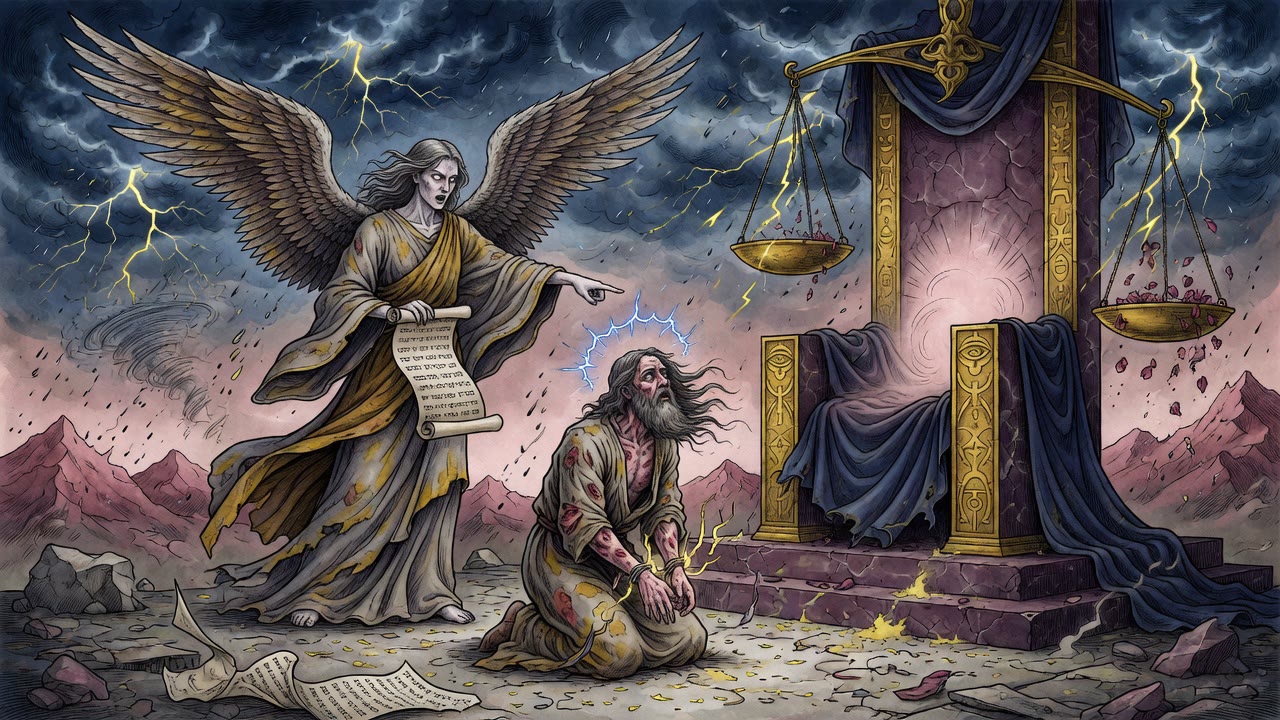
Ha-Satan saw the switch. He confronted the guard in the open dust and exposed the kindness line by line. Caught, the servant fetched the burnt piece, put it in the Accuser's hand, and repeated Job's words. Satan took the crust and answered with a sentence that left no room for ceremony. "As the bread is burnt, so I will disfigure thy body."
Then he left the gate. The threat stayed in the air like smoke. Job had kept the Accuser from his table, and the Accuser had named the body as payment. Inside the chamber, Job heard the report and did not unbar the door. He had drawn the first line. The Accuser had drawn the second across skin that still looked whole.
The Wife Who Carried Water
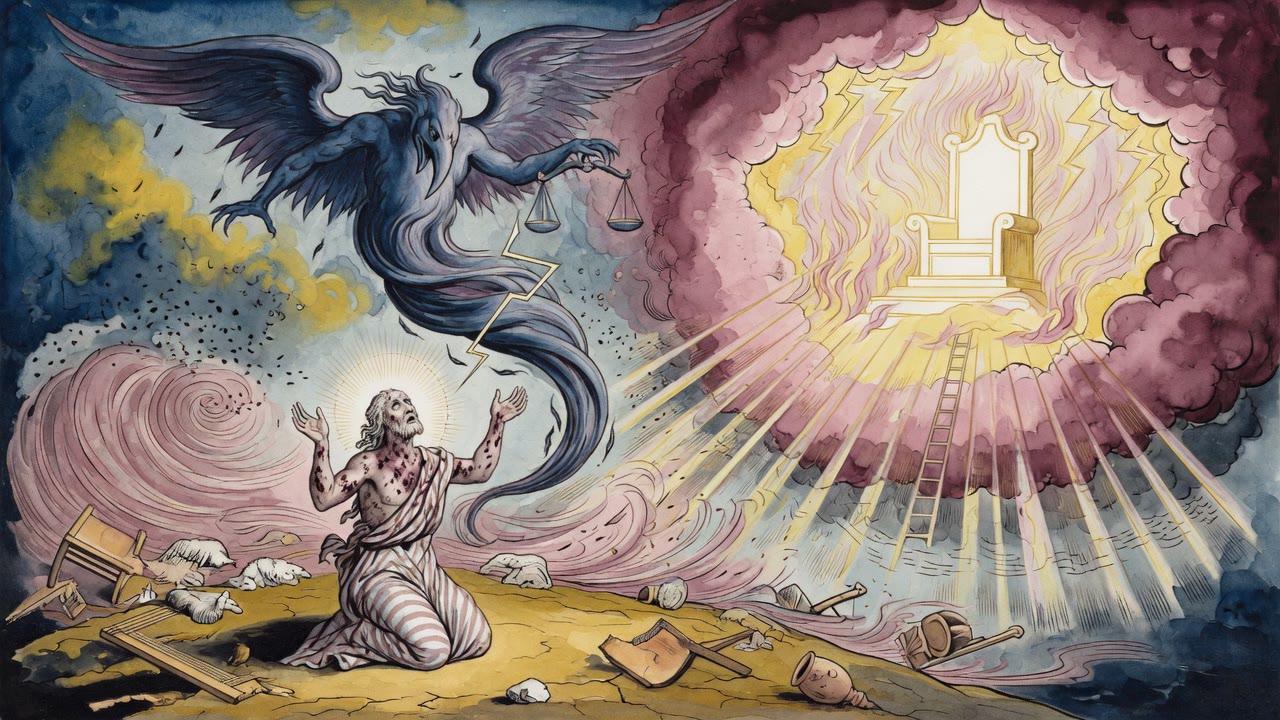
Calamity followed the way the Accuser works: first the herds, then the children, then the skin. Messengers ran until their mouths went dry. Roofs fell. Feast days turned into funerals. Job sat in the ash of his own house while boils rose on him from sole to crown. His wife, whose name the book of Job never records, was driven out to labor when the household wealth was gone.
She carried water for a hard master who paid her with contempt and little bread. Jars bit into her shoulders. The path from well to door wore grooves into her heels. Even so she shared what she had with her husband on the dunghill. When the master learned she was feeding the sick man from his wage, he dismissed her in the street and kept the jars.
She stood with empty hands and a husband still starving in ash. She cut off her hair with a borrowed blade. The tradition calls it her crowning glory, the last thing she could sell without selling her body. The shorn weight fell into a cloth. She took it to a bread merchant and traded beauty for a loaf she meant to carry back to Job before night closed the road.
Poison Sold With the Loaf
The merchant was Ha-Satan (the Accuser) in another face. He weighed the hair, took her payment, then leaned close and whispered what despair loves to hear. "Hadst thou not deserved this great misery of thine, it had not come upon thee."
The words did what the burnt bread had promised in reverse. They did not mark her skin. They marked her will. Broken, she went to Job with tears and groans and the loaf still warm against her ribs. She begged him to renounce God and die. End it. Speak the curse. Stop the slow death that feels longer than any sword.
Job heard his wife, and he heard the voice behind her. He looked at the cut hair's absence, at the bread bought with it, at the ash under his sores. He did not answer her first. He turned toward the presence that had worn a beggar's cloak and a merchant's smile and used a woman's mouth as a last tool.
Frank Meeting in the Ash
"Why dost thou not meet me frankly?" Job said. "Give up thy underhand ways, thou wretch."
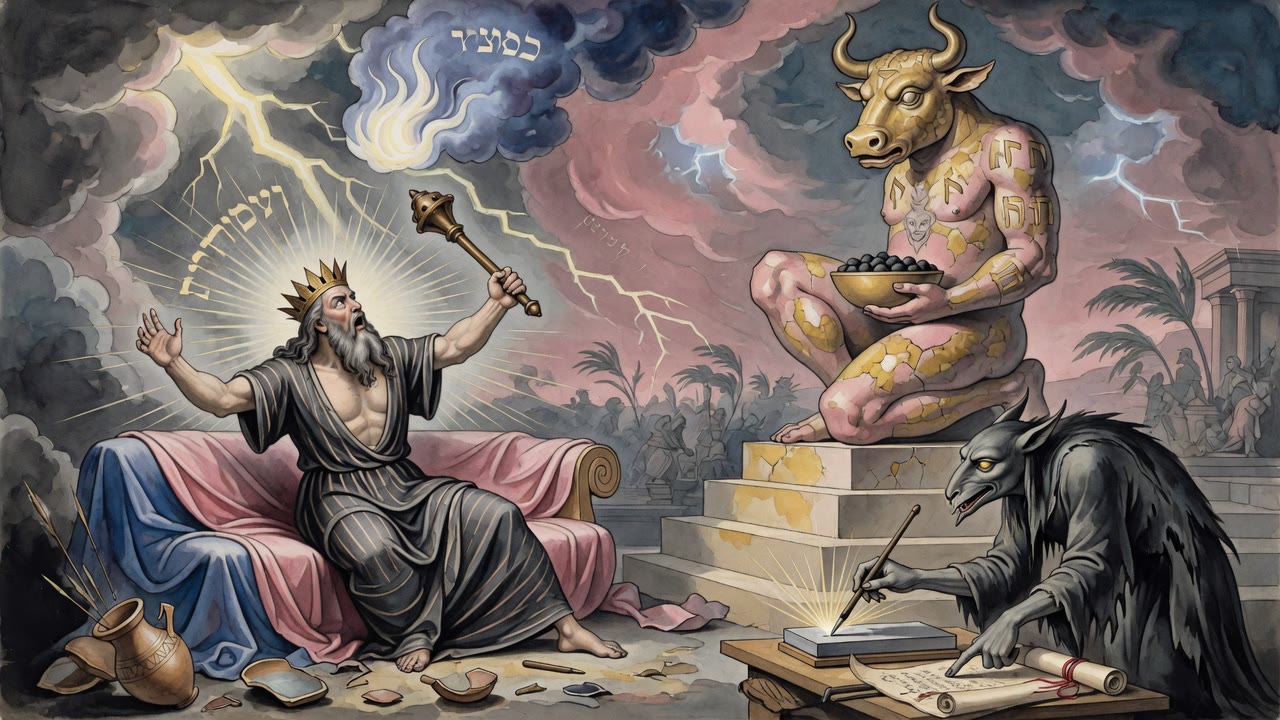
Ha-Satan stood before him without a disguise. The Accuser who works for the heavenly court had spent his tools: the gate, the burnt crust, the swapped loaf, the cut hair, the wife's plea. Job still sat in ash and would not renounce the Name. Abashed, Satan vanished from the dunghill as if the open challenge had burned him the way the crust had burned in the oven.
The house did not return. The sores did not instantly heal. What changed was the shape of the war. The Accuser could no longer reach Job through a servant's kindness or a wife's sold hair. He had been named and sent out of the room. The gate stayed quiet through the next watch. No beggar came. No merchant whispered at the well.
Job remained on the ground where the burnt bread had begun its work, scraping his skin with a potsherd, waiting for the God who had permitted the trial to speak from the whirlwind. The Accuser did not come back as a beggar that day. The crust's threat still rode Job's flesh, but the underhand road was closed.
← All myths