Satan May Wound Job But Not Spill His Soul
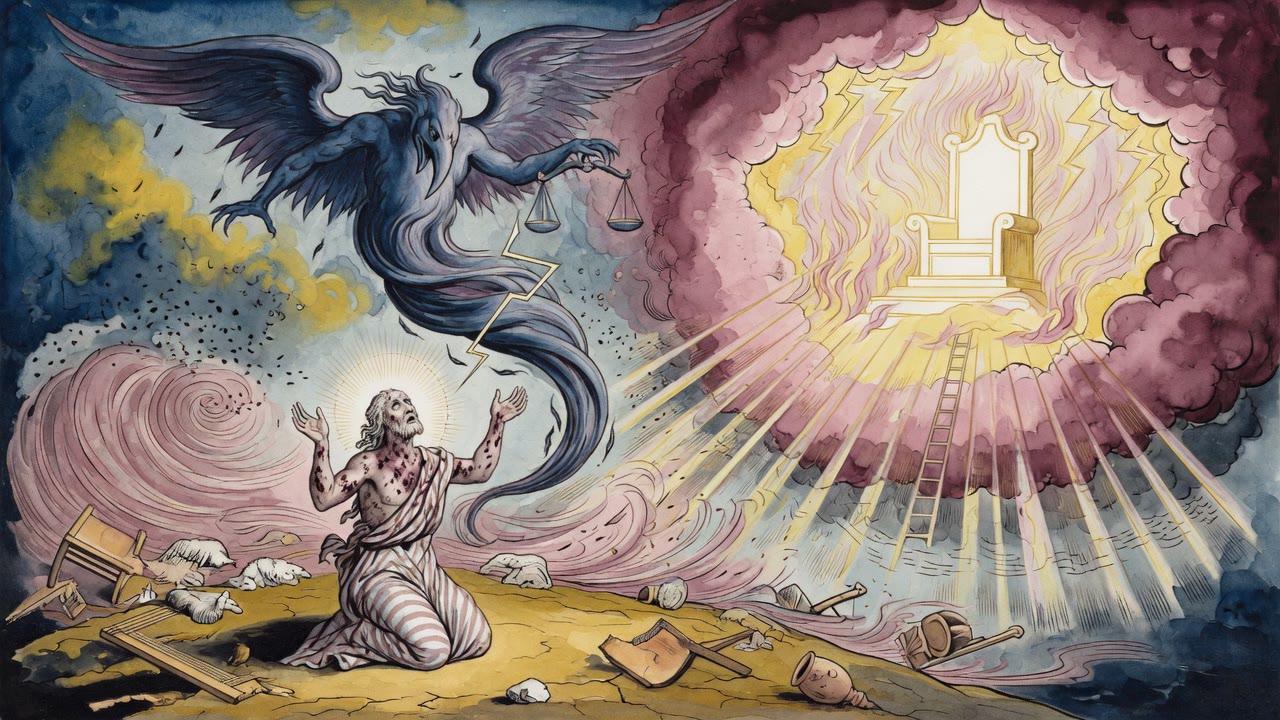
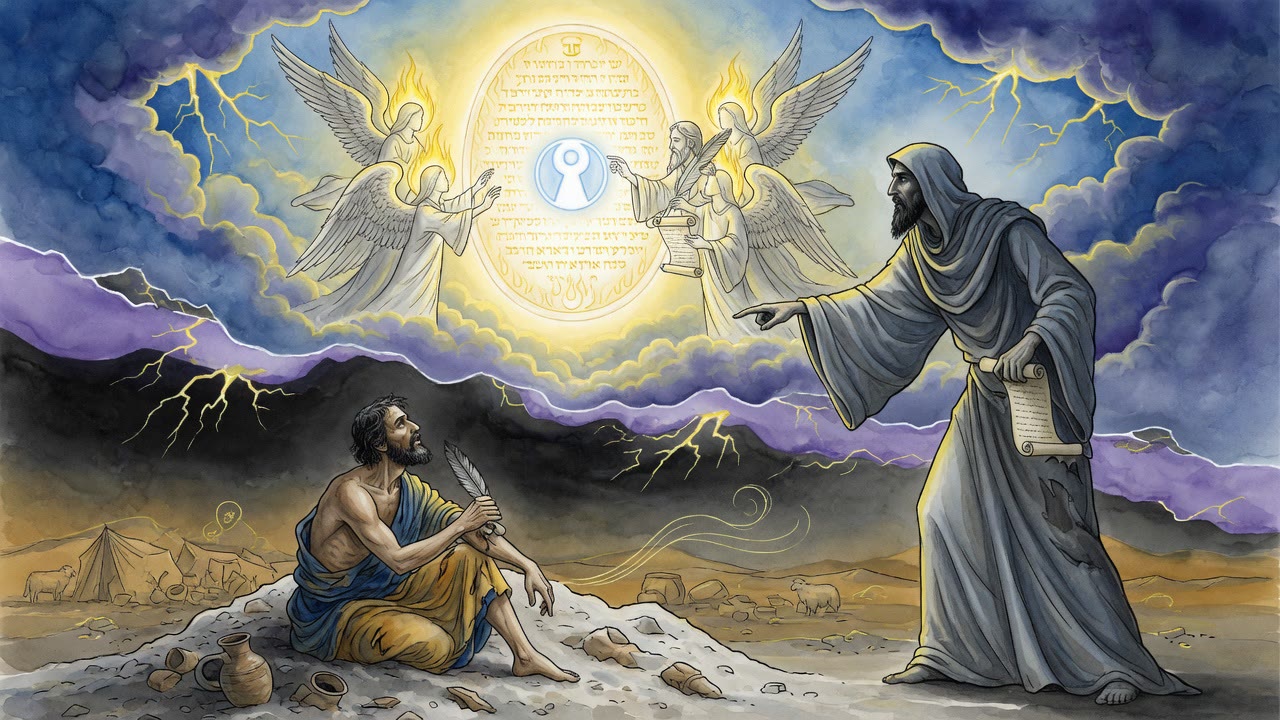
Heaven lets the Accuser bruise Job from crown to sole, yet seals his soul. Job scrapes ash with a potsherd and will not curse.
Table of Contents
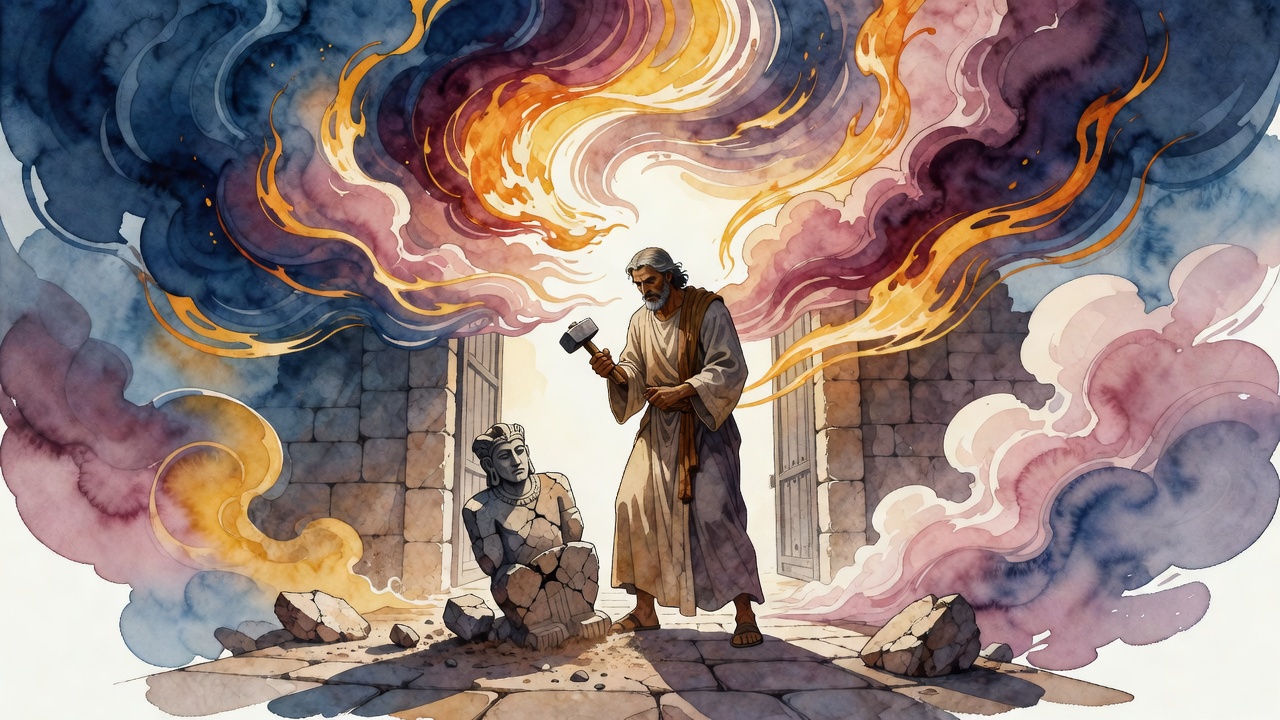
Job rode out of his palace with fifty men at his back and the warning of an archangel still ringing in his ears. Smash the idol of Edom, the messenger had said, and Ha-Satan the Accuser will answer you in kind. Steadfastness will turn trouble into joy. Shrink back, and the Name you love will still be true, but your own mouth will have chosen the safer lie.
 Click for full size
Job did not shrink. In the land called Uz, a name that smells of counsel and dark plans, he put his hands on the local god and tore it down. Pitch stuck to his sleeves. The fifty men hauled the wreckage into the sun. Job wiped his palms and said what he meant to keep saying until he died.
"Out of love of God I am ready to endure all things unto the day of my death. I will shrink back from naught."
The First Stripping
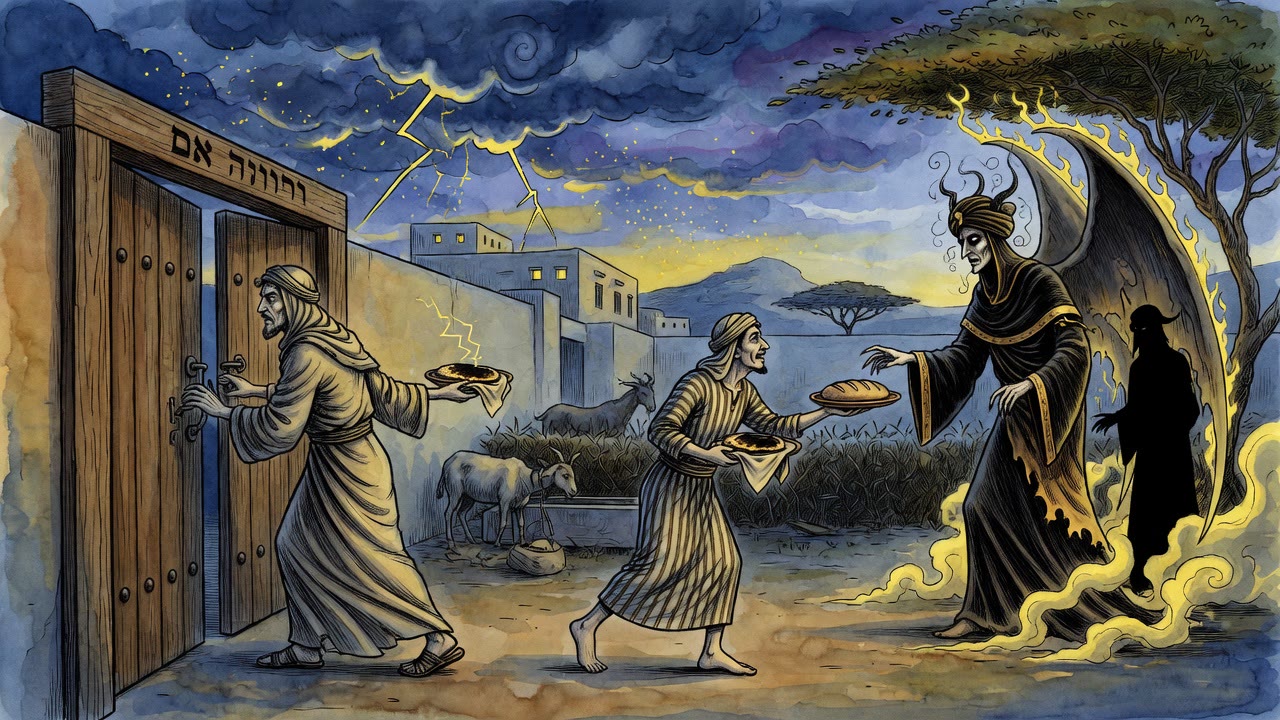
Ha-Satan (the Accuser) came before God with the old brief. Take the herds. Take the children. Take the reputation of a man who looks pious only because the ledger is full. Permission was given for the outer life, and the outer life fell in a hard sequence: fire on the flocks, raiders on the stock, a house that would not stand when the wind found it.
Job tore his robe. He sat in the dust and blessed the Name that gives and the Name that takes. The Accuser watched the blessing leave Job's mouth and hated it. A man who praises while the inventory burns is unfinished work.
So Ha-Satan returned a second time.
Break the Pitcher, Spare the Wine
"Skin for skin," the Accuser pressed. Touch the man himself. Let the body become the courtroom.
God set the limit in one hard line. The soul stays sealed. Ha-Satan may crack the vessel. He may not spill what the vessel holds. Later tellers would say the Accuser's post is unenviable: a servant ordered to break the pitcher and keep every drop of wine inside. Power without the last permission is still a chain.
Ha-Satan took what he had been given. He left the throne room of heaven with a license written in one direction only: outward, into flesh, bone, and skin. The center of the man stayed locked.
Three Hours on the Floor
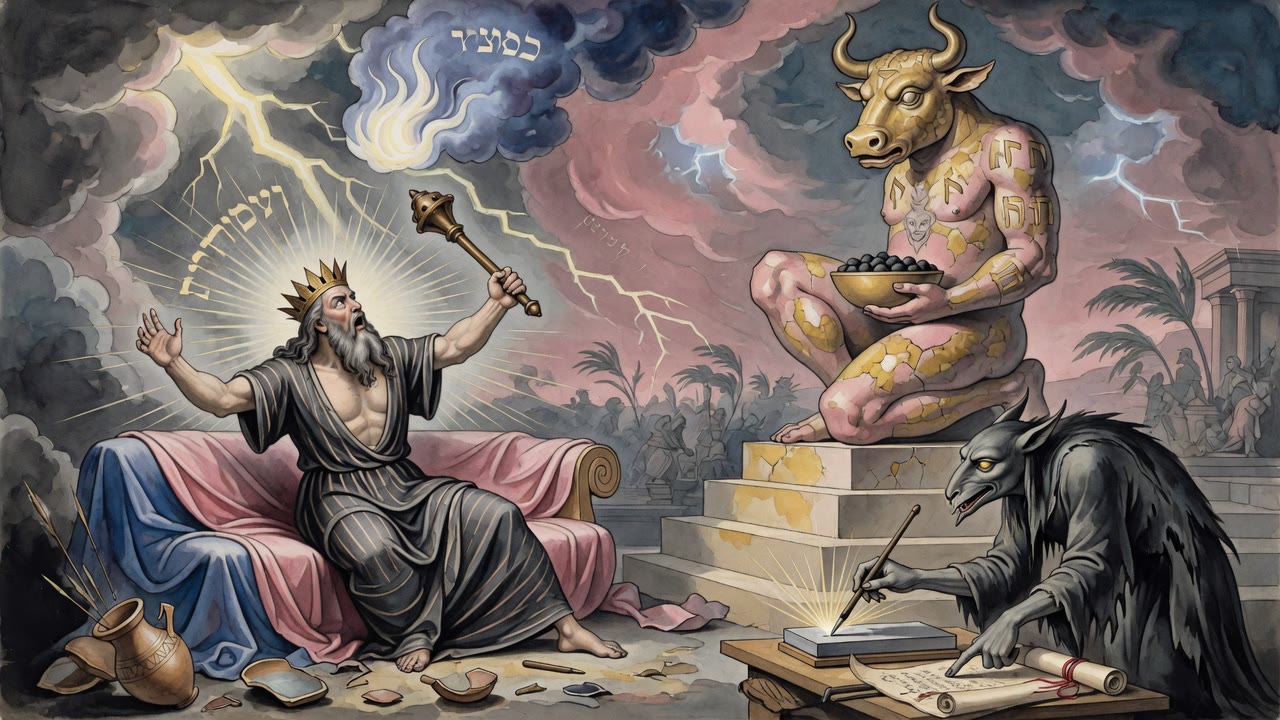
The storm hit the house like a thrown wall. Beams screamed. Dust poured from the ceiling in gray ropes. Job was lifted from his throne and thrown across the chamber. His shoulder struck stone. He tried to rise and the floor shoved him down again. He lay there for three full hours while the wind tested every joint of the palace and the Accuser measured how long a king could stay horizontal without cursing the One who had set the limit.
When the air finally thinned, Job could not stand the way a king stands. His crown had rolled under a broken bench. His name still sat on the doorposts, but the body under the name had become the Accuser's workspace. Servants stared from the doorway and would not cross the threshold.
Then the plague came, from the sole of his foot to the crown of his head. Boils opened and wept on the lower limbs. The upper flesh crusted dry and itched until reason thinned to a single red thread. Job dragged himself down the steps, past the empty courtyard where his herds had once crowded, and outside the city gates, because the city would not keep a king who looked like a curse walking its streets.
He found the ash-heap where refuse and mourning meet. He sat. Heat rose through the ash into the open sores. Flies found him before any friend did.
He scraped with his nails until the nails left him. Fingertips went with them, soft and useless. He picked up a potsherd, a shard of broken pottery with one sharp edge, and worked the crust from his skin in short, careful strokes, because care was the only dignity left that did not require clean hands.
The Heap and the Sealed Center
Friends arrived after the news had outrun the dust and did not recognize him until he spoke. They sat seven days without a word while the ash stuck to their garments and the sun moved over a man who no longer looked like the host who had once opened four doors to the poor. When speech returned, it came as accusation dressed as comfort. Job answered from the heap, voice raw, body ruined, and still he would not give Ha-Satan the sentence the Accuser wanted most: a curse aimed at God that would prove the first brief right.
Inside the wrecked pitcher, the wine held. The soul the Accuser could not touch kept naming the One who had allowed the test. Job's earlier vow in Edom, spoken when he still wore a crown and could still close his fingers without blood, now had to be paid in full on a mound of ash with a shard of clay for a tool.
He scraped. He breathed. He counted the hours by the itch and the shade of the wall. He refused the easy blasphemy that would have ended the experiment in the Accuser's favor. The city watched from a distance. Children were pulled indoors when the wind shifted toward the heap. Heaven kept the seal on what Ha-Satan had been forbidden to reach.
When the wind finally changed, it found a man still sitting on the heap, potsherd in hand, soul unspilled, and the Accuser still short of the confession he had crossed worlds to extract.
← All myths