Jobab Hears His Name and Breaks the False God
Drums and smoke rose from a courtyard altar that never cooled. In the dark a voice used the name the market had forgotten, and told him to rise.
Table of Contents
Jobab stood in the dark of his own house and listened to the town outside. Drums. A low chant. Smoke from a courtyard altar that never cooled. He was king of that land, and the land bowed to a carved thing men called a god. For years he had given alms, judged cleanly, and kept his mouth from easy curses. Still the smoke rose every night, and a question he hated began to grow under his ribs.
 Click for full size
"Is this idol the maker of heaven and earth?" he whispered. "How would I know?"
The Voice That Used His Older Name
Sleep would not hold him. He sat up on the bed, palms flat on the linen, when a voice cut through the room. He hears the older name first, the one the market had dropped, the one he had worn before the crown.
"Jobab. Arise, and I will tell you who he is whom you desire to know. The one to whom the people offer sacrifices is not God. He is the handiwork of the tempter, wherewith he deceives men."
Jobab dropped to the floor. The boards were cold under his knees. He pressed his forehead to the wood until the grain bit him, then lifted his face into the dark.
"O Lord," he said, voice rough, "if this idol is the handiwork of the tempter, grant that I may destroy it. None can hinder me, for I am the king of this land."
No second vision came. No map. Only the permission he had asked for, and the knowledge that the permission would cost him.
Fifty Men at the Shrine
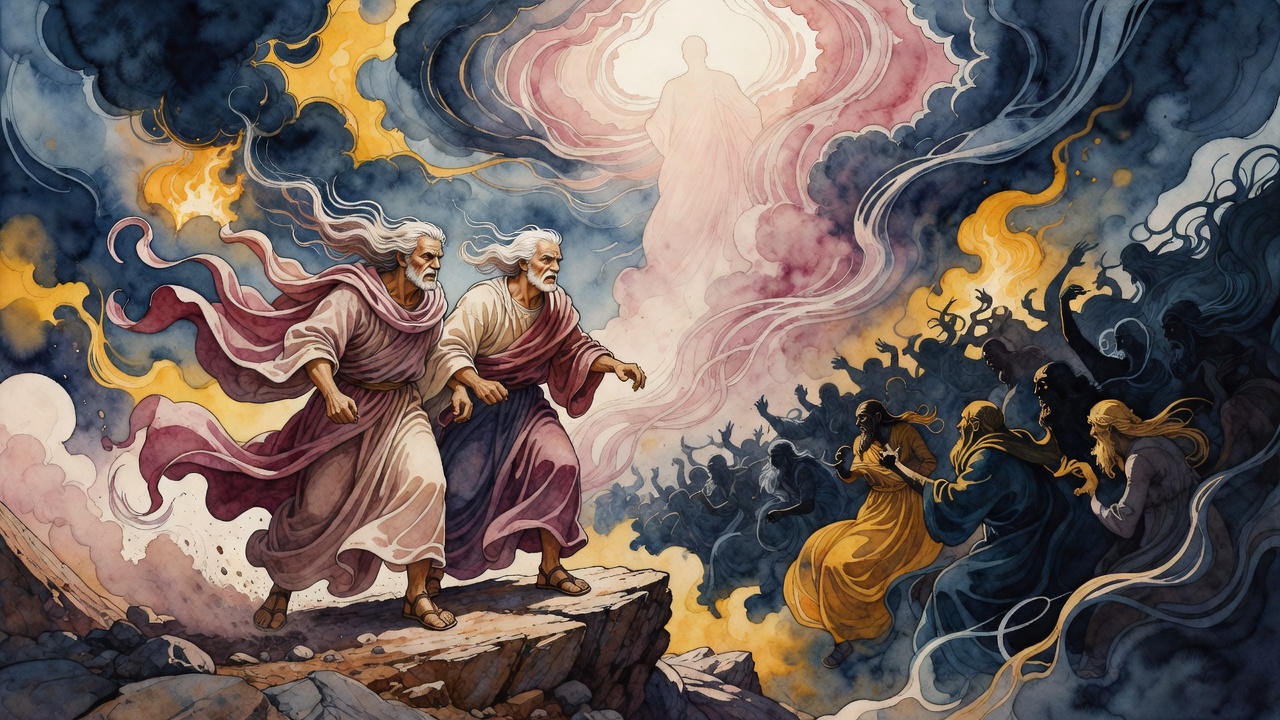
At first light he chose fifty men who still feared a true Name more than a local statue. They walked the main road while the city woke. Vendors pulled shutters open. A child ran ahead of a goat. Jobab did not stop for greetings. He went straight to the shrine where the idol stood, painted eyes bright, trays of yesterday's fat still sticky at its feet.
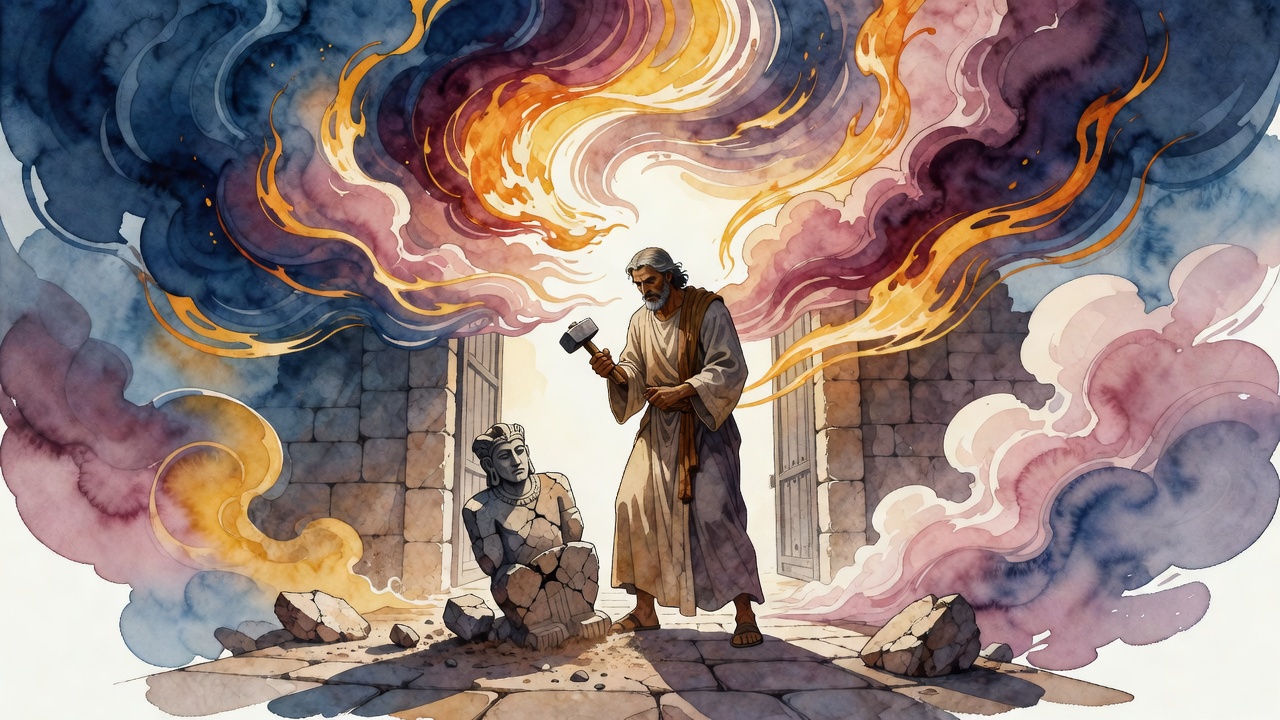
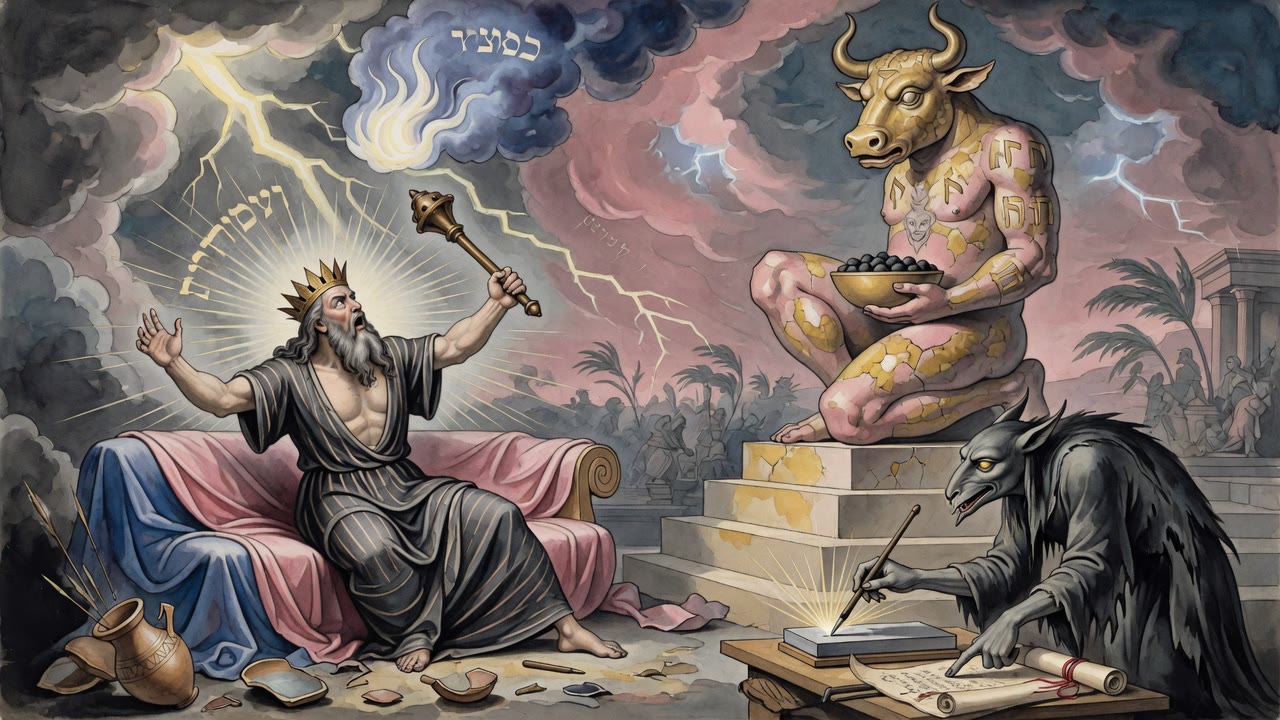
He put both hands on the image and pulled. He breaks the base on the first heave. The wood cracked. Rope bit into his palms as the men hauled. Wood splintered. Gold leaf fluttered down like dry leaves. Someone in the crowd shouted. Someone else spat. Jobab raised the broken head and cast it into the dust of the square.
"This is not the One who made the sky," he said. "Do not feed it another night."
The smoke of the broken altar rose thin and wrong. Priests of the old cult backed away. Jobab wiped pitch from his fingers and felt, for one clean breath, like a man who had chosen correctly.
The Accuser Sharpens His Brief
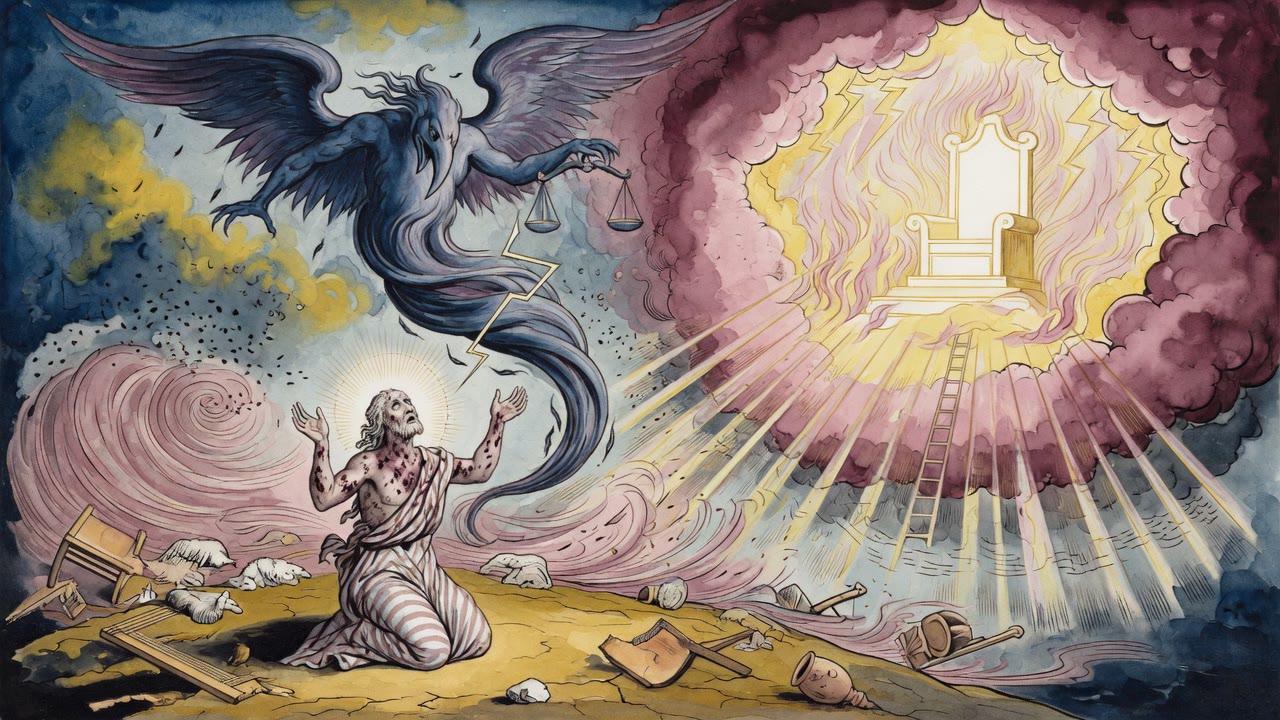
Above the square, in a court that does not need doors, Ha-Satan the Accuser did not celebrate the wreckage. He hated Jobab's unbroken loyalty the way a prosecutor hates a witness who will not bend. Virtue that holds under pressure is a public insult to the Accuser's craft. The smashed idol did not free Jobab from that gaze. It fixed him inside it.
Ha-Satan gathered the case. Here is a king who lives among idolaters and still walks clean. Here is a man who will break a city's god because a night voice told him the truth. Take away the props of his ease, the Accuser would argue, and watch whether the piety survives the inventory.
Jobab knew enough of heaven's prosecutor to understand the shape of the coming years. He did not put the idol back together. He went home with dust on his sleeves and ordered the square swept.
Three Days They Would Not Bury Him
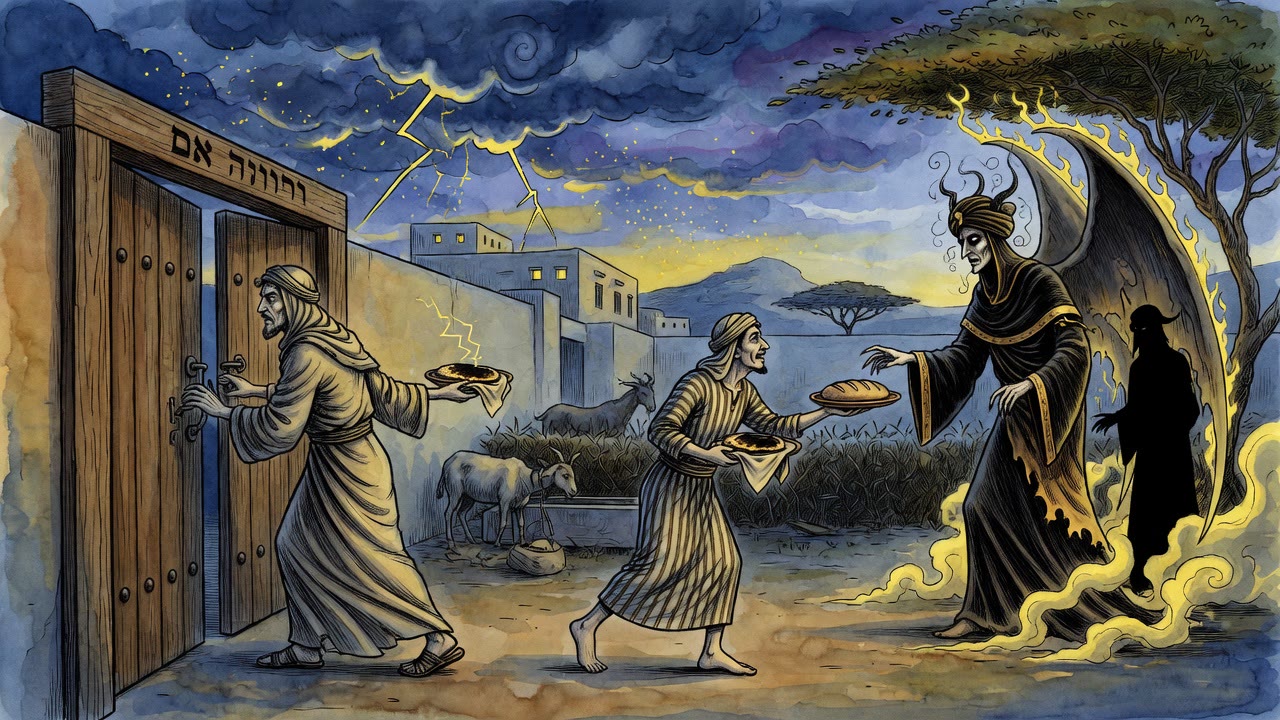
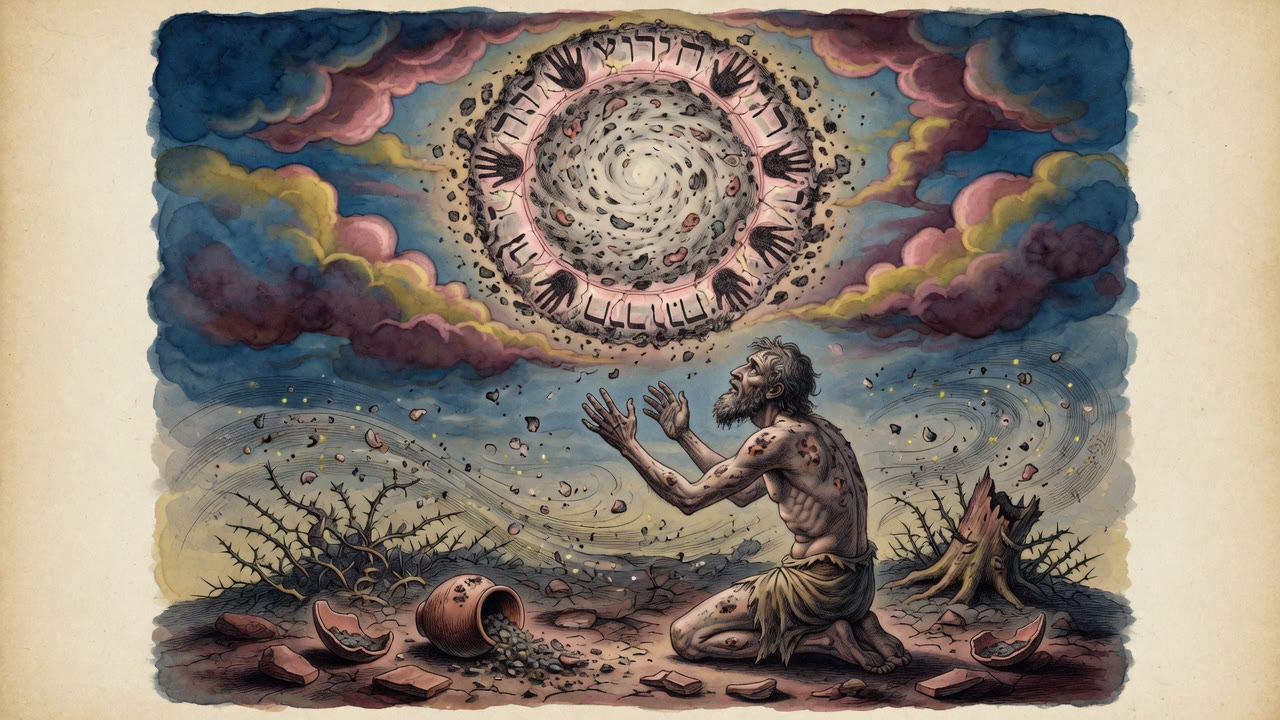
Years later, when the trials had already written themselves into his skin and his house, the people who had eaten at his table could not bear to bury a certain righteous dead man for three full days. Widows sat in the doorway. Orphans refused the shroud. The poor stood in the heat and would not let the body go. They clutched a hand that would no longer close around bread. Only on the fourth day did they lower him into the ground, as if the earth itself had to be begged.
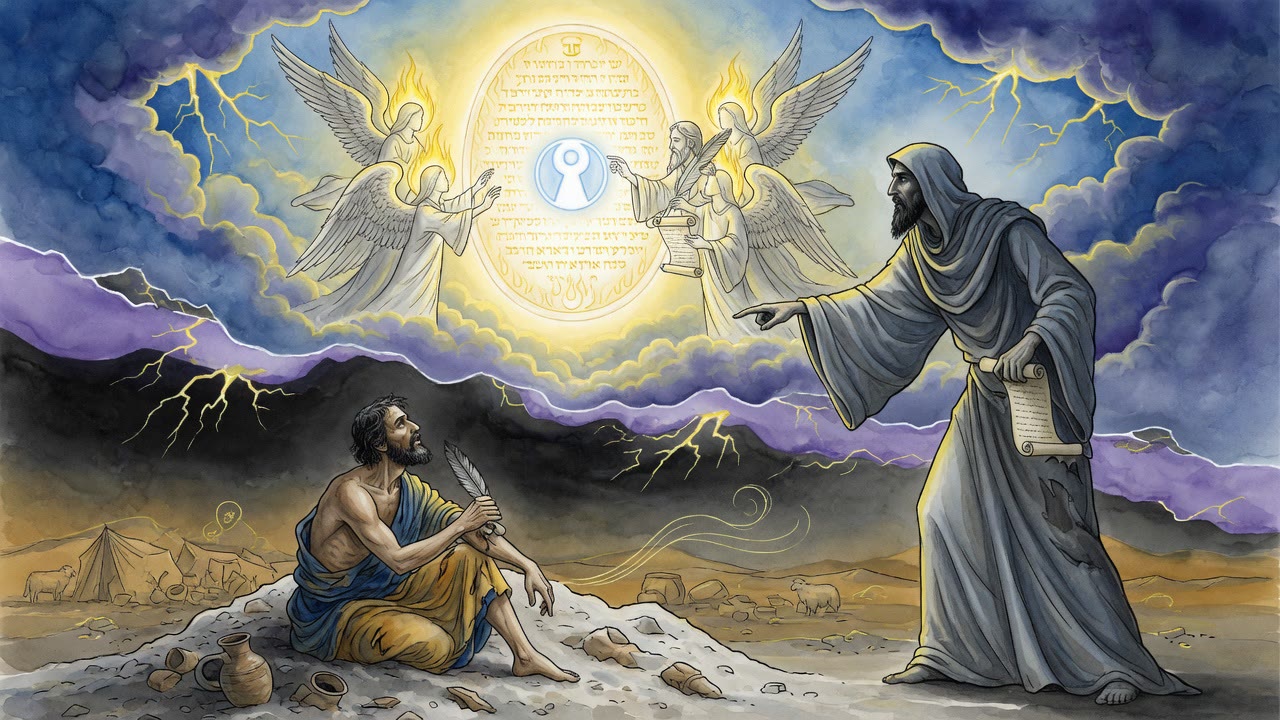
Heaven does not forget that kind of grief, or the names that steadied it. Job's name would be remembered for piety that did not collapse when the props were kicked away. His friends, who sat with him when the ash stuck to their clothes and the arguments grew sharp, were not erased. Their names were kept. They were spared the punishment of Gehinnom (the fiery place of judgment after death). The Ruach ha-Kodesh (רוח הקודש), the holy spirit, was poured on them for the sympathy they had shown while the Accuser pressed the case.
The Name He Would Not Give the Wood
The Accuser who had filed the brief was sent down from the court. He had been vanquished by a man who thanked God in the ash. The prosecutor had nothing left to file. Jobab, who had risen in the night as a doubting king and smashed a false god at dawn, lived long enough to learn what the Accuser could strip and what he could not.
The idol in the square never stood again. The question under his ribs had an answer, and the answer had a price. On the last morning anyone remembered him whole, he still refused to call the tempter's wood by the Name of God.
← All myths