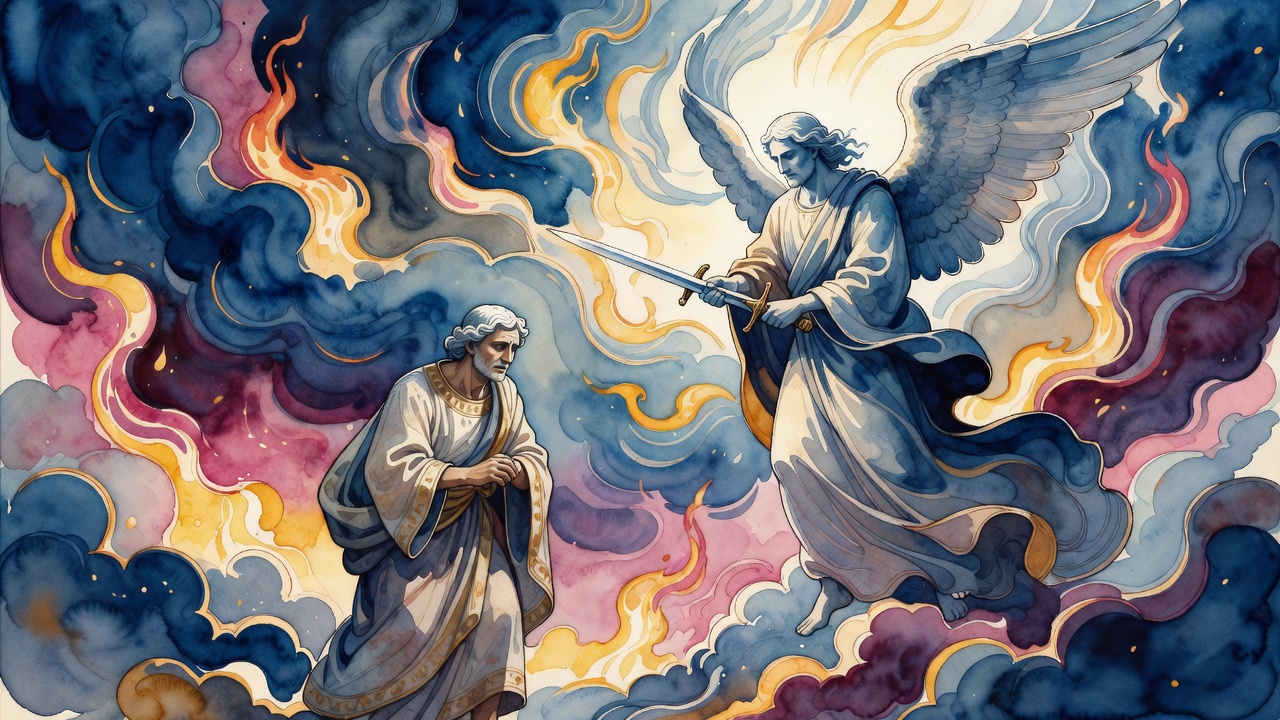
Jonah Mourned a Plant While Nineveh Lived
After Nineveh turned, Jonah still burned for his own honor. God grew a plant of two hundred seventy-five leaves, then withered it, and asked who deserves pity.
Table of Contents
 Click for full size
A City Turns, a Prophet Burns
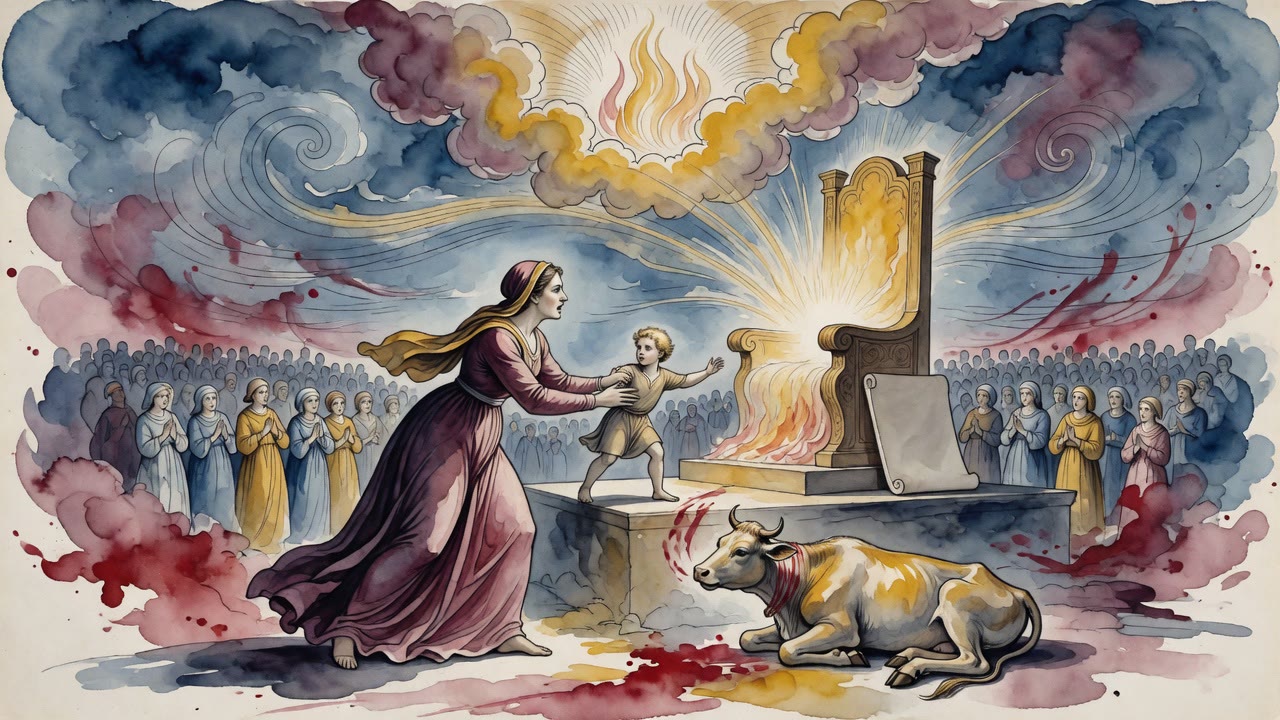
The people of Nineveh heard Jonah and turned from their wicked ways. God saw the repentance and spared the city. That should have been a prophet's joy. Instead Jonah pressed his own case. He asked forgiveness for the first flight, the ship, the refusal. God answered that Jonah had been mindful of the divine honor. Jonah had feared that a canceled doom would make the word of God look false. "Therefore did I deal mercifully with thee," God said, "and rescue thee from the bowels of Sheol (the shadowy pit of the dead)."
Honor and mercy stand in the same courtroom. Jonah wanted the Name protected by fulfilled threat. God protected the Name by keeping a prophet alive and a city from fire.
Heat Inside the Fish
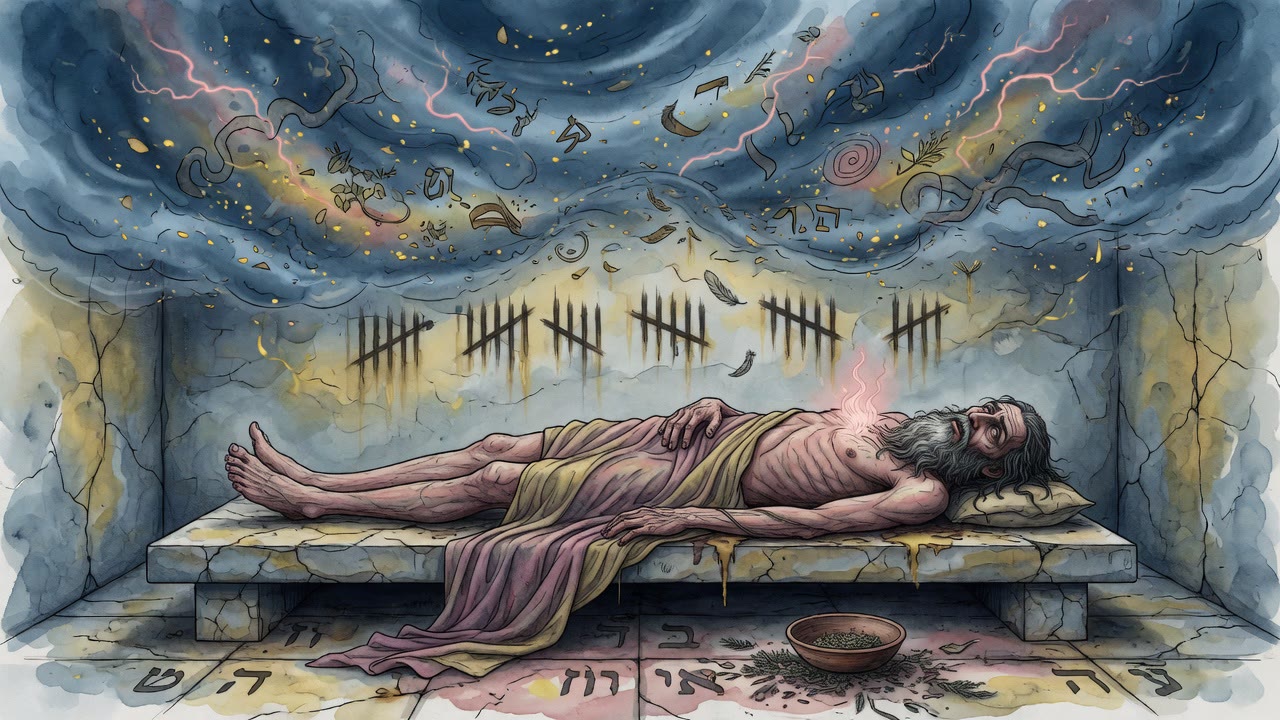
Jewish tradition, as gathered in the legends, will not leave the fish as a mild timeout. Intense heat inside the creature ruined Jonah's clothes, took his hair, and left him tormented by insects after he was cast up. Rescue was not comfort. Rescue was survival with a body that still remembered the dark.
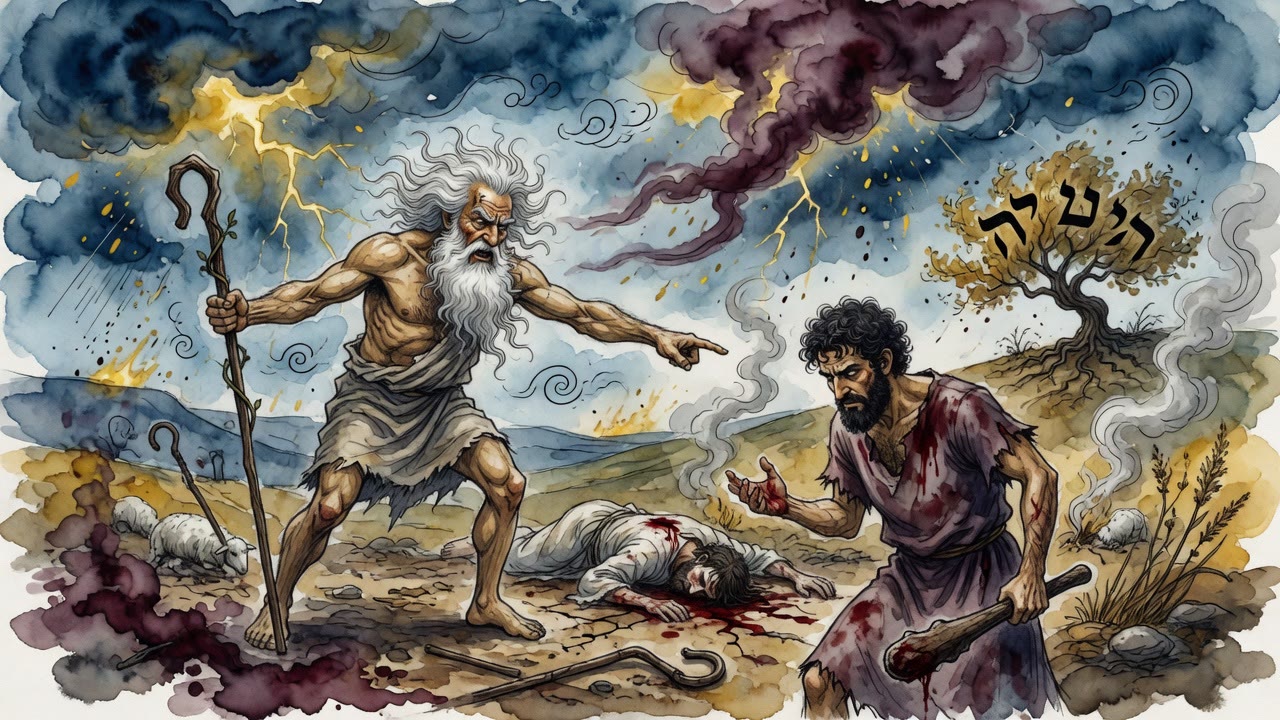
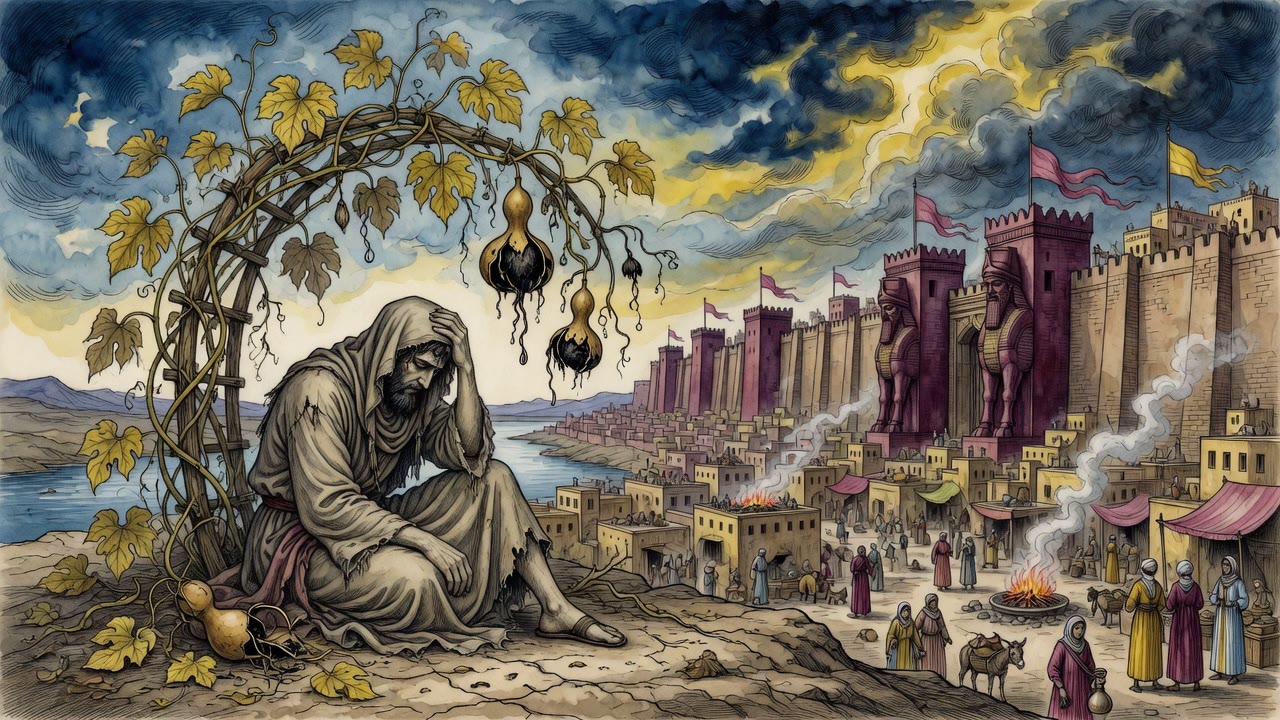
To shield him from that misery, God caused a kikayon to sprout, a plant with two hundred and seventy-five leaves, each larger than a hand, shade overnight where there had been none. Then God withered the plant. The sun returned. The insects returned. Jonah wished for death again, as if the city and the plant had swapped places in his heart.
Pity for Leaves, Not for Crowds
God led Jonah to the withered plant and asked the question that ends the book in the legend's telling. Jonah felt pity for a plant he had not planted or grown. How much more should the Creator pity Nineveh, a great city full of people? Jonah prostrated himself and said, "O God, guide the world according to Thy goodness." The argument about prophetic reputation broke. Empathy, forced through a dead vine, opened.
The Maggid keeps the math cruel on purpose. Two hundred seventy-five leaves against thousands of lives. A prophet who can love shade more than strangers is not a cartoon villain. He is every soul that prefers a private comfort to a public mercy that does not flatter him.
All Who Call on the Name
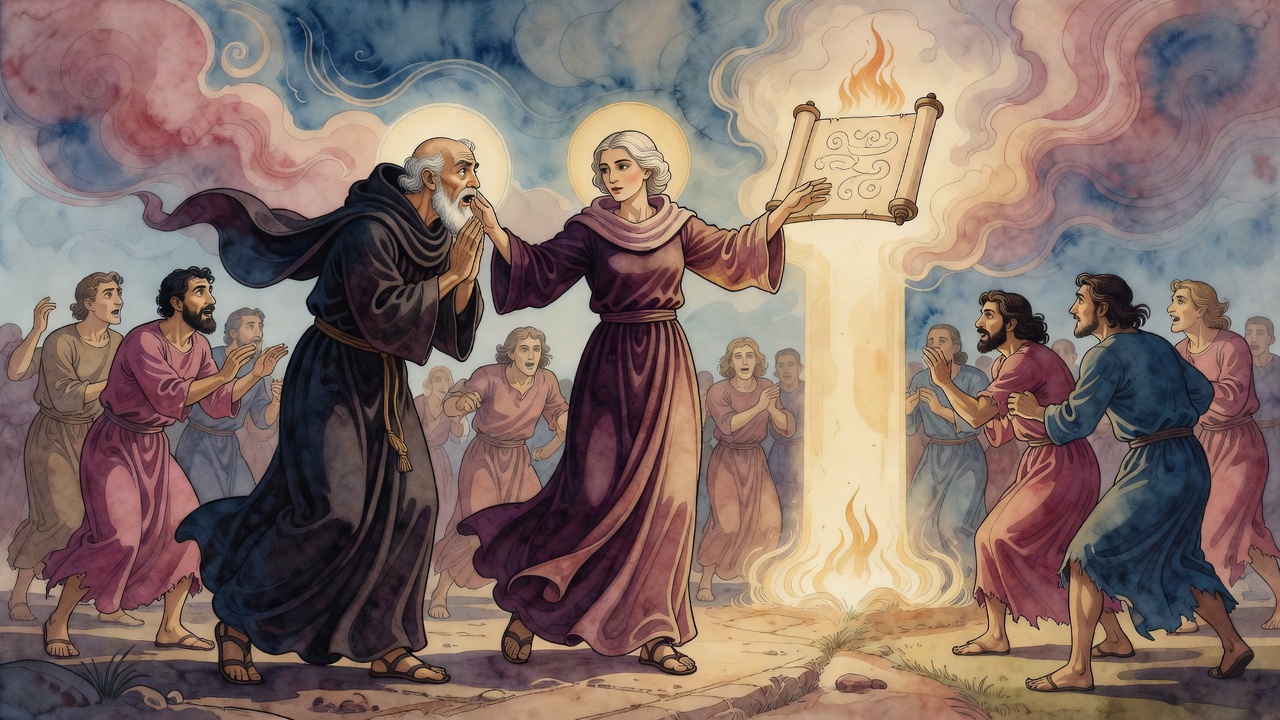
The Mekhilta hears another prophet on the same mercy. Joel declared, "And all who call in the name of the Lord shall be saved" (Joel 3:5). The sages ask where God first made that promise. They trace it to Moses in Deuteronomy: the peoples of the earth will see that the Lord's name is called upon you. Joel is not inventing a soft religion. He is unrolling a thread from Sinai to the nations' fear and to the open call of salvation.
Nineveh's turn is that promise under pressure. A foreign city calls, in its own way, toward the God Jonah serves. The prophet who fled rather than watch mercy land on enemies must learn what Joel and Moses already bound together: the Name on Israel is not a private brand. It is a summons that can save those who call.
Honor Rewritten as Goodness
Jonah's fear for God's honor was not empty. A prophet whose word never lands becomes a joke, and jokes about God are dangerous. The legend refuses to mock that fear. It relocates it. True honor is not the pleasure of watching a city burn on schedule. True honor is the goodness that can guide a world without lying about judgment or about pity.
The plant dies so the argument can live. The fish burns so rescue is never cheap. The Mekhilta's Joel line keeps the door open for every mouth that calls the Name without requiring Jonah's approval first.
Stand with Jonah in the heat after the shade fails. Feel the itch of insects and the insult of a withered gift. Then look at the city still breathing. The question God asks is not whether judgment is real. The question is whether a human heart can stand to see mercy travel farther than its pride. Answer as Jonah finally did, or the book remains a mirror you refuse to face.
Call on the Name. Teach others to call. Do not demand that God shrink the map of pity to the size of your reputation. The legends and the Mekhilta, set side by side, will not let that demand pass as zeal.
Prophets are not hired to enjoy their own accuracy. They are sent to speak a word that may turn a city and then leave the prophet looking, for a moment, like a man whose deadline failed. Jonah felt that shame in advance and ran. God dragged him back through heat and insects so that the second sermon would cost more than the first flight. Cost is part of the pedagogy.
Joel's open promise does not erase Israel. It stretches the meaning of the Name placed upon Israel until a Nineveh that turns can live under the same sky. The Mekhilta's chain from Moses to Joel blocks the claim that mercy for outsiders is a late invention. Jonah had to learn a Torah older than his anger. The plant was the tutor. The city was the exam.
← All myths