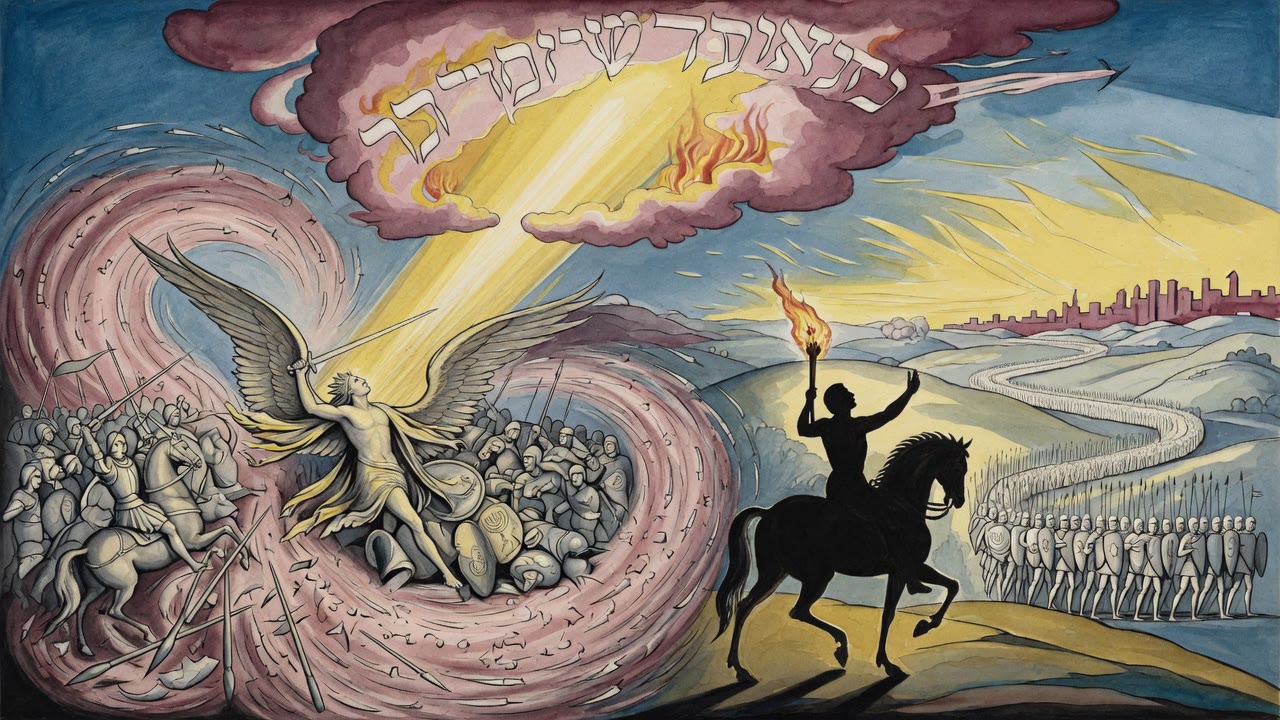
Jonathan Turned Royal Letters Into Jewish Power
The letter opened: King Alexander to his brother Jonathan. With it came a purple robe and a crown of gold, and Jonathan wore them through Sukkot.
Table of Contents
 Click for full size
The Sword Ceased and Jonathan Governed
After Judas fell, the people chose Jonathan to lead them. The situation he inherited was not what Judas had held. There was no great battle immediately waiting. There was a truce, and what truce gave him was not rest but the need to govern. He went to Machmas and began to govern the people, destroying the ungodly out of Israel. He restored prisoners. Borders were left alone. For a time, the sword ceased from Israel.
That quiet did not feel permanent. Jonathan understood that openings close. He used the pause to build what fighting could not build: a framework for normal life, a judiciary that reached the towns, and eventually walls for Jerusalem, because without walls a city is not a city but an invitation.
Demetrius Feared Jonathan's Memory
When Alexander Balas rose against Demetrius, Demetrius understood the danger from a different direction. Jonathan, he knew, would remember. He remembered the evils done to him, his brothers, and his people. Left to choose between Demetrius and Alexander, Jonathan would choose Alexander because Demetrius had been the source of the grief.
So Demetrius sent letters dripping with flattery. The strategy was transparent, but its transparency did not make it useless. Let us first make peace with him before he joins with Alexander against us. Demetrius offered Jonathan concessions that would have seemed unimaginable a year before: he could raise an army, keep those held captive in the Akra, and be given authority over Judea. Jewish memory had become a force that kings negotiated with, not simply suppressed.
Alexander Called Jonathan Brother
Then Alexander Balas wrote his own letter. Shall we find such another man? We will make him our friend and confederate. The letter began: King Alexander to his brother Jonathan, greeting. Brother. Jonathan was being carried into the language of equal alliance before he had accepted anything at all.
Alexander went further. He sent Jonathan a purple robe and a crown of gold and appointed him high priest of his nation and friend of the king. Jonathan put on the holy garment in the seventh month of the year, during Sukkot, gathering his forces and stocking up with armor. He stood in the middle of the festival as high priest and military leader both, the accumulated authority of two competing kings folded into a single robe worn during a season of joy.
He Read the Royal Letters Aloud in the City
When Jonathan came to Jerusalem he read aloud the letters before all the people, including those still holding out in the tower, the Seleucid garrison that had been a symbol of occupation for years. They were sore afraid. They understood that the man before them now had the king's own authorization to build a force. The letters did not just describe power. Read aloud in the city, they created it. What had been promises in writing became a fact the whole population witnessed.
Those in the tower sent to Demetrius asking him to release them from their position, but Demetrius was already losing ground. Jonathan pushed the advantage, demanding that Demetrius remove the garrisons from the citadels of Judea and Bethzur, grant tax exemptions for Judea and the three provinces, and confirm Jerusalem as sacred and free. He also read these letters aloud, in the Temple courts, and the people rejoiced greatly.
← All myths