6 min read

Joseph and David Both Swore Oaths Against Their Desire

The rabbis paired Joseph and David across a thousand years. Both faced desire so strong they had to swear formal oaths against themselves to survive it.

Curated by Arthur · Told by Maggid ·
Table of Contents
  1. The Same Test, Different Centuries
  2. Joseph in the House of Potiphar
  3. David in Jerusalem
  4. The Line From Joseph to the Messiah

The Same Test, Different Centuries

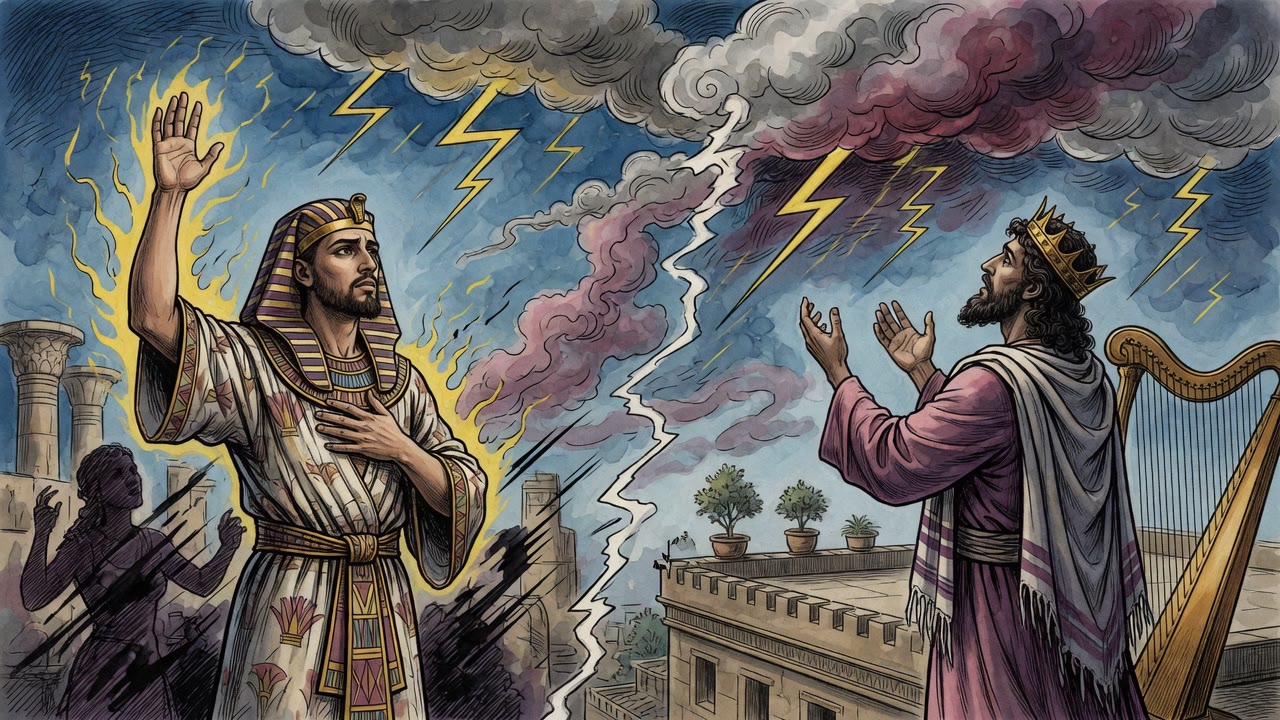
They never met. Joseph was a prisoner in Egypt four centuries before David was born in Bethlehem. Joseph dreamed of sheaves and stars while David wrote psalms about shepherds and enemies. Their stories have different textures, different supporting characters, different catastrophes and recoveries. But the rabbis who loved to pair men who never met kept pulling them together, reading their lives side by side as if they were two hands on the same body, because each man had faced the same test and each had faced it alone.

The test was desire. Not ordinary desire, easily managed, but desire so overwhelming that the text itself needed to record the oath they swore against themselves. The yetzer hara, the inclination that the tradition personifies as an internal adversary, attacked both of them at the moment of maximum vulnerability. Both men responded by binding themselves with a sworn oath, not trusting willpower, not trusting character, reaching for the most formal constraint available: the oath sworn before God, which they would have to break before God if they violated it.

Joseph in the House of Potiphar

Potiphar's wife asked day after day. She was persistent in a way the text preserves without commentary, as if the persistence itself is part of what Joseph had to survive. He refused and refused and refused. When she grabbed his garment and he fled naked out of the house, the tradition reads the flight as a physical expression of something he had been doing internally for weeks: running from what was being offered, removing himself from the proximity that made refusal more difficult.

Rabbi Yosei's reading in Vayikra Rabbah identifies the oath Joseph swore. He had looked at the face of his father Jacob and seen, in that face, both everything his father had built and everything that could be lost. He swore not to break what Jacob had built. The oath was not against Potiphar's wife specifically but against himself, against the possibility of his own yielding. He took himself out of the negotiation by removing his own freedom to negotiate.

Joseph left his garment in her hand. He left Egypt with nothing, went to prison, and eventually rose to govern the land that had imprisoned him. But the tradition traces the line from that moment of flight to everything that followed: the preservation of the family in famine, the reunification with his brothers, the continuation of the covenant. The oath he swore in a foreign house carried consequences that outlasted him by generations.

David in Jerusalem

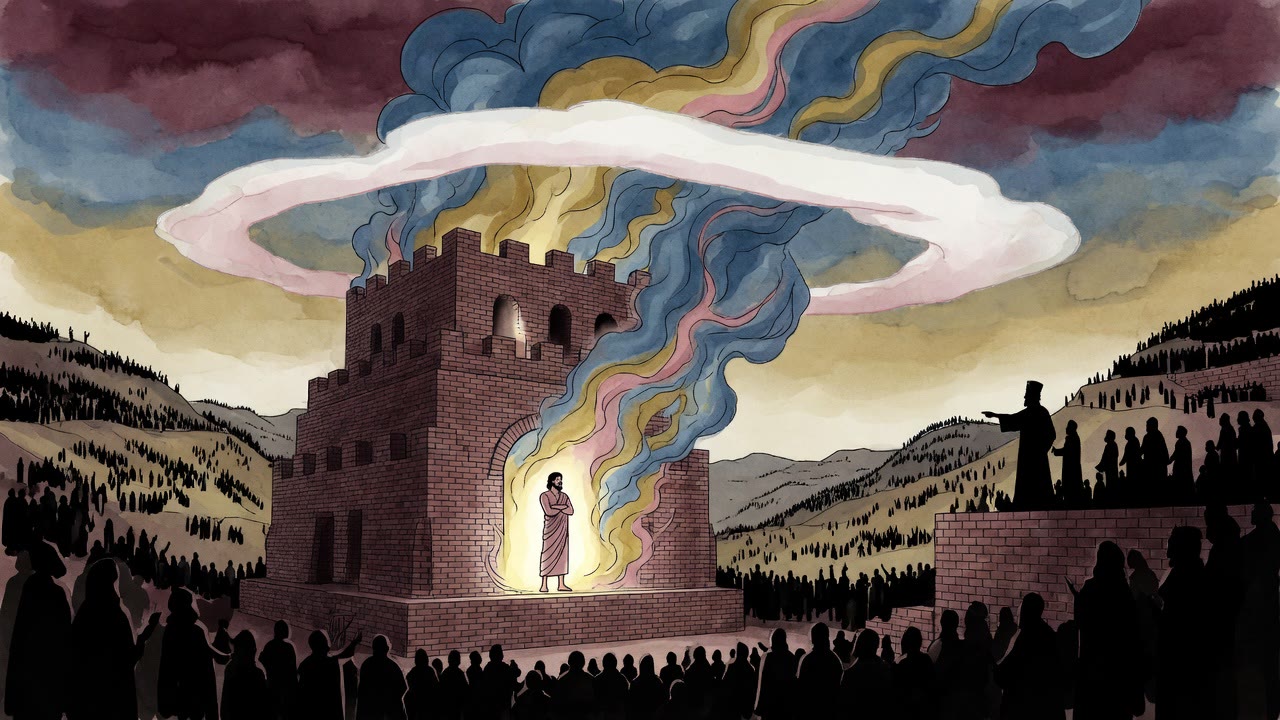
A thousand years later, David stood on his roof at evening and saw Bathsheba bathing. What followed is one of the most documented moral catastrophes in the Hebrew Bible: Uriah placed where he would be killed, the child born and dying, Nathan arriving with a parable and an accusation. David had everything and wanted one more thing, and he took it by removing the obstacle that stood in the way.

But the tradition also preserves the oath he swore. Vayikra Rabbah, the same text that records Joseph's oath, records David's as well. He swore against his own inclination, binding himself against yielding to what he most wanted. The difference between David and Joseph is not that one swore and the other did not. Both swore. The difference is that David, on that evening on the roof, found that the oath he had sworn was insufficient against what he was looking at.

The tradition does not let this define him entirely. Midrash Tehillim holds David up as the great model of return, the man anyone who wants to do teshuvah should study, not because he succeeded but because he turned back from where he had gone, and the turning was as complete as the departure had been. He wrote psalms of confession that people still pray. He became, paradoxically, the man the tradition recommends to anyone who has failed and needs a map back.

The Line From Joseph to the Messiah

The two figures do not stay separate in the tradition even after their individual stories end. Midrash Tehillim connects the year of redemption to the year of sustenance, and the sustenance is Joseph's feeding of the world during famine, and the redemption is David's lineage. Mashiach ben Yosef and Mashiach ben David are two messianic figures the tradition holds separately: one who comes first and falls, one who comes after and endures. They are named for the two men who swore oaths against themselves and kept the covenant, and failed to keep it, and kept it again. The two messiahs emerge from the two men because redemption is not a single event but a process that requires both the Joseph quality, the stubborn refusal to yield no matter what it costs, and the David quality, the stubborn insistence on returning no matter how far you have gone.


← All myths
From the tradition

Sources

4 sources

The texts this telling draws on, in full. Open a card to read inline, or expand it for a wider, quieter read.

Vayikra Rabbah 23:11Vayikra Rabbah

In Vayikra Rabbah, a collection of rabbinic homilies on the Book of Leviticus, we find a fascinating discussion on how some biblical figures actively fought against their yetzer hara (יֵצֶר הָרַע), the "evil inclination." It's not just about passively resisting; these figures took serious action, including... taking oaths!

Rabbi Yosei points out three individuals in particular: Joseph, David, and Boaz. Each of them, he says, was attacked by their yetzer hara and responded by swearing an oath against it. It's like they were saying, "Enough is enough! I'm drawing a line in the sand."

Remember the story? Potiphar's wife tries to seduce him, but he refuses. Rabbi Huna, quoting Rabbi Idi, homes in on Joseph's powerful words: "How can I perform this great wickedness [and sin against God]?" (Genesis 39:9). Now, here's the really interesting bit: Rav Huna points out that the verse doesn't just say "sin against the Lord," but "sin against God." The Rabbis interpret this slight difference in wording to mean that Joseph wasn't just worried about sinning; he was actively taking an oath against his own evil inclination, saying, "By God, I will not sin and I will not perform this great wickedness!" It's a powerful declaration of intent.

Next up is David. In I (Samuel 26:10), David says, "As the Lord lives, rather, the Lord will strike him." The question is, to whom is David making this oath? Rabbi Yoḥanan and Reish Lakish have differing opinions on the matter. Rabbi Yoḥanan believes that David is swearing to his yetzer hara that he won't harm Saul. Reish Lakish, on the other hand, argues that the oath is directed at Avishai, forbidding him from harming Saul. According to this interpretation, David is warning Avishai, "As the Lord lives, if you touch him, I will mix your blood with his blood!" It's a pretty intense way of saying, "Back off!" And that's why, the text explains, "David said to Avishai: Do not destroy him” (I Samuel 26:9).

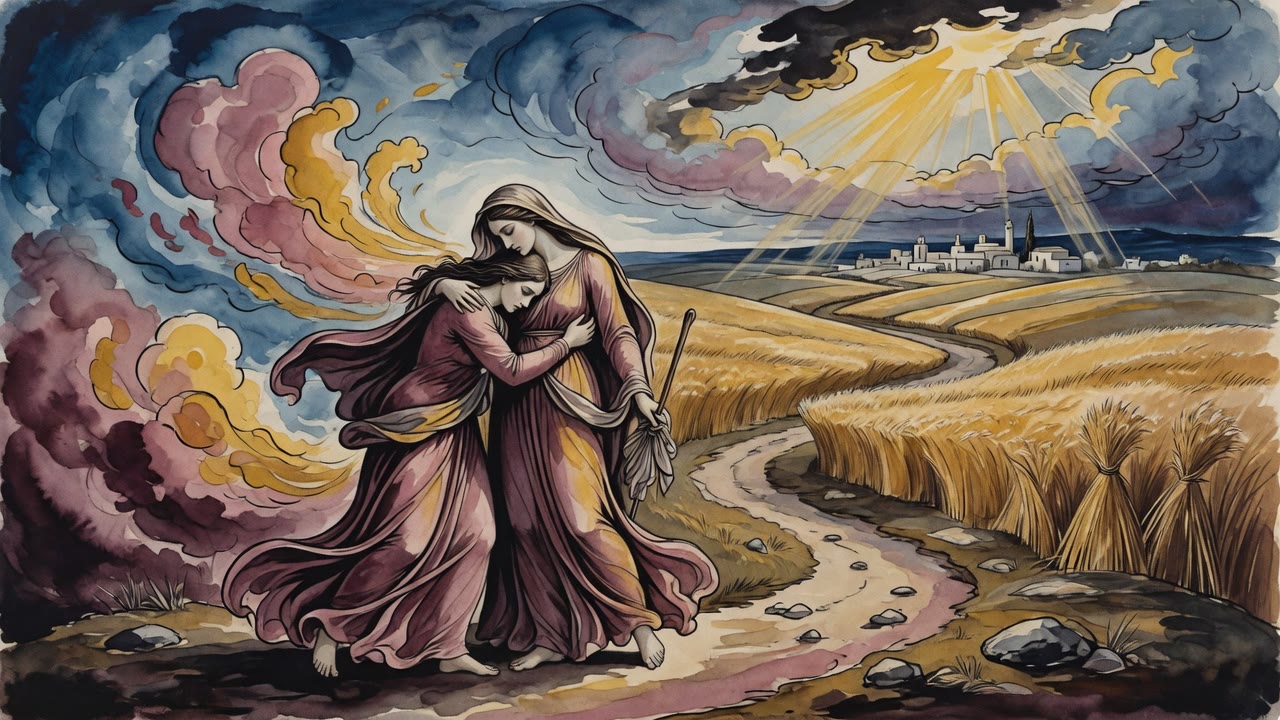
Finally, we have Boaz, from the Book of Ruth. Remember that nighttime encounter on the threshing floor? Ruth asks Boaz to redeem her, a vulnerable moment with a lot at stake. In (Ruth 3:13), Boaz says, "As the Lord lives, lie until the morning." Now, what's going on here? Rabbi Yudan and Rabbi Ḥama offer their insights. Rabbi Yudan suggests that Boaz's yetzer hara was working overtime that night, whispering temptations in his ear: "You're unmarried, she's unmarried... perfect match!" So, Boaz takes an oath against his evil inclination: "As the Lord lives..." But, Rabbi Yudan continues, to the woman he simply says: “Lie until the morning.” It’s an oath to himself, and a promise to her to act honorably.

Rabbi Ḥanina beautifully sums it up, quoting (Proverbs 24:5): “A wise man has might, and a man of knowledge exerts strength.” He connects this verse directly to Boaz, explaining that Boaz's wisdom and knowledge are demonstrated by his ability to overcome his evil inclination with an oath.

What can we take away from these stories? Perhaps it's the idea that battling our inner demons isn't a passive process. It requires conscious effort, even dramatic declarations. These figures recognized the power of their yetzer hara and chose to confront it head-on, using the strength of their convictions and, in these cases, the force of an oath. It's a reminder that we, too, have the power to choose our path, even when temptation knocks.

Full source
Sifrei Devarim 9:1Sifrei Devarim

Sifrei Devarim, a collection of legal interpretations on the book of Deuteronomy, gives us some fascinating perspectives on just that.

When the Torah says "to give to them," who exactly is "them"? Are we talking about the generation that first entered the Promised Land? Well, according to one interpretation in Sifrei Devarim, yes, that's part of it. But it doesn’t stop there.

Then there’s "and to their seed." This refers to their children. Makes sense. But the text doesn't simply stop there. It continues with "after them," opening up a much wider vista of inheritance. This "after them," it suggests, includes the lands conquered later by King David and Yeravam. You might recall the passage in II Kings (14:25) about Yeravam, son of Yehoash, restoring Israel's boundary "from the approach of Chamath to the sea of the Aravah." So, the promise stretches beyond the initial conquest.

Wait, there’s more! There's another interpretation, even grander in scope. "To give to them" still refers to those who entered the land. "And to their seed" now points to those who returned from Bavel, Babylon, after the exile. But "after them".. ah, this is where it gets truly interesting. "After them" refers to those who will come in the days of the Mashiach, the Messiah. a promise echoing across millennia, reaching towards a future redemption.

It makes you think about the nature of promises, doesn't it? Are they locked in time, or do they ripple outwards, encompassing generations yet unborn? It’s a question that invites us to consider our own place within this unfolding story.

And then there's this passage from Devarim (1:9): "And I said to you at that time, to say." Moses, our teacher, says he isn't speaking on his own authority, but at the behest of the Omnipotent. It's a powerful reminder that even the greatest leaders are vessels for something larger than themselves.

But what follows is even more intriguing. "I shall not be able alone to bear you." Now, hold on a minute. Was Moses, the very man who led the Israelites out of Egypt, split the Red Sea, and brought down manna from heaven, really incapable of judging them?

The Sifrei Devarim challenges us with a rhetorical question: "Is it possible that Moses was not able to judge Israel?" Of course, the answer is no, not in the literal sense. So, what's really going on here? What is Moses really communicating?

The text suggests that Moses is saying something deeper. He acknowledges the burden of leadership, and how it impacts those who judge. He tells them, "The L-rd your G-d has 'elevated' you over your judges," removing the onus from them and placing it on the judges. He's highlighting the immense responsibility that comes with authority. It's not about Moses's personal inadequacy, but about the weight of justice itself.

It’s a powerful lesson, isn’t it? The interpretation in Sifrei Devarim reminds us that true leadership isn't about personal power, but about serving a higher purpose, and understanding the weight of the responsibility that comes with it. And that the promises made to us, to our ancestors, continue to reverberate, shaping not only our present but also our future. A future, perhaps, we are still waiting to inherit.

Full source
Devarim Rabbah 4:7Devarim Rabbah

That feeling of unexpected liberation and joy is at the heart of our story today, drawn from Devarim Rabbah, a collection of rabbinic interpretations on the Book of Deuteronomy.

The verse we're exploring is (Deuteronomy 19:8), "When [the Lord your God] will expand [your border]." But to truly understand it, we need to look through the lens of (Psalm 31:8-9): "I rejoice and am happy in Your kindness, for You have seen my affliction. You have known my soul’s distress, and You did not deliver me into the hand of the enemy; You set my feet in open space."

Who is speaking in this psalm? Well, the Rabbis offer two powerful interpretations.

First, they suggest it’s Joseph, the son of Jacob who was sold into slavery in Egypt. Imagine his situation: betrayed by his brothers, falsely accused by Potiphar's wife, imprisoned and forgotten. He was truly in a tight spot. According to this reading in Devarim Rabbah, Joseph reflects: "Master of the universe, 'I rejoice and am happy in Your kindness' that You performed with me. Had You exacted revenge on my behalf from Potifera’s wife, and had not given me the kingship, I would have rejoiced and been happy. Now that I have the kingship, 'I rejoice and am happy in Your kindness….'"

Joseph acknowledges God's kindness in his ascent to power. He recalls his past suffering, the affliction described in (Psalm 105:17-18): "They tortured his legs with chains; his body was placed in irons." Yet, God didn't leave him in the clutches of his "enemy," Potiphar, but instead, as Devarim Rabbah says, "You set my feet in open space – You made me ruler over the entire land of Egypt." This is clear from (Genesis 42:6-7): "Joseph was the ruler over the land; he was the provider of grain to all the people of the land."

But that's not the only way to understand these verses. The Rabbis offer another compelling reading, this time focusing on the entire nation of Israel.

Think about the Israelites in Egypt. Enslaved, oppressed, their lives made bitter. As (Deuteronomy 26:6-7) recounts, "The Egyptians mistreated us, and afflicted us, and imposed upon us hard labor. We cried out to the Lord, God of our fathers, and the Lord heard our voice, and He saw our affliction…" (Exodus 1:14) echoes this, stating, "They embittered their lives."

And who was their enemy? None other than the wicked Pharaoh, who, as (Exodus 15:9) says, proclaimed, "I will pursue."

Yet, God redeemed them, leading them out of slavery and into freedom. "You set my feet in open space," Israel declares, "as you expanded my border," echoing the original verse from (Deuteronomy 19:8), "When [the Lord your God] will expand [your border]." But it wasn't just about freedom; it was also about receiving the wealth of the Egyptians. This is why Israel says, according to Devarim Rabbah: ‘Master of the universe, “I rejoice and am happy in Your kindness” that You performed with us. Had You exacted revenge against the Egyptians and not given us their wealth, we would have rejoiced. We have joy and happiness because You gave us their wealth.’

So, what can we take away from these interpretations? Perhaps it's this: that even in the darkest of times, when we feel most confined and oppressed, there is the potential for expansion, for liberation, for joy. Whether we see ourselves in Joseph's individual journey or in the collective experience of the Israelites, the message is clear: God sees our affliction, knows our distress, and can lead us to a place of spaciousness and freedom. Maybe, just maybe, the narrow places we find ourselves in now are simply preparing us for the wide-open spaces that await.

Full source
Midrash Tehillim 80:2Midrash Tehillim

That tension, that push-and-pull, it's something our ancestors wrestled with too. And wouldn't you know it, the ancient wisdom of the Midrash Tehillim, a collection of interpretations on the Book of Psalms, speaks directly to this. It uses Psalm 80, opening with the plea "Shepherd of Israel, listen," as a springboard for a powerful idea.

The Midrash (rabbinic interpretive commentary) suggests that the year of redemption and the year of sustenance are deeply connected. Just as the year of redemption sustains us spiritually, so too the year of sustenance – our daily needs being met – brings its own kind of redemption. It's a beautiful cycle. we need both the miraculous intervention and the daily provision. And the Midrash goes further, suggesting that these aren't just yearly events, but daily realities. Just as sustenance is provided every single day, so too does redemption come every single day. And here's the kicker: both involve miracles! redemption is often remembered as this huge, dramatic event, but maybe it's also woven into the everyday miracles of having our needs met.

Then comes a fascinating debate. Rabbi Samuel bar Nachmani, a prominent sage of the Amoraic period, takes it a step further. He suggests that sustenance is even greater than redemption! Now, how could that be? His reasoning is that redemption, at least in the story of Jacob, came through an angel, as we see in (Genesis 48:16): "The angel who redeemed me from all harm." But sustenance, he argues, comes directly from God, as it says in Psalm 23: "God who shepherds me." Whoa. Direct divine intervention in our daily bread.

So, what does this mean for us? The Midrash urges us to act like Joseph's flock. Remember the story of Joseph in Egypt? He gathered grain during the years of plenty to prepare for the years of famine. The Midrash uses this as a metaphor: just as Joseph gathered grain, so too should we gather sustenance from this world for the next. We need to prepare ourselves spiritually, gathering good deeds and positive experiences, to sustain us in the future.

And it doesn't stop there. The Midrash continues, drawing a parallel between how Joseph provided for his brothers "bread according to their children's needs" (Genesis 47:12) and how God provides for us. It's a plea: provide for us according to our deeds.

Rabbi Tanhuma, citing Rabbi Avin, adds another layer. Joseph repaid his brothers' evil deeds with good. Likewise, the Midrash suggests we have repaid God's "evil" deeds - interpreted here as difficult commandments or trials – as if we had transgressed. Yet, God has repaid us with good. It's a striking image of a relationship built on forgiveness and grace.

This whole passage is a powerful meditation on our relationship with the divine. It suggests that sustenance and redemption aren't separate, but intertwined. It challenges us to see the miraculous in the mundane and to strive to be worthy of the blessings we receive. So, the next time you sit down to a meal, remember: you're not just filling your belly, you're experiencing a small miracle, a daily redemption. And that’s something to be grateful for.

Full source