5 min read

Joseph's Coat and the Goat-Blood Deception

Joseph wore a coat light enough to hide in one hand, and the brothers answered with a pit, a sale, and goat blood that broke Jacob's house.

Curated by Arthur · Told by Maggid ·
Table of Contents
  1. The Coat Fit in a Hand
  2. The Brothers Could Not Speak Peace
  3. The Road to Shechem Stayed Open
  4. The Pit Had Teeth
  5. The Goat Returned to Jacob

Joseph wore his father's grief on his shoulders. The coat was beautiful, yes, but the wound beneath it was Rachel. Every time Jacob looked at the boy, the dead beloved looked back.
The Coat Fit in a Hand

The garment was called a ketonet passim. It may have reached the palms and ankles. It may have been striped or fine. The old telling makes it almost impossible: so thin and delicate it could be folded into the hollow of a hand.

Jacob did not hide what he felt. He had other sons, strong sons, older sons, sons who worked and watched and waited. But Joseph carried Rachel's beauty, and Jacob made the love visible. A private ache became public fabric.

The word passim also carried trouble in its letters. Pe pointed toward Potiphar. Samekh toward the merchants. Yod toward the Ishmaelites. Mem toward the Midianites. The coat looked like favor, but its threads already spelled sale, accusation, foreign hands, and Egypt.

The Brothers Could Not Speak Peace

The brothers did not pretend. Their hatred came into the open. They could not speak peaceably to Joseph, and the house learned to breathe around that silence.

The coat did more than decorate him. It lifted him above the men who labored beside the flocks. Some said Jacob had given Joseph the teachings he learned from Shem and Ever, as if the younger son had become heir not only to affection but to the house's spiritual memory. The brothers saw the cloth and heard a verdict: Joseph would rise, and they would stand below him.

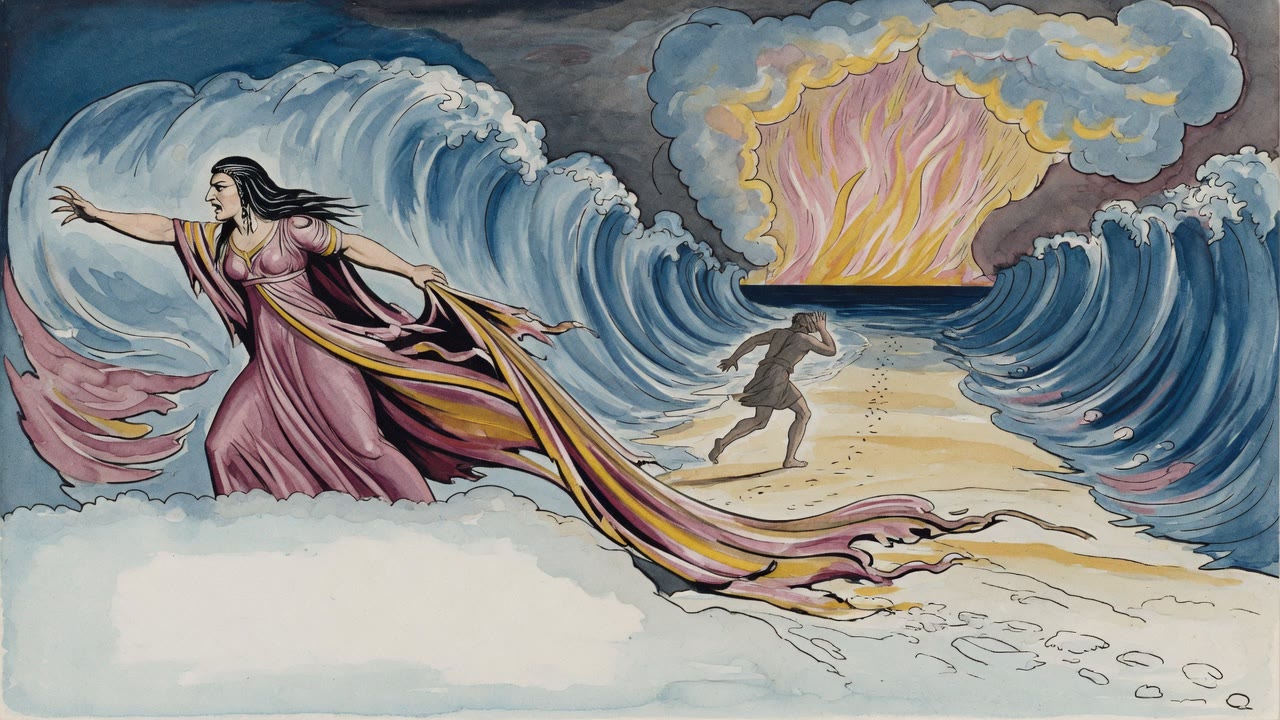
There was another cut hidden in the word passim: clefts, strips, openings. The sea itself would one day split for Joseph's descendants. The brothers did not know the whole future, but jealousy often feels prophecy before it has facts. They could smell a destiny that did not seem to include them.

The Road to Shechem Stayed Open

Jacob sent Joseph to check on his brothers near Shechem, though he knew the hatred waiting there. He told the boy to travel by day. He asked for word about the brothers and the flock. He did not say, come back to me.

Joseph answered like Abraham had answered before him: here I am. He went because his father asked, and because obedience can walk straight into danger while everyone else hears the warning bells.

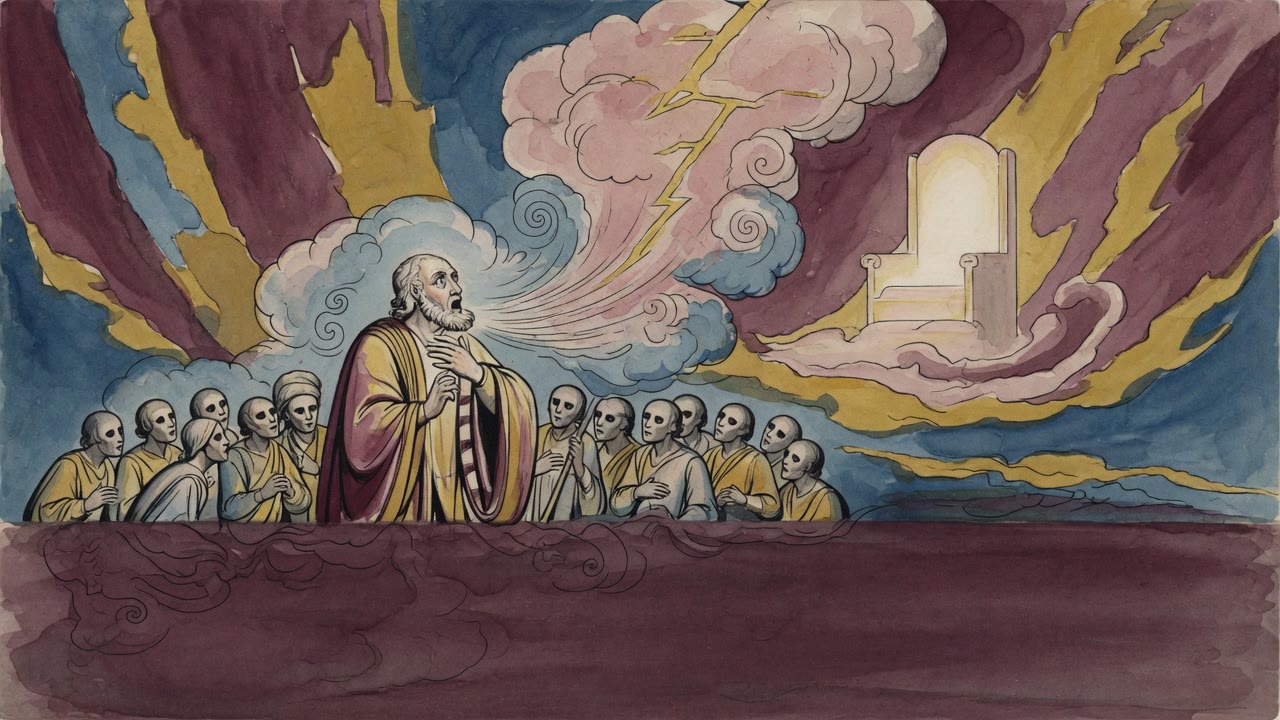
At Shechem he found no brothers. In the fields a man met him, and the man was more than a man. Gabriel asked what he sought. Joseph said he sought his brothers. The answer cut cold through the air: they had given up the divine qualities of love and mercy. They had gone to Dothan.

Behind the curtain of the Throne, the bondage of Egypt had begun to move. Joseph would be the first to enter it.

The Pit Had Teeth

They saw him from far away. The coat announced him before his voice could. Simon and Levi reached for death. Dogs were considered. Knives could have come next. They mocked the master of dreams and asked what would become of his dreams once the dreamer was gone.

Heaven answered without stepping into the field: they would see whose word stood, theirs or Mine.

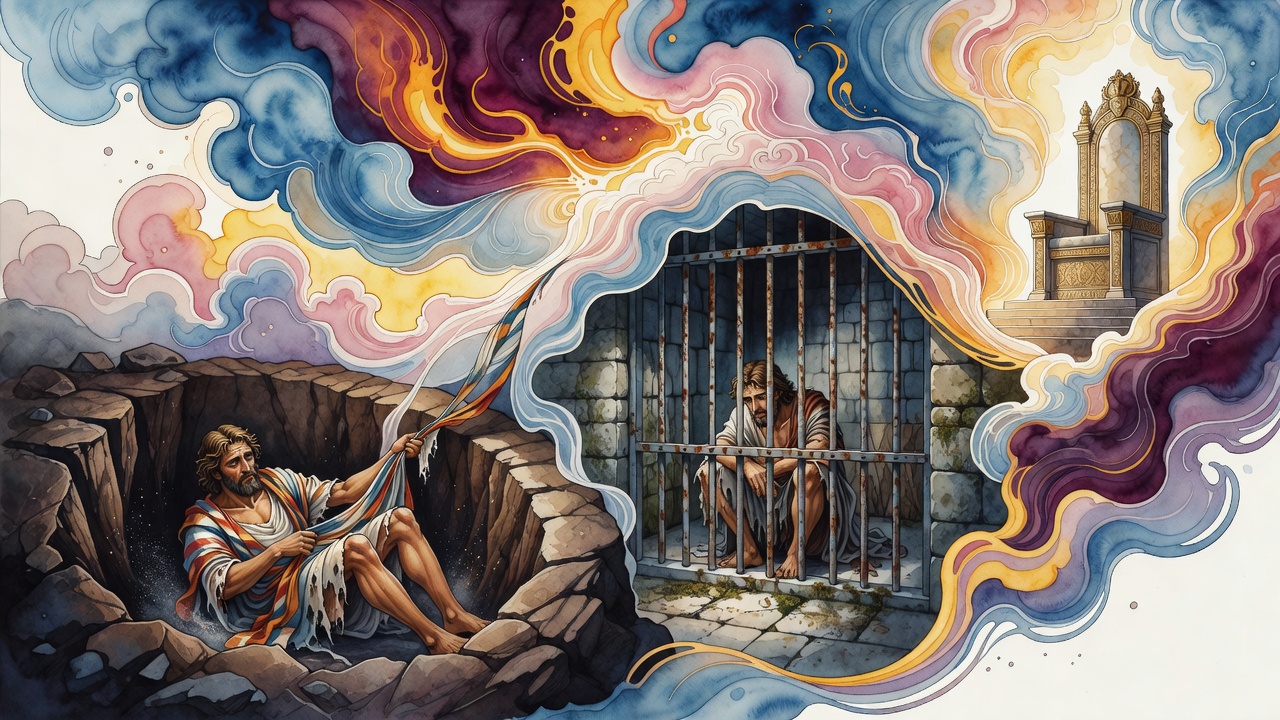
Joseph begged. He reminded them that he was their brother, flesh of their flesh. Zebulon wept. Reuben, carrying his own burden before Jacob, pulled the brothers back from murder and proposed the dry pit. The pit was dry because water had been kept from it for that hour. It was not empty. Snakes and scorpions lived below, coiled in the dark, but they did not touch him.

The brothers moved away so they would not have to hear him cry.

The Goat Returned to Jacob

Judah stopped the final plan to kill him. Better to sell him, he said, than spill a brother's blood. So Joseph went from pit to traders, from traders toward Egypt, from the family field into the first step of the decree spoken to Abraham.

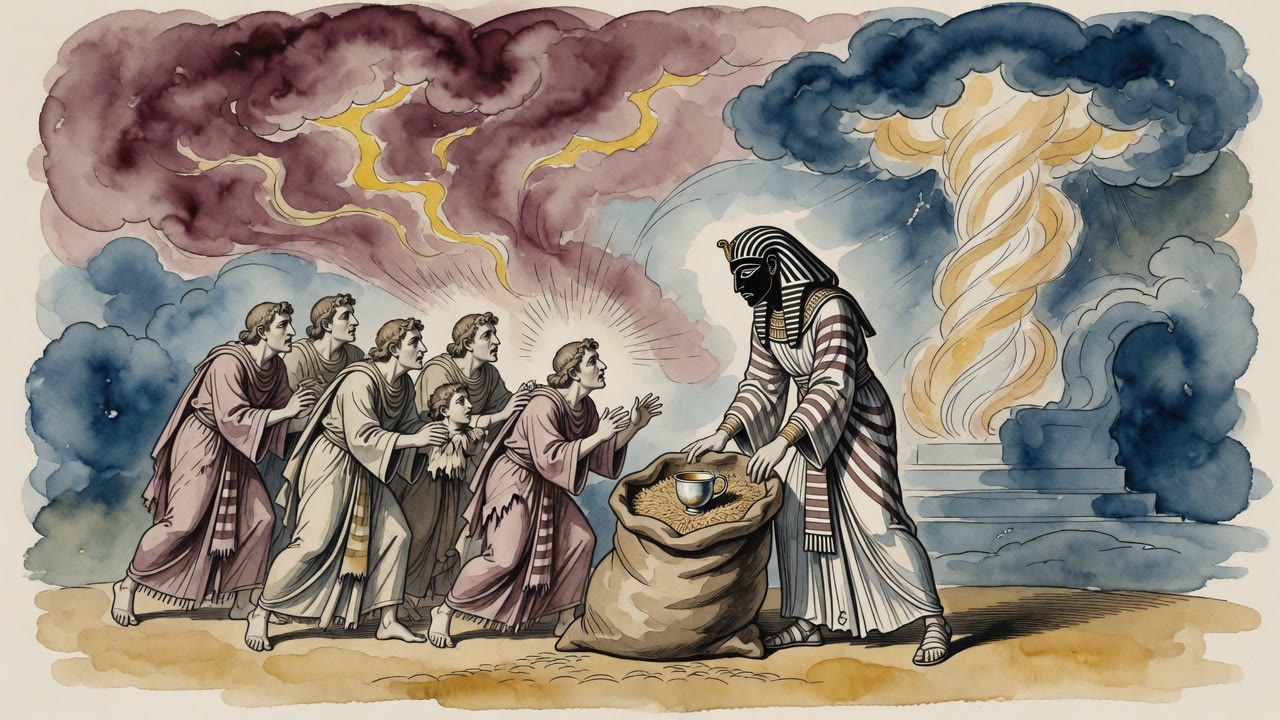
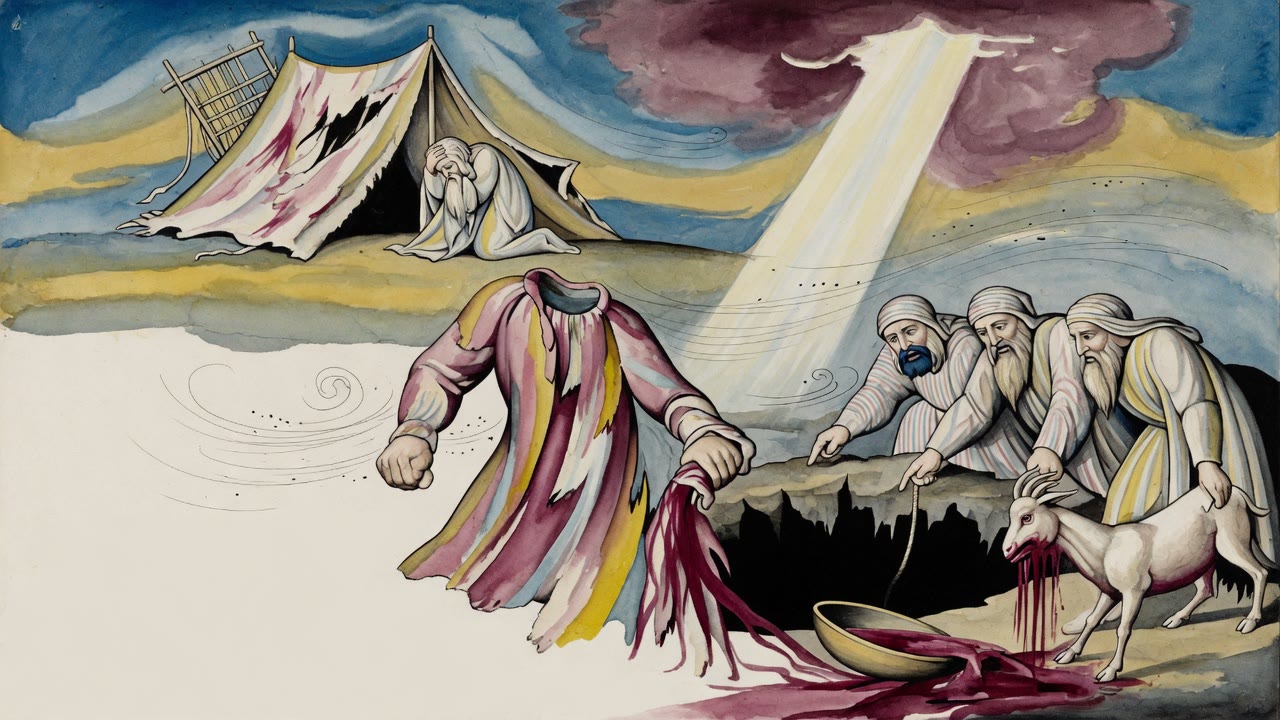
Then the brothers needed proof. They killed a young goat because its blood looks like human blood. They dipped the coat. They sent the cloth home and asked Jacob to recognize it.

A goat had once helped Jacob deceive Isaac. Goat skins on smooth arms had turned him into Esau long enough to take a blessing. Now goat blood turned Joseph's coat into evidence long enough to break Jacob's heart. The old tool returned to the old hand, sharpened by the sons who had learned deception without being taught.

Jacob looked at the blood and believed the lie. The coat that began as a father's love came back as a son's death. Somewhere on the road to Egypt, Joseph was still alive, and the dreams the brothers tried to bury were walking faster than they were.


← All myths
From the tradition

Sources

7 sources

The texts this telling draws on, in full. Open a card to read inline, or expand it for a wider, quieter read.

Legends of the Jews 1:9Legends of the Jews

The Torah, in the story of Joseph, doesn’t shy away from those very human emotions. In fact, it puts them front and center.

The brothers of Joseph, were seething. And it all started with a coat.

Jacob, their father, loved Joseph more than all his other sons. Why? Well, according to Legends of the Jews, Ginzberg tells us Joseph was as beautiful as his mother Rachel, who Jacob deeply loved. Looking at Joseph eased Jacob’s grief over her death. Can you imagine? To see your beloved in your child’s face? It’s a powerful image.

Jacob showed this love openly. He gave Joseph a special coat. We know it as the "coat of many colors," but the Hebrew, Passim, is so much richer. Passim. It wasn't just beautiful, it was incredibly fine, so light you could hide it in your hand. But the word itself, Passim, hints at the future, a kind of coded message. As Legends of the Jews goes on to explain, each letter of Passim foreshadows Joseph's trials: Pe for Potiphar, Samek for the merchants who bought him, Yod for the Ishmaelites, and Mem for the Midianites. It's like the coat was a prophecy woven into fabric.

But that's not all. Passim also means "clefts." According to tradition, Joseph's brothers knew that someday the Red Sea would be cleft – split open – for Joseph’s descendants. They were jealous not just of the coat, but of the future glory they sensed awaited him!

Imagine the simmering resentment. To be constantly reminded that you are not the favorite, to see your brother singled out… it’s a potent mix of emotions.

Now, here’s a fascinating point: despite their hatred, the brothers weren’t secretive about it. They didn’t hide their feelings. They proclaimed their enmity openly. You might think that makes them worse, but is there something almost honest about it? At least you know where you stand.

This whole episode, really, is a microcosm of human relationships. Love, favoritism, jealousy, resentment, and the weight of destiny – all wrapped up in a single, shimmering coat. What do we do with these complex emotions? How do we work through the uneven playing fields of life? The story of Joseph, as we’ll see, has a lot to say about that.

Full source
Bereshit Rabbah 84:8Bereshit Rabbah

Take the story of Joseph, for example. It's a rollercoaster of sibling rivalry, betrayal, and ultimately, redemption. But what really set the stage for all that drama? It all starts with a coat.

In (Genesis 37:3), we read, "Israel loved Joseph more than all his sons, because he was a son of his old age; and he made him a ketonet passim," often translated as a "fine tunic." And just one verse later, the consequences are laid bare: "His brothers saw that their father loved him more than all his brothers, and they hated him and could not speak peaceably to him."

So, why this preferential treatment? The rabbis of the Midrash (rabbinic interpretive commentary), those ancient interpreters of our sacred texts, grappled with this very question. Rabbi Yehuda suggests that Joseph resembled Jacob in appearance, perhaps a mirror image of his beloved father. Rabbi Neḥemya offers a different perspective, saying that Jacob transmitted all the halakhot – the Jewish laws and traditions – that he had learned from Shem and Ever specifically to Joseph. He was grooming Joseph to carry on the spiritual leadership.

Let's zoom in on that tunic – that ketonet passim. What was so special about it? Reish Lakish, quoting Rabbi Elazar ben Azarya, gives us a powerful warning: a parent should never show favoritism. This tunic became a symbol, a visible manifestation of Jacob's love for Joseph, and it sowed the seeds of jealousy and hatred among his brothers.

The word passim itself is fascinating. One interpretation says it means the tunic reached the palm of his hand [pas yado]. This wasn't just about fashion; it was a status symbol, suggesting Joseph didn't need to work with his hands. He was being elevated above his brothers. Another interpretation suggests passim means the tunic was incredibly thin and light, so delicate it could be hidden in the palm of your hand. Imagine the craftsmanship!

The Midrash even plays with the word passim, suggesting that the brothers held a lottery [shehefisu] to decide who would deliver the tunic to their father after they had supposedly killed Joseph and stained it with blood. It fell to Judah.

But here's where it gets really interesting. The rabbis see the word passim as an acronym, hinting at the troubles that lay ahead for Joseph: Peh for Potiphar, samekh for the merchants [soḥarim] who bought him as a slave, yod for the Ishmaelites [Yishmaelim] who initially captured him, and mem for the Midianites [Midyanim] who also played a role in his enslavement (Genesis 37:28). It's like the Torah is giving us a secret preview of Joseph's journey!

And what about the ultimate redemption, the Exodus from Egypt? Rabbi Shimon ben Lakish, again in the name of Rabbi Elazar ben Azarya, connects the brothers' hatred of Joseph to the splitting of the Red Sea! He quotes (Psalms 66:5), "Come and see the works of God," and then (Psalms 66:6), "He turned the sea into dry land." According to the Rashash commentary, God orchestrated the brothers' hatred, which led to Joseph's enslavement in Egypt. This allowed him to resist the advances of Potiphar's wife, accrue immense merit, and ultimately, it was this merit that paved the way for the sea to be split [pas yam – strips in the sea] for the Israelites to escape slavery.

Isn’t that incredible? The ketonet passim, that seemingly simple garment, becomes a thread connecting sibling rivalry, personal trials, and national liberation. It reminds us that even the smallest actions can have profound and far-reaching consequences. It’s a powerful reminder that sometimes, what appears to be a curse can ultimately pave the way for a blessing.

Full source
Targum Pseudo-Jonathan on Genesis 37:31Targum Pseudo-Jonathan on Genesis

The brothers had to produce evidence. Targum Pseudo-Jonathan on (Genesis 37:31) explains their choice of weapon-of-deception with clinical precision: they killed a kid of the goats, because his blood is like the blood of a man.

Goat blood, in color and viscosity, most closely resembles human blood. The brothers were not improvising. They had thought it through. Which animal's blood would look, to their father's horrified eye, like the blood of his missing son?

Of all the animals they could have chosen, they chose a goat.

The sages never forgot this. Jacob himself, decades earlier, had deceived his own father Isaac by dressing in the skins of goats to impersonate Esau (Genesis 27:16). A young Jacob had used a goat to steal a blessing from his father. Now ten sons of Jacob use a goat to steal a son from their father. The measure is being returned. The deception travels through the generations.

This is the principle the sages call middah k'neged middah, measure for measure. Not as punishment, exactly, but as revelation. What we plant in one generation often ripens in the next. The goat that helped Jacob lie to Isaac returns, transformed, to help Jacob's sons lie to Jacob.

The Targumist states the fact without commentary: his blood is like the blood of a man. But the echo is inescapable. In the house of Israel, the old deceptions do not die. They wait in the fields, wearing the coat of a goat, until the next generation needs them.

Full source
Legends of the Jews, I. Joseph, Joseph Cast Into The PitLegends of the Jews

The story begins with Jacob's sons, out tending their father's flocks near Shechem. They were gone a long time, and Jacob, naturally, started to worry. He was concerned about his sons' safety and the welfare of his livestock – because, as the story reminds us, it’s a duty to care for anything that provides for you. So, he sends Joseph to check on them. Even though Jacob knew full well how much his other sons resented Joseph.

As Ginzberg retells it in Legends of the Jews, this willingness of Joseph to go, despite knowing the danger, later haunted Jacob. "Thou didst know the hatred of thy brethren, and yet thou didst say, Here am I." Ouch.

Jacob, perhaps sensing something amiss, tells Joseph to travel only during the day. He says, "Go now, see whether it be well with thy brethren, and well with the flock; and send me word." It’s almost a prophecy, isn’t it? As the story goes, he didn't say he expected to see Joseph again, only to hear from him.

Why all this indirectness? It's all part of God's plan. The story is setting up the events that will lead Jacob and his family down into Egypt. since the "covenant of the pieces" – that dramatic moment where God revealed the future to Abraham – God had decided that Jacob's descendants would end up in Egypt. And Joseph's being sold into slavery? Well, that was just God's way of making it happen, instead of, say, directly dragging Jacob down there as a captive.

Joseph arrives in Shechem, a place already associated with bad omens for Jacob's family – remember the story of Dinah? Finding no one there, he wanders into the wilderness. It's here that he meets Gabriel, appearing as a man. Gabriel asks, "What seekest thou?" Joseph answers, "I seek my brethren."

Gabriel's reply is… chilling. "Thy brethren have given up the Divine qualities of love and mercy." He reveals that they’ve moved on to Dothan, having learned that the Hivites were planning to attack them. But there's more. Gabriel says he overheard "behind the curtain that veils the Divine throne" that the Egyptian bondage was about to begin, and Joseph would be the first to be subjected to it!

Talk about a loaded encounter.

So, Joseph finds his brothers in Dothan, and they see him coming from afar. That's when the conspiracy begins. They plot to kill him. Legends of the Jews, drawing from various Midrashic (rabbinic interpretive commentary) sources, paints a vivid picture of their hatred. They even considered setting dogs on him!

Simon, fueled by jealousy and perhaps a bit of fear, says to Levi, "Behold, the master of dreams cometh… Let us slay him, that we may see what will become of his dreams." But God, as always, has the last word. "Ye say, We shall see what will become of his dreams, and I say likewise, We shall see, and the future shall show whose word will stand, yours or Mine."

As Simon and Gad move to attack, Joseph pleads for his life, reminding them of their father, Jacob. According to Ginzberg, his words touched Zebulon, who began to weep with him. Reuben steps in, proposing an alternative: "Let us not slay him, but let us cast him into one of the dry pits."

Now, here's where the divine orchestration gets really interesting. The pits were dry because God had prevented water from filling them, specifically so Joseph could be rescued later! Reuben, as the eldest, felt responsible and also grateful to Joseph for including him in his dream of the sun, moon, and stars. He planned to rescue Joseph later, hoping it would atone for a past transgression against Jacob.

Reuben's plan is foiled, but the story tells us he’s still rewarded for his good intentions. As he was the first to attempt to save Joseph, the city of Bezer in the tribe of Reuben was the first city of refuge. God tells Reuben that Hosea, one of his descendants, would be the first to lead Israel back to God.

The brothers agree to Reuben's plan. Simon seizes Joseph and throws him into a pit, which, to make matters worse, was filled with snakes and scorpions, with another pit full of waste nearby. Some accounts even say Simon threw stones at him!

Despite all this, Joseph later shows remarkable forgiveness towards Simon. When Simon is held hostage in Egypt, Joseph makes sure he receives special treatment.

Before throwing him in, they strip Joseph of his iconic coat of many colors. But miraculously, the snakes and scorpions can't harm him. God hears his cries, keeping the reptiles hidden. From the depths of the pit, Joseph cries out, "O my brethren, what have I done unto you?… Am I not flesh of your flesh, and bone of your bone?"

To avoid hearing his pleas, the brothers move away. Only Zebulon shows pity, fasting for two days in grief.

The brothers then decide to kill Joseph after they finish eating. But Judah intervenes, saying, "What profit is it if we slay our brother? Rather will the punishment of God descend upon us." He suggests selling Joseph to a passing group of Ishmaelites on their way to Egypt.

So, there you have it. Joseph in the pit. A story of betrayal, jealousy, and divine intervention. It's easy to focus on the cruelty of Joseph’s brothers, but maybe the real takeaway is about the bigger picture: that even in the darkest of pits, a larger plan might be unfolding. And that even the most terrible acts can be part of something… inevitable.

What do you think? Is it comforting to believe that everything happens for a reason, even when that reason is beyond our understanding? Or is it a dangerous idea that excuses terrible behavior? Maybe the truth lies somewhere in between.

Full source
Legends of the Jews 1:46Legends of the Jews

The only clue? A tattered, blood-stained coat. It's a scene ripped straight from the biblical story of Joseph, and the heartbreaking moment Jacob, his father, is presented with what appears to be proof of his son's demise.

The story behind that coat, and how it even made its way back to Jacob, is full of brotherly conflict, according to Legends of the Jews, Louis Ginzberg's masterful compilation of rabbinic lore.

It all started with a suggestion – a pretty terrible one, if you ask me. The brothers, having already sold Joseph into slavery (a detail glossed over in that initial presentation!), needed to cover their tracks. Someone (the text doesn't specify who initially proposed it) suggested using Joseph's distinctive coat as evidence of his death.

Simon wasn’t having it. He staunchly refused to hand over the coat. Why? Because, as Ginzberg tells us, Simon was still seething with anger at his brothers for not killing Joseph! He was ready to fight to keep it.

So, why the attachment to the coat? Was it a symbol of their betrayal? A grim souvenir? Whatever the reason, Simon's refusal nearly blew their entire scheme.

His brothers, cornered, turned on him. "Hand it over," they threatened, "or we'll say you were the one who did this awful deed." Faced with their collective accusation, Simon relented.

Enter Naphtali. He took the coat to Jacob, delivering the devastating news with carefully chosen words. "We found this garment," he said, "covered with blood and dust on the highway, a little beyond Shechem. Know now whether it be thy son's coat or not."

Can you imagine the weight of those words? The unbearable suspense?

Jacob, seeing the coat, instantly recognized it. Overcome with grief, he collapsed. Ginzberg describes him lying motionless on the ground, "like a stone." It's a powerful image of utter despair, a father's world shattering in a single, horrific moment.

Then, the dam broke. Jacob arose, his grief erupting in a loud cry, a wail of anguish: "It is my son's coat!"

It's a scene that resonates across millennia. A reminder of the power of deception, the fragility of family bonds, and the enduring pain of loss. And it all started with a coat. A coat that became a symbol of betrayal, grief, and a story that continues to captivate and haunt us to this day. What do you think the impact of that moment had on the rest of Jacob's life?

Full source
Targum Pseudo-Jonathan on Genesis 37:18Targum Pseudo-Jonathan on Genesis

Targum Pseudo-Jonathan on (Genesis 37:18) lingers over three words: from afar. The brothers saw Joseph in the distance, long before he arrived. They had time. They had distance. And in that empty space between sighting and arrival, they made up their minds to kill him.

Notice the Targum's precision: before he had come nigh to them, and plotted against him to kill him. The plot was fully formed before Joseph was in earshot. No argument preceded it. No provocation sparked it. Joseph did nothing that morning except walk toward his brothers wearing the coat his father had made him.

The sages saw in this moment the terrible power of the waiting gap. Had Joseph arrived suddenly, had he appeared at their shoulder with a smile and a greeting, they might not have been able to harden themselves fast enough. But distance is time. And time, for a crowd already nursing hatred, is weaponry.

The Talmud will later teach that anger should be slept on, that decisions made in the heat of seeing someone arrive are rarely wise (see Eruvin 65b). The brothers demonstrate the opposite. They saw Joseph, and the long distance to him was exactly the amount of time they needed to become ten men ready to kill one.

The Targumist is warning us. The dangerous moment is rarely the confrontation itself. The dangerous moment is the walk toward it. Watch what you think about while you wait.

Full source
Targum Pseudo-Jonathan on Genesis 37:4Targum Pseudo-Jonathan on Genesis

The Torah says the brothers hated Joseph and could not speak a word of peace to him (Genesis 37:4). Readers sometimes take this as a character flaw, petty brothers who refused to be civil. Targum Pseudo-Jonathan on (Genesis 37:4) sharpens the image.

The Targum keeps the phrase almost word-for-word: they cherished enmity against him, and were unwilling to speak peacefully with him. But the Aramaic word for cherished, netaru, is heavy. It is the word for guarding a grudge, nursing it, feeding it like a fire that must never go out. The brothers did not merely fail to greet Joseph. They worked at their hatred. Every day they chose it again.

The sages read the verse's silence as a strange consolation. They could not speak peacefully, meaning, they would not pretend. When Joseph walked by, they did not fake a smile. They did not lie. Rabbi Shimon ben Lakish, centuries later, would say: their crime was terrible, but at least they did not add hypocrisy to it (see Bereshit Rabbah 84:9).

It is a thin comfort. Honest hatred is still hatred. And the silence at the family table would soon grow into a plot, and the plot into a pit. The Targumist is telling us that Joseph's exile did not begin when he was sold. It began when ten men decided, every morning, that today they would still refuse to say shalom.

Full source