5 min read

Joseph Was Carried From Pit to Prison to Throne

Joseph was thrown into a pit, trapped by a garment, and forgotten in prison. Heaven kept moving him toward Pharaoh's throne.

Curated by Arthur · Told by Maggid ·
Table of Contents
  1. An Angel Pointed Toward Dothan
  2. The Garment Became a Second Trap
  3. His Father's Face Held Him Back
  4. The Angel Untied Every Reminder
  5. The Throne Was Already Moving

The pit had no water, but it had teeth.

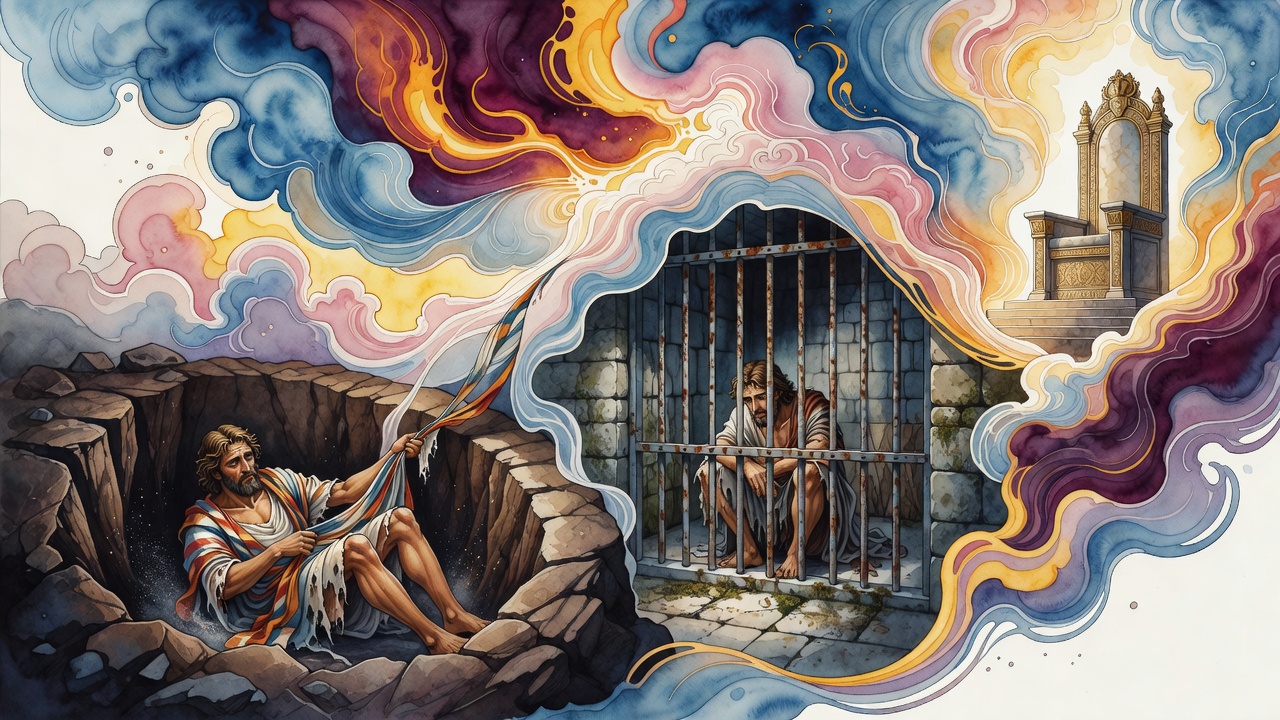
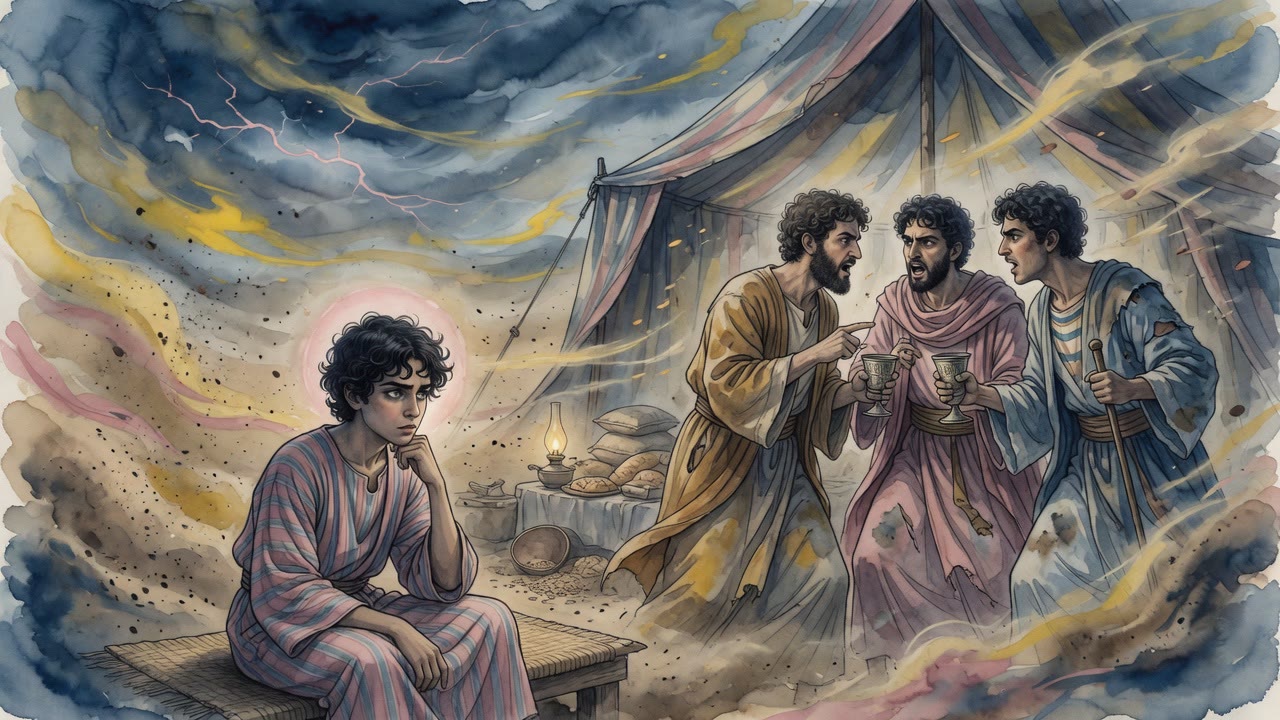
Joseph's brothers threw him down and sat to eat above him. The Torah says the pit was empty of water. The tradition listens to that sentence and hears the missing danger: snakes and scorpions below, brothers above, and a boy between both kinds of death.

He had come because Jacob sent him. He kept walking because obedience can look very much like walking into a trap.

An Angel Pointed Toward Dothan

Joseph wandered in the field before the pit found him.

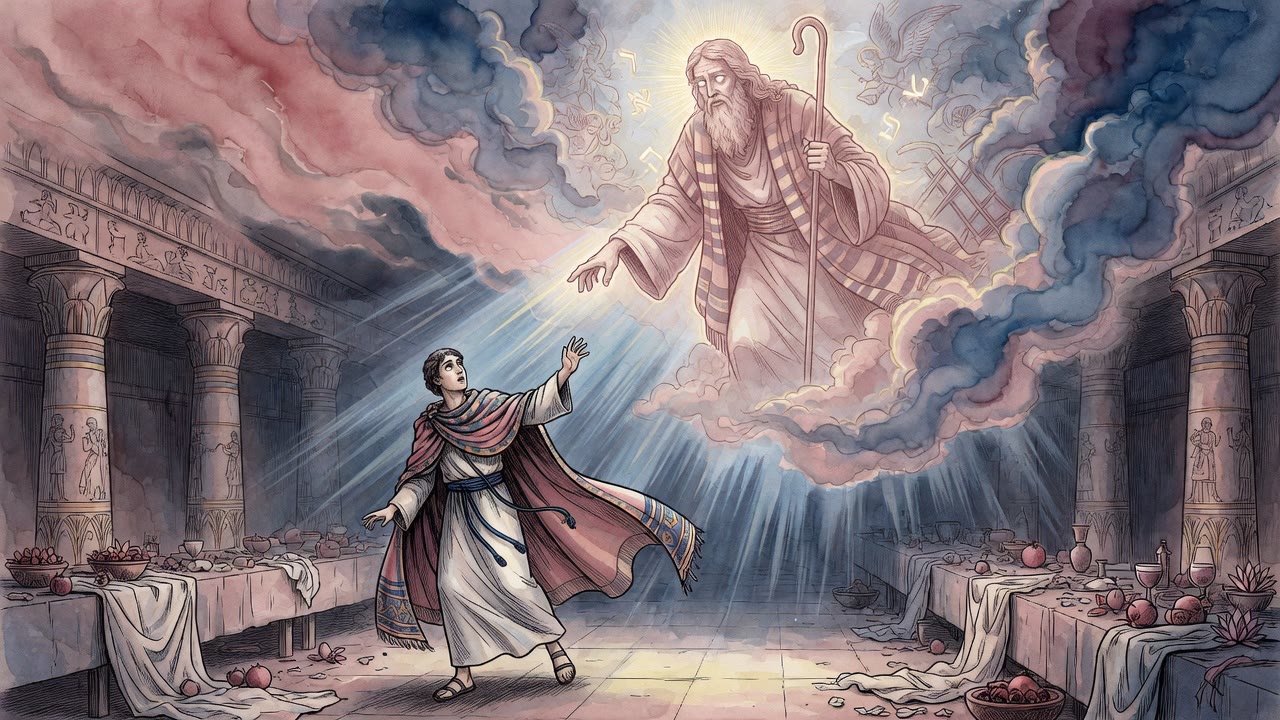
A stranger asked what he sought. Joseph answered that he was looking for his brothers. The stranger sent him toward Dothan, but the tradition sees more than a helpful passerby. The man was an angel, and the answer came from behind the curtain of the divine throne: the descent into Egypt was beginning, and Joseph would be first.

The angel did not rescue him from the road. The angel made sure he reached it.

The Garment Became a Second Trap

Egypt gave Joseph another house and another danger.

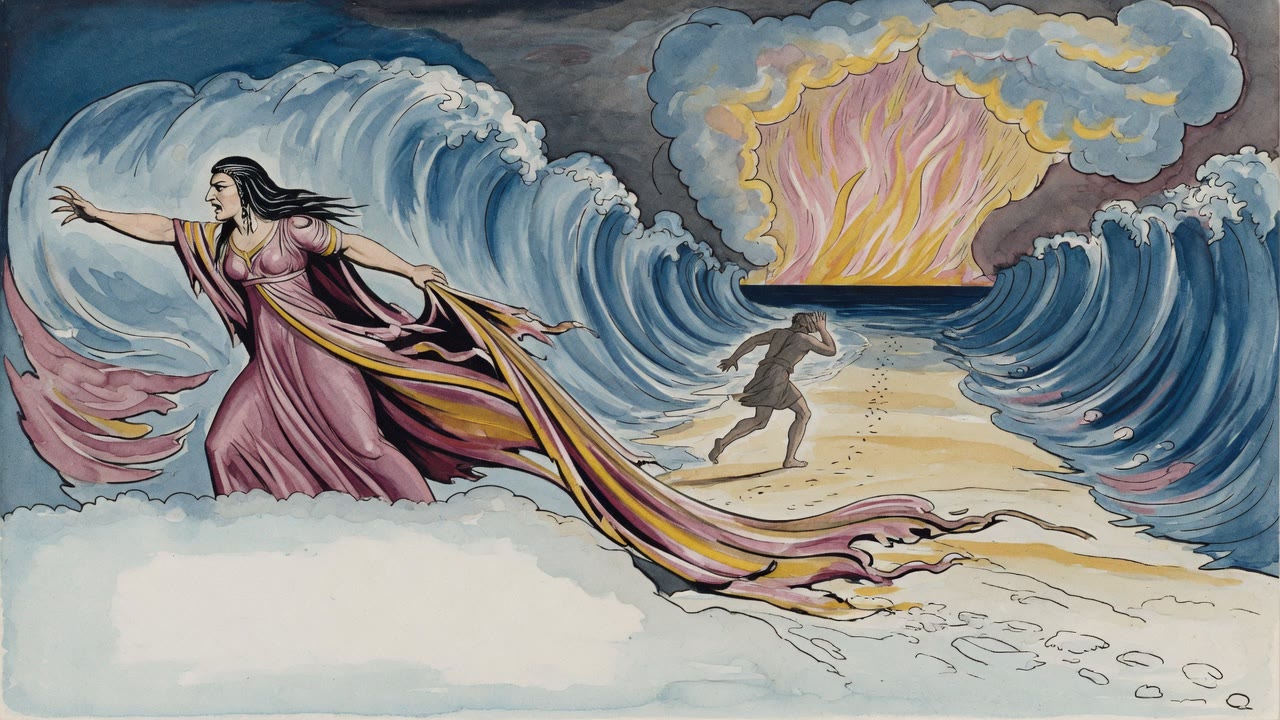
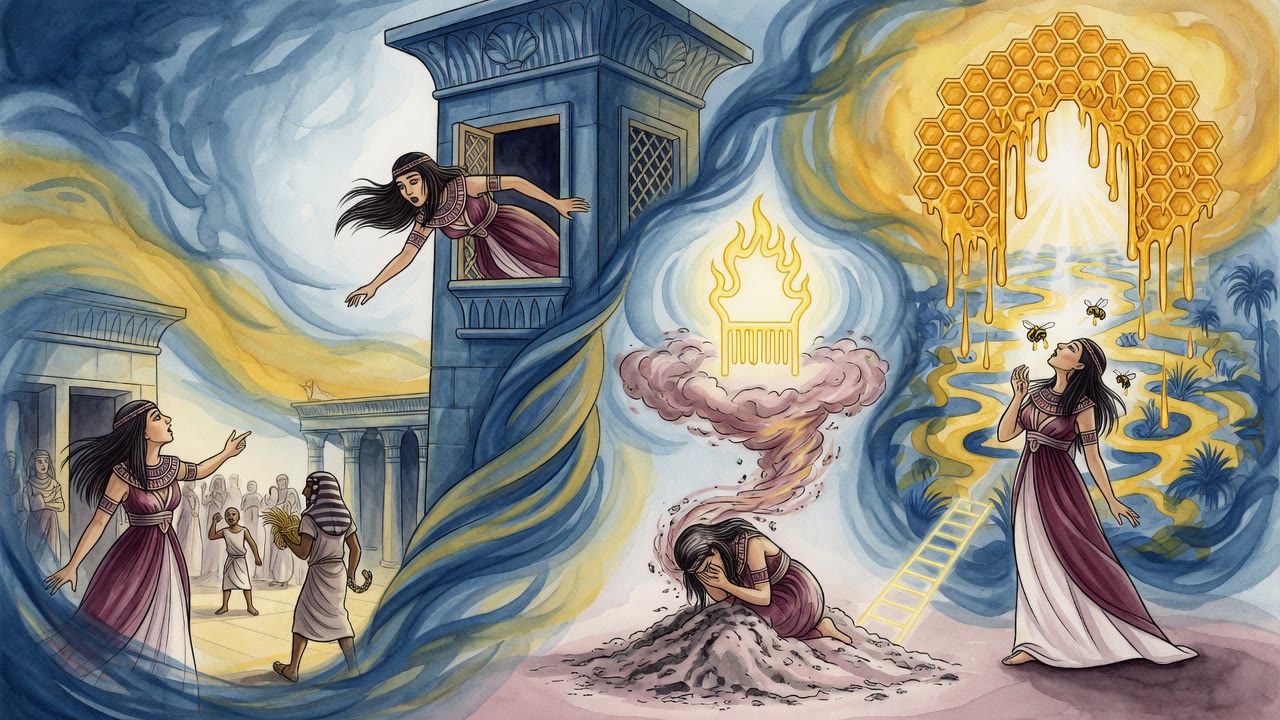
Potiphar trusted him with everything. Zuleika watched him with a desire sharpened by prediction. The stars had told her that descendants would come to her through Joseph, but the future had spoken in a riddle she could not read. She reached for him directly. He refused. She grabbed his garment, and he ran out without it.

The coat had helped turn his brothers against him. Another garment now sent him to prison.

His Father's Face Held Him Back

The tradition does not make Joseph marble.

At the dangerous instant, he almost broke. Then Jacob's face appeared before him, not as lecture but as presence. Joseph saw the father whose house he still carried inside him, the covenant that had not vanished in Egypt, the name he would lose if he stayed. He ran.

That is why his righteousness has weight. It was not untested purity. It was a body at the edge, seized back by memory.

The Angel Untied Every Reminder

In prison, Joseph interpreted dreams.

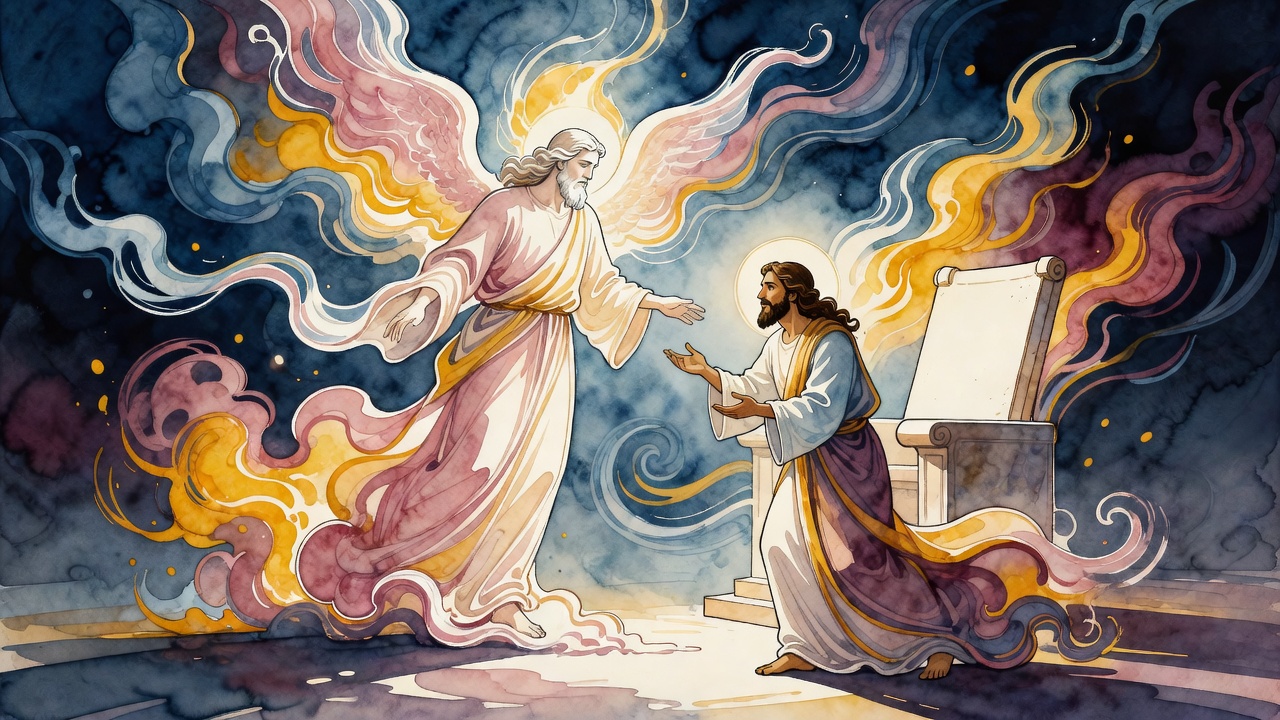
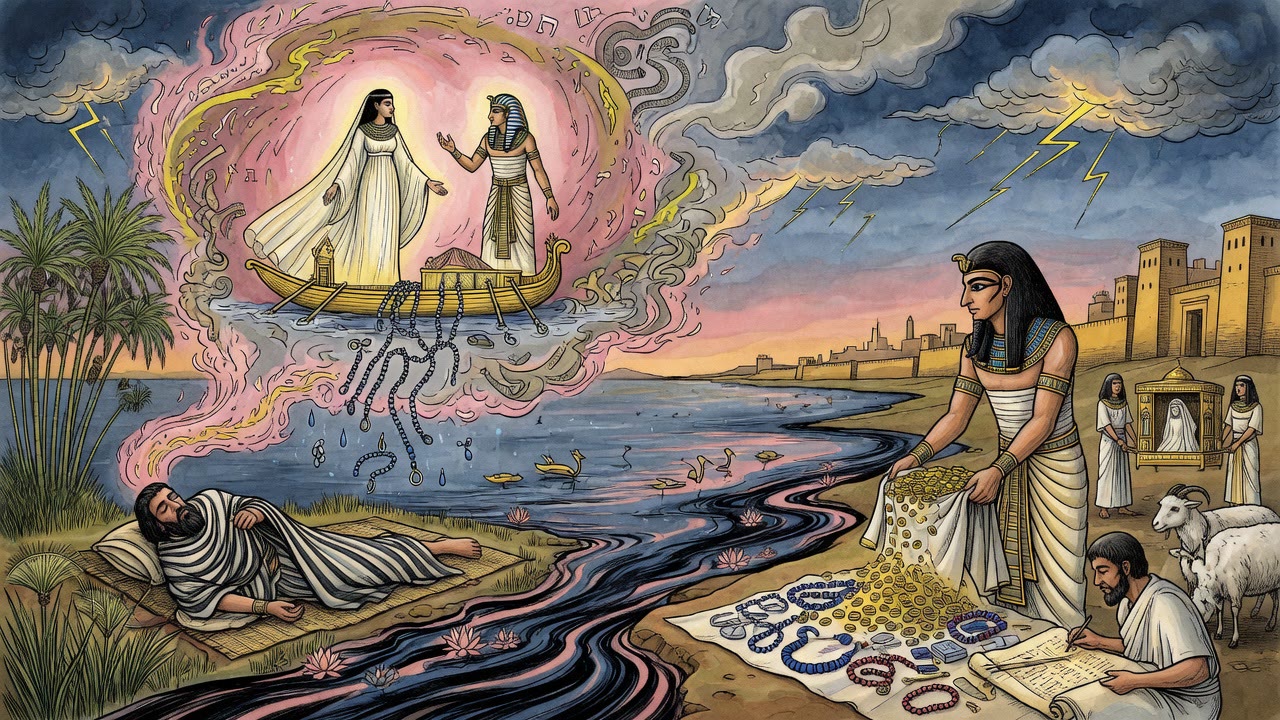
The chief butler promised to remember him and then forgot. Bereshit Rabbah makes the forgetting active. The butler tied knots to remind himself. An angel untied them. He made marks. Heaven erased the path back to Joseph because Joseph's rescue would not be credited to a palace servant's gratitude.

The delay hurt, but it protected the meaning of the ascent. God would remember him when human memory failed.

The Throne Was Already Moving

Years later, Pharaoh dreamed.

The butler remembered at last because heaven let him remember. Joseph was washed, shaved, brought up from the pit beneath the prison, and stood before the king. The boy from the scorpion pit became the man who could read famine before it arrived. Egypt thought it was promoting a useful interpreter. God was placing Jacob's house ahead of hunger.

The brothers had thrown him down. Zuleika had locked him away. The butler had forgotten him. Each fall became another stair.

The repeated garment matters because Joseph's life keeps being misread through cloth. The coat from Jacob announces favor and helps ignite hatred. The garment in Zuleika's hand becomes false evidence of guilt. Later, Pharaoh will dress Joseph in fine linen and gold, and Egypt will read that clothing as authority. The same life passes through envy, accusation, and kingship by changing what others think they see on him.

Joseph's own body is harder to disguise. When he finally reveals himself to his brothers, he speaks Hebrew and shows the sign of circumcision. Linen, office, beard, and Egyptian rank fall away. The brother they sold is still inside the viceroy. Heaven carried him through costumes until the truth could stand uncovered.

That is why the butler's forgetting is not a side episode. It prevents the wrong version of Joseph's story from being told. If a grateful servant pulls him out, Joseph owes the palace a favor. If God remembers him through Pharaoh's dream, Joseph arrives as the interpreter heaven has kept hidden for famine. The delay gives the ascent its proper author.

Joseph's rise needed to look impossible until the exact hour it became necessary.

Only then could Egypt learn that forgotten prisoners can become shelter for nations.

The stair had been hidden inside the fall.


← All myths

From the tradition

Sources

4 sources

The texts this telling draws on, in full. Open a card to read inline, or expand it for a wider, quieter read.

Legends of the Jews, I. Joseph, Joseph Cast Into The PitLegends of the Jews

The story begins with Jacob's sons, out tending their father's flocks near Shechem. They were gone a long time, and Jacob, naturally, started to worry. He was concerned about his sons' safety and the welfare of his livestock – because, as the story reminds us, it’s a duty to care for anything that provides for you. So, he sends Joseph to check on them. Even though Jacob knew full well how much his other sons resented Joseph.

As Ginzberg retells it in Legends of the Jews, this willingness of Joseph to go, despite knowing the danger, later haunted Jacob. "Thou didst know the hatred of thy brethren, and yet thou didst say, Here am I." Ouch.

Jacob, perhaps sensing something amiss, tells Joseph to travel only during the day. He says, "Go now, see whether it be well with thy brethren, and well with the flock; and send me word." It’s almost a prophecy, isn’t it? As the story goes, he didn't say he expected to see Joseph again, only to hear from him.

Why all this indirectness? It's all part of God's plan. The story is setting up the events that will lead Jacob and his family down into Egypt. since the "covenant of the pieces" – that dramatic moment where God revealed the future to Abraham – God had decided that Jacob's descendants would end up in Egypt. And Joseph's being sold into slavery? Well, that was just God's way of making it happen, instead of, say, directly dragging Jacob down there as a captive.

Joseph arrives in Shechem, a place already associated with bad omens for Jacob's family – remember the story of Dinah? Finding no one there, he wanders into the wilderness. It's here that he meets Gabriel, appearing as a man. Gabriel asks, "What seekest thou?" Joseph answers, "I seek my brethren."

Gabriel's reply is… chilling. "Thy brethren have given up the Divine qualities of love and mercy." He reveals that they’ve moved on to Dothan, having learned that the Hivites were planning to attack them. But there's more. Gabriel says he overheard "behind the curtain that veils the Divine throne" that the Egyptian bondage was about to begin, and Joseph would be the first to be subjected to it!

Talk about a loaded encounter.

So, Joseph finds his brothers in Dothan, and they see him coming from afar. That's when the conspiracy begins. They plot to kill him. Legends of the Jews, drawing from various Midrashic (rabbinic interpretive commentary) sources, paints a vivid picture of their hatred. They even considered setting dogs on him!

Simon, fueled by jealousy and perhaps a bit of fear, says to Levi, "Behold, the master of dreams cometh… Let us slay him, that we may see what will become of his dreams." But God, as always, has the last word. "Ye say, We shall see what will become of his dreams, and I say likewise, We shall see, and the future shall show whose word will stand, yours or Mine."

As Simon and Gad move to attack, Joseph pleads for his life, reminding them of their father, Jacob. According to Ginzberg, his words touched Zebulon, who began to weep with him. Reuben steps in, proposing an alternative: "Let us not slay him, but let us cast him into one of the dry pits."

Now, here's where the divine orchestration gets really interesting. The pits were dry because God had prevented water from filling them, specifically so Joseph could be rescued later! Reuben, as the eldest, felt responsible and also grateful to Joseph for including him in his dream of the sun, moon, and stars. He planned to rescue Joseph later, hoping it would atone for a past transgression against Jacob.

Reuben's plan is foiled, but the story tells us he’s still rewarded for his good intentions. As he was the first to attempt to save Joseph, the city of Bezer in the tribe of Reuben was the first city of refuge. God tells Reuben that Hosea, one of his descendants, would be the first to lead Israel back to God.

The brothers agree to Reuben's plan. Simon seizes Joseph and throws him into a pit, which, to make matters worse, was filled with snakes and scorpions, with another pit full of waste nearby. Some accounts even say Simon threw stones at him!

Despite all this, Joseph later shows remarkable forgiveness towards Simon. When Simon is held hostage in Egypt, Joseph makes sure he receives special treatment.

Before throwing him in, they strip Joseph of his iconic coat of many colors. But miraculously, the snakes and scorpions can't harm him. God hears his cries, keeping the reptiles hidden. From the depths of the pit, Joseph cries out, "O my brethren, what have I done unto you?… Am I not flesh of your flesh, and bone of your bone?"

To avoid hearing his pleas, the brothers move away. Only Zebulon shows pity, fasting for two days in grief.

The brothers then decide to kill Joseph after they finish eating. But Judah intervenes, saying, "What profit is it if we slay our brother? Rather will the punishment of God descend upon us." He suggests selling Joseph to a passing group of Ishmaelites on their way to Egypt.

So, there you have it. Joseph in the pit. A story of betrayal, jealousy, and divine intervention. It's easy to focus on the cruelty of Joseph’s brothers, but maybe the real takeaway is about the bigger picture: that even in the darkest of pits, a larger plan might be unfolding. And that even the most terrible acts can be part of something… inevitable.

What do you think? Is it comforting to believe that everything happens for a reason, even when that reason is beyond our understanding? Or is it a dangerous idea that excuses terrible behavior? Maybe the truth lies somewhere in between.

Full source
Legends of the Jews, I. Joseph, Joseph And ZuleikaLegends of the Jews

"Throw the stick up in the air," goes the saying, "it will always return to its original place." And perhaps that's how Zuleika, Potiphar's wife, felt about her growing desire for Joseph. According to Ginzberg's retelling in Legends of the Jews, Joseph, much like his mother Rachel, possessed a captivating beauty. And Zuleika? Well, she was consumed by an "invincible passion" for him.

Some even say that Zuleika's feelings were intensified by astrological predictions. The stars, it was said, foretold that she would have descendants through Joseph. Though, as we'll see, the prophecy unfolded in a way she never expected: Joseph later married her daughter Asenath, who bore him children.

Initially, Zuleika didn't reveal her feelings directly. Instead, she tried to use trickery. Under the guise of visiting him, she'd approach Joseph at night. And, because she had no sons of her own, she would pretend that she wanted to adopt him. Joseph, being the kind soul he was, even prayed to God on her behalf, and she eventually did bear a son. But even then, she continued to embrace Joseph, though he remained oblivious to her true intentions.

Eventually, Joseph recognized her "wanton trickery" and was deeply saddened. He tried to dissuade her from her sinful desires by speaking to her about God. But she, in turn, threatened him with death, even resorting to physical punishments to bend him to her will. When those tactics failed, she tried seduction. "I promise thee," she'd say, "thou shalt rule over me and all I have, if thou wilt but give thyself up to me… and thou shalt be to me the same as my lawful husband."

But Joseph wouldn't budge. Mindful of the teachings of his fathers, he retreated to his chamber to fast and pray, begging God to deliver him from the clutches of the Egyptian woman. Despite his self-denial, his master believed he was living a life of luxury, because, as the stories say, those who fast for the glory of God are made beautiful of countenance.

Zuleika, in a twisted game, would praise Joseph's chastity to her husband, ensuring he wouldn't suspect anything. And secretly, she'd encourage Joseph, telling him not to fear her husband, that Potiphar was convinced of his purity. She even claimed that if anyone tried to spread rumors about them, Potiphar wouldn't believe a word of it.

When she realized her words were having no effect, Zuleika changed tactics. She asked Joseph to teach her about the word of God. "If it be thy wish that I forsake idol worship," she pleaded, "then fulfil my desire, and I will persuade that Egyptian husband of mine to abjure the idols, and we shall walk in the law of thy God." Joseph's response was firm: "The Lord desireth not that those who fear Him shall walk in impurity, nor hath He pleasure in the adulterer."

On another occasion, she threatened, "If thou wilt not do my desire, I will murder the Egyptian and wed with thee according to the law!" Joseph, horrified, tore his garment and cried out, "O woman, fear the Lord, and do not execute this evil deed, that thou mayest not bring destruction down upon thyself, for I will proclaim thy impious purposes to all in public."

Even magic didn't work. She sent him a dish prepared with spells, hoping to ensnare him. But when the eunuch presented it, Joseph saw a vision of a man offering him a sword along with the dish. Warned, he refused to taste it. Later, when Zuleika questioned him, Joseph rebuked her, revealing that God had shown him her treachery through an angel. To prove that "the malice of the wicked has no power over those who fear God in purity," he ate the food before her eyes, trusting in the protection of God and the angel of Abraham.

Humiliated, Zuleika fell at Joseph's feet, promising to never repeat her sin. But her unholy passion persisted, and her distress made her visibly ill. When her husband noticed her decline, she feigned a pain in her heart.

In a moment of desperation, when alone with Joseph, she threatened suicide if he wouldn't yield to her. Joseph, attempting to calm her, warned that her rival, Asteho, would mistreat her children and erase her memory from the earth. But his words backfired, fueling her hope that he cared for her.

Day after day, Zuleika, whose name, according to some traditions, was indeed Zuleika, pursued him with flattery and amorous talk. "How fair is thy appearance, how comely thy form! Never have I seen so well-favored a slave as thou art." Joseph, unwavering, would reply, "God, who formed me in my mother's womb, hath created all men."

She'd compliment his eyes, his words, his hair, but Joseph remained steadfast, never even raising his gaze to meet hers. Gifts and threats were equally ineffective. He knew, "The Lord executeth judgment for the oppressed… The Lord giveth food to the hungry… The Lord looseth the prisoners… The Lord raiseth up them that are bowed down… The Lord openeth the eyes of the blind."

When she resorted to seductive behavior, he rejected her, proclaiming, "I fear my master." Zuleika, in a fit of passion, would retort, "I will kill him!" Joseph, appalled, exclaimed, "Not enough that thou wouldst make an adulterer of me, thou wouldst have me be a murderer, besides?" And then, he would declare, "I fear the Lord my God!"

Zuleika, unable to grasp his devotion, dismissed his fear of God. But Joseph countered, "Great is the Lord and highly to be praised, and His greatness is unsearchable." One time, she even took him into her chamber and covered the idol hanging above the bed, so it wouldn't witness their actions. Joseph responded, "Though thou coverest up the eyes of the idol, remember, the eyes of the Lord run to and fro through the whole earth."

He continued, "Adam was banished from Paradise on account of violating a light command; how much more should I have to fear the punishment of God, were I to commit so grave a sin as adultery! The Lord is in the habit of choosing a favorite member of our family as a sacrifice unto Himself… Also the Lord is in the habit of appearing suddenly, in visions of the night, unto those that love Him… Were I to fulfil thy desire, I would share the fate of my brother Reuben."

With these words, Joseph sought to cure Zuleika of her lust, not out of fear of punishment or public opinion, but because he desired to sanctify the Name of God before the entire world.

Finally, when she declared her desires in unmistakable terms, Joseph recoiled. "Why dost thou refuse to fulfil my wish? Am I not a married woman? None will find out what thou hast done." Joseph replied, "If the unmarried women of the heathen are prohibited unto us, how much more their married women? As the Lord liveth, I will not commit the crime thou biddest me do." This, it is said, was an example of pious men uttering an oath when tempted, seeking moral courage to control their instincts.

When persuasion failed, Zuleika's desire plunged her into a deep sickness. The women of Egypt came to visit, questioning her languid state. Zuleika devised a plan. She prepared a feast, placing knives at each setting to peel oranges. Then, she ordered Joseph to appear, adorned in costly garments, and serve her guests.

As Joseph entered, the women were captivated by his beauty. They became so entranced that they cut their hands with the knives, and the oranges in their hands were covered with blood, yet they were oblivious. Zuleika then revealed the reason for her suffering, explaining how she constantly saw Joseph and could not control her feelings.

The women, now understanding, suggested she simply reveal her feelings to Joseph. But Zuleika explained that she had tried everything, promising him everything, yet he remained unmoved.

Her sickness worsened. While her husband remained oblivious, Zuleika's female friends, aware of her love for Joseph, continued to encourage her to entice him. One day, she seized Joseph, but he was stronger and pushed her to the ground. Weeping and pleading, Zuleika begged him to consider the honor she had bestowed upon him and to end her suffering.

But Joseph remained steadfast. Zuleika, undeterred, persisted for an entire year, but Joseph, in his chastity, refused to even look at her. In a final act of desperation, she placed an iron shackle on his chin, forcing him to look her in the face.

What does this story tell us about temptation, resilience, and the unwavering commitment to one's beliefs? Joseph's journey is a evidence of the power of faith and the strength of character in the face of overwhelming odds. It's a reminder that even when the world tries to pull us in different directions, we have the capacity to choose our own path, guided by our principles and our connection to something greater than ourselves.

Full source
Bereshit Rabbah 88:7Bereshit Rabbah

Remember the story? Joseph, wrongly imprisoned, interprets the dreams of Pharaoh's chief butler. He asks the butler, once restored to his position, to remember him and mention him to Pharaoh. But, as (Genesis 40:23) tells us: "And the chief butler did not remember Joseph, but forgot him." Ouch.

What's really going on here? Bereshit Rabbah, a collection of rabbinic interpretations of Genesis, dives deep into this verse, and it's far from a simple oversight.

The Midrash (rabbinic interpretive commentary) paints a fascinating picture. The butler wasn't just forgetful; he was actively prevented from remembering! Each day, he'd set up reminders, conditions that would trigger his memory of Joseph. But, the Bereshit Rabbah tells us, an angel intervened, reversing those conditions every single time. He'd tie knots in his garments as a reminder, and the angel would untie them.

So why the cosmic interference? Why couldn't the butler just do what he promised? The answer, according to the Midrash, is profound. God didn't want Joseph's salvation to depend on the whims of a royal servant. As the text puts it, "You forget him, but I will not forget him."

This leads to a beautiful, sweeping reflection on God's unwavering presence in times of seeming abandonment. The Midrash launches into a series of rhetorical questions that echo through Jewish history. Who expected Abraham and Sarah, in their old age, to have a child? Who expected Jacob, crossing the Jordan with only his staff, to become wealthy? Who expected Joseph, after all his trials, to become a king?

The list goes on. Moses, cast into the Nile. Ruth, the Moabite proselyte, becoming the ancestor of kings. David, the shepherd boy, ascending the throne. Yehoyakhin, freed from prison. Ḥananya, Mishael, and Azarya, emerging unscathed from the fiery furnace. And on and on, a litany of seemingly impossible transformations, each a evidence of God's power to uplift and redeem.

It's a powerful reminder that even when human help fails, when we feel utterly forgotten, divine providence is still at work. As the Midrash continues, who expected deliverance in the days of Haman? Who expects the exiles to return in glory? Who expects the fallen booth of David to be raised again, a reference to the messianic age from (Amos 9:11)?

The passage culminates with a vision of ultimate unity and redemption. "Who expects that the whole world will become one group," the text asks, echoing the messianic hope of a world united in service to God, as (Zephaniah 3:9) describes: "For then I will convert all the peoples to a pure language, for all of them to call in the name of the Lord, to serve Him with a common effort."

It's easy to get caught up in the day-to-day disappointments, the moments when we feel overlooked and abandoned. But the story of Joseph, as interpreted by Bereshit Rabbah, offers a powerful counter-narrative. It reminds us that even in our darkest moments, even when we're completely forgotten by those around us, we are held, remembered, and ultimately redeemed by a force far greater than ourselves. So, the next time you feel forgotten, remember Joseph, remember the butler's knots, and remember that you are not alone.

Full source
Legends of the Jews, I. Joseph, Joseph Makes Himself KnownLegends of the Jews

Legends of the Jews (Ginzberg) turns to Joseph Makes Himself Known.

We've seen Joseph rise to power in Egypt, second only to Pharaoh himself. We've seen his brothers unknowingly travel to Egypt seeking grain during a famine, and we’ve watched Joseph, unrecognizable after years apart, test them, subtly manipulating events to see if they've truly changed since they sold him into slavery. Now, according to Ginzberg's Legends of the Jews, Joseph sees that his brothers are truly on the verge of destroying Egypt in their fury over Benjamin's apparent theft of a valuable cup. He knows it's time.

How to reveal himself? Joseph, ever the strategist, engineers a perfect moment. He uses Manasseh to calm Judah's rage. Then, he gently questions them about the stolen cup. Benjamin vehemently denies any involvement, swearing an oath, invoking the memory of his lost brother Joseph. He cries out, "As true as my brother Joseph is separated from me… I swear that I did not touch the cup!"

Joseph, hearing these words, can no longer contain himself. He challenges them. “You said the brother of this lad was dead. Did you yourselves see him dead before you?” They confirm they did. Joseph presses further, "Did you stand beside his grave?" Again, they say yes. But then Joseph asks, "Did you throw clods of earth upon his corpse?" And this time, they say no.

Joseph seizes on this nuance. According to Legends of the Jews, Joseph reflects that his brothers are still pious and truthful. They believe him dead because, as the story goes, a poor man is like a dead man, and they did throw him into a pit, which they considered his grave. But they didn't actively cover him with earth, which would have been a lie.

It's a moment of intense psychological insight. He declares, "Ye lie when ye say that your brother is dead. He is not dead. You sold him, and I did buy him." Then he dramatically calls out, "Joseph, son of Jacob, come hither!" The brothers are bewildered, looking around for this mysterious Joseph. Finally, he cries out, "Why look ye here and there? Behold, I am Joseph your brother!"

Can you imagine the shock? The text says, "Their souls fled away from them." They are utterly stunned. God, however, performs a miracle and returns their souls to their bodies, allowing them to comprehend the unbelievable truth.

Joseph tries to reassure them, pointing out that he is speaking to them in Hebrew, proving his identity. But they are still in disbelief. The smooth-faced youth they betrayed is now a powerful, bearded ruler! So, Joseph bares his body, revealing the marks of his lineage, proving he is indeed a descendant of Abraham.

The brothers are ashamed and terrified. According to Legends of the Jews, they are so enraged at Joseph for revealing their misdeeds that they want to kill him! But an angel intervenes, scattering them. Judah's outcry is so powerful that the very walls of Egypt crumble!

Despite their fear, Joseph seeks to comfort them. "Now be not grieved, nor angry with yourselves, that ye sold me hither, for God did send me before you to preserve life." He emphasizes that he harbors no vengeful thoughts. He uses vivid imagery, saying, "As little as I harbor vengeful thoughts in my heart against Benjamin, so little do I harbor them against you."

Finally, his words begin to soothe them. They approach him, and Joseph, weeping, embraces and kisses each of them. He weeps because his prophetic spirit shows him the future enslavement of their descendants. He particularly weeps on Benjamin's neck, foreseeing the destruction of the two Temples, which would be located in Benjamin's territory. And Benjamin weeps for the sanctuary at Shiloh, in Joseph's territory, which is also destined for destruction.

Pharaoh, relieved by the reconciliation, welcomes Joseph's family to Egypt, offering them the best land. But even in this moment of triumph, there's a hint of future conflict, as some Egyptians worry about the influx of Hebrews.

Joseph showers his brothers with gifts, including changes of clothing for weekdays and the Sabbath. He gives Benjamin five changes of raiment, not to elevate him, but to foreshadow the future glory of Mordecai, a descendant of Benjamin, who would be arrayed in five royal garments. He presents his brothers to Pharaoh, who is impressed by their heroic stature and handsome appearance.

Joseph also provides wagons for his family to travel to Egypt. When Judah discovers that they are ornamented with idols, he burns them. Joseph replaces them with eleven others, including the one he used when he first rose to power, now intended for his father, Jacob. He sends lavish gifts to his brothers' children and wives, and even to his sister, Dinah.

As his brothers depart, Joseph gives them three pieces of advice for their journey: don't take too large steps, don't discuss Halakic (Jewish law) subjects and lose your way, and enter the city before sunset.

What a complex and emotionally charged moment! Joseph's revelation is not just a personal reunion; it’s a pivotal point in the history of his family and, ultimately, the Jewish people. He transforms potential tragedy into a moment of reconciliation and sets the stage for their future in Egypt. It leaves you wondering: how often do we misinterpret events in our own lives, only to realize later that they were part of a larger plan? And how often do we hold onto secrets, when perhaps, revealing them could lead to healing and understanding?

Full source