Joseph Opened Egypt's Stores the Day the Seed Failed
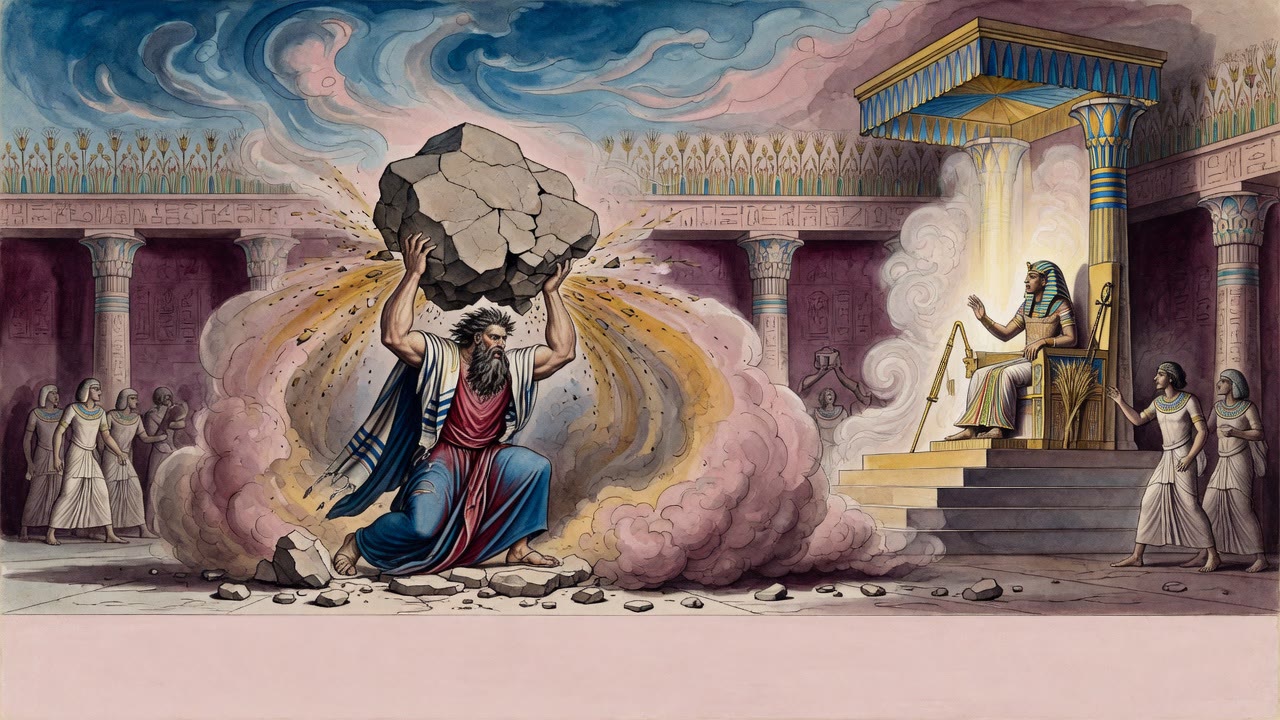
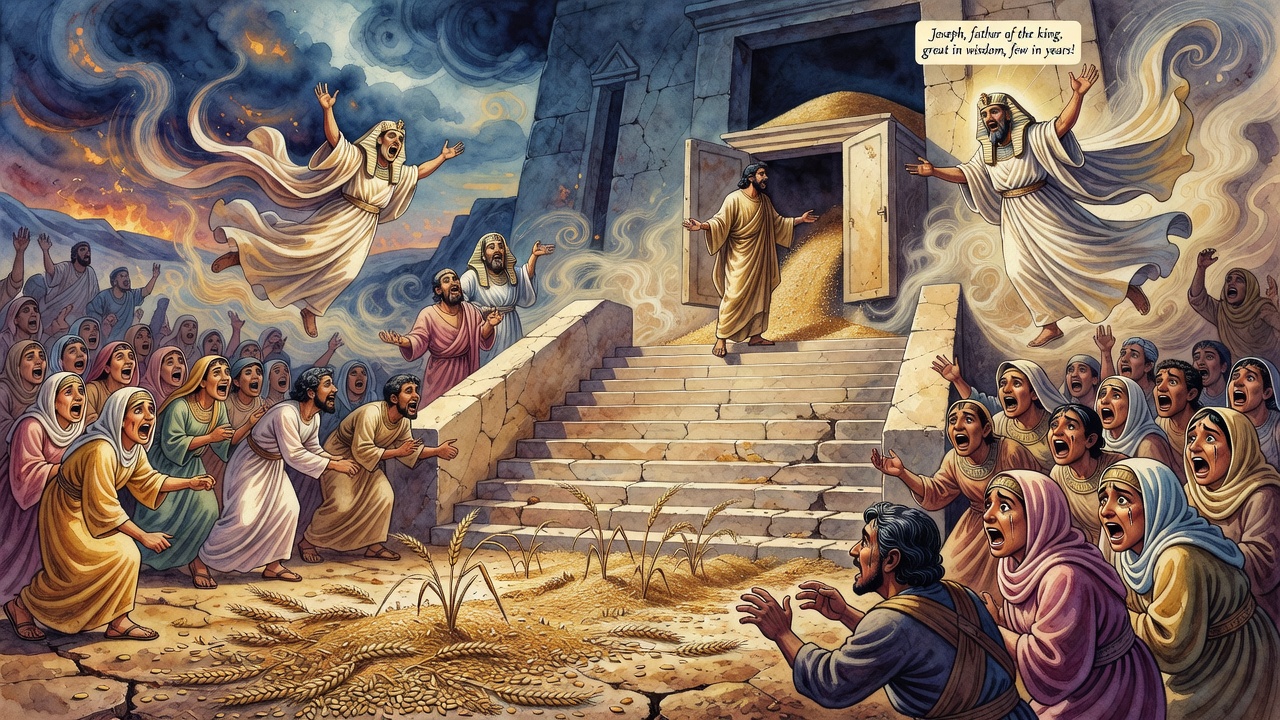
Seed wheat refused to rise. Crowds cried at Pharaoh's steps. Heralds called Joseph father of the king, great in wisdom, few in years, and he sold bread.
Table of Contents
 Click for full size
One Dream, Doubled
Joseph stood before Pharaoh and did not hedge. The seven wasted cattle rising from the river and the seven thin ears scorched by the east wind were not two warnings but one, spoken twice so no courtier could pretend the night had been unclear. Plenty would fill the land until the barns groaned. Then famine would eat the plenty until the barns remembered their emptiness. Store now or die later. That was the whole vision, hard as a brick in the mouth.
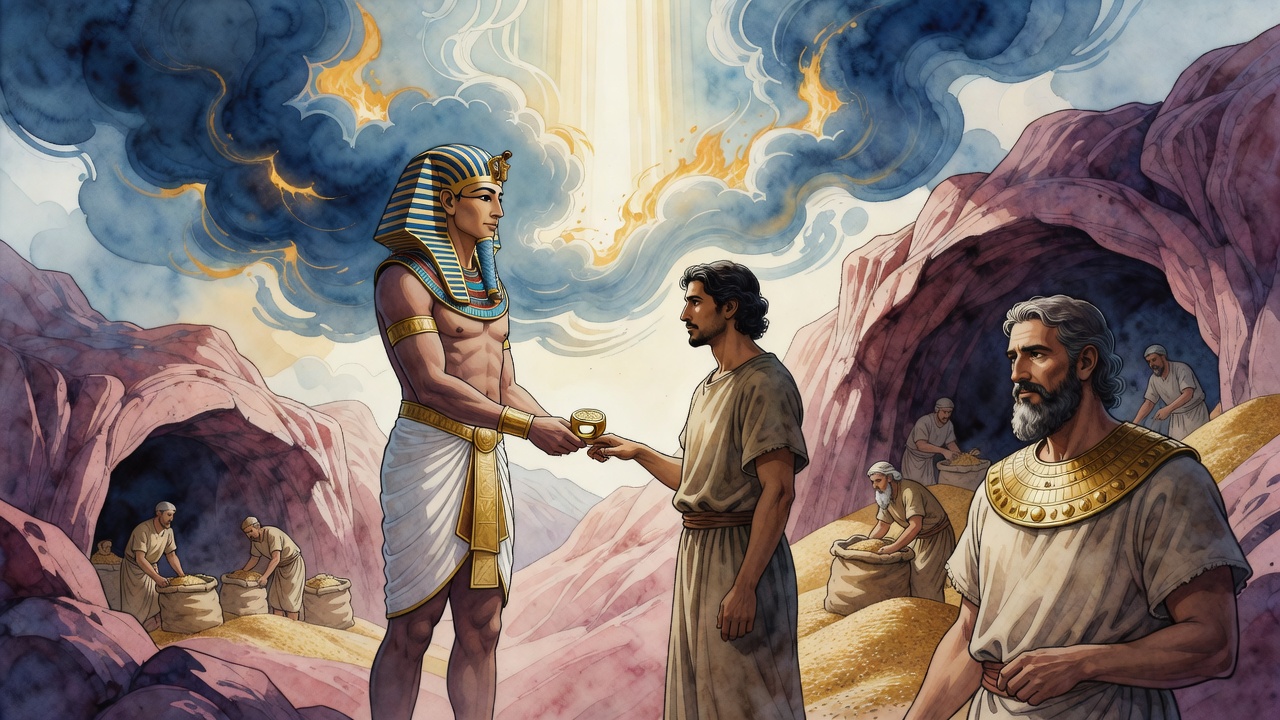
Pharaoh listened with the stillness of a man who has already watched his magicians fail. The Hebrew prisoner, washed and shaved for the throne room, did not fail. Within a breath the throne transferred policy to a man still wearing the smell of the jail under the linen. Seven good years. Seven bad. One plan. No second opinion would be allowed to wreck it.
Father of the King
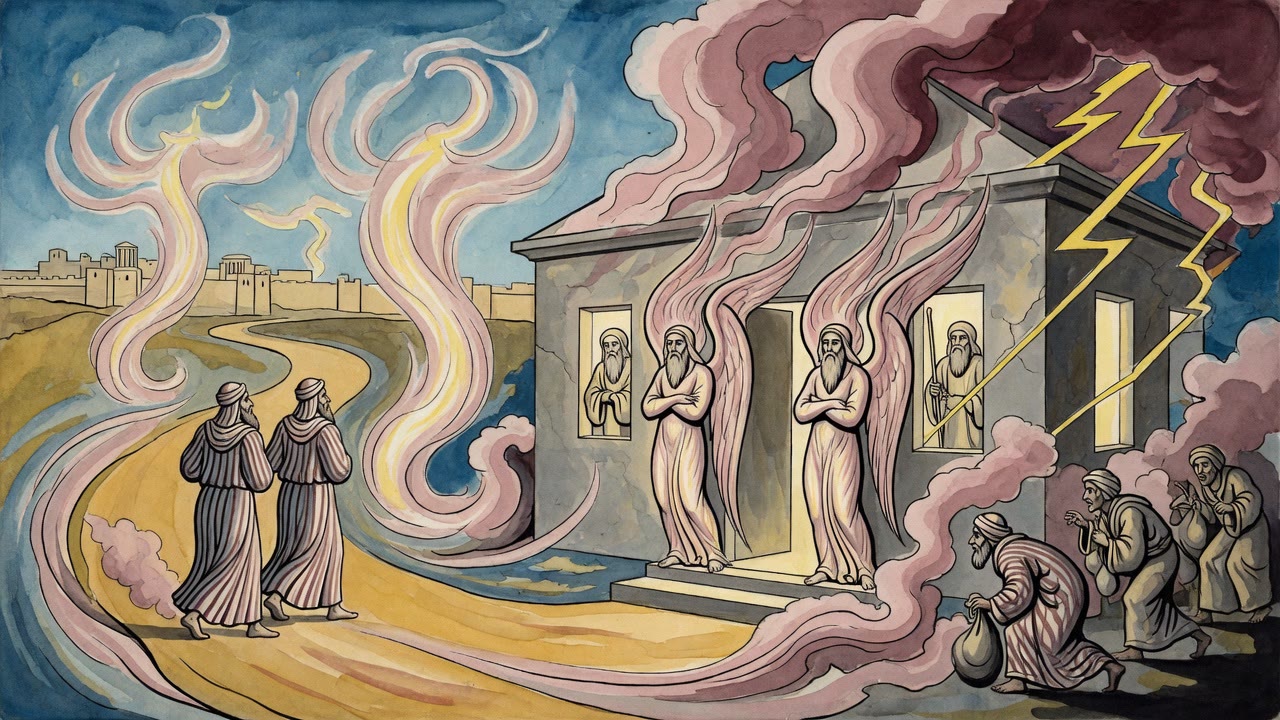
Runners went ahead of the second chariot and sang so the streets would learn the new order before the dust settled.
"This is the Father of the king. Great in wisdom, few in years."
The Hebrew of the Torah preserves only the obscure word avrekh, a knot scholars still pull. The old Aramaic reading splits it clean: father in counsel, tender in years. Joseph was thirty when he rode that road. Authority of an elder in a body still willing to work from dawn. The empire learned his name before it learned how hungry it would become, and children who watched the chariot pass would later stand in his bread lines.
Seven years he gathered. Granaries rose like artificial hills along the Nile. Grain poured in until counting became a kind of worship of tomorrow. Overseers learned his numbers. Farmers learned his tax. Then the lean years opened their mouth, and the east wind that had burned the dream-ears arrived in the fields for real.
The Seed Refused
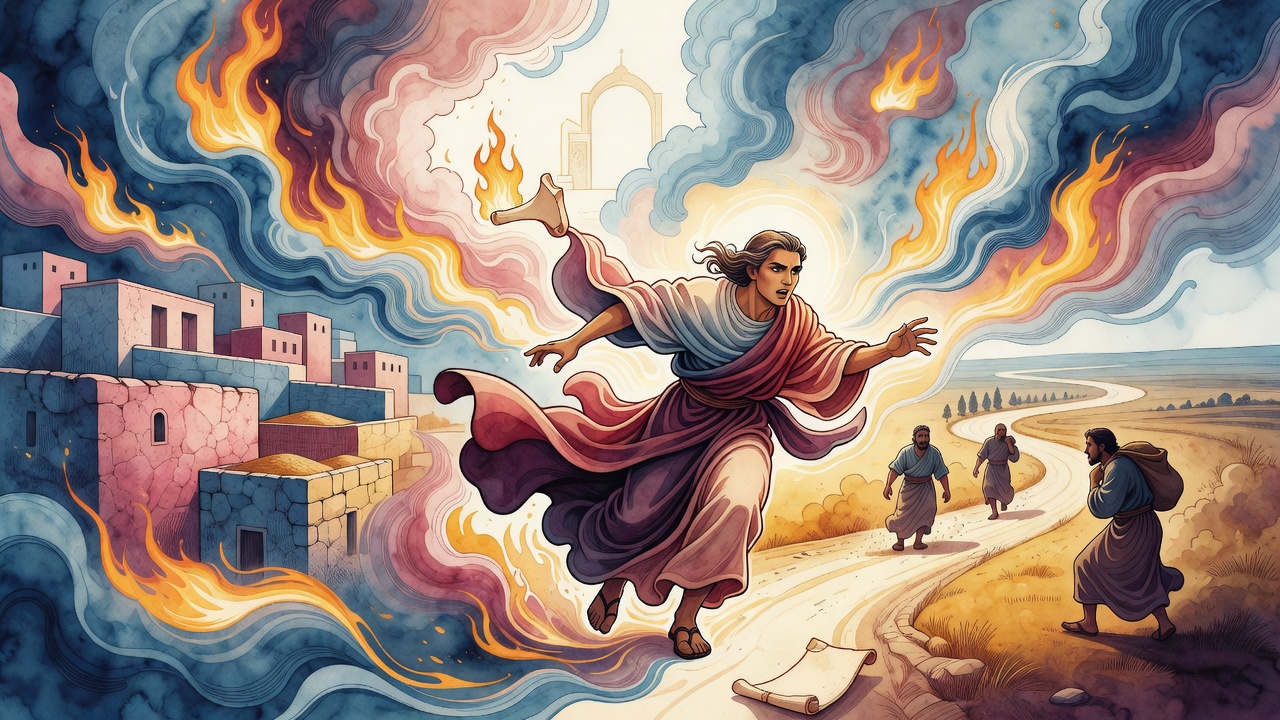
The famine in Egypt was not only missing rain. The seed wheat itself bare no fruit. What was planted refused to rise. Soil that had always answered the plow went mute. Citizens of the greatest empire of the ancient Near East stood outside the royal compound and cried for bread, not requesting, crying, throats raw, children on hips, the sound of a kingdom discovering it cannot eat gold.
Pharaoh did not answer them himself. He sent them to Joseph. "Go to Joseph, and what he shall tell you do." The throne kept its gold. Policy kept one door. A wiser ruler, by the measure of pride, might have scattered authority among regional officials and watched the plan dissolve into local favoritism. He did not improvise. He pointed every empty hand toward the man who had warned him of this day seven years earlier. Humility at the top is rare when the steps are crowded with panic. Pharaoh practiced it.
The Stores Open
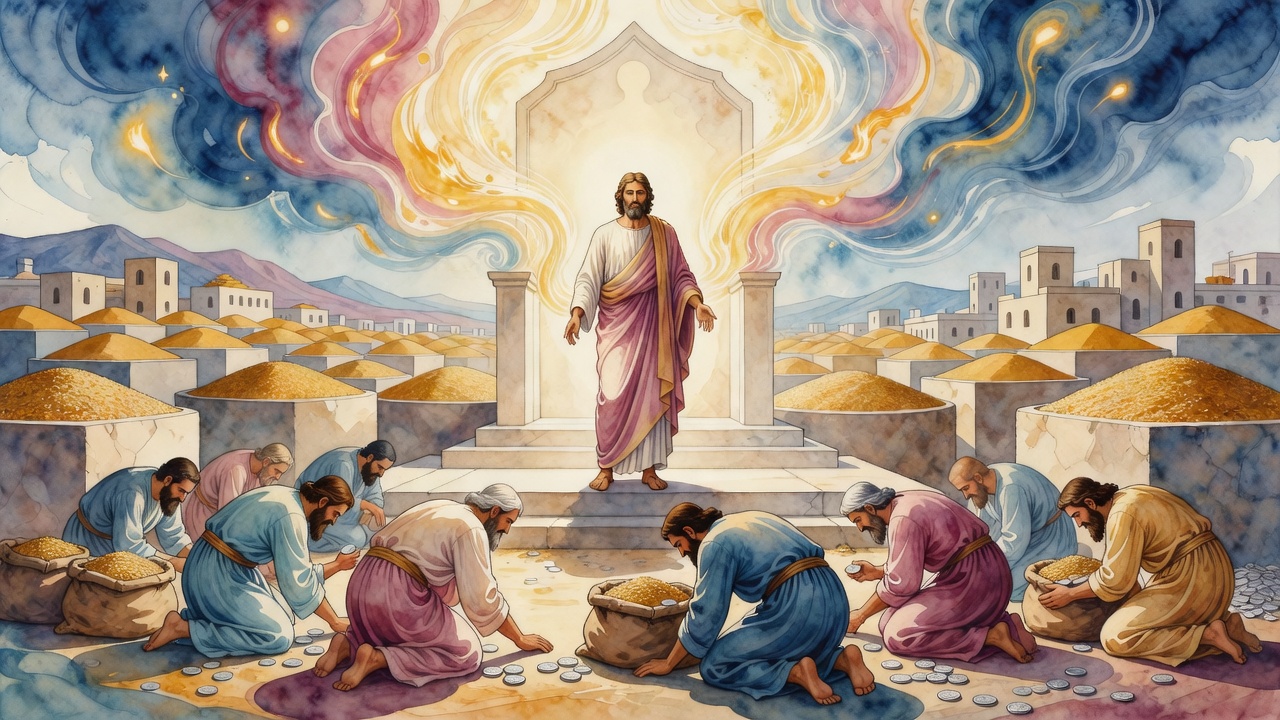
The moment the famine deepened, Joseph opened all the treasures and sold to the Egyptians. Sold, not gave. Free grain would have triggered hoarding, riots, and resale at inflated prices in alleys the law could not reach. A controlled price meant each family took what it needed and the distribution did not tear itself apart. The tax of the plenty years returned as famine revenue so the kingdom could survive the next lean harvest without collapsing into civil knives.
Even so the famine waxed mighty in the land. The granaries opened, and hunger still grew teeth. Joseph's plan did not erase the crisis. It kept the doors of the storehouses open long enough for breath to continue under a sky that would not yield. Crisis management rarely makes the crisis disappear. Sometimes it only keeps the hinge oiled until rain remembers its job.
In the streets the heralds' chant still echoed under the famine's new music, the scrape of empty bowls, the shuffle of feet toward a single door. Joseph rode out among the stores the way he had once walked the prison corridor, counting, commanding, refusing the luxury of panic. A nation learned that preparation is a kind of prophecy fulfilled in sacks.
Night after night the granary lamps burned. Clerks tallied. Guards watched against theft. Mothers left with measured grain and the knowledge that tomorrow's line would form again. From prison to chariot to the keys of every treasure, the man few in years held Egypt through a disaster he had named before it arrived. Great in wisdom. Few in years. Father of a king who knew when not to speak.
← All myths