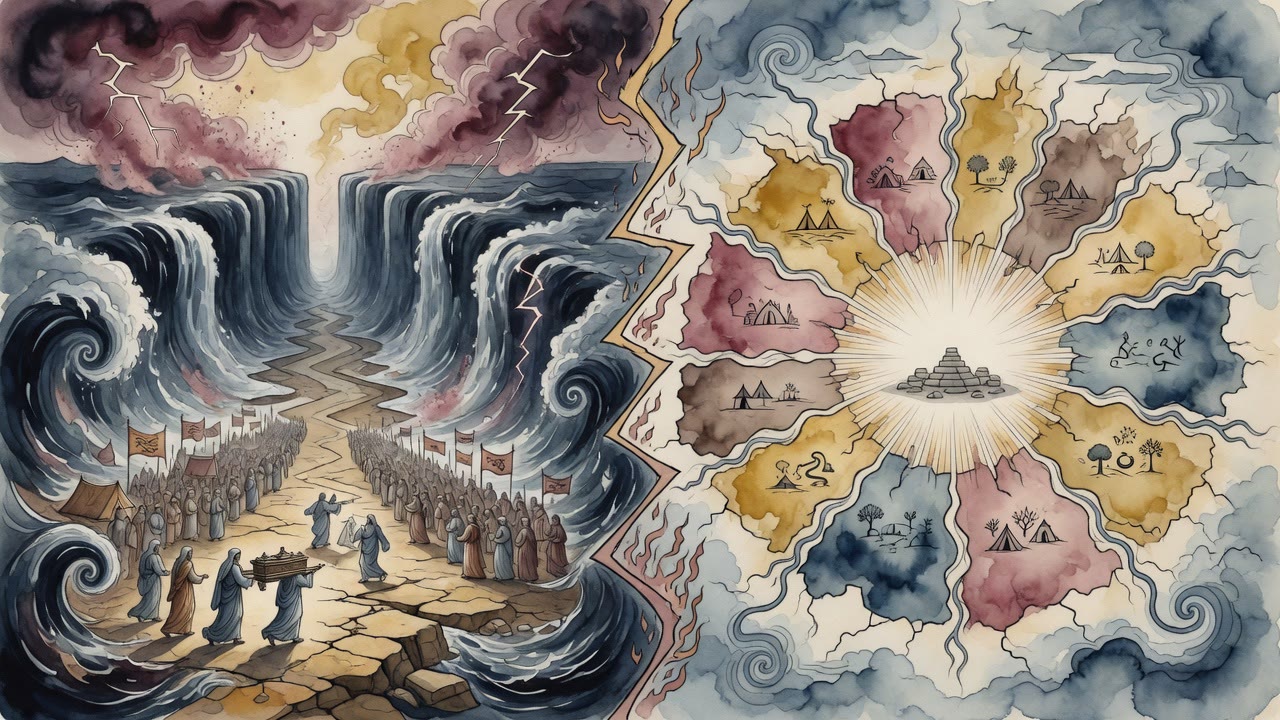
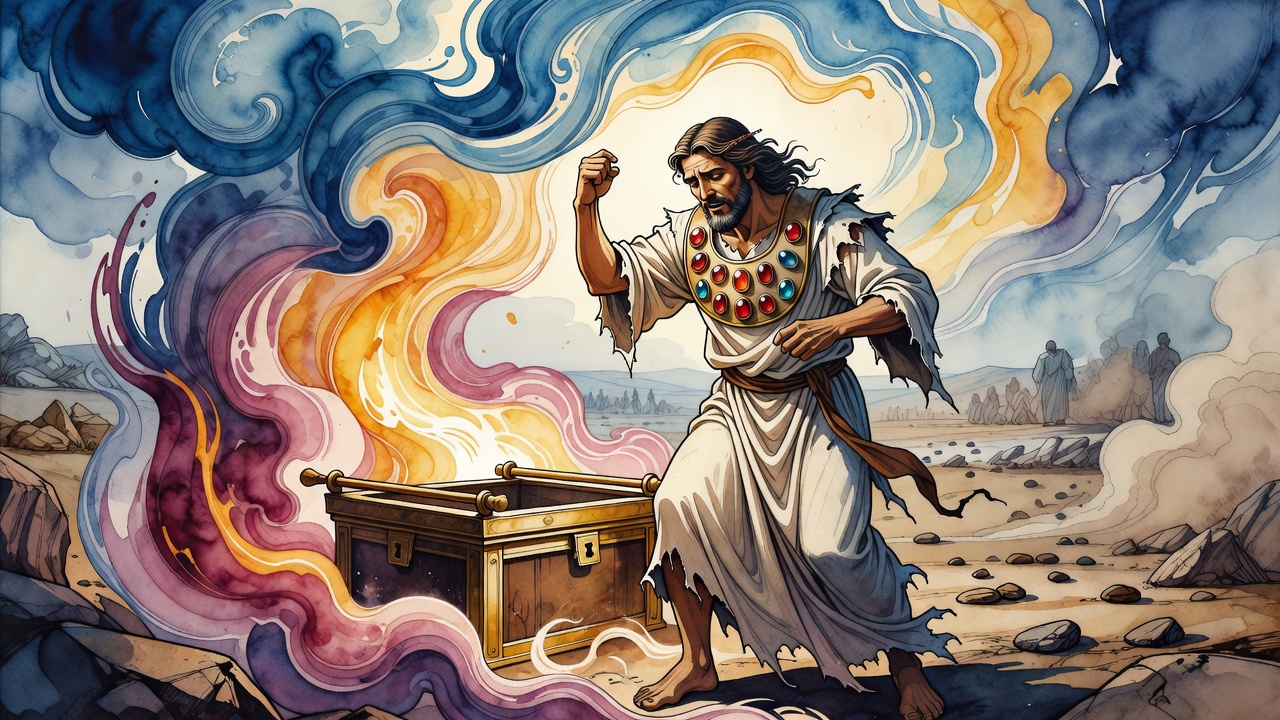
Joshua Lay in Dust Until Heaven Said Get Up
The army had lost at Ai and men were dead. God offered no comfort, only a question about why Joshua was lying face down in the dust.
Table of Contents
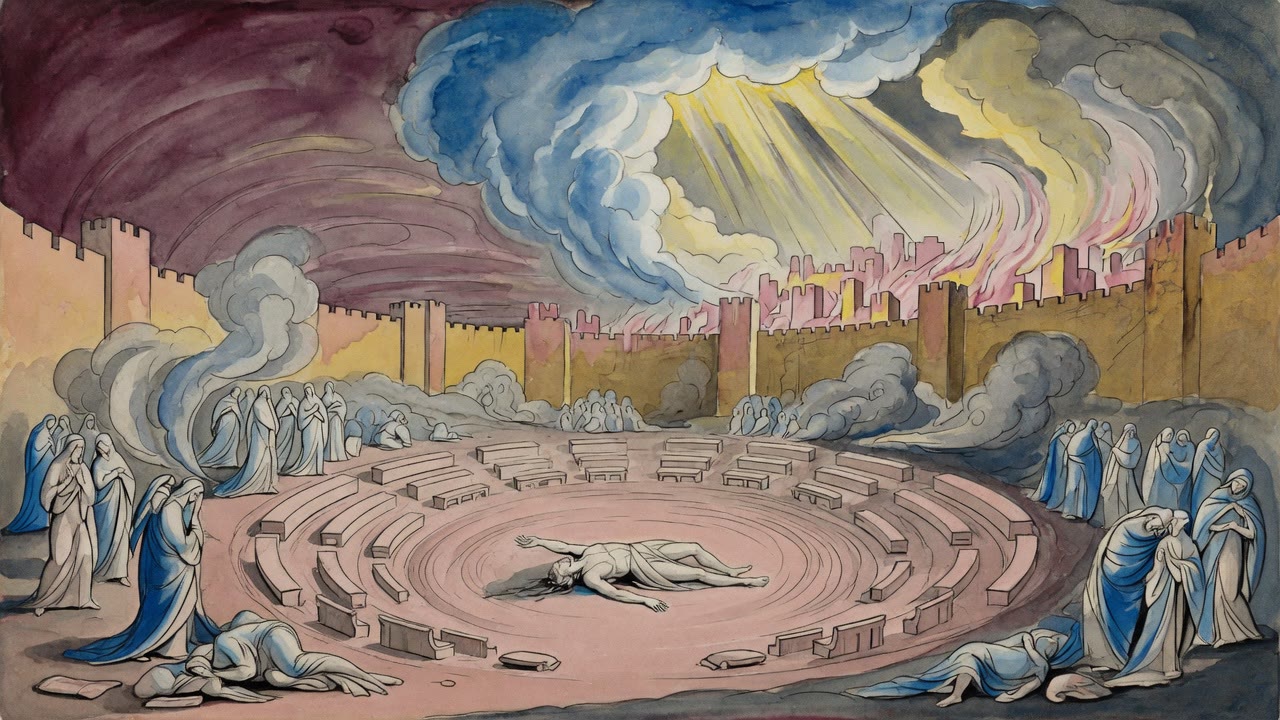
Joshua put his face in the dust before the Ark and did not get up until the question came.
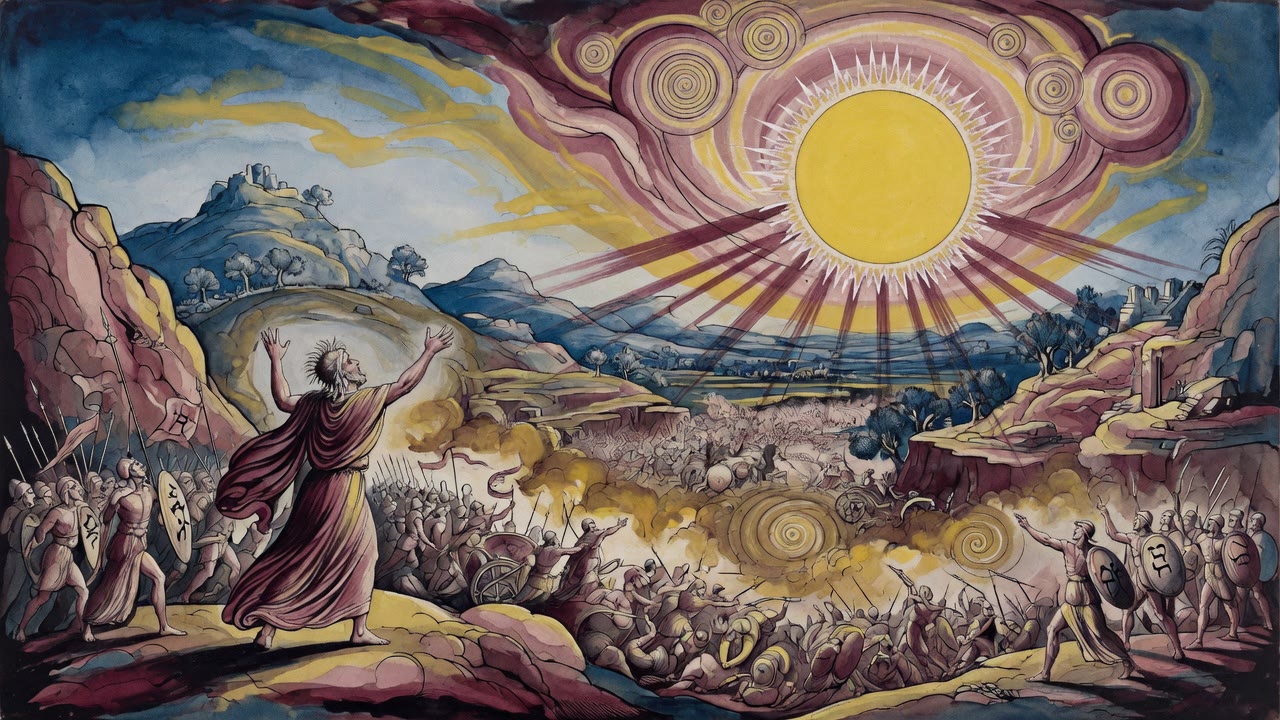 Click for full size
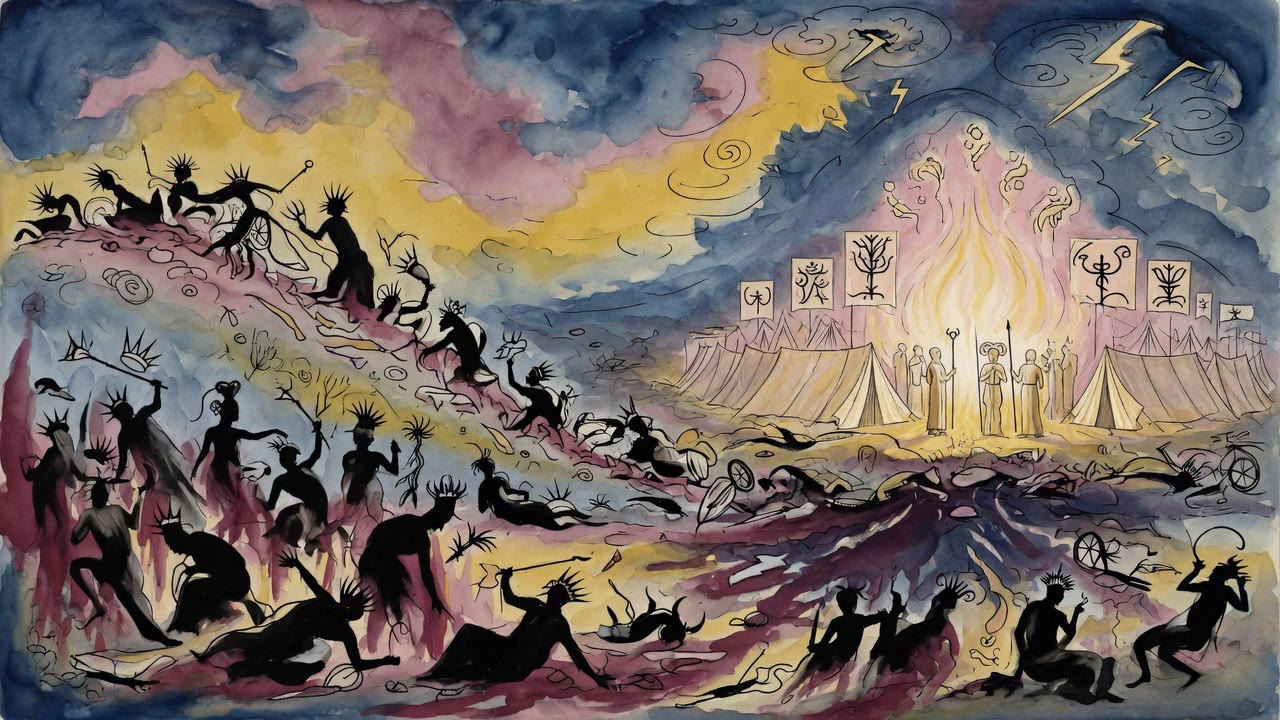
Ai had broken them. Men were dead. The conquest that began with walls falling now tasted like failure. Joshua tore his grief open on the ground in front of the whole camp's memory of him. To later eyes the posture looks pure. Heaven opened with a cut instead of a comfort. "Why are you falling on your face?"
Rabbi Eleazar hears a law for leaders inside the rebuke. A man of standing, watched by an entire people, does not fling himself down in public despair whenever grief hits. If the answer does not come, the collapse teaches the watchers that heaven is closed, and the leader's shame becomes their doctrine. Prostration before the congregation is permitted when the voice returns, as it returned to Joshua. "Get up." The response justifies the posture. Without it, drama is only contagion.
Get Up Means There Is Still a Road
Joshua rose because the question itself was already an answer: heaven was still speaking, which meant the story had not ended at Ai. Sin in the camp would be found. The next battle would be fought differently. A leader's tears are not forbidden. A leader's tears as theater without reply are dangerous, because people drink the silence after them.
He had to stand again in dust that still held the shape of his body, and command.
The Threefold Lock on Jericho
Earlier, when Jericho fell, Joshua had not only warned against rebuilding. He bound "Cursed be the man" with a force the sages hear three ways at once: ban, curse, and oath. Ban like Meroz, blasted with shofars for refusing the Lord's war. Curse like the Levites' cry at Ebal against the maker of a graven image. Oath like Saul's vow that distressed his own troops. Then the small redundancy: "this city, Jericho." Why both? To seal the ban twice. No one may rebuild Jericho under another name, and no one may rebuild elsewhere and slap Jericho's name on the stones. The ruined ground was meant to stay ruined without loophole or costume.
The same mouth that would later press into dust had already locked a city out of history's rebuilding schemes. Authority in Joshua is not only military. It is verbal. Words that bind. Words that must also know when to stop performing grief.
Flint, Copper, and the Holy Tongue
God told him to make flint knives for circumcision, one of four "make for yourself" commands in Scripture. Rabbi Ami notices the pattern of materials: cedar for Noah's ark, flint for Joshua's knives, silver for trumpets, and one blank. When Moses had to make a fiery serpent, no metal was named. Moses reasoned by the holy tongue itself. Gold is zahav, silver kesef, neither echoing serpent. Copper is nechoshet, serpent is nachash. Copper answered copper in the ear, so the object and the command shared a root. From this the sages learn that Torah was given in the holy tongue, where names and orders are cut from the same sound.
Joshua's generation lived inside that language. Knives of rock. Oaths that stack meanings. A face in dust waiting for a verb: get up.
Dust on a Commander's Mouth
So the conquest is not only walls and lots of land. It is a man learning the difference between prayer that leads and prayer that panics the led. Jericho stays under a triple seal. Ai becomes a classroom with a hard first question. Flint cuts a covenant mark into bodies that will inherit under a speech-shaped law.
Joshua stood. The camp watched him stand. That was part of the miracle.
The air held still long enough for the next choice to hurt.
No one in the house mistook the silence for peace.
Feet moved. Hands worked. The old pressure found a new edge.
Inside, every object seemed to remember the last hard hour.
Mercy, when it came, would not erase the shape of the fear that preceded it.
← All myths