4 min read

Judah Threw a Stone at Heaven and Joseph Threw One Back

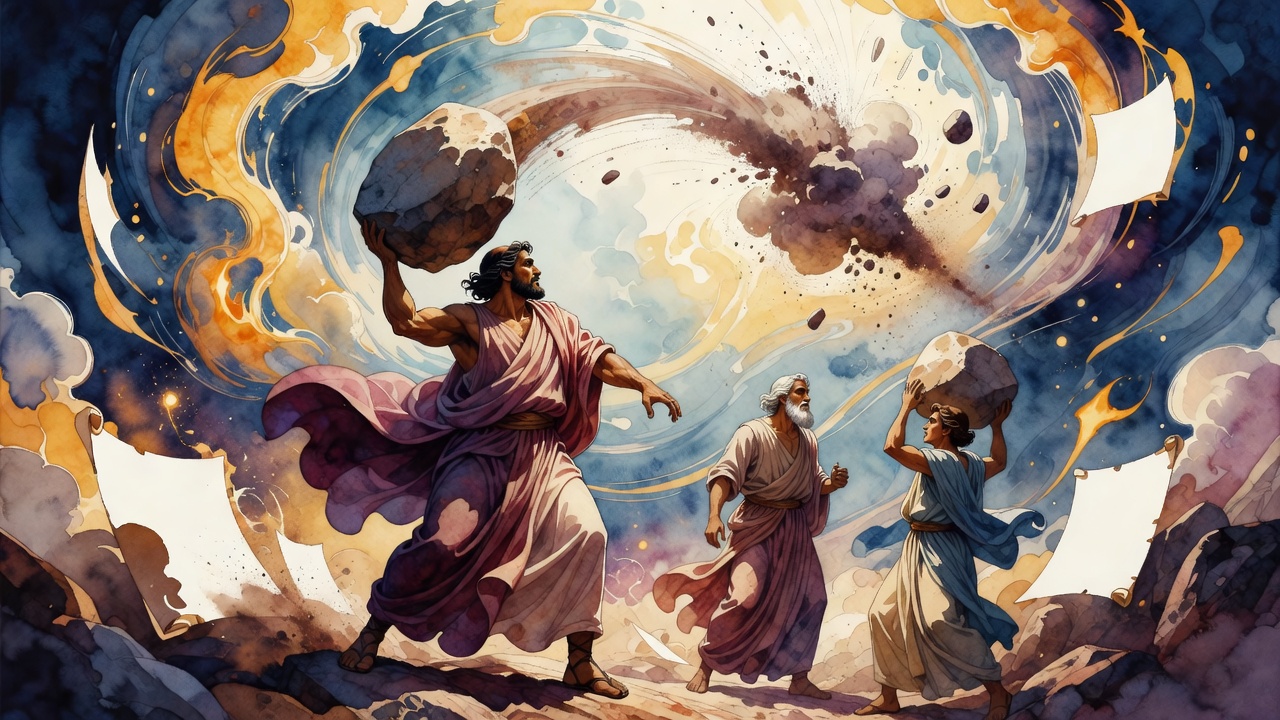
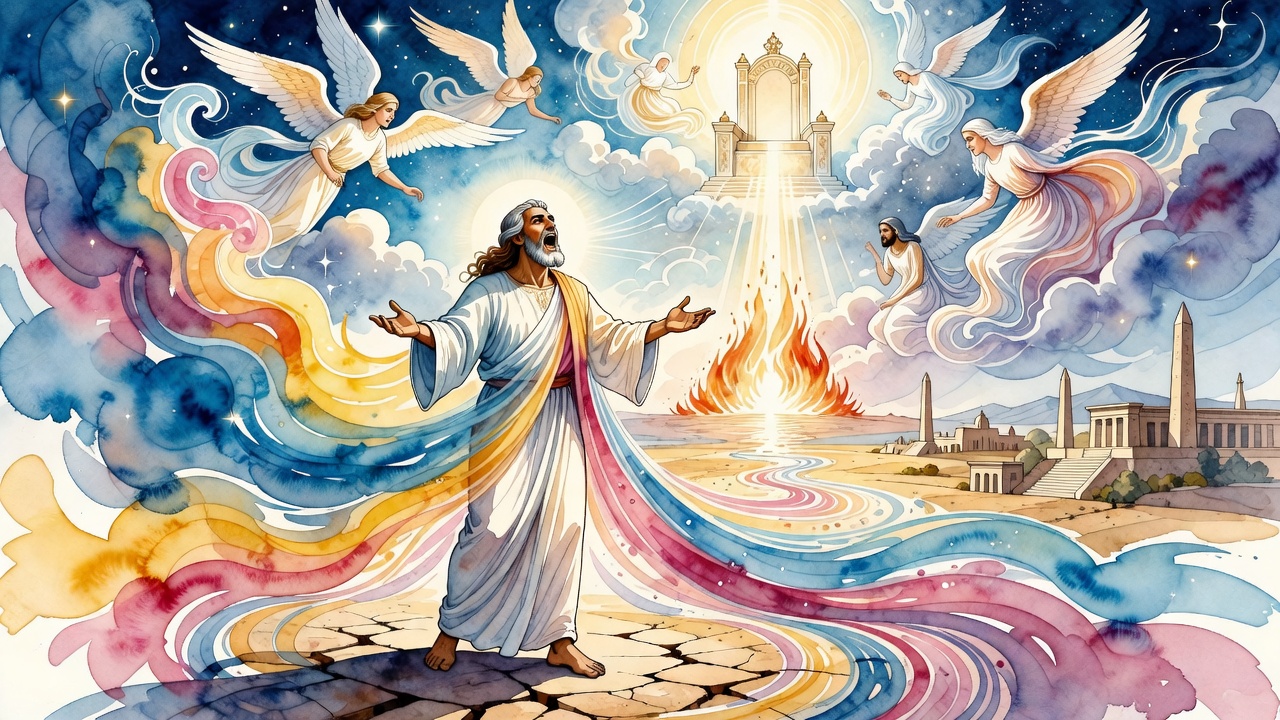
Judah cast a four-hundred-shekel stone toward the sky and crushed it to dust. Joseph nodded to Manasseh, who picked up another stone and matched him.

Curated by Arthur · Told by Maggid ·
Table of Contents
  1. When the Words Were Gone
  2. The Language of the Body
  3. Manasseh's Answer
  4. What It Meant That They Were Matched

When the Words Were Gone

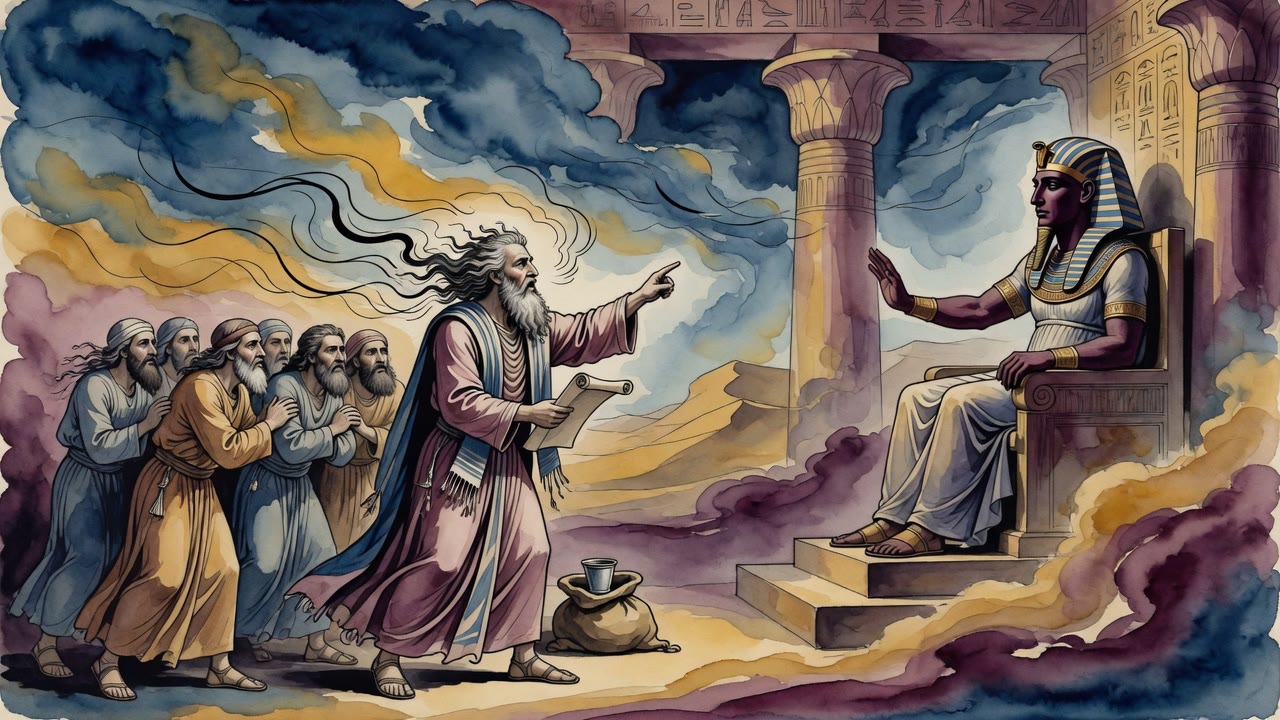
Judah had tried the legal arguments. He had argued collective liability, had offered himself as surety, had described his father and the pledge he had made and the consequences that would follow if Benjamin did not come home. The Viceroy of Egypt had heard all of it and held his position: the guilty one stays, the rest go free. There was nothing left to say.

Judah picked up a stone. The tradition gives its weight: four hundred shekels. He cast it toward heaven with one hand, caught it with his left hand as it came down, sat upon it. The stone turned to dust beneath him.

The Language of the Body

This is not a negotiating tactic. It is a declaration. Judah was not trying to frighten the Viceroy with the demonstration. He was announcing what was inside him, what forces were available to him that had not yet been deployed in the room. The legal arguments had been honest and well-constructed. They had not worked. Now he was showing the Viceroy what came after the arguments ran out.

A four-hundred-shekel stone thrown to heaven, caught, and reduced to dust by a man sitting on it. The dust was the important part. It was not enough to throw the stone. It had to become nothing. That was the full expression of what Judah's body could do when his will was organized around a single point, and the single point was: Benjamin does not stay here.

Manasseh's Answer

The Viceroy watched this. Then he gave a quiet command to his steward. The steward was Manasseh, Joseph's son, the young man who had been running his father's errands and managing his father's household for years. Manasseh had been present at every stage of this encounter. He had searched the brothers' sacks. He had found the cup. He had managed the logistics of bringing the brothers back to the court. Now his father gave him a quiet word, and Manasseh picked up another stone.

He did the same thing Judah had done. Cast it toward heaven, caught it, sat on it, and the stone turned to dust.

The room went very still. Judah had been showing the Viceroy what was available on his side of the room. The Viceroy had shown him what was available on the other side. Whatever Judah's tribe carried, Joseph's house carried something equivalent. The Viceroy was not without resources of his own kind.

What It Meant That They Were Matched

The tradition reads this exchange as the end of the confrontation and the beginning of the revelation. Joseph and Judah had faced each other with their full force, and the force had come out even. There was no advantage to be pressed. The physical demonstration had run its course. What was left was the truth.

Joseph cleared the room of his Egyptian servants. He called his brothers to stand closer. And then he wept, loudly enough that the household heard it outside, loudly enough that the news eventually reached Pharaoh. He said: I am Joseph. Is my father still alive?

The stone exchange had been necessary. Not because either man wanted to fight, but because both needed to know that what was about to happen was not the result of a power imbalance that could have forced a different outcome. Joseph revealed himself to his brothers in a room where no one was holding anyone's fate at an angle. The acknowledgment of equal force made the reconciliation real.


← All myths

From the tradition

Sources

3 sources

The texts this telling draws on, in full. Open a card to read inline, or expand it for a wider, quieter read.

Legends of the Jews 1:296Legends of the Jews

Legends of the Jews turns to Judah and the Heavenly Realms.

The scene is set: Judah, son of Jacob, is not happy. How does he react? Not with a calm discussion, that's for sure!

Instead, Judah grabs a stone – a stone weighing four hundred shekels, which is no small pebble! He hurls it towards the heavens with one hand, catches it in his other, and then… sits on it. And get this: the stone turns to dust. Imagine the sheer display of power!

Joseph isn't one to be outdone. He commands Manasseh to do the same with another stone. And Joseph then coolly says to Judah, "Strength hath not been given to you alone, we also are powerful men. Why, then, will ye all boast before us?" It's a challenge, plain and simple.

Now, the narrative takes an even more fantastical turn. Judah, seemingly unfazed, sends Naphtali on a seemingly impossible errand: to count all the streets of Egypt. Think of the logistics! Before Naphtali can even set off, Simon jumps in, offering a solution that's… well, let's just say it's a little extreme. "Let not this thing trouble you," he says, "I will go to the mount, and take up one huge stone from the mount, throw it over the whole of Mizraim" – that's the Hebrew name for Egypt – "the city of Egypt, and kill all therein."

Whoa.

The tension is palpable. It's a clash of egos, a battle of strength, and a hint of the almost absurd lengths these brothers are willing to go to prove their point. The story highlights a common theme found throughout Jewish folklore: the incredible strength and abilities attributed to figures of legend. It makes you wonder, what was at stake that led to such an over-the-top display of power? And what does it say about the nature of sibling rivalry, or perhaps the burdens – and temptations – of leadership?

Full source
Legends of the Jews, I. Joseph, Joseph Meets His BrethrenLegends of the Jews

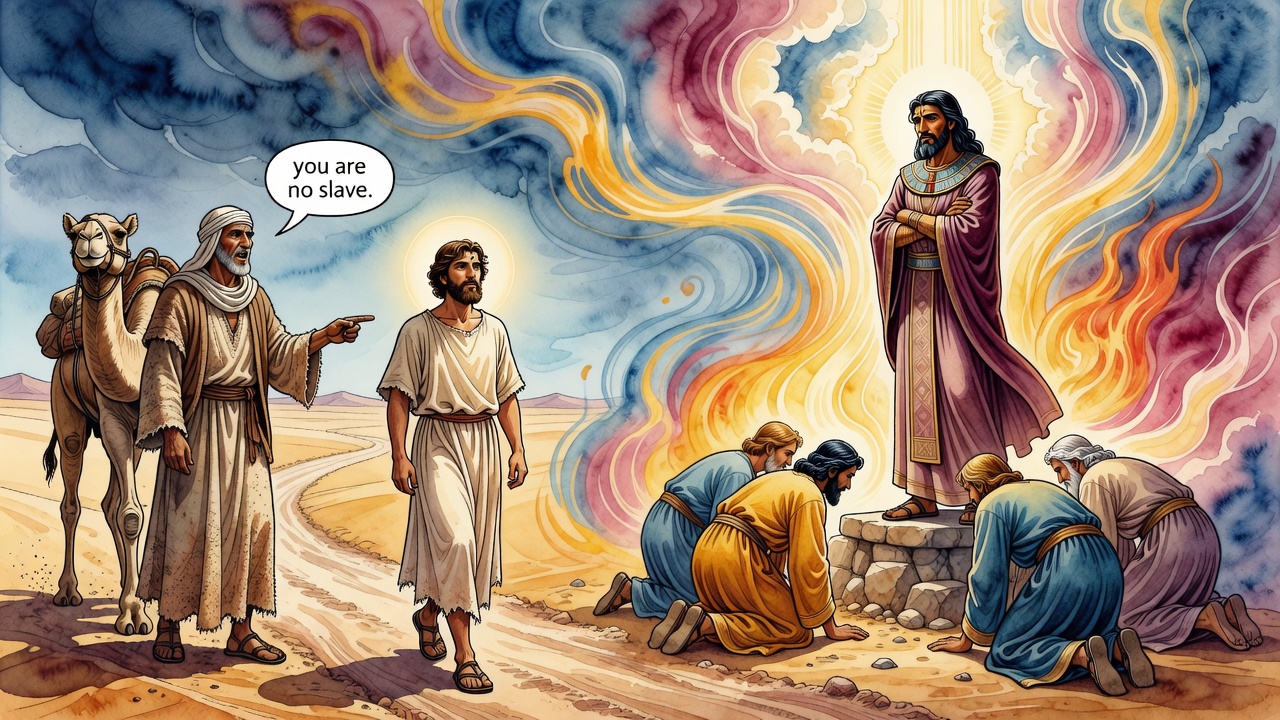
His brothers, the very ones who sold him into slavery years ago, bow before him, desperate for grain. They don't recognize the beardless youth they betrayed in this imposing figure. But Joseph? He knows them instantly.

In Legends of the Jews, Joseph initially wants to reveal himself. But then, an angel – the very one who guided him to his brothers in Dothan long ago – appears and reminds him of their murderous intent.

We find in Midrash Rabbah and other sources that angels often play complex roles in these stories, acting as messengers, testers, and sometimes, even instigators. In this case, the angel's warning throws a wrench into Joseph's plans. He decides to test his brothers, to see if they've truly changed.

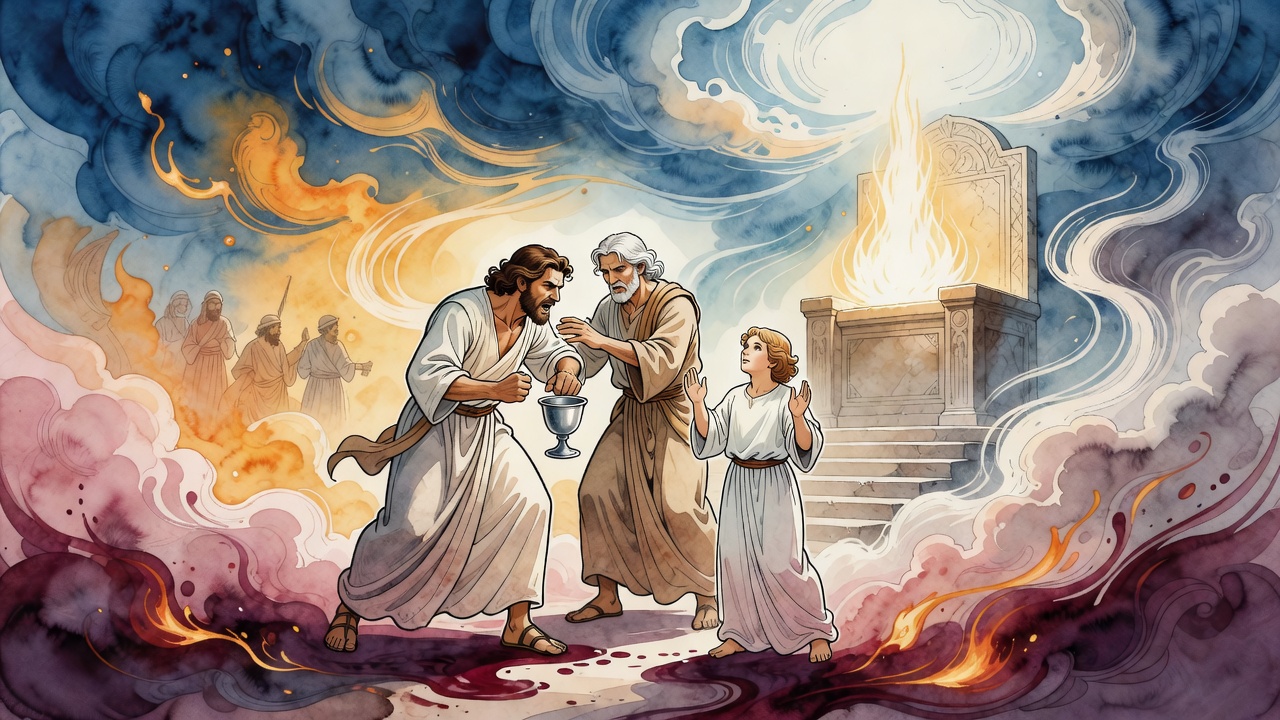
He accuses them of being spies. "By this magic cup," he declares, referring to a divining cup, "I know your secrets!" Of course, it's all a ruse. But it throws his brothers into a panic.

They protest, "We are honest men! Sons of one father!" They even mention their younger brother, still at home with their father Jacob, and the brother who is lost. Unknowingly, they include Joseph himself in that count.

Joseph presses them, pointing out their suspicious behavior. Why did they enter the city separately? Why have they lingered so long? Why were they seen in the… less reputable parts of town?

Their explanation is desperate: they were searching for their lost brother, fearing he might have been sold into slavery and forced into a life of shame. It’s a flimsy excuse, dripping with irony. "We heard that some Ishmaelites stole our brother, and sold him into slavery in Egypt," they say, "and as our brother was exceeding fair in form and face, we thought he might have been sold for illicit uses…"

Joseph, still testing them, scoffs at their claim to be sons of Abraham. He demands they prove their innocence by sending one of them back to Canaan to fetch their youngest brother, Benjamin.

The brothers refuse, and Joseph throws them into prison for three days. That God never allows the pious to languish in distress longer than three days, a reminder of divine providence even in these fraught circumstances.

On the third day, Joseph releases them, but with a condition: one of them must remain behind as a hostage. He chooses Simon. Why Simon? Because, according to Ginzberg, Simon was one of the brothers who advocated for Joseph's death. Levi was the other, but Joseph feared leaving both of them behind, lest they unleash their wrath upon Egypt as they did in Shechem. He also resents Simon for having actually lowered Joseph into the pit.

As the brothers prepare to leave, Simon cries out, "Ye desire to do with me as ye did with Joseph!" The other brothers can only lament their predicament.

But getting Simon into custody is no easy task. When Joseph's men try to arrest him, Simon lets out a mighty roar, and they all fall to the ground, teeth knocked out! Only Joseph and his son Manasseh remain standing. Manasseh subdues Simon, binding him and taking him to prison.

Joseph secretly instructs his staff to treat Simon well, providing him with good food and kindness. It's a glimmer of mercy amidst the deception.

As the remaining brothers journey home, they discover the money they paid for the grain has been mysteriously returned to their sacks. They are terrified. “Where, then, is the lovingkindness of God toward our fathers Abraham, Isaac, and Jacob?” they cry.

Reuben and Judah remind them that this is likely divine retribution for their cruelty towards Joseph. They recognize, perhaps for the first time, the gravity of their sin.

When they arrive home, they tell Jacob everything. He is devastated, especially at the thought of losing Benjamin. He accuses them of plotting against him, lamenting, “Me have ye bereaved of my children.” He refuses to let Benjamin go back to Egypt, convinced it will lead to his death.

Jacob's words reveal his deep-seated suspicion of his sons. He believes they were responsible for Joseph's disappearance and now, Simon's imprisonment. His grief is compounded by the fear that he will never see the fulfillment of God's promise to make him the father of twelve tribes.

And so, the stage is set for the next chapter of this incredible story. Will Jacob relent and allow Benjamin to go to Egypt? Will Joseph finally reveal himself to his brothers? And, perhaps most importantly, can this fractured family ever truly be whole again? It leaves you pondering the long reach of past actions and the difficult path to forgiveness and reconciliation.

Full source
Legends of the Jews 1:279Legends of the Jews

Legends of the Jews turns to Judah's Cry for Benjamin Shook the Foundations of Egypt.

Think about Judah. He’s standing there, facing the impossible: returning to his father Jacob without Benjamin. The weight of that responsibility, the guilt of potentially causing his father’s death from grief, just shatters him.

"How shall I go up to my father, and the lad be not with me?" he cries out, his voice cracking with despair.

This isn't just any sob. This is a cry that resonates. According to Legends of the Jews, Ginzberg's monumental collection of rabbinic lore, Judah's lament traveled an astounding four hundred parasangs. A parasang is an ancient unit of distance, and depending on who you ask, that means his cry covered anywhere from 800 to 1200 miles!

And it doesn't stop there. The legend tells us that Hushim, the son of Dan, heard the outcry all the way in Canaan. Now, Hushim was known for being deaf, but also for his incredible strength. So powerful was the vibration of Judah's voice that he leaped to Egypt in a single bound. Talk about commitment! He adds his voice to Judah's, and the combined wail is so immense that the entire land of Egypt is on the verge of collapse.

Can you imagine the sheer force of it?

Ginzberg recounts that the impact was so great that Joseph's valiant men lost their teeth! And the cities of Pithom and Raamses, those cities built by the Israelites’ forced labor years later, were destroyed, left in ruins until the Israelite slavery.

Now, up until this point, Judah's brothers had been silent. Maybe stunned, maybe unsure of what to do. But this…this was the breaking point. Filled with rage and determination, they stamped their feet so hard that it looked like deep furrows had been carved into the earth by a plow.

In that moment, Judah steps up as a leader. He rallies his brothers, telling them to be brave, to act like men, reminding them that the situation demands their absolute best. "Be brave," he urges them, "demean yourselves as men, and let each one of you show his heroism, for the circumstances demand that we do our best."

It's a powerful scene, isn't it? A moment of raw emotion, of desperate action, and of brothers standing together against seemingly insurmountable odds. It reminds us that even in the face of despair, courage and unity can emerge. And sometimes, just sometimes, a good, loud cry can shake the very foundations of the world.

Full source