5 min read

Justice Laughed While the Flood Generation Danced

Their bulls bred and never failed, and their children ran loose through the fields with drums and harps. Then they told God to leave them alone.

Curated by Arthur · Told by Maggid ·
Table of Contents
  1. The Bull That Never Missed
  2. Depart From Us
  3. Somebody in the Room Was Laughing
  4. He Went In in Peace and Came Out in Peace
  5. A Town Called Courtyard of Death
Justice Laughed While the Flood Generation Danced Click for full size

The Bull That Never Missed

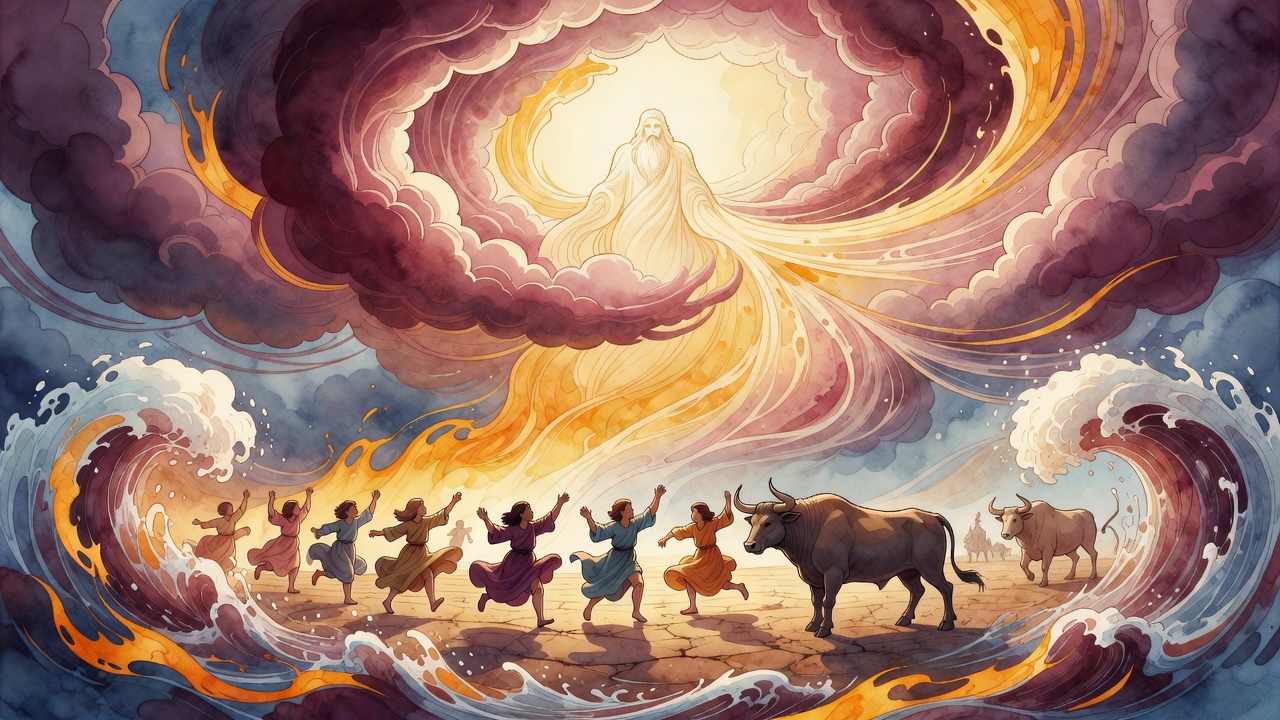
The bull went to the cow and it took, every season, year after year, so there were no dead calves and no barren stretch, and the herds thickened while their owners slept.

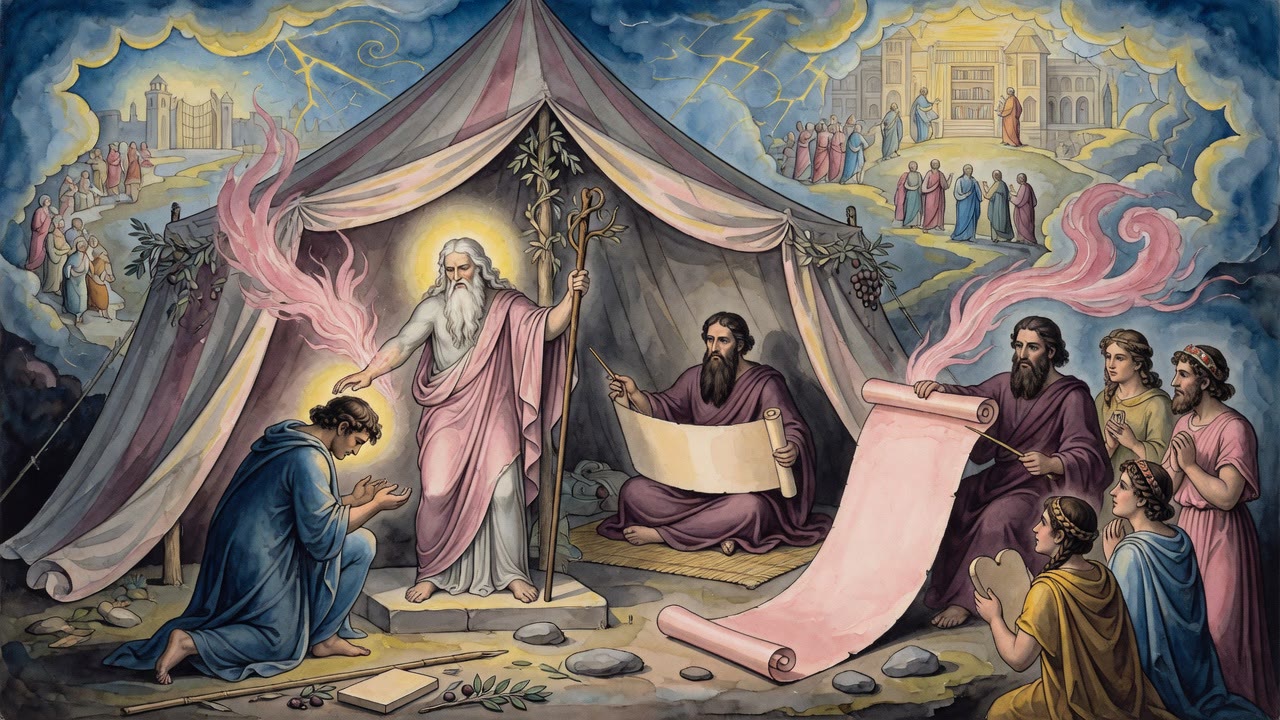
They let the children run loose, turning them out into the fields the way a man turns out a flock, dozens at a time, because nothing out there had ever hurt anybody. The children danced in the open where the whole countryside could watch them. Somebody had a drum and somebody had a harp, and a pipe went most evenings, since there was no reason on earth to stop playing.

They wore their days out on good things. That is the phrase for it, and it means they spent whole lives on pleasure and woke up to find more of it waiting.

Depart From Us

A generation like that eventually says out loud what it has been thinking, so they said it.

"Go away from us. We do not want to know Your ways."

Then came the sentence that got them remembered, which was the one thing they had not planned on. "What is the Almighty, that we should serve Him. What do we get out of praying to Him."

It was not a philosophical position but a piece of accounting. They had the herds and the harps and the children in the field, and because none of it had ever arrived with a bill attached, they concluded there was nobody to pay.

Somebody in the Room Was Laughing

There was laughter over that generation, but it did not come from the party.

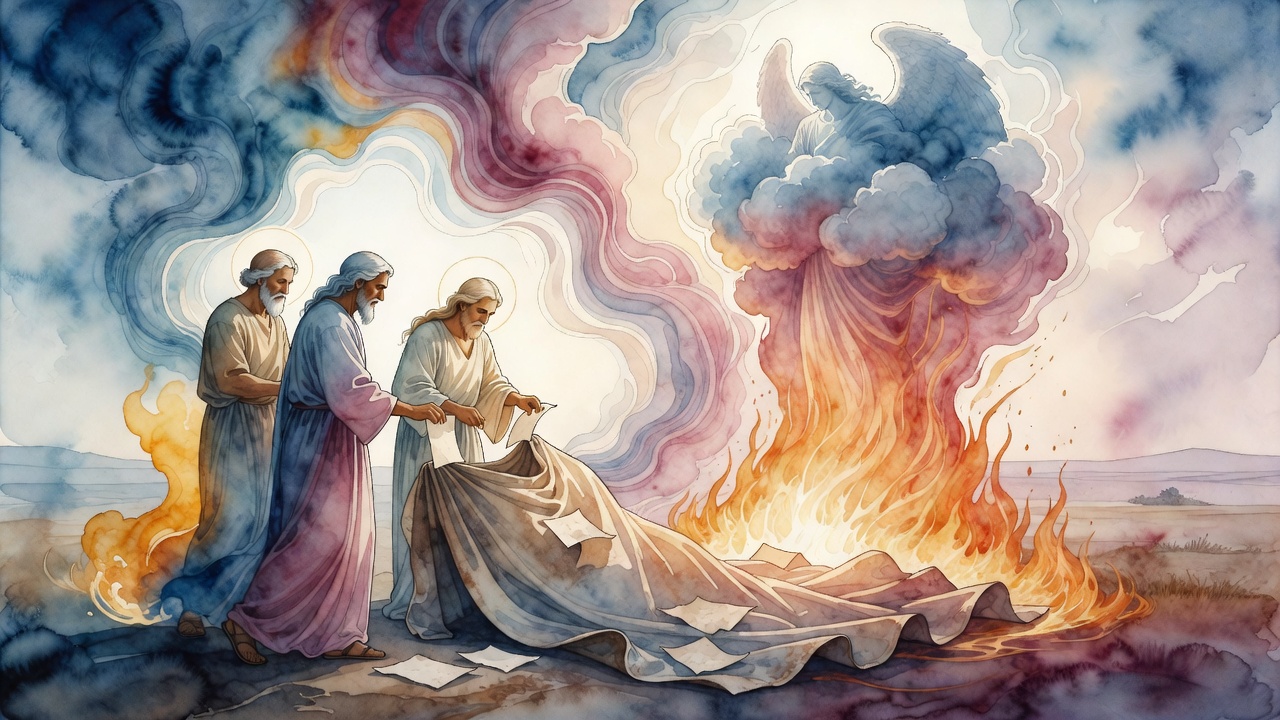
The attribute of justice laughed at them, and it was the wrong kind of laugh, a laugh out of joint, the sound a court makes when the verdict is already written and signed though the defendants are still calling for more wine. Of laughter I said, it is mad.

God finished the line for them. "And joy. What exactly is this accomplishing." Then He swore it. "By your lives, I will rub your memory out of the world."

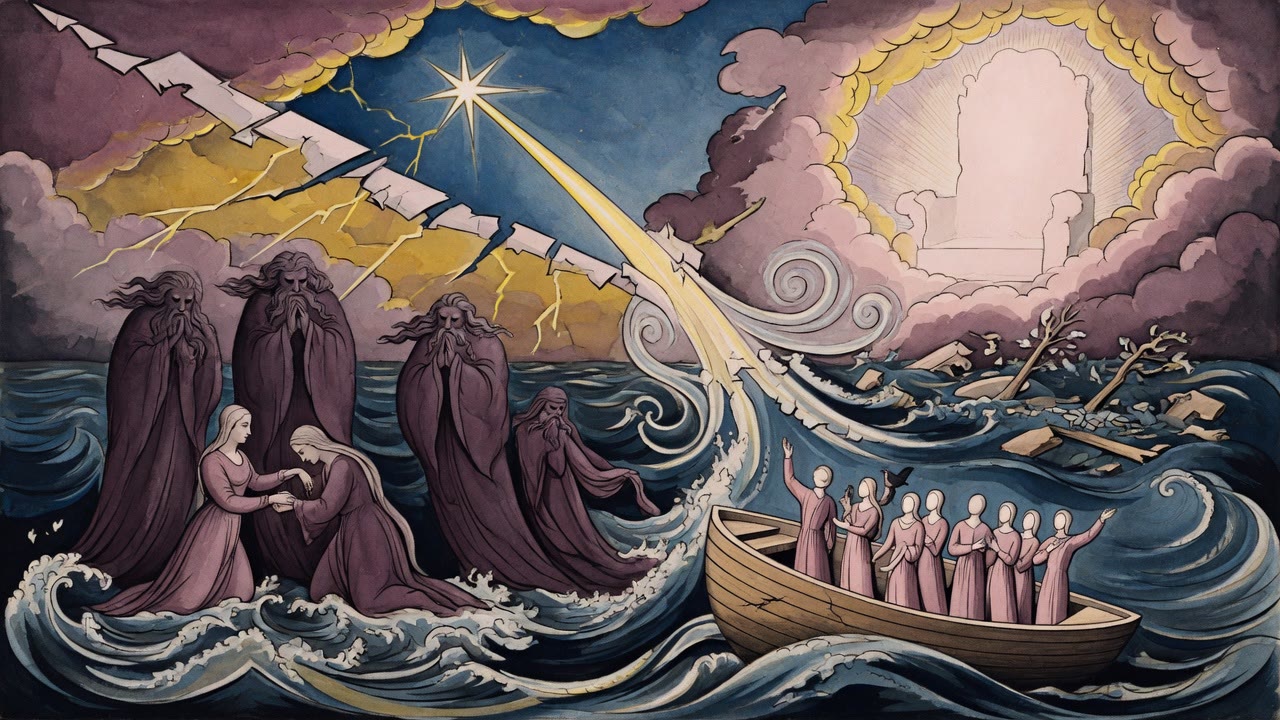
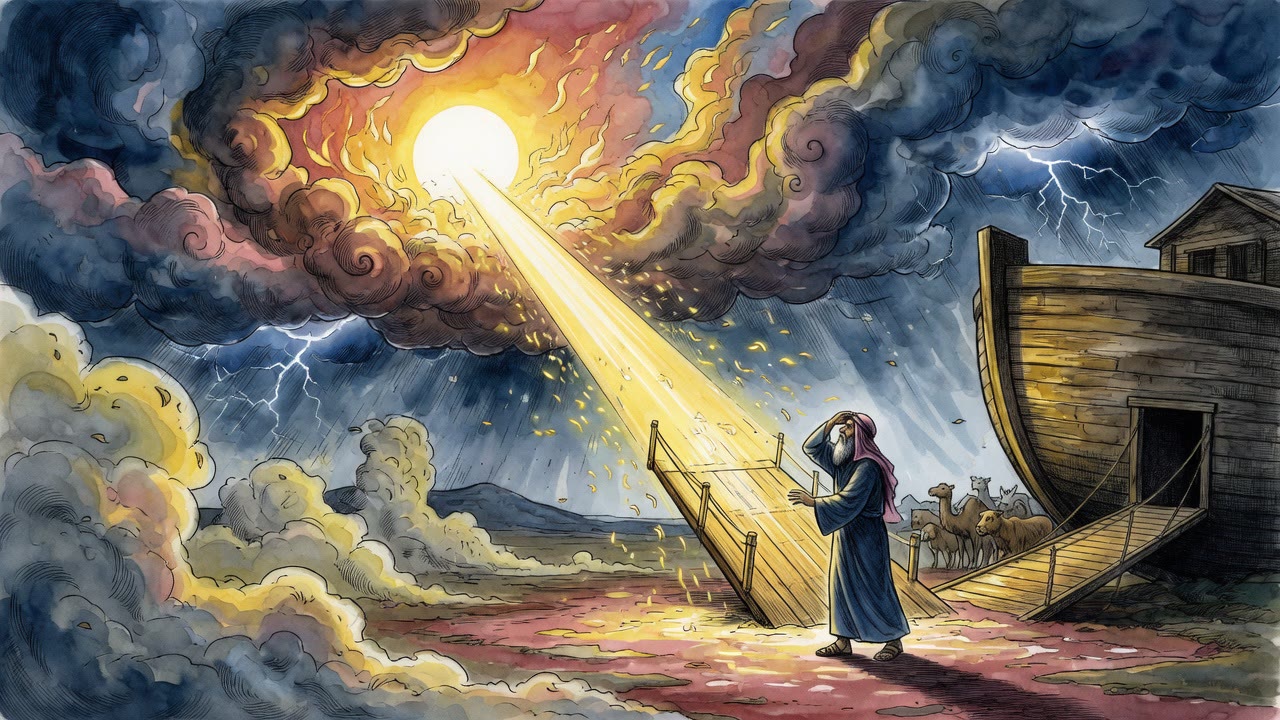
So the music stopped when the flood came in over the fields where the children had been dancing, and what is written afterward is that He wiped out everything that stood. Not the deeds, but the memory. A generation that had been the envy of the earth left nothing behind that anyone could name.

He Went In in Peace and Came Out in Peace

God breaks the powerful, and He does not count them on the way through.

They were not a handful of bad men but the strong of the earth, and they worked their wickedness with both hands until the ledger of it ran past any number a clerk could hold. That is the point of the phrase. Not that the tally was large, but that there was no finishing it.

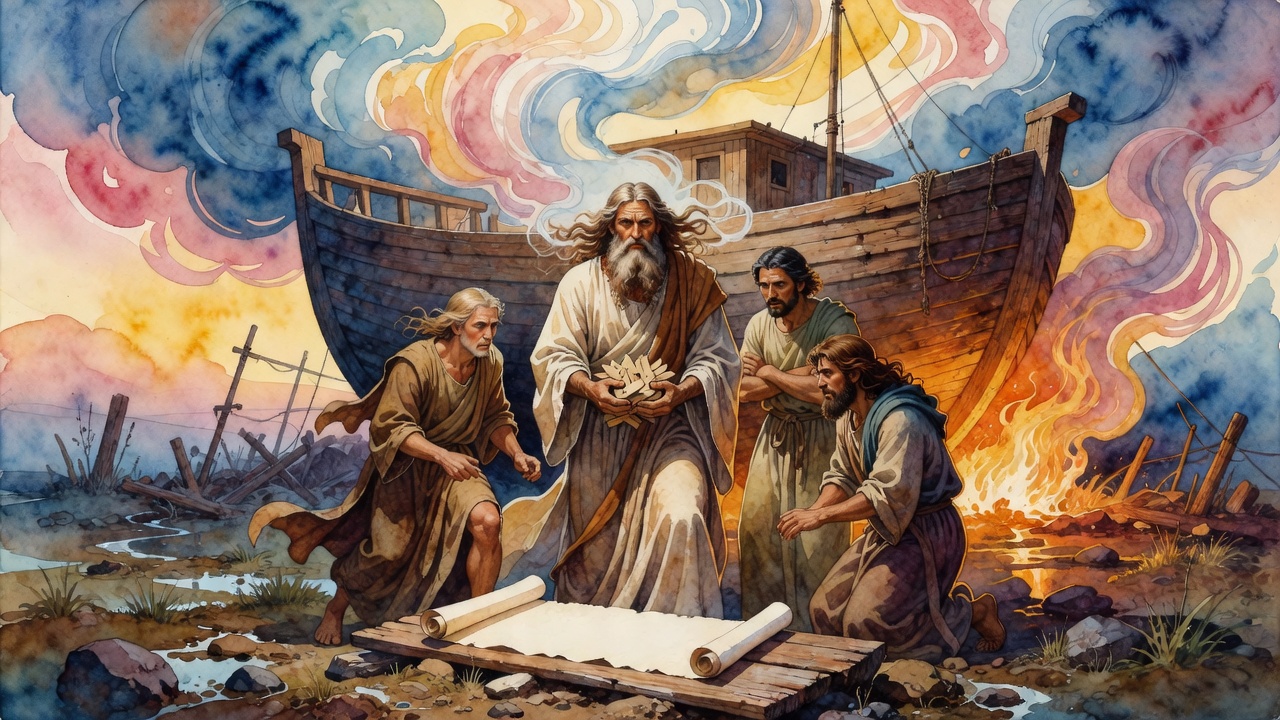
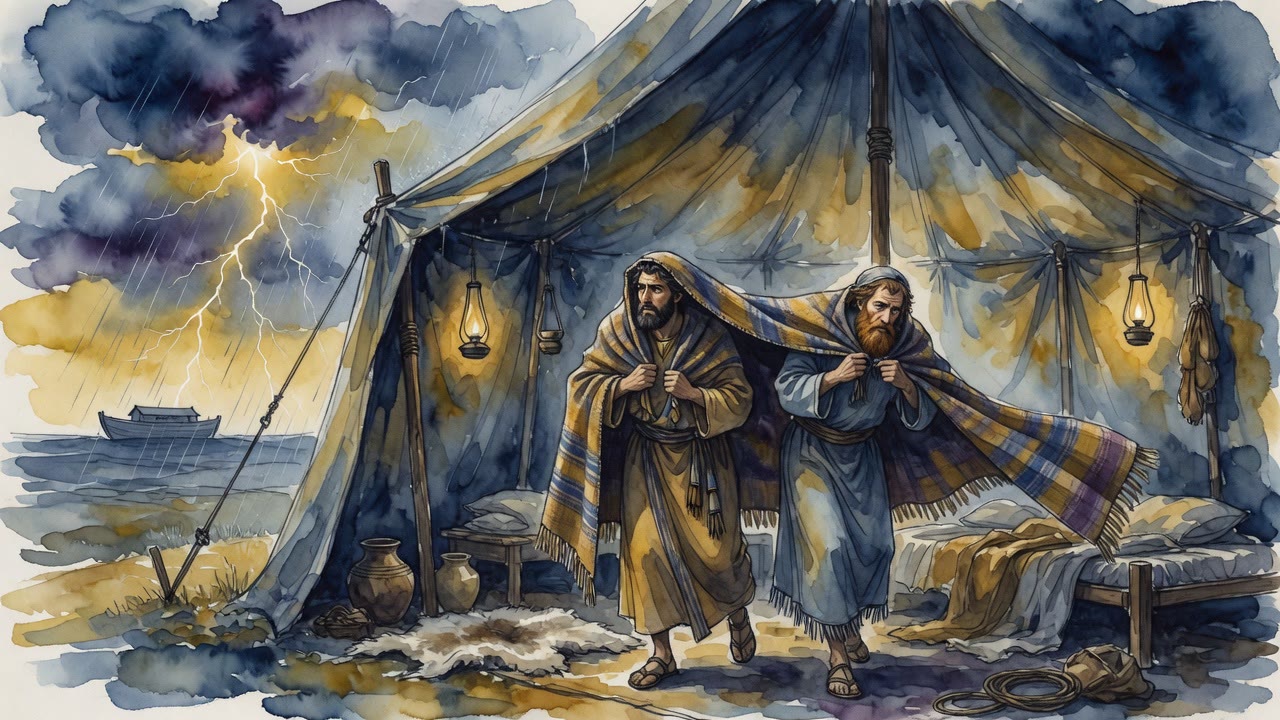
And He puts others in their place, so Noah went in in peace and came out in peace, and he came out with three sons. Shem, Ham, and Yefet, three men standing on ground that was still soft, in a world with nobody else in it. The note beside Ham in the record is that he fathered Canaan, so the trouble was already boarded and waiting.

From those three the whole earth got repopulated, the way a single great fish releases its eggs until the water is full of fish.

Nobody afterward stood up and told God He had gotten it wrong, because there was nobody left who could. "From the first day I am He, and no one is pulling anything out of My hand, and when I act, who reverses it."

A Town Called Courtyard of Death

Generations on, the list of Yoktan's sons runs through some ordinary names, Almodad and Sheleph, and then lands on one that stops the eye.

Hatzarmavet. Courtyard of Death.

Rabbi Huna knew the place, or knew of it. The people there ate leeks and wore garments made out of papyrus, and they got up every morning expecting to die that day, though they were not surprised when the day ended and they had not. Rabbi Shmuel had heard a worse version, in which they do not even have the papyrus.

So the water went down and the ground dried and the sons of Noah scattered like fish eggs until they had filled the whole map, and one of the towns they filled it with was named for the yard where death does its waiting. The dancers went under with their bulls and their drums and their names, but the world came back, and it came back with a place like that in it.


← All myths
From the tradition

Sources

3 sources

The texts behind this telling. Some cards carry a translation of the source; others are our own retelling of it, and each card says which. Every card links out to the original.

Midrash Tanchuma Buber, Achrei Mot 2:3Midrash Tanchuma Buber, Achrei Mot

Translation of the source text.Midrash Tanchuma (Buber), Public Domain, on Sefaria · CC-BY-SA

Another interpretation (of Ecclesiastes 2:2): "Of laughter I said: It is mad!" How confused was the laughter that the attribute of justice laughed over the generation of the flood, [for it is written] (Job 21:10): "His bull breeds and does not fail," etc.; (Job 21:11): "They send forth their little ones like a flock, [and their children dance about]"; (Job 21:12): "They take up [the] timbrel and harp," etc.; (Job 21:13): "They spend [their days] in prosperity." Since they said (Job 21:15): "What is the Almighty that we should serve Him?" the Holy One, blessed be He, said to them (Ecclesiastes 2:2): "And of rejoicing, what does this do?" By your lives, I am destroying your memory from the world, [for it is written] (Genesis 7:23): "And He wiped out all that existed."

Full source
Bereshit Rabbah 36:2Bereshit Rabbah

Retold in our words. Read the original at the link below.The Sefaria Midrash Rabbah, 2022 · CC-BY

The Book of Job (34:24) tells us that God "shatters [yaroa] the powerful without number." What does that even mean? Well, Midrash Rabbah, specifically Bereshit Rabbah 36, interprets this verse as referring to the generation of the Flood. These weren't just a few bad apples; these were powerful individuals who "performed evil [here’u] with their evil deeds." And the text emphasizes the sheer volume of their wickedness: "Without number – their evil deeds were innumerable." An uncountable amount of wrongdoing. It's a chilling thought.

The same verse in Job continues: "And sets others in their place." Who are these "others"? Bereshit Rabbah makes the connection: "these are the descendants of Noah: 'The sons of Noah…were Shem, Ham, and Yefet.'" From the ashes of the old world, a new one would rise, seeded by Noah's lineage.

Could anyone question the divine act of wiping out nearly all of humanity? (Isaiah 43:13) weighs in, declaring, "Indeed, from when there was day, I am He, and there is no savior from My hand…I will act, and who can reverse it?" The Midrash (rabbinic interpretive commentary) connects this to the Flood, asking rhetorically: "all the actions and thoughts that I implemented with the generation of the Flood, who could say to Me: ‘You did not act appropriately?’" It's a powerful statement about divine authority and the justification for such drastic action.

Amidst the chaos and destruction, there's a figure of hope: Noah. He "entered in peace and emerged in peace," evidence of his righteousness. "The sons of Noah, who emerged…were…" – the lineage continues, carrying the promise of a renewed world. But even in this new beginning, shadows linger. "And Ham was the father of Canaan," the text notes, adding almost as an aside, "the father of the debased one." It's a subtle hint that the potential for evil still exists, even after such a cataclysmic cleansing.

(Genesis 9:19) reminds us: "These three were the sons of Noah, and from these the whole earth was dispersed." Bereshit Rabbah beautifully illustrates this concept, comparing it "to a great fish that disperses its eggs and fills the world." Imagine that image: a single source giving rise to a multitude, spreading across the vastness of the earth.

So, what does it all mean? This passage from Bereshit Rabbah paints a vivid picture of divine judgment, the promise of renewal, and the complex legacy of humanity. And perhaps, most importantly, it serves as a reminder that even in the face of divine power, human actions and choices still matter.

Full source
Bereshit Rabbah 37:8Bereshit Rabbah

Retold in our words. Read the original at the link below.The Sefaria Midrash Rabbah, 2022 · CC-BY

Bereshit Rabbah 37 explores the lineage of Noah's descendants. The verse It's that name, Ḥatzarmavet, that really caught the rabbis' attention.

Rabbi Huna offers a rather grim interpretation. He suggests that Ḥatzarmavet isn't just a name, but a place – literally, "courtyard of death." And why is it called that? Because, according to Rabbi Huna, the people there are so desperately poor that they "eat leeks and wear papyrus garments, and anticipate death every day." Imagine a life so devoid of comfort and hope that death is a welcome prospect. It's a stark image of hardship.

Wait, Rabbi Shmuel chimes in with an even harsher assessment! He says they don't even have papyrus garments. So, what are they wearing? The implication is that they have absolutely nothing of value.

Then the text moves on to (Genesis 10:30): “Their dwelling was from Mesha, as you approach Sefar, the mountain of Kedem.” What does all that mean?

Elazar ben Pinḥas suggests that "Mesha" is a metaphor for death itself. He goes on to explain that the children born there are mostly illegitimate, and sadly, illegitimate children do not live long. A somber reflection on the challenges faced by those born outside of accepted societal structures.

The passage continues with a series of cryptic geographical and social observations. "Media is ill," we're told, implying that while most children there are legitimate, there are still illegitimate ones among them. Eilam and Govevei are described as "dying," meaning that the majority of their children are illegitimate.

Then we have Ḥevel Yama, described as "the sky-blue wool of Babylon." Now, sky-blue wool, according to the rabbis, was the most expensive material. So, Ḥevel Yama represents the finest lineage in Babylon. It’s a place of prestige and high status. Tzor and Tzayar, we learn, are the sky-blue wool of Ḥevel Yama, further emphasizing the exclusivity and quality associated with that region.

Rabbi Yehuda then offers a final thought: "Mesopotamia is like the Exile in terms of lineage." Exile, in this context, is a moniker for Pumbedita, a place known for its fine lineage. The implication is that Mesopotamia, like Pumbedita, maintains a certain standard of ancestral purity.

Finally, “As you approach Sefar” is interpreted as Tafrei, and “The mountain of Kedem” as the mountains of the east, because Kedem often means east.

So, what are we to make of all this? On the surface, it might seem like a dry, almost random collection of geographical and social observations. But beneath the surface, there's a powerful message about the fragility of life, the impact of poverty and social standing, and the ever-present shadow of mortality.

And perhaps, most importantly, it encourages us to appreciate the blessings we have, and to strive to create a world where everyone has the opportunity to live a life of dignity and hope, rather than simply waiting for the "courtyard of death."

Full source