6 min read

The Kabbalist Who Tried to Break the Messiah's Chains

David's line runs through Lot's daughters and Moabite Ruth, so the redeemer is quarried from evil, and one mystic in Hebron set out to break his chains.

Curated by Arthur · Told by Maggid ·
Table of Contents
  1. The Redeemer Quarried From Sodom
  2. One Soul Gathered From Every Generation
  3. The Soul in Chains
  4. The Mystic of Hebron
  5. The Binding of Samael
  6. The Handful of Incense
The Kabbalist Who Tried to Break the Messiah's Chains Click for full size

The Redeemer Quarried From Sodom

Two daughters lay with their own father in a cave above the ash of Sodom, certain the world had ended and no man was left alive to give them children. From that night came Moab. From Moab, generations on, came a widow named Ruth, a Moabite who followed her mother-in-law into a foreign country and stooped in another man's field to glean barley. And from Ruth came David, the shepherd God chose to be king.

The king's blood, traced backward, does not run clean. It runs through Lot's daughters, through the veil Tamar wore at the crossroads to trap her own father-in-law into fathering her sons, through a Moabite woman a man of Israel was forbidden to marry. The redeemer of the world was being quarried, stone by scandalous stone, out of the Other Side, the side the sages name evil.

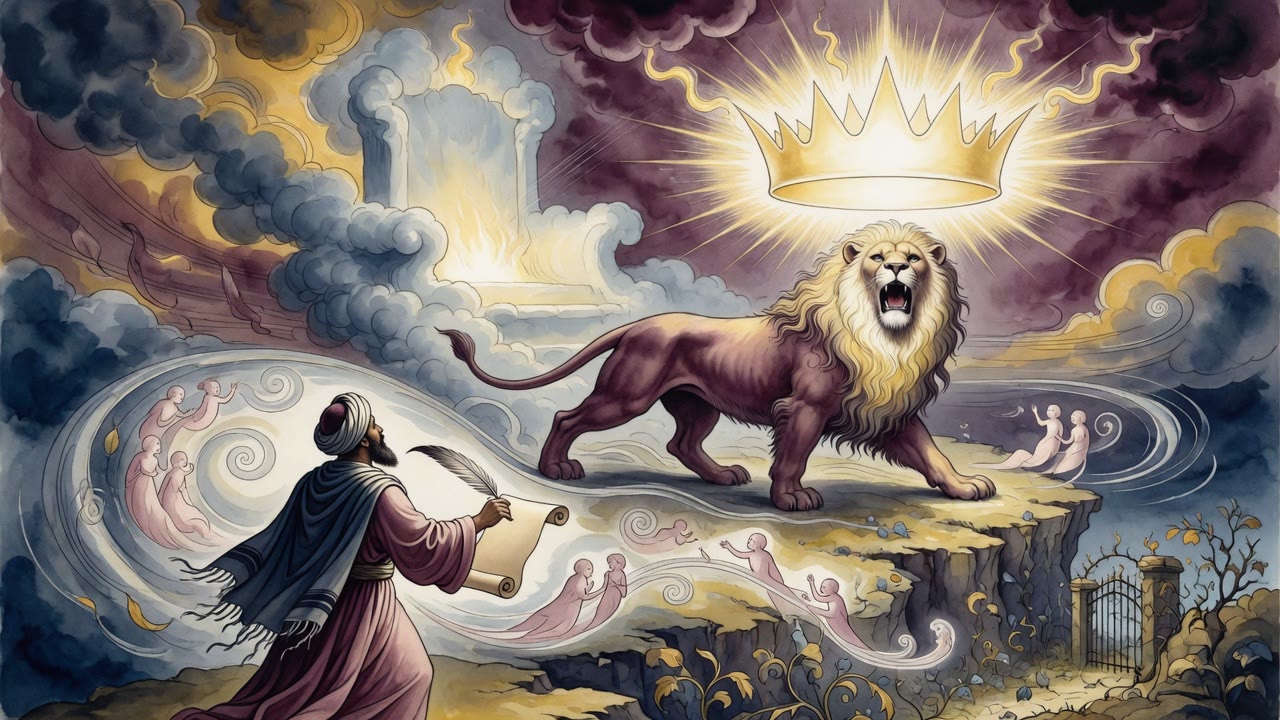
David knew it. He knew what his line had carried up out of that cave, the Evil Impulse itself, seeded in the incest above the ruined cities. He wanted it gone. He set himself to banish the side of evil from the world, to tear it out by the root so that nothing dark could ever rise against Israel again. He could not. He had no power over it. A man cannot uproot the ground he stands on, and David stood on it. He was made from it.

One Soul Gathered From Every Generation

The soul waiting to enter that stained line was not one soul. Like the soul of Adam, the first man, it held all the others inside it, the souls of every generation folded together into a single burning weight. Whoever carries all the generations carries the strength of the whole world in his chest. When such a man turns back toward God, he pulls every soul behind him along the same turn, and the age of redemption arrives in one breath.

But the weight was too heavy to descend. The gathered soul had sunk down among broken things, scattered as sparks through the wreck of every generation, and it could not fall into a waiting body and be born.

The Soul in Chains

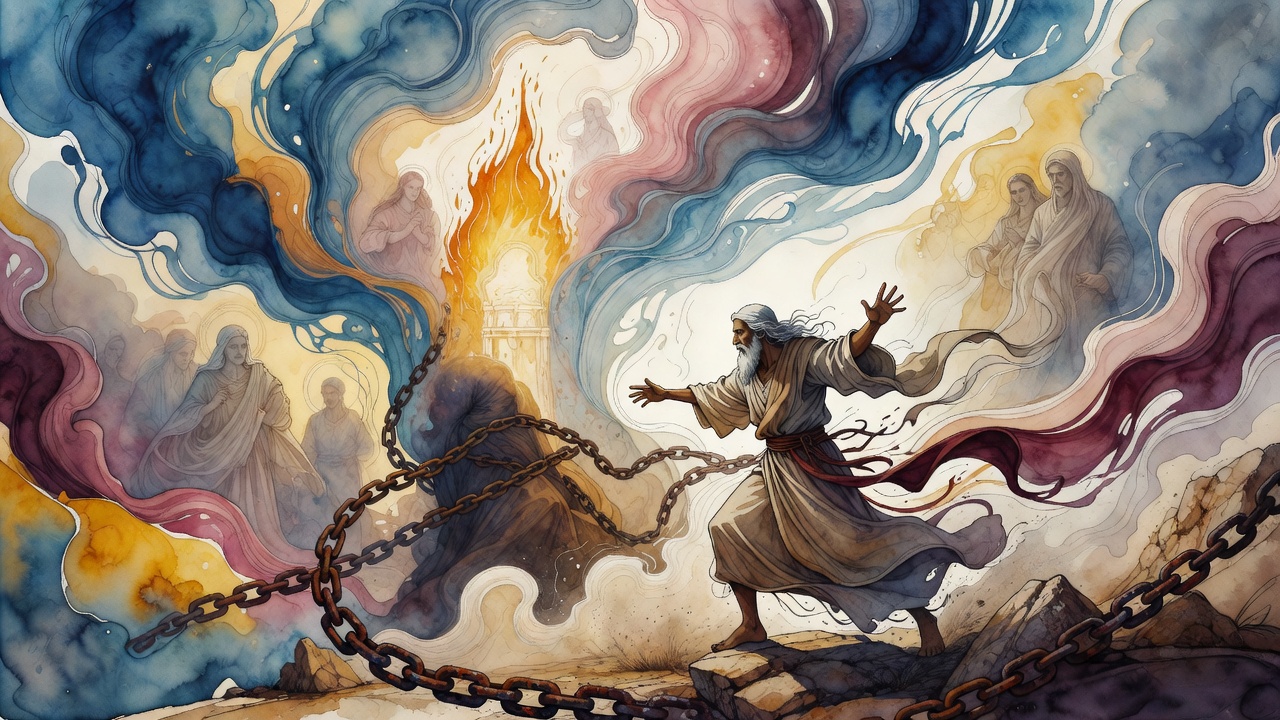
Worse than scattered. Chained. The forces of evil had seized the soul of the Messiah and bound it, and it lay in their keeping still, a captive in the dark. Until the chains were struck off, the soul could not come down. Until the soul came down, no child was born to carry it, and the Messiah did not come. Every generation that passed and left him in irons was a generation that had chosen to leave him there.

The waiting was no longer about when he would come. It was about who would go down into the dark and break the chains.

The Mystic of Hebron

In Hebron, where the fathers of the nation lie buried, a man named Joseph decided it would be him. He did not merely long for the Messiah. He hunted him. Joseph della Reina gave his life to the secrets, pored over the mystical books through the nights, fasted his body thin, prayed until the words wore grooves in him, all to learn the single thing worth knowing, how to force the redemption open before its hour.

Then the great book surfaced in his lifetime, the Zohar, hidden for ages and suddenly in his hands, thick with the secret architecture of God and the Other Side. To Joseph this was no accident. It was a summons. If the soul of the Messiah lay chained, the book had come to show him where the jailers stood.

The Binding of Samael

The jailers had names. Samael, the great accuser, prince of the side of evil, and Lilith, his mate. They held the keys. Joseph reasoned it plainly. To free the chained soul he did not need to find the Messiah at all. He needed to overpower the two who kept him.

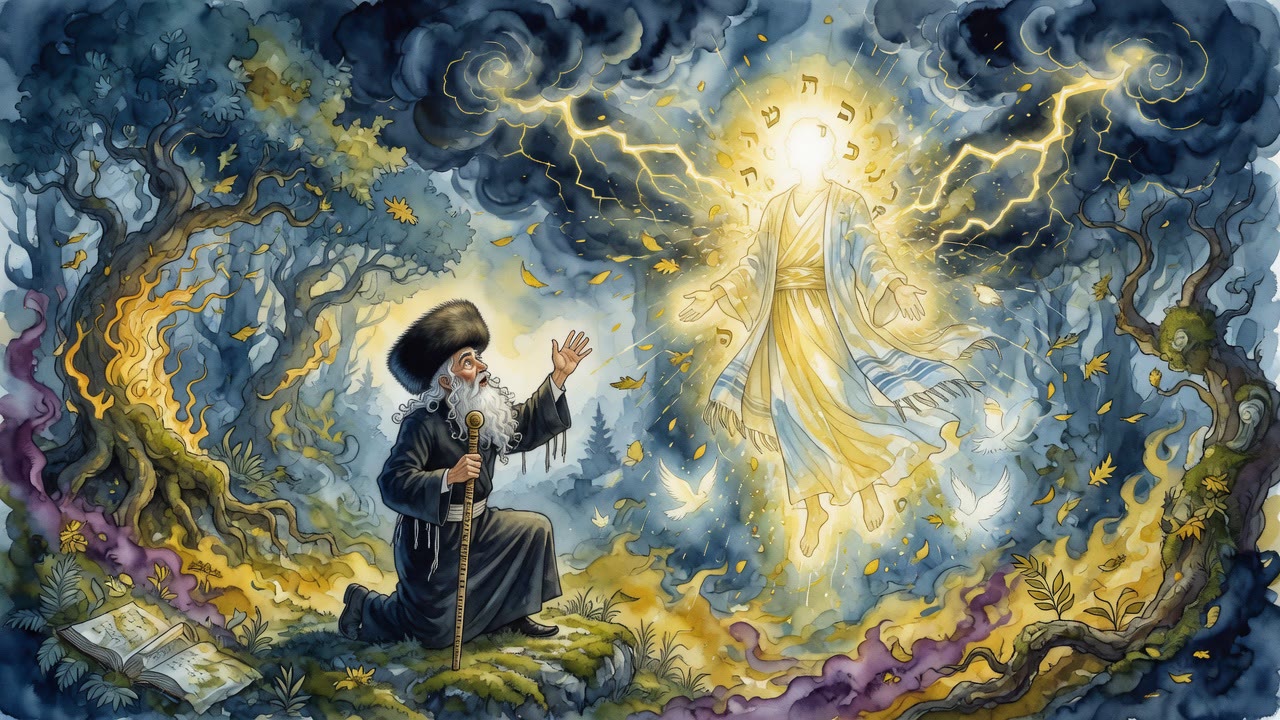
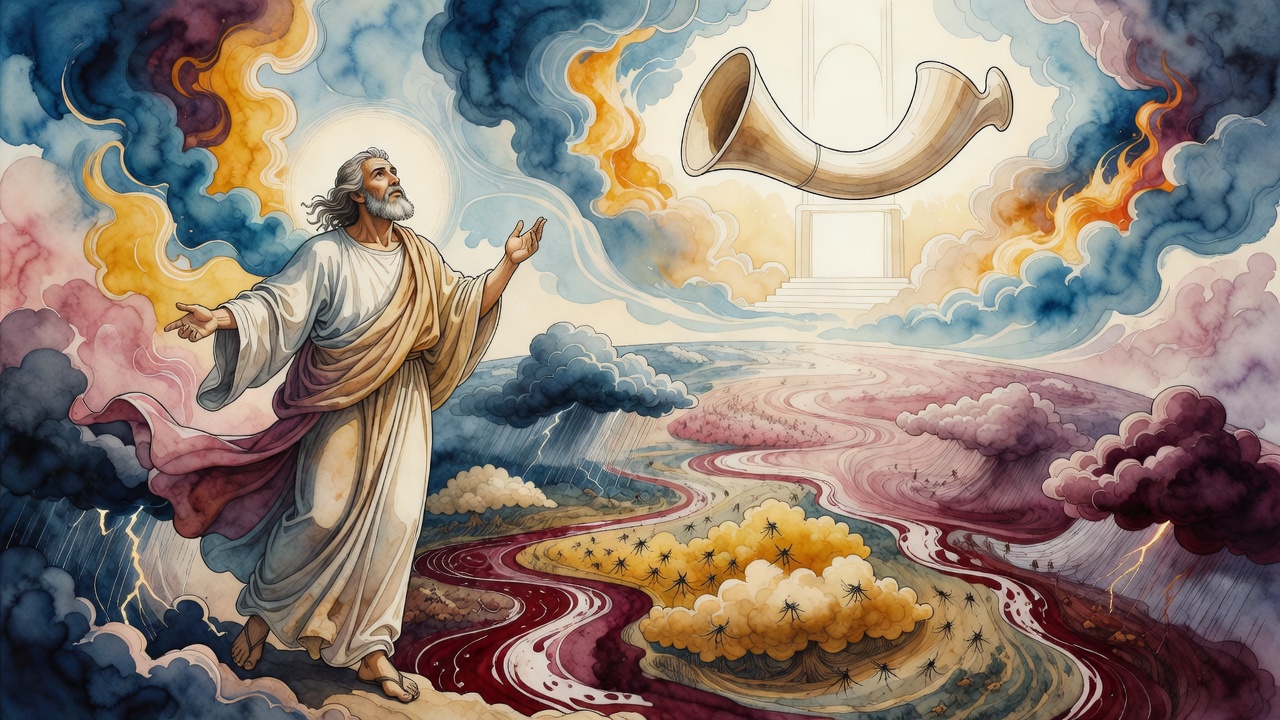
He purified himself and his disciples for weeks, immersing, fasting, refusing meat and wine, until they were scoured clean enough to speak the Name and not be burned by it. They climbed to a high and lonely place. They called down the great angels, who came and warned them off, and they would not stop. They spoke the holy Names, and the two powers rose in front of them as two black dogs, snarling, unable to move.

Joseph bound them. He wound the chains of the Name around Samael and around Lilith and drew them tight, and the accusers who had held the Messiah in irons stood in irons themselves, weakening, sinking, begging. It had worked. The oldest chains in the world were about to change hands.

The Handful of Incense

Then Samael spoke, low and ruined. "Give us only a little to eat," he said. "A little incense, and let us go." He sounded like something dying.

Joseph hesitated. The demon looked so weak. What harm in a handful of incense to a beaten thing already in chains. He took frankincense, set it burning, and lifted the smoke toward the bound powers.

The instant it reached them the chains slipped away like thread. He had made an offering to the side of evil, and an offering is worship, and worship is surrender. Samael rose to his full height, Lilith beside him, stronger now than before Joseph had ever touched them, and the two of them laughed. The soul of the Messiah stayed chained in the dark, sunk deeper than before. Joseph della Reina, who had come within a handful of incense of ending the exile, went down into ruin and never rose out of it, and the generation walked on wearing its chains, having freed the one prisoner it should have left bound.


← All myths
From the tradition

Sources

3 sources

The texts behind this telling. Some cards carry a translation of the source; others are our own retelling of it, and each card says which. Every card links out to the original.

Bereshit Rabbah 41:5Bereshit Rabbah

Retold in our words. Read the original at the link below.The Sefaria Midrash Rabbah, 2022 · CC-BY

Yet, Jewish tradition whispers of just such a mystery: that the Messiah himself will descend from the side of evil.

How can this be? Well, the story starts with King David, the ancestor from whose lineage the Messiah will spring. And David’s own ancestry is… complicated. As we find in Genesis Rabbah, David was descended from Ruth the Moabite. And who were the Moabites? They were descendants of Moab, the son born of incest between Lot and one of his daughters after the destruction of Sodom. Sodom. The epitome of wickedness. As the verse says, "I have found David" (Psalm 89:21). But where did God find him? In Sodom, so to speak. That’s where the roots of his lineage lie. So, the soul of the Messiah, destined to bring ultimate good into the world, has its origins in a place associated with moral decay.

Why would God orchestrate things this way? The text in Tree of Souls tells us, "For reasons known only to Him, God caused events to occur whereby the Messiah will be born from the realm of evil." It's a profound statement, hinting at a divine plan beyond our full comprehension.

The Zohar, that foundational text of Jewish mysticism, explores this further. The incestuous union of Lot and his daughters (Genesis 19:30-38) is identified as the source of the power of the Yetzer ha-Ra – the Evil Impulse. Think of the Yetzer ha-Ra as that little voice in your head that tempts you to do things you know you shouldn't.

Now, this isn’t to say that the Messiah will be evil, far from it. But it does suggest that his soul possesses a unique connection to, and understanding of, the forces of darkness. The key here, as explained in Tree of Souls, is that the Messiah’s soul is closest to evil, possessing great intensity.

There's a fascinating idea embedded here: that only someone who intimately understands the nature of evil can truly conquer it. According to Ginzberg's retelling in Legends of the Jews, had the Messiah descended from a perfectly righteous lineage, no enemy could have prevailed against Israel, and exile would have been impossible. But perhaps, the path to true and lasting redemption requires confronting the shadows within ourselves and within the world.

And what happens when the Messiah comes? In the messianic era, that evil soul will be transformed, through a process of tikkun (spiritual repair) – repair or restoration – into good. This concept of tikkun olam, repairing the world, is central to Jewish thought. It suggests that even the most broken, damaged parts of ourselves and our world can be healed and elevated. It's not about denying or ignoring the darkness, but about confronting it and transforming it.

The No'am Elimelekh, Likutei Shoshanah, and Tzidkat ha-Tzaddik (a righteous person) all offer further insights into this complex idea. David himself, aware of his origins, wanted to banish the "evil side" from which he was born, eliminating it from the world. But he couldn't. He had no power over it, precisely because he was born from it. It's a powerful image – the recognition that we cannot simply eradicate the darkness, but must learn to integrate and transform it.

Remember that even the most unlikely sources can give rise to profound goodness. And that the path to redemption often lies in confronting, not avoiding, the shadows within ourselves and the world around us. What are the implications of this story? How does it change the way we think about the human experience?

Full source
Sippurei Ma'asiyot, 1973 ed., pp. 276-277Sippurei Maasiyot (Rabbi Nachman)

Retold in our words. Read the original at the link below.Sefaria-hosted English translation · CC-BY-SA

Just like the soul of Adam, the very first human, Jewish mystics tell us the soul of the Messiah is all-encompassing. It’s not just one single soul, but a collective – comprised of all other souls. According to some traditions, the Messiah’s soul contains the souls of all generations. The idea is that someone who encompasses all generations in their soul possesses the powers of the entire world. And with that power, when they repent, they can arouse repentance in everyone, bringing about the Messianic Age.

Some stories paint a picture of this soul in distress.

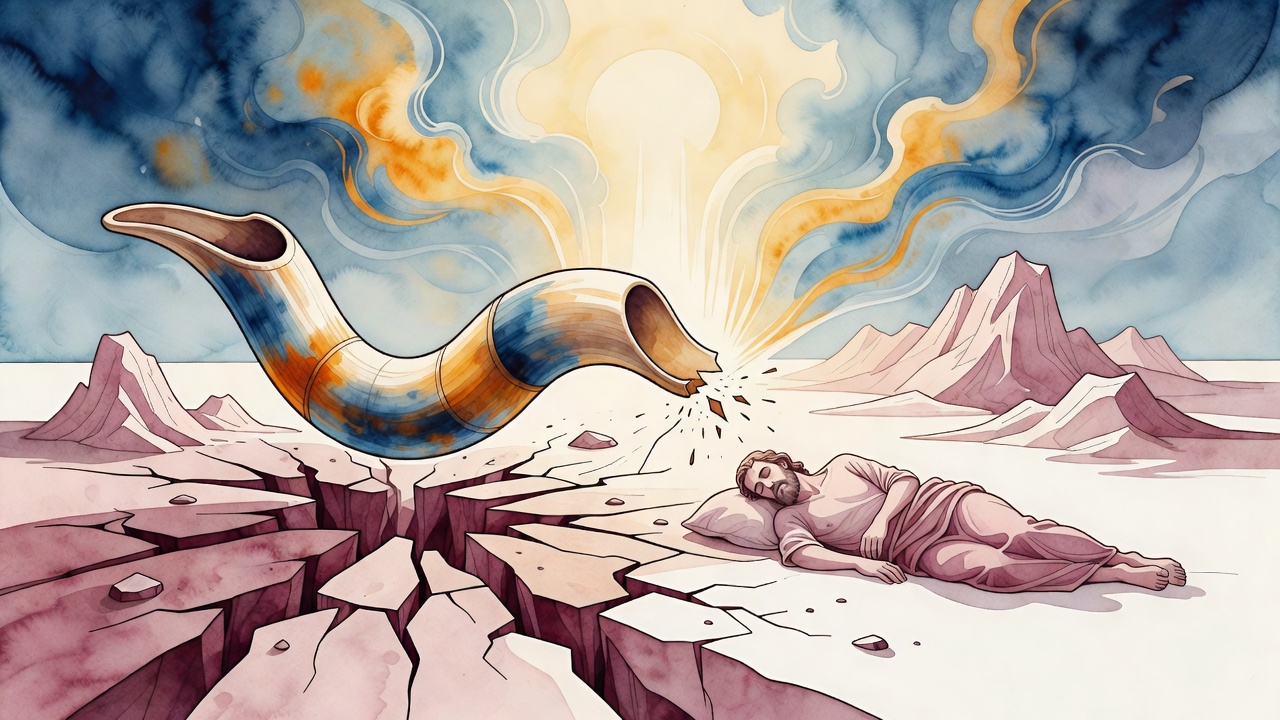
One tradition says that the soul of the Messiah has been exiled – banished to a place of desert and desolation where no one walks. A storm wind rises, creating such confusion that the Messiah loses all the signs that were given to him. These are the signs by which he was supposed to identify himself before the people of Israel! It becomes impossible to recognize him, because he has no way of revealing himself. What's worse, some of those lost signs and marvels of the Messiah are then found by false prophets who appear, calling themselves by the name Messiah. But, thankfully, their lies and wantonness are eventually exposed, their false teachings revealed for all the world to see.

Other traditions say that the soul of the Messiah has been chained and is being held captive by the forces of evil. Not until the chains of the Messiah are broken will the captive soul of the Messiah be set free. It's a powerful image, isn't it?

These accounts of exile and imprisonment are meant to explain a profound question: why hasn't the Messiah come yet? The implication is that as long as the Messiah's soul is being held captive, it can't descend into the body of the Messiah, therefore preventing the birth and coming of the Messiah.

Then there's the Kabbalistic idea, rooted in the teachings of Rabbi Isaac Luria (known as the Ari) and his concept of the Shvirat ha-Kelim, the Shattering of the Vessels. This is a central idea in Lurianic Kabbalah. After the Shattering and the subsequent Tikkun (spiritual repair) Olam (Repairing the World) – with the Gathering of the Sparks – the soul of the Messiah, sunk among the broken vessels, sent forth sparks in every generation. According to this tradition, if a generation is worthy, that spark might become the Messiah, and the footsteps of the Messiah would be heard throughout the world. We see this idea in Sippurei Ma'asiyot, and Tzidkat ha-Tzaddik (a righteous person) 159.

This particular myth gained prominence through the writings of Nathan of Gaza, a key figure in the 17th-century saga of Shabbatai (the Sabbath) Zevi, who was a false Messiah. This idea places the responsibility for the Messiah's arrival squarely on the shoulders of each generation. It means that the coming of the Messiah will not take place until there is a worthy generation.

The idea of identifying the Messiah through specific signs has ancient roots. From the time of Moses, there was a tradition that the Redeemer could be identified by a sign. In the case of Moses, the sign was the words "I have taken note of you" (Exod. 3:16). We even see in Midrash (rabbinic interpretive commentary) how Serah bat Asher, who lived from the time of Jacob until the time of Moses, identified Moses as the Redeemer.

So, what does it all mean?

Perhaps the most potent takeaway is this: the coming of the Messiah isn't just a passive event that we await. It's something we actively participate in. Whether it's freeing the chained soul, gathering the sparks, or striving to be a worthy generation, the tradition places the impetus for redemption firmly in our hands. It reminds us that we have a role to play in bringing about a better world. And that's a powerful thought, isn't it?

Full source
Zohar 2:212a; Kav HaYashar 1Zohar

Retold in our words. Read the original at the link below.Sefaria-hosted English translation · CC-BY

Zohar turns to The Chains Of The Messiah.

Hebron, long ago. A city steeped in history, in faith, in the whispers of ancestors. And in this city lived Joseph, a man obsessed – in the best possible way – with the coming of the Messiah. He wasn’t just idly wishing; he was living it. He devoted his life to mystical study, pouring over ancient texts and offering fervent prayers, all in a desperate attempt to understand how he could speed up the arrival of redemption.

Then, something extraordinary happened.

It was during Joseph’s lifetime that the Zohar – the central text of Kabbalah, Jewish mysticism – was rediscovered. moment! This ancient, profound book, filled with secrets and insights into the nature of God and the universe, suddenly reappears. For Joseph della Reina, this wasn't just a coincidence. It was a sign.

Full source