5 min read

The Parting in the Hair Where the Messiah's Light Descends

A dying master shows his companions a single parting in the hair of the divine head, the channel where the light that will summon the Messiah waits.

Curated by Arthur · Told by Maggid ·
Table of Contents
  1. The Track Cut Through the Hair
  2. The Six Hundred and Thirteen Roads
  3. The Breath in the Nostril
  4. When the Smoke Refused to Rise
  5. What the Master Left Open

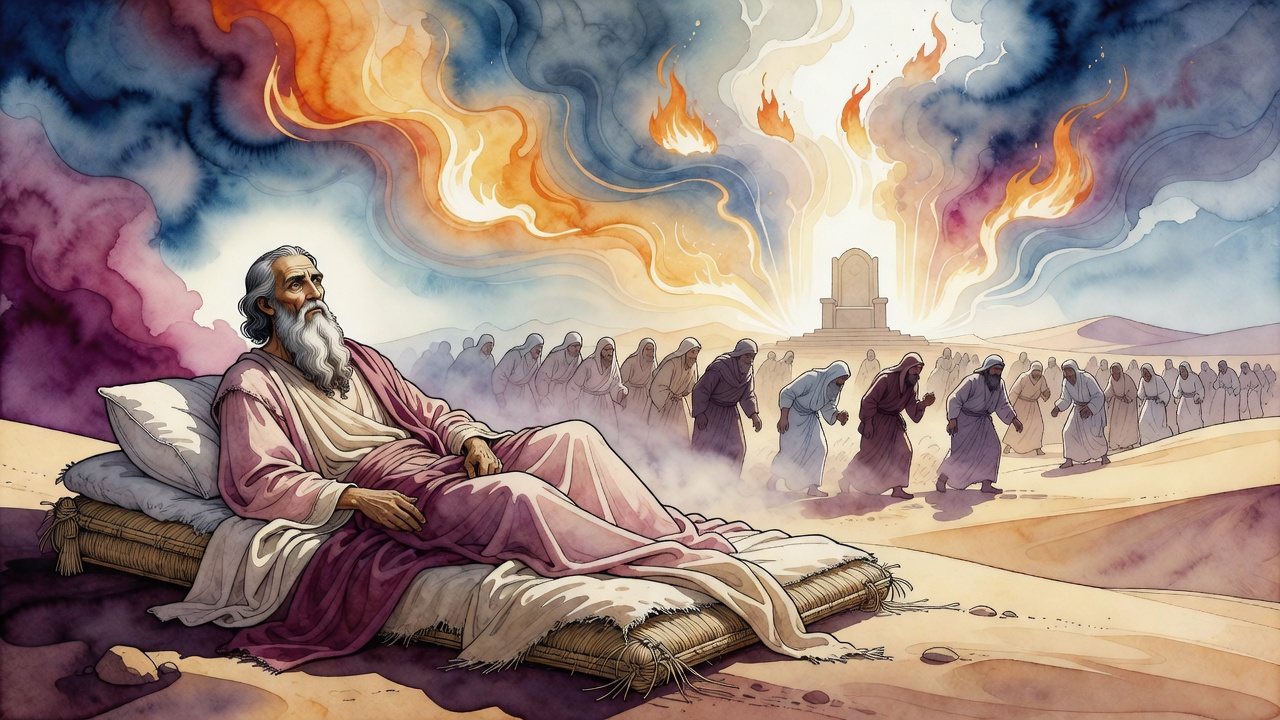
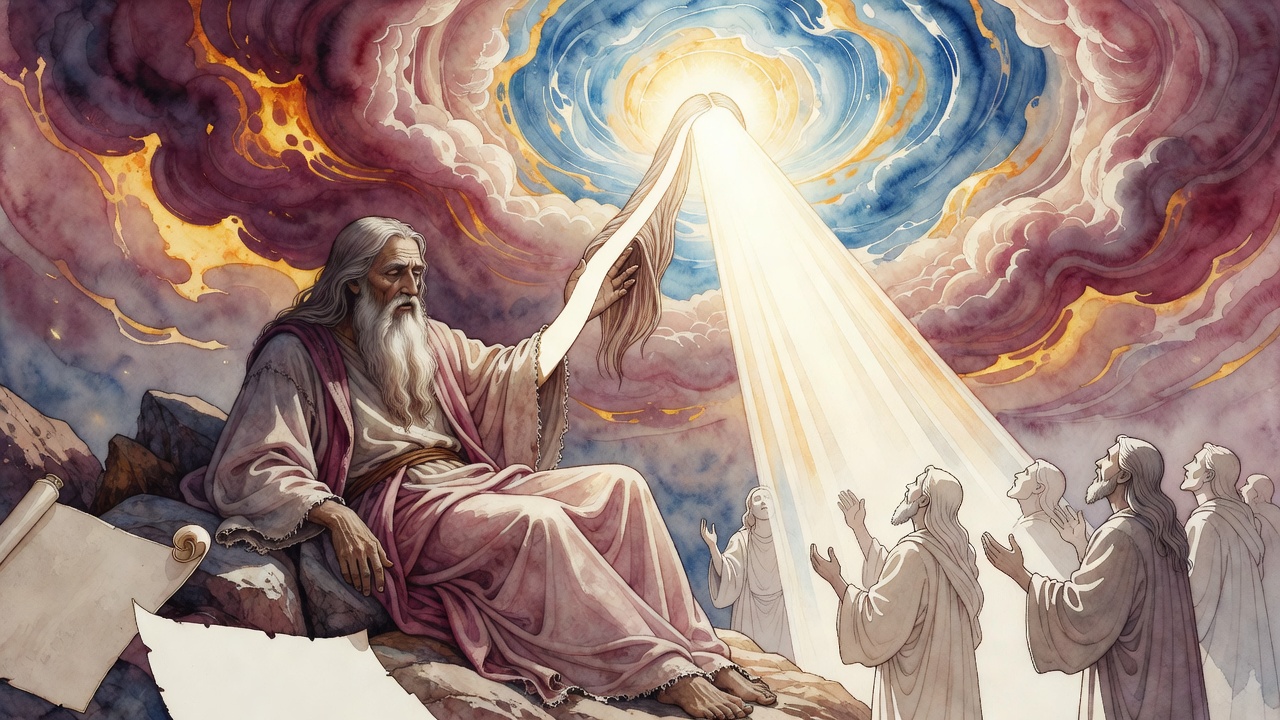
The old master would not last the day, and the companions knew it. Rabbi Shimon bar Yochai lay in the house with the doors shut and the few who remained pressed close around him, close enough to hear the breath catching in his chest. He had one secret left to give, and he meant to give it before the breath stopped.
The Parting in the Hair Where the Messiah's Light Descends Click for full size

"Come near," he told them. "There is a thing hidden in the head of the King that the whole world is waiting on, and I will not carry it out of the world with me."

Rabbi Abba took up his pen.

The Track Cut Through the Hair

Rabbi Shimon spoke of the divine countenance the way a man describes a face he has stared at his whole life. Across the crown of it lay the hair, strand upon strand, black and ordered, and through the hair ran a single parting. Not a decoration. A road.

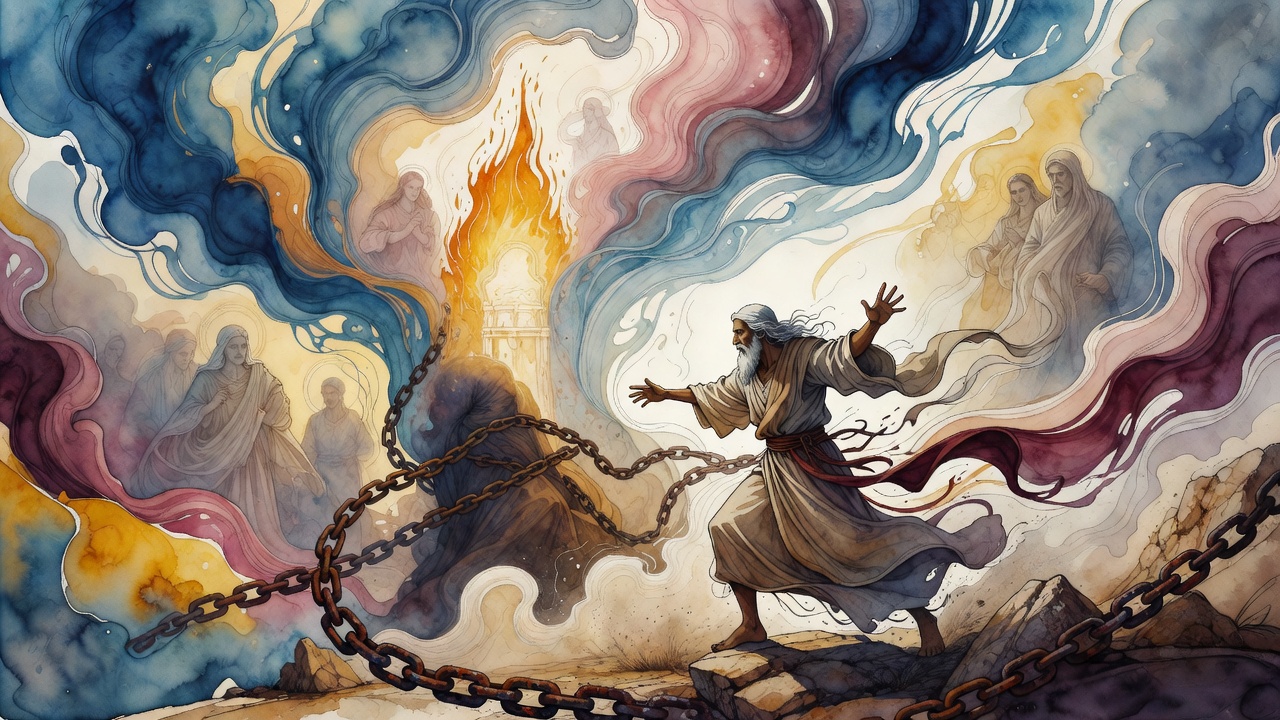
The parting was a shining track, he said, and it began in the highest and most sealed place there is, in Chochmah (חכמה), Wisdom, the emanation so far above thought that no mind takes hold of it. From that sealed place the track came down. Where it ran, it burned white.

"This," he told the companions, "is where the righteous will stand in the world that is coming." He gave them the verse from Proverbs, the one about the path of the just that shines like the gleam of sunlight, brighter and brighter toward the full noon. That brightness was no reward tucked away in a corner of heaven. That brightness was the parting itself.

The Six Hundred and Thirteen Roads

Then he widened it. The single track was not one road among many. It was the road that lit every other road.

Six hundred and thirteen paths ran through Zeir Anpin (זעיר אנפין), the Small Face, the countenance through which God turns toward the world and gives the Torah with its commandments. Six hundred and thirteen commandments, six hundred and thirteen paths. Not one of them held any light of its own. Every one of them was lit from the single parting cut down out of Wisdom.

The companions understood him. Every act of a righteous life, every command kept in a small house on an ordinary night, drew its light from the most hidden place there is. The parting was not the end of the road. It was the source.

The Breath in the Nostril

Rabbi Shimon lifted the teaching higher still, above the Small Face to the Vast Countenance, to Arich Anpin (אריך אנפין), the Long Face, the Ancient Holy One whom no eye has ever measured.

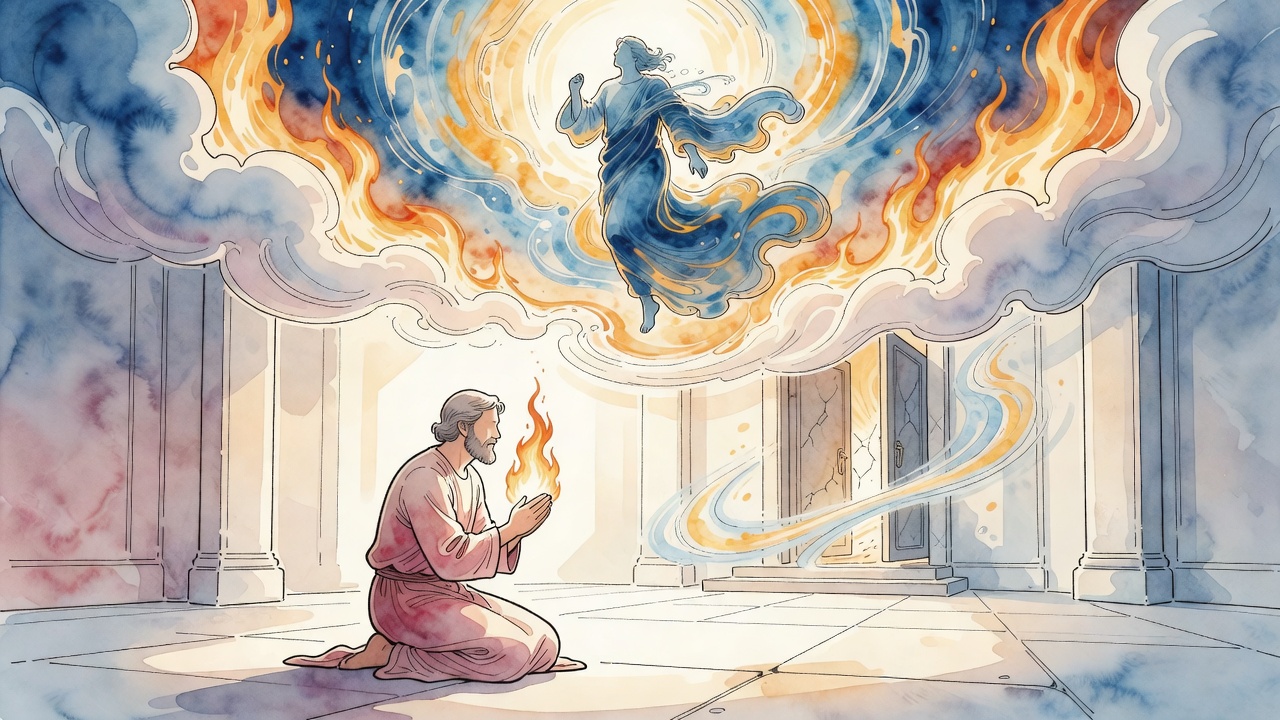
From the nostril of that Vast Countenance, he said, a breath moves. It passes down through the opening of the nose and enters the Small Face below, and the breath is the spirit of life. It is the same spirit the prophet Isaiah named when he swore that the spirit of Hashem would rest upon one man, the spirit of wisdom and understanding. That breath in the nostril is the one that waits for the days of King Messiah. When it comes down full through the channel, wisdom will settle on the redeemer, and the nostril that seemed a place only for smoke will prove to be a channel for healing and for joy.

When the Smoke Refused to Rise

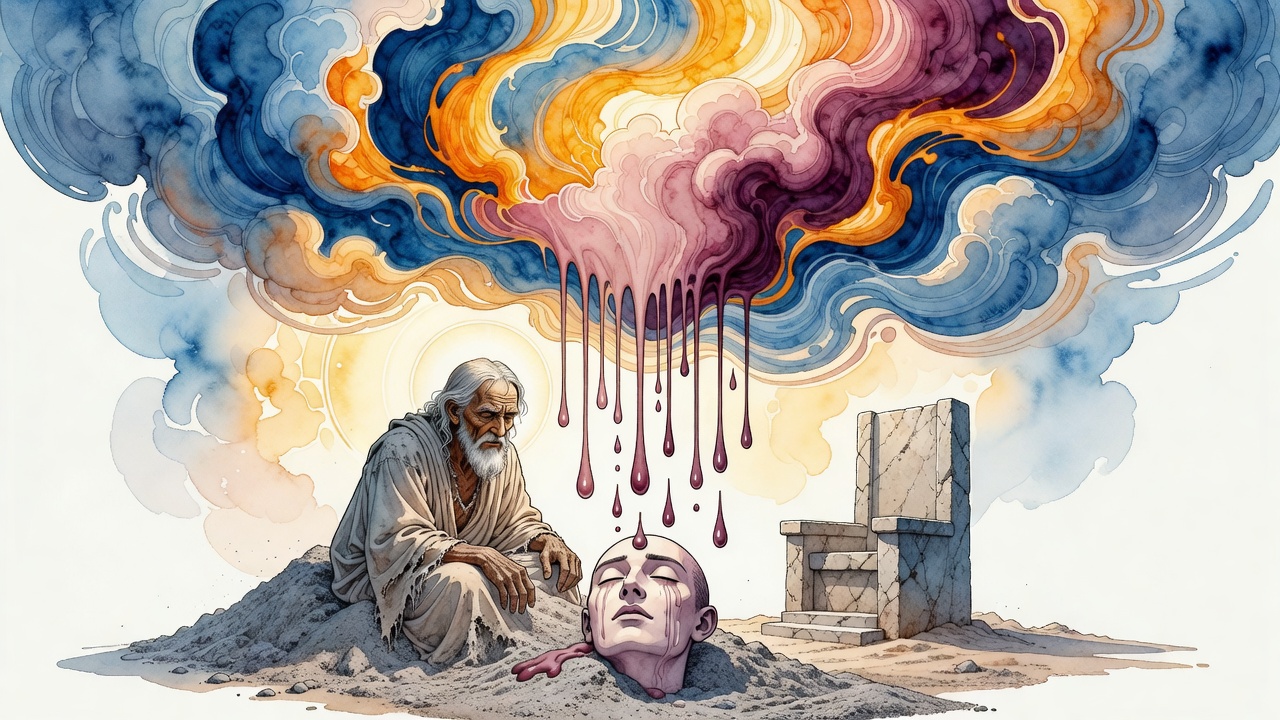
But he set two verses against each other, and the companions felt the danger in it. In the first, smoke rises from the nostrils of the Face, the smoke of anger, the reek of a judgment already tilting toward the world. In the second, the prophet says God restrains himself, and the Hebrew word for that restraint carries the very same root as the word for nose.

"Do you hear it?" Rabbi Shimon asked. The same nostril that could pour smoke chooses instead to hold its breath. Even when the judgment is earned and the smoke is climbing, the Face refuses to breathe it out. It holds back. It holds back for the sake of a people not yet worthy, so that there is still room for them to turn and to grow. The restraint was not weakness. It was love, choosing to wait.

What the Master Left Open

So the whole picture stood before them. A parting cut through the hair of the divine head, running down from a Wisdom no mind can reach. A breath held in the nostril of the Ancient One. A channel kept open above the world, and at the far end of it, not yet released, the light that will summon the Messiah and rest the spirit of wisdom upon him.

The companions bent lower over the words. Rabbi Abba's pen kept moving. And the master, who had held the door of that channel open with the last of his strength so the ones beside him could see clear through it, let his voice fall quiet, the secret out of him at last and gone into the world where it would wait.


← All myths
From the tradition

Sources

2 sources

The texts behind this telling. Some cards carry a translation of the source; others are our own retelling of it, and each card says which. Every card links out to the original.

Idra Zuta 1:18Idra Zuta

Retold in our words. Read the original at the link below.Idra Zuta, The Small Gathering, trans. Michal Ricardo · CC-BY

The Idra Zuta, part of the Zohar, gives us a glimpse into that very place.

It all starts with the "parting of the hair." Sounds a little strange. But in Kabbalistic thought, this isn't about a hairstyle. Instead, it's a metaphor. It refers to a specific pathway, a shining track emanating from the most concealed and incomprehensible realm of Chochmah – that's wisdom, in Hebrew. Chochmah is one of the sefirot, the ten emanations of God's light, and it's so high up, so abstract, that it's almost impossible for us to grasp.

From this hidden place, a path emerges.

This path, the Idra Zuta tells us, is where the righteous shine in the World to Come. It's a place of immense light and joy. As (Proverbs 4:18) says, "But the path of just men is like the gleam of sunlight…" Think of that image: a radiant, ever-brightening path. That's the reward, the destination, for those who live a righteous life. And as (Isaiah 58:14) promises, in that place, "then shall you delight yourself in Hashem" – you will find ultimate joy in the presence of God.

But here's where it gets even more interesting. This isn't just some isolated road. The Idra Zuta continues by saying that all other paths – specifically, the six hundred and thirteen paths associated with Zeir Anpin – are illuminated by this central one. Now, Zeir Anpin is a complex term, but for our purposes, it represents the manifestation of God in the world, particularly through the Torah and its commandments. The 613 commandments, in other words.

So, what does it mean that these paths are illuminated by the "parting of the hair"? It suggests that the ultimate source of light and guidance for all our actions, all our efforts to live a good life, comes from that highest, most incomprehensible source of wisdom. It means the path of the righteous isn't just some nice reward off in a corner of the spiritual world, it's the source.

That even in the most hidden and mysterious aspects of the Divine, there's a path, a connection, waiting for those who seek righteousness. How can we make sure that our actions are illuminated by that ultimate source of wisdom and joy?

Full source
Idra Zuta 1:33Idra Zuta

Retold in our words. Read the original at the link below.Idra Zuta, The Small Gathering, trans. Michal Ricardo · CC-BY

The Idra Zuta, a section of the Zohar, is considered one of the most profound and esoteric parts of Kabbalah. It explores the mysteries of the Sefirot, the emanations of the Divine, and the relationships between them. And right from the start, we are confronted with this idea of the Holy Name – GOD's Name – as both hidden and revealed. the Divine is inherently beyond our comprehension, infinitely vast and unknowable. That’s the "hidden" aspect, corresponding, the Idra Zuta tells us, to the most concealed, the Atika Kadisha, the "Ancient Holy One." Yet, the Divine also manifests in the world, becoming accessible to us through creation and revelation. This is the "revealed" aspect, emerging in Zeir Anpin, often understood as the "Small Face" or the manifestation of God in the world.

This duality, this dance between hiddenness and revelation, permeates our prayers and blessings. The Idra Zuta explains that our blessings need to reflect both aspects. That’s why we use both the second person, "Blessed are you," directly addressing the Divine, and the third person, "who has hallowed and commanded us," referring to God in a more indirect, "hidden" way. It’s a subtle but powerful way of acknowledging both the immensity and the intimacy of our relationship with the Divine.

Things get even more fascinating when we turn to the imagery of the Divine Face, specifically the nose – the Arich Anpin’s nose, to be precise. According to the Idra Zuta, the breath, the very spirit of life, flows from the Arich Anpin, the "Long Face" or the "Vast Countenance," through the opening of the nose and into Zeir Anpin. This breath, this spirit, is what allows us to access wisdom, particularly in the era of King Messiah.

This resonates with the prophecy in Yeshayahu (Isaiah) 11:2: "And the spirit of Hashem shall rest upon him, the spirit of wisdom and understanding…" The nose, the chotem in Hebrew, isn't just an organ of smell; it's a conduit for divine life force, bringing joy, contentment, and healing.

But there's a twist! The text contrasts two verses about noses. One, from II Shmuel (Samuel) 22:9, describes smoke rising from the nostrils of Zeir Anpin, potentially suggesting anger or displeasure. The other, from Yeshayahu (Isaiah) 48:9, speaks of God refraining (echetom, sharing the same root as "nose") for our praise.

What does this mean? It suggests that even in moments of divine judgment or hiddenness, there's a deeper purpose, a restraint born out of love and a desire for our ultimate benefit. God, in a sense, "holds back" for our sake, allowing us to grow and learn.

So, as we reflect on these ideas from the Idra Zuta Where do we see glimpses of the infinite, the unknowable? And where do we experience the tangible presence of the Divine in our everyday world? Perhaps the answer lies in recognizing that both are always present, intertwined, like the breath flowing from the Divine nose, bringing life and wisdom to us all.

Full source