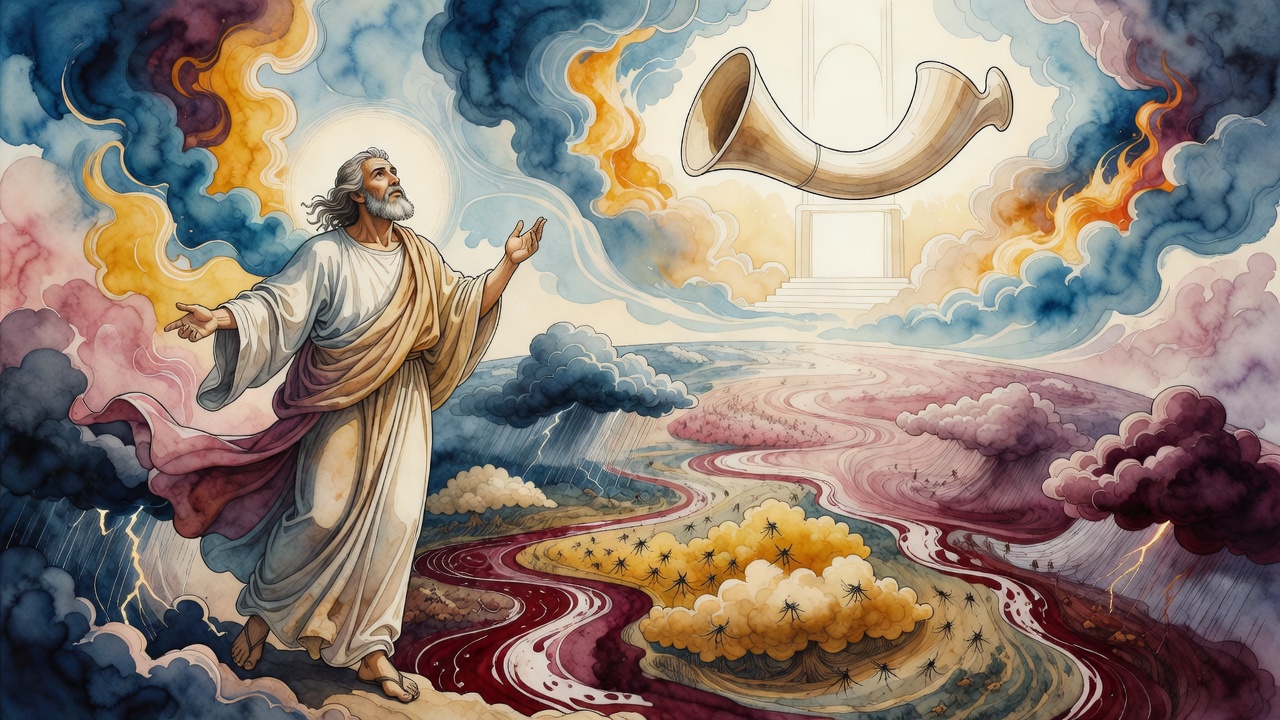
The Messiah's Soul Waited in White Fire for a Ready Generation
Rabbi Menachem finished the midnight tikkun, the repair rite, with a voice that cracked on the last psalm. He felt the empty chair beside him, almost occupied.
Table of Contents
 Click for full size
The Palace That Would Not Open Downward
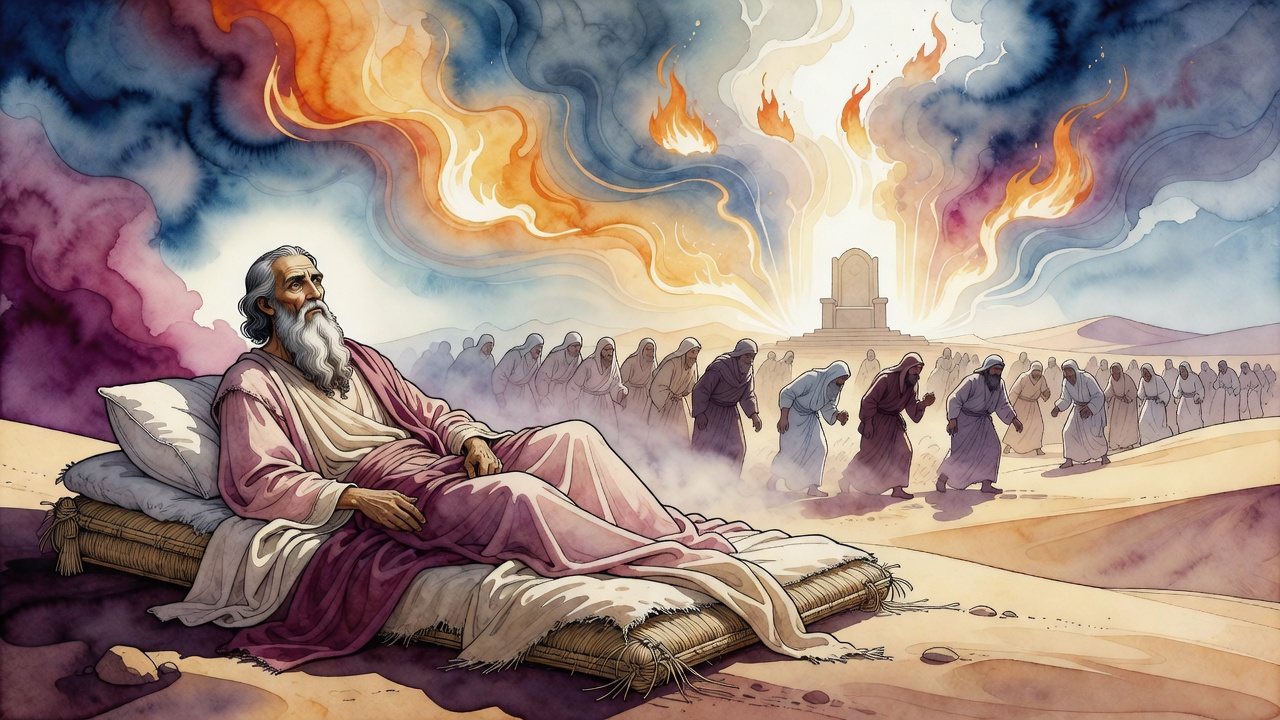
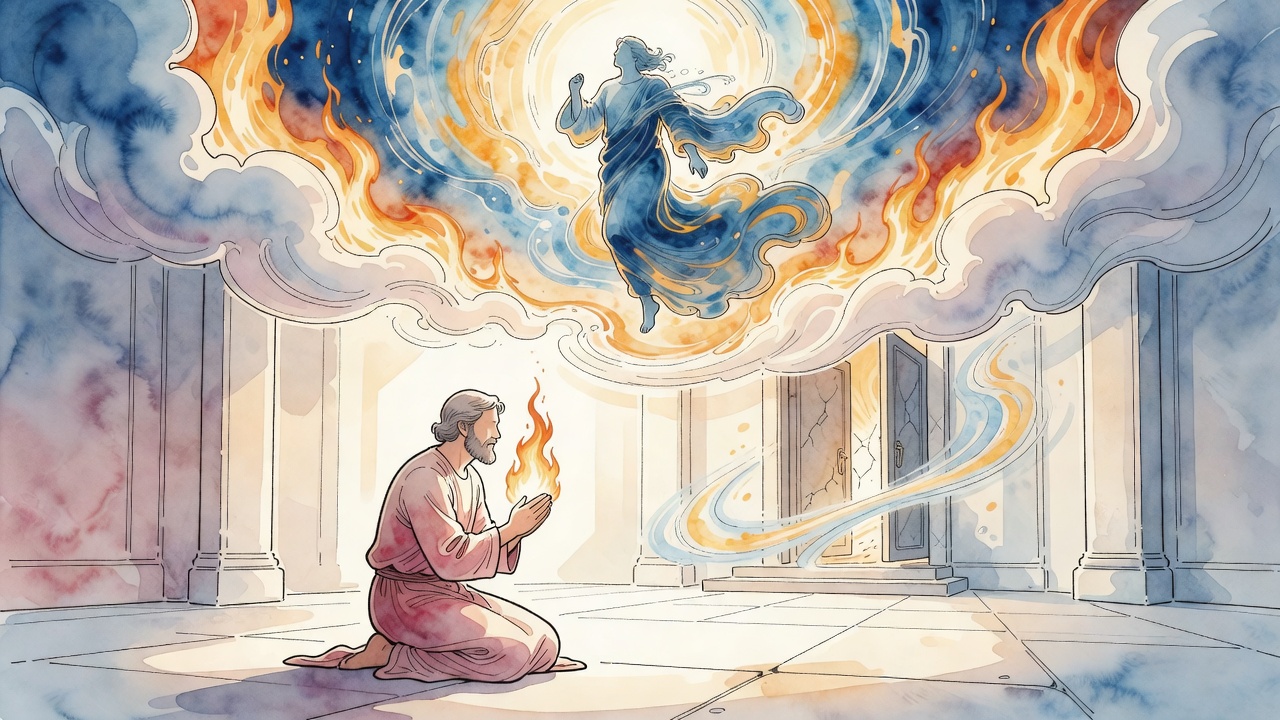
The soul of the Messiah walked a corridor of white fire that never cooled. Windows looked onto worlds that had not yet chosen their ending. No hunger there. No age. Only a waiting so sharp it felt like a blade held point-up under the ribs of heaven.
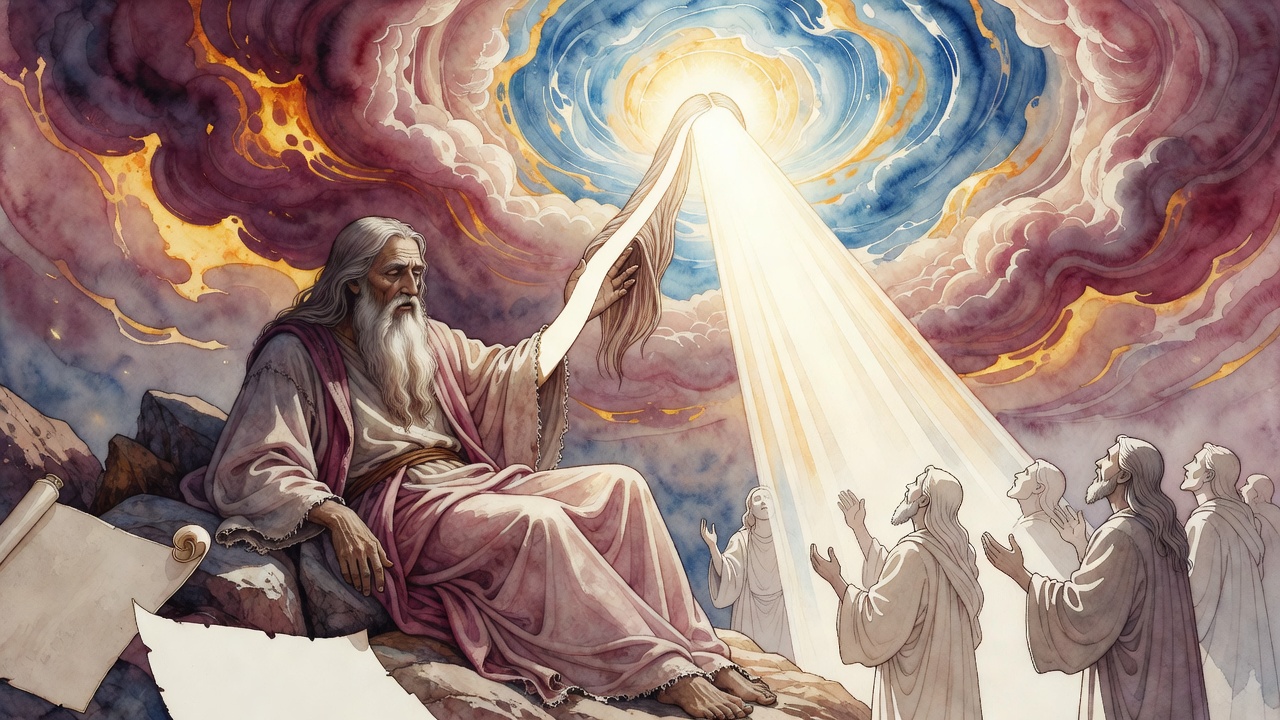
This was not the only messianic spark. In every generation a Tzaddik ha-Dor, the most righteous of his time, carried an earthly soul that could, if the world bent far enough toward repair, receive a second soul from above. Two lamps. One body. The upper lamp waited in the palace for a night when the lower lamp burned clean enough to host it.
Below, in a narrow house on a muddy street, Rabbi Menachem of that generation finished the midnight tikkun (a repair) with a voice that cracked on the last psalm. His students thought him complete. Heaven knew he still walked with one fire, not two. He washed his hands, closed the book, and felt the empty chair beside his own prayer as if someone tall had almost sat down.
Half a Soul Is Still a Whole Life
Menachem taught orphans free of charge. He returned lost coins. He refused a seat that required silence about a cruel decree. His earthly neshama (נשמה), the soul-breath that thinks and chooses, was bright enough that beggars slept easier on his street. Still the upper palace did not open.
Why? Because most of the generation held only Nefesh, the lowest layer, and only a minority had earned Ruach (the spirit-soul) or Neshama (the higher soul) in full. The tradition is blunt: Mashiach ben David does not come until the Ruachot and Neshamot are rectified. A single tzaddik (a righteous person) cannot drag a whole age across the finish line by himself. The palace soul paced. The street soul prayed. The gap between them was the age's unfinished work.
One night Menachem dreamed the corridor of white fire. A figure without a face stood at a sealed door and said, "I am ready when they are." He woke with salt on his lips and no triumph in his chest. Readiness above is not the same as readiness below. He told no one the dream. He added another hour of study for the weak students instead.
When a Ruach Borrows Another Body
In the same years a lesser man named Berel died with a blemished Ruach and returned with only his Nefesh (the life-soul) clean enough to wear. He could not receive his own damaged Ruach. Instead, for a season, the Ruach of a deceased tzaddik rested on him like a guest who leaves no trunk in the corner. Berel felt wiser than he was. He spoke sentences he had never learned. Shopkeepers asked who had taught him overnight. Then the guest withdrew when the work of that season ended, and Berel stood ordinary again, shaking in the market with a bag of onions.
That ibur (עיבור), the temporary impregnation of one soul by another, is how heaven keeps repair moving when a single lifetime is not enough. The Messiah-soul in the palace watched such borrowings the way a general watches scouts. Progress, yes. Not yet arrival. Souls that had damaged higher layers could still host borrowed light while their own Ruach finished repair elsewhere.
Menachem met Berel after the withdrawal. Berel wept. "I was almost someone else." Menachem put a hand on his shoulder. "You were a house that hosted light. Do not despise the empty rooms. Keep them clean for the next guest." Berel nodded and went home to relearn his own voice, slower, less brilliant, more his.
The Night That Almost Happened
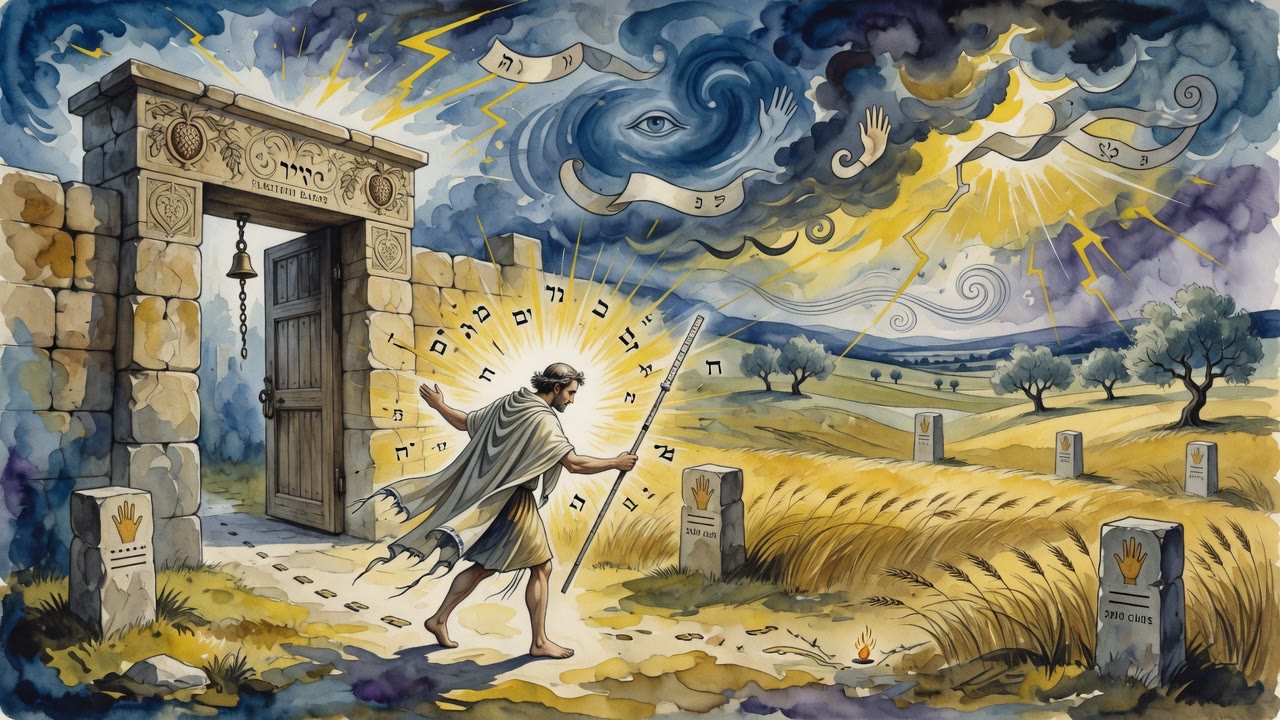
A famine year broke something open. The city shared bread until the last storehouse showed its floorboards. Menachem gave his own portion and taught with a voice so stripped of self that even the officer of the keys lowered his eyes. Above, the palace door trembled. The messianic soul stepped to the threshold. Wind moved through both worlds at once. Menachem's students later said the candles leaned toward the north without a draft.
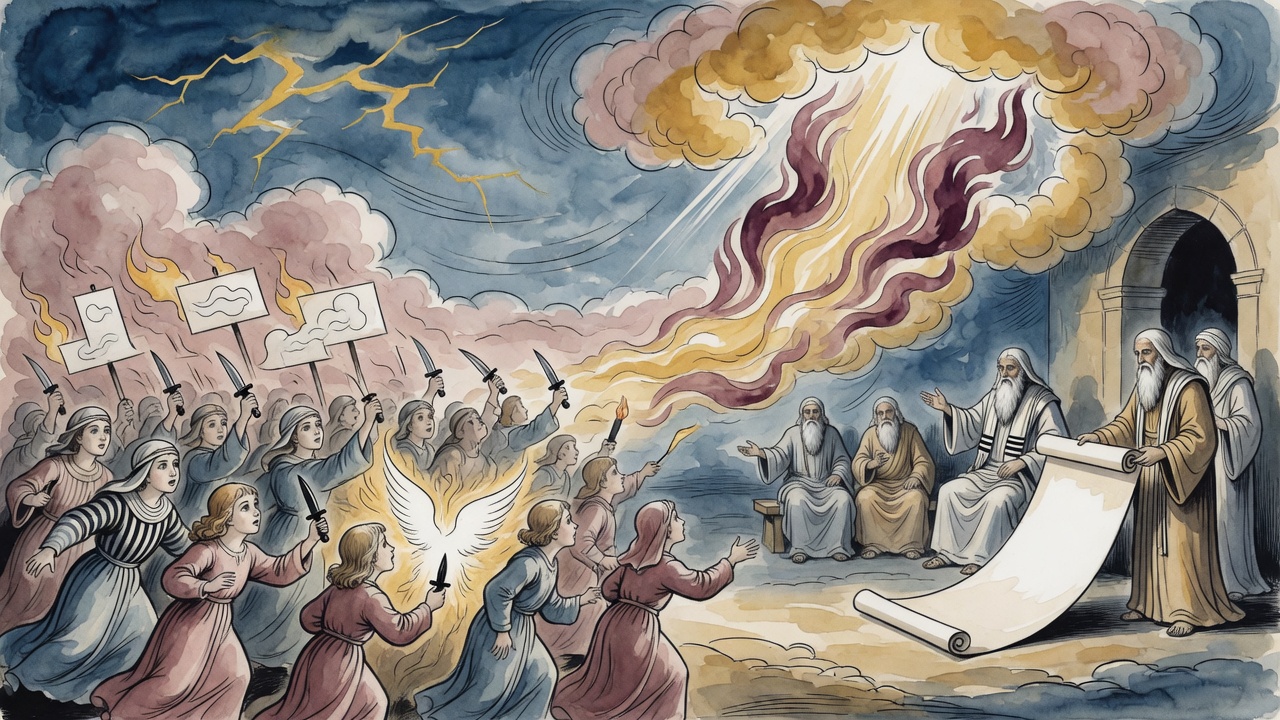
Then a riot over the last grain killed three men in the market. The door sealed with a sound like a book closing. The upper soul turned back into the corridor. Menachem felt the almost in his bones and did not tell his students. He only said the next morning, "We were near. Near is not nothing. Near is a debt." He buried one of the dead with his own hands and said the psalms without ornament.
He lived the rest of his years as the righteous of his generation, never the fusion of two souls that would have signaled the era's turn. When he died, the palace soul did not descend into a grave. It kept walking the white corridor, waiting for another street, another midnight psalm, another age that might finish what this one began.
In the study house they still argued whether the Messiah is a palace figure or a man of dust. The older teachers answered with both hands open. He is a soul above and a candidate below. The marriage of the two is the event. Until then, every generation carries a lamp and a locked door, and some nights the lock warms under a hand that almost turns it.
← All myths