6 min read

The Hidden Messiah and the Rainbow the World Has Never Seen

In a palace no one else may enter, a thousand halls deep in longing, the Messiah weeps and waits for the sign that his hour has come.

Curated by Arthur · Told by Maggid ·
Table of Contents
  1. The Palace No One Else May Enter
  2. The Bird That Sings Him Toward the Throne
  3. When Gog and Magog Scar the Earth
  4. He Comes Forth With Only a Staff and a Sack
  5. The Rainbow Adorned Like a Bride
The Hidden Messiah and the Rainbow the World Has Never Seen Click for full size

The Palace No One Else May Enter

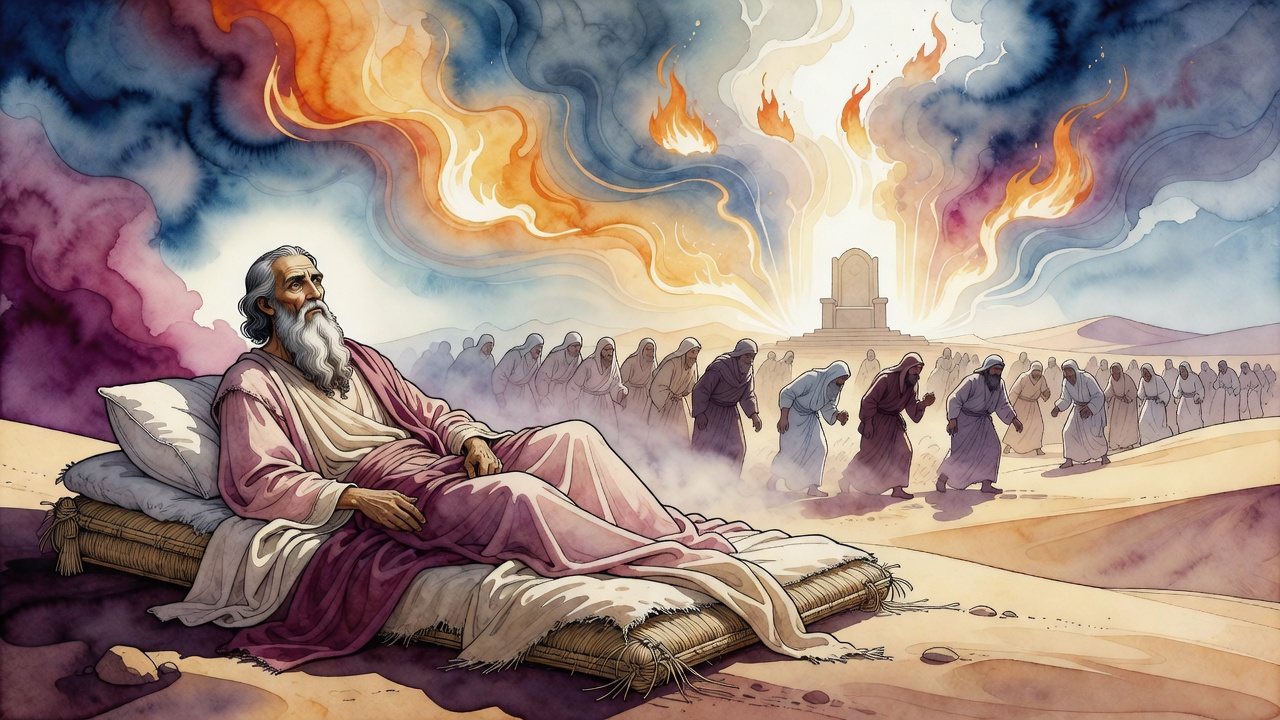
Deep in a heaven folded away from every road stands a palace that opens for one guest and no other. Its makers called it the Bird's Nest, and inside it a thousand halls run one into the next, each heavier than the last with longing. No angel walks them. No prophet has ever crossed their threshold. Only the Messiah may enter, and he has been inside so long that the doors have learned the weight of his hand.

He is not enthroned there. He waits there. The palace is a prison built of yearning, and he is its only prisoner, held back from the world until the hour he is permitted to come out. In a tree beside the palace a wondrous bird keeps its nest, close enough that the Messiah can hear it stir in the dark.

The Bird That Sings Him Toward the Throne

On every New Moon, on the festivals, and on each Shabbat, the Messiah walks into the halls of longing, lifts his voice, and weeps. The sound does not stay inside the palace. The Garden of Eden shudders at it. The firmament trembles. His grief climbs through the heavens until it reaches the throne of God.

Then God calls the bird. It leaves its place in Eden, flies to the nest in the tree, and sings. No music ever made on earth resembles it. Three times the bird pours out its song, and on the third the bird and the Messiah rise together, up past the shaking firmament, all the way to the Throne of Glory. There God swears an oath in the hearing of the man He keeps hidden. He swears to break the wicked kingdom of Rome, to end the empire that has ground His children into the dust, and to give that battered people every blessing set aside for them since the beginning.

The oath sworn, the bird flies back to its nest. The Messiah walks back into his palace. The doors close. Once more he is hidden, and once more he waits, and the halls fill again with the ache of a promise not yet kept.

When Gog and Magog Scar the Earth

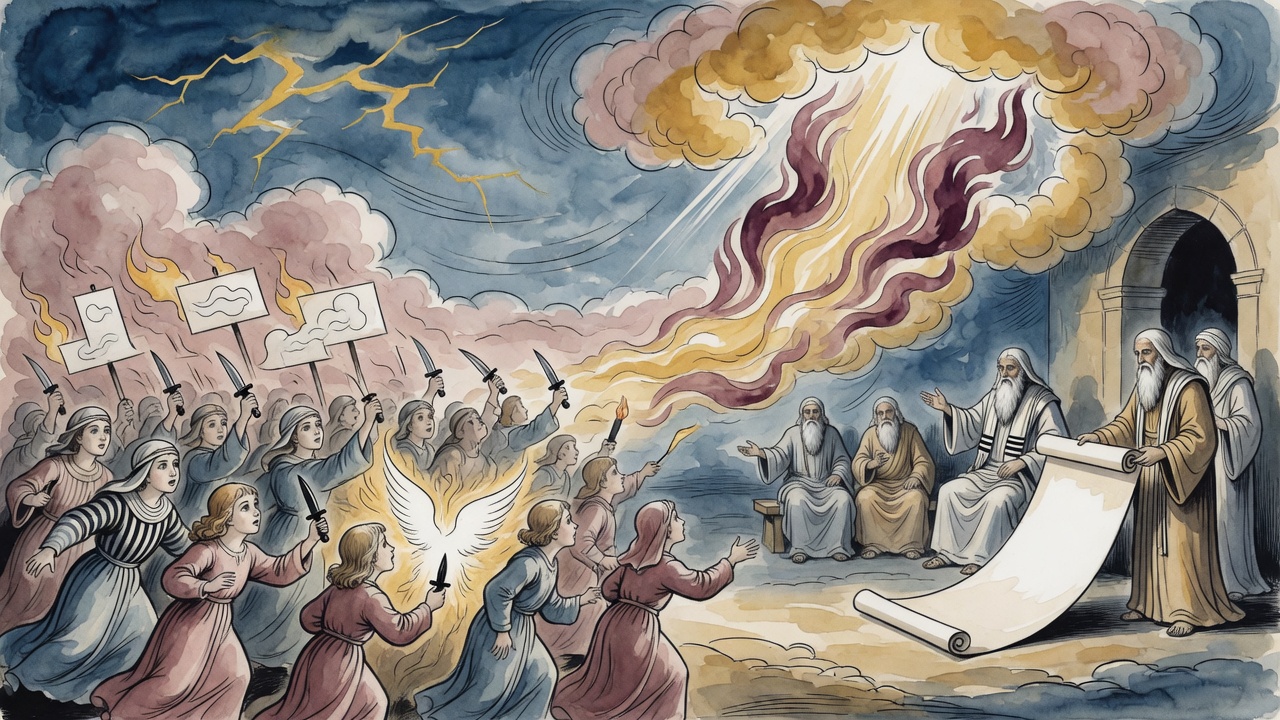
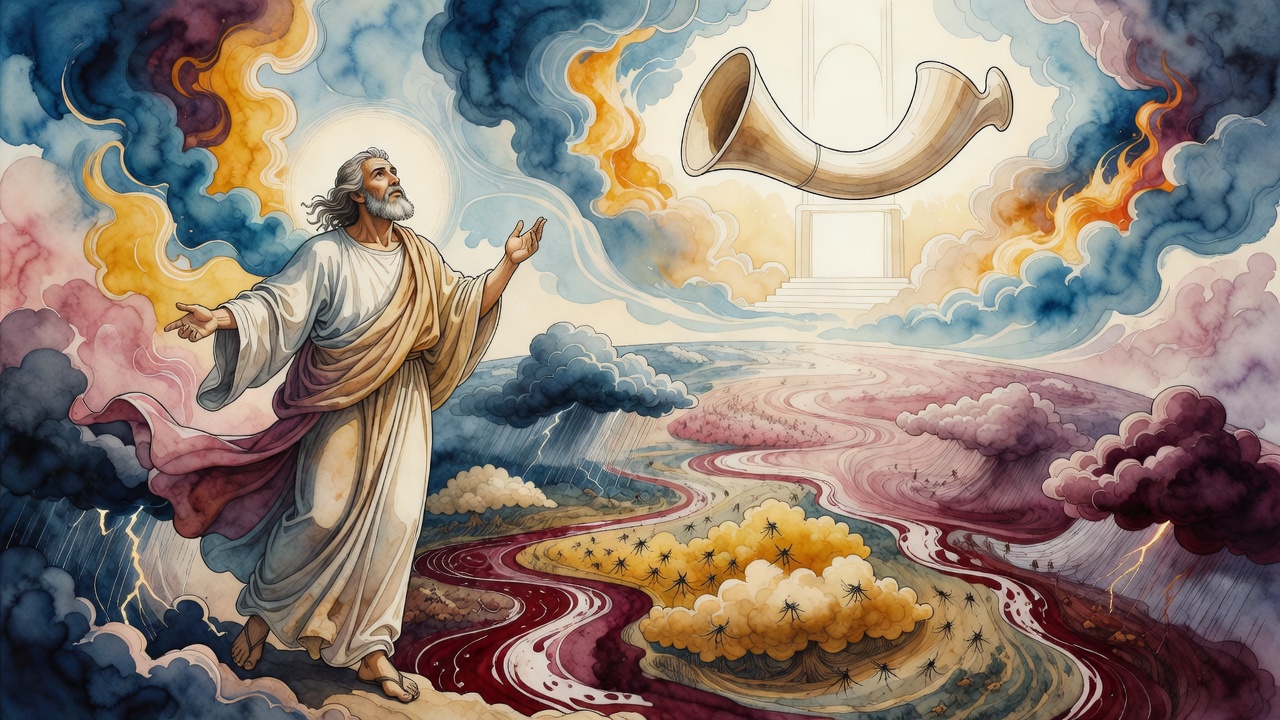
Below him the world tears itself open. The armies of Gog and Magog rise against the nations, and the fields the Messiah has never been allowed to walk are salted with the dead. The earth wears its wounds like a burned face. Every generation of the exile has felt the chains that hold him fast, the long links forged from each single day the redemption did not come.

Then the hour turns at last. The doors that opened for no one swing outward.

He Comes Forth With Only a Staff and a Sack

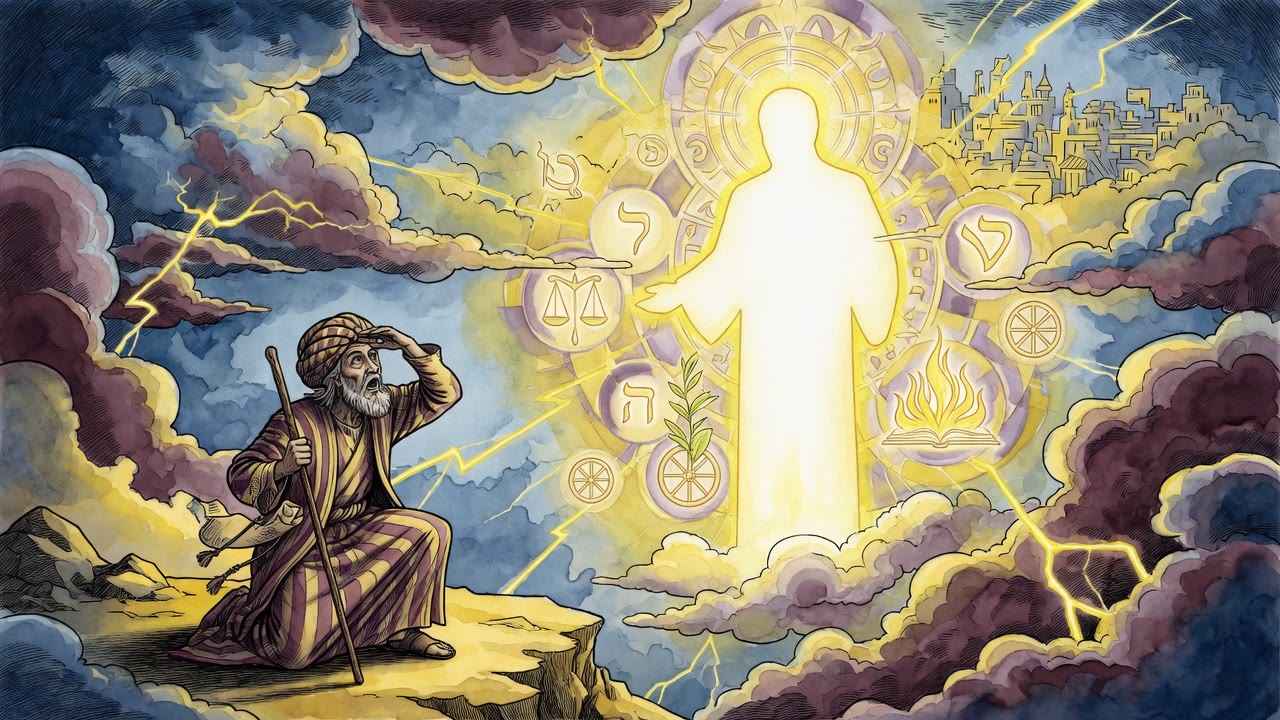
He steps out of the prison-palace carrying almost nothing. No crown, no army, no herald walking before him. A staff in his hand, a sack across his shoulder, and that is the whole of it. The redeemer the world has ached for comes out looking like a beggar on a country road.

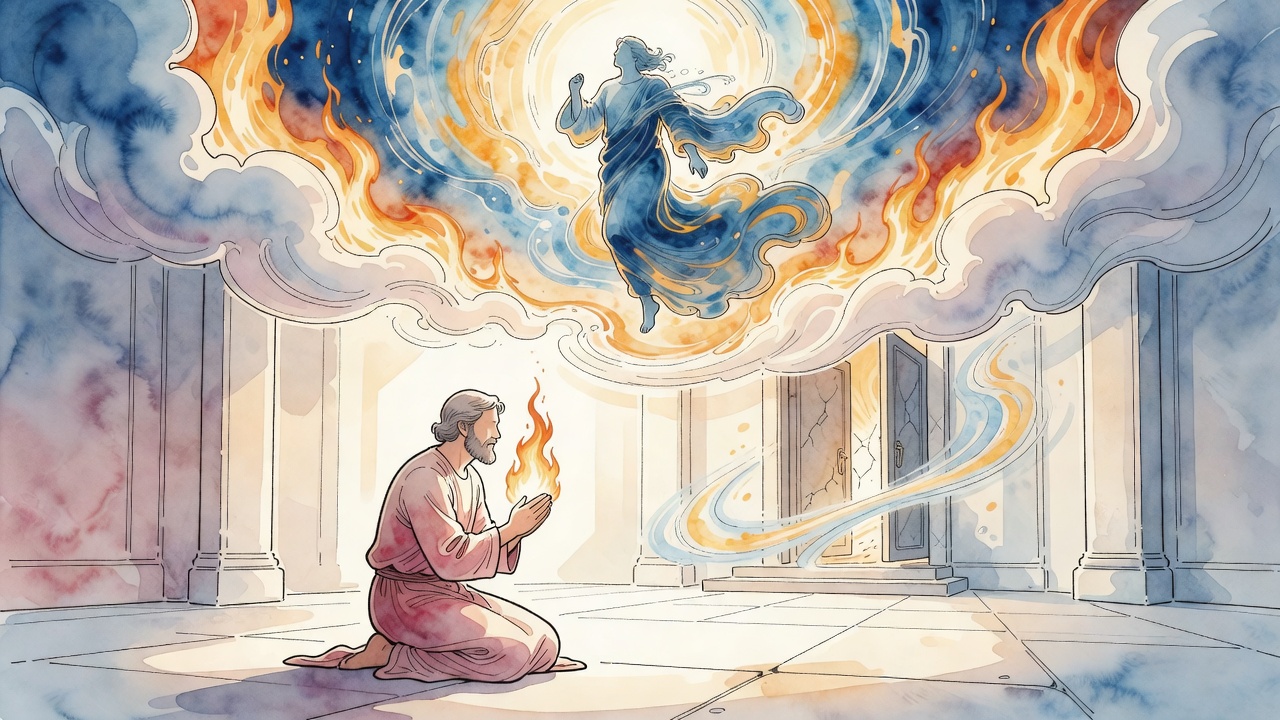
His first act is not conquest. He wraps himself in prayer and girds himself like a warrior, not for a battlefield but for the presence of God, and he cries out from the bottom of everything he has carried. "Master of the Universe," he says, "remember on my behalf the suffering and grief and darkness and obscurity into which I was cast. My eyes have beheld no light, and my ears have heard great reviling, and my heart broke with pain and grief."

He will not let the plea rest on himself alone. "You know that I have not acted for my own glory," he says, "nor for the glory of my father's house, but for Your glory have I acted, and for Your children who dwell in sorrow among the peoples of the world."

Heaven answers him with work, not comfort. Before any throne is won there is one task set before him, and God gives it to him plainly. "Go and assemble all your brethren from all the nations." From every land where they were scattered he is to gather them home, the exiles carried back like an offering laid before God.

The Rainbow Adorned Like a Bride

A sign has been set for that gathering, and it hangs where everyone has always been able to see it and no one has understood it. The rainbow that arches over the world after rain is the old sign, the bow God set in the clouds for Noah so the waters would never again drown the earth. Its colors are muted. It promises only that the worst will not come back.

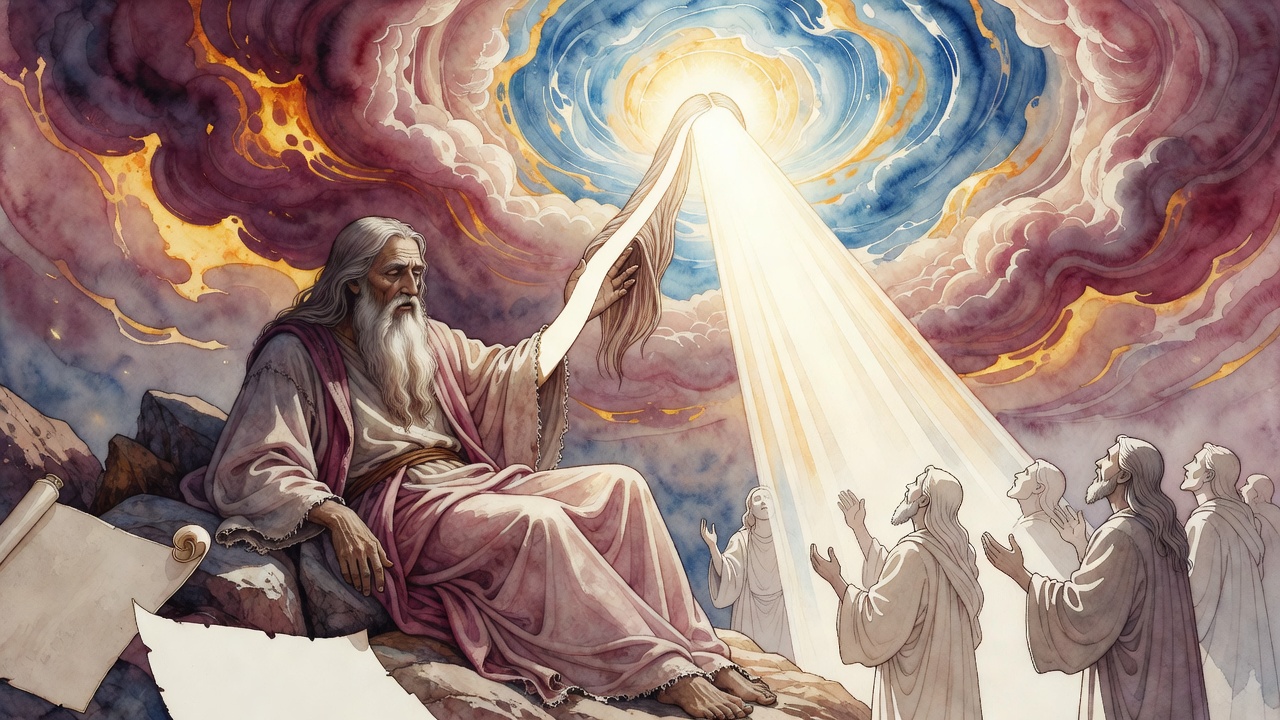
That faded arc is not the rainbow of the Messiah. Not yet. When the exiles begin their long walk home, the bow in the sky will catch fire with color, blazing so bright that its splendor floods the whole world, adorned the way a bride is adorned for the bridegroom who has waited to marry her. That rainbow will not say only that God will hold back the flood. It will say that God has remembered, that His covenant with Israel stands, and that the footsteps drawing near belong to the man who wept alone in a thousand halls and has finally walked out of them.

The world has seen the pale bow for as long as there has been rain. The bright one it has never seen at all.


← All myths
From the tradition

Sources

3 sources

The texts behind this telling. Some cards carry a translation of the source; others are our own retelling of it, and each card says which. Every card links out to the original.

Zohar 2:8b-9aZohar

Retold in our words. Read the original at the link below.Sefaria-hosted English translation · CC-BY

This isn't just any palace; it's a secret place, holding within it a thousand halls of yearning. And according to tradition, no one can enter this place, except for the Messiah himself. It’s a sanctuary, a waiting room of sorts, where he patiently awaits the divine signal that his time, at long last, has come.

Why is it called the Bird's Nest? Because near this palace dwells a wondrous bird, the Messiah’s own bird, whose nest is nestled in a nearby tree. A palace of yearning, a waiting Messiah, and a bird of unparalleled beauty.

On Rosh Chodesh (New Moons), on holy days, and every Shabbat (Sabbath), the Messiah enters these halls of longing. He lifts his voice and weeps. The pain of waiting, the yearning for redemption?

The Zohar, that foundational text of Jewish mysticism, hints at the immense power of this moment. The Garden of Eden itself trembles, and the very rakia (firmament) shakes as the Messiah's voice ascends, reaching all the way to God's throne.

And what happens when God hears this heart-wrenching cry? God beckons the enchanted bird. This bird, residing in the Garden of Eden, flies from its paradise and enters its nest near the Messiah's palace. And then… it sings.

Oh, the song of this bird! It’s said to be indescribably beautiful, a melody unlike any other ever heard. According to the lore, no earthly music can compare. Three times the bird repeats its song, a celestial aria of hope and redemption.

And then, the climax: the bird and the Messiah ascend together, rising on high to the very Throne of Glory. It's there, in the divine presence, that God swears an oath. God promises to destroy the wicked kingdom of Rome – a symbol of oppression and evil throughout much of Jewish history – and to bestow upon His children all the blessings destined for them.

After this sacred oath, the bird returns to its nest, and the Messiah returns to his palace. And there, once again, he remains hidden, waiting.

This hidden palace, this waiting Messiah, this celestial bird. This story, drawn from the tradition of Jewish tradition, reminds us that even in the darkest of times, hope remains.

What does this image evoke in you? Does it offer comfort? Does it inspire hope? Perhaps, like the Messiah in his palace, we too are called to cultivate a space of yearning within ourselves, a space where we can connect with the divine promise of a brighter future.

Full source
Hekhalot Rabbati 6Heikhalot Rabbati

Retold in our words. Read the original at the link below.Sefaria-hosted English translation · CC-BY

The apocalyptic wars of Gog and Magog have ravaged the earth, leaving behind a landscape scarred by conflict and despair. But even in the darkest of times, hope flickers. Because from the depths of confinement, a figure emerges: the Messiah.

He doesn't arrive in splendor or with fanfare. As Hekhalot (the heavenly palaces) Rabbati 6 tells us, he comes forth "from prison with nothing except for his staff and his sack." image for a moment. Stripped bare, humbled, yet carrying the weight of destiny.

The first act of the Messiah is not one of immediate triumph, but of profound devotion. He wraps himself in prayer, girds himself as a hero – not for battle, but before God. This moment of intimate connection is crucial. He cries out, a raw and honest plea: "Master of the Universe, remember on my behalf the suffering and grief and darkness and obscurity into which I was cast. My eyes have beheld no light and my ears have heard great reviling, and my heart broke with pain and grief."

The Messiah isn't just some divine figurehead; he's someone who has endured immense personal hardship. And, crucially, he connects his suffering to the suffering of his people. "You know that I have not acted for my own glory, nor for the glory of my father's house, but for Your glory have I acted, and for Your children who dwell in sorrow among the peoples of the world." He recognizes that his mission is inextricably linked to the fate of Israel. We've talked about the idea of a suffering Messiah before – the pain and anguish he has to go through before the final redemption, and the idea of the "chains of the Messiah" that hold back the coming of the messianic era.

And what is the first task he undertakes? It's not to conquer kingdoms or perform miracles, but to gather the scattered remnants of his people. "Go and assemble all your brethren from all the nations," the Messiah commands. This echoes the prophecy of Isaiah (66:20): "And they shall bring all your brethren out of all the nations as an offering to the LORD." The Ingathering of the ExilesKibbutz Galuyot – is a central tenet of messianic belief.

This passage, as Schwartz notes in Tree of Souls, encapsulates the very essence of the Messiah's role at the End of Days. He is not just a redeemer, but a compassionate leader who understands the pain and longing of his people. He emerges not from a palace, but from a prison, a symbol of the oppression and exile that Israel has endured.

Perhaps it's a reminder that even in our darkest moments, hope remains. That even when we feel imprisoned by our circumstances, we can find strength in faith and in the knowledge that we are part of something larger than ourselves. Maybe it's a call to remember the suffering of others and to work towards a world where all people can live in freedom and dignity. The story of the Messiah emerging from prison isn't just a myth; it's a powerful symbol of resilience, redemption, and the enduring hope for a better future.

Full source
Zohar 1:72bZohar

Retold in our words. Read the original at the link below.Sefaria-hosted English translation · CC-BY

Maybe that’s because the rainbow we see today isn’t the rainbow of the Messiah. Not yet, anyway. the rainbow we know is a promise, a beautiful one, certainly. It's a reminder of God's covenant with Noah, a pledge that He will never again unleash a flood to destroy the earth. As it says in (Genesis 9:12-13), God set His bow in the clouds as a sign of the covenant between Himself and all living creatures.

What if the rainbow could be more? What if it could signify not just the prevention of destruction, but the promise of redemption?

Jewish tradition tells us that the rainbow holds a deeper, messianic significance. The Zohar, that foundational text of Jewish mysticism, hints at this. It suggests that the rainbow we see now, with its muted colors, is just a shadow of what it will become.

A rainbow so vibrant, so dazzling, that it radiates its splendor throughout the entire world. A rainbow adorned like a bride for her bridegroom. That, my friends, is the rainbow of the Messiah.

When that rainbow appears, it will be a sign that God has remembered His covenant with Israel, a signal that the footsteps of the Messiah are drawing near. It signifies a new covenant, a promise of the Ingathering of the Exiles – one of the key prerequisites for the messianic age. This kibbutz galuyot, the return of the Jewish people to their ancestral homeland, is not just a political or geographical event. It's a spiritual homecoming, a cosmic shift.

The current rainbow, in a way, is a reminder of what’s not here. It’s a promise of no more destruction, but the messianic rainbow is a promise of something more – a world restored, perfected, and filled with light.

Admire its beauty, yes, but also remember the promise it holds. Remember that one day, we might just witness a rainbow so magnificent, so transformative, that it will herald the dawn of a new era. A rainbow that proclaims the coming of the Messiah.

Full source