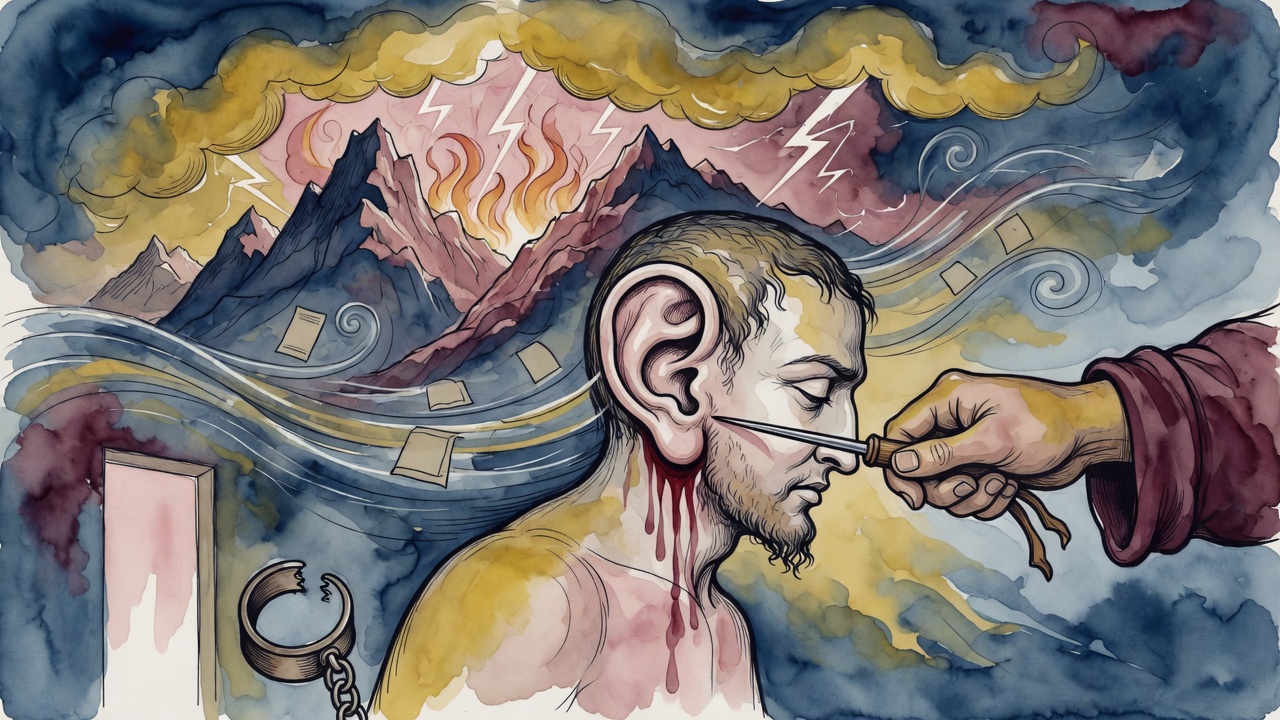
Translation of the source text.Tanna debei Eliyahu Rabbah, Warsaw 1880 · Public Domain
Another interpretation: "Is it not to share your bread with the hungry?" (Isaiah 58:7), "hunger" is none other than hunger for words of Torah, and "bread" is none other than words of Torah, as it is said (Amos 8), "Behold, days are coming, says the Lord God, when I will send a famine in the land, not a famine for bread, nor a thirst for water, but for hearing the words of the Lord," and so forth. From here they said: if there is a man who understands words of Torah, let him sustain others also from his Torah, so that his wisdom may increase for him and they add to it for him. And everyone who does so is not held back from the future good that is to come upon Israel in the days of the son of David, and of him Scripture says (Psalms 50), "And to him who orders his way I will show the salvation of God." This "way" is Torah, as it is said (Deuteronomy 5), "You shall walk in all the way which the Lord your God has commanded you, that you may live and that it may be well with you," and so forth. And "salvation" is none other than in the days of the son of David, as it is said (Isaiah 51), "My righteousness is near, My salvation has gone forth," and so forth. But if there is in a man words of Torah and he does not sustain others from his Torah, he brings evil upon himself, for in the end the wisdom of his Torah diminishes in his hand, and needless to say that they do not add to it for him; and of him Scripture says (Proverbs 11), "He who withholds grain, the people will curse him; but blessing shall be on the head of him who sells it." If so, "and that you bring the poor that are cast out to your house" (Isaiah 58:7), how so? If there is in a man words of Torah and sufferings come upon him, his heart is settled within him; but if there is not in a man words of Torah and sufferings come upon him, his heart turns bitter within him. So what should he do? Let him justify the judgment upon himself. How so? If he is hungry and thirsty and naked and has no provisions, yet he is alive and existing upon the face of the earth on scant bread and meager water, in nakedness and in want of all things, let him say: thus and so is written in the Torah (Deuteronomy 28), "Because you did not serve the Lord your God with joy and with gladness of heart for the abundance of all things, therefore you shall serve your enemies whom the Lord will send against you, in hunger and in thirst and in nakedness and in want of all things; and he will put a yoke of iron upon your neck until he has destroyed you." Therefore let the great and holy King be blessed and praised, who lives and exists forever and ever, blessed be He and blessed be His name forever and ever and to all eternity, who gave me life in the world and did not destroy me from the face of the earth. And so David used to say: were it not that words of Your Torah comforted me at the time when sufferings came upon me, I would already have uprooted myself from the world, as it is said (Psalms 119), "Unless Your Torah had been my delight, I would then have perished in my affliction." Blessed is the Omnipresent, blessed be He, who chose the words of the sages and their disciples, and fulfills for them: by the measure with which a man measures, they measure to him. Just as they sit in synagogues and in study houses and in every place that is free for them, and read and study for the sake of Heaven, with fear in their hearts, and uphold the words of Torah upon their mouths, so too the Holy One, blessed be He, sits opposite them and reveals to them the secrets of the Torah in their mouths and in their hearts; and concerning them is fulfilled what is said (Deuteronomy 30), "For the word is very near to you, in your mouth and in your heart, to do it." Happy is the man who has in him words of Torah, and who sits and reads and studies in a modest and hidden place: beside whom do they lodge him? You must say: beside the Holy One, blessed be He, as it is said (Psalms 91), "He who dwells in the secret place of the Most High shall abide in the shadow of the Almighty." Just as they make themselves solitary in this world and no stranger is with them, so too in the World to Come they sit beside the Holy One, blessed be He, alone, and no stranger is with them; of them Scripture says (Psalms 68), "God settles the solitary in a home, He brings out prisoners into prosperity; only the rebellious dwell in a parched land." And "prisoners" are none other than disciples of the sages, who imprison themselves to the Omnipresent in the study house, to Scripture, and to Mishnah, and to Talmud, and to Midrash, and to laws and aggadot. And it says (Isaiah 49), "saying to the prisoners, Go forth; to those who are in darkness, Show yourselves", "saying to the prisoners, Go forth": these are the common people who have in them proper conduct and the rest of the commandments, and who strengthen the hands of the disciples of the sages, and keep themselves far from transgression and from robbery and from every ugly thing; "to those who are in darkness, Show yourselves": these are the disciples of the sages who dwell in a place that is not fitting for them. Another interpretation: "God settles the solitary in a home," and so forth, the Holy One, blessed be He, did not bring it about and bring Israel out of Egypt except for the sake of Sarah, Rebecca, Rachel, and Leah: in reward that Sarah took Hagar and brought her up to Abraham's bed; and in reward that they said to Rebecca (Genesis 24), "Will you go with this man?" and she said, "I will go," and she placed her trust in the Holy One, blessed be He; and in reward that Rachel took Bilhah and brought her up to Jacob's bed; and in reward that Leah took Zilpah and brought her up to Jacob's bed. Therefore it is said, "God settles the solitary in a home, He brings out prisoners into prosperity." If so, "when you see the naked, that you cover him" (Isaiah 58:7), how so? If you saw a man who has no words of Torah in him, bring him into your house and teach him the recitation of the Shema and the prayer, and teach him one verse each day or one law, and spur him on in the commandments; for you have no one naked in Israel except one who has no Torah and commandments, and he is like one who is naked. And so you find regarding Knesset Yisrael that was in Egypt, as it is said (Ezekiel 16), "And I caused you to multiply, and you came to excellent ornaments; your breasts were formed and your hair grown, yet you were naked and bare," and so forth. Do not read "to excellent ornaments" (ba-adi adayim) but "to fixed adornments" (be-tikkunei tikkunim), because you had been emptied of the commandments and there were in you only two commandments, one, the blood of the Passover, and one, the blood of circumcision, as it is said (Ezekiel 16), "And I passed by you and saw you weltering in your blood, and I said to you, In your blood, live; and I said to you, In your blood, live." What is written after it? "Yet you were naked and bare." What is the meaning of "And I passed by you and looked, and behold, your time was the time of love"? Rather, at the hour when the Holy One, blessed be He, said to Abraham our father (Genesis 22), "Take now your son, your only one," and so forth, immediately Abraham hearkened to the words of the Holy One, blessed be He, and did all that He commanded him; therefore it is said, "and behold, your time was the time of love." Another interpretation: at the hour when Isaac said to Abraham his father, "Bind me well and place me upon the woodpile, lest I kick against you and I be found to have made myself liable to two deaths before the Holy One, blessed be He", and he was a young man standing in his strength, thirty-seven years old, therefore it is said, "and behold, your time was the time of love." Another interpretation: at the hour when the Holy One, blessed be He, found all twelve tribes who all did the will of Jacob their father, as it is said (Hosea 9), "Like grapes in the wilderness I found Israel", do not read "Israel" (Yisrael) but "God saw" (sheraah El) that all their deeds were directed toward Him, therefore it is said, "and behold, your time was the time of love." "And I spread My skirt over you", this is the Torah; "and covered your nakedness", this is the kingdom of Heaven; "and I swore to you", this is the dwelling of forty years in the wilderness; "and entered into a covenant with you, says the Lord God, and you became Mine", this is the second dwelling, in the Tabernacle of Shiloh. What is the meaning of "and you shall not hide yourself from your own flesh"? Rather, thus the Holy One, blessed be He, said to this man: "My son, all the days that I have placed you upon the face of the earth, do good deeds and the study of Torah, and keep yourself far from transgression and from any ugly thing"; therefore it is said, "and you shall not hide yourself from your own flesh." Another interpretation: "and you shall not hide yourself from your own flesh", one who has a disciple of the sages in his neighborhood and knows of him that he reads for the sake of Heaven and studies for the sake of Heaven, and he feeds and sustains and supports him, it turns out that he sustains and keeps alive that disciple of the sages and his wife and his children and all that is his and all his kin in the family; therefore it is said, "and you shall not hide yourself from your own flesh." Another interpretation: "and you shall not hide yourself from your own flesh", if a man married a woman and found in her some matter and divorced her, and in the end she became poor, let him sustain her according to his ability, whatever he is able; therefore it is said, "and from your own flesh," and so forth. Let a man always look at himself and know that after an hour comes death; therefore let him lift his eyes to heaven and say in his heart, "Who created these, sun and moon, stars and constellations, and the four winds of the world, and all the Work of Creation, all of which rise early and stay late to do the will of their Creator?" So shall you rise early and stay late in words of Torah and to do the will of the Holy One, blessed be He, every single day continually; and you shall be like the sun and moon that give light to the many, as it is said (Isaiah 58), "Then shall your light break forth as the dawn, and your healing shall spring forth speedily." This is the reward of your light commandment; but the reward of your weighty commandment is what is said after it (Isaiah 58), "and your righteousness shall go before you, the glory of the Lord shall gather you up; then you shall call, and the Lord will answer; you shall cry, and He will say, Here I am," and so forth. And just as you did My will in My Torah every single day continually, so I will give you an opening of the mouth in clear Torah such that no man can refute it; and if you see yourself in clear Torah such that no man can refute it, immediately your bones shall be made eager for the commandment, as it is said (Isaiah 58), "And the Lord will guide you continually, and satisfy your soul in drought, and make your bones eager"; and then you shall be like a spring that flows from the garden, watering figs and grapes and pomegranates and all kinds of choice fruits, as it is said (Isaiah 58), "And you shall be like a watered garden, and like a spring of water whose waters do not fail." And just as you honored and delighted your father and your mother in their old age, so shall you delight in the Lord.

 Click for full size