Parshat Chayei Sarah6 min read

Keturah Was Hagar Whom Abraham Once Sent Into the Desert

Sarah demanded Hagar be severed from her line in this world and the next. When Sarah died, Abraham reached back for the woman he had exiled.

Curated by Arthur · Told by Maggid ·
Table of Contents
  1. The Bill of Divorce Sarah Demanded
  2. The Night the Holy One Came to His Tent
  3. The Handmaid Walks Into the Wilderness
  4. The Tent After Sarah Was Buried
  5. The Woman Whose Deeds Smelled of Incense
  6. Six Sons and a Second Bill of Divorce
Keturah Was Hagar Whom Abraham Once Sent Into the Desert Click for full size

The Bill of Divorce Sarah Demanded

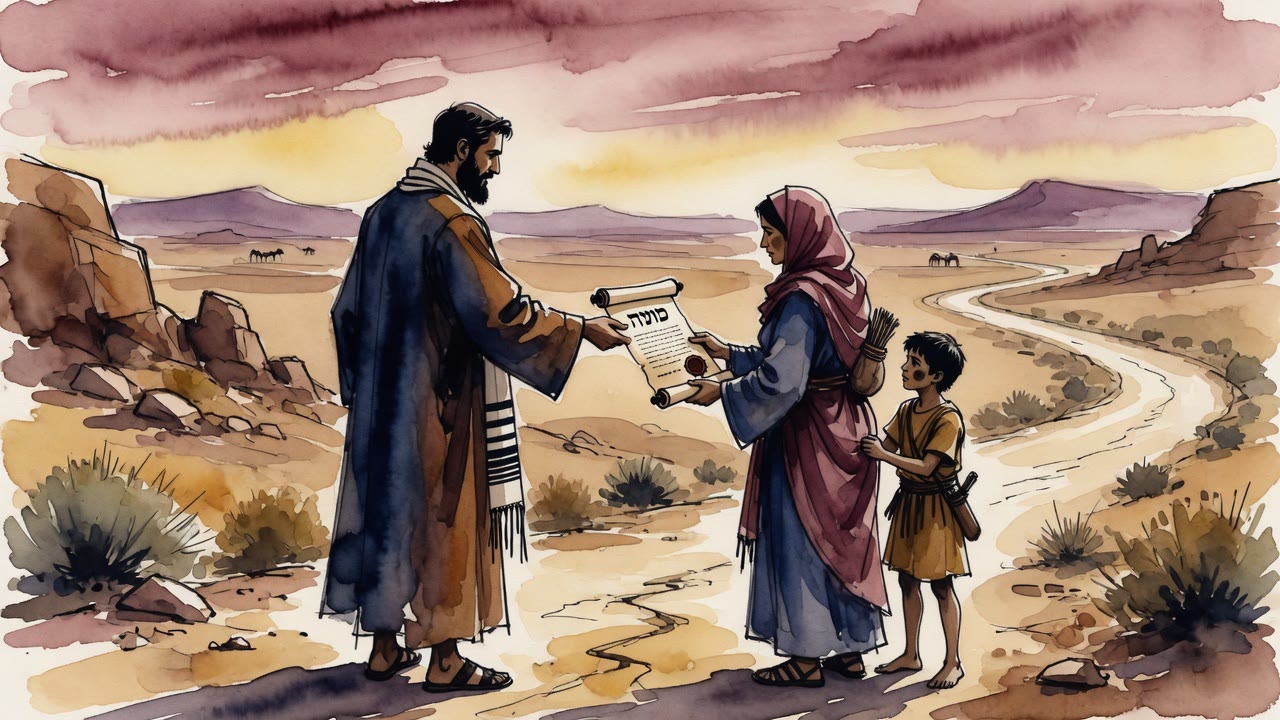
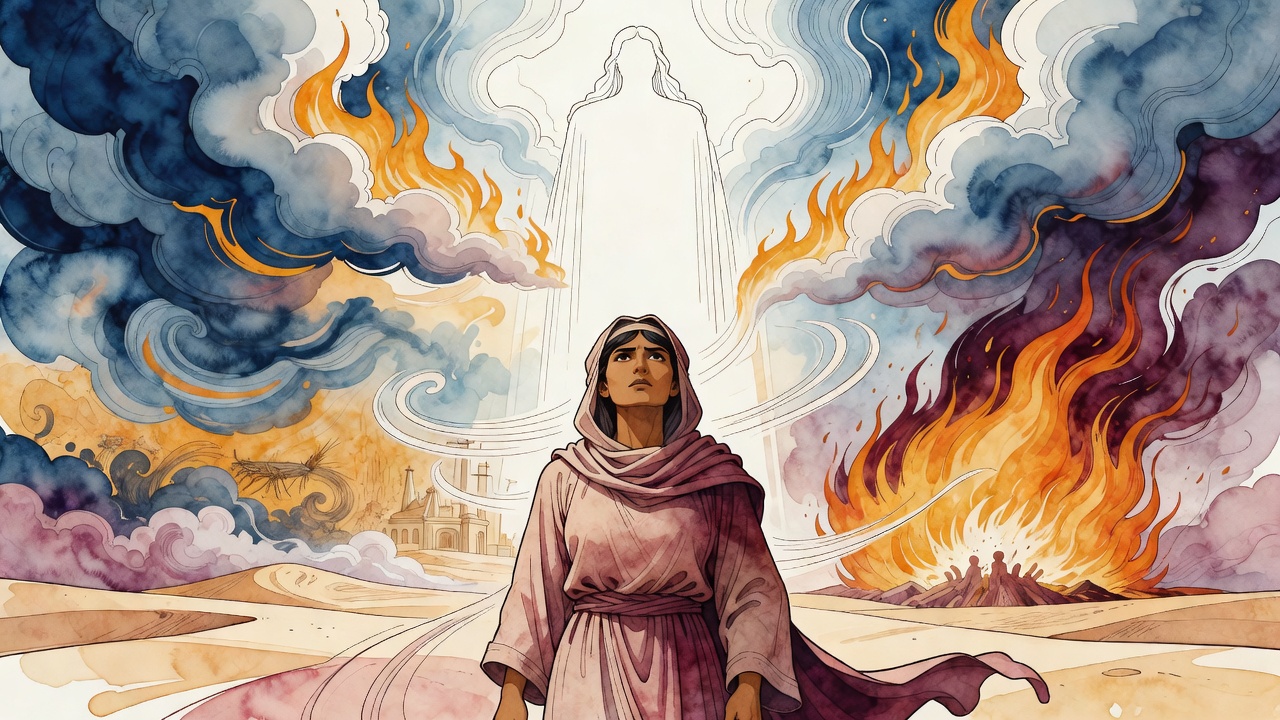
Sarah did not ask that the handmaid be sent away quietly. She told Abraham to sit and write a get, a bill of divorce, the kind a man drafts to cut a wife loose for good. Then she named the second thing, and it was heavier than the first. Hagar and her boy Ishmael were to be severed from her and from her son Isaac, not only under this sun but in the world to come. No shared inheritance in life. No shared portion after death. The exile was to run past the edge of the grave.
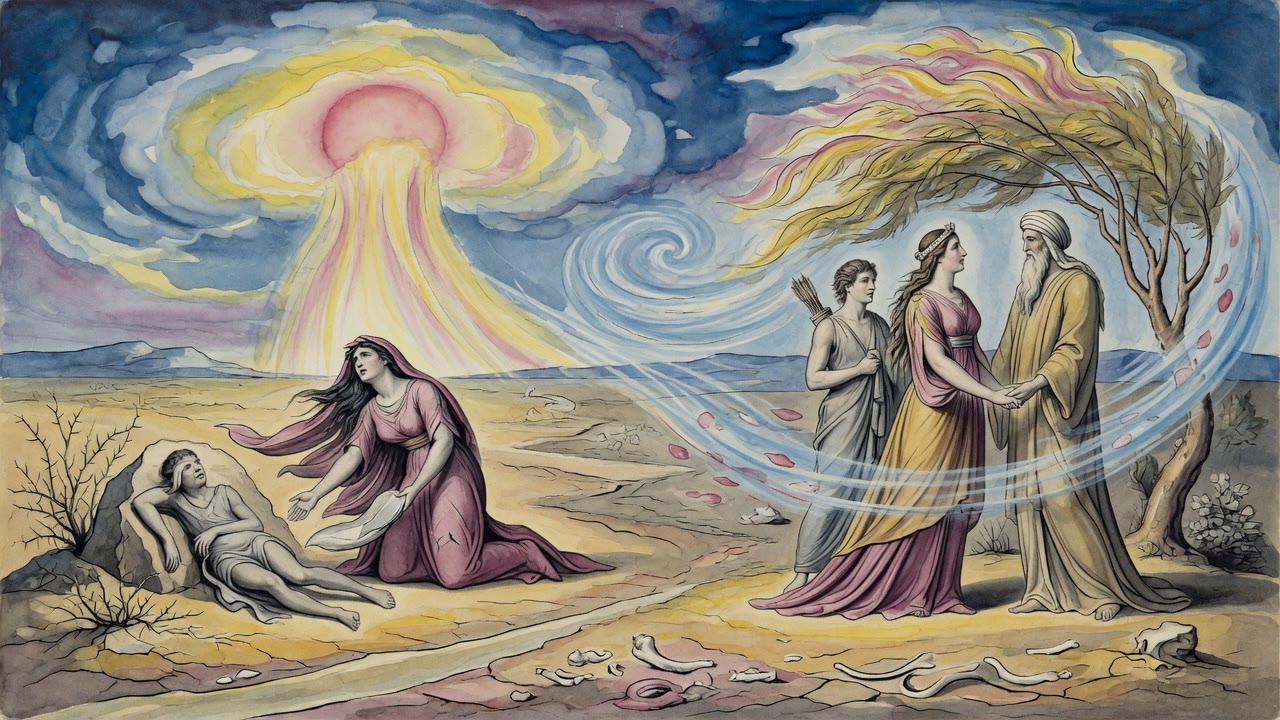
Abraham heard the whole demand, and something in him gave way. Of every hard thing that had come to him, and hard things had come, this one landed worst. The sage Ben Tema kept the measure of it. The matter was, in the words of the verse, "very grievous in Abraham's sight on account of his son." Not the property, not the quarrel between the two women. His son. Ishmael was his firstborn, the child he had carried on his own shoulders, and now he was to write him out of the world with his own hand.

The Night the Holy One Came to His Tent

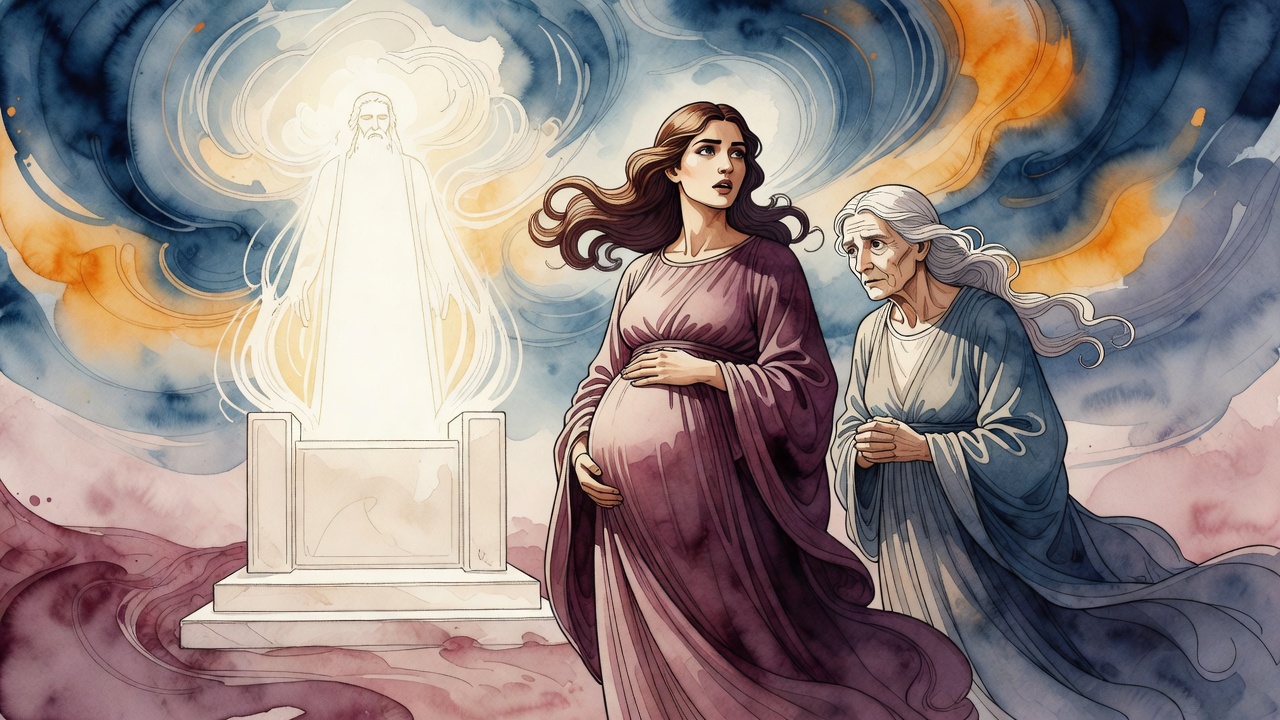
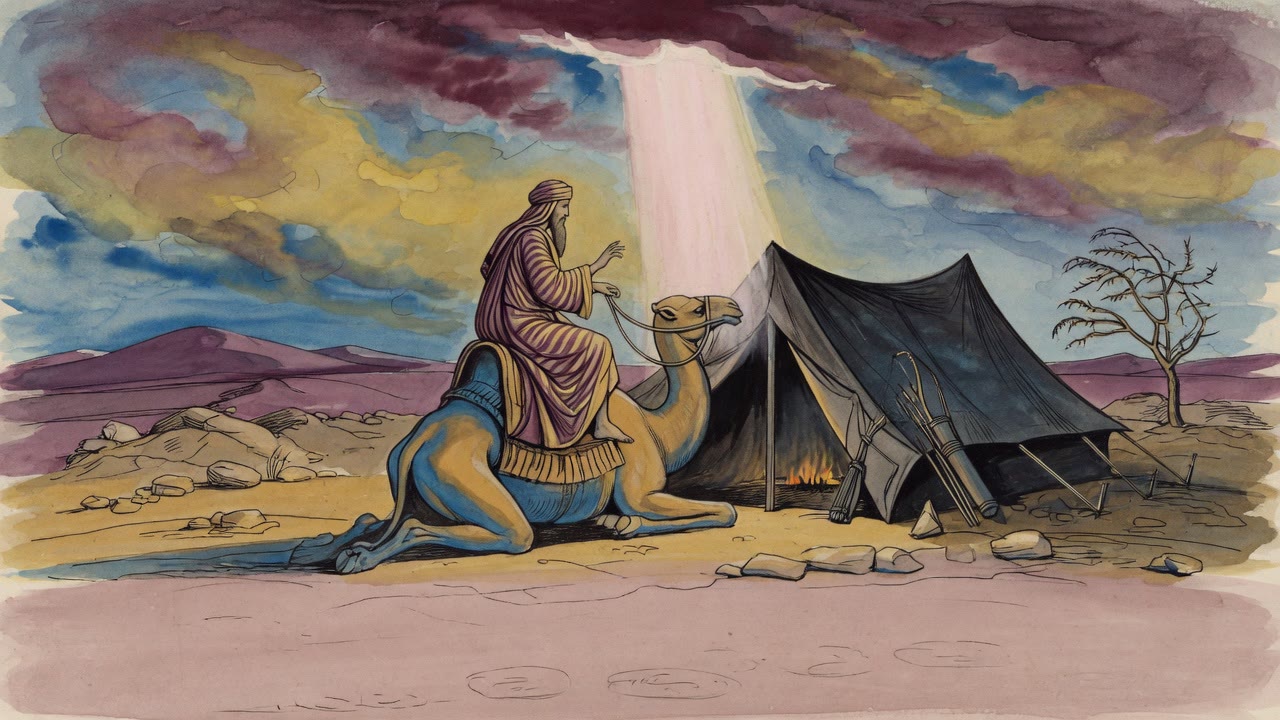
He did not sleep, and in the dark of that night HaKadosh Baruch Hu, the Holy One, came to him. Rabbi Judah preserved what was said. God did not argue the estate. He spoke about the marriage.

"Abraham, dost thou not know that Sarah was appointed to thee for a wife from her mother's womb?" the voice said. "She is thy companion, and the wife of thy covenant." One woman was the wife of the covenant, chosen before she drew her first breath. The other was the handmaid, and the difference was not cruelty, it was station. Then came the ruling that broke the argument. "All that Sarah has spoken she has uttered truthfully. Let it not be grievous in thine eyes." The verse sets it down the same way. "And God said unto Abraham, Let it not be grievous in thy sight."

Abraham had no appeal left to make.

The Handmaid Walks Into the Wilderness

In the morning he did what he had been told. He wrote the deed. He took bread and a skin of water and set them on Hagar's shoulder, and he sent her out with the boy toward the open country. She went the way a divorced woman goes, carrying a child and a document that said she would not come back. Behind her the tent held Sarah and Isaac and the whole weight of the promise. The wilderness swallowed the mother and her son and did not give a reason.

That should have been the end of her. A handmaid is sent off with a document in her hand, the covenant narrows to one son, and the sand takes the rest.

The Tent After Sarah Was Buried

Then Sarah died. Abraham bought a field and a cave and laid her in the ground, and he came back to a tent that had won every argument and now stood empty of the woman who had made them. He was old. The great trials were behind him. The knife on the mountain, the long wait for one son, all of it done.

And the old man reached back across the years for the woman he had driven into the sand. He took another wife. Her name, the sages say, was Keturah, and when they say it they lean close, because they know who she was. Keturah was Hagar. The handmaid he had cut loose with his own bill of divorce had come back to stand under the same roof, and this time he married her outright.

The Woman Whose Deeds Smelled of Incense

The name carried the verdict. Keturah runs close to ketoret, the incense burned in worship, and the sages read her deeds into it. Whatever she had been in Sarah's tent, whatever contempt or grief had passed between the two women, her acts in the years apart had turned as pleasing as the smoke that rises off the altar. The desert had not broken her. It had refined her, and Abraham married the refined woman.

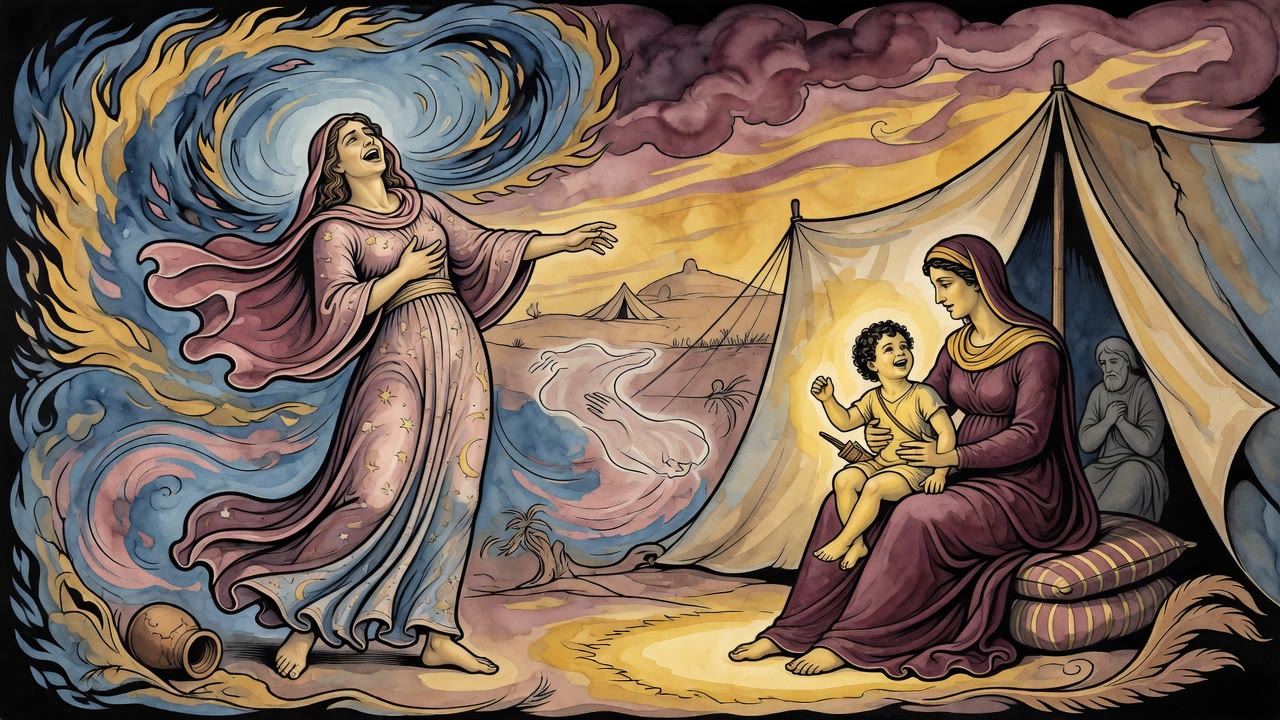
She bore him six sons. The verse counts them plainly. "And she bare him Zimran," and after Zimran the others, a whole second household rising in the tent of a man near the end of his life. The woman who had walked out with a water skin and a boy came back and filled the tent with children.

Six Sons and a Second Bill of Divorce

The reunion carried the old shape inside it. The sons were Abraham's, and still they were not Isaac's brothers in the inheritance. When he grew old he gave the sons of his concubines gifts, and he sent them away from Isaac his son toward the east, and the sages say he did it, once more, "by a deed of divorcement." The same instrument that had opened the whole story closed it. A get had sent the mother into the wilderness. A get now sent her sons toward the sunrise, loaded with presents and pointed away from the covenant.

So Abraham stood in his last years and watched the camels go east, the incense-woman beside him, her six boys carrying his blessing and his gifts and the old name of Ishmael out past the horizon, while Isaac stayed behind with the promise. The exile he had signed came back as a marriage. The marriage went out again as an exile. And the woman he had sent to die in the sand died instead as his wife, her deeds smelling of incense, in the house that had once written her out.


← All myths
From the tradition

Sources

2 sources

The texts behind this telling. Some cards carry a translation of the source; others are our own retelling of it, and each card says which. Every card links out to the original.

Pirkei DeRabbi Eliezer 30:9Pirkei DeRabbi Eliezer

Retold in our words. Read the original at the link below.Pirke de Rabbi Eliezer, trans. Rabbi Gerald Friedlander, London (1916) · CC-BY

We meet her after the death of Sarah, when Abraham – yes, that Abraham – takes her as his wife. But who was she, really?

Some traditions identify her with Hagar, the mother of Ishmael. But Pirkei DeRabbi Eliezer, a fascinating collection of stories and interpretations from the early Middle Ages, offers another intriguing perspective. It focuses not so much on her identity, but on the quality of her actions. Keturah. The name itself, hints at something special. It suggests that her deeds were as beautiful and pleasing as the fragrance of incense. That's quite a compliment. And she bore Abraham six sons!

Here's a twist: These sons, according to Pirkei DeRabbi Eliezer 30, were all known by the name of Ishmael. As it says, "And she bare him Zimran." (Genesis 25:2) What's that about?

The text goes on to paint a somewhat poignant picture. It likens Keturah and her sons to a woman sent away from her husband. Just as a husband might give his wife a get – a deed of divorce – so too did Abraham, in a way, separate these sons from Isaac, his heir.

"But unto the sons of the concubines, which Abraham had, Abraham gave gifts, and he sent them away from Isaac his son." (Genesis 25:6) This, according to Pirkei DeRabbi Eliezer, was "by a deed of divorcement." He gave them gifts, yes, but also… distance. Distance from Isaac, distance from the inheritance, distance, perhaps, from the heart of Abraham’s covenant.

It's a powerful image. What does it tell us? Perhaps about the complexities of family, of inheritance, of the echoes of the past and the shaping of the future. It speaks of love and legacy and also, maybe, a touch of sadness. Even in the lives of our great ancestors, the stories are never simple, are they? They’re layered, complex, full of both light and shadow.

So, the next time you hear the name Keturah, remember her fragrant deeds, her many sons, and the bittersweet tale of her separation from Isaac’s lineage. There’s a lot packed into that one name.

Full source
Pirkei DeRabbi Eliezer 30:3Pirkei DeRabbi Eliezer

Retold in our words. Read the original at the link below.Pirke de Rabbi Eliezer, trans. Rabbi Gerald Friedlander, London (1916) · CC-BY

The patriarch Abraham certainly did.

The story begins with Sarah, Abraham's wife, making a demand. She tells Abraham to write a get, a bill of divorce, and send away his handmaid Hagar and her son Ishmael. But this isn't just about this world; she wants them separated from her and her son Isaac in the world to come as well!

Ben Tema, a sage whose teachings are recorded in the Pirkei DeRabbi Eliezer, emphasizes the emotional toll this took on Abraham. More than any other misfortune he had faced, this request was "exceedingly evil in his eyes," as it says, "And the thing was very grievous in Abraham's sight on account of his son" (Genesis 21:11). from Abraham's perspective: He loved Ishmael, his firstborn. How could he possibly send him away?

Then, Rabbi Jehudah steps in to offer a deeper insight. He says that in that very night, HaKadosh Baruch Hu, The Holy One, Blessed be He, revealed Himself to Abraham.

God says, "Abraham! Dost thou not know that Sarah was appointed to thee for a wife from her mother's womb? She is thy companion, and the wife of thy covenant." He reaffirms the special bond between Abraham and Sarah. God emphasizes that Sarah is not a mere handmaid, but his wife. Conversely, Hagar is called his handmaid, not his wife.

And then comes the crucial instruction: "All that Sarah has spoken she has uttered truthfully. Let it not be grievous in thine eyes," as it is said, "And God said unto Abraham, Let it not be grievous in thy sight" (Genesis 21:12). God is essentially validating Sarah's feelings and telling Abraham to trust in the divine plan.

This passage highlights a recurring theme in Jewish tradition: the importance of marriage and the unique role of the matriarchs. Sarah isn't just being demanding; she's acting as a protector of the covenantal line, ensuring that the inheritance and promise pass through Isaac. The Zohar, the foundational text of Jewish mysticism, often speaks of the spiritual power and insight possessed by women, particularly the matriarchs.

According to Ginzberg's retelling in Legends of the Jews, this divine intervention was crucial in resolving Abraham's inner conflict. He was torn between his love for his sons and his commitment to God's covenant.

What do we take away from this ancient story? It shows us that sometimes, even when we don't understand, we need to trust in a higher purpose. And perhaps most importantly, it emphasizes the importance of communication and understanding within relationships, even when those relationships are as complex and challenging as the one between Abraham, Sarah, and Hagar. Sometimes, the greatest tests lead to the deepest understanding.

Full source