5 min read

Hagar Conceived at Once While Sarah Waited

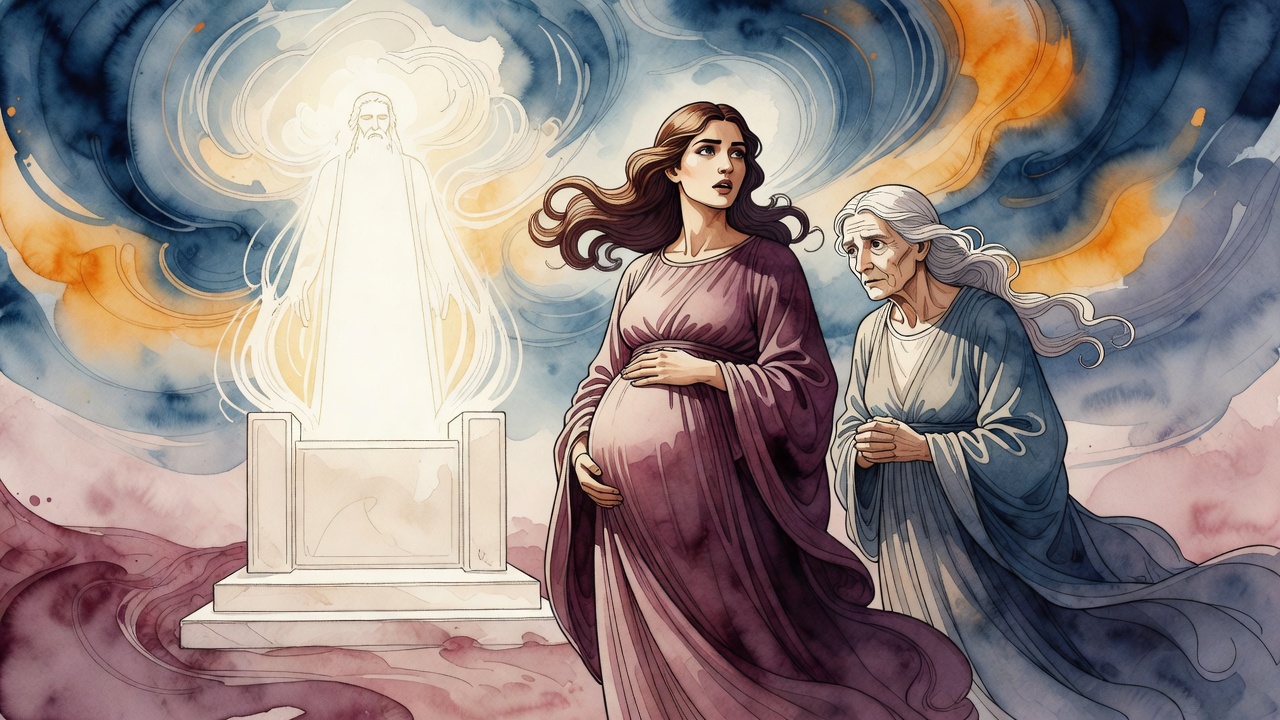
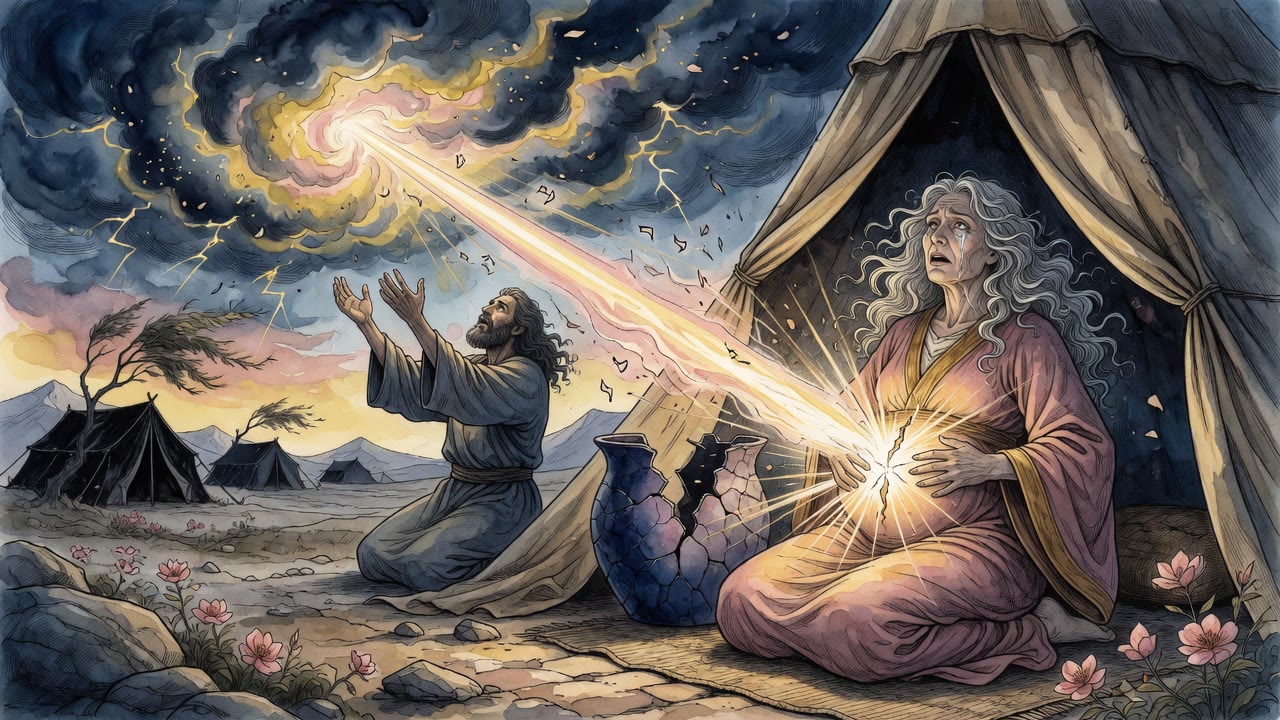
Hagar filled with child on the first night, then whispered that Sarah's piety was a sham, while the mistress had waited through ninety empty years.

Curated by Arthur · Told by Maggid ·
Table of Contents
  1. The Whisper by the Jars
  2. Ten Years on the Land's Clock
  3. Why the Matriarchs Waited
  4. Heed Her Voice
  5. What the Courtyard Kept

Hagar knew before the second morning.

Hagar Conceived at Once While Sarah Waited Click for full size

The servant who had been given into Abraham's tent came out of that first union already carrying a secret that would crack the house. Wheat takes pain and seasons. Weeds spring up without tending. Rabbi Chanina ben Pazi said it that way, and the household learned it the hard way, in the gap between one night's ease and ninety years of empty arms.

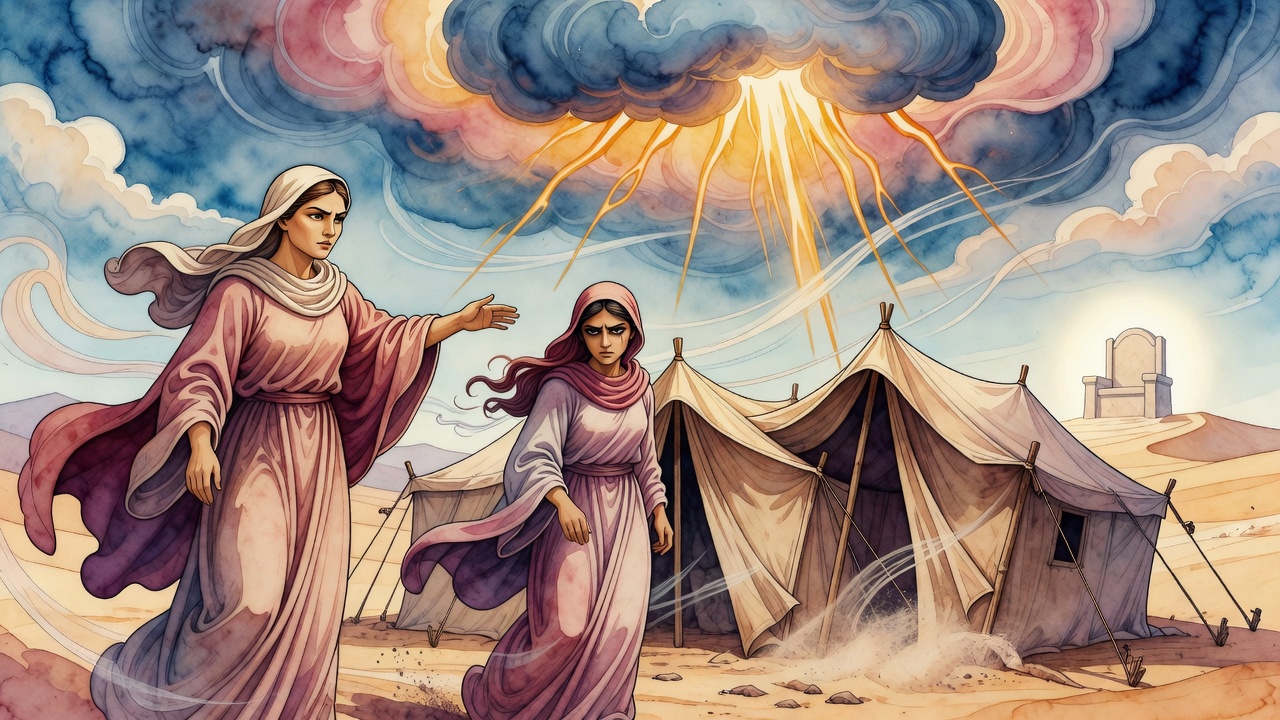
Sarah had waited through those years with a body that still looked like a bride under a canopy. Noblewomen came to ask after her health. They left with blessings on their lips and envy of her face. Then the Egyptian girl began to whisper in the courtyard where the water jars stood.

The Whisper by the Jars

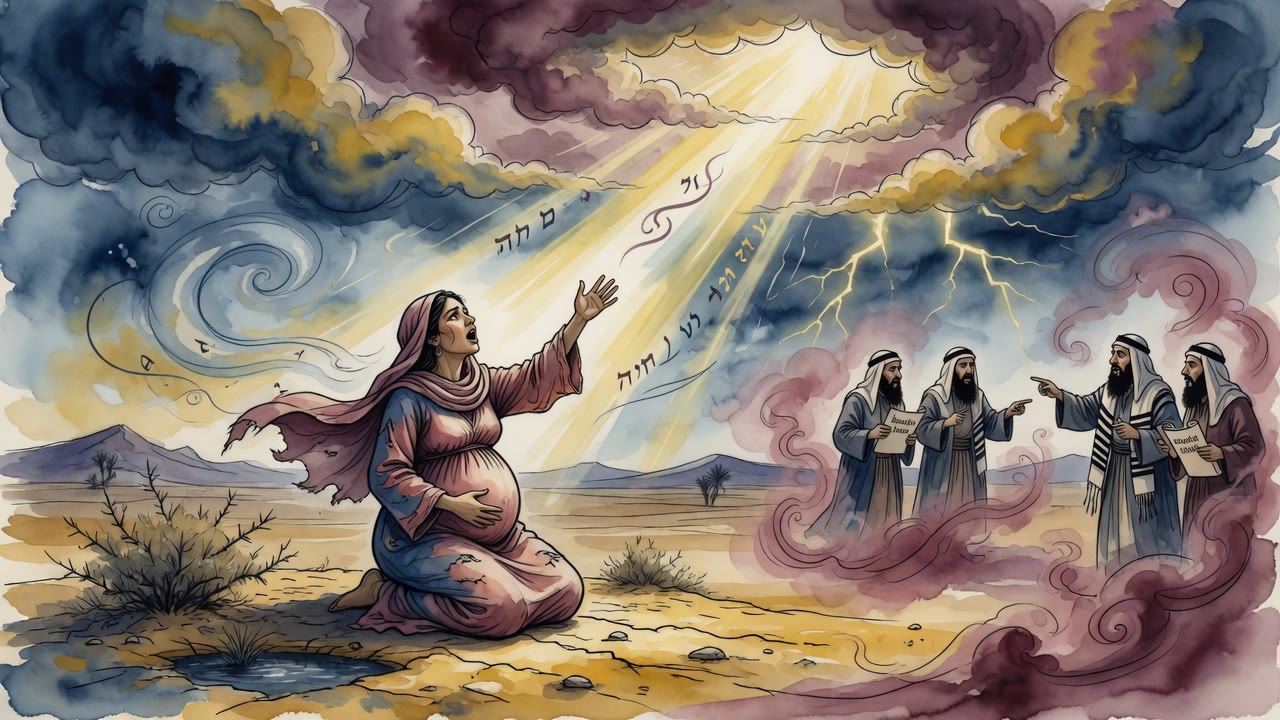
"Look how long the mistress stayed empty," Hagar told the visitors, "while I filled in a single night. Her piety is a show. Heaven answers me at once."

The words did not need volume. They only needed ears. Sarah heard her own honor turn thin in other women's mouths. She watched the same ladies who once praised her virtue now glance at her belly as if it were evidence in a trial. She turned on Abraham with a charge he could not dodge. You hear my disgrace and say nothing.

Through a parable of two prisoners begging a passing king, she pressed harder still. His earlier prayer had been selfish. He had said "I go childless" rather than "we," and so the blessing had aimed at him alone. The household's joy curdled into grievance in one afternoon. Bread tasted the same. The air did not.

Ten Years on the Land's Clock

The sages later carved law from this pain. If a couple lives together ten years and no child is born, the husband may not simply wait forever as if hope itself were a plan. The clock, they insisted, starts only after Abram and Sarai enter the land of Canaan. Years in Haran and on the road do not count. Illness and prison drop out of the reckoning. The ten years measure a real shared chance at parenthood, not mere calendar ink.

When Rava asked why not learn from Isaac, who waited twenty years with Rebecca, the answer cut clean. Isaac was a special case, constitutionally barren for a time, not a model for ordinary households. Abraham's story set the rule. Sarah's story set the fire under it. The law remembers a tent where speed and delay stood in the same room and tore at each other.

Sarah had already waited far longer than ten years when she offered Hagar. The offering was not cold strategy alone. It was a woman who had run out of private seasons and still wanted the covenant to have a body.

Why the Matriarchs Waited

Why leave the matriarchs barren so long? The answers come like a chorus that does not cancel the cruelty. Because God craves their prayer and their conversation, like a lover saying to his dove in the rock, show me your face, let me hear your voice. Because their husbands would cherish them in their beauty without the long distractions of pregnancy. Because most of their years could pass free of that burden, and the late child would arrive as a shock of mercy rather than a routine.

Sarah stayed fresh. Sarah also stayed empty. The two truths shared one body until Hagar's speed made the emptiness look like a verdict from heaven. The visitors' eyes changed. The servant's shoulders straightened. The mistress felt her name slip in rooms she still owned.

Heed Her Voice

Heaven would later tell Abraham to listen to Sarah's voice, not as a courtesy but as command. The wife who crowned her husband with dignity was not a side figure in the covenant. When the house split over Hagar and the boy, Abraham did not invent a softer path that pleased everyone and obeyed no one. He obeyed the voice he had been told to heed, even when the road out of camp led a mother into the wilderness with a skin of water.

The first night of Hagar's conception was not a triumph of fertility alone. It was a test of whether a household can hold a quick pregnancy beside a long prayer without turning love into accusation. For a while, it failed. The mockery rose. The silence of the husband broke. The law of ten years waited in the wings for later courts that would never meet Sarah and still live inside her story.

What the Courtyard Kept

In the courtyard, the visitors stopped asking after Sarah's health with the same eyes. They had heard a servant's arithmetic: one night against ninety years. They had not heard heaven's longer math, the math that would open Sarah's body at ninety and set Isaac's laughter against Hagar's early certainty.

Weeds first. Wheat later. The house learned both under pressure, and the pressure had a name that walked past the jars with a hand on a belly that arrived too soon for peace.


← All myths
From the tradition

Sources

3 sources

The texts behind this telling. Some cards carry a translation of the source; others are our own retelling of it, and each card says which. Every card links out to the original.

Yalkut Shimoni on Torah 79:3Yalkut Shimoni on Torah

Translation of the source text.Torat Emet (Yalkut Shimoni) · CC-BY-NC

"And she gave her to Abram her husband as a wife", and not to another; as a wife, and not as a concubine. (Genesis 16:4) "And he came in to Hagar, and she conceived." From the first intercourse she became pregnant. Rabbi Elazar said: A woman never conceives from the first intercourse. They objected to him: But is it not written (Genesis 19:36), "And the two daughters of Lot conceived from their father"? Rav Tanchum said: They mastered themselves and brought forth their nakedness, and they conceived as from a second intercourse. Rabbi Chanina ben Pazi said: These thorns, they are neither weeded nor plowed nor sown, yet of themselves they come forth and rise up and grow tall; but this wheat, how much pain and how much toil until it comes up! And why were the matriarchs barren? Because the Holy One, blessed be He, desires their prayer and desires their conversation. This is what is written, "My dove in the clefts of the rock" etc., Why did I make you barren? On account of "Show Me your appearance." Rabbi Chanina bar Pappa said: So that they might be cherished by their husbands through their beauty. Rabbi Chiyya bar Abba said: So that most of their years should pass without subjugation. Rabbi Meir says: So that their husbands might take pleasure in them, for all the time that a woman is bearing children she becomes disfigured and loathsome to her husband, for all the ninety years that Sarah did not bear, she was like a bride within her wedding canopy, and noblewomen would come to inquire after her welfare, and she would say to them: Go out and inquire after the welfare of this wretched one. And Hagar would say to them: My mistress Sarai, her secret is not like her open appearance; she appears righteous but is not righteous; for were she righteous, see how many years she did not conceive, while I in a single night conceived! And Sarai would say: With this one am I to take care to deal and converse? Would that I might rather deal and converse with her Master! (Genesis 16:5) "And Sarai said to Abram: My wrong be upon you." Rav Yudan in the name of Rabbi Yehudah bar Rabbi Simon: You wrong me with words, why? Because you hear my disgrace and are silent. Rav Abba bar Kahana said: Let my case be claimed against you. A parable of two men who were imprisoned in the prison-house; the king happened to pass by. One said: Claim my just due! He said: Bring him out. His fellow said to him: Let my case be claimed against you! Had you said, "Claim our just due," then just as he brought you out, he would have brought me out. Now, since you said, "Claim my just due," you he brings out, me he does not bring out. Thus said Sarah: Had you said, "And we are going childless," then just as He gave to you, so would He give to me; but now, since you said (Genesis 15:2), "And I go childless," to you He gives, to me He does not give. A parable of two men who went to borrow seed from the king. One said to him: Lend me seed. The king said: Give it to him. His fellow said to him: Let my case be claimed against you! Had you said, "Lend us seed," then just as He gave to you, so would He have given to me; now, since you said, "Lend me," to you He gave, to me He did not give. So here too: Had you said, "Behold, to us You have not given seed," then just as He gave to you, so would He have given to me; but now, since you said, "Behold, to me You have not given seed," to you He gives, to me He does not give. Rabbi Nechemyah in the name of Rav Avin said: She wronged him to his face. And the Rabbis say: Four traits were stated concerning women: gluttonous etc., also quarrelsome. "My wrong be upon you" etc. (as is written in Remez 24).

Full source
Yalkut Shimoni on Torah 79:2Yalkut Shimoni on Torah

Translation of the source text.Torat Emet (Yalkut Shimoni) · CC-BY-NC

Our Rabbis taught: if a man married a woman and stayed with her ten years and she did not bear, he is not permitted to remain idle. He must divorce her and give the marriage settlement, for perhaps he was not granted the merit to have children from her. And although there is no proof of the matter, there is a hint of it, as it says, "at the end of ten years of Abram's dwelling in the land of Canaan" (Genesis 16:3). This teaches you that dwelling outside the Land does not count in the reckoning. Therefore, if he was sick, or she was sick, or both were imprisoned in confinement, those years do not count for them in the reckoning.

Rava said to Rav Nachman: let us learn instead from Isaac, of whom it is written, "And Isaac was forty years old" and "Isaac was sixty years old when she bore them" (Genesis 25:20, 26). He said to him: Isaac was sterile [and could not father earlier]. If so, Abraham too was sterile? Rather, that verse is needed for the teaching of Rabbi Chiyya bar Abba in the name of Rabbi Yochanan: why were the years of Ishmael counted? In order to reckon by them the years of Jacob.

Full source
Yalkut Shimoni on Torah 89:4Yalkut Shimoni on Torah

Translation of the source text.Torat Emet (Yalkut Shimoni) · CC-BY-NC

"And she is a married woman" (literally, possessed by a husband; Deuteronomy 22:22) means by the elevation of the husband. "And she is a married woman": Rav said, the husband was crowned through her, but she was not crowned through her husband. The rabbis say: she was the mistress of her husband. Everywhere the man decrees, but here, "all that Sarah says to you, listen to her voice" (Genesis 21:12).

Full source