5 min read

Sarah Gave Hagar and Watched the House Tilt

Sarah placed Hagar in Abraham's tent to build a house, then watched the maidservant's eyes change, until contempt and pain split the covenant household.

Curated by Arthur · Told by Maggid ·
Table of Contents
  1. The Title That Would Not Move
  2. When Eyes Learn Contempt
  3. Pain Returned to Its Author
  4. A Wife, a Handmaid, a Promise
  5. Authority Without Peace

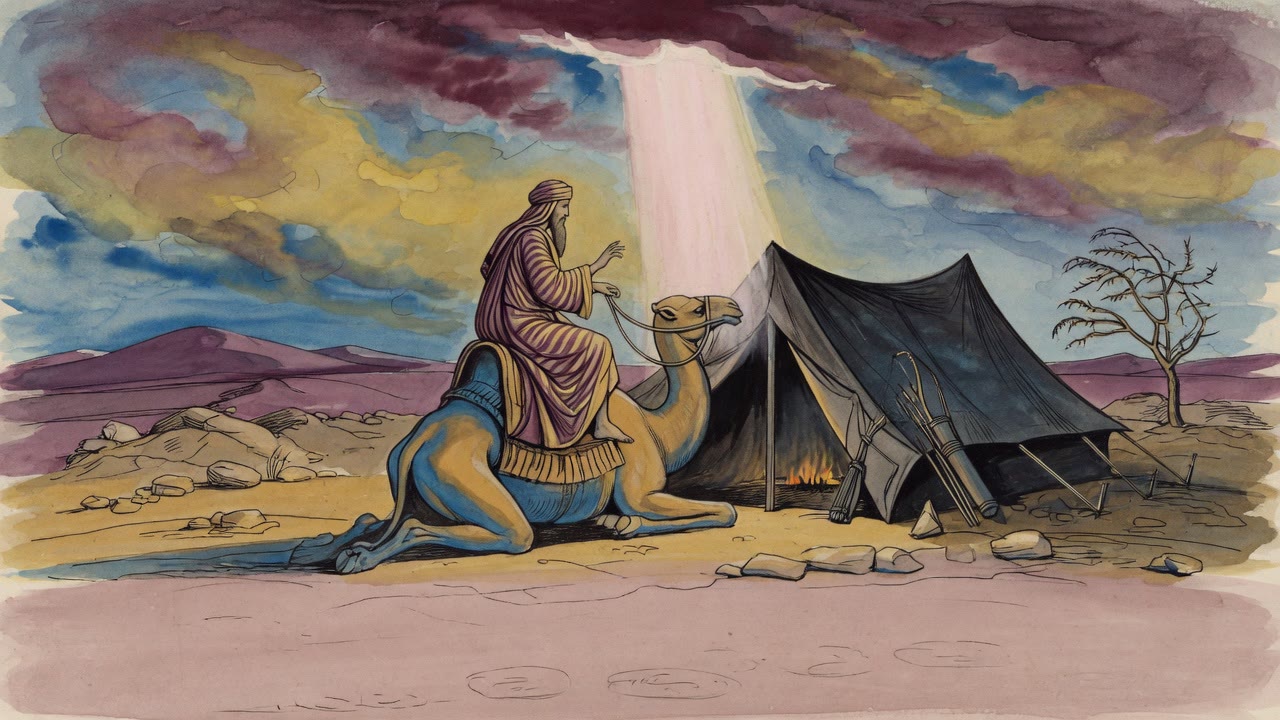
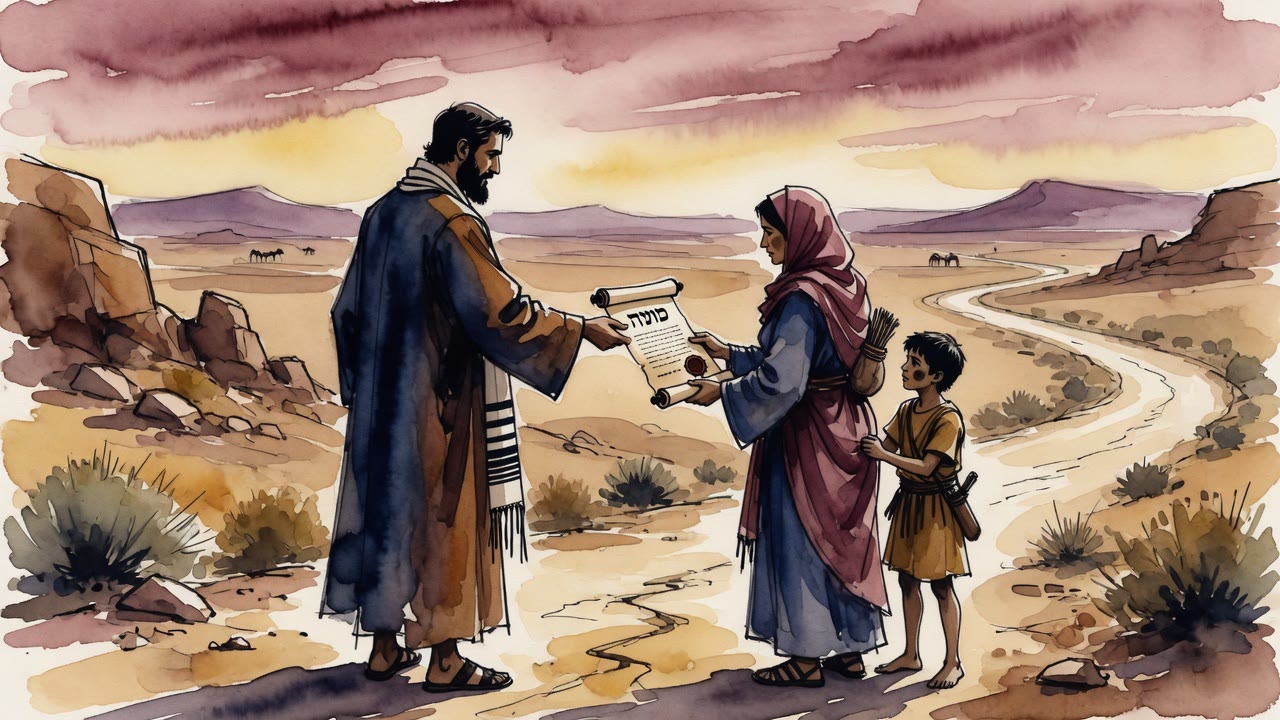
Sarah put Hagar's hand into the only future she could still imagine. Years had stacked up without a child of her own. The covenant with Abraham needed a body to continue, and her body had not opened. So she did the hard practical thing the age understood: she offered her Egyptian maidservant as a second path to a son (Genesis 16:2).

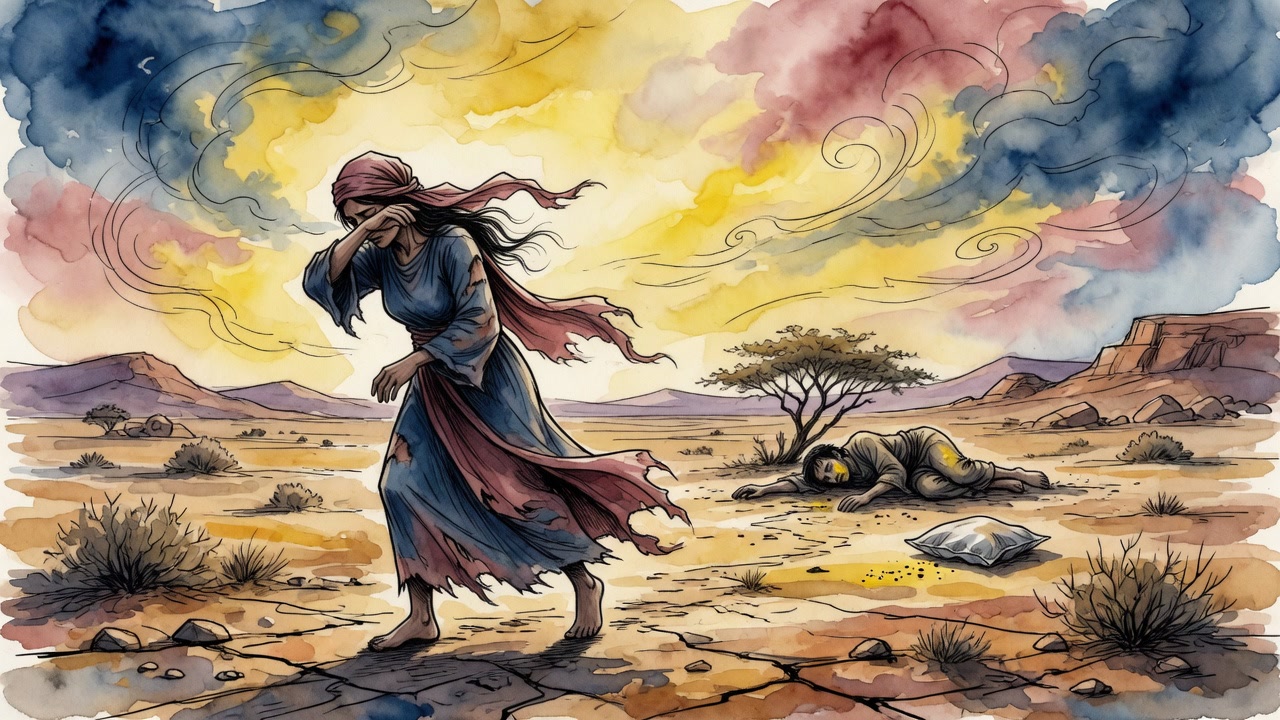
Sarah Gave Hagar and Watched the House Tilt Click for full size

The tent accepted the arrangement. The house did not stay level.

The Title That Would Not Move

Even while the plan ran, the text keeps naming her Sarah, wife of Abraham. The phrase is not decoration. It nails status in place while biology refuses to cooperate. She remains the wife. Hagar remains the handmaid. The legal spine holds. The emotional floor does not.

Abraham listened. The arrangement began. Conception came quickly enough to rearrange every glance in the camp.

When Eyes Learn Contempt

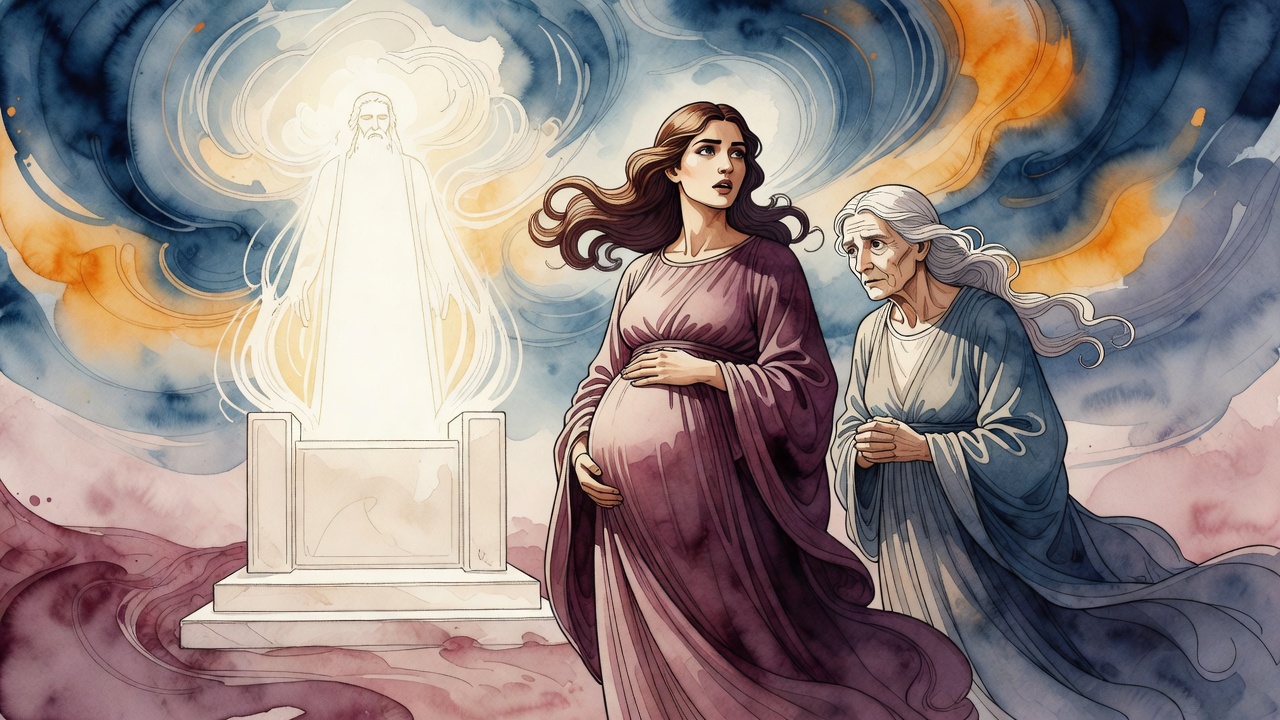
After Hagar knew she carried a child, her mistress became small in her sight (Genesis 16:4). The midrash lingers on the grammar of despising. There is a difference between being made light and making light. Hagar's new weight in the womb became a weight she used against Sarah's empty years.

Sarah felt the tilt in her own house. The woman she had placed in Abraham's tent now measured her with a look that said, I have what you prayed for. Generosity curdled into injury. The plan that was meant to build a household began to split it.

Pain Returned to Its Author

Sarah went to Abraham with the wound open. The wrong done to me is on you, she said in effect. He put the maidservant back under Sarah's authority. Harshness followed. Hagar fled toward the wilderness with the unborn child and a story already too sharp for simple blame (Genesis 16:5-6).

No one in the tent was only victim or only author. Sarah had offered. Hagar had scorned. Abraham had yielded and then yielded again. The covenant house learned that a solution can become a new problem faster than a camel drinks.

A Wife, a Handmaid, a Promise

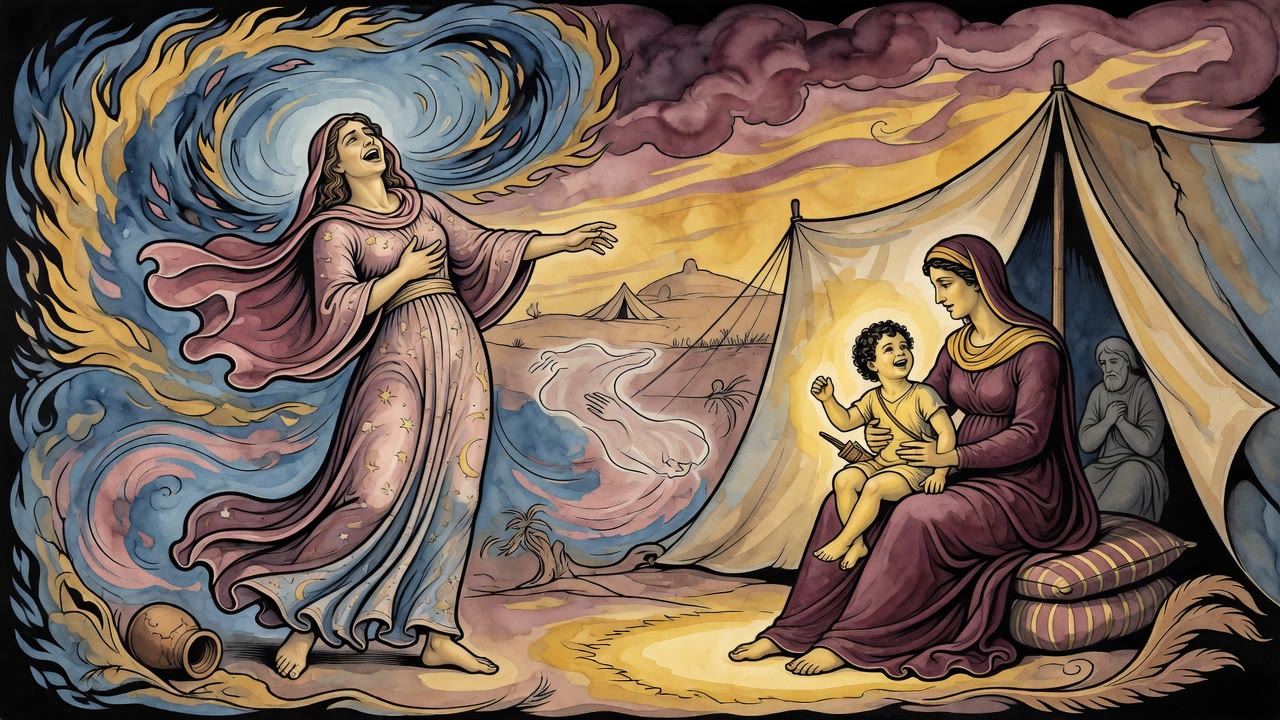
Later the child Ishmael would breathe and cry and force new choices. Later Sarah would laugh and bear Isaac and the house would tilt again. In this earlier hour the drama is smaller and rawer: a woman trying to force the future, another woman tasting sudden elevation, a man standing between them with less speech than the moment needs.

Sarah's offering was not temple smoke. It was a body loaned in hope. The hope worked biologically and failed relationally. That double result is the scene the midrash keeps pressing. Identity titles stay clear. Human eyes do not.

When Hagar's steps turned toward open country, the camp behind her held a wife still named wife and a promise still unnamed as to how it would finally arrive. The house had tried to build itself by rearrangement. Rearrangement had revealed the load-bearing walls.

Authority Without Peace

When Abraham returned Hagar to Sarah's hand, authority came back without repairing trust. Harshness can reassert a hierarchy and still leave a house unlivable. Hagar's flight toward the spring on the way to Shur is the body's verdict on that failure. She would rather risk open country than remain under a restored order that still burns.

An angel will find her. A name will be given to the child. A well will become a memory. Those mercies do not cancel the earlier tilt. They prove that heaven tracks the handmaid as well as the wife, even when the human plan treated one woman as instrument and the other as wounded manager.

Sarah's offering began in despair shaped like practicality. Hagar's contempt began in sudden status shaped like revenge. Abraham's silence began in the habit of yielding to the stronger emotion in the room. The midrash does not need to invent villains. It only needs to slow the scene until each pressure is visible.

By the time the camp breathes again, the covenant still stands and the household still limps. That limp is part of the story's honesty. Not every solution worthy of hope is worthy of peace. Sarah remains wife in the text's naming. The eyes in the tent have learned how quickly names and glances can disagree.

Years of waiting had taught Sarah how to manage hope like a ration. The offering of Hagar was a ration strategy. It worked too well and too fast. Speed became the insult. If the handmaid conceives at once, the wife's long empty seasons look, to cruel eyes, like a verdict rather than a delay.

Hagar learned that elevation without wisdom is a short tower. From its top she looked down and lost the ground she still needed. Flight into wilderness is what happens when a tower and a harsh hand meet in the same week. The covenant house would need more years and more words before any peace worth the name returned.


← All myths

From the tradition

Sources

3 sources

The texts behind this telling. Some cards carry a translation of the source; others are our own retelling of it, and each card says which. Every card links out to the original.

The Midrash of Philo 2:2The Midrash of Philo

Retold in our words. Read the original at the link below.The Works of Philo Judaeus, trans. C. D. Yonge, London, H. G. Bohn, 1854-1890 · Public Domain

Philo, a Jewish philosopher from Alexandria, writing way back in the first century CE, thought so. He saw these narratives as having layers of meaning, a literal interpretation and a more profound, allegorical one. And in a text known as The Midrash of Philo, he dives deep.

Take the story of Sarah offering Hagar to Abraham so that he might have children. The first reading, it seems like Sarah is dealing with her barrenness by providing a solution for her husband, ensuring his lineage continues. She’s putting his needs before her own pride. Philo acknowledges this literal reading. He says that "in the actual letter of this statement it is the same thing to feel no envy, and also to provide for the welfare of the wise man who is her husband and her genuine brother.” This is a

Philo doesn't stop there. He asks us to look at the “inner sense of the passage.” What if Sarah’s actions represent something more symbolic? He suggests that Sarah, in her inability to “bring forth beautiful works deserving of praise,” turns to “the intermediate kind of study." In other words, when we feel inadequate in our virtue, perhaps we should pursue knowledge as a stepping stone. This pursuit of knowledge, Philo beautifully puts it, is "as it were the whetstone of the mind and of the intellect." It sharpens us!

Think of it like this: encyclopedic knowledge, that broad understanding of various subjects, can prepare us for deeper wisdom. It's like training for a marathon. You don't just wake up one day and run 26.2 miles. You build up to it.

Philo even addresses Sarah’s statement, "The Lord has shut me up." He points out that being "shut up" implies the possibility of being opened again "at a seasonable time." There's hope in that! It suggests that Sarah's (and, by extension, our) inability to achieve perfection right now doesn't mean it's impossible forever. It simply means we need to focus on "a milder kind of learning" in the meantime.

He illustrates this with the example of the Olympic games. Not everyone can win first prize, but there are second and third prizes for those who strive. Similarly, Sarah is awarded the "first prize of virtues" and the "second prize of encyclical study." It's a beautiful way of saying that even if we don't reach the highest level of spiritual attainment, we can still find value and growth in the pursuit of knowledge.

So, next time you're feeling stuck or inadequate, remember Sarah and Hagar. Remember Philo's interpretation. Maybe it's not about reaching perfection right away. Maybe it's about embracing the journey of learning and growth, knowing that even in our imperfections, we can find value and purpose. And who knows? Maybe that journey is exactly what we need to unlock our own potential for greatness. Just something to think about.

Full source
The Midrash of Philo 4:2The Midrash of Philo

Retold in our words. Read the original at the link below.The Works of Philo Judaeus, trans. C. D. Yonge, London, H. G. Bohn, 1854-1890 · Public Domain

The Torah, in its often subtle way, touches upon this very question.

Our passage focuses on a seemingly small detail in the story of Sarah and Hagar. You remember the story. Sarah, unable to conceive, gives her maidservant Hagar to Abraham to bear a child. But after Hagar conceives, she begins to look down on Sarah. (Genesis 16:4)

Here's the interesting part: the text doesn't say Hagar despised Sarah. Instead, it says Sarah "was despised" (Genesis 16:4). As Philo points out, there’s a world of difference between those two phrasings! One implies Hagar's active fault, the other simply describes a state of affairs. Why this linguistic precision?

Philo suggests that the Torah isn’t interested in assigning blame here. It’s not about pointing fingers. Instead, it's trying to convey a deeper truth about value and perception. It’s as if the text is saying, "Look, this is what happened, and here's what we can learn from it."

Philo then takes us into a more allegorical realm. He proposes that those who value status and external achievements over inner wisdom are making a fundamental error. They are like Hagar, perhaps, momentarily elevated by a visible accomplishment – having a child – but ultimately lacking the true, enduring value that comes from "invisible seed and offspring which is appreciable only by the intellect." Who do we truly admire? Is it always the person with the most possessions, the highest status, or the most visible accomplishments? Or is it often the person who possesses wisdom, integrity, and a strong moral compass?

Philo argues that true value lies in that which is "united with wisdom." That which is combined with folly is "slavish and inconstant.

The story of Sarah and Hagar, then, becomes a parable about the dangers of misplaced priorities. It’s about the cultivation of inner qualities that endure long after external achievements have faded.

What "seeds" are we cultivating? What kind of "offspring" are we hoping to bring into the world? Are we valuing the things that truly matter, or are we getting caught up in the fleeting allure of external validation? Perhaps the Torah, through this ancient story, is gently nudging us to reconsider our own definitions of success and worth.

Full source
The Midrash of Philo 3:1The Midrash of Philo

Retold in our words. Read the original at the link below.The Works of Philo Judaeus, trans. C. D. Yonge, London, H. G. Bohn, 1854-1890 · Public Domain

In Jewish tradition, a name can be a destiny, a reflection of character, a clue to understanding the deeper story. Take Sarah, for example. Why is she always referred to as "Sarah, the wife of Abraham"?

It seems like a simple enough detail in (Genesis 16:2): "Sarah the wife of Abraham, taking her handmaid Hagar the Egyptian, gave her into his hand." But the Midrash of Philo, that collection of ancient interpretations, asks, "Why has he called Abraham's wife Sarah?"

Why the constant reminder of her marital status? It's not like

Maybe it’s there to show us something about Sarah's identity, and about the act she's about to undertake. Sarah is facing a profound personal challenge: infertility. In that time, and even today for many, bearing children was deeply intertwined with a woman's sense of self-worth and purpose. She’s giving her handmaiden, Hagar, to Abraham to conceive a child. That's a HUGE deal. It's a heartbreaking sacrifice.

So, "Sarah, the wife of Abraham" isn't just a label. It's a statement of her unwavering commitment, her enduring role, even in the face of immense personal pain. It highlights the fact that she is acting within the bounds of her marriage, trying to fulfill what she sees as her wifely duty in the context of that time.

Maybe it’s there to remind us, and maybe even to remind her, who she is in this moment of difficult decision-making.

We see a woman confronting faith, societal expectations, and her own desires. And perhaps, just perhaps, the constant reminder of her marriage is a way of anchoring her, and us, to the core of her being as she navigates this incredibly complex situation.

What other seemingly simple phrases might be holding deeper meanings? What other clues are hidden in plain sight in the stories we think we know so well? Keep asking questions. Keep digging. The Torah is a deep well.

Full source