5 min read

Sarah Handed Hagar Over and Kept the Name Wife

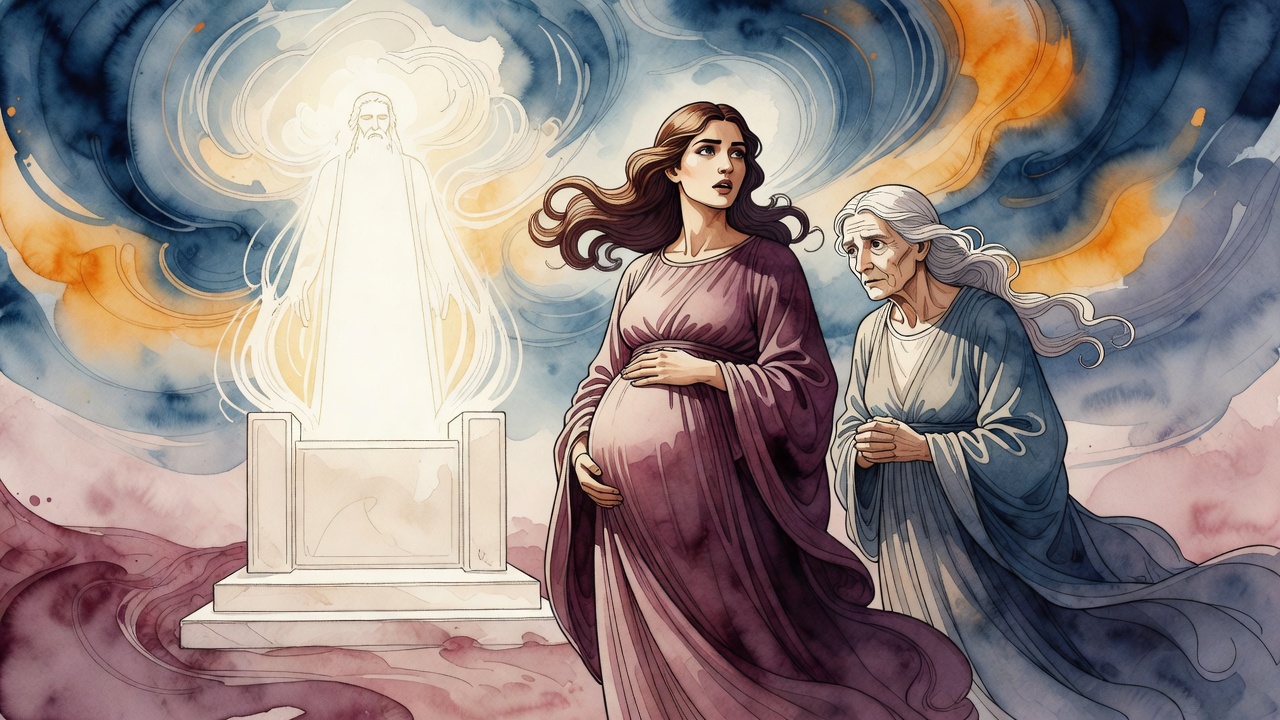
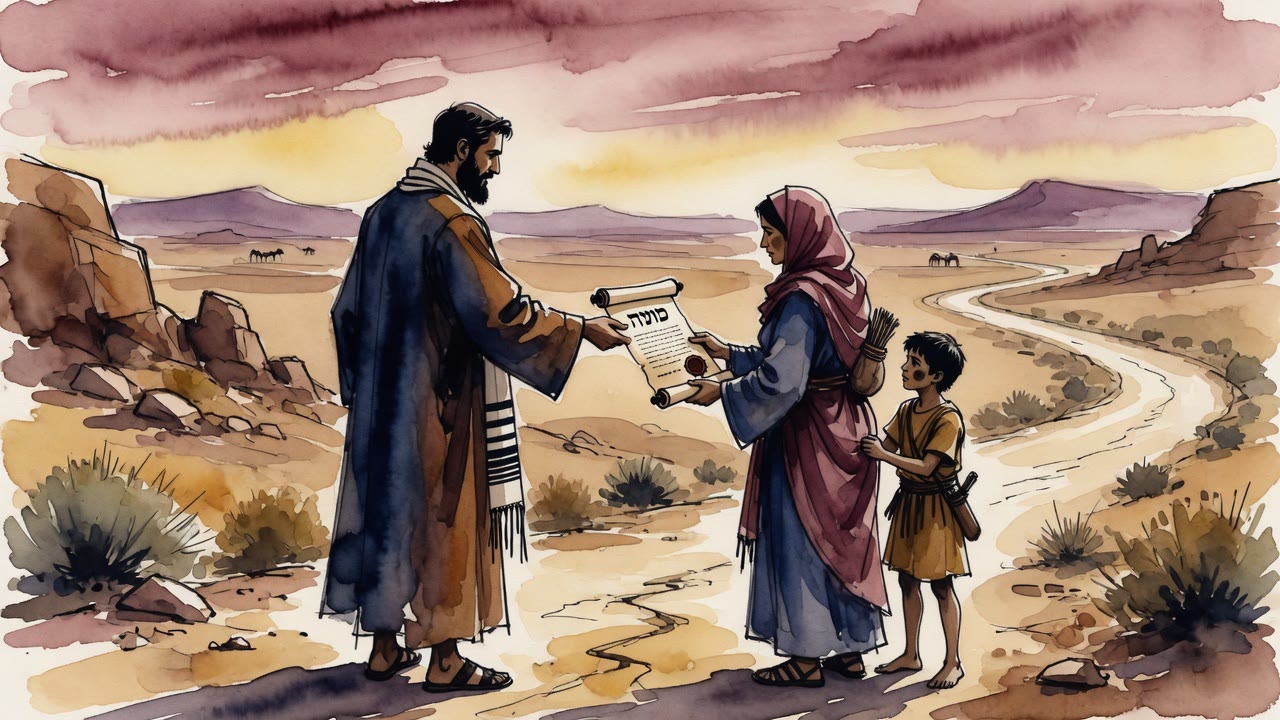
Sarah said the Lord had shut her up. Shut, not sealed over. Then she walked across the tent and put her Egyptian handmaid into her husband's hands.

Curated by Arthur · Told by Maggid ·
Table of Contents
  1. Shut Up Is Not Sealed Over
  2. She Would Not Let the House End
  3. Still Called the Wife of Abraham
  4. The Handmaid Who Was Also Called Wife
  5. What the Tent Held Afterward

Sarah had the whole thing settled in her head before she said any of it out loud, and when she said it she said it without a tremor.

Sarah Handed Hagar Over and Kept the Name Wife Click for full size

"The Lord has shut me up so that I shall not bring forth," she told Abraham. "Go in now to my handmaid, so that I may have a son by her" (Genesis 16:2).

Then she went and fetched Hagar herself.

Shut Up Is Not Sealed Over

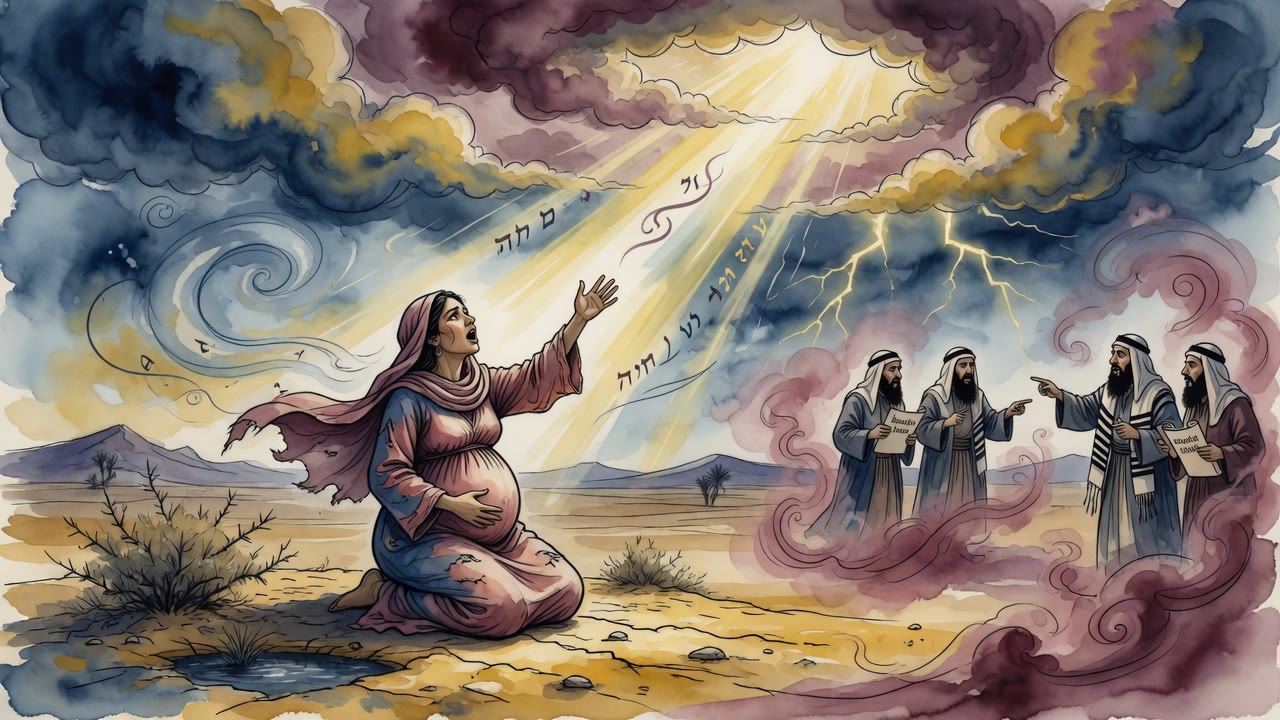
Nobody handed her that word. She chose it. Shut up. A door is shut up, and a door that is shut up gets opened again when the hour for it arrives. She did not say the Lord had ended her, or emptied her, or forgotten her. She said shut, which is a temporary condition, and everyone standing in that tent knew it.

So she was not there without hope. She knew perfectly well she would bear a child. She also knew she would not bear one yet, and there is no arguing a hinge open ahead of its time. Ten years in Canaan had taught her that much. She had waited long enough to tell the difference between a locked door and a wall.

What she could do in the meantime was take the second thing.

She Would Not Let the House End

Envy would have been the easy weather. It would also have been useless, and Sarah had no room in her for anything useless.

She was mistress of the Egyptian girl. The girl was hers to give. Abraham was old, the promise over his head was a promise about descendants, and a household with no child in it dies out quietly and nobody writes down the year. Sarah looked at that and did the arithmetic and came down on the side of the house rather than on the side of her own standing. Her dignity was worth something. Her husband's line was worth more. She traded the first for the second and did not haggle over it.

It is a strange kind of love to watch from the outside. It looks like a woman giving away her place. It was a woman refusing to let the whole thing die on her account.

Still Called the Wife of Abraham

And when that afternoon was set down in the record, the record did not demote her. Sarah the wife of Abraham took Hagar her Egyptian handmaid and gave her to her husband (Genesis 16:3). Wife. Not the former wife, not the barren one, not the woman who had stepped aside.

The title is doing work there. Some men keep a wise wife in the house and spend themselves on a concubine, and love the concubine like a fever, and let the marriage go grey in a back room. That kind of man is common enough that the sentence has to make plain this was not that. Abraham went where his wife sent him. He remained the husband of one woman on the very day another became lawful to him, and the proof is that the wording will not stop calling her his.

Whatever passed between him and the Egyptian was a matter of the body, undertaken for the getting of a child. What he had with Sarah was two souls tied together, and no arrangement about an heir came near it.

The Handmaid Who Was Also Called Wife

Then the wording does something else, and it is easy to walk straight past it.

Hagar is not left a handmaid in that sentence. She is given to Abraham to be his wife. The same word, for the servant.

He had gone to her out of deference to Sarah and not out of his own wanting, and because that was the reason, the record refuses to leave the girl with a servant's name fastened to what happened to her. If she was going to carry his child she would carry his title. It cost nothing to give and it was the only thing anybody gave her that day.

Hagar stood between the two of them in the middle of the tent, a long way from the Nile, and was made a wife by a decision she had no part in.

What the Tent Held Afterward

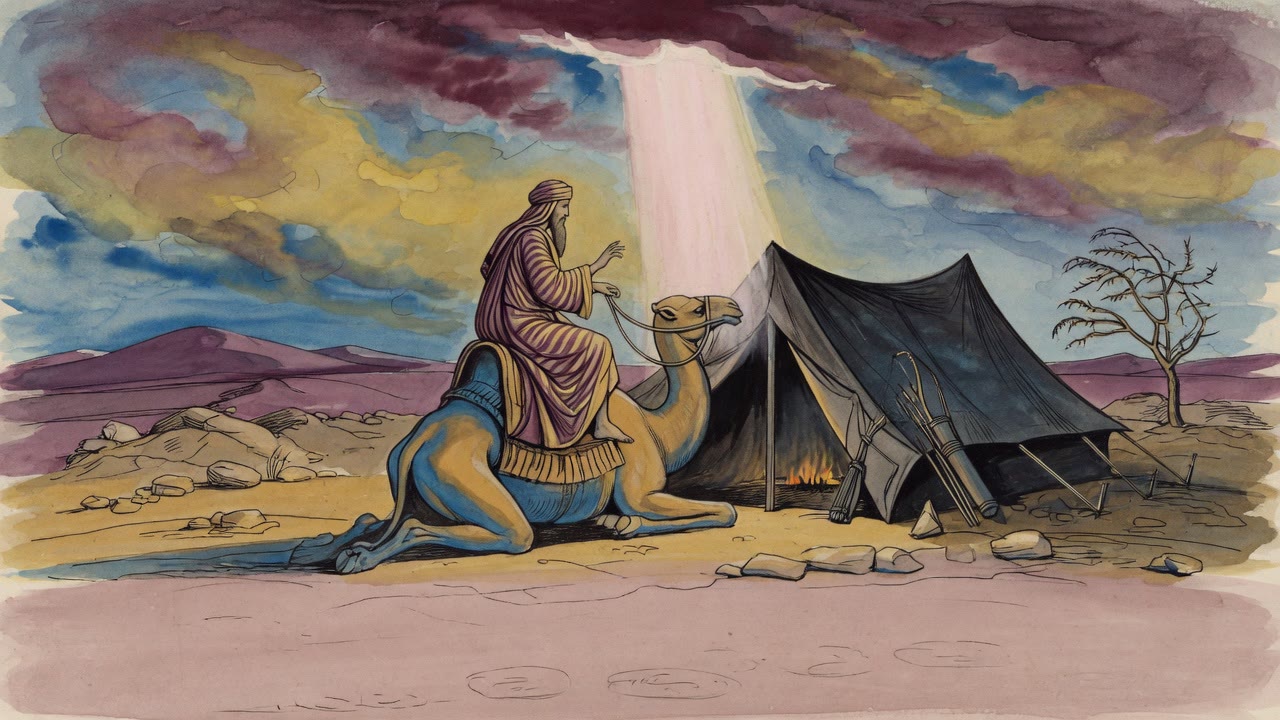
Outside, a goat knocked its horn against a tent peg. Sarah walked out into the strip of shade by the door and stood there with her hands empty.

She had not lost her name. She had not lost her husband. She had given away the one thing she still had to give and had kept the two things she could not replace, and behind her a woman who had been a handmaid that morning was now something else.

The door was still shut. Sarah had never claimed otherwise. She was waiting for the hour it would be opened.


← All myths

From the tradition

Sources

4 sources

The texts behind this telling. Some cards carry a translation of the source; others are our own retelling of it, and each card says which. Every card links out to the original.

The Midrash of Philo 2:1The Midrash of Philo

Retold in our words. Read the original at the link below.The Works of Philo Judaeus, trans. C. D. Yonge, London, H. G. Bohn, 1854-1890 · Public Domain

The question before us is this: Why did Sarah, barren and yearning for a child, actually suggest that Abraham sleep with her handmaid, Hagar? "Behold the Lord has shut me up so that I shall not bring forth: go in now unto my handmaid so as to beget a son by her?" (Genesis 16:2).

What was going through her mind?

Well, the Midrash of Philo, a fascinating collection of interpretations and expansions on the biblical text attributed to the Jewish philosopher Philo of Alexandria, grapples with this very question. Remember, midrash (rabbinic interpretive commentary) isn't just about simple explanations; it's about filling in the gaps, exploring the motivations, and drawing out deeper meanings.

One way to understand Sarah's actions is to recognize the immense pressure she must have been under. In that time and culture, a woman's worth was often tied to her ability to bear children, particularly a son. The Torah tells us repeatedly how important lineage and descendants were. And Sarah, despite her faith in God, had been waiting… and waiting… and waiting.

Perhaps, in her despair, Sarah saw this as the only way to fulfill God's promise to Abraham that he would be the father of a great nation. Maybe she thought, "God has closed my womb, but perhaps He will work through Hagar. This is the only way!" Think of it as a painful act of self-sacrifice, a desperate attempt to secure her husband's legacy, even if it meant immense personal heartache.

The Midrash of Philo doesn’t offer a single, definitive answer, and honestly, I think that’s the point. It invites us to wrestle with the complexities of human relationships, the burdens of societal expectations, and the often-difficult path of faith. It's a reminder that even our matriarchs and patriarchs were flawed, complex individuals navigating challenging circumstances.

And doesn't that make their stories, and our own, all the more relatable?

Full source
The Midrash of Philo 2:2The Midrash of Philo

Retold in our words. Read the original at the link below.The Works of Philo Judaeus, trans. C. D. Yonge, London, H. G. Bohn, 1854-1890 · Public Domain

Philo, a Jewish philosopher from Alexandria, writing way back in the first century CE, thought so. He saw these narratives as having layers of meaning, a literal interpretation and a more profound, allegorical one. And in a text known as The Midrash of Philo, he dives deep.

Take the story of Sarah offering Hagar to Abraham so that he might have children. The first reading, it seems like Sarah is dealing with her barrenness by providing a solution for her husband, ensuring his lineage continues. She’s putting his needs before her own pride. Philo acknowledges this literal reading. He says that "in the actual letter of this statement it is the same thing to feel no envy, and also to provide for the welfare of the wise man who is her husband and her genuine brother.” This is a

Philo doesn't stop there. He asks us to look at the “inner sense of the passage.” What if Sarah’s actions represent something more symbolic? He suggests that Sarah, in her inability to “bring forth beautiful works deserving of praise,” turns to “the intermediate kind of study." In other words, when we feel inadequate in our virtue, perhaps we should pursue knowledge as a stepping stone. This pursuit of knowledge, Philo beautifully puts it, is "as it were the whetstone of the mind and of the intellect." It sharpens us!

Think of it like this: encyclopedic knowledge, that broad understanding of various subjects, can prepare us for deeper wisdom. It's like training for a marathon. You don't just wake up one day and run 26.2 miles. You build up to it.

Philo even addresses Sarah’s statement, "The Lord has shut me up." He points out that being "shut up" implies the possibility of being opened again "at a seasonable time." There's hope in that! It suggests that Sarah's (and, by extension, our) inability to achieve perfection right now doesn't mean it's impossible forever. It simply means we need to focus on "a milder kind of learning" in the meantime.

He illustrates this with the example of the Olympic games. Not everyone can win first prize, but there are second and third prizes for those who strive. Similarly, Sarah is awarded the "first prize of virtues" and the "second prize of encyclical study." It's a beautiful way of saying that even if we don't reach the highest level of spiritual attainment, we can still find value and growth in the pursuit of knowledge.

So, next time you're feeling stuck or inadequate, remember Sarah and Hagar. Remember Philo's interpretation. Maybe it's not about reaching perfection right away. Maybe it's about embracing the journey of learning and growth, knowing that even in our imperfections, we can find value and purpose. And who knows? Maybe that journey is exactly what we need to unlock our own potential for greatness. Just something to think about.

Full source
The Midrash of Philo 3:1The Midrash of Philo

Retold in our words. Read the original at the link below.The Works of Philo Judaeus, trans. C. D. Yonge, London, H. G. Bohn, 1854-1890 · Public Domain

In Jewish tradition, a name can be a destiny, a reflection of character, a clue to understanding the deeper story. Take Sarah, for example. Why is she always referred to as "Sarah, the wife of Abraham"?

It seems like a simple enough detail in (Genesis 16:2): "Sarah the wife of Abraham, taking her handmaid Hagar the Egyptian, gave her into his hand." But the Midrash of Philo, that collection of ancient interpretations, asks, "Why has he called Abraham's wife Sarah?"

Why the constant reminder of her marital status? It's not like

Maybe it’s there to show us something about Sarah's identity, and about the act she's about to undertake. Sarah is facing a profound personal challenge: infertility. In that time, and even today for many, bearing children was deeply intertwined with a woman's sense of self-worth and purpose. She’s giving her handmaiden, Hagar, to Abraham to conceive a child. That's a HUGE deal. It's a heartbreaking sacrifice.

So, "Sarah, the wife of Abraham" isn't just a label. It's a statement of her unwavering commitment, her enduring role, even in the face of immense personal pain. It highlights the fact that she is acting within the bounds of her marriage, trying to fulfill what she sees as her wifely duty in the context of that time.

Maybe it’s there to remind us, and maybe even to remind her, who she is in this moment of difficult decision-making.

We see a woman confronting faith, societal expectations, and her own desires. And perhaps, just perhaps, the constant reminder of her marriage is a way of anchoring her, and us, to the core of her being as she navigates this incredibly complex situation.

What other seemingly simple phrases might be holding deeper meanings? What other clues are hidden in plain sight in the stories we think we know so well? Keep asking questions. Keep digging. The Torah is a deep well.

Full source
The Midrash of Philo 3:2The Midrash of Philo

Retold in our words. Read the original at the link below.The Works of Philo Judaeus, trans. C. D. Yonge, London, H. G. Bohn, 1854-1890 · Public Domain

This particular piece tackles the tricky subject of a virtuous man taking a concubine, even though he already has a wife. How could that possibly be seen as righteous? Well, Philo offers a rather nuanced perspective.

The passage begins by addressing men "incontinent and lascivious," those who might abandon their wives for concubines driven by nothing but fleeting passion. Philo contrasts this with the man "endued with virtue," who remains devoted to his wife. But here’s the twist: this virtuous man might, at a time when it was permissible, also take his wife's handmaid as a concubine.

Why? According to Philo, the key is intent. The physical connection with the concubine is purely "for the sake of propagating children." But his relationship with his wife? That's something far deeper: "two souls joined together in harmony by heavenly affection." This "literal effect of the statement" gives us a glimpse into ancient attitudes toward marriage and procreation.

Like so many ancient texts, there's a deeper layer, a hidden meaning waiting to be uncovered. What about the "inner meaning?" Philo suggests that "he who has truly entrusted all his secret wishes to wisdom, and justice, and the other virtues.. remains constant to it." Wisdom, in this case, is personified as a wife.

Think of it this way: once you've tasted the joy of "matrimonial connection" with wisdom, you remain faithful. But, and this is crucial, that doesn’t mean you should shun other forms of knowledge. "Encyclical education," meaning a well-rounded education, might "lead him in a beautiful course." Geometry, arithmetic, grammar, rhetoric – all these disciplines can be seen as enriching, yet secondary to the pursuit of virtue.

Philo uses a clever analogy: even if a virtuous man masters these sciences, he remains mindful of honesty, pursuing it as a "necessary aim," while treating education as "an accessory." He doesn't neglect his "wife," wisdom, for these other pursuits.

Now, here's where it gets even more interesting. Philo approves of calling the handmaid "wife," because the man only went to her bed at the "exhortation of his real wife, and not of his own genuine inclination." The text implies that the handmaid deserves the title of "wife" out of respect and acknowledgement for her role in fulfilling the societal expectation of procreation.

And for those who prefer allegory? Philo suggests that "the exercise of the middle disciplines also stands in the place of a concubine, having nevertheless the shape and ornaments of a wife." In other words, all the learning we acquire imitates and reflects true virtue. The pursuit of knowledge, like a concubine, can enhance and complement our core values, but it should never replace them.

It challenges us to examine our own motivations and priorities. Are we pursuing fleeting passions, or are we striving for a deeper connection with what truly matters? The Midrash of Philo, through its intricate layers of meaning, invites us to consider what it means to live a virtuous life, balancing our desires with our devotion to wisdom and truth.

Full source