5 min read

The Kings Who Died Before Adam Drew Breath

Before Adam stood, kings ruled in a world of pure din. Their thrones cracked. Malchut was both their wound and the door of their repair.
Curated by Arthur · Told by Maggid ·
Table of Contents
  1. Thrones Before Breath
  2. Malchut on Trial
  3. Three Acts of Healing
  4. What Their Dying Bought
The Kings Who Died Before Adam Drew Breath Click for full size

Thrones Before Breath

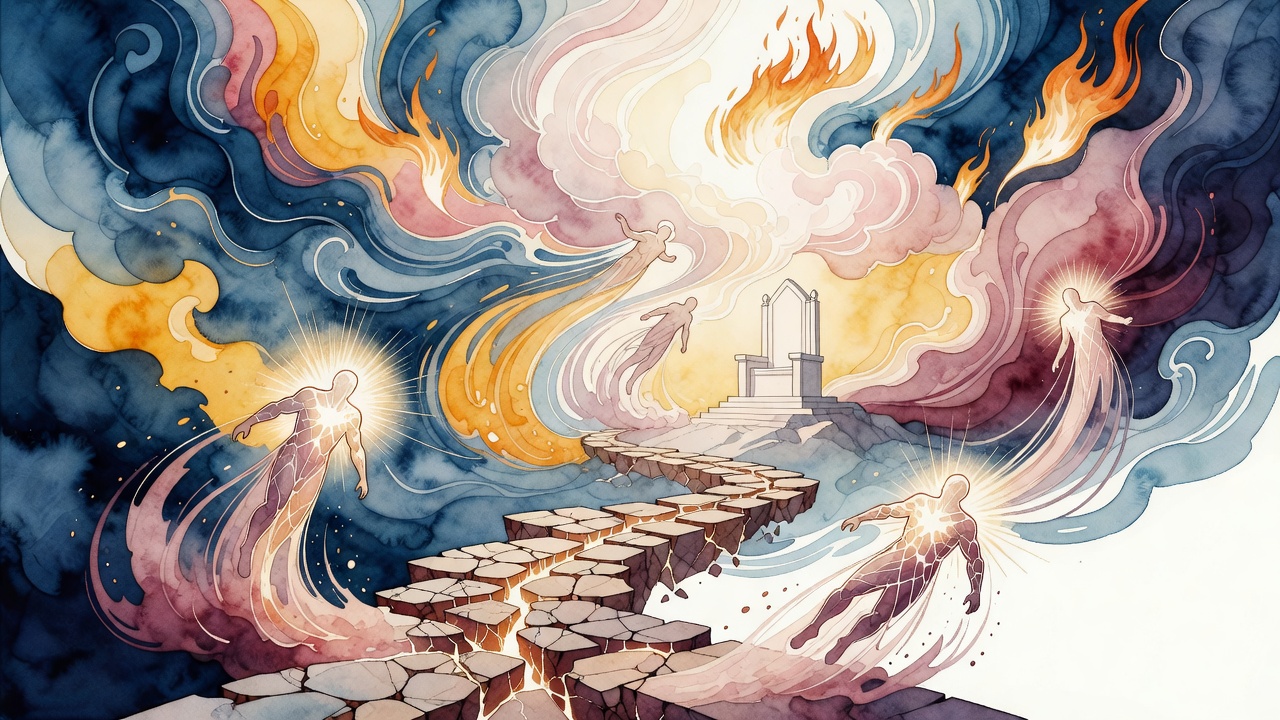
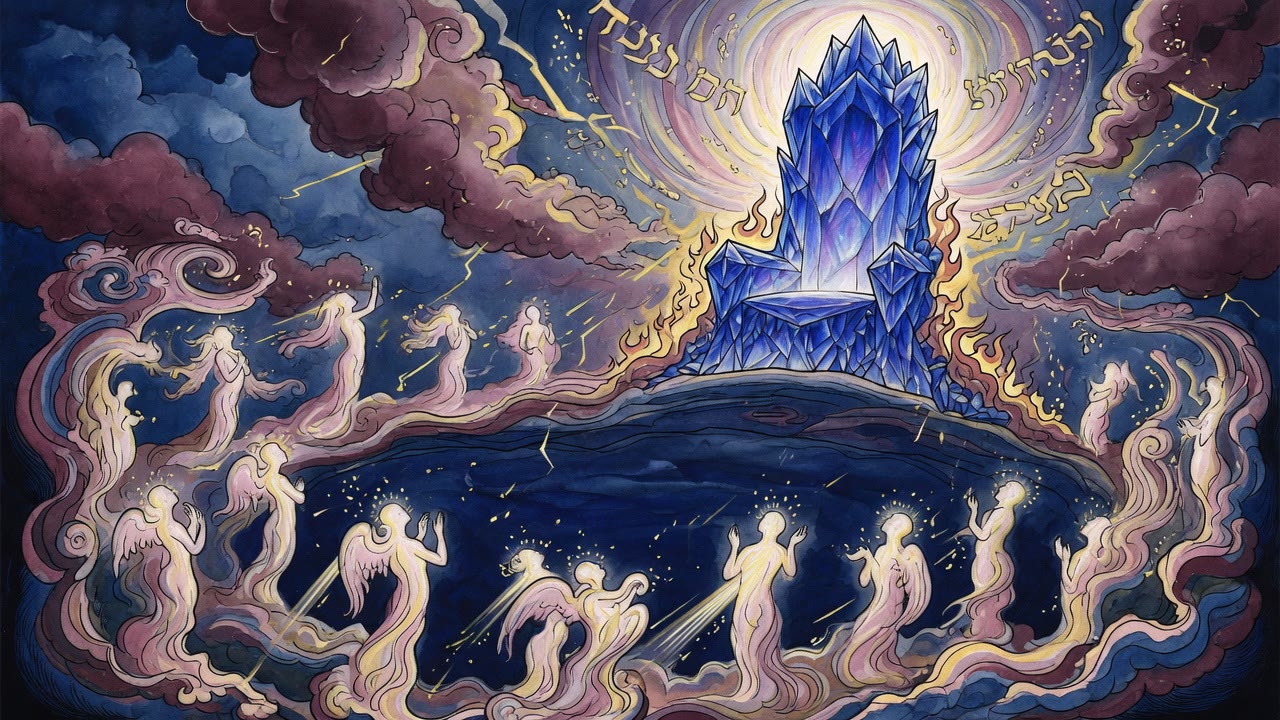
The primordial kings took their seats before Adam drew a first breath. They ruled in a configuration of creation that had not yet learned mercy as a partner. Crowns sat on heads that had never heard a human prayer rise like smoke. The land under them, if land is the word for a stage so early, answered only to din, to measure without softness, to law without a second voice in the chamber.

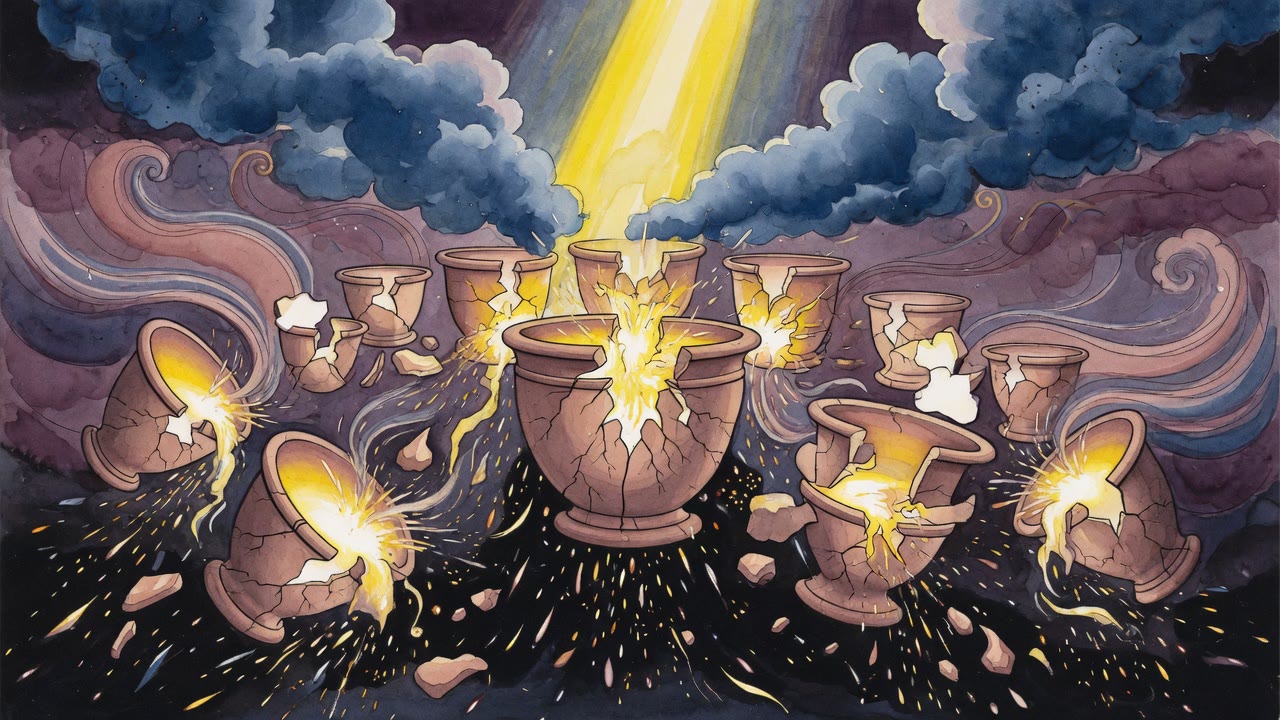
The Supreme Mind had calculated how things would stand in an unrectified state. Strict Judgment reigned without a partner who could plead or temper. Only defects could thrive in such air. Creations appeared able to work and then revealed that only their bad parts ruled them, the way a machine can look complete on a table and still be born already failing its own blueprint. Form itself took damage. Function became a rumor the kings could no longer enforce.

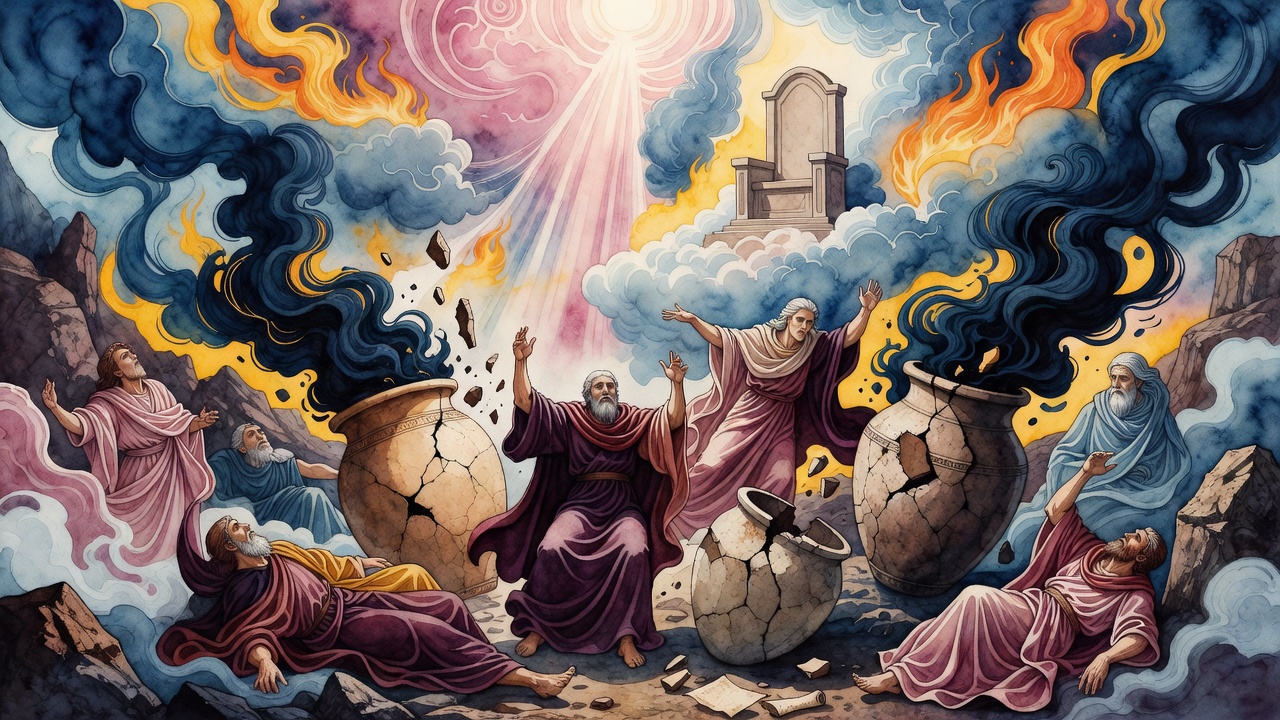
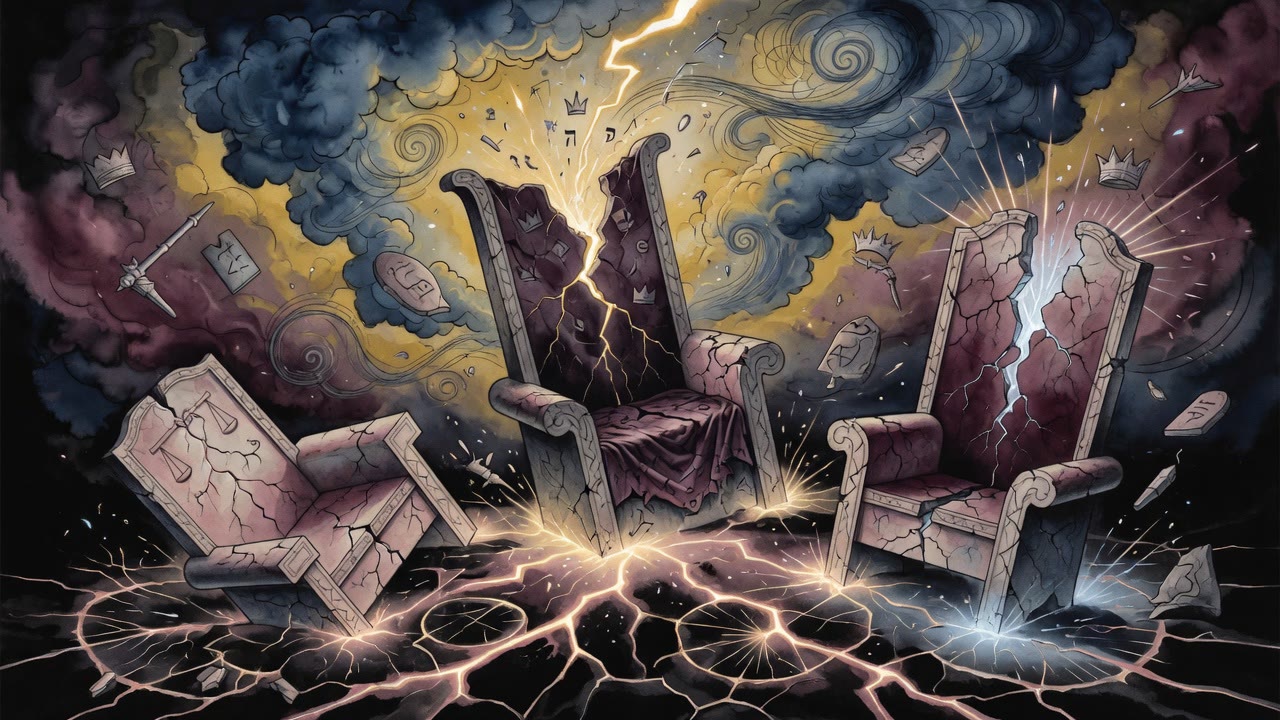
They reigned and they died. Death here is the language of broken government, kings who could not hold the light assigned to their offices, thrones that cracked under a weight no cushion of chesed had been allowed to share. Later, when Genesis whispers of kings in Edom who ruled and died before any king ruled the children of Israel, the kabbalists hear that whisper as an echo of these earlier thrones, a historical rhyme of a cosmic fact.

No mourner stood at those funerals. The funerals were the clearing of a stage.

Malchut on Trial

Was Malchut the source of their breakage or the beginning of their repair? The openings refuse a cheap answer that would let a student pick a side and sleep. Kingdom holds both joy and sadness in one vessel. The material edge of divinity is where beauty delights and where decay enters through the same door. The same station that can crown a world can also expose it to shattering if the crown is all severity and no joining.

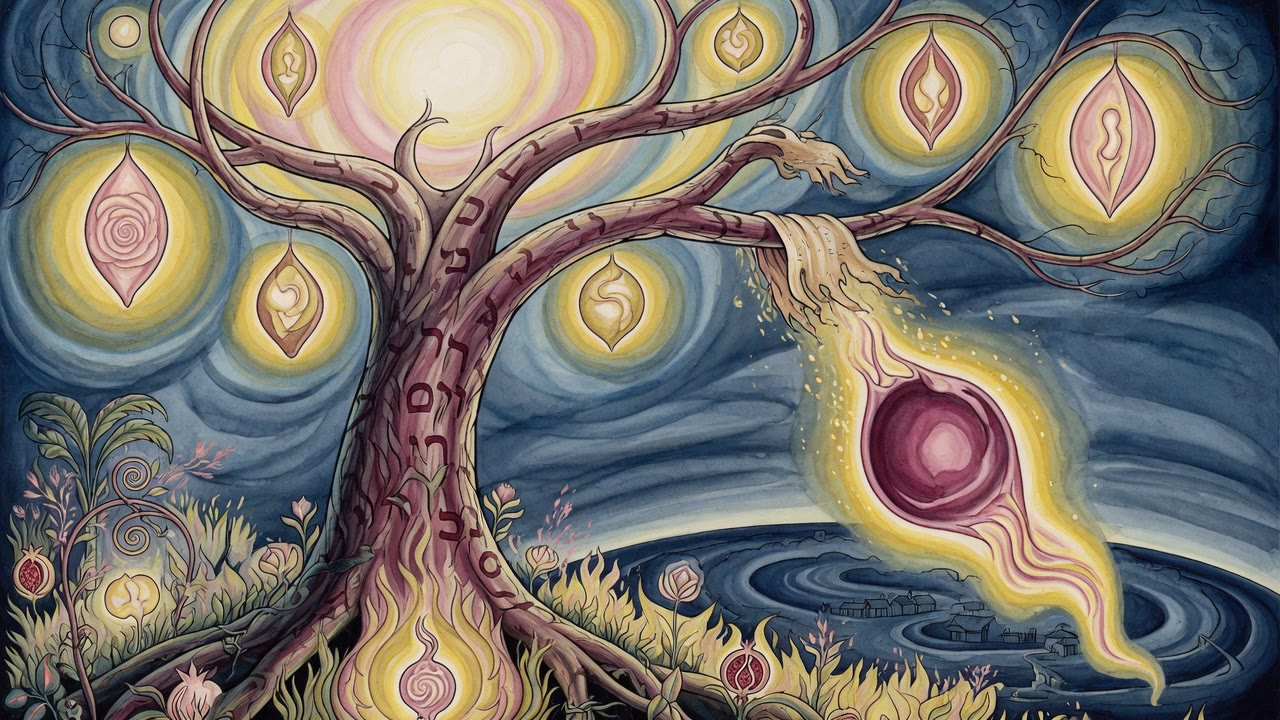
Elsewhere the tree of life teachings say the rule of Malchut brings repair. The contradiction is only a surface. Malchut unrectified is a throne that kills its kings, a kingdom of pure din where every reign ends in collapse. Malchut brought into order is a throne that steadies them, a place where beauty and the hind of love can stir higher lights to give. She is not two goddesses quarreling. She is one vessel whose fitness depends on whether mercy has entered the government that pours into her.

The kings died on her frontier because the frontier was still all Judgment, a border post with no gate of kindness. Their death cleared the stage for a different kind of reign, one that would still use Malchut and would not confuse her with the wound alone.

She watched them fall and learned both lessons at once.

Three Acts of Healing

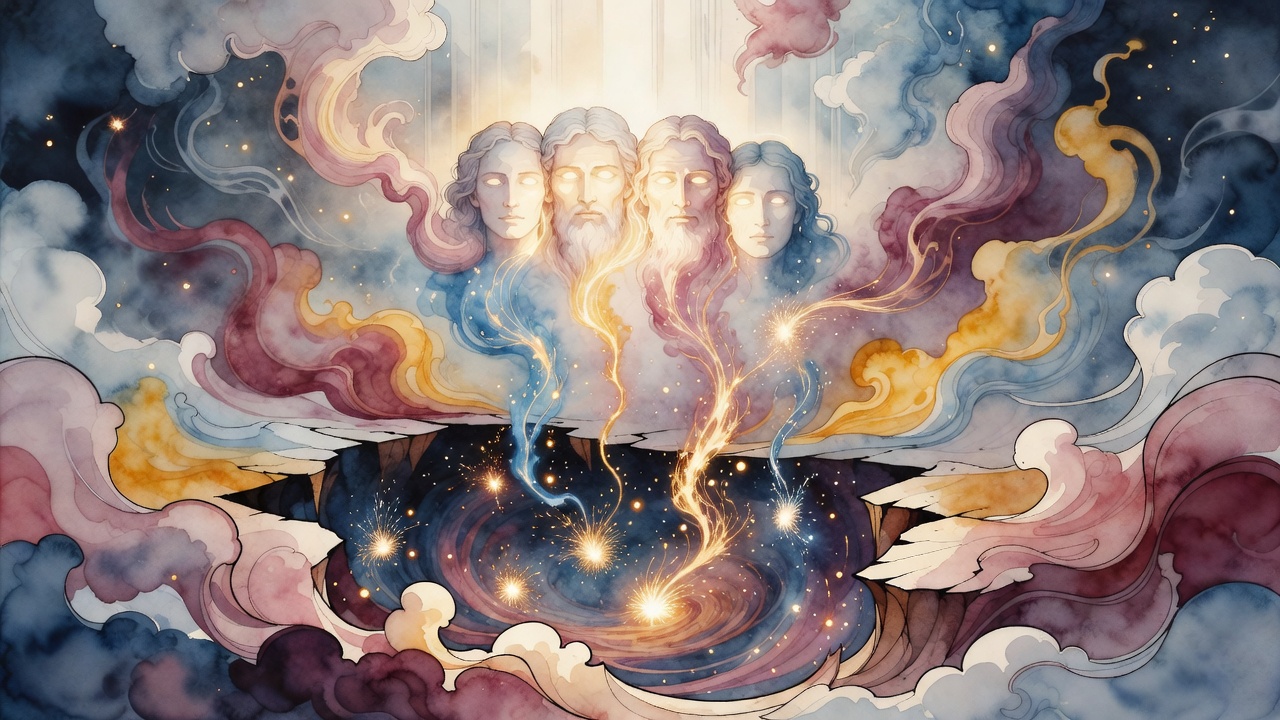
After the thrones fell, healing began in three movements, as deliberate as a play that knows its acts. First, binding. Two radiations torn apart were pressed together again until a seam held. The first root of repair is reunion, not decoration, not speeches, not a painted smile on a broken vase. Gather the largest pieces before you hunt the dust.

Second, an awakening of love, heat returning to lights that had gone cold in separation. Love here is not a soft mood for evenings. It is the force that makes separate lights prefer one another to isolation, that makes a channel want its neighbor, that makes government possible again after pure din has made government fatal.

Third, a new harmonious order, a matkela, a balance that can hold weight without immediately cracking the way the first thrones cracked. Order is the government that follows binding and love, still imperfect, already better than the reign of defects. The kings' shards were large. Binding them was the first work. Love was the heat. Order was the house that could finally stand, if carefully, if not yet forever.

Adam would later stand in a world that remembered those deaths as a warning written under the floorboards of Eden, a creak in the wood when severity tries to rule alone.

What Their Dying Bought

If the first government had succeeded in pure Judgment, the later world of choice might never have opened. A perfect din would have left no room for a creature who fails and returns. Their failure is not celebrated with songs. It is used. From dead kings comes the possibility of living repair. From unmitigated din comes the lesson, paid in thrones, that din alone cannot rule a world meant for more than sentences.

Malchut learns from their graves. She will be the place of beauty and the hind of love, not only the place of fracture. The three stages of healing will repeat in smaller keys whenever a human throne cracks, whenever a household or a heart tries severity without kindness and then begins again with binding, love, and order.

Before any man named a day of the week, the kings had already risen, ruled in severity, and fallen so that a gentler government could be attempted under a sky that still remembers their crowns in the dust and refuses to put those crowns back on without mercy beside them.

The dust of those crowns is part of the soil Adam would later till. He would not know the names of the kings. He would feel, in every hard season, the memory of a world that tried to run on Judgment alone and learned the cost.


← All myths
From the tradition

Sources

3 sources

The texts behind this telling. Some cards carry a translation of the source; others are our own retelling of it, and each card says which. Every card links out to the original.

Kalach Pitchei Chokhmah 58:4Kalach Pitchei Chokhmah

Retold in our words. Read the original at the link below.138 Openings of Wisdom, trans. Rabbi Avraham Greenbaum, Azamra Institute (2005) · CC-BY

The primordial kings stand at the edge of creation, royal figures marked by power before repair. Kalach Pitchei Chokhmah asks whether Malchut is the source of their breakage or the beginning of their repair.

Wait! There's another side to the story. Elsewhere, in another part of the Etz Chayim, namely Derushey HaNekudot (Inquiries of the Points) chapter 3, we find the opposite idea! It says that it's actually the rule of Malchut that brings about repair! So, which is it? Is Malchut the source of the problem, or the solution? Is it the cause of the Kings' imperfection, or the means of their fixing?

Confused yet? Don't worry, you're not alone. This work attempts to resolve the apparent contradiction, and it does so in two parts.

First, it explores the nature of Malchut itself. It explores how Malchut can be the source of both joy and sadness. the material world is full of beauty and delight, but it's also where we experience pain and loss. The very things that bring us happiness are also subject to decay and change. So, Malchut, in its essence, holds both these potentials.

Then, the second part of the explanation connects this understanding of Malchut back to the Primordial Kings. It shows how their connection to Malchut, with its inherent duality, explains their flawed nature. Perhaps it suggests that their flaws weren’t inherent weaknesses, but rather a reflection of the very nature of the world they were connected to – a world still in the process of finding its balance.

So, what's the takeaway here? Maybe it's that even in the most ancient and abstract of stories, we find echoes of our own experiences. The tension between joy and sorrow, perfection and imperfection, is something we all confront. And perhaps the story of the Primordial Kings, with all its complexities, is ultimately a reminder that even in imperfection, there's the potential for repair, for growth, and for finding a little bit of light in the shadows.

Full source
Kalach Pitchei Chokhmah 54:7Kalach Pitchei Chokhmah

Retold in our words. Read the original at the link below.138 Openings of Wisdom, trans. Rabbi Avraham Greenbaum, Azamra Institute (2005) · CC-BY

You’re not alone. Jewish mystical tradition has wrestled with this very idea for centuries.

Specifically, the Kalach Pitchei Chokhmah, a profound Kabbalistic text, explores what happens when things go wrong at the very source of creation. It explores a time when, as the text puts it, the "Supreme Mind" was calculating how creation would exist in an "unrectified state." A state where strict judgment, din (דין), reigned supreme, unsoftened by mercy.

What would that look like? Well, according to the Kalach Pitchei Chokhmah, the consequences are pretty stark. Only defects could exist. The creations themselves would be damaged. It might look the part, but it’s destined to fail.

The text goes on to explain that the creations would appear to have lost their ability to carry out their good function. Only their bad parts – their flaws, their imperfections – would rule over them, causing damage to their intrinsic form.

It's like imagining a world where only the negative aspects of everything are amplified, where potential is stifled, and purpose is corrupted.

But it doesn't stop there. The Kalach Pitchei Chokhmah draws a parallel between this state of destruction in the creations and what's happening "above," on the level of the Sefirot (סְפִירוֹת‎). The Sefirot, for those unfamiliar, are the ten emanations or attributes through which God reveals Himself and continuously creates both the physical realm and the chain of higher metaphysical realms.

In their broken state, the text says, we see "faulty laws of government that are unable to accomplish anything. Laws, the very framework of existence, rendered ineffective.

This, the text suggests, is the "destruction and ruin" described earlier in the Kalach Pitchei Chokhmah (specifically, Opening 37, Part 1). A state where good laws cannot operate, and that has a direct, devastating effect on creation itself.

So, what are we to make of this? It's tempting to feel discouraged, to see this as a description of a world permanently broken. But Kabbalah isn’t about despair. It's about understanding the complexities of existence, including the potential for things to go wrong, so that we can work towards tikkun (spiritual repair) olam (תיקון עולם), repairing the world.

The Kalach Pitchei Chokhmah, by showing us the potential for unrectified judgment to wreak havoc, implicitly calls us to embrace mercy, compassion, and the ongoing work of mending the cracks in creation. Maybe, just maybe, by understanding the brokenness, we can begin to piece things back together.

Full source
Kalach Pitchei Chokhmah 59:6Kalach Pitchei Chokhmah

Retold in our words. Read the original at the link below.138 Openings of Wisdom, trans. Rabbi Avraham Greenbaum, Azamra Institute (2005) · CC-BY

We've touched on the breaking, but what about the mending? How did the universe even begin to heal?

That's what The Kabbalists saw this repair as a process with three key aspects, almost like a three-act play. First, there's the binding together, the initial act of mending. Then, an immediate awakening of love. And finally, a new, harmonious order established.

Think of it like this: after a vase shatters, the first thing you do is gather the biggest pieces. This initial stage of repair, according to Kalach Pitchei Chokhmah, focuses on reconnecting what was fractured. Specifically, it describes the binding together of "two radiations." What does that mean?

Well, in Kabbalistic thought, the universe emanates from God through various channels, often visualized as lights or radiations. When the vessels broke, these radiations were disrupted. The repair begins with reuniting these energies. Kalach Pitchei Chokhmah calls this the "first root of the repair," the very foundation upon which everything else is built.

This concept of "balance," or matkela (מתקלא) as the Sifra DeTzeniuta puts it, is also crucial. This balance, this joining of radiations, isn’t just a mechanical process. It’s the very source of love within the Sefirot, the divine attributes or emanations. These Sefirot, like building blocks of creation, become infused with love precisely because of this reconnection. It's a powerful idea: that love itself is born from the mending of what was broken. That connection is essential for the flow of divine energy.

Full source