Two Hundred Eighty-Eight Sparks Fell at Night
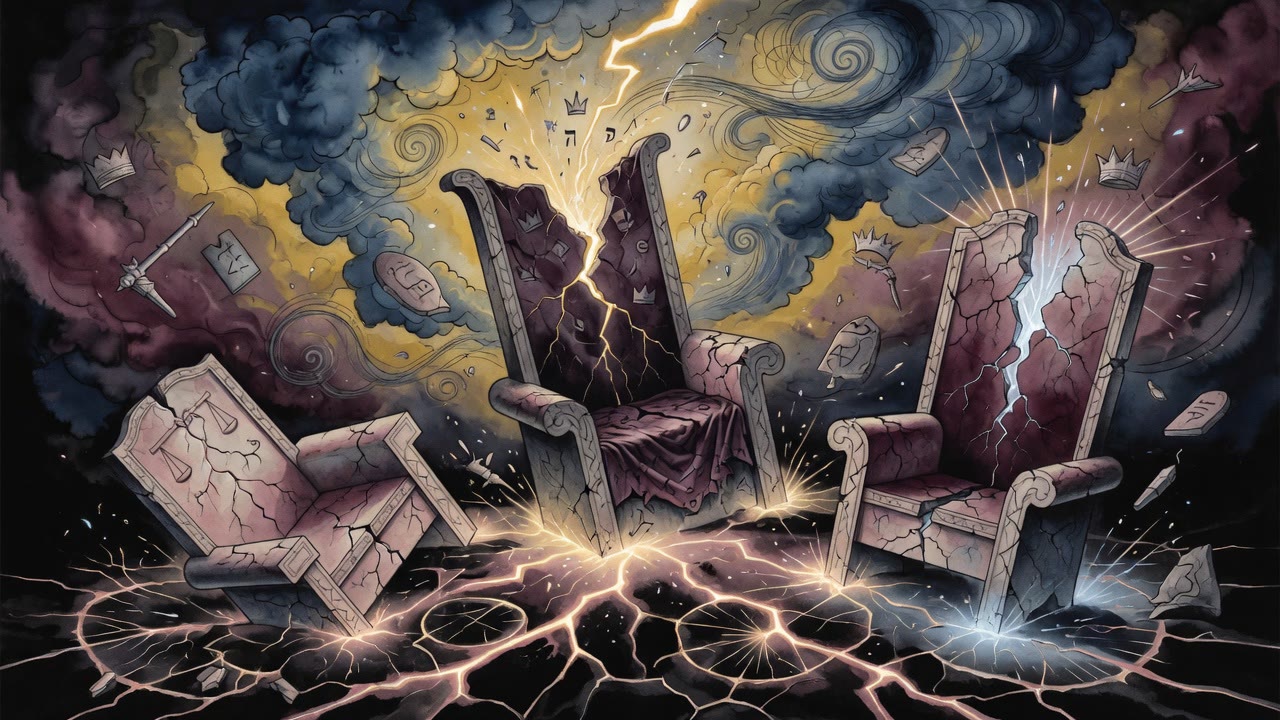
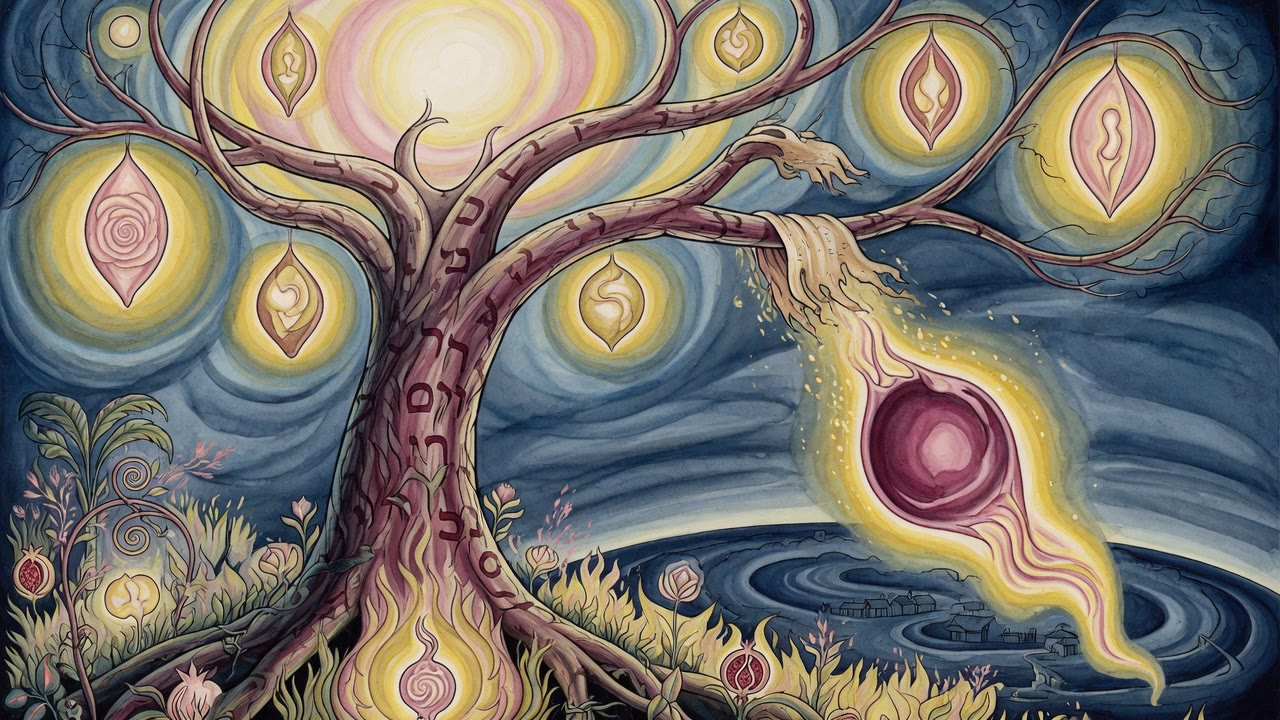
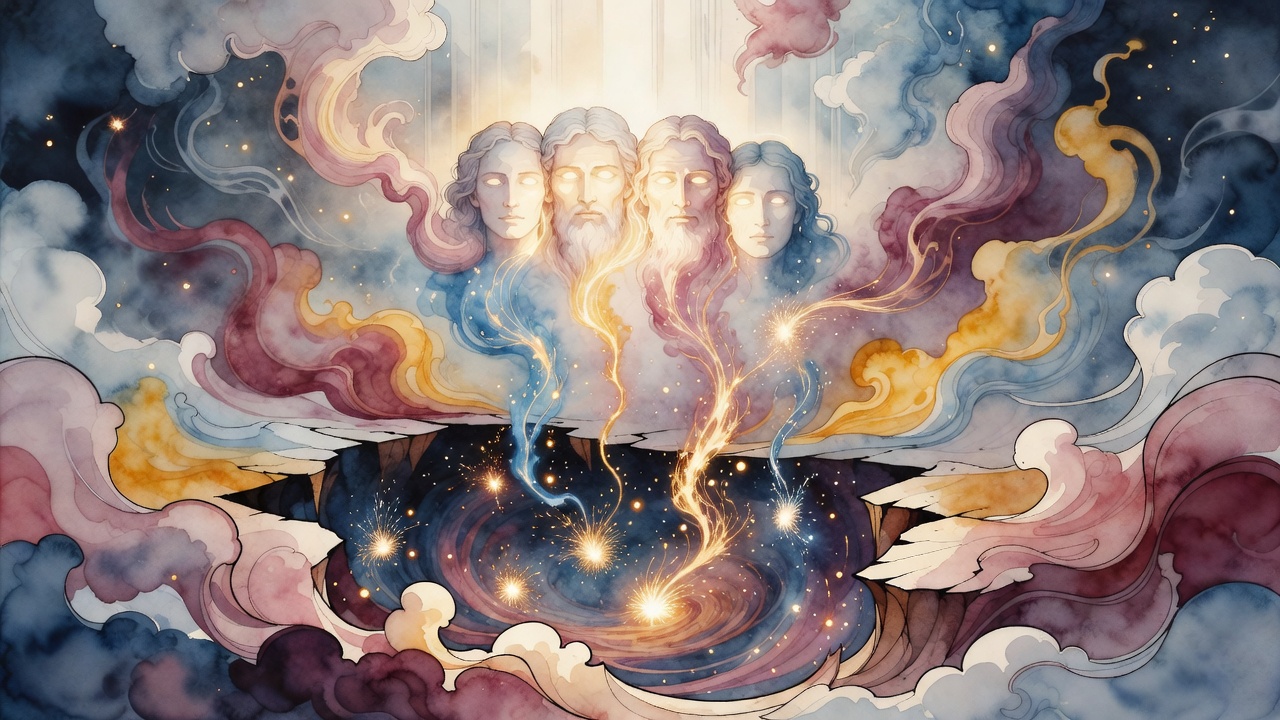
Four faces held seventy-two, and the sum became two hundred eighty-eight lights that had to fall. They dropped through the break and refused to go dark.
Table of Contents
 Click for full size
The Number That Had to Fall
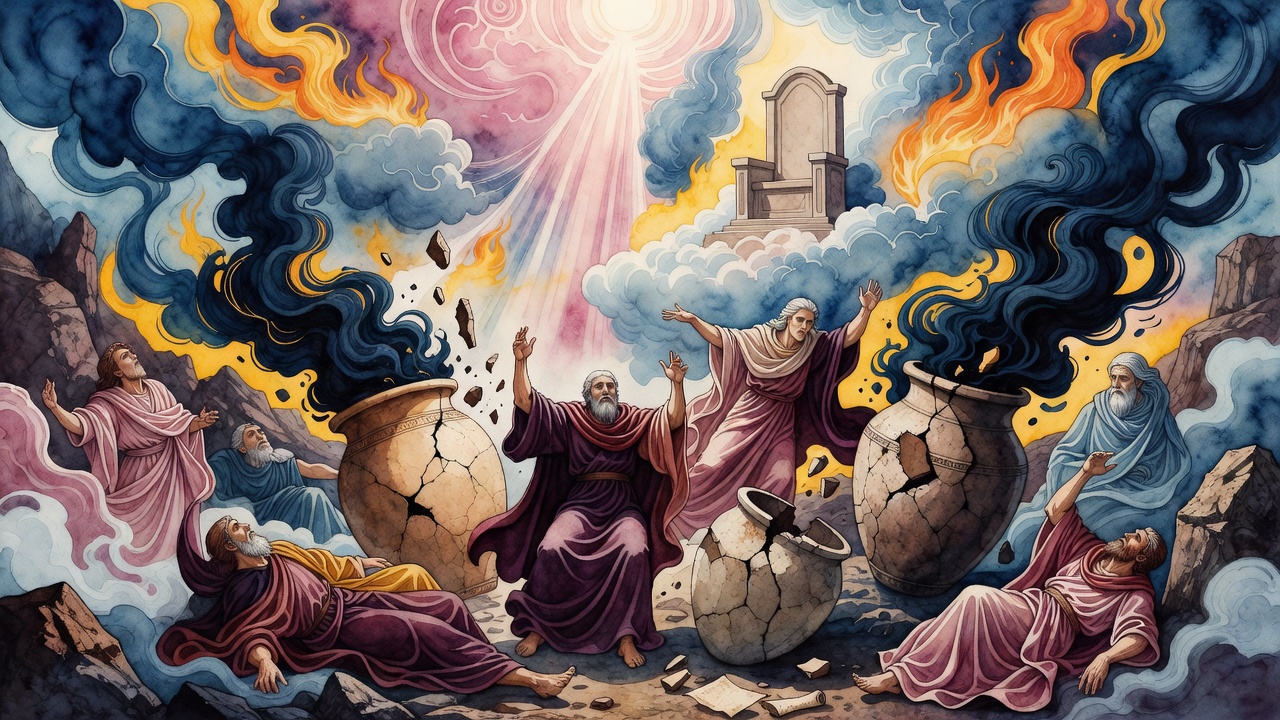
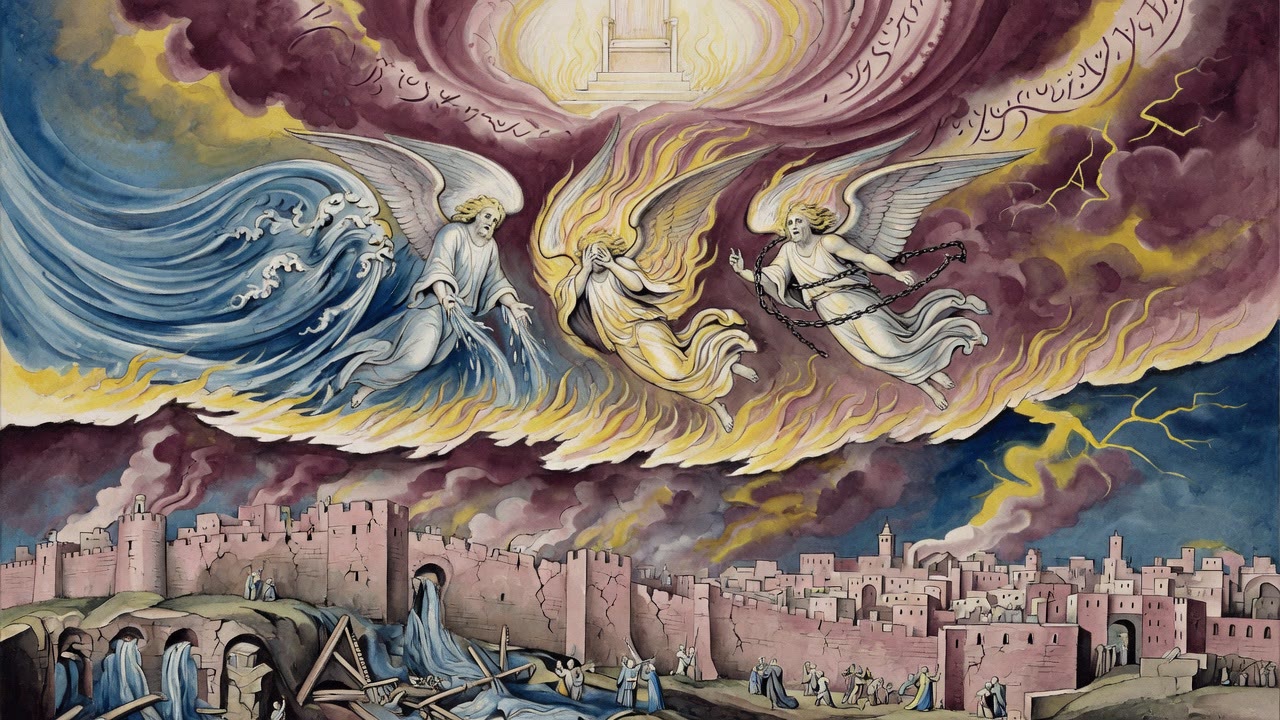
Two hundred eighty-eight sparks stood in the higher realm and were told they must descend. Not as a punishment handed to rebels. As a necessity written into the break. The vessels were already cracking under a light too strong for their clay. Someone had to carry holiness into the wreckage, or the wreckage would become pure death, a cold that no later blessing could warm.
The number is not poetry first. It is arithmetic of the Name. AV is seventy-two. Four partzufim, four divine configurations, each holding that seventy-two, make two hundred eighty-eight. The name that lifts and the sparks that fall share a root the way a tree and its shadow share a trunk. When the vessels break under the force bound up with AV, the sparks that correspond to that name go down with the shards, counted, deliberate, unwilling to abandon the ruin.
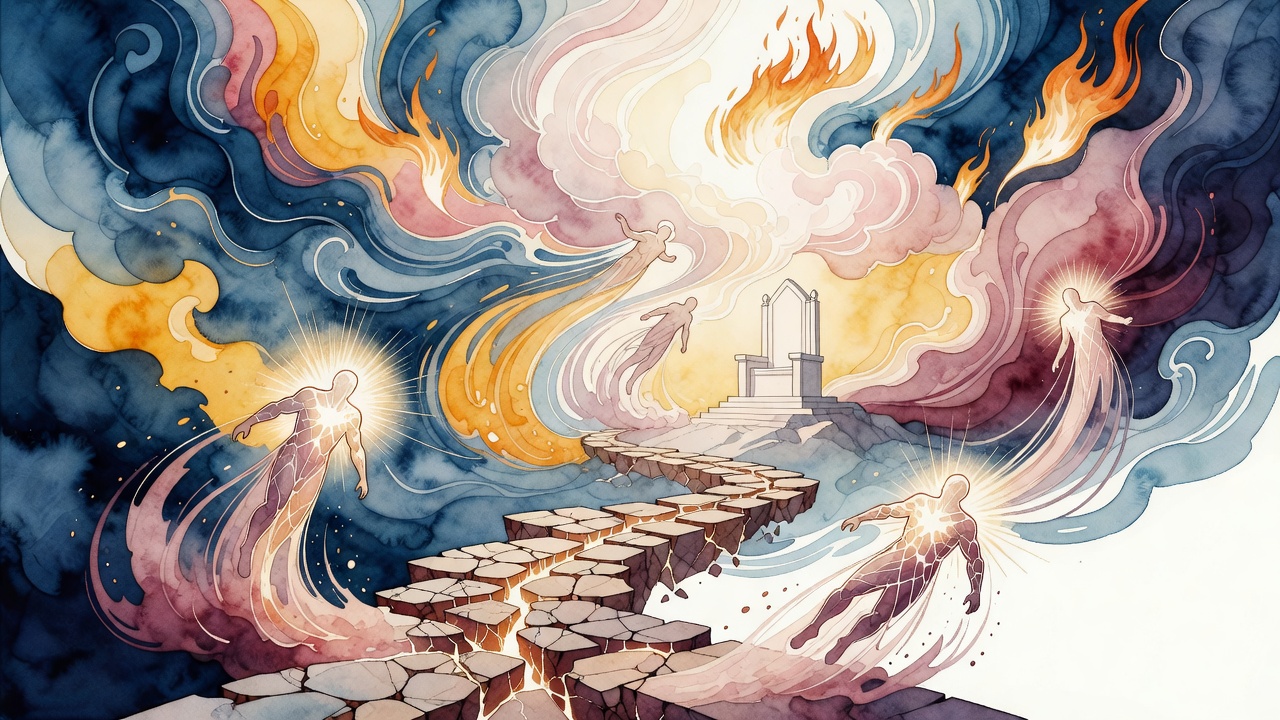
They fell the way embers fall when a great lamp is struck from a high ceiling in a hall that has not yet learned the word night. Night received them. Night did not extinguish them. That refusal is the whole hope of later ages.
A single spark, falling, looks like a star that chose the wrong direction. Two hundred eighty-eight look like a rain that remembers fire.
Chandelier and Floor
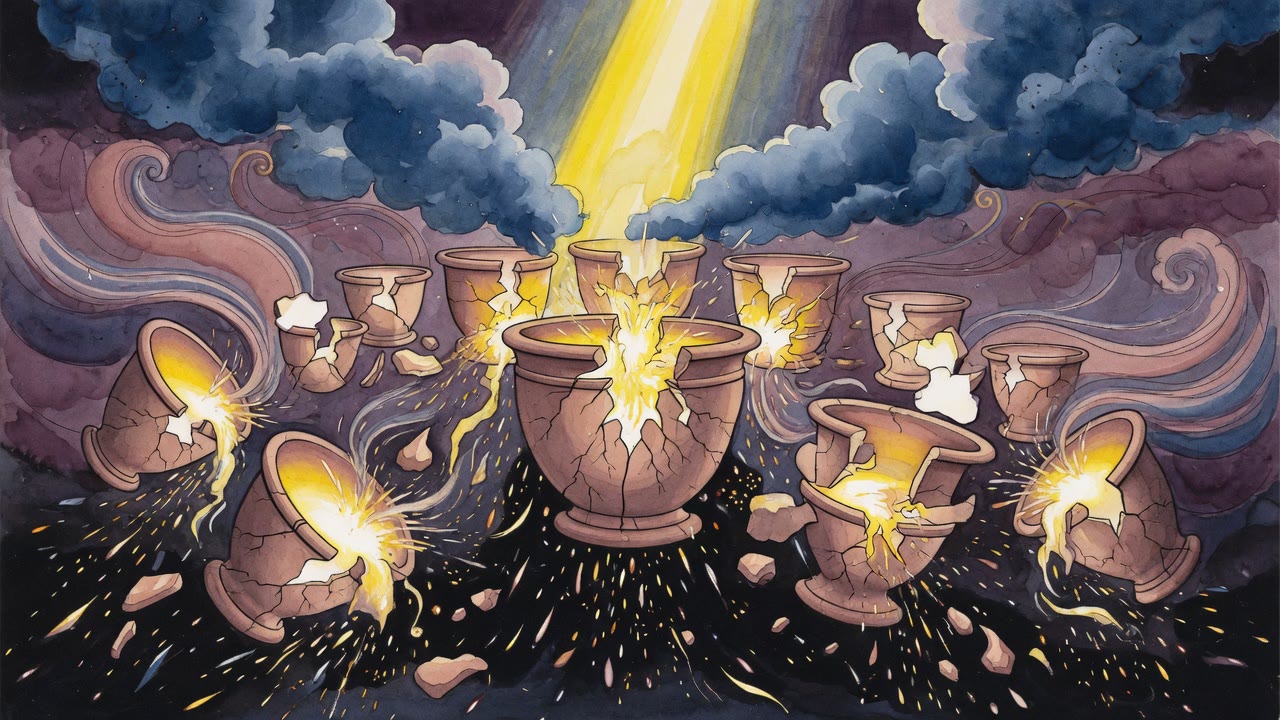
Imagine a chandelier built to hold a brilliance it cannot keep. The arms snap under the weight of too much noon. Glass rains. Flame does not vanish. It scatters across the floor and hides under furniture, under dust, under the shoes of whoever walks next through the dark hall. That is the 288 in the lower worlds. Holiness mixed with husk. Light that still knows it is light, trapped where no one looks first, under ordinary days and bitter ones alike.
They had to descend from the higher realm because repair cannot be done only from above by remote decree. Sparks in exile are invitations with sharp edges. Every act that frees one is a stitch in the original break. Every act that buries one deeper, using holiness for cruelty or waste, is a lengthening of the night and a thicker coat of dust on the ember.
The breaking and the descent are one story told at two speeds. The cups shatter in an instant of cosmic time that no clock can catch. The sparks keep falling through history, into markets, into mouths, into exiles that last generations, into a crust of bread and a withheld word and a coin returned late.
The floor of the world is paved with opportunities that burn if ignored and warm if lifted.
A Remnant That Will Not Die
Even in the darkest exile a spark remains. The openings insist on this the way a mother counts children after a fire, lips moving, refusing the count that ends too soon. Nothing is allowed to fall so far that redemption cannot find it. Death itself, the last silence, still leaves a point of light that the Other Side cannot swallow whole, though it tries, though it presses, though it names the dark complete.
Events below root in the Sefirot (the ten channels of divine power) above. When a lower world goes black, the black is a symptom in the branches of a trouble in the roots. The safety net is built into the plan so that one force endures and total destruction stays a threat and never a finished fact, God forbid. The net is made of these sparks and of the will that numbered them before they fell.
A person in a bitter land who still says a blessing over dry bread is not inventing hope from nothing. That person is touching a spark that fell for exactly such a mouth, in exactly such a night, under exactly such a sky that forgot how to be kind and still held a hidden point of fire.
The remnant is small enough to miss and strong enough to restart a world.
Only Some Levels Could Break
Not every floor of the divine house was glass. Only certain levels were vulnerable to the cosmic shattering. The strong links of the chain held. The 288 belong to the places that could be damaged and therefore could also be healed. Fragile is not the same as forsaken. The name AV that oversaw the vulnerability also oversees the raising. What was numbered in the fall is numbered in the return, as if the bookkeeper of heaven refuses to lose a single line.
Vessels that shattered lost power and form. Sparks that fell kept both in miniature. That is why a free spark can rebuild more than its size suggests. It carries a memory of the cup and a loyalty to the light.
Gathering What Night Hid
Tikkun (a repair) is the long gathering. Hands, prayers, restraints, kindnesses, the refusal to let a spark be used for cruelty, the patience to search under furniture while others laugh at the search, all of these lift what fell. Four times seventy-two went down. Four times seventy-two wait, in scattered form, to go up.
On a night when the world feels finished and the exile feels permanent, two hundred eighty-eight unseen points still burn under the floorboards of creation. A careful hand, a honest mouth, a turned heart, any of these may lift one. The night notices. The night does not win by default. It only wins when no one bothers to look for the rain of fire that refused, from the first fall, to go dark.
← All myths