Parshat Vayishlach5 min read

Laban's Message Woke Esau's Four Hundred for War

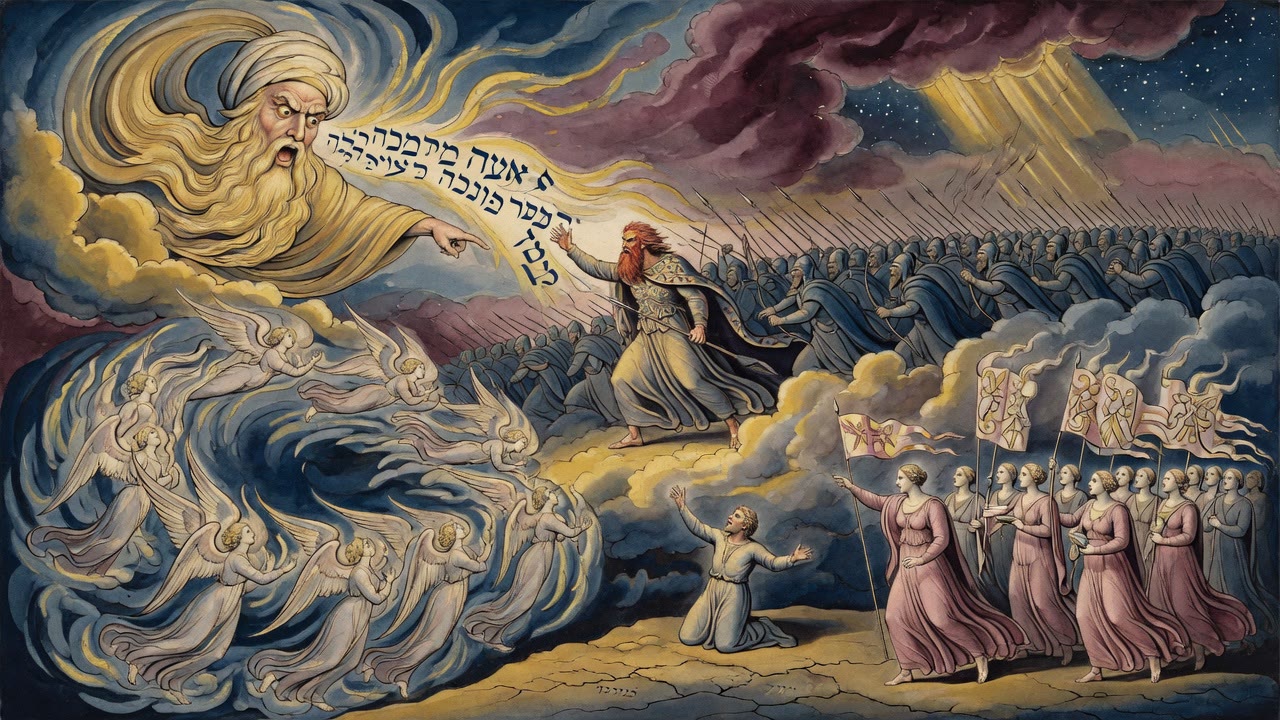
Laban's words rekindled Esau's old fury. Four hundred men marched while Rebekah sent seventy-two retainers, and Jacob named the place Mahanaim for God's host.

Curated by Arthur · Told by Maggid ·
Table of Contents
  1. A Message Like Oil on Embers
  2. Rebekah's Seventy-Two
  3. What the Inheritance Was Always About
  4. Two Camps on a Narrow Night
Laban's Message Woke Esau's Four Hundred for War Click for full size

A Message Like Oil on Embers

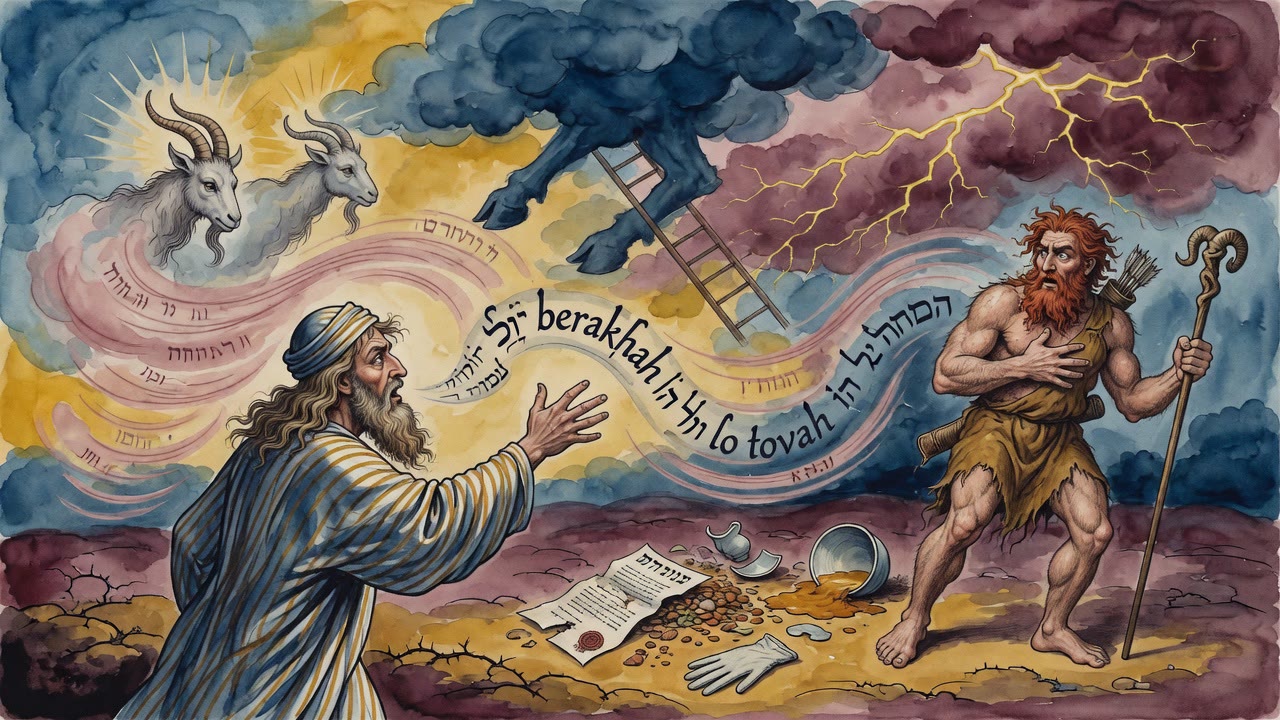
Laban had already cheated Jacob in wages, wives, and speckled flocks. When the long service ended, his words traveled farther than his flocks. The legends say Laban's message to Esau stirred a hatred that had slept without dying. Embers under ash became open flame. Esau did not only remember a birthright sold and a blessing taken. He heard, through Laban's mouth, that the brother who fled was prosperous enough to be worth destroying, and prosperity on a road home can look like an insult to a man who chose the sword.

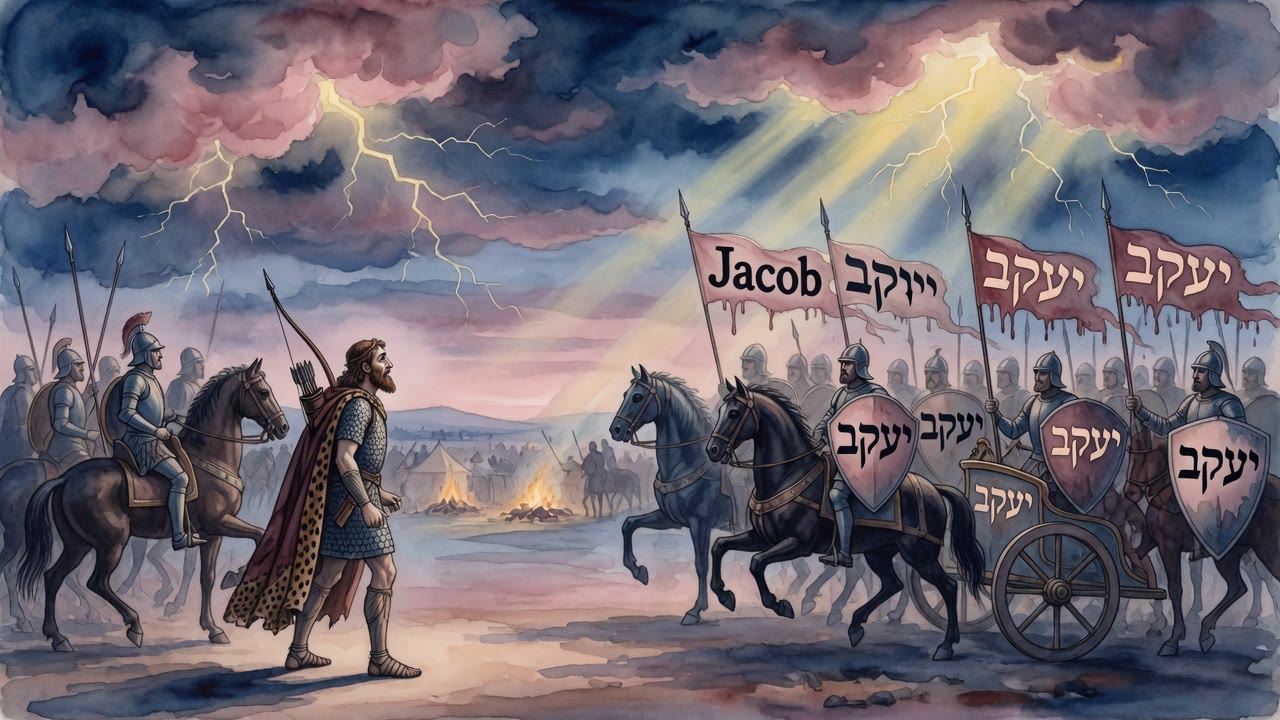
He gathered his household, sixty strong, and three hundred and forty men of Seir. Four hundred in the round number the Torah also knows. He divided them into seven cohorts. His own sixty marched under his son Eliphaz. Horite captains took the other six. The plan was not a duel at dawn between two brothers. It was a harvest of Jacob's people and Jacob's goods, organized with the care of a commander who intended to leave no flock unclaimed.

Rebekah's Seventy-Two

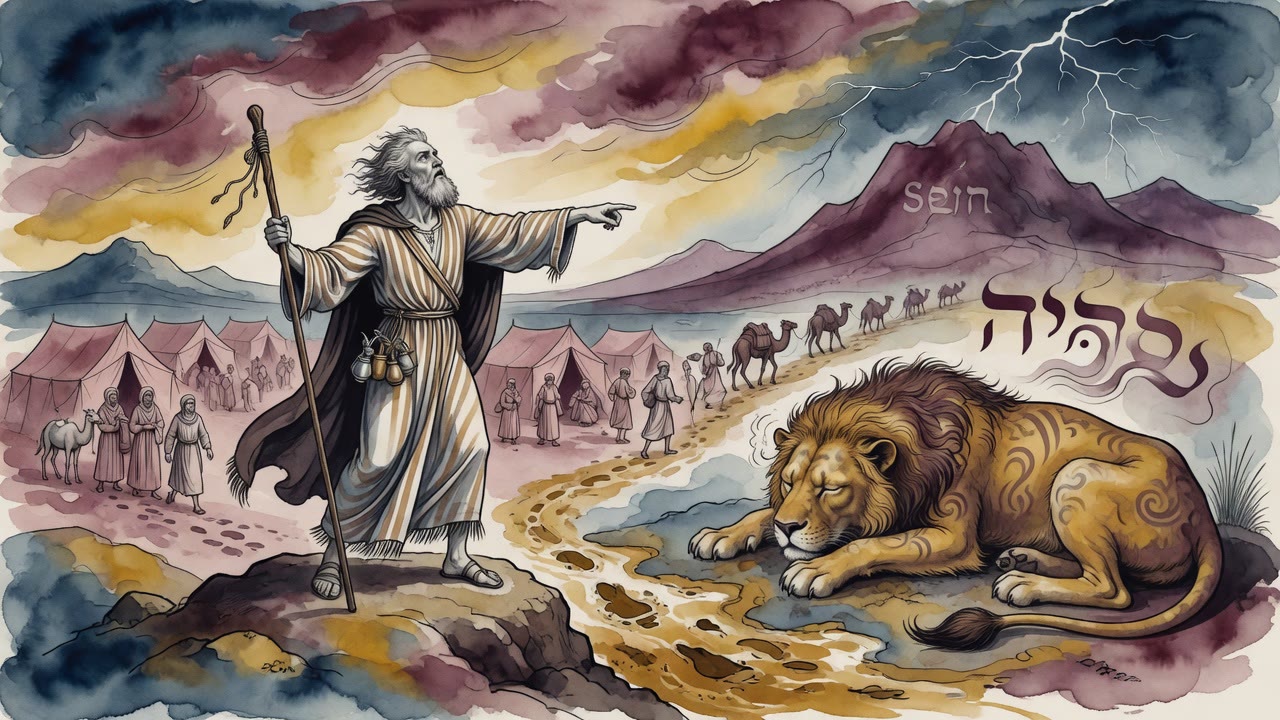
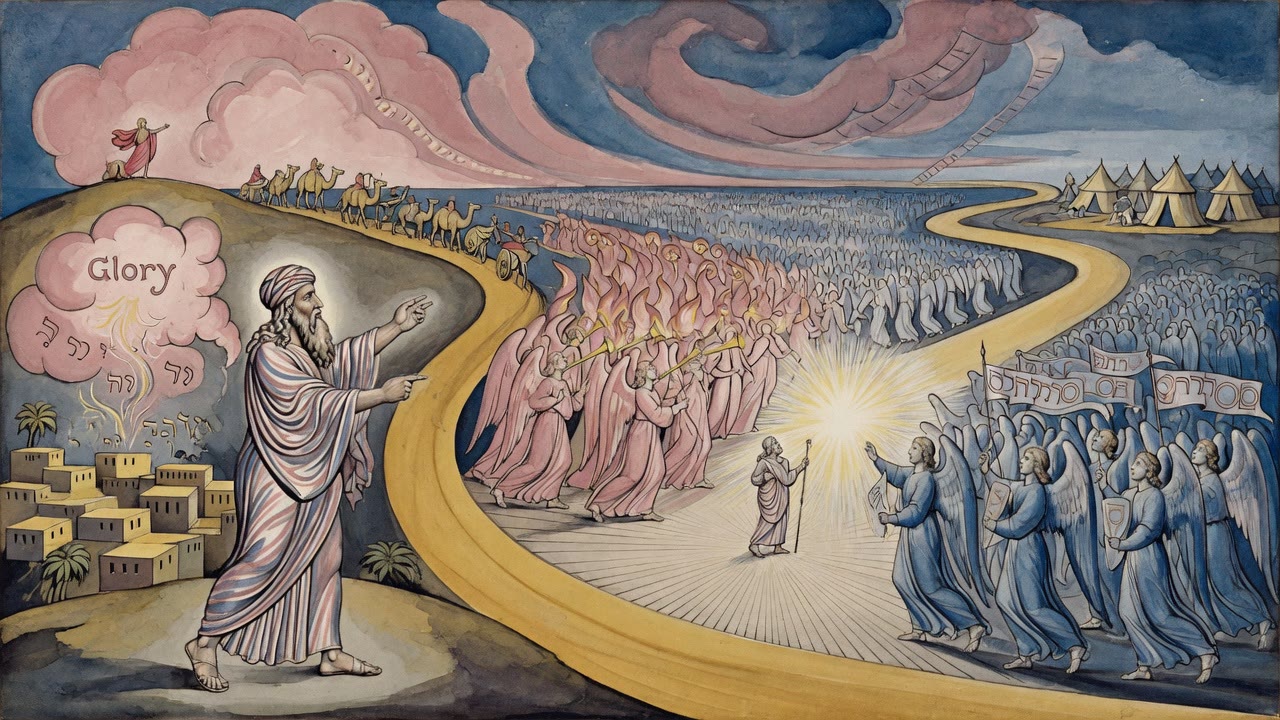
Messengers reached Rebekah while Esau's dust was still rising. She understood speed the way she once understood skins and stew. Before Esau could close the distance, she sent seventy-two retainers from Isaac's household toward Jacob. The mother who had once dressed Jacob for a stolen blessing now dressed the road with living help. Jacob lingered near the Jabbok, the brook whose name means wrestler, when he saw them coming. Joy cracked his fear open. "This is God's helping host!" he cried, and named the place Mahanaim, two camps, a human camp and a camp he read as heaven's reinforcement arriving in dusty cloaks.

The name stuck to the map before the night of the hip and the limp. Help arrived before the angel. The story refuses to separate motherly logistics from divine reinforcement, as if the same mercy could wear both a woman's urgency and a heaven-sent banner.

What the Inheritance Was Always About

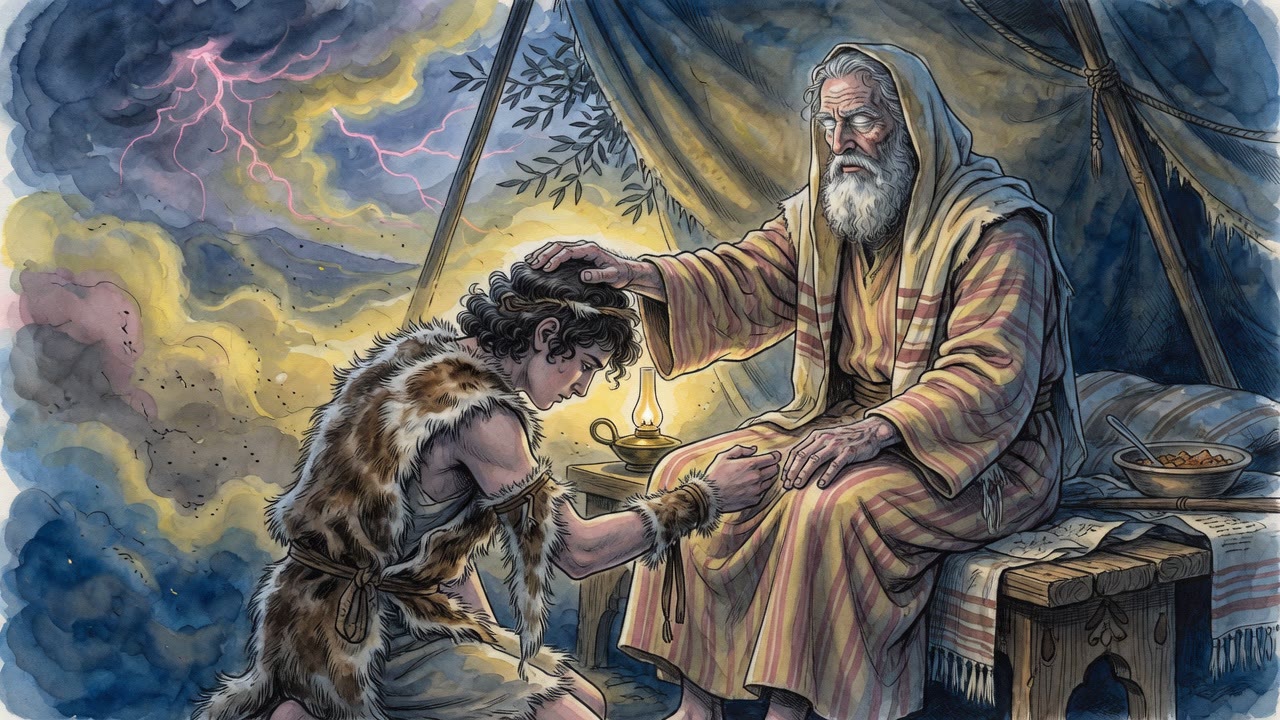
Pirkei de-Rabbi Eliezer remembers another scene after Isaac, when Esau proposed splitting the estate with the elder choosing first. Jacob saw an eye that never filled with riches. He divided the inheritance into two piles. One pile held gold, silver, cattle, every portable wealth a caravan could envy. The other held the Land of Israel and the Cave of Machpelah. Esau took what glittered. Jacob took what buries patriarchs and grows covenant. The sword and the land parted company on purpose, and the choice still shapes who claims what when brothers meet on roads.

Laban's later message tried to reverse that partition by force. If Esau could kill Jacob before the border, the land-choice might become a corpse-choice. Four hundred men were an argument against a birthright already sold and a grave already claimed in the ledgers of heaven if not yet in every human deed.

Two Camps on a Narrow Night

Jacob arranged gifts, divided people, and prepared to bow seven times if bowing could buy a morning. The host he had named at Mahanaim did not make him careless. It made him able to stand without pretending fear was faith. Esau's cohorts still approached. The brook still waited for a wrestler who would limp into dawn. Between Laban's tongue and Rebekah's retainers, the old hatred learned it would not meet an undefended brother walking alone with wives and children and spotted sheep.

Some wars end in embraces that surprise both sides. Some begin in letters from a father-in-law who cannot stand to see a son-in-law leave whole. Jacob's road home ran through both. The four hundred would still need to be faced face to face. The seventy-two had already taught him he was not alone on the bank of the wrestler's stream, and the name Mahanaim remained after the danger passed, a map-word for the night help arrived before the fight.

Laban's tongue had always been a second shepherd's crook, pulling people where flocks could not. He used it on Jacob for twenty years in wages that changed by morning. He used it again on Esau when Jacob finally left, as if the father-in-law could not bear a departure that did not also rekindle an old war. Hatred that sleeps is not dead. It waits for a letter.

Esau's seven cohorts turned family memory into formation marching. Eliphaz at the head of sixty made the threat intimate. Horite captains made it regional. Rebekah's seventy-two answered scale with speed, not with matching hundreds. Mahanaim named the moment Jacob realized help can look like cousins on the road and still be read as heaven's host. The wrestler brook waited ahead. The gifts waited to be arranged. The bows waited to be counted to seven. Before any of that, a mother and a message and a name on a map had already changed the odds.


← All myths
From the tradition

Sources

2 sources

The texts behind this telling. Some cards carry a translation of the source; others are our own retelling of it, and each card says which. Every card links out to the original.

Legends of the Jews 6:166Legends of the Jews

Retold in our words. Read the original at the link below.The Legends of the Jews by Louis Ginzberg (1909) · Public Domain

Our ancestor Jacob certainly did. The story

Remember Laban, Jacob’s less-than-honest father-in-law? Well, his words acted like fuel on a dying fire. The Legends of the Jews, a masterful compilation of rabbinic lore by Louis Ginzberg, tells us that Laban's message to Esau stirred up a long-dormant hatred with a vengeance. Esau, burning with renewed fury, gathered his forces.

Esau amassing his household, sixty strong, along with three hundred and forty inhabitants of Seir. He was ready for war, ready to spill blood. His goal was simple: to destroy Jacob and claim everything he owned. He organized his warriors meticulously, dividing them into seven cohorts. His own division, sixty men strong, was led by his son, Eliphaz. The other six divisions were placed under the command of various Horite leaders. He was leaving nothing to chance.

While Esau was bearing down on Jacob, messengers from Laban arrived at Rebekah’s doorstep with alarming news. Esau, with his four hundred men, was on the warpath, intent on slaughtering Jacob and seizing all his possessions. The urgency was palpable. Rebekah, fearing Esau would strike before Jacob reached safety, sprang into action.

Think about the weight of that responsibility! Rebekah swiftly dispatched seventy-two retainers from Isaac's household to aid Jacob.

Jacob, lingering near the banks of the Jabbok – a brook whose name means "wrestler," foreshadowing a later pivotal event – was overjoyed to see these men approaching. According to Ginzberg, Jacob greeted them with a powerful declaration: "This is God's helping host!" And so, he named the place Mahanaim, meaning "Host" or "Two Camps". (Genesis 32:3)

What does this moment reveal to us? Is it just a thrilling battle scene from the past? Or does it speak to something deeper about the ever-present need for support, for divine intervention, when facing seemingly insurmountable challenges?

Full source
Pirkei DeRabbi Eliezer 38:6Pirkei DeRabbi Eliezer

Retold in our words. Read the original at the link below.Pirke de Rabbi Eliezer, trans. Rabbi Gerald Friedlander, London (1916) · CC-BY

Pirkei DeRabbi Eliezer turns to Kingdom of Isaac of Esau.

Pirkei DeRabbi Eliezer, a fascinating collection of stories and interpretations from the early Middle Ages, gives us a glimpse into one version of that post-Isaac drama. In chapter 38, we find Esau making a proposition to Jacob. He says, in effect: "Let's split everything our father left behind. But since I’m the elder, I get to choose my portion first."

Jacob, according to this account, sees right through Esau. He understands that Esau's greed is insatiable. Like it says in Ecclesiastes (4:8), Esau's "eyes are not satisfied with riches."

So, what does Jacob do? He comes up with a counter-offer. A pretty audacious one, if you ask me. He divides the inheritance into two parts: one part is all the material wealth, the gold and silver, the livestock... everything tangible. The other part? The Land of Israel itself, and the Cave of Machpelah in Hebron. This cave, Me’arat HaMachpelah in Hebrew, is considered the burial place of the patriarchs and matriarchs – a place of immense spiritual significance.

Think about the stakes here. Jacob isn’t just talking about real estate. He’s talking about destiny, about connection to the divine promise made to Abraham.

Esau’s reaction is telling. He doesn't immediately jump at the offer. Instead, he goes to consult with Ishmael in the wilderness, as Genesis (28:9) tells us. Why Ishmael? Perhaps Esau seeks counsel from someone he perceives as sharing a similar fate – someone who also feels overlooked in the ancestral narrative.

Ishmael’s advice is blunt: "The Amorite and the Canaanite are in the land. Jacob trusts in God that he will inherit the land, therefore take all that thy father has left, and Jacob will have nothing." In other words, Ishmael is saying: grab the sure thing. The land is a gamble, a matter of faith. The wealth is tangible, immediate power.

What’s fascinating about this passage in Pirkei DeRabbi Eliezer is what it reveals about the contrasting worldviews of Jacob and Esau. One values material wealth and immediate gratification, while the other prioritizes spiritual inheritance and a connection to the divine promise, even if it means facing uncertainty and challenges. It’s a story of choosing between the here and now, and the promise of something greater to come.

Which choice would you have made?

Full source