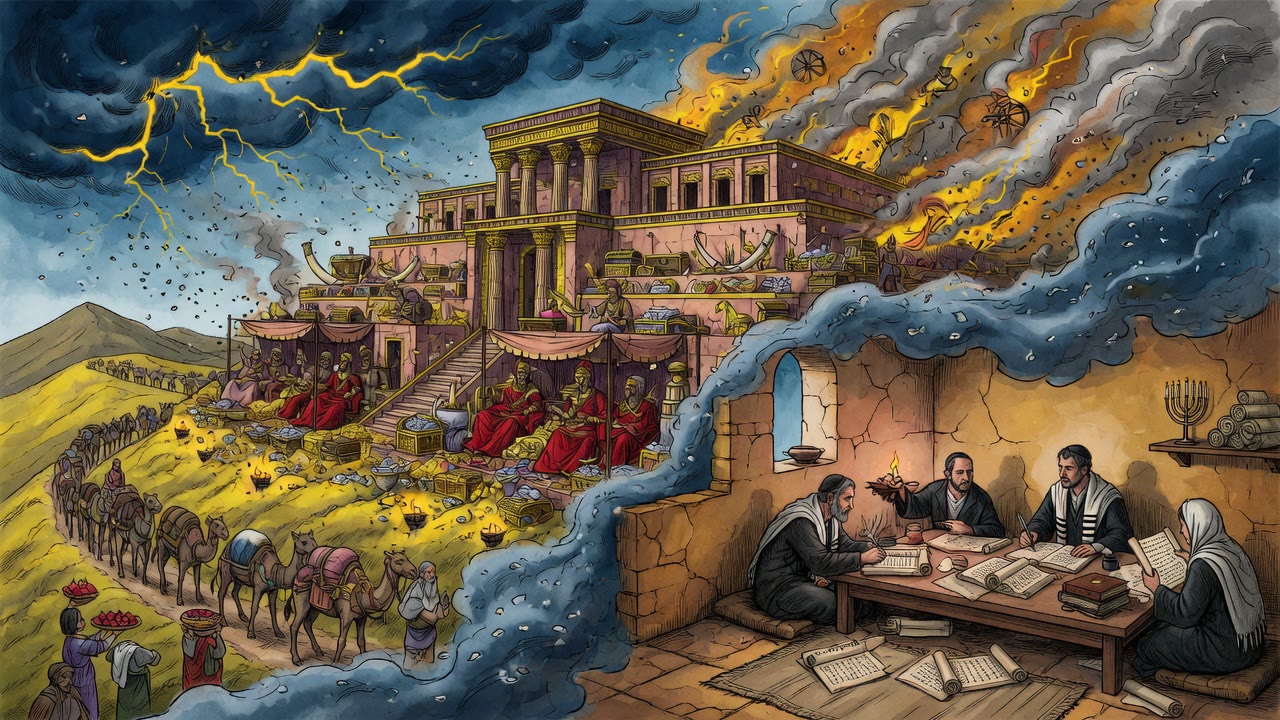
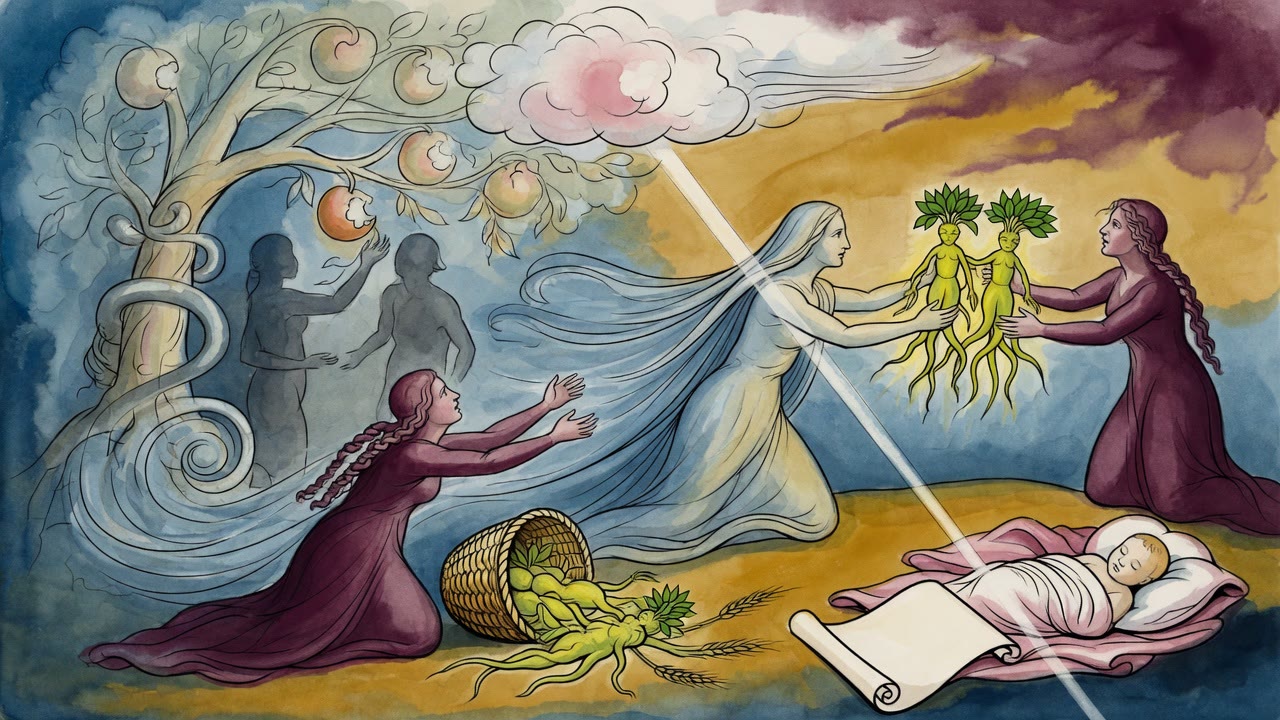
Leah Wept Until the Decree Bent Toward Jacob
Leah walked to the crossroads and asked what kind of man Esau was. A hunter, they said, and a robber. She carried that news home.
Table of Contents
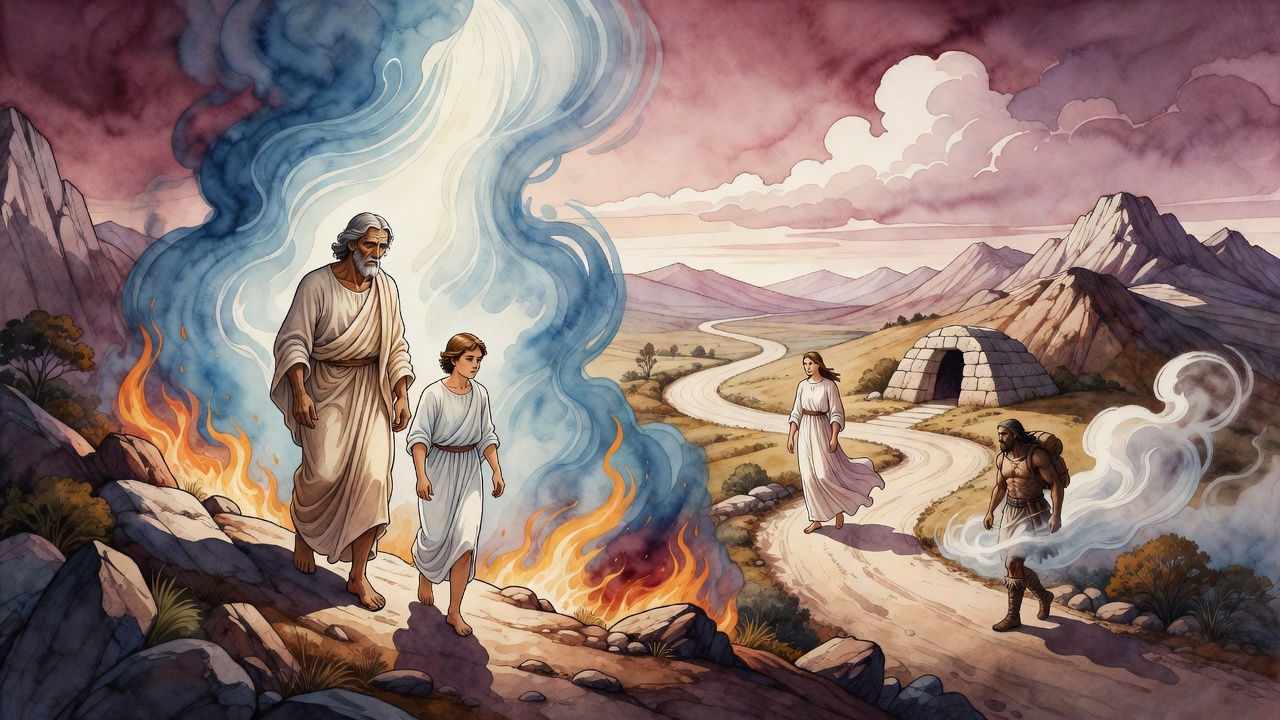
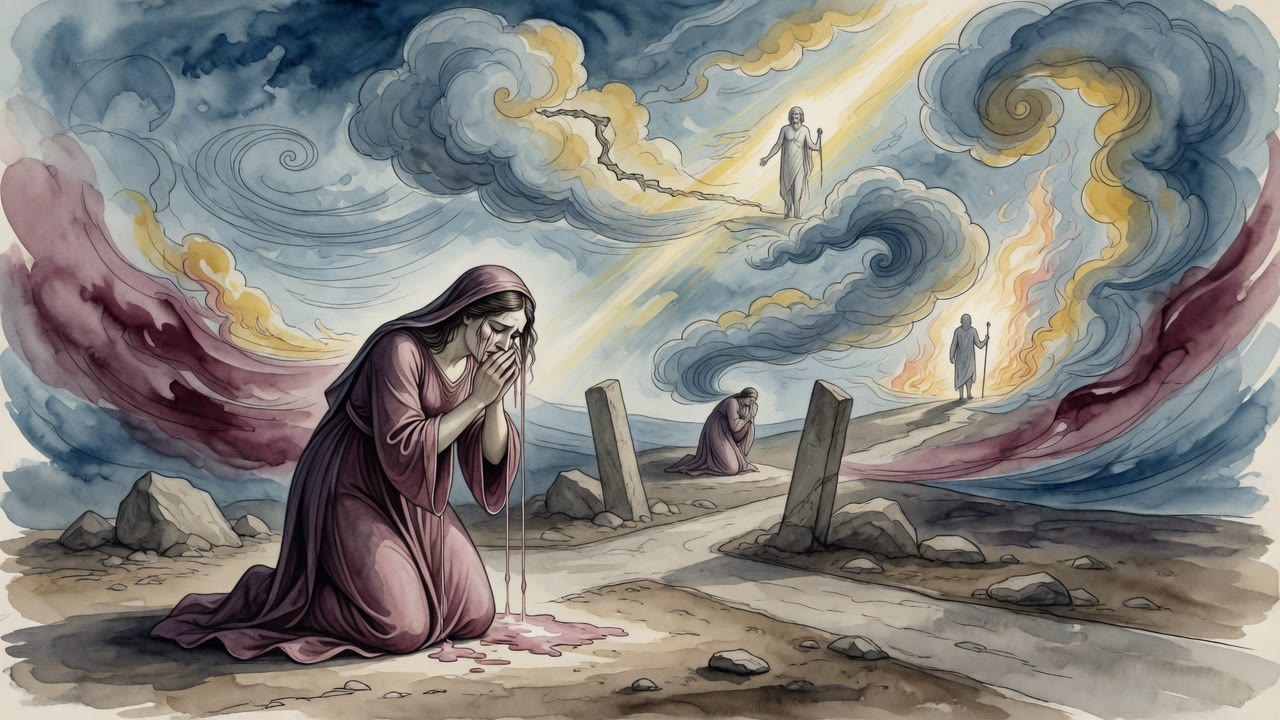
Leah walked to the crossroads and asked strangers one dangerous question: what kind of man is Esau?
 Click for full size
The travelers did not soften their answers. A hunter. A violent man. A robber. A son who had already made his mother's house tremble. The words reached Leah again and again, each report darker than the last, until the road itself became a place of dread.
She had not chosen him. The match had been waiting for her before she was old enough to push it away.
The Elder Daughter for the Elder Son
In Laban's house the arithmetic looked clean. Laban had two daughters. Rebekah had two sons. While the children were still young, brother and sister had agreed by letter: the elder daughter for the elder son, the younger daughter for the younger son. Families love arrangements that sound simple when spoken over messengers. Leah's body would pay for the simplicity.
Rachel was meant for Jacob. Leah was meant for Esau.
No one needed to insult Leah for the sentence to crush her. She was not ugly. She was not lesser in form or stature. The sisters stood equal in beauty, equal in height, equal in the way a face fills a doorway. One comparison followed them anyway. Rachel's beauty filled the eye at once. Leah's eyes told another story. They were tender, weak, worn down, as if the lids themselves had learned how to mourn.
People looked at those eyes and thought they had found a blemish. Leah knew they were looking at evidence.
What Travelers Said of Esau
Day after day she went where news traveled. Crossroads. Wells. Market paths. Men with dust on their sandals had seen Esau. Women carrying jars had heard his name. Shepherds knew which households feared him and which men moved aside when he came near.
Leah asked anyway.
Each answer tightened the decree around her. Esau's hands were stained by violence. Esau's appetite ran ahead of him. Esau belonged to the field, to blood, to whatever could be seized before anyone else claimed it. The elder daughter for the elder son. The phrase became a trap with good family manners.
So Leah cried.
Not one afternoon. Not one frightened prayer and then sleep. She wept until her lashes thinned. She wept until the lashes dropped from the lids. She cried out for one thing: not that she should be made famous, not that she should be loved first, not that Rachel should lose anything, but that she should not fall into the hand of the wicked one.
Tears That Wore the Lids Thin
Heaven heard a prayer that had no ornament.
Leah's tears did not make her prettier. They did something harder. They argued against a settled arrangement. Every household had already placed her. Every whisper had already assigned her future. Her father could count daughters. Rebekah's house could count sons. The village could repeat the formula until it sounded like law.
Her eyes became the battlefield. The decree pressed from one side, her prayer from the other. Tender eyes were not weakness. They were the visible mark of a fight nobody else had bothered to join. Leah's body carried the cost of refusing a fate chosen by other people.
When the turning came, it did not look like rescue at first. It came through Laban's house, through darkness, through a wedding door that should have opened for Rachel.
A Wedding Door Opens in the Dark
Jacob had worked for Rachel. Seven years of labor had moved under her name. Every morning in the fields, every evening with the flock, every day of waiting had pointed toward the younger sister. Rachel had even given Leah the signs Jacob had set, so the elder sister would not be shamed in the dark.
Then night covered the tent.
Leah entered a marriage built from someone else's expectation and her father's design. No harp could make that clean. No feast could hide the dread in it. Jacob woke into anger. Rachel woke into loss. Leah woke as a wife who had escaped Esau and still not been chosen.
Her prayer had saved her from the hunter. It had not handed her an easy life. She stepped out of one terrible future into a tent where love leaned away from her. The household would call her hated, not because she lacked beauty, but because Jacob's heart had already marked another path. She had been spared. She had not been spared pain.
The Unwanted Wife Builds Israel
The next answer came through children.
Leah bore Reuben and named him from being seen. She bore Simeon and named him from being heard. Levi followed. Judah followed. Names rose from her tent like prayers turning into bodies. The woman everyone had placed beside Esau became the mother whose sons would stand at the center of Israel.
Rachel remained beloved. Leah remained the one the future kept entering through. The household never gave her the simple comfort of being first in Jacob's heart. The tribes kept arriving at her door anyway.
The tender eyes had not vanished. They had changed the road before her. A match spoken by relatives, strengthened by gossip, and carried by letters had bent beneath tears. Leah asked not to be given to Esau. She received Jacob, sons, tribes, and a place in the cave where the patriarchs and matriarchs sleep.
The road kept the memory of her questions. Her eyes kept the answer.
← All myths