5 min read

What Happened to Dinah After Her Brothers Destroyed Shechem

The Torah never mentions Dinah again after her brothers' revenge. The rabbis followed her into Egypt and found her daughter there.

Curated by Arthur · Told by Maggid ·
Table of Contents
  1. The Chest Jacob Built
  2. What Happened in Shechem
  3. What Happened After
  4. Asenath Was Dinah's Daughter
  5. The Measure and the Answer

The Chest Jacob Built

Before Shechem ever happened, Jacob had already made a decision about his daughter. When he learned that Esau was marching toward him with four hundred men, Jacob looked at Dinah and felt a father's fear compress into action. What if Esau sees her and wants her? What if he demands her as a wife? Jacob took Dinah and shut her inside a locked chest and hid her where his brother's eyes could not find her.

Heaven was watching. A voice said to Jacob: you have locked your daughter away from your brother. By your life, she will be taken by someone worse. The rabbis preserved this as cause and effect, not punishment exactly but consequence: the hiding did not prevent what it feared. It guaranteed a worse version of it.

Shechem, the prince of Hivites, was worse than Esau.

What Happened in Shechem

The Torah says Dinah went out to see the daughters of the land. The tradition elaborates: while Jacob and his sons sat in the house of study absorbed in Torah, Dinah walked abroad in the city of Shechem to watch the dancing and singing women at a festival. Shechem saw her, and seized her, and violated her.

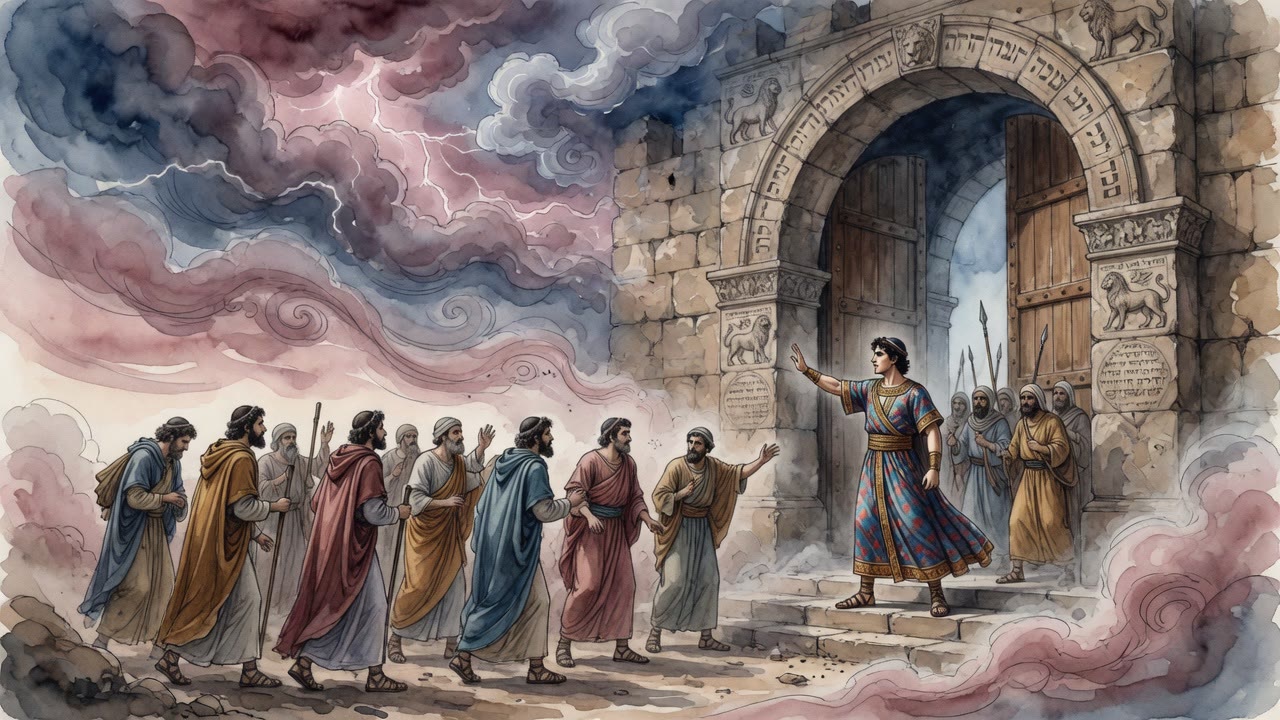
Then he wanted to marry her. His father Hamor came to Jacob to negotiate. Jacob's sons came home from the field. Simeon and Levi, her full brothers from Leah, listened to the proposal and made a counter-proposal: all the men of Shechem must be circumcised. When the men of the city were three days into their recovery and incapacitated with pain, Simeon and Levi entered the city with swords and killed every male. They took Dinah and came out.

Jacob was furious at what they had done. They said: should he have treated our sister like a harlot?

The Torah does not record anyone asking Dinah what she thought.

What Happened After

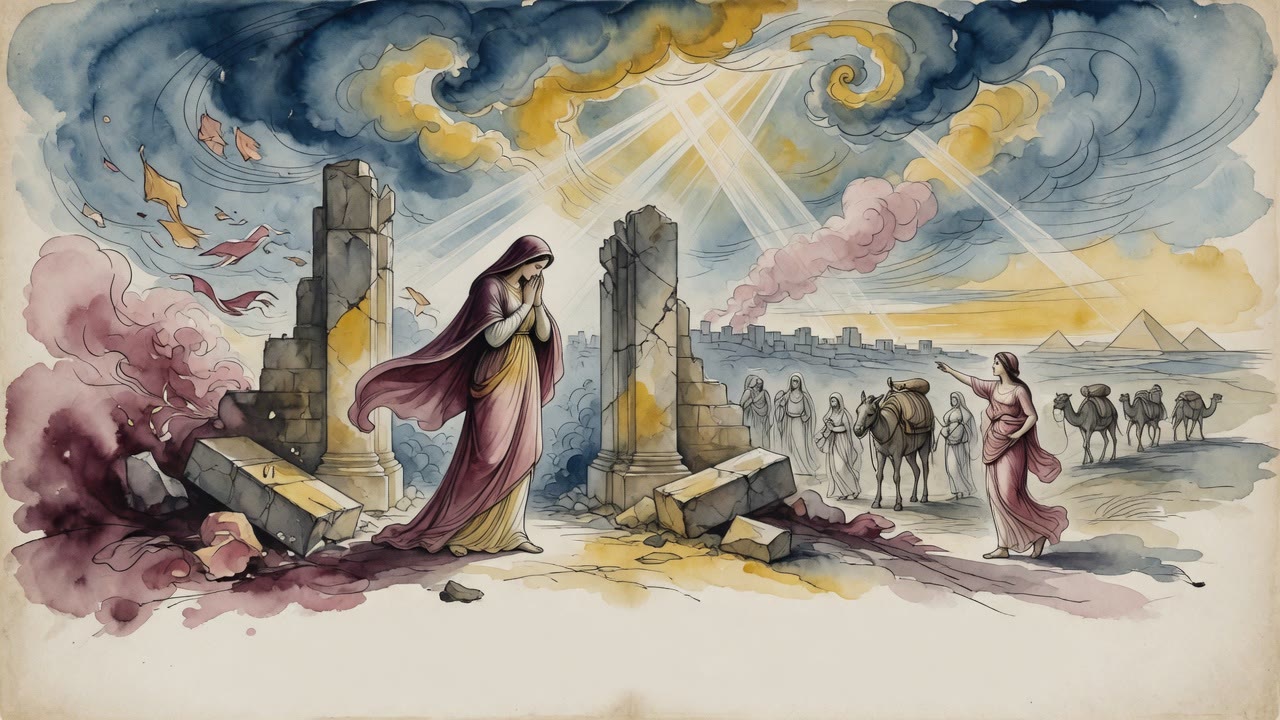
The text goes silent on her. The story moves to Jacob journeying to Bethel, to Rachel's death, to the generations of Esau, to Joseph's story beginning. Dinah disappears from the narrative as completely as if she had never existed.

The tradition could not accept this. The rabbis tracked her through the silences.

One line in Genesis that most readers pass over without stopping became, in the tradition, the doorway to everything. When Joseph rose to power in Egypt and Pharaoh gave him a wife, her name was Asenath, daughter of Poti-phera, priest of On. She appears to be thoroughly Egyptian. But the rabbis looked at the name Asenath and heard a Hebrew root: asun, calamity. And they looked at the timing and the geography and they drew a line.

Asenath Was Dinah's Daughter

Dinah had conceived a child with Shechem. After the massacre, when Simeon and Levi brought their sister home, she was carrying that child. When the girl was born, Jacob's household did not know what to do with her. She was the daughter of violation, the grandchild of the man his sons had killed, born into a family compound still raw with the aftermath of everything that had happened in that city.

The tradition says Jacob wrote the name of God on a golden plate and hung it around the infant's neck and sent her away. Some versions say an angel carried her to Egypt. She was taken to the household of Poti-phera in Heliopolis and raised there as his daughter.

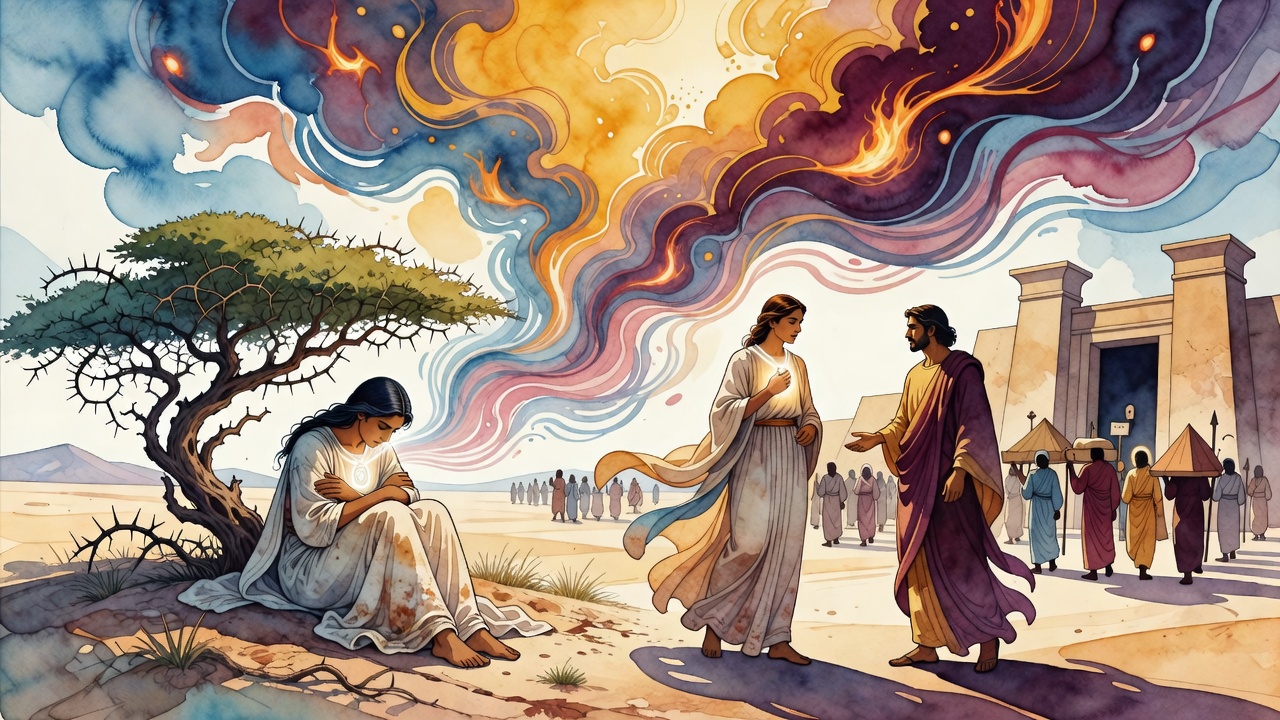
Years later, when Joseph had risen to become second to Pharaoh, Pharaoh chose a wife for him from the Egyptian elite. He chose Asenath, daughter of the priest of On. And Joseph, who did not know, married his niece. The daughter his sister Dinah had conceived in grief and exile came home to the family through the only door that had been left open.

The Measure and the Answer

The rabbis were reading two things simultaneously: the injustice done to Dinah, and the provision that followed it. They did not claim the provision canceled the injustice. They observed that God had arranged things so that the child born from the worst moment of Dinah's life was not simply abandoned or erased. She became someone. She became the mother of Ephraim and Manasseh, the two sons of Joseph who received blessings from Jacob at his deathbed as though they were his own sons, the two tribes who between them inherited the largest portion of the land.

Dinah herself the tradition placed in Egypt too, in her old age, buried there. She had suffered more than the text was willing to record. What the rabbis gave her, in the absence of any further narrative, was lineage: the knowledge that what had been done to her in Shechem had not ended in silence but had produced, across years and geography and suffering, a daughter who came home.


← All myths
From the tradition

Sources

4 sources

The texts this telling draws on, in full. Open a card to read inline, or expand it for a wider, quieter read.

Legends of the Jews 6:214Legends of the Jews

The Legends of the Jews, Louis Ginzberg's vast gathering of rabbinic and midrashic traditions, here expands the brief and painful verse, "And Dinah, the daughter of Leah, whom she had borne to Jacob, went out to see the daughters of the land" (Genesis 34:1). The aggadah sets the scene at a moment of study. While Jacob and his sons were sitting in the house of learning, absorbed in the words of the Torah, Dinah went abroad into the city of Shechem to watch the dancing and singing women.

The tradition adds a detail of malice on the part of Shechem son of Hamor. He had deliberately hired these women to dance and play in the streets in order to draw Dinah out from her father's household, knowing she would be curious to see them. The rabbis observe with sorrow that had she remained at home, nothing would have befallen her. They frame her going out not as a grave sin but as the natural inclination of a young woman to be seen and to see, which left her exposed to a man who had set a snare.

When Shechem caught sight of her, he seized her by main force, young though she was, and violated her in a brutal and beastly fashion. The midrash thus reads the single biblical word "went out" as the hinge of the whole tragedy, and it uses the episode to warn how a moment of unguarded curiosity, exploited by a wicked man, could open the door to violence and to the bloody vengeance that the sons of Jacob would soon take upon the city.

Full source
Legends of the Jews 1:180Legends of the Jews

Sometimes, the most fascinating tales lie just beyond the edges of the well-known ones. Take Joseph, for instance. We know he rose to power in Egypt, but what about his wife, Asenath? Her story is far more intriguing than you might realize.

Her very name, is a whispered history, a clue to a past shrouded in mystery. The ancient texts tell us she wasn't just any Egyptian woman. According to Legends of the Jews, a masterful compilation by Rabbi Louis Ginzberg, Asenath was the daughter of Dinah and Hamor. Dinah, you might remember, was the daughter of Jacob who was infamously abducted and, according to some sources, raped in the city of Shechem.

Asenath was abandoned near the Egyptian border. Can you imagine such a thing? To ensure her true identity wouldn't be lost, Jacob, her grandfather, engraved the story of her birth and parentage on a golden plate and fastened it around her neck. It's a poignant image, isn't it? A tiny baby, marked with her history, adrift in a strange land.

Here's where the story takes another turn. One day, Potiphar, an Egyptian captain, was walking near the city walls with his servants when they heard the cries of a child. They followed the sound and discovered the abandoned baby. At Potiphar's command, they brought her to him. Upon reading the golden plate, he learned her history and decided to adopt her, raising her as his own daughter. What a twist of fate!

Even Asenath's name itself is packed with meaning, a kind of coded biography. The Alef in Asenath, we're told, stands for On, where Potiphar served as a priest. The Samek represents Setirah, meaning "hidden," because she was kept concealed due to her extraordinary beauty. The Nun signifies Nohemet, "weeping," because she wept and entreated to be delivered from the heathen house of Potiphar. And finally, the Taw stands for Tammah, "the perfect one," a tribute to her pious and perfect deeds.

So, the next time you read the story of Joseph in Egypt, remember Asenath. Remember the golden plate, the abandoned baby, and the name that echoes with a hidden past. It reminds us that even in the grand sweep of biblical narratives, there are countless untold stories waiting to be discovered, each one offering a glimpse into the complexities and wonders of human experience. These hidden stories, like Asenath's, enrich our understanding and add layers of depth to the narratives we think we know so well.

Full source
Bereshit Rabbah 80:11Bereshit Rabbah

The ancient rabbis grappled with that very feeling when they looked at the story of Dina, Jacob’s daughter, in the Book of Genesis.

The Torah tells us that Dina went out to visit the women of the land and was then seized and violated by Shechem, son of Hamor the Hivite (Genesis 34). But the story doesn’t end there. It's what happens after that caught the eye of the rabbis in Bereshit Rabbah, the great rabbinic commentary on Genesis. They weren't just focused on the act itself, but on the long, messy aftermath.

“And [he] took Dina,” the Torah says. Rabbi Yudan sees something heartbreaking in those words. He pictures Dina being dragged away, the experience clinging to her, refusing to release its grip. He paints a picture of her brothers leaving with her in this state, in tow, still captive in many ways.

Rav Huna offers a rather blunt, but perhaps insightful, observation. He says, “One who engages in relations with an uncircumcised man, it is difficult to pull away." It’s a stark statement, and you can interpret it in a few ways. Was he speaking literally, about the physical act? Or was he using it as a metaphor for the spiritual and emotional entanglement that can happen in relationships, especially those that cross cultural or religious boundaries?

Then, Rav Huna adds a poignant detail. He imagines Dina crying out, “But I, where will I carry my shame?” It's a raw, vulnerable question echoed in other parts of the Bible (II (Samuel 13:1)3). Where does one put such a profound sense of violation? How does one move forward, carrying such a burden?

the verse says in Bereshit Rabbah, Simeon steps forward and vows to take her, meaning to marry her. But the story takes another dark turn. We read in (Genesis 46:10) about “Shaul, son of the Canaanite woman,” among Simeon’s descendants. The rabbis saw in this a connection. They suggest that Shaul was actually the son of Dina, conceived during her encounter with Shechem.

Rabbi Yehuda offers one interpretation: that Shechem performed deeds like the Canaanites, deeds of harlotry. Rabbi Nehemya suggests that Dina actually engaged with a Hivite, a group included within the broader category of Canaanites.

But then the Rabbis offer a different, almost unsettling, ending. They say that Simeon ultimately took Dina and buried her in the land of Canaan. Buried her? This raises so many questions. Did he marry her and she died? Or…did something more tragic occur? The text leaves it chillingly ambiguous.

These rabbis, wrestling with the implications of Dina's story, weren't just interested in the plot points. They were searching for meaning, for understanding the complexities of trauma, shame, and the lasting impact of a single, devastating act. They saw it not just as a historical event, but as a reflection of the human condition.

So, what do we take away from this? Maybe it’s a reminder that the consequences of violence ripple outwards, touching not only the victim but also their family and community. Maybe it’s a call to acknowledge the lingering pain and shame that can haunt individuals and societies long after the initial event. And perhaps, most importantly, it’s a challenge to confront the uncomfortable, unresolved questions that these ancient stories continue to pose.

Full source
Midrash Tanchuma Buber, Vayishlach 19:2Midrash Tanchuma Buber, Vayishlach

(Genesis 34:2:) "AND HE TOOK HER, AND LAY WITH HER, AND AFFLICTED HER." And on account of what sin did the uncircumcised one come upon her? It is written (Job 6:14): "TO HIM WHO IS DESPONDENT, KINDNESS IS DUE FROM HIS NEIGHBOR, EVEN IF HE FORSAKES THE FEAR OF the Almighty." Rather, at the time when our father Jacob was coming and the tribes were with him, Dinah was with him. When the messengers came and said to him (Genesis 32:7): "WE CAME TO YOUR BROTHER, TO ESAU," Jacob took Dinah and placed her in a chest, so that Esau should not see her and take her for a wife. The Holy One, blessed be He, said to him: You withheld her from him. By your life, she is destined for an uncircumcised man! This is what is written (Job 6:14): "TO HIM WHO IS DESPONDENT, KINDNESS IS DUE FROM HIS NEIGHBOR." Had she been married to Esau, perhaps she would have brought him under the wings of the Divine Presence. When Job took her, did she not bring him under the wings of the Divine Presence? Therefore, because you withheld her, behold, the son of a cursed one has come against her, as it is written (Genesis 34:2): "AND SHECHEM THE SON OF HAMOR SAW HER."

Full source