Leaven Still Waited When the Passover Knife Rose
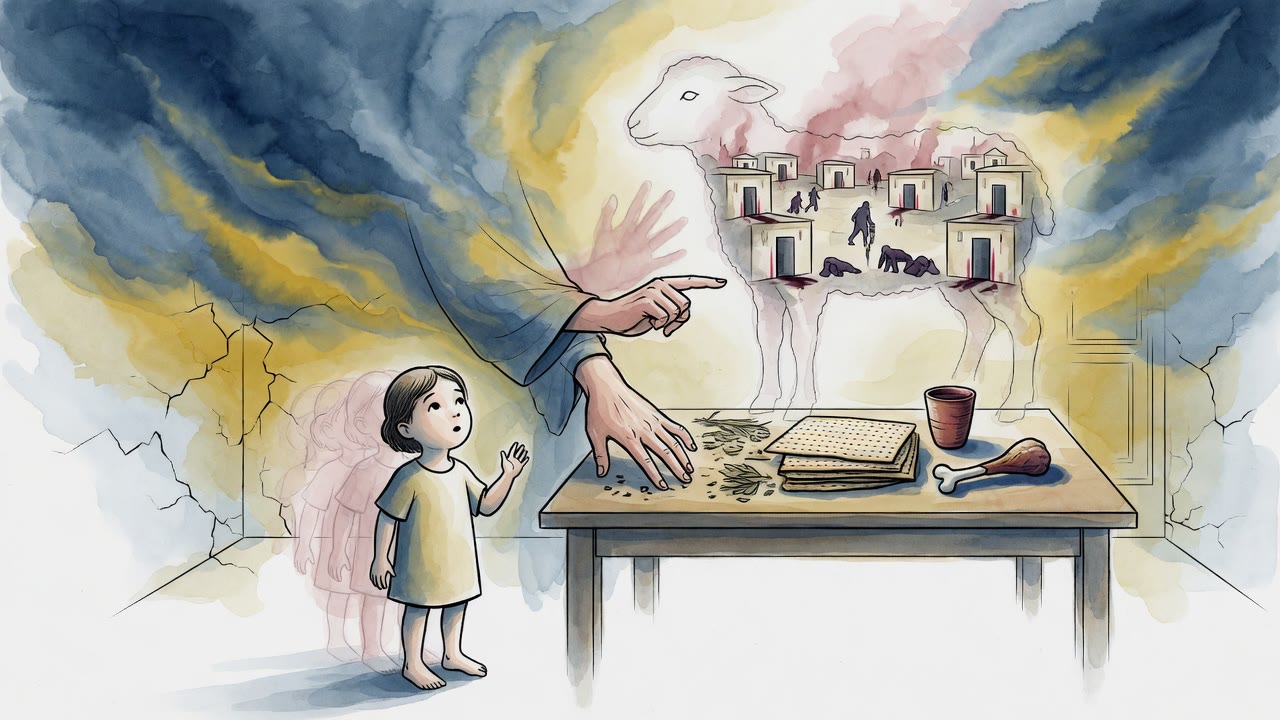
A jar of old dough sat in the corner of the house. The lamb hung ready, but no one could cut its throat until the last crumbs were burned.
Table of Contents
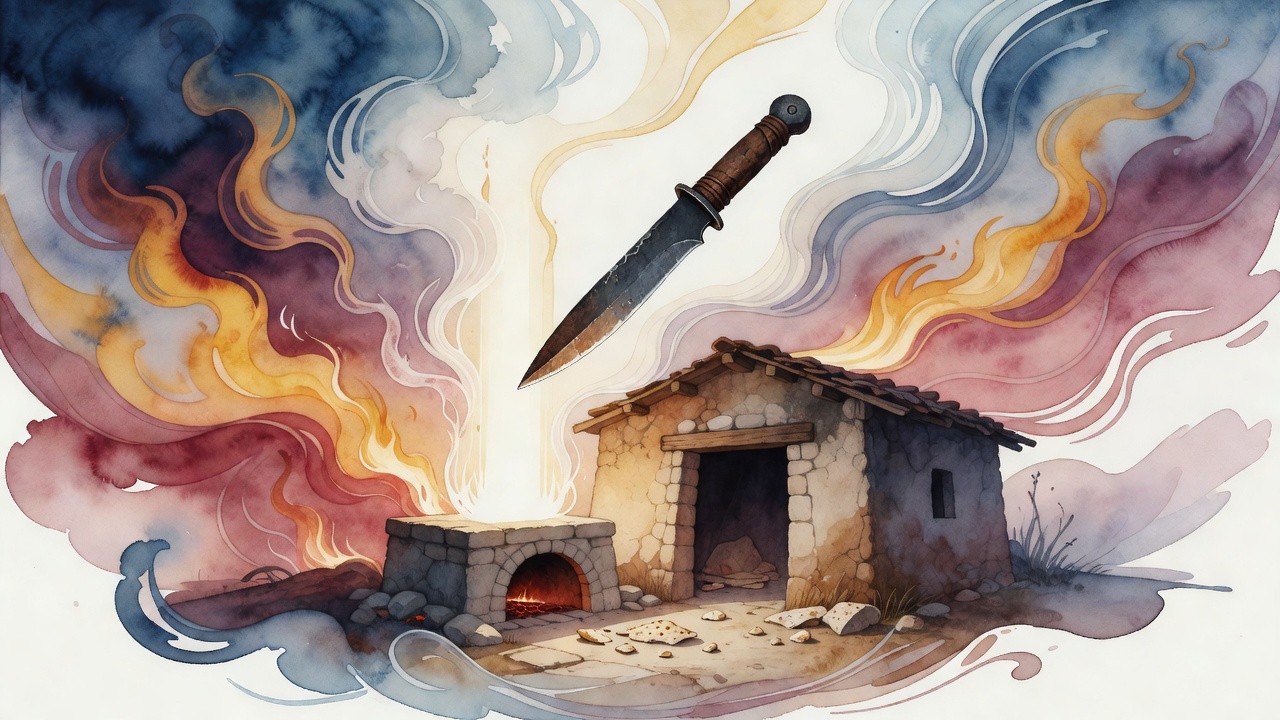
The lamb hung ready, and the knife did not fall. In the corner of the room a clay jar still breathed the sour of old dough. Rabbi Yishmael's reading of the verse stood between the blade and the throat. You shall not offer the blood of My sacrifice with leavened bread. While leaven remained in possession, the Passover blood was not allowed to open.
 Click for full size
Blood and Leaven Must Not Overlap
A child pointed at the jar. A woman flushed. The father of the house felt the whole festival tilt on a handful of crumbs he had sworn were already gone.
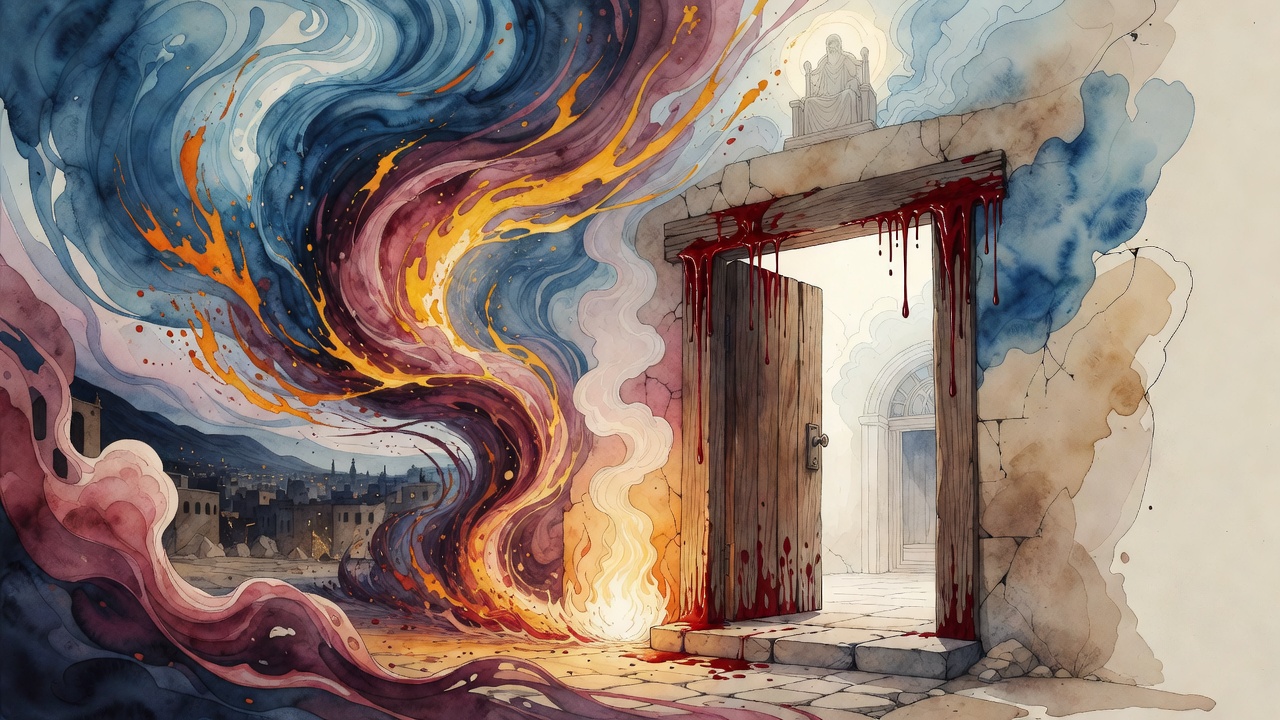
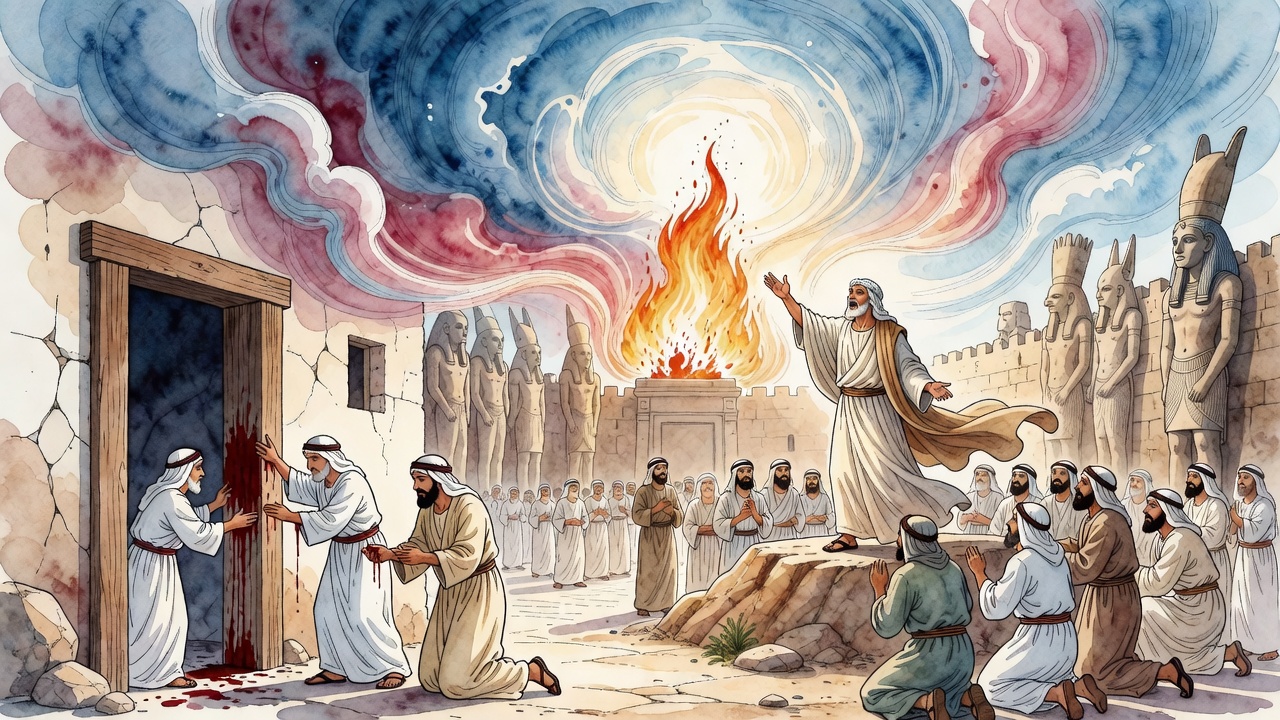
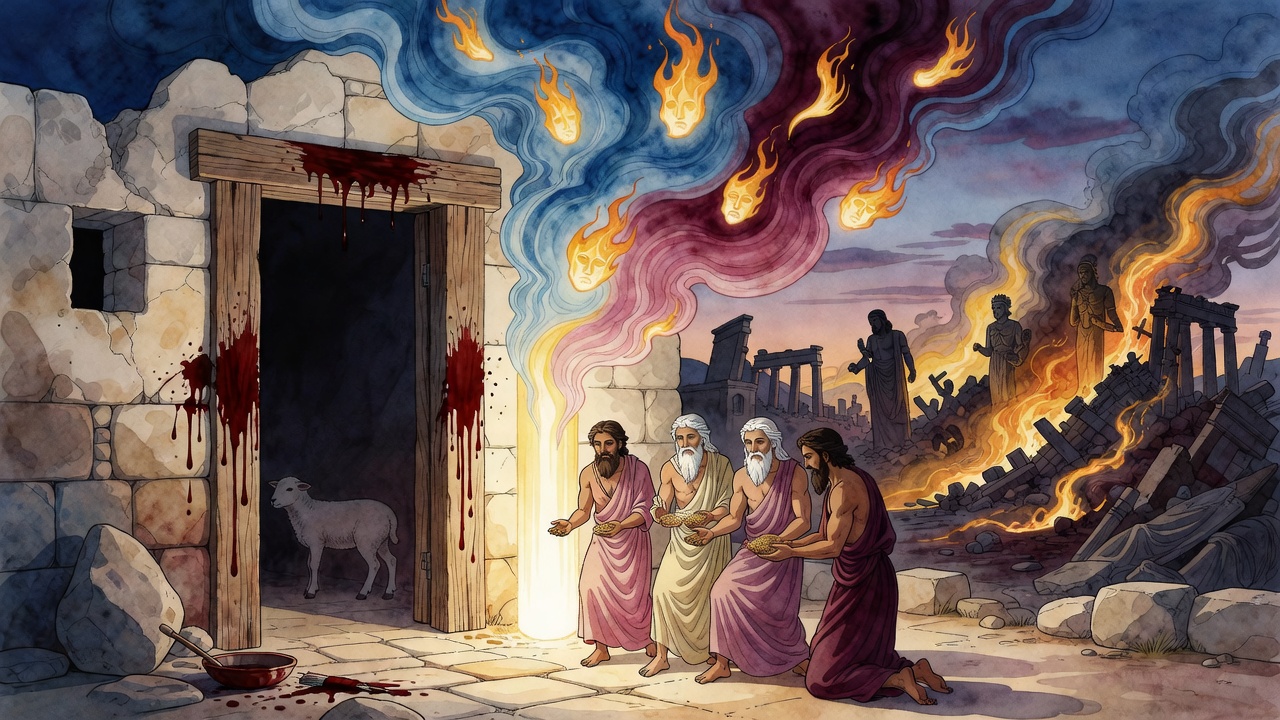
The timing was not etiquette. It was a border. Egypt's night had once demanded a clean house and a marked door in the same breath. Now the law refused to let the offering's blood and the household's leaven share a clock. Slaughter while leaven remains, and you have mixed the story of freedom with the story of what must be left behind.
They burned what could burn. Rabbi Yehudah wanted fire for leaven the way leftover sacrificial meat is ordered to burn, a chain of inferences that made flame the first answer. Others allowed crumbling, scattering, nullifying, so long as the leaven was gone as property and power. Argument or not, this house chose heat. The jar's contents blackened.
The child coughed and asked if God hated bread. The mother said God hated unfinished exits. Only then did the knife remember its job.
Roasted by Fire, Not by Almost-Fire
The baker next door had a clever oven. He heated the walls until they glowed, raked out every coal, and offered the residual heat as if it were flame's cousin. Rav Asi, in the name of Rabbi Yochanan, would not buy the cousin. "Roasted by fire" means fire, the doubled phrase in Scripture demanding the thing itself, not the memory of heat clinging to clay.
Coals under cut pieces could count, for a glowing coal is still fire's body. A swept oven with only stored warmth was a story about fire, not fire. The Pesach lamb was not to be told a story. It was to meet flame raw, not softened first like something boiled and finished for comfort.
No metal spit. No grill pretending to be pure. The fire itself had to do the work, the way the Holy One had done the work in Egypt without a middleman empire. The father carried live coals with tongs that shook. He would not be caught serving almost-redemption to guests who had come for the real night.
Fat began to hiss. Someone said the smell was older than their street. Someone else said it was as old as the first hurried exit, and then went quiet because haste is hard to joke about when your own house almost failed the clock.
The House That Ate as One
They ate in one company, in the houses marked for the meal, the plural and singular of Scripture teaching both the protected dwelling and the gathered group. A man could not wander the night with meat in his hand as if freedom were a private snack. The lamb bound people to a room and to each other.
Outside, residual heat still radiated from ovens that had been almost enough. Inside, real flame worked the meat without apology. Children watched the surface darken and asked why crumbs and coals mattered so much. The father, who had almost failed both tests, did not give a speech. He pointed at the doorpost memory and at the fire.
A guest from two streets over arrived late and was folded into the company without making a second house of the meal. The law's "one group" felt, for an hour, like kindness rather than restriction.
When the Knife Finally Fell
Earlier, when the cut finally came, it was clean. Blood moved where blood was allowed to move. Leaven was ash. Fire was fire. The meal that followed tasted of haste and herbs and a law that had refused shortcuts.
Someone at the table said the name of Egypt softly, not as tourism, as warning. A people that lets almost-fire and leftover dough define its night will wake up still owned. A people that waits for the real alignment wakes up free and slightly scorched, which is the correct skin for the story.
The jar sat empty in the corner, black-mouthed, useful again only as a reminder that the knife has a schedule stricter than hunger. The father washed his hands twice. He could still smell the burned dough under the roasted meat.
At the door, as guests left, he checked the hinges as if leaven could hide in wood. It could not. He checked anyway. Freedom, once nearly spoiled by crumbs, makes a man thorough.
← All myths