Levi ben Sisi Faced Bandits With a Torah Scroll
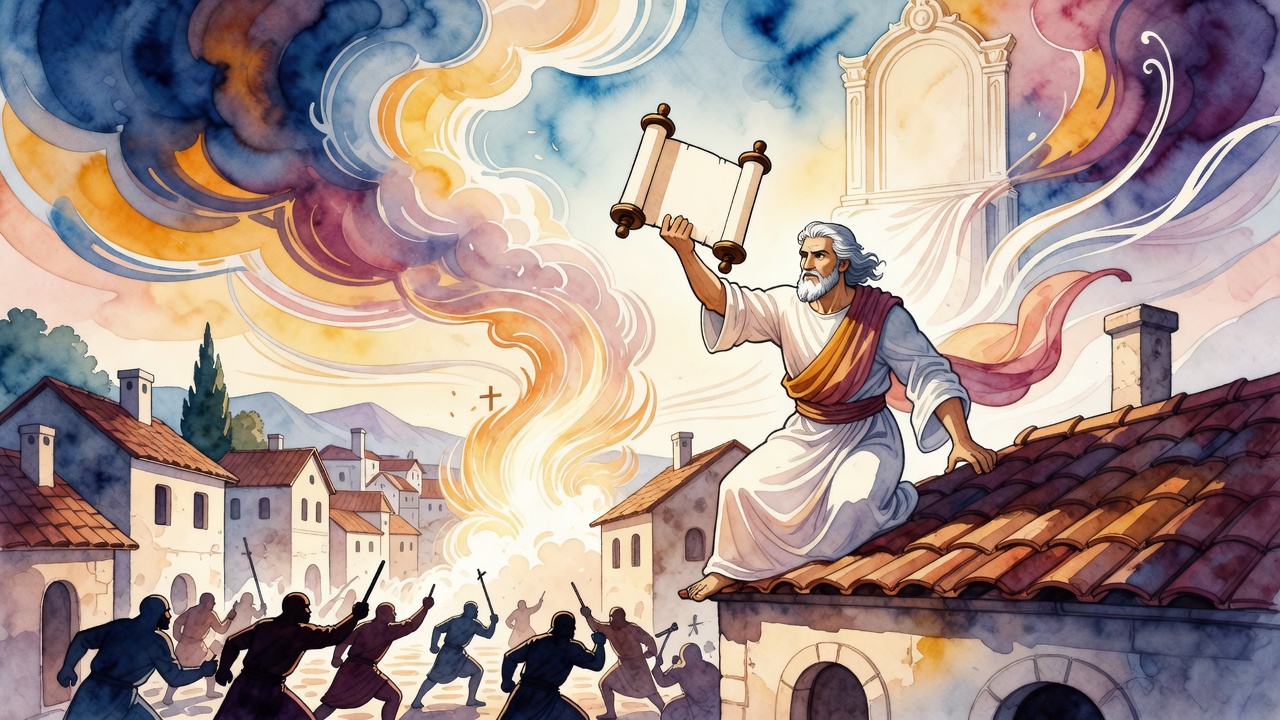
Raiders entered the town. Levi climbed to the roof with a Torah scroll and staked his life on never having dropped a word of its practice.
Table of Contents
 Click for full size
Raiders in the Street
Raiders marched into Levi ben Sisi's town with the confidence of men who had already counted the spoils. Doors shut. Children were pulled inside. The air filled with the sound of boots that did not care whose threshold they crossed.
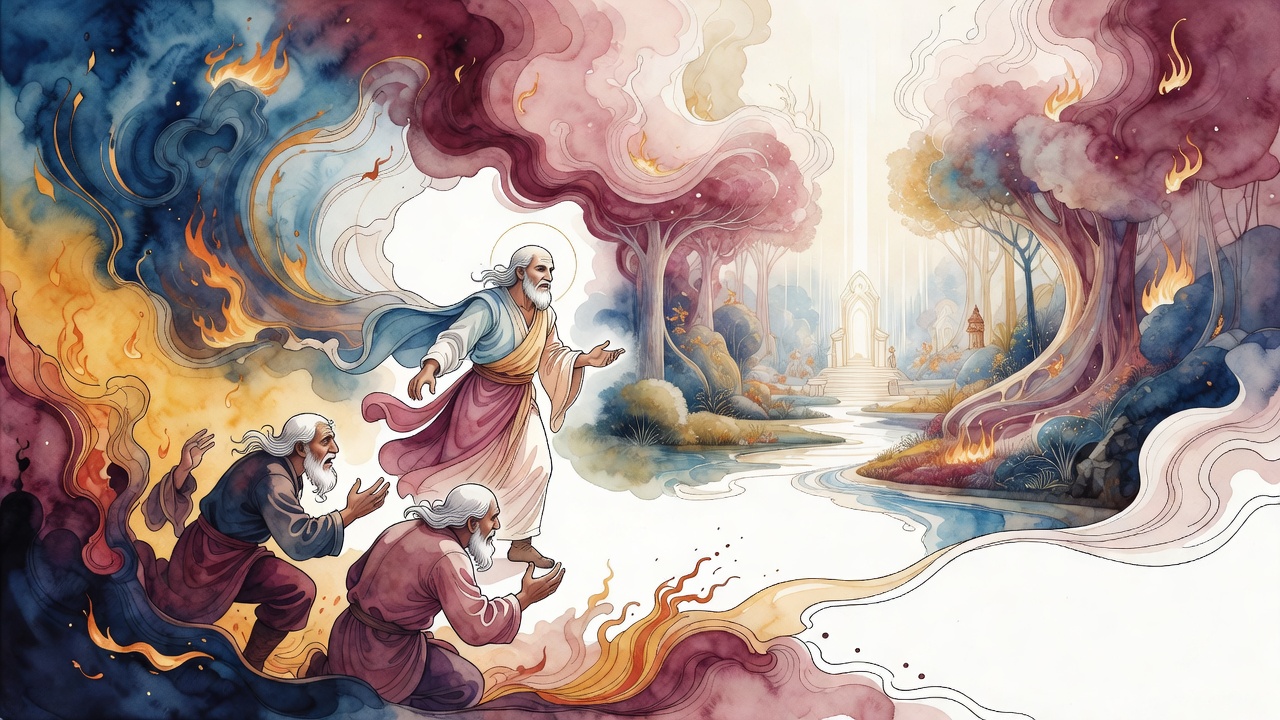
Levi ben Sisi climbed to the roof. In his arms he carried a Torah scroll, not a sword. He prayed like a man putting his whole life on one scale. Master of the worlds, if I have ever let a single word of this scroll slip from my practice, let the bandits prevail. If not, let them leave.
The raiders were searched for and simply could not be found. Integrity with the text became the town's wall. His own kept words turned into vanished enemies.
The Student's Withered Hand
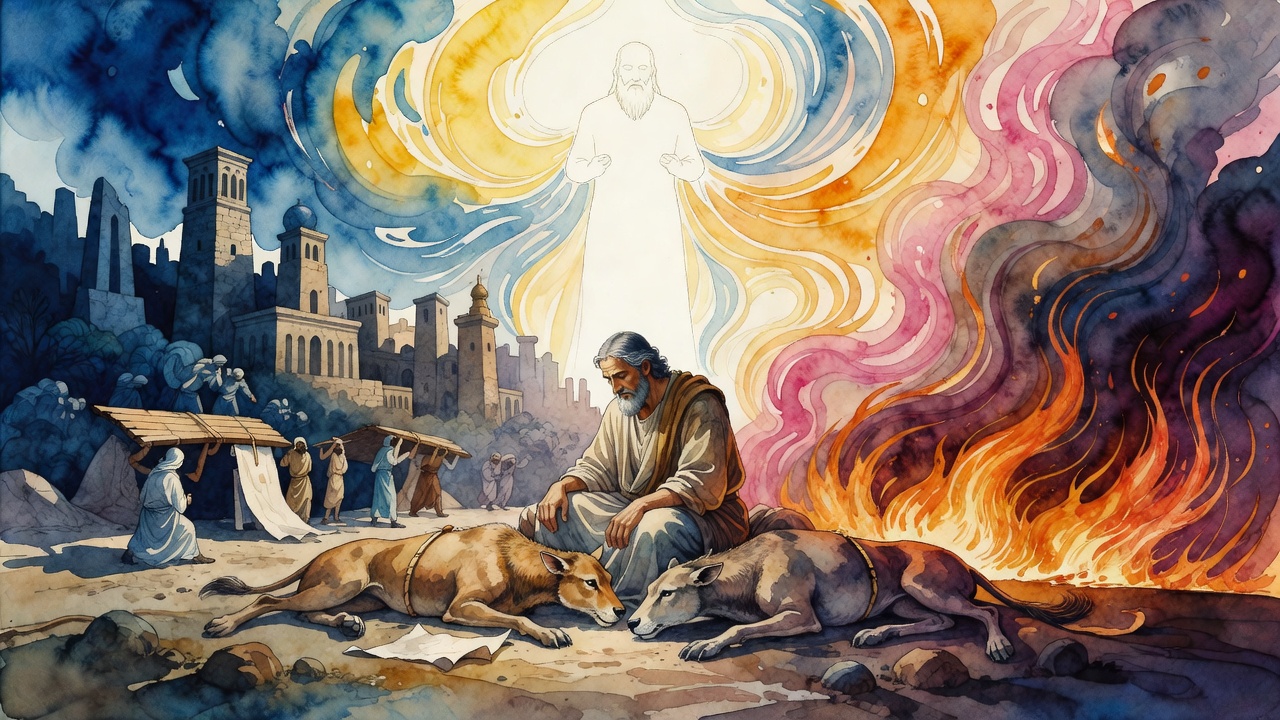
His student tried the same prayer when danger returned. The bandits left, but the student's right hand withered, a sign that he was not entirely clean. Heaven answered the petition and marked the petitioner.
The student's student tried it again. Now nothing worked the way the first miracle had worked. The hand stayed whole. The bandits stayed too. The sages drew a hard lesson. A fool struck by a blow does not even feel it. Dead flesh feels no scalpel. Some people no longer register the warning meant to wake them.
The roof that had once held a clean man and a scroll became a measuring stick for later generations. Same words. Different insides. Different outcomes.
Words That Failed and Words That Guard
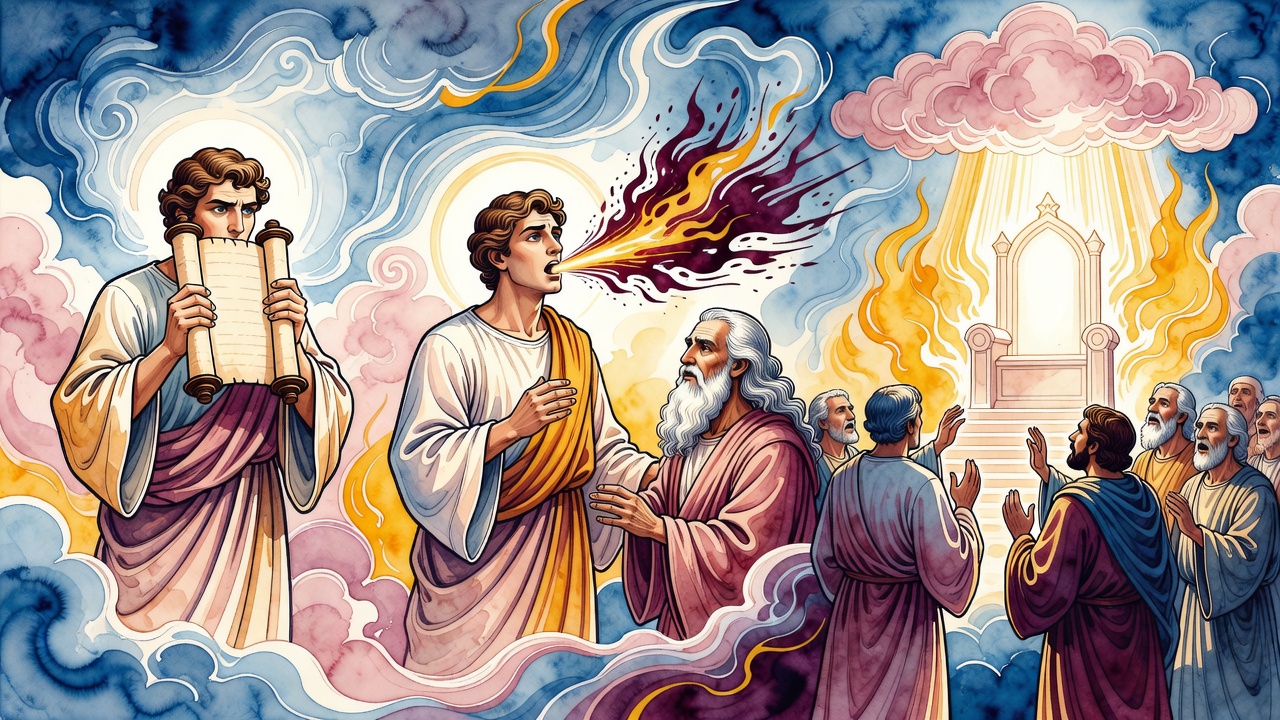
The prophet says, Take words with you when you return to God. Rabbi Yudah heard a warning in it. Words alone failed at Sinai, where the people flattered Heaven with their mouths even as their hearts lied. Rabbi Nechemyah heard hope. Bring people of substance with you, good readers and good teachers. He named Levi ben Sisi and his circle as the model.
The story of the roof is not a magic trick. It is the midrash's way of saying that practiced words have weight. Flattery evaporates when raiders arrive. A life that has not dropped a line of the scroll can stand where weapons fail.
Scarlet Against the Snow
Proverbs praises the woman who does not fear the snow, for all her household is clothed in scarlet. Chizkiyah describes the sentence of the wicked in Gehinnom (the place of punishment after death): a full year, half in scorching heat and half in bitter cold. God first afflicts them with an itch and casts them into fire, and they cry, "So this is God's Gehinnom (the realm of judgment after death)!" Then He drags them into snow, and they moan, "And this is God's cold!" Their sound moves from a sigh to pure wailing, from "ah" to "woe."
One might fear Israel faces the same frozen sentence. Proverbs answers. This household does not fear the snow, because it is clothed in scarlet, and the word can be read as "twos," doubled mitzvot (commandments) that warm and shield.
Circumcision and its uncovering. The fringes of the tzitzit and the tefillin (the leather prayer boxes bound on arm and head). The Torah's emphatic doubled forms: you shall surely give the freed servant a gift, surely give to the poor, surely open your hand, surely tithe. Each doubled command is another layer against the cold of judgment.
Warmth That Is Not Fabric
Levi's scroll on the roof and the household in scarlet are the same craft under different weather. One faces bandits. One faces the snow of Gehinnom. Both depend on mitzvot that have been worn, not merely praised.
A withered hand is a mercy compared with dead flesh that feels nothing. The midrash would rather mark a student than leave him unfeeling. The sea of return stays open, but the roof still asks whether the words you bring have been lived.
When the next raid comes, the question is not whether you can recite the prayer. It is whether the scroll in your arms has already been practiced in the quiet years, when no one was watching but Heaven.
When the Warning Goes Numb
The sages' hardest line is not about bandits. It is about flesh that no longer feels the scalpel. A fool struck by a blow does not register the hit meant to wake him. The student's student kept a whole hand and a town still full of raiders. Success without cleansing is not success. It is numbness wearing the costume of safety.
Levi's prayer worked because practice had already been happening in private years. The scroll on the roof was only the public edge of a life that had not dropped a word. His student reached for the same edge with a life still mixed. Heaven saved the town and marked the arm. The next generation reached with less and received less.
Scarlet mitzvot against Gehinnom's snow are the same logic stretched across judgment rather than raid. Doubled commands are not decoration. They are layers. A household that has worn them does not fear the cold the way a bare household must. The midrash is not selling magic cloth. It is describing a life insulated by deeds that come in pairs and stay on the body.
Take words with you, the prophet said. Levi took a whole scroll and a record that matched it. Words without that record are the flattery that failed at Sinai. Words with that record can empty a street of raiders and warm a soul against a year of heat and ice.
← All myths