7 min read

An Angel Gave Levi a Sword and He Told No One for a Century

An angel handed Levi a sword in a dream. He woke on the mountainside, found a shield of brass in the grass, and told nobody for the rest of his life.

Curated by Arthur · Told by Maggid ·
Table of Contents
  1. The Sheep at Abel-Maul
  2. The Angel Put a Sword in His Hands
  3. The Shield in the Grass
  4. Seven Men in White at Bethel
  5. The Last Hour of a Very Old Man
An Angel Gave Levi a Sword and He Told No One for a Century Click for full size

The Sheep at Abel-Maul

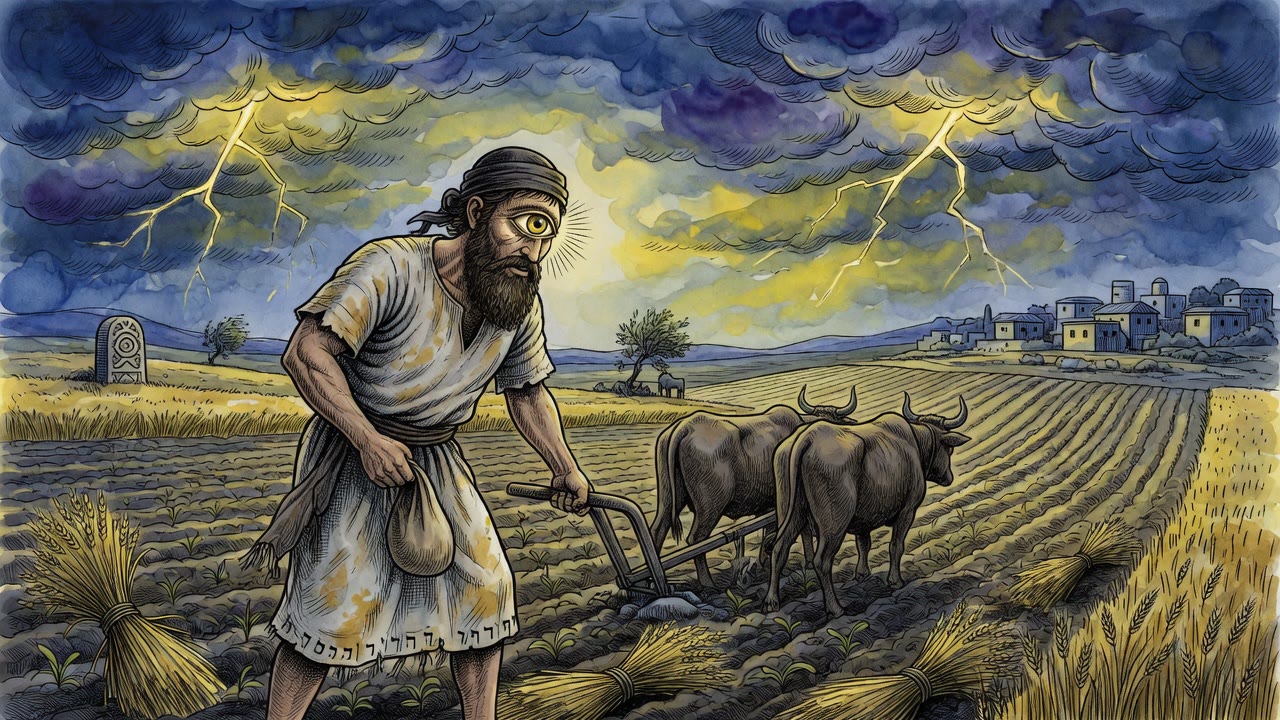
Levi was eighteen and watching his father's flocks at Abel-Maul when the grief came down on him.

He had been looking at the world too clearly for weeks. Wrongdoing had built itself walls. Lawlessness sat up on the towers like a garrison. He prayed on the hillside to be pulled out of it, and then sleep took him where he stood, and he was standing on a high mountain he had never climbed, and the sky came apart over his head.

A voice said, "Levi, enter."

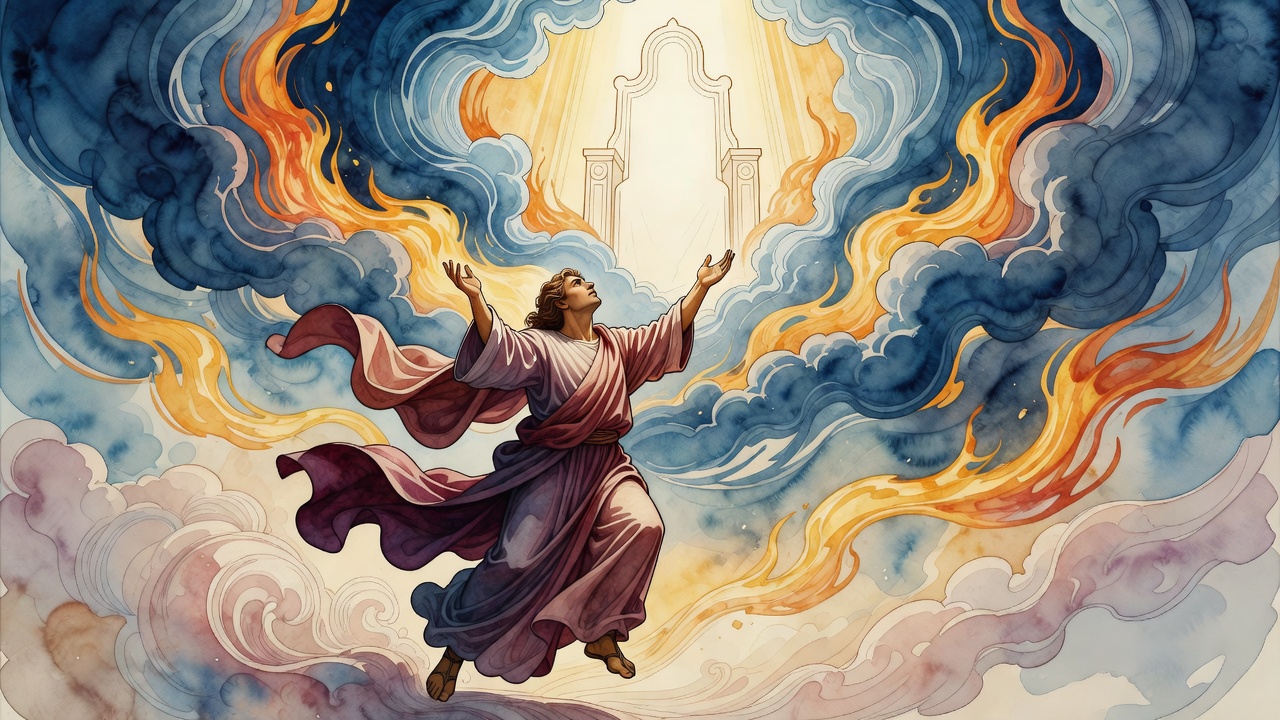
He went in. The first heaven had a great sea hanging in it over nothing at all. The second was brighter than any morning he had ever worked through, lit from no direction he could find, and he asked the angel beside him why. "Do not marvel at this," the angel said. "You will see a heaven brighter than this one, and when you have climbed to it you will stand near the Lord and be his minister."

The Angel Put a Sword in His Hands

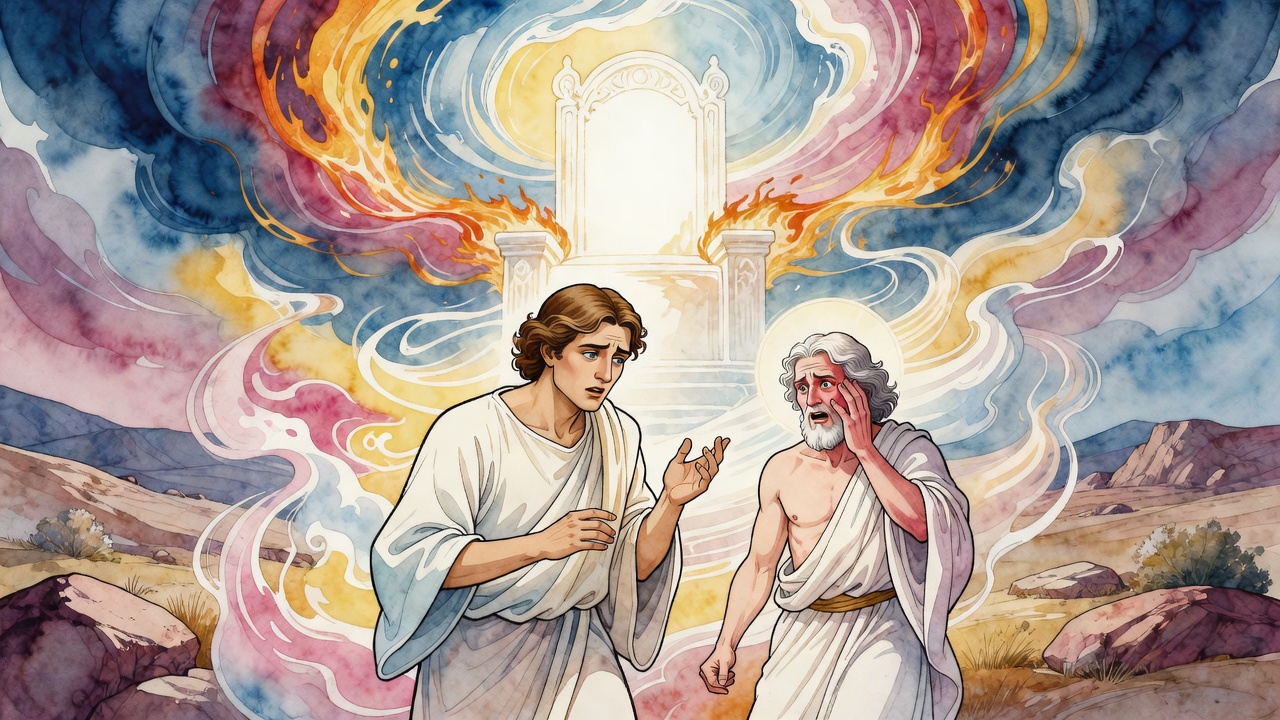
The gates opened on a temple, and on a throne of glory sat the Most High, who gave him the priesthood and the blessings that went with it.

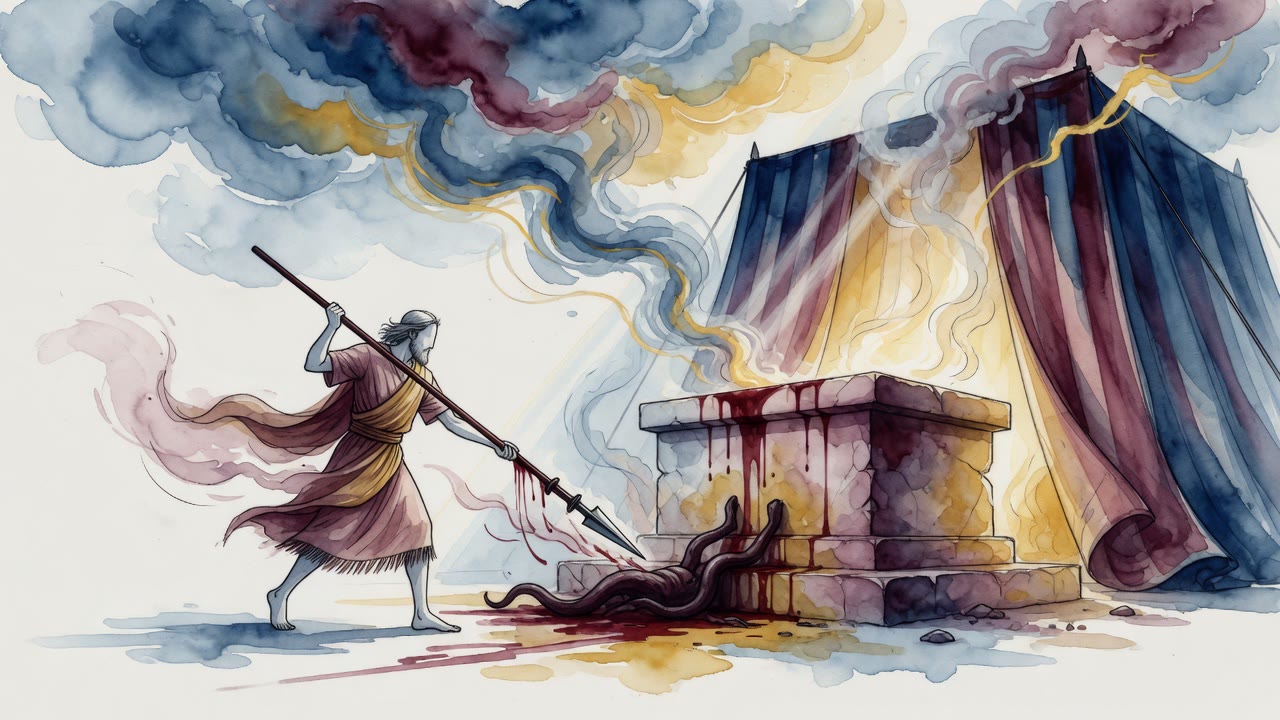
Then the angel walked him back down to the earth and put two things into his hands. A shield and a sword.

"Take vengeance on Shechem for Dinah your sister. I will be with you, because the Lord has sent me."

Levi asked the angel for his name, so that he would have something to call on when the trouble came. He did not get it. "I am the one who pleads for Israel," the angel said, "so that they are not wiped out altogether. Every evil spirit attacks them."

Then Levi woke on the hillside with the sheep still around him and nothing whatever in his hands.

The Shield in the Grass

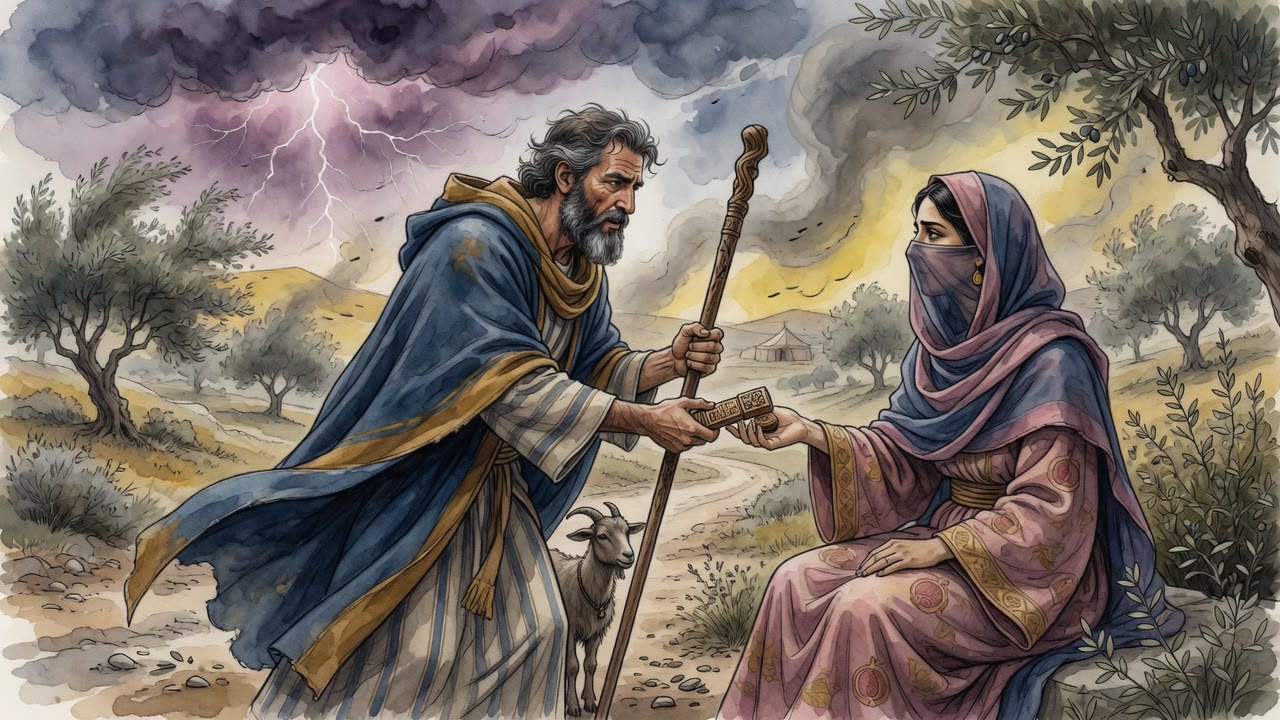
He was walking home to his father when he found it lying in the grass. A shield of brass. There had been no shield on that mountain when he lay down on it. He carried it back and said nothing about where the other half of the gift had gone, and the hill south of Abila has been called Aspis ever since, which is the word for a shield.

What he did say was this. He went to Jacob, and he went to Reuben, and he argued that the men of Shechem should be told not to circumcise themselves. Leave them as they are, he said. He lost the argument. The men of the city took the covenant knife and went home to their beds to heal.

Levi killed Shechem first. Simeon killed Hamor. Their brothers came in behind them and put the rest of the city to the sword.

What broke Jacob was not the killing. It was that those men had been brought into the covenant and then cut down inside it. He was sick for the whole of that day, and years later, when he stood over his sons to bless them, he looked at Levi with that day still on his face.

Levi gave him the reasons. The men of that city had tried to take Sarah and had tried to take Rebecca exactly as they took Dinah. They had hounded Abraham when he was a stranger passing through and harried his flocks when the ewes were heavy, and a man named Eblaen, born in Abraham's own household, they had shamed. Jacob heard it all and stayed sick.

Seven Men in White at Bethel

Seventy days later, at Bethel, it happened again.

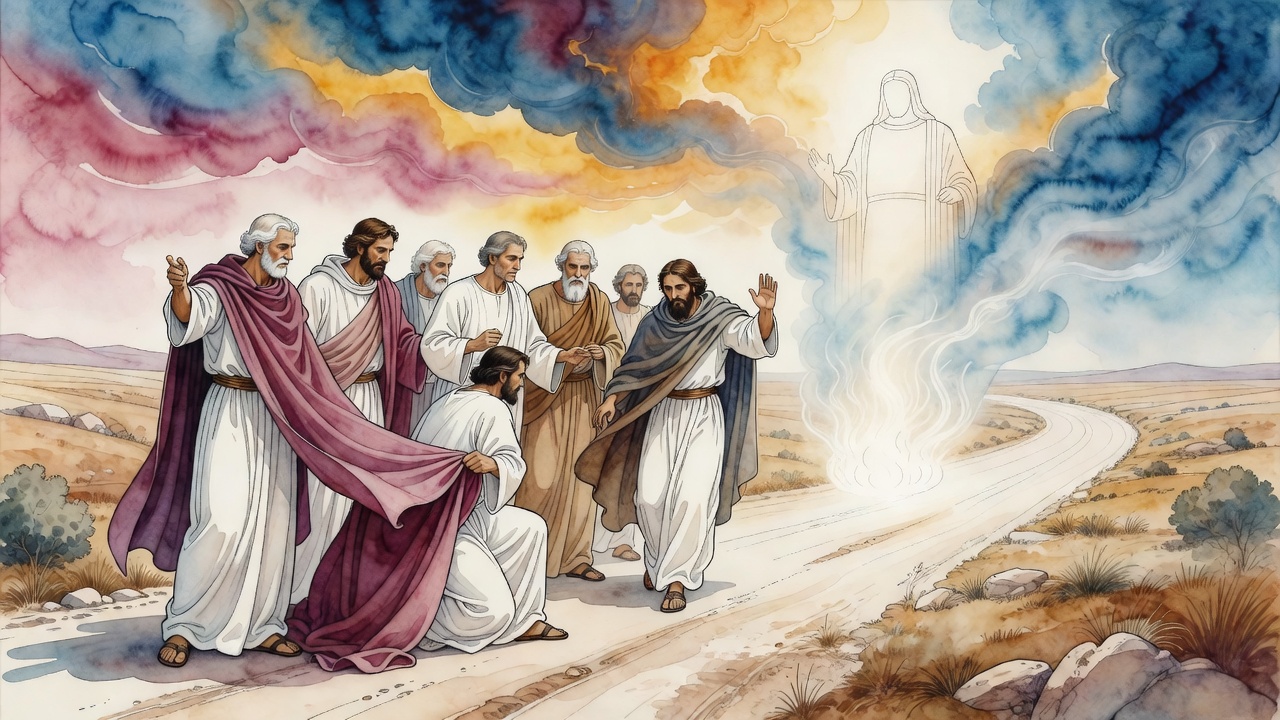
Seven men in white stood over him. "Get up. Put on the robe of the priesthood, and the crown of righteousness, and the breastplate of understanding, and the garment of truth, and the plate of faith, and the turban, and the ephod of prophecy."

They dressed him one at a time. The first poured holy oil over his head and handed him a staff for judgment. The second washed him in clean water and fed him bread and wine. The third put the linen on him. The fourth tied a purple sash at his waist. The fifth pressed a branch of rich olive into his hand. The sixth set a crown on his head. The seventh laid the priest's diadem over the crown and filled both his hands with incense until they were heavy.

He was nineteen. He woke understanding that this was the same dream as the first one, and he hid this one too, and told no man on earth.

The Last Hour of a Very Old Man

He married Melcha at twenty-eight. Gersam was born, then Kohath, then a third son who came so hard out of his mother that Levi named him Merari, my bitterness, because the child nearly died with her. Jochebed was born in Egypt when he was sixty-four. He watched his sons have sons. He said nothing about the mountain.

Then it was revealed to him that he was going to die. He was in good health that day, and he called all of them in.

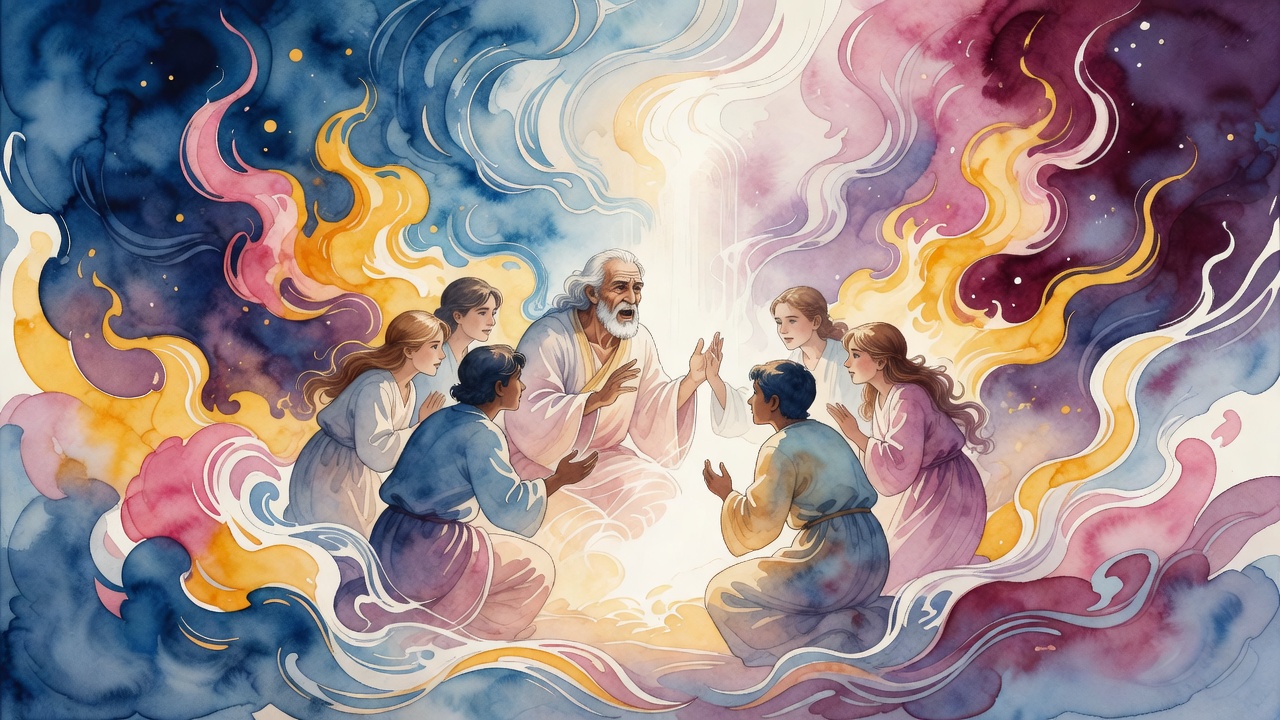
He told them the whole thing. The sea hanging in the first heaven. The angel who would not give a name. The seven men and the incense. And he told them what he had taken out of the writings of Enoch, which was not comfort: his own descendants would sin against God, and would be punished for it, and only after the punishment would a new priest be raised up, one to whom all the words of the Lord would be revealed.

"Choose now," he said. "Light or darkness. The law of the Lord or the works of Beliar."

"Before the Lord we will walk according to his law."

"The Lord is a witness. His angels are witnesses. I am a witness, and you are witnesses, to what has just come out of your mouths."

"We are witnesses," they said.

He stopped talking, stretched his feet out on the bed, and was gathered to his fathers at a hundred and thirty-seven. They laid him in a coffin, carried him up to Hebron, and buried him with Abraham, Isaac and Jacob.


← All myths

From the tradition

Sources

3 sources

The texts behind this telling. Some cards carry a translation of the source; others are our own retelling of it, and each card says which. Every card links out to the original.

Testament of LeviTestaments of the Twelve Patriarchs

Retold in our words. Read the original at the link below.The Testaments of the Twelve Patriarchs, R. H. Charles (1917) · Public Domain

Levi, third son of Jacob and Leah, called his sons together when he knew his death was near. It had been revealed to him that he would die. When they gathered, he told them everything.

"I was born in Haran," Levi began, "and I came with my father to Shechem. I was young, about twenty years of age, when with Simeon I wrought vengeance on Hamor for our sister Dinah" (Genesis 34:25-29).

Then came the vision.

While feeding the flocks in Abel-Maul, the spirit of understanding fell upon Levi. He saw all humanity corrupting its way, unrighteousness building walls, lawlessness enthroned on towers. Grief-stricken for the human race, Levi prayed for deliverance. Sleep fell upon him. He found himself on a high mountain. The heavens opened.

An angel of God spoke: "Levi, enter."

He entered the first heaven and saw a great sea hanging in the void. He passed into a second heaven, far brighter, filled with boundless light. The angel told him: "Marvel not, for you shall see another heaven more brilliant and incomparable." When Levi ascended to the highest place, he would stand near the Lord, become His minister, and declare His mysteries to humanity.

The angel explained the structure of the heavens. The lowest heaven is gloomy because it beholds all the unrighteous deeds of men. It contains fire, snow, and ice prepared for the day of judgment. In the second heaven are the hosts of heavenly armies, ordained to execute vengeance on the spirits of deceit and Beliar. Above them dwell the holy ones. In the highest of all dwells the Great Glory, far above all holiness. Below that are the archangels, who minister and make propitiation to the Lord for the sins of the righteous, offering a sweet-smelling, bloodless offering. Further down are thrones and dominions, forever offering praise to God.

"When the Lord looks upon us," Levi said, "all of us are shaken. The heavens, the earth, and the abysses tremble at the presence of His majesty."

Then the angel opened the gates of heaven, and Levi saw the holy Temple. Upon a throne of glory sat the Most High, who said: "Levi, I have given you the blessings of the priesthood until I come and sojourn in the midst of Israel." The angel brought Levi back to earth, gave him a shield and a sword, and said: "Execute vengeance on Shechem because of Dinah your sister, for the Lord has sent me." Levi destroyed the sons of Hamor. When he asked the angel's name, the angel replied: "I am the angel who intercedes for the nation of Israel, that they may not be utterly smitten."

A second vision followed. At Bethel, after seventy days, Levi saw seven men in white garments. They said: "Arise, put on the robe of the priesthood, the crown of righteousness, the breastplate of understanding, the garment of truth, the plate of faith, the turban of the head, and the ephod of prophecy." One by one, seven angels vested him. The first anointed him with holy oil and gave him the staff of judgment. The second washed him with pure water and fed him bread and wine. The third clothed him in a linen vestment. The fourth girded him with a sash of purple. The fifth gave him a branch of rich olive. The sixth placed a crown on his head. The seventh set upon him a diadem of priesthood and filled his hands with incense.

"Levi, your seed shall be divided into three offices," they declared, "for a sign of the glory of the Lord who is to come." His descendants would include high priests, judges, and scribes. By their mouths the holy place would be guarded.

Isaac, grandfather of Levi, confirmed it all. He taught Levi the law of the priesthood: sacrifices, burnt-offerings, first-fruits, peace-offerings. He warned him especially against the spirit of lust, which would through Levi's descendants pollute the holy place. "Take a wife without blemish while you are young," Isaac counseled. "Before entering the holy place, bathe. When you offer sacrifice, wash. When you finish, wash again."

Levi foresaw a dark future: seventy weeks of priestly corruption, profaning sacrifices, making void the law, persecuting righteous men. The Temple would be laid waste. Israel would be scattered among the nations as captives.

But after the punishment, the priesthood would be renewed. "The Lord shall raise up a new priest," Levi prophesied. "His star shall arise in heaven as of a king, lighting up the light of knowledge as the sun lights the day. He shall shine forth upon the earth, and shall remove all darkness from under heaven. The heavens shall exult in his days, and the earth shall be glad. He shall open the gates of paradise and remove the threatening sword against Adam. He shall give the righteous ones to eat from the Tree of Life. Beliar shall be bound by him, and he shall give power to his children to tread upon evil spirits."

"Choose for yourselves," Levi told his sons, "either the light or the darkness, either the law of the Lord or the works of Beliar." His sons answered before the Lord: "We will walk according to His law."

Levi stretched out his feet on the bed and was gathered to his fathers at a hundred and thirty-seven years. They buried him in Hebron, with Abraham, Isaac, and Jacob.

Full source
Legends of the Jews 2:28Legends of the Jews

Retold in our words. Read the original at the link below.The Legends of the Jews by Louis Ginzberg (1909) · Public Domain

He's surrounded by his children, his life's work laid bare before him. He’s not reminiscing about past glories, though. He's consumed by a vision of the future – a future where his own descendants will stumble and fall.

Levi, remember, is the father of the priestly tribe, the Levites. He carries a heavy burden, a profound responsibility for the spiritual well-being of generations to come.

In Legends of the Jews, Levi implores his children to walk in the ways of the Lord, to fear Him with all their hearts. But it’s not just a generic blessing. He reveals a prophecy, a warning gleaned from the writings of Enoch – writings that, sadly, didn't make it into the final version of the Hebrew Bible, but clearly held great weight in this tradition.

He knows, somehow, that his descendants will sin. They will transgress against God, and they will suffer the consequences. A grim prediction. But there’s a glimmer of hope. Levi foresees that God will eventually raise up a new priest, someone who will receive all the words of the Lord. It's a promise of redemption, a light at the end of a long, dark tunnel.

Then comes the pivotal moment. Levi presents his sons with a stark choice: "Choose, now, light or darkness, the law of the Lord or the works of Beliar."

Who is Beliar? He's often seen as a figure of darkness, a representation of evil, much like Satan. The contrast is clear: choose the path of righteousness, or succumb to the allure of wickedness. The choice, as always, is ours.

Their response is immediate and resolute: "Before the Lord we will walk according to His law." It's a powerful declaration, a commitment to uphold the covenant.

But Levi, ever the wise patriarch, seeks to solidify their promise. He calls upon witnesses: "The Lord is witness and the angels are witnesses, I am witness and ye are witnesses, concerning the word of your mouth."

And his sons, unwavering in their resolve, reply: "We are witnesses."

It's a solemn oath, a binding agreement witnessed by both earthly and heavenly beings. It's a moment of profound significance, evidence of the power of choice and the enduring importance of faith.

Does this story resonate with you? Does it remind us that even in the face of inevitable failings, the choice to strive for righteousness remains? It seems that even on his deathbed, Levi was trying to shape the future, to guide his descendants towards the light. And perhaps, through his words, he can guide us too.

Full source
Bereshit Rabbah 34:14Bereshit Rabbah

Retold in our words. Read the original at the link below.The Sefaria Midrash Rabbah, 2022 · CC-BY

The verse at the heart of this discussion is (Genesis 9:6): "One who sheds the blood of man, by man his blood shall be shed, as He made man in the image of God." Simple enough The first reading. But the rabbis of the Bereshit Rabbah, in section 34, unpack it with incredible depth.

Rabbi Ḥanina, for instance, sees this verse as the foundation for the laws given to the descendants of Noah – laws applicable to all humanity. He finds within it allowances for executing a murderer even with just one witness and one judge. No need for the usual two witnesses, no prior warning necessary. According to Rabbi Ḥanina, this verse even covers situations where someone uses an agent to commit murder, or even for causing the death of a fetus! It's all there, compressed within those few words.

Then Rabbi Yehuda ben Rabbi Simon chimes in, expanding the scope even further. He suggests that this verse applies even if someone strangles another person, even if the blood doesn't visibly flow. The point, it seems, is the taking of a life, regardless of the method.

Rabbi Levi offers yet another layer. What happens if a murderer escapes earthly justice? When will they finally face judgment? Rabbi Levi suggests that justice awaits in the Messianic era, when the Messiah – "the man," ba'adam – will come. A chilling thought: no one escapes ultimate accountability.

But it's Rabbi Akiva who delivers a truly powerful interpretation. He argues that shedding blood is akin to diminishing God's very image. Why? Because God created humanity b'tzelem Elohim, in His image. Taking a life is thus an assault on the divine.

This idea of diminishing God's image is then picked up in relation to procreation (Genesis 9:7), "And you, be fruitful, and multiply; teem on the earth, and multiply upon it." Rabbi Elazar ben Azarya argues that someone who chooses not to have children is, in a way, diminishing God's image. After all, weren't we commanded to "be fruitful and multiply" right after being told we were made in God's image?

Ben Azai takes it even further, claiming that refraining from procreation is equivalent to spilling blood and diminishing the divine image. Strong words, indeed!

Rabbi Elazar ben Azarya, ever the pragmatist, gently reminds Ben Azai that actions speak louder than words. (It's worth noting here that Ben Azai himself remained a bachelor his entire life, dedicating himself to Torah study.) Ben Azai responds that his soul yearns for Torah and that the world can be populated by others. A fascinating glimpse into a personal choice weighed against a perceived obligation.

So, what does all this mean? It highlights the profound value placed on human life within Jewish tradition. It's not just about the physical act of killing; it's about the deeper implications, the spiritual consequences, the impact on the very fabric of creation. It forces us to confront our own roles in upholding the sanctity of life, both literally and figuratively. And it leaves us pondering: How do we honor the divine image in a world that often seems to devalue it?

Full source