5 min read

Lilith Kept House in the Goldsmith's Cellar

In Posen a goldsmith keeps a secret wife in the cellar. On Passover his human wife follows him down and sees the truth.

Curated by Arthur · Told by Maggid ·
Table of Contents
  1. The Workshop Under the House
  2. Secret Wife
  3. Passover and the Keyhole
  4. Amulet, Vow, and the Price of Release
  5. What the Cellar Still Holds
  6. Two Households, One Roof
Lilith Kept House in the Goldsmith's Cellar Click for full size

The Workshop Under the House

In Posen the goldsmith kept his real work below street level. Heat, metal, the small songs of hammer and file. Neighbors knew the sound. They did not know the other company that waited when the human family went upstairs.
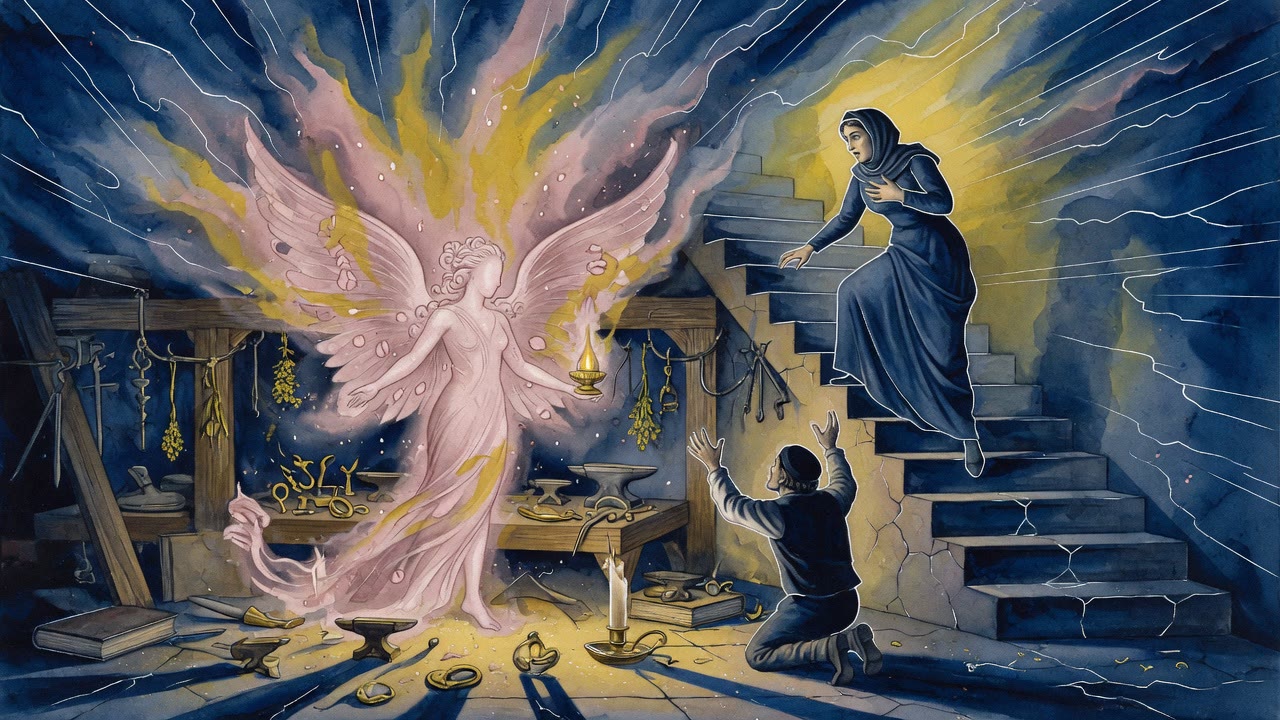
The Zohar teaches that impurity can engender demons, and that wasted seed is a potent source. Lilith, or one of her daughters, steals what is spilled and breeds sons who call the man father. They settle in attic, closet, cellar. The house gains a second household that does not eat at the same table.

The goldsmith's second household had a queen.

Secret Wife

Day by day he yielded more time to the cellar. Lust does not always arrive as a storm. Sometimes it arrives as a schedule. His human wife turned her back to sleep, and Lilith found him in dreams by night and visions by day until the secret marriage felt more solid than the public one.

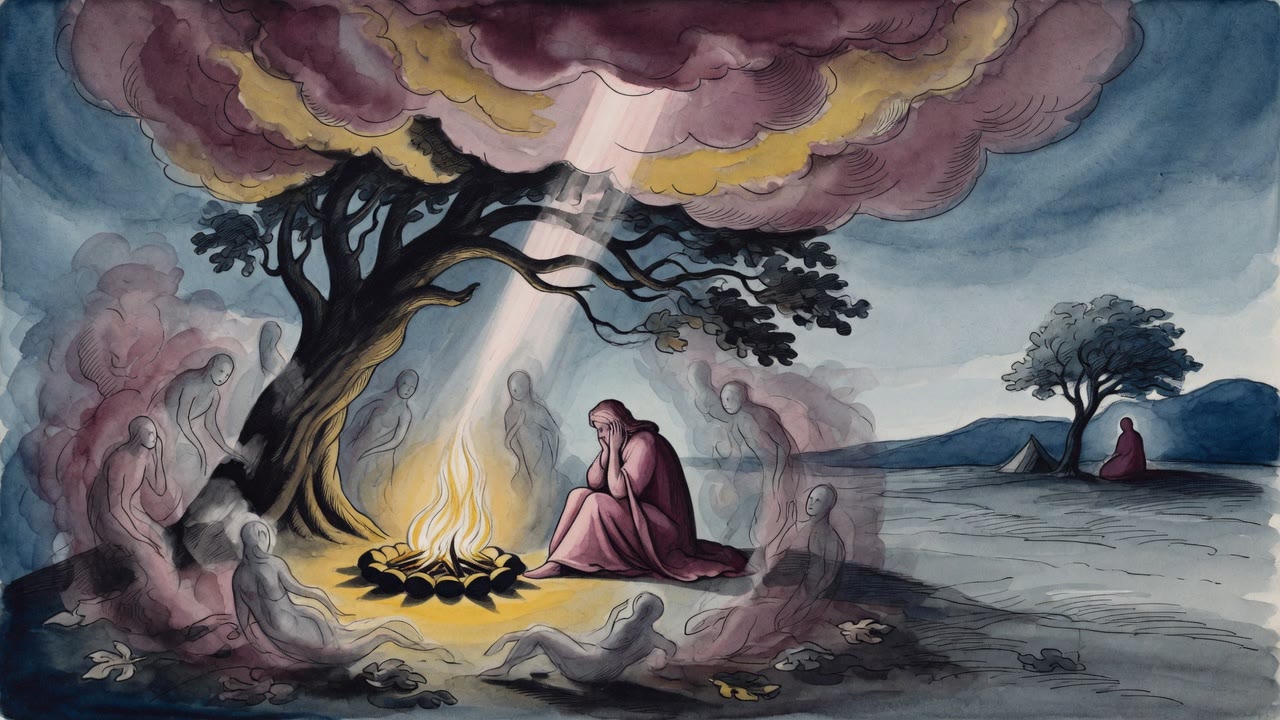
He went down. He came up smelling of smoke and something sweeter. He spoke less at his own table. The children learned not to ask why their father's eyes looked past them toward the floorboards.

Seed and form, the Kabbalists say elsewhere, are a partnership of forces. Male spark. Female shaping. When that partnership is torn out of covenant and fed to the other side, the form that grows is not a child of blessing. It is a claim with a mouth.

Passover and the Keyhole

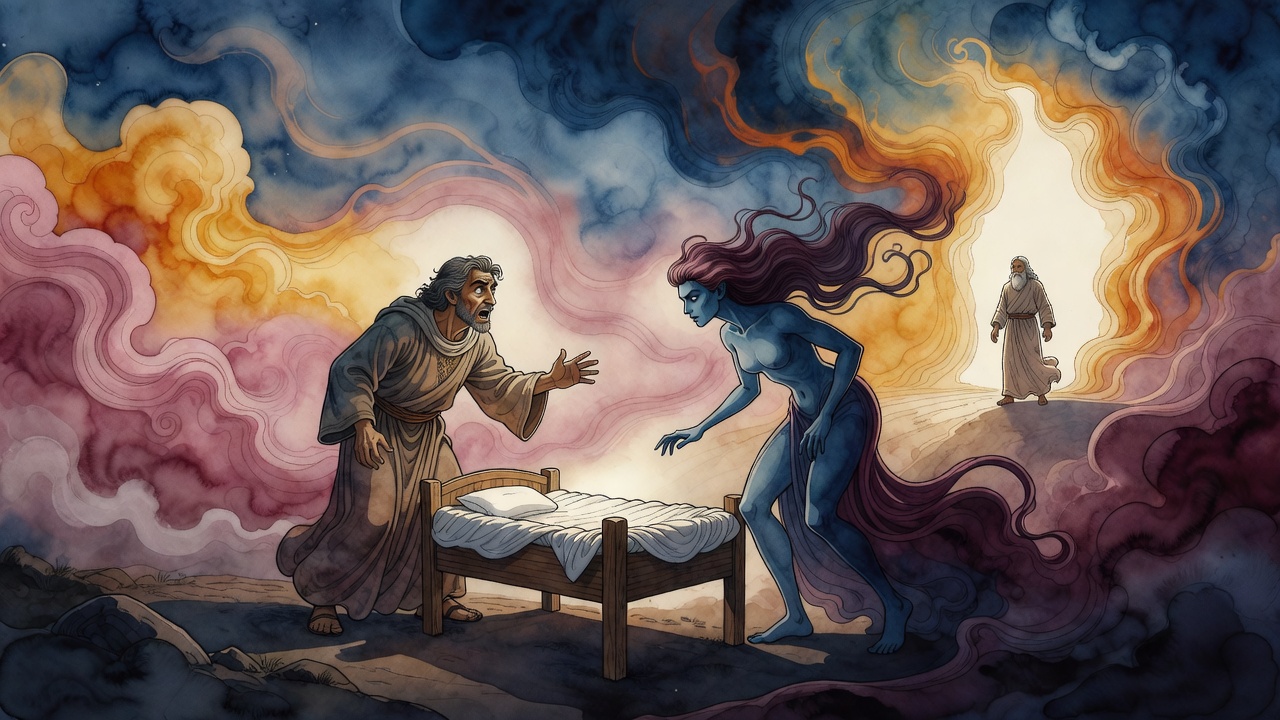
One Passover the family sat at the Seder. The words reached "And they went down into Egypt," and the goldsmith rose as if the verse had called his true name. He went down to the cellar. His wife thought him ill and followed.

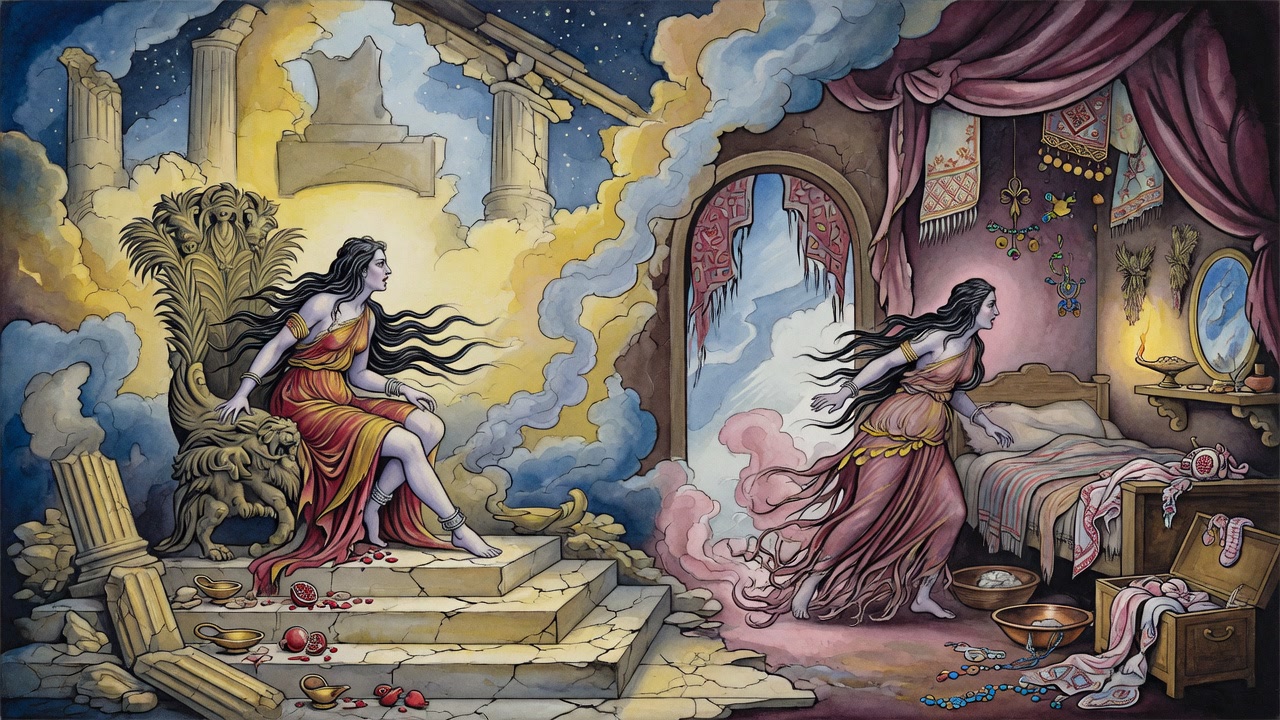
Through the keyhole the cellar was no longer a workshop. It had become a palatial chamber. Her husband lay naked in the arms of a lover who was not of their people and not of their world. The wife held her face still. She returned to the table. She finished the night without spilling the vision into the children's cups.

The next day she went to the rabbi.

Amulet, Vow, and the Price of Release

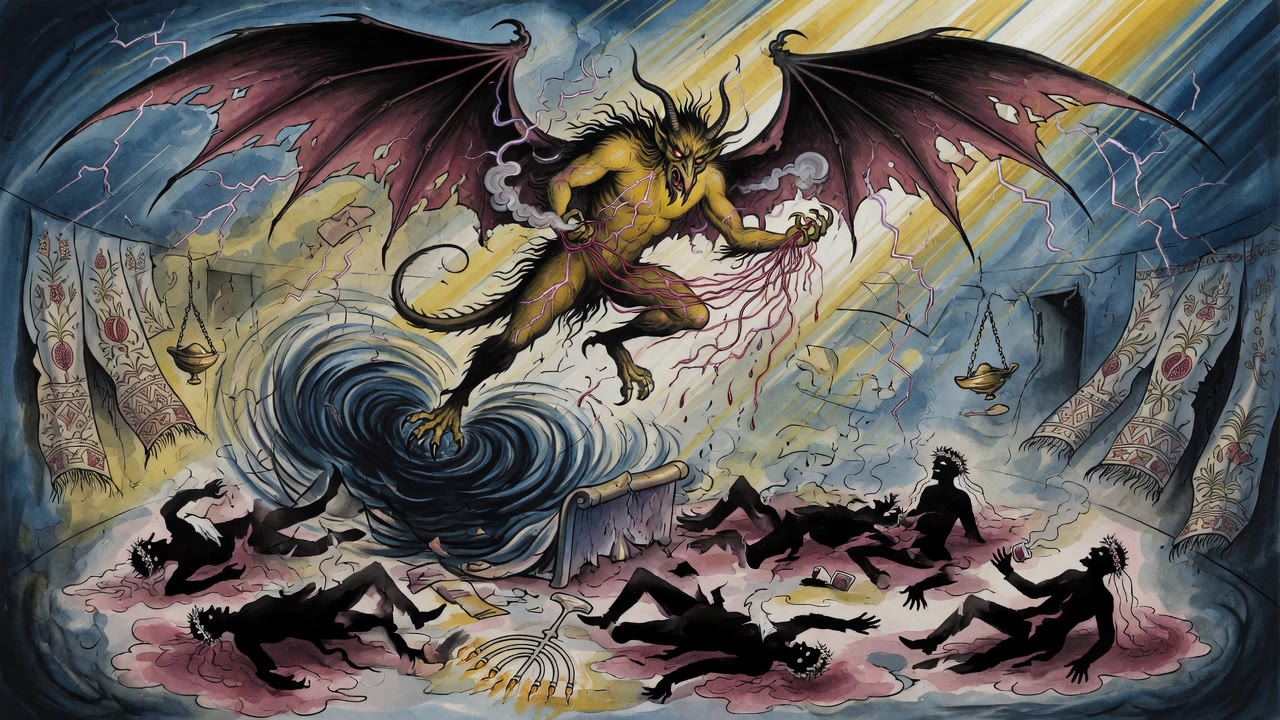
The rabbi confronted the man. Confession came. An amulet was given to break Lilith's hold. Freedom, when it came, was not free. Before she released him she demanded the cellar be bequeathed to her and their demon offspring for all time. He vowed it.

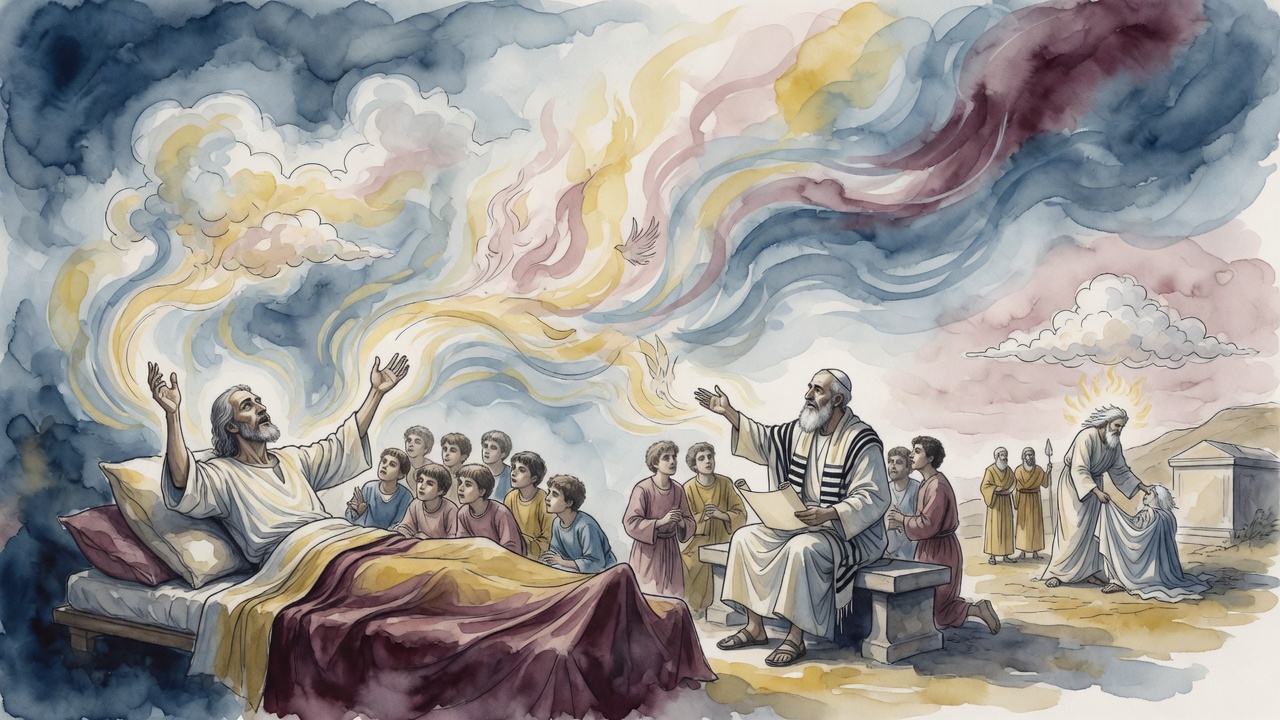
He lived out his years loosed from her daily power. On his deathbed the other children gathered, invisible to the human family, crying their claim around a body that had fathered more than one kind of heir. The house that looked ordinary from the street held a title deed written in fear.

Lilith does not always lose cleanly. Sometimes she trades a living man for a permanent room.

What the Cellar Still Holds

The story is not told to decorate the dark. It is told to name how a second life can grow under the floor of the first when desire refuses covenant and waste becomes company. The Zohar's demons are not foreign mythology pasted on. They are the tradition's way of saying that acts leave residents.

Upstairs, a Seder can still be sung. Downstairs, a vow can still outlive the singer. Between them walks every person who thinks a hidden room is private because no neighbor has a key.

The goldsmith's wife saw through a keyhole and chose the rabbi over silence that would have killed her slower. The cellar kept its claim. The Name on the amulet kept the man for the rest of his mortal days. Both truths stayed in the house like two kinds of metal that never quite alloy.

Two Households, One Roof

By day the goldsmith sold rings for weddings. By night he fed a marriage that could not stand in the street. The irony did not stop him. Many stories of the other side begin with that split: public covenant upstairs, private claim below.

When demon sons regard a man as father, the house becomes crowded in a way no census counts. Attic. Closet. Cellar. The Zohar's map of residence is domestic on purpose. Terror works best when it knows where you sleep and where you work.

The amulet bought him years. The vow bought Lilith a room in perpetuity. On the deathbed the invisible children cried while the visible ones held his hands. Both sets of offspring were telling the truth about what he had fathered. Seed without holy form still makes a claim. The cellar remembered.

His wife, who had looked through a keyhole and chosen law over quiet shame, outlived the secret. She never liked the stairs that led down. Some doors stay closed for reasons that are not superstition. They are memory with a lock.


← All myths

From the tradition

Sources

2 sources

The texts behind this telling. Some cards carry a translation of the source; others are our own retelling of it, and each card says which. Every card links out to the original.

Zohar I:54bZohar

Retold in our words. Read the original at the link below.Sefaria-hosted English translation · CC-BY

In Jewish folklore, demons can be born from impurity. The Zohar, that foundational text of Jewish mysticism, tells us that any impurity can engender demons. But the tradition goes even further.

One particularly potent source? Wasted seed. what happens when a man's seed is spilled? Well, according to tradition, his demon offspring are conceived. And who often steals that seed? None other than Lilith, or one of her daughters. Just a drop is all it takes. These demon sons regard the man as their father and then find a place to live.. in his house! Whether it's in the attic, the cellar, or even a closet, they make themselves at home.

Even married men aren’t safe from Lilith’s allure. No sooner do their wives turn their backs than Lilith seeks out victims among them, appearing to them in dreams during the night and as visions during the day. Sometimes, Lilith so sways a man that she becomes his secret wife.

There's a story, recounted in the Kav ha-Yashar, a famous 17th-century ethical text, that really brings this to life. It's about a goldsmith in the city of Posen who was secretly married to Lilith. The demoness lived in the cellar, where the goldsmith had his workshop. He spent time with his demon lover every day, keeping her existence secret from his family. Little by little, the goldsmith yielded everything to her, lusting after her day and night.

One Passover, it got so bad that the goldsmith got up in the middle of the Seder – the ritual Passover meal – when the words, "And they went down into Egypt" were read, and he went down to the cellar. His wife, worried he was ill, followed him. Peering through the keyhole of the cellar door, she saw the cellar had been transformed into a palatial chamber, and her husband lay naked in the arms of a lover.

Imagine what she must have felt.

Maintaining her composure, she returned to the Seder and revealed nothing to the rest of the family. But the next day, she went to the rabbi and told him everything. The rabbi confronted the man with his sin, and he confessed. The rabbi then gave him an amulet to protect himself against Lilith, and he used it to free himself from her.

But Lilith didn't let go easily. Before she would release him, she demanded that the cellar be bequeathed to her and their demon offspring for all time, and the man took a vow to this effect. He escaped her powers for the rest of his life, but as he lay on his deathbed, his demon children swarmed around him, invisible to his human family, crying out his name. Talk about a haunting image.

After his death, the house became known as haunted. Eventually, it was sold, and the new owner had a workman break open the door to the cellar, which had been nailed shut. When that workman was found dead on the threshold, Rabbi Yoel Ba'al Shem was sent to investigate. He confirmed that the cellar was infested with demons and ordered a rabbinic court, a Beit Din (a rabbinic court), to be convened. The court ruled against the demons' right to live there, on the grounds that they transgressed the boundaries of the cellar, and they were expelled into the wilderness.

According to Ginzberg's retelling in Legends of the Jews, the belief that Lilith or one of her daughters, the Lilin, seek to steal a man's seed to create half-human, half-demon offspring is popular and pervasive in Jewish folk tradition. These demonic sons are said to haunt their fathers all their lives. The struggle portrayed in this and similar tales can be seen as one between humans and demons, with offspring who are half-human, half-demonic.

Or, as some interpretations suggest, it's a struggle between Jews and Gentiles, where Jewish men are lured by Gentile women, and their offspring are half-Jewish, half-Gentile. In both cases, the offspring are spurned by both sides.

Lilith, in this context, plays a major role in Jewish lore as the incarnation of lust. She haunts men in their dreams and imaginations. Every time a man had a sexual dream or fantasy, he was believed to have had intercourse with Lilith, and the product of this intercourse were mutant demons, half human and half demon, who were spurned by humans and by demons alike. As we find in Midrash Rabbah, these encounters have consequences.

So, what does this all mean? Is it just a scary story to keep men in line? Perhaps. But it also speaks to the anxieties around temptation, the dangers of unchecked desire, and the fear of the "other" – whatever that "other" may be. It's a reminder that our actions, even the ones we think are private, can have far-reaching consequences, not just for ourselves but for generations to come. And maybe, just maybe, it's a warning to be careful what you keep hidden in your cellar.

Full source
Kalach Pitchei Chokhmah 63:14Kalach Pitchei Chokhmah

Retold in our words. Read the original at the link below.138 Openings of Wisdom, trans. Rabbi Avraham Greenbaum, Azamra Institute (2005) · CC-BY

It all boils down to this fascinating idea about seed, form, and the distinct roles played by both. Where does new life begin? The Kalach Pitchei Chokhmah ("63 Openings of Wisdom") explores this mystery, revealing a profound understanding of the interplay between male and female. It suggests that the seed, the initial spark, emanates from the male. But that's only half the story.

It's within the female that this seed takes shape. It's there that the form is carefully sculpted, refined, and brought to its full potential. That's the kind of transformative power

Wait, there's more! It's not as simple as one provides the seed and the other the form. Our sages, in the Talmud (Niddah 31a), tell us that "the woman emits seed of a red color…" So, what does this mean?

The Kalach Pitchei Chokhmah explains that the very chomer (חומר) – the material substance itself – contains a feminine aspect. This "red-colored component" within the body represents the female's contribution to the very building blocks of life.

So, if both male and female contribute seed, what distinguishes their roles? The text goes on to say that the male provides the overarching power, the governing force that shapes the overall form. It's like the architect who envisions the grand design of a building.

Think of the "Likeness of Man," the ideal human form. The power that governs this overall form, according to this teaching, comes from the male. But the intricate details, the nuanced design, those are the gifts of the female. Nachmanides (Ramban), in his commentary on (Leviticus 12:1), echoes this sentiment, emphasizing the female's role in the specific details of creation.

It’s a partnership, a collaboration of cosmic proportions. It's not about one being superior to the other, but rather about two distinct forces working in harmony to bring forth new life and beauty into the world.

Perhaps it's a reminder to appreciate the unique contributions of both male and female energies in all aspects of our lives, recognizing that true creation happens when these forces work together in balance. It's an invitation to see the world not as a collection of isolated individuals, but as an intricate web of interconnectedness, where each part plays a vital role in the unfolding of the divine plan.

Full source