5 min read

Lions Forced Samaria's Settlers to Learn Torah

Foreign settlers in Samaria fell to lions until Israel's elders sent teachers. Rabbi Dosethai and Rabbi Micaiah brought circumcision, Torah, and tears.

Curated by Arthur · Told by Maggid ·
Table of Contents
  1. Empty Land, New Tax Farmers
  2. Elders in a Foreign Court
  3. Two Teachers on a Hard Road
  4. Consent and the Older Law
  5. After the Lions Quiet
Lions Forced Samaria's Settlers to Learn Torah Click for full size

Empty Land, New Tax Farmers

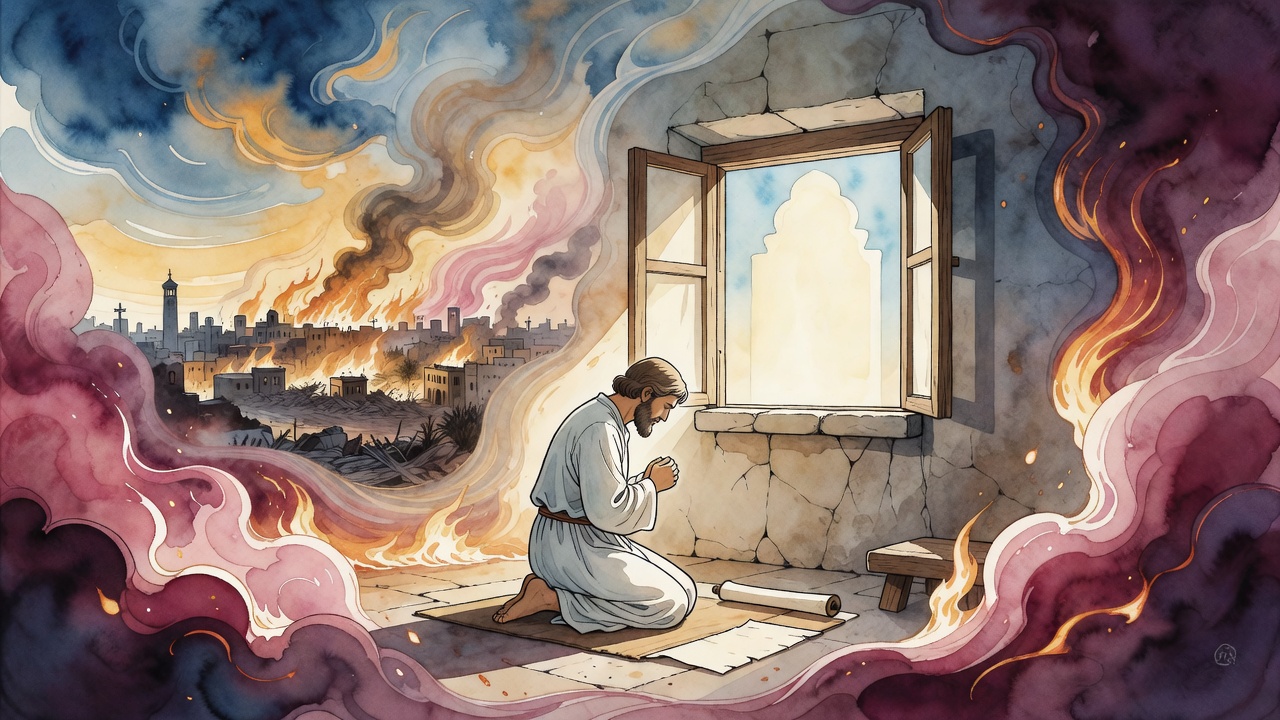
When the Israelites were taken from Samaria toward Babylon, the king who wanted tribute still flowing sent his own people to settle the emptied towns. Their task was simple on paper and deadly on the ground. Live in the land. Collect. Send silver home along roads that still remembered Hebrew footsteps. The fields did not agree with the new arrangement.

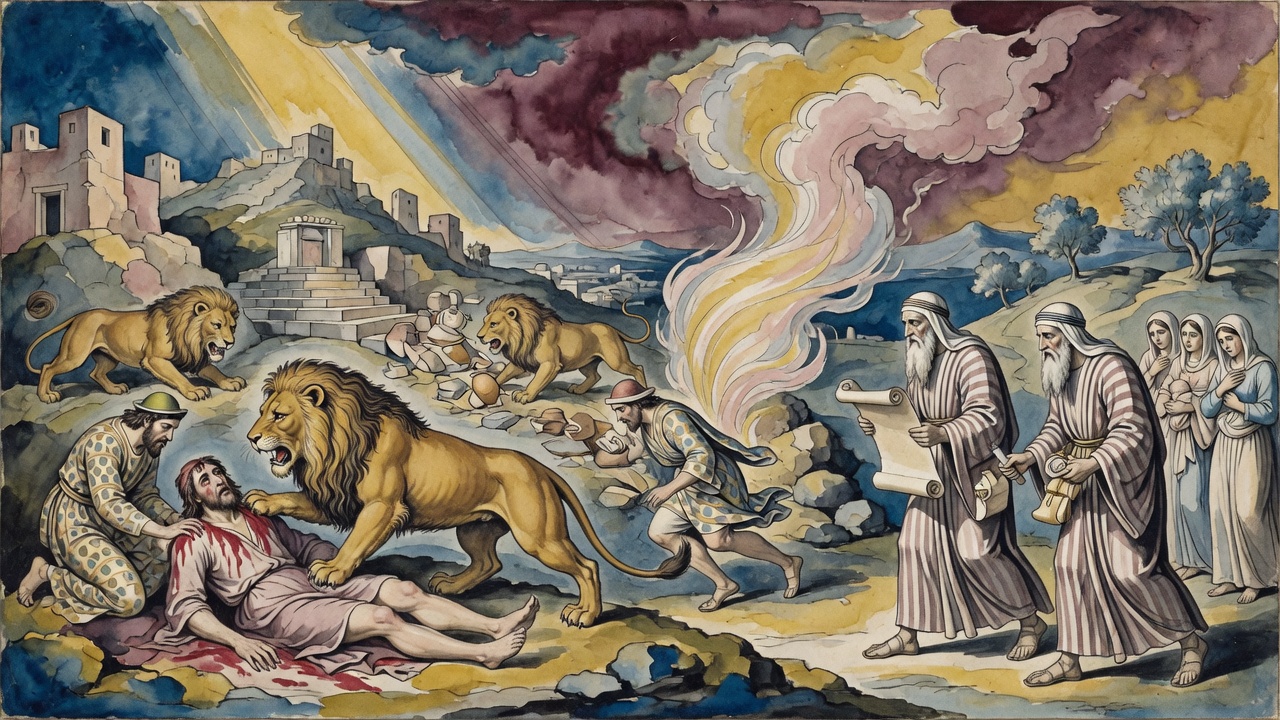
The Holy One sent lions among the new settlers. Beasts that had not bereaved Israel in the years of Torah now killed men who did not fear the Lord. The survivors sent word to the king in language officials understand. The land will not receive the new settlers. Few remain of many. Fear of claws became a political report sealed and carried by riders who did not look back at the carcasses along the ditches.

Elders in a Foreign Court

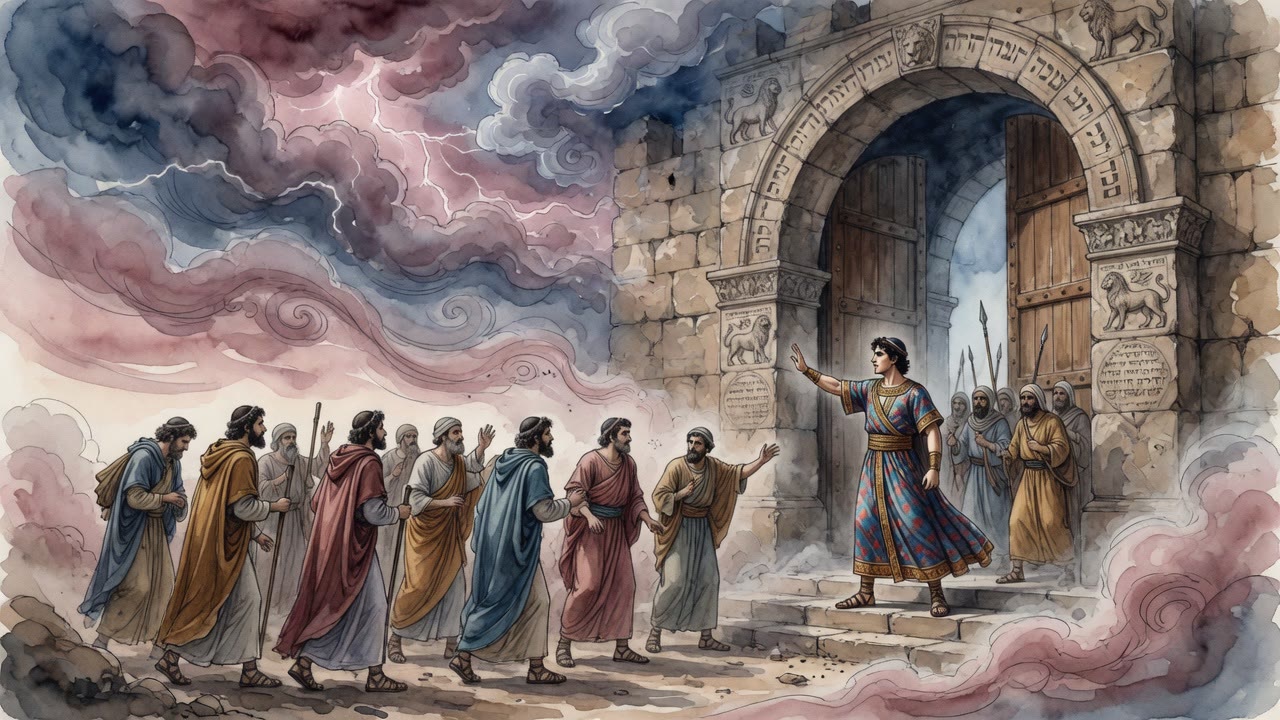
The king called for the elders of Israel and asked the riddle that power always asks when nature refuses its plans. All the years Israel lived there, the beasts of the field did not destroy them. Now the royal servants die. The king demanded an answer. The elders answered with conditions the land itself seemed to enforce like an old treaty written in soil. That land does not receive a nation that does not study Torah. That land does not receive a nation that is not circumcised.

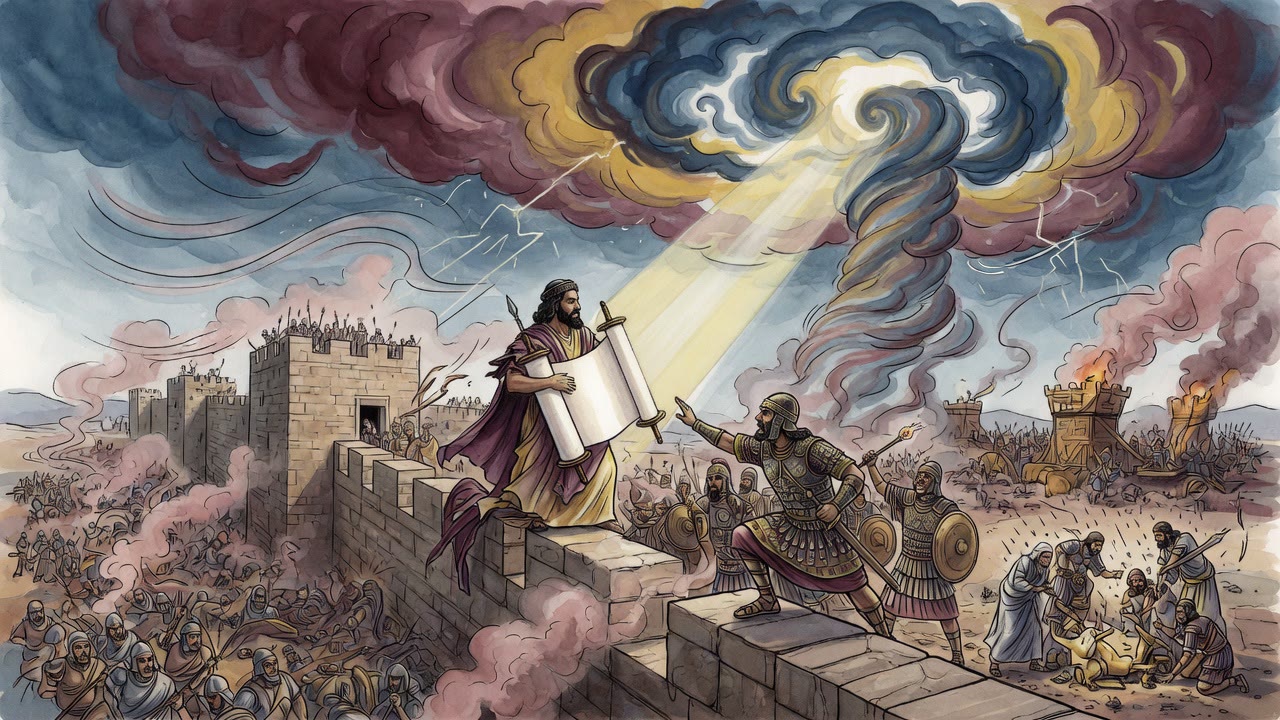
They may have hoped the crisis would open a road home, a royal admission that only Israel could hold those hills. The king heard a practical fix that kept his map intact. Give two teachers to circumcise the settlers and teach them the book of the Torah. There is no refusal to the word of the king. Policy bent toward covenant forms for the sake of tax and survival, not for the sake of Sinai's love, and still the forms arrived under seal and threat.

Two Teachers on a Hard Road

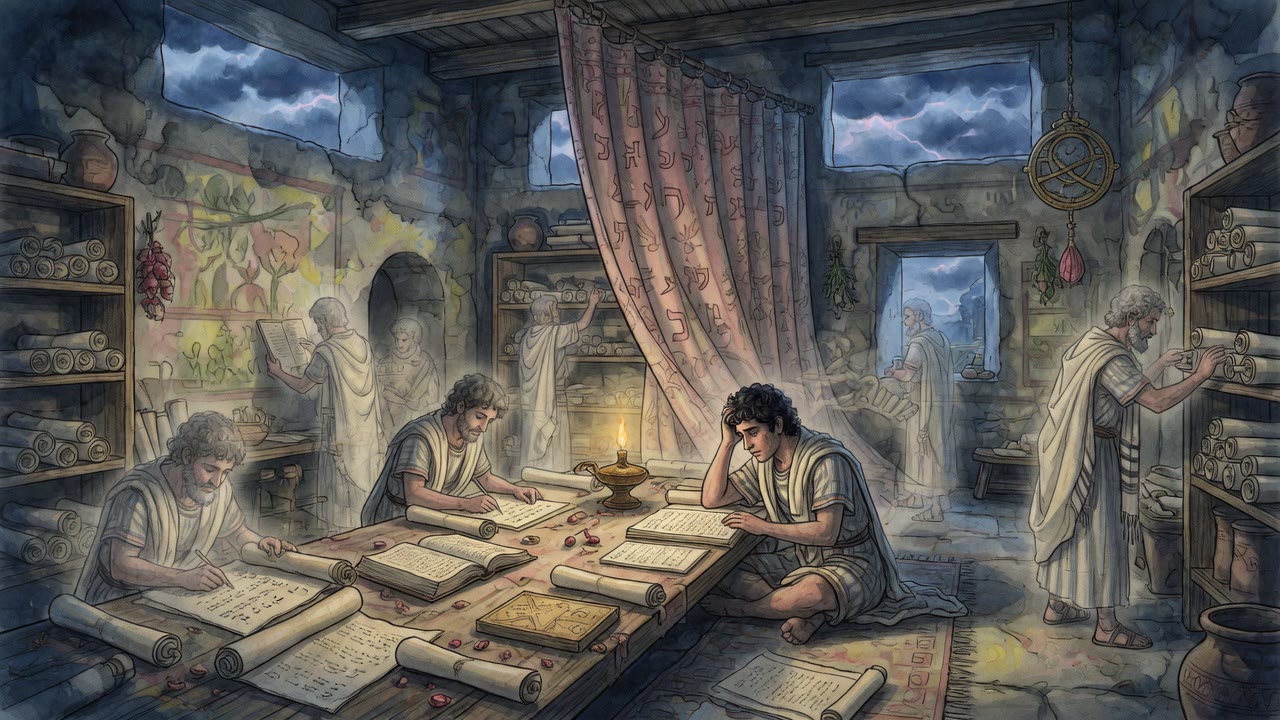
The elders sent Rabbi Dosethai of the Court-House and Rabbi Micaiah. They went up to Samaria under royal protection that smelled like necessity. They circumcised the settlers and taught them Torah in houses that had recently heard only the language of empire. The midrash adds that they taught in the Notarikon script, a compressed letter-method, and that they wept while they taught.

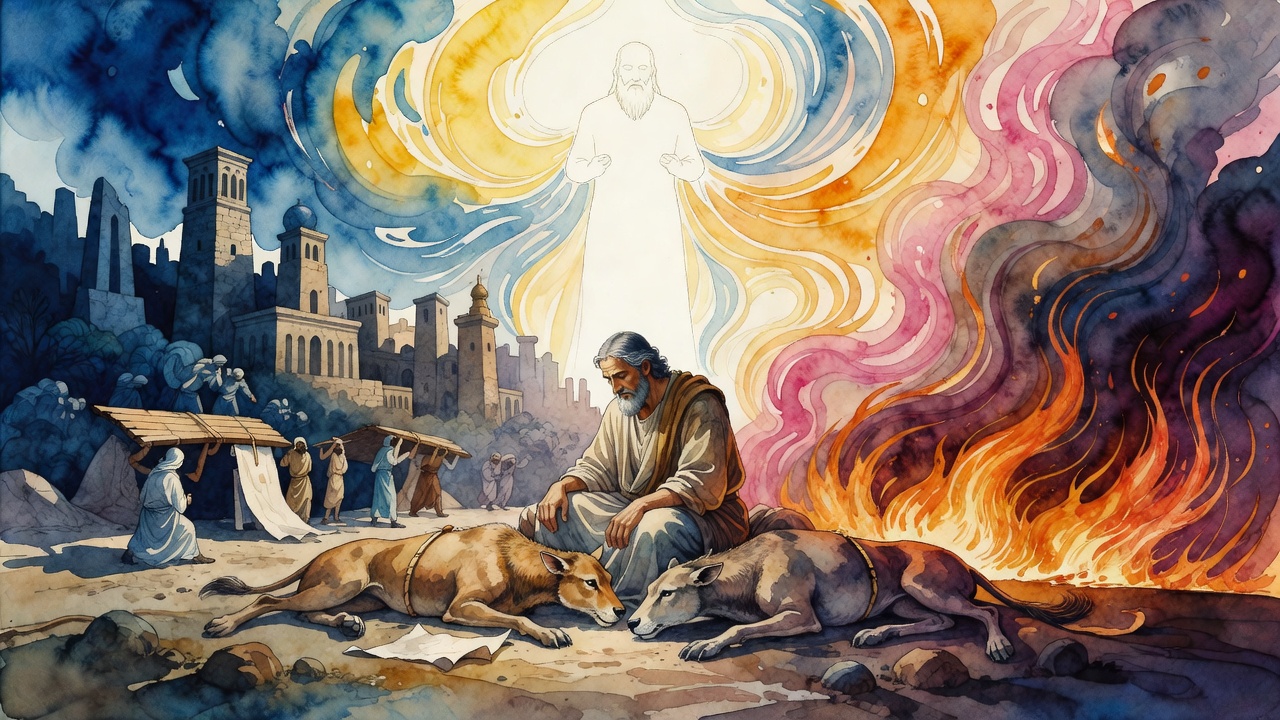
The tears are left partly unexplained, which makes them heavier. Teachers of a coerced classroom may weep for the land that demands holiness, for the exile that emptied it, for pupils who learn under the shadow of lions rather than under love of the Name. Still the teaching happened. The mark of the covenant and the words of the book entered a population that had arrived as foreign instruments of extraction. The lions were the first rabbis. The human rabbis followed with knives, scrolls, and wet faces that no court painter would ever be hired to record.

Elsewhere the same midrashic family stresses that gentiles who come to Israel and take circumcision do so of free will and in the fear of Heaven, not as cattle branded for a master's count. Samaria's settlers sat in a harder seat. Beasts and a king's command stood behind their lessons. The story does not pretend the classroom was pure desire. It shows Torah arriving even through political panic, a strange victory for the book that outlasted the panic and the empire that ordered the lessons.

Abraham's covenant had always pointed beyond one household toward those who would join by choice. Here the sign and the book reached people who needed them to stay alive in a land that remembered Israel's terms more faithfully than the king remembered Israel's people. The land became a teacher with teeth. The elders translated the teeth into curriculum and sent two men who could bleed and recite in the same week.

After the Lions Quiet

When the settlers kept the forms, the killings ceased in the logic of the tale. The land accepted a people who bore the mark and opened the book, even if their first motive was fear sharp enough to obey any syllabus. Dosethai and Micaiah left behind a Samaria that could not be only a tax farm. Something of Israel's grammar had been pressed into foreign mouths under duress and under miracle at once.

Exile had emptied the hills of the northern kingdom. Lions and two weeping sages refilled them with a half-covenant that would complicate identity for generations. The king got his tribute route and his quiet nights without casualty lists. Heaven got a witness that the land of Israel is not neutral dirt for any empire's experiment. It answers to Torah or to teeth, and it does not care which official signed the resettlement order or how carefully the taxes were once calculated.


← All myths

From the tradition

Sources

2 sources

The texts behind this telling. Some cards carry a translation of the source; others are our own retelling of it, and each card says which. Every card links out to the original.

Pirkei DeRabbi Eliezer 38:23Pirkei DeRabbi Eliezer

Retold in our words. Read the original at the link below.Pirke de Rabbi Eliezer, trans. Rabbi Gerald Friedlander, London (1916) · CC-BY

It all started when the Israelites were exiled from Samaria to Babylon. The king, wanting to keep things running smoothly (and, let's be honest, to keep the tax money flowing), sent his own people to settle in Samaria. Their job? Collect tribute for the kingdom. Seems straightforward enough. Not quite.

The Holy One, blessed be He, had other plans. the verse says, He sent lions among the new settlers! Lions! They started killing people, and as (2 (Kings 17:2)5) says, "And so it was, at the beginning of their dwelling there, that they feared not the Lord: therefore the Lord sent lions among them, which killed some of them."

Understandably, the settlers were terrified. They sent a message to the king: "Our lord, the king! The land whither thou hast sent us will not receive us, for we are left but a few out of many." They were basically saying, "This land is rejecting us!"

The king, confused and probably a little annoyed, called for the elders of Israel. He asked them, "All those years during which ye were in your land, the beasts of the field did not bereave you, and now it will not receive my servants. What gives?"

Now, here’s where it gets interesting. The elders, perhaps hoping this mess would lead to their return to their homeland, gave the king some… advice. "Our lord, O king! That land does not receive a nation who do not study the Torah; behold, that land does not receive a nation who are not circumcised." In other words, they told him the land was only hospitable to those who followed Jewish law.

The king, desperate for a solution, took their advice (sort of). He said, "Give me two of you, who shall go and circumcise them and teach them the book of the Torah; and there is no refusal to the word of the king."

So, the elders sent Rabbi Dosethai of the Court-House and Rabbi Micaiah. These two brave souls went to Samaria, circumcised the settlers, and taught them the Torah. But here's the kicker: they taught them the Torah in the Notarikon script. Notarikon is a method of deriving a word, or sentence, by using each of its initial, or final, letters to stand for another word. And the text says, "they wept." Why did they weep? Perhaps they wept out of sorrow for those who had died, or perhaps out of hope that they would be able to bring these people to a better way of life.

And what happened then? Those nations followed the statutes of the Torah… and they also served their own gods. They were trying to blend two worlds.

What does this all mean? Well, it seems to be a cautionary tale about the importance of remaining true to one’s own identity and traditions. When the settlers in Samaria tried to occupy a land and a culture that wasn’t theirs, chaos ensued. And even when they were taught the ways of the Torah, they couldn't fully let go of their old beliefs.

How much of our identity is tied to the land we inhabit, the traditions we uphold, and the stories we tell ourselves? And what happens when those things are disrupted or lost?

Full source
Pirkei DeRabbi Eliezer 29:9Pirkei DeRabbi Eliezer

Retold in our words. Read the original at the link below.Pirke de Rabbi Eliezer, trans. Rabbi Gerald Friedlander, London (1916) · CC-BY

Rabbi Jochanan, a prominent figure in the Talmud, offers some striking insights here. He states that gentiles, or "heathens" as the text puts it, who choose to come to Israel and convert are circumcised only through their own free will and consent. It's understood that they do so "in the fear of Heaven," meaning with sincere religious intent.

Then comes a rather cautious note. Rabbi Jochanan says, "We do not believe a proselyte until seven generations (have passed), so that the waters should not return to their source." What does that mean? Well, the idea is that we don't fully trust the sincerity of a convert until their lineage has proven their commitment over several generations. There's a fear that they might revert to their former ways, that the "waters" of their previous beliefs might flow back.

Things get even more complex when we According to this passage, slaves were circumcised both with and without their consent. And unlike gentile converts, "no confidence is placed in slaves." The text draws a parallel to the slaves circumcised by Abraham himself. Remember, the Torah tells us, "All the men of his house, those born in the house, and those bought with money of the stranger, were circumcised with him" (Genesis 17:27).

Why did Abraham circumcise his slaves? The text suggests it was primarily for ritual purity, "so that they should not defile their masters with their food and with their drink." In other words, it was less about spiritual transformation and more about maintaining a state of ritual cleanliness within the household.

The passage then takes a rather stark turn, describing the perceived impurity of the uncircumcised. "Whosoever eateth with an uncircumcised person is as though he were eating flesh of abomination," it says. Harsh words. It continues, "All who bathe with the uncircumcised are as though they bathed with carrion, and all who touch an uncircumcised person are as though they touched the dead." The uncircumcised are even described as being like the dead in their lifetime, and their prayers are said not to reach God. The text quotes (Psalms 115:17), "The dead praise not the Lord."

In contrast, the text emphasizes the power of prayer from circumcised Israelites, saying their prayers ascend to God like a "sweet savour," citing (Psalms 115:18), "But we will bless the Lord from this time forth and for evermore. Praise ye the Lord."

This passage from Pirkei DeRabbi Eliezer is a powerful reminder of how ancient societies grappled with issues of identity, purity, and inclusion. It reveals a hierarchical worldview where circumcision served not only as a religious rite but also as a marker of social status and perceived spiritual worthiness. It’s a window into a world very different from our own, a world where the lines between the sacred and the profane, the included and the excluded, were drawn with stark clarity. It leaves us to consider how far we’ve come, and how we continue to wrestle with these very same questions of belonging and acceptance today.

Full source