Swear by the Name That Made Heaven and Earth
On his deathbed a patriarch bound his sons with an oath by the Name that made heaven and earth, and demanded affection that outlives the grave.
Table of Contents
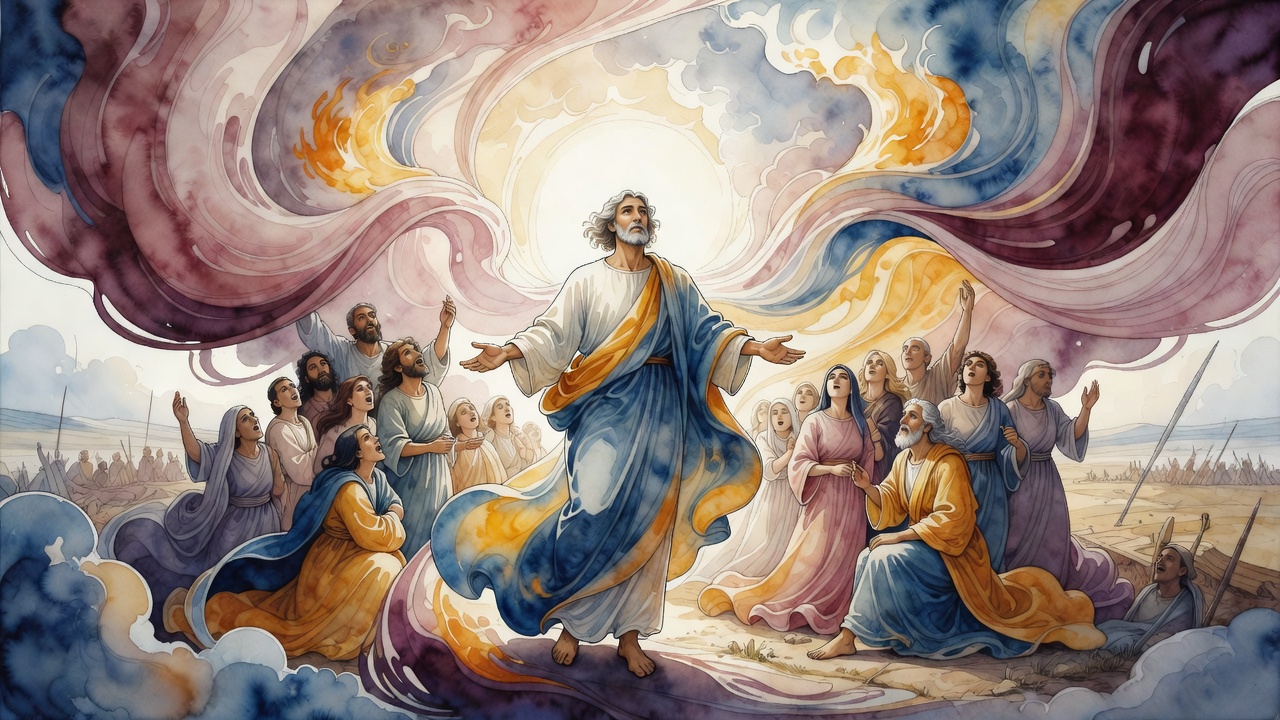
The old man's breath came thin, but his hands still found his sons' wrists and held them hard enough to leave a memory. Outside the tent, camels shifted. Inside, jealousy had been waiting years for the inheritance conversation. He did not begin with land parcels. He began with a Name long enough to fill the room.
 Click for full size
"Swear," he said, "by the name glorious and honored and great and splendid and wonderful and mighty, which created the heavens and the earth and all things together."
Two Demands Under One Sky
The Book of Jubilees, a Second Temple Jewish expansion of the Genesis story, sets this oath near the end of a father's strength. The sons are not asked for poetry. They are asked for two acts that sound simple and ruin families when refused. Fear and worship the Creator. Love each brother with affection and righteousness, desiring no evil against him all the days of life.
Affection without righteousness becomes favoritism with soft words. Righteousness without affection becomes cold legality. The oath wants both, forever, not until the will is read. Prosperity and survival hang on the choice. Division and malice lead toward destruction. The dying man knew his household's history well enough to refuse vague promises.
One son tried to smile the moment away. The grip on his wrist did not loosen.
The Dead Who Still Speak
Philo of Alexandria, writing in the first century CE, draws a hard line about whose voice heaven still receives. God listens to the worthy even when they no longer walk among the living. They live an incorporeal life; their righteousness continues to sound. The wicked may flourish in the street, yet their prayers meet an averted face. Their souls, Philo says, lie buried in their bodies like a sepulchre. Walking is not the same as living.
Cain, cursed upon the earth after Abel's blood, becomes the type of a life severed from connection. The earth rejects the one who rejected his brother. The deathbed oath in Jubilees is the opposite motion: bind the living brothers so the father's merit does not have to shout forever against their future crimes.
In the tent, the sons felt watched not only by the dying eyes but by a court that does not close when a body cools.
Why Humanity Began as One
The midrash asks why God started the human story from a single ancestor. Family pride is one answer. Many first fathers would mean endless claims to senior blood. Even with one origin, people quarrel over rank. Multiply origins and the quarrel becomes war. Greed is another answer. People already rob each other as siblings of one man. Multiply founding lines and you multiply theft. Faces differ so a thief cannot easily claim another's house or wife as his own. Voice, appearance, and mind, said Rabbi Meir, protect against deceit. Adam comes last on the sixth day so no heretic can call the human a partner in creation.
The patriarch in the tent did not recite that midrash. He enacted its fear. Brothers who forget they share one root will invent new roots and then spill blood defending them.
The Oath Spoken Aloud
They swore. Some voices shook. Some were too steady. He made them repeat the clause about desiring no evil, because that clause is where clever men hide loopholes. Not only "do not strike." Do not desire the strike. The heart is a field where theft begins before the hand moves.
When the last son finished, the old man released their wrists and lay back. The tent felt larger. Outside, a jackal called and no one used it as an omen. They had enough omen in their own history.
After the burial, the inheritance was divided with fewer knives on the table than the uncles had predicted. It was not paradise. It was an oath still warm. One brother later caught himself mid-curse and stopped, remembering the Name that made the heavens, and the stopping counted as a kind of worship.
What Outlives the Body
Philo's worthy dead and Jubilees' binding speech meet in a single claim: death does not end moral hearing, and life without brother-love is already a kind of death. The midrash's single ancestor adds the structural reason. God built humanity to make rivalry inexcusable even when it remains common.
On anniversaries the sons returned to the grave and did not only praise the father's flocks. They checked one another's faces for the old hunger. Sometimes they failed. When they failed, the oath still stood as a witness harder than a contract written on skin, because it had been sworn by the act of creation itself.
A grandchild asked once why the old stories talk so much about brothers. The answer was the grip on the wrist: because the world is full of men who will share a father and still invent reasons to destroy each other, and heaven is not fooled by their flourishes of success.
← All myths