5 min read

Meir Barbi Fortified the Breach While Secrets Waited

The head of the court stood where a congregation's wall had cracked, while seekers elsewhere begged for Torah secrets their hands were not clean enough to hold.

Curated by Arthur · Told by Maggid ·
Table of Contents
  1. The Breach Does Not Wait for Scholarship
  2. What the Secret Demands of a Body
  3. Trusted Confidants Walk the Low World First
  4. When the Feet Refuse to Stumble
Meir Barbi Fortified the Breach While Secrets Waited Click for full size

The Breach Does Not Wait for Scholarship

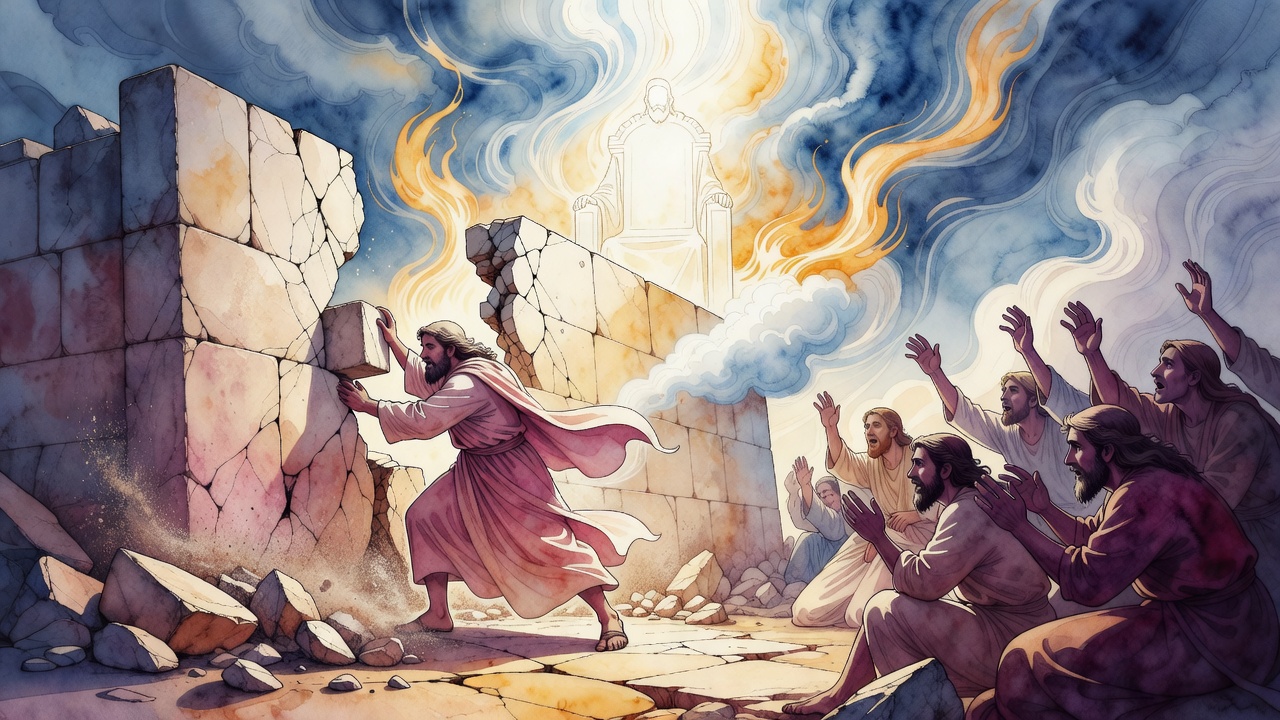
Meir Barbi did not look like a man writing commentaries when the congregation cracked. He stood in the breach the way a body stands in a door during a storm, Av Beit Din of a holy community in Italy, Pesaro or Padua depending on who whispered the letters P"V. Wind of quarrel, wind of fear, wind of enemies who wished stumbling feet. He planted himself and fortified the place with rulings, with presence, with a back that refused to leave the gap.

Somewhere a chronicler would pause mid-page to bless that light and call him esteemed and revered. For Meir the blessing was noise. A court head who abandons the breach to chase secrets leaves children in the dark. He lifted his eyes only long enough to say the Lord was his helper, then returned to the work that kept the wall from falling. Petitioners came with torn contracts and torn families. He heard them until his voice roughened. Night did not cancel morning's docket.

A younger scholar once asked when they would open the hidden books together. Meir pointed at the doorway still under pressure. First this, he said. Then, if your hands are clean, that.

What the Secret Demands of a Body

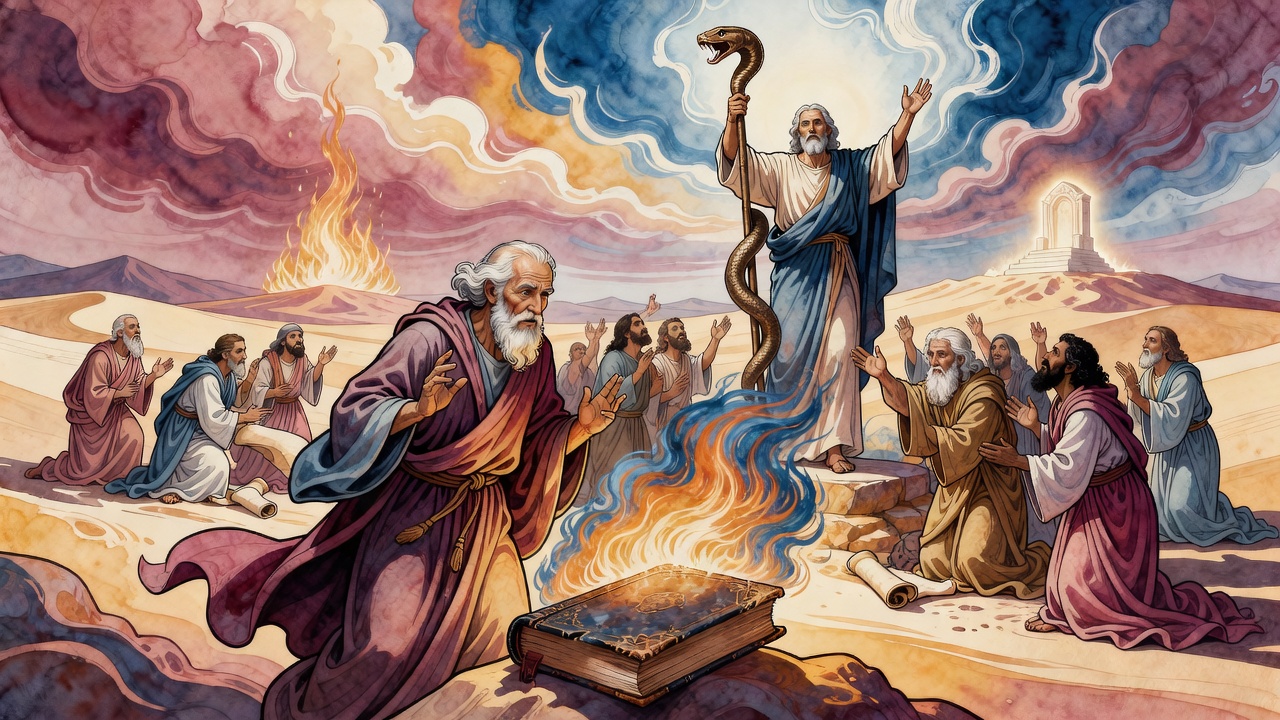
Far from that doorway, seekers pressed for hidden Torah as if wisdom were a coin left on a table for whoever grabbed first. The standard waiting for them was not cleverness. Torah for its own sake, not for a seat at the front. Meticulous fences of the Sages, even the small decrees that look like fuss until a life is saved by a fence. A heart clean enough that dishonest gain tastes like ash. Trust that does not lean on patrons. Speech that tells truth without first measuring who is listening. Psalm 25 had already named the company: the secret of the Lord is with those who fear Him, and the fear is not a costume worn on festival days.

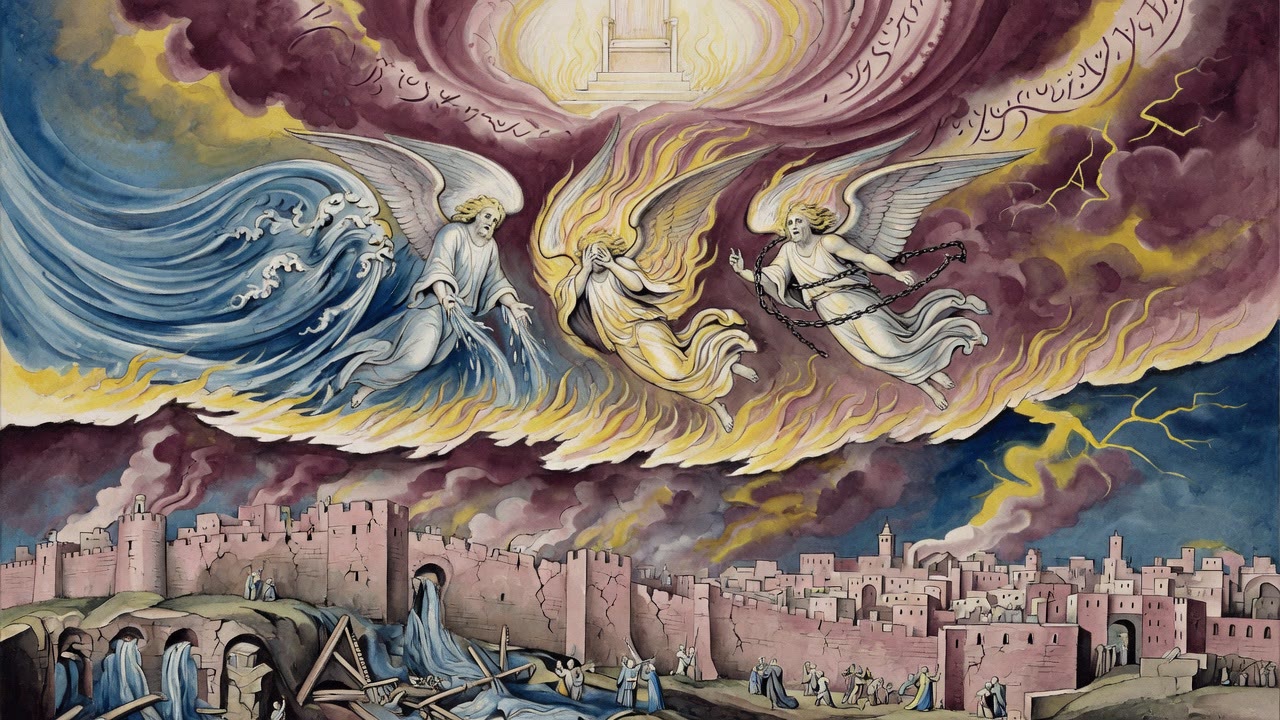
Nachmanides, the Ramban, had lived that hunger in an earlier century, and the later wrapping-book remembered what his pursuit required. Sanctity. Separations. Purity. A pure heart chasing truth, justice, peace, knowledge braided with love and fear of God. Without that preparation, free speculation becomes a blade turned inward. The vessel cracks. The wine stains the floor. The secret does not arrive because the hands that reached were still sticky with appetite. Anything other than this path, the warning runs, is dangerous. Harm dressed as insight is still harm.

Meir had seen clever men shatter households with half-learned mysteries. He preferred a dull day of honest court to a brilliant night of vanity.

Trusted Confidants Walk the Low World First

God's trusted confidants, those who may behold hidden treasures, are not naifs sealed in a study loft. They must know the nature of this lowly world, its customs, its shifting opinions, the characters of people across lands and years. Left and right. Truth and falsehood. Good and evil as they actually move in markets and courts. A man who cannot read a human face will misread a divine hint and call the error illumination.

Meir Barbi knew faces. Debtors who smiled. Litigants who quoted verses while hiding ledgers. Widows who spoke softly and still told the whole truth. Men who wished him evil and waited for his feet to stumble. That knowledge was not distraction from holiness. It was the apprenticeship the confidant path demands. Heaven does not pour mysteries into a skull that cannot tell a lie from a plea. The low world is the first textbook. The high books wait their turn.

When the Feet Refuse to Stumble

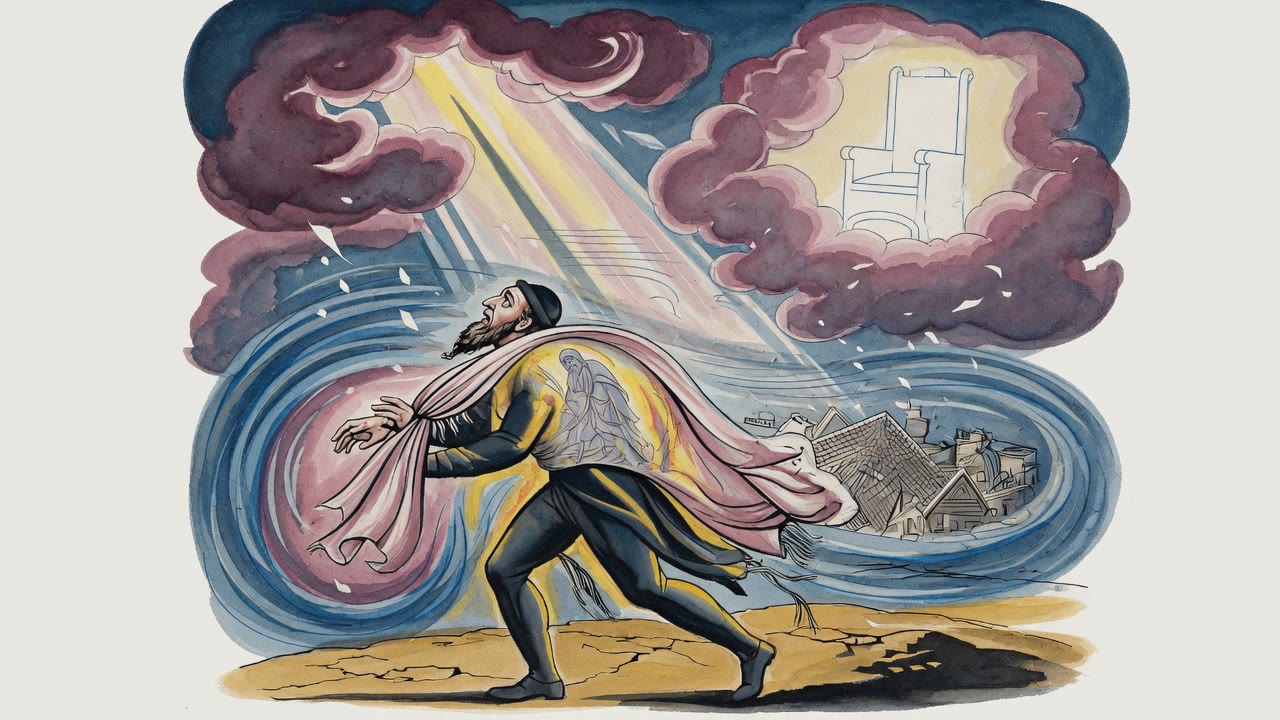
Night after night the pressure held. He answered with a verse that had teeth. He did not let my feet stumble. Whoever wishes evil, may he find no support above. The words were not poetry for the page. They were posture. A leader who stands in a breach prays with his stance before he prays with his mouth. When his knees ached, he stayed. When flattery came, he set it aside like a bribe made of sugar.

Students still asked for secrets after the last case closed. Meir pointed them again toward the door he guarded. Fortify the living house. Clean the living heart. Learn the living world. Only then open the books that claim to map heaven. The Tree of Life's hidden fruit tastes of life for those who merit it, a taste of the living King's countenance. For those who grab, it tastes of danger dressed as fragrance. He would rather they hate him for the delay than love him for a key that opens a pit.

On a quiet morning, when the breach finally eased, he washed and sat with a single page of plain Torah. No chase. No performance. Sanctity first, the way the Ramban would have recognized. The secrets could wait another hour. The wall could not.


← All myths
From the tradition

Sources

4 sources

The texts behind this telling. Some cards carry a translation of the source; others are our own retelling of it, and each card says which. Every card links out to the original.

Mitpachat Sefarim 1:37Mitpachat Sefarim

Retold in our words. Read the original at the link below.Sefaria Community Translation · CC-BY

That feeling… it's not new. Generations have felt it. And sometimes, you hear echoes of their struggles, their fears, and their hopes in the most unexpected places.

This passage from Mitpachat Sefarim – literally, "a wrapping for books." In it, we find a heartfelt plea amidst turmoil.

The author pauses to remember "the esteemed and revered Rabbi, like Meir Barbi, may his light shine," who was the Av Beit Din (head of the rabbinical court) of a holy congregation. The location is noted as P"V which is understood to be either Pesaro or Padua in Italy. He stood in the breach, the author says, and fortified it in his place. May the Lord be with him, and may his peace rise like a banner above all. A leader standing strong in a time of crisis, a beacon of hope when everything feels like it's falling apart.

Then the author turns to their own experience. "Despite all this," they write, "He did not let my feet stumble. The Lord is my helper, and I shall gaze upon my enemies." It's a declaration of faith, a refusal to be overwhelmed by the darkness. "Whoever wishes evil upon us," they continue, "may he be cursed in the upper realms, and may he find no support in the lower realms." A fierce sentiment, born of a desperate time.

But it doesn't end there. The tone shifts to gratitude: "I will give thanks to the Lord, for He is good; His loving kindness endures forever. He has shown His great kindness to me in times of siege, preserving and sustaining me." It’s a reminder that even in the darkest moments, there is always something to be thankful for. Always a glimmer of hope.

And finally, a plea for the future: "With His abundant kindness and abundant mercy, He has brought me to old age. In Him, my heart trusts, even in old age and gray hair, He will not forsake me. May my old age not bring shame upon my youth, nor consume the vitality of my ancestors. May I and my descendants be counted among the righteous who shine like stars forever and ever." It’s a powerful prayer for continuity, for meaning, for a legacy that transcends the struggles of the present.

What strikes me most about this passage is its raw humanity. It’s a glimpse into the heart of someone facing hardship, clinging to faith, and hoping for a brighter future. And in a strange way, it connects us to that person across the centuries. Their fears, their hopes, their prayers… they resonate with us still.

What breaches are we standing in today? What light are we trying to shine? And what legacy will we leave for those who come after us?

Full source
Mitpachat Sefarim 1:47Mitpachat Sefarim

Retold in our words. Read the original at the link below.Sefaria Community Translation · CC-BY

It's more than intellectual prowess, that's for sure. It's about character, about who you are as a person.

The Mitpachat Sefarim, an important Jewish text, explores exactly this. It paints a portrait of the kind of person to whom the Torah reveals its secrets. And it's a breathtakingly high standard.

It starts with Torah l’shma, engaging with Torah for its own sake. Not for accolades, not for power, but simply to preserve and fulfill it. And it's not just about the big stuff. It's about being meticulous in observing even the minor details of the commandments, the "fences" erected by our Sages, and their decrees.

Why this emphasis on character? Well, (Psalm 25:14) tells us, "The secret of the Lord is with those who fear Him." The Mitpachat Sefarim elaborates: it's especially for someone with a pure and clean heart. Someone who despises dishonest gain, has complete trust in God, and doesn't rely on others but speaks the truth from their heart. How often do we truly speak from our hearts, without worrying about what others will think? How often are we truly honest, even when it's difficult?

This ideal person isn't haughty, they walk in simplicity, hate injustice, and avoid the company of the wicked. They love righteousness and honor those who fear God. Compassion, humility, generosity, patience, and modesty are their hallmarks. They are careful in their actions, mindful of the future, and even concerned with repairing the faults of others.

Such a person, the text says, is desirable and beloved both below and above. They fear God in all matters, and aren't disdainful of God's discipline. Instead, they acknowledge Him in every measure and thank Him for every attribute and quality He bestows upon them. They fulfill their obligations with enthusiasm, rejoicing in the remembrance of God and His love. They distance themselves from anger, grief, and sorrow, and only complain about their own sins, the destruction of the Temple, and the length of the exile.

They avoid idle talk and frivolous matters, refraining from mocking and jesting. Their heart is strong enough to withstand the pressures of a corrupt world. They contemplate the Torah day and night, never ceasing to study its words. And they exert themselves to uncover its hidden depths, both revealed and concealed, in matters of Jewish law (halakha) and stories (aggadah).

They fill their "cup" with the words of the legal authorities, striving to discern and comprehend God's laws and statutes. They weigh arguments with true and upright judgment, gaining a deep understanding of the Midrashim (rabbinic interpretive commentary) (interpretive stories) and speaking in clear and desirable language.

This ideal person has a balanced and logical mind, safeguarding themselves from even the slightest error, even in a single word. Their actions are blameless, because they are the embodiment of a righteous person.

So, what does all this mean for us? Are we supposed to despair because we don't measure up to this ideal? I don't think so. I think it's a reminder that learning Torah isn't just an intellectual exercise. It's a journey of self-improvement, a constant striving to become a better person. It suggests that the more we embody these qualities, the more deeply we can understand the Torah's wisdom. It's a lifelong process, a continuous cycle of learning, growing, and striving to live a more righteous life. And maybe, just maybe, that's the real secret to unlocking the Torah's deepest mysteries.

Full source
Mitpachat Sefarim 1:44Mitpachat Sefarim

Retold in our words. Read the original at the link below.Sefaria Community Translation · CC-BY

Guess what? According to Mitpachat Sefarim, this pursuit isn't just about intelligence. It’s about your whole being.

It "requires sanctity, separations, purity, and a pure heart in the pursuit of truth, the pursuit of justice and peace, the pursuit of knowledge with love of God and fear of Him, and the grasp of wisdom and true understanding that are hidden in order to merit it." That's a tall order. It's not enough to just want the knowledge. We have to prepare ourselves, almost like purifying a vessel before pouring something precious inside.

Think of it like this: imagine trying to learn a complex musical piece while your mind is racing with a million other thoughts. You might technically be reading the notes, but are you truly hearing the music? Are you grasping the composer's intent? Probably not. The same principle applies here. To truly grasp wisdom, we need to clear the mental and spiritual clutter.

What happens if we don't? What if we barrel ahead without that essential preparation? Well, Mitpachat Sefarim warns us, things can get… dicey. "Anything other than this is dangerous," the text says, "as the cause of harm is based on unacceptable free speculation.and it is detrimental to a corrupted soul. It is a snare." Whoa. Strong words.

The great Ramban (Nachmanides), in his introduction to his commentary on the Torah, echoes this sentiment, cautioning against unchecked speculation. It's like trying to build a house on a shaky foundation. It might look good for a while, but eventually, it's going to crumble.

So, what's the solution? How do we build that solid foundation?

Well, the text points us towards the Kabbalists. "All of this is already known in the books of the Kabbalists. Whoever wishes to know on what their foundation is based should study them and find sufficient certainty." The Kabbalah, with its intricate symbolism and profound insights, offers a path, a framework for understanding these hidden truths. It’s a deep dive into the mystical dimensions of Judaism.

But the author of Mitpachat Sefarim stops short of giving us a Kabbalah 101 lesson. Why? Because, as the verse states, "assisting without strength.is futile." It's like trying to lift something incredibly heavy when you haven't built up the necessary muscles. You might strain yourself, but you're not going to move the object. We need to do the work, to study, to purify ourselves, to build that inner strength.

Mitpachat Sefarim leaves us with a challenge. The treasure is there, waiting to be discovered. But are we willing to do the work to become worthy of it? Are we ready to begin that journey of purification, of seeking truth with a pure heart? Maybe the real treasure isn't the wisdom itself, but the transformation we undergo in the pursuit of it.

Full source
Mitpachat Sefarim 1:48Mitpachat Sefarim

Retold in our words. Read the original at the link below.Sefaria Community Translation · CC-BY

We all crave that connection, that feeling of being close to the Divine. But how do we actually get there?

The Mitpachat Sefarim, a fascinating text whose name literally translates to "wrapping of books," offers a clue. It suggests that becoming one of God's "trusted confidants," someone who can "behold the hidden treasures of the Divine," isn't just about piety. It's about something much more grounded, much more… human.

In Mitpachat Sefarim, we can't be naive or ignorant of the world around us. We need to be aware. Aware of "the nature of this lowly world and its ways," the ebb and flow of time, the ever-shifting landscape of customs and opinions. It's about understanding people – their character, their motivations, their perspectives, both past and present, across different lands. In short, to understand the world.

Why?

Because, the text implies, a deep understanding of humanity – in all its messy glory – is a prerequisite for truly understanding the Divine. You have to have a "good intellect," the text urges, investigating and knowing what is good and evil, learning to discern between truth and falsehood, understanding even the difference between left and right. As it says in Proverbs, "He gives wisdom to the wise." (Proverbs 2:6).

Think of it this way: if you want to climb a mountain, you need to know the terrain. You need to understand the weather patterns, the potential dangers, the best routes. The spiritual path is no different.

But the Mitpachat Sefarim doesn't stop there. This worldly wisdom, this keen intellect – that's just the beginning, "only the fringes of the path," it says. It's preparation, necessary but not sufficient.

The real treasure, the key to entering the "inner chambers of the King," lies in something else entirely: the battle against our own yetzer hara (יצר הרע), our "evil inclination."

Ah, yes, that pesky little voice inside us that whispers temptations, doubts, and negativity. We all know it, don’t we?

The text says that we need to be "skilled in the struggle against the evil inclination in order to acquire the treasure." So, not just aware of our shortcomings, but actively working to overcome them.

The path to divine connection isn't about escaping the world, but about engaging with it fully, understanding it deeply, and then using that understanding to conquer our own inner demons. Maybe the real treasure isn't some mystical secret, but the person we become along the way, forged in the fires of self-awareness and relentless self-improvement.

What "evil inclinations" might you need to overcome to discover the treasure that awaits?

Full source