Micah Burns While Heaven Weighs His Bread
Micah's idol splits a nation, then fire takes him. Angels want him crushed. God stops them because his door fed strangers.
Table of Contents
 Click for full size
Two Columns of Smoke
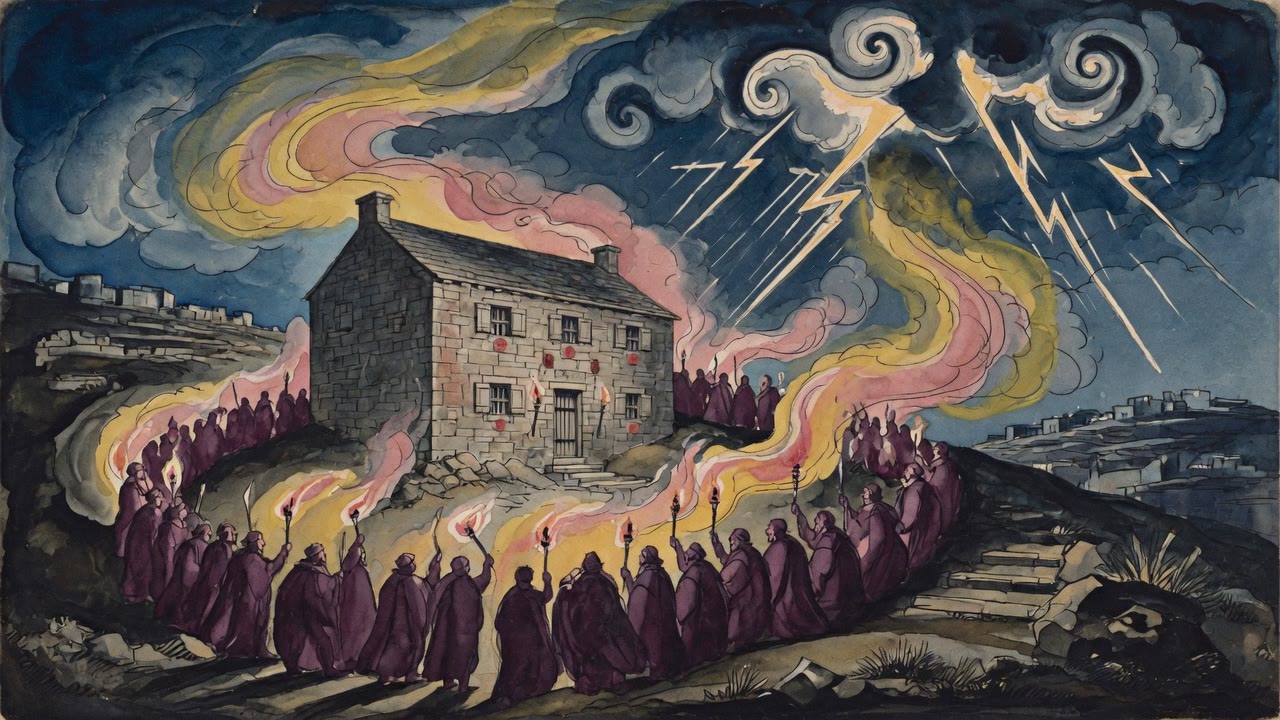
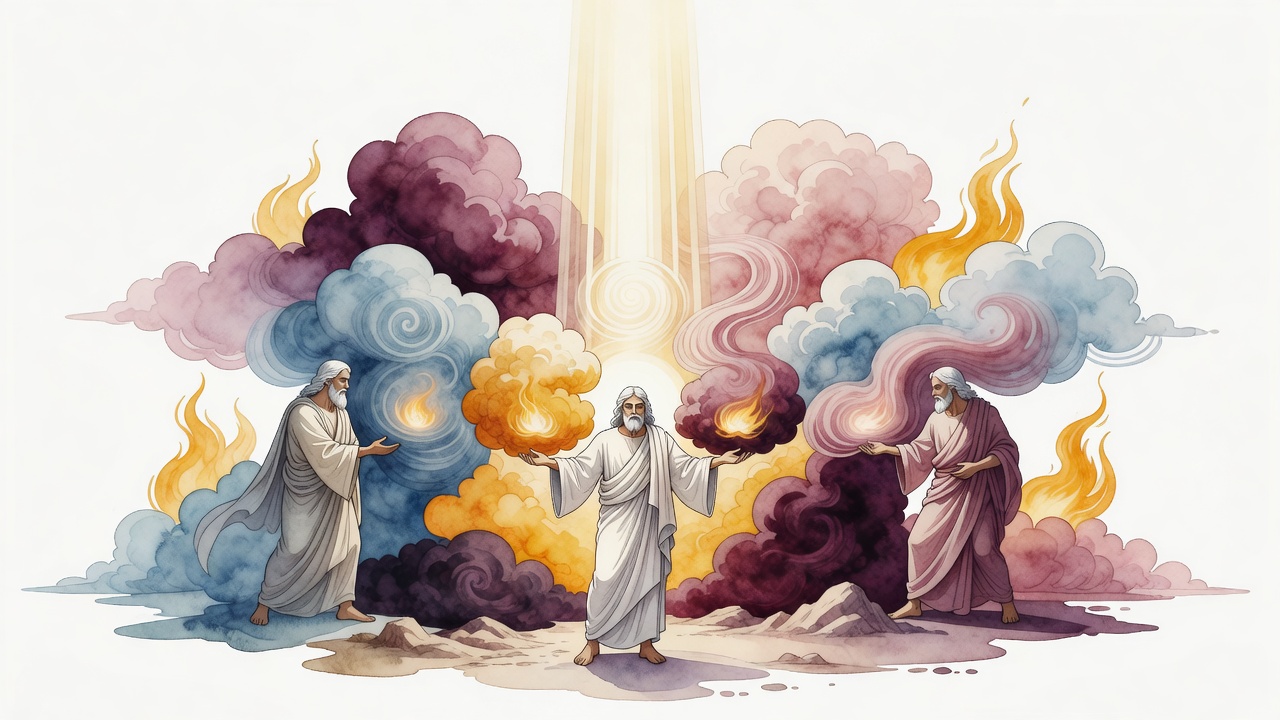
From the altar at Shiloh to Micah's private shrine was only three miles. Two columns of smoke rose and tangled in the same sky: one for the Holy One, one for a carved god that should never have shared the air. Travelers on the road between them could smell both offerings and choose which door still felt like safety after dusk. Micah's door stayed open. Bread waited for anyone still walking when the light failed.
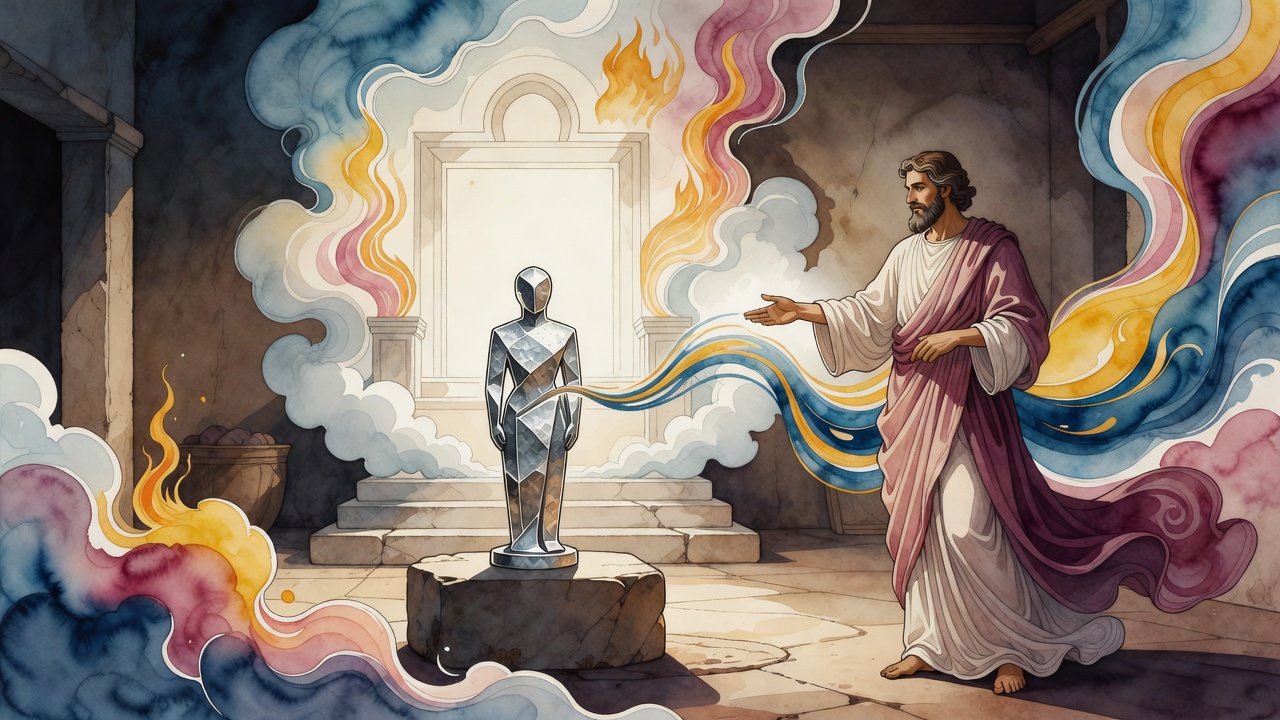
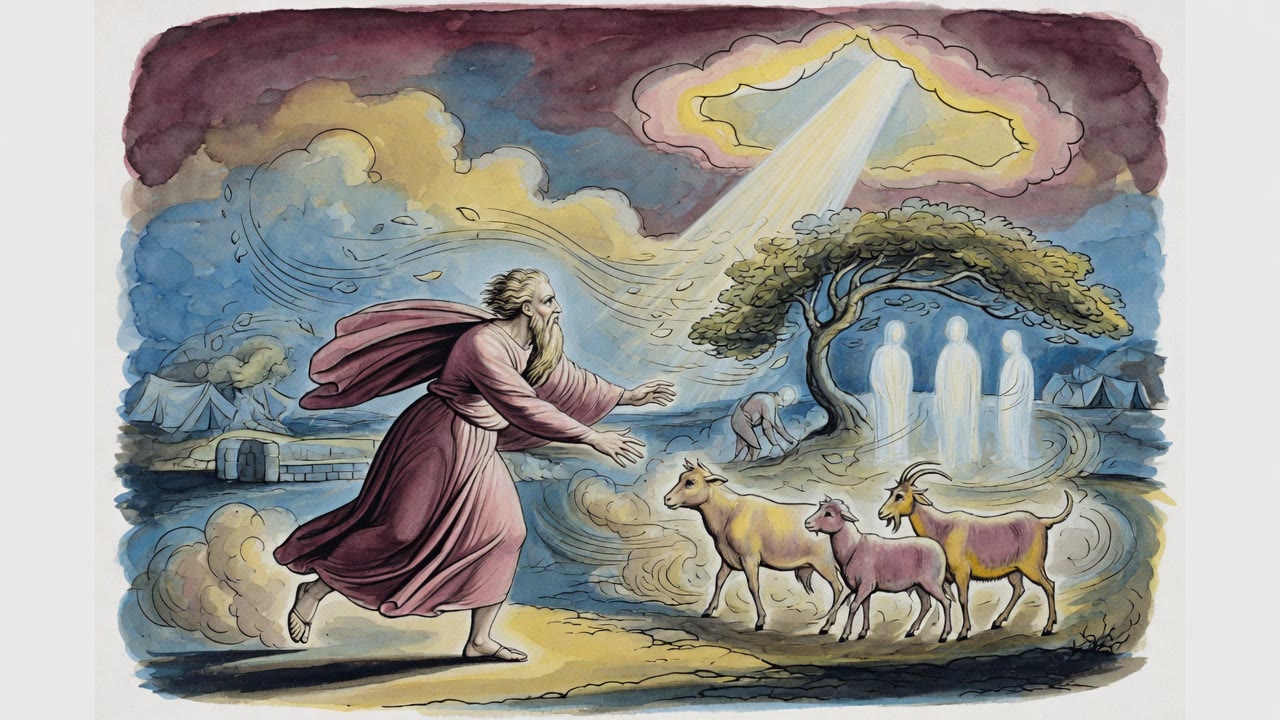
Angels wanted him shoved aside in disgust. God stopped them. Leave him alone, He said, for he feeds the stranger. Hospitality bought a man clemency his idolatry could not erase. The house that led Israel astray also set a table that did not ask a guest for a creed before the meal.
Rabbi Natan keeps the picture tight: holy altar and idol almost within sight of each other, smokes braided, heaven arguing over a host who would not lock his gate. The scandal is not only the idol. The scandal is how normal the double smoke became to human eyes that still walked the road for bread.
The War He Helped Ignite
The outrage at Gibeah pulled the tribes into a slaughter that left Benjamin nearly erased. Seventy-five thousand Benjamites fell. Six hundred survivors fled, tradition says, toward distant coasts, a remnant carrying the fear of a nation that had turned its knives inward. The civil war had many fathers, but Micah and his mother stood near the head of the chain that taught Israel how to live with a homemade sanctuary and a hired priest while Shiloh still burned its proper fire.
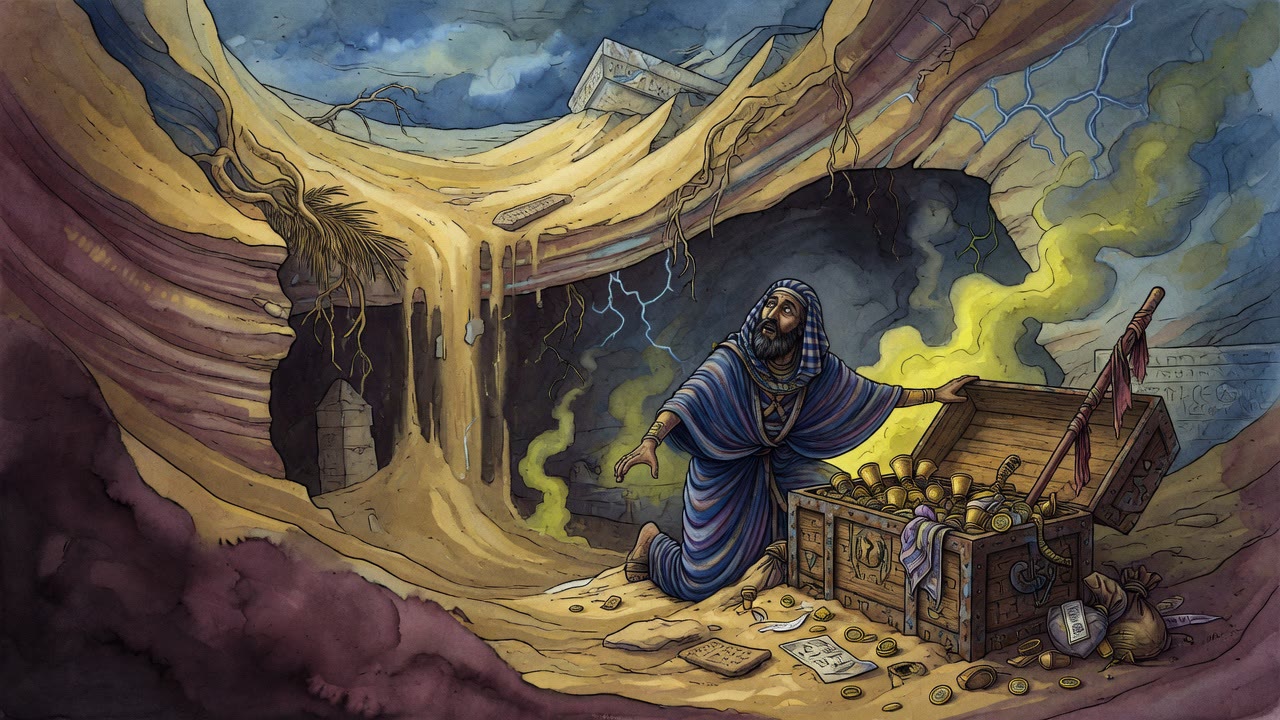
Retribution did not forget them. Micah met his end by fire. His mother, the old tellings say, was consumed by worms. The man who split loyalty between the true altar and a household idol died in heat, not in quiet old age. Fire answers fire when two smokes have shared a sky for too long and the land has paid in tribal blood.
Six hundred men on the run are a people reduced to a rumor. Micah's account sits beside that math without apology. Private religion with public consequences does not stay private when the tribes finally draw swords.
The Court Above Divides
In the heavenly court an accuser detailed Micah's sins without hurry: the shrine, the image, the priest drawn from a line that should have known better, the slow training of a people to tolerate a second smoke. Another voice rose on the other side of the ledger and named the open door, the bread, the weary stranger who never left hungry. God listened to both. The judgment that followed was strange enough to remember: even in the lower realms Micah receives a measure of spare. In one account he occupies the first place in the sixth division of Gehinnom (the place of punishment after death) under the angel Hadriel, and he is spared the tortures that grind the rest.
A flicker of light in the darkest address. Not innocence. Not acquittal. A discount earned by a table that would not close. The tradition refuses to let radical hospitality vanish from the record just because the host also carved a god and taught others to bow.
Gehinnom (the realm of judgment after death) with a lighter seat is still Gehinnom. The midrash will not make Micah a hero. It will also not pretend the bread never happened. Heaven's scales are not a single pan.
Bread Against Idol Smoke
Then the lesson turns into indictment of the tribes. For My honor, when My altar stood beside an idol, you did not protest. For the honor of one woman wronged at Gibeah, you marched to war. The complaint is not that they cared too much about human blood. It is that they cared so little about His Name until human scandal finally moved them. Micah's house becomes a mirror held up to national zeal that sleeps through sacrilege and wakes for outrage it can name in a courtroom of men.
Three miles. Two smokes. A people who could smell both and still call the road normal. Only when a woman was violated did the swords leave their sheaths. Heaven noticed the order of their zeal and spoke it back to them without comfort.
The passage also warns about names. The renegade priest is called a son of Manasseh though he descended from Moses, because Scripture hangs a fault on whoever is already faulty. Cling to good company, Rabbi Elazar urges, so your children inherit the company you chose, not the smoke you tolerated.
After the Fire
Some strands bind Micah's line to later calamity, even to the shadow of Jeroboam and calves that would split a kingdom again. Collectors of legend keep the wound open across generations, as if one household shrine taught a nation how to build golden substitutes whenever unity felt expensive. What does not change is the stubborn detail of the bread. The sages refused to list Micah among those barred forever from the world to come, because his door was a habit, not a performance for angels watching the ledger.
He burns in the telling and still feeds people in the same telling. That double image is the point. Idolatry is not excused. Hospitality is not erased. Between Shiloh's smoke and a private shrine, between civil war and a seat in Gehinnom with less pain than the rest, walks a man whose worst and best deeds refuse to cancel each other cleanly. The road still needs bread. Heaven still counts who gives it, even when the giver's other hand carves a god.
← All myths