Midnight Angels Kept Their Bargain With God
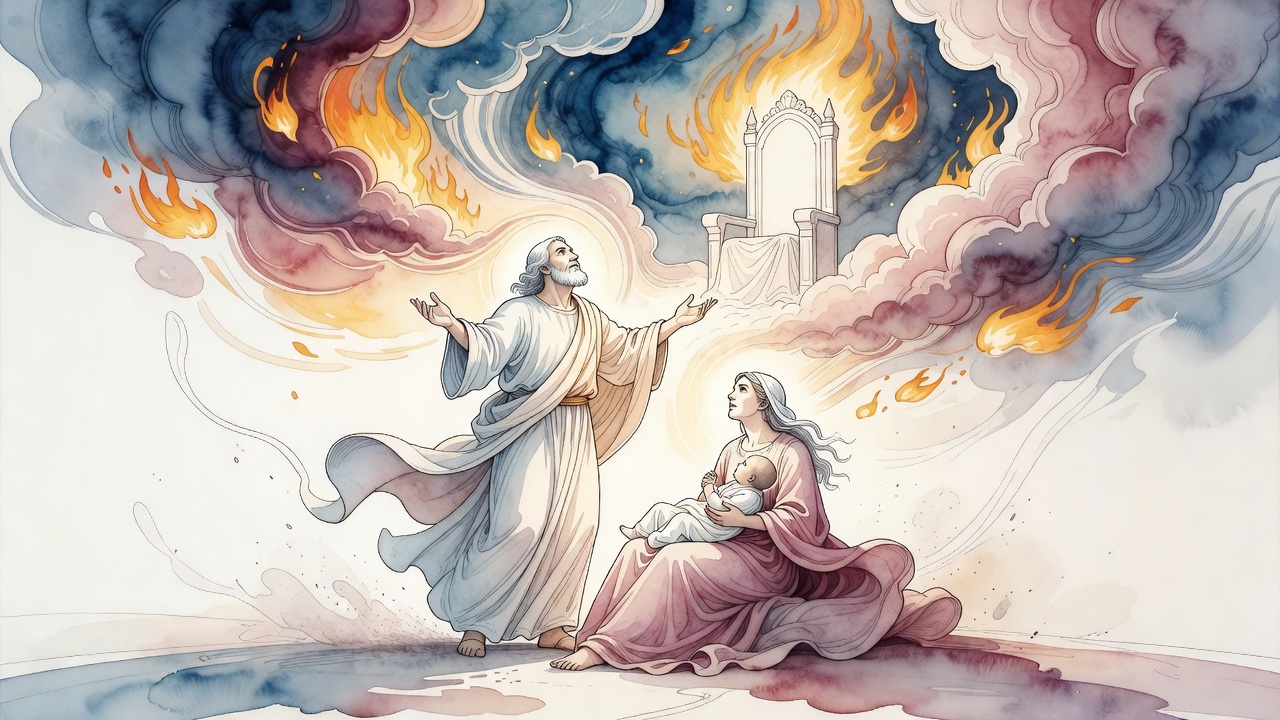
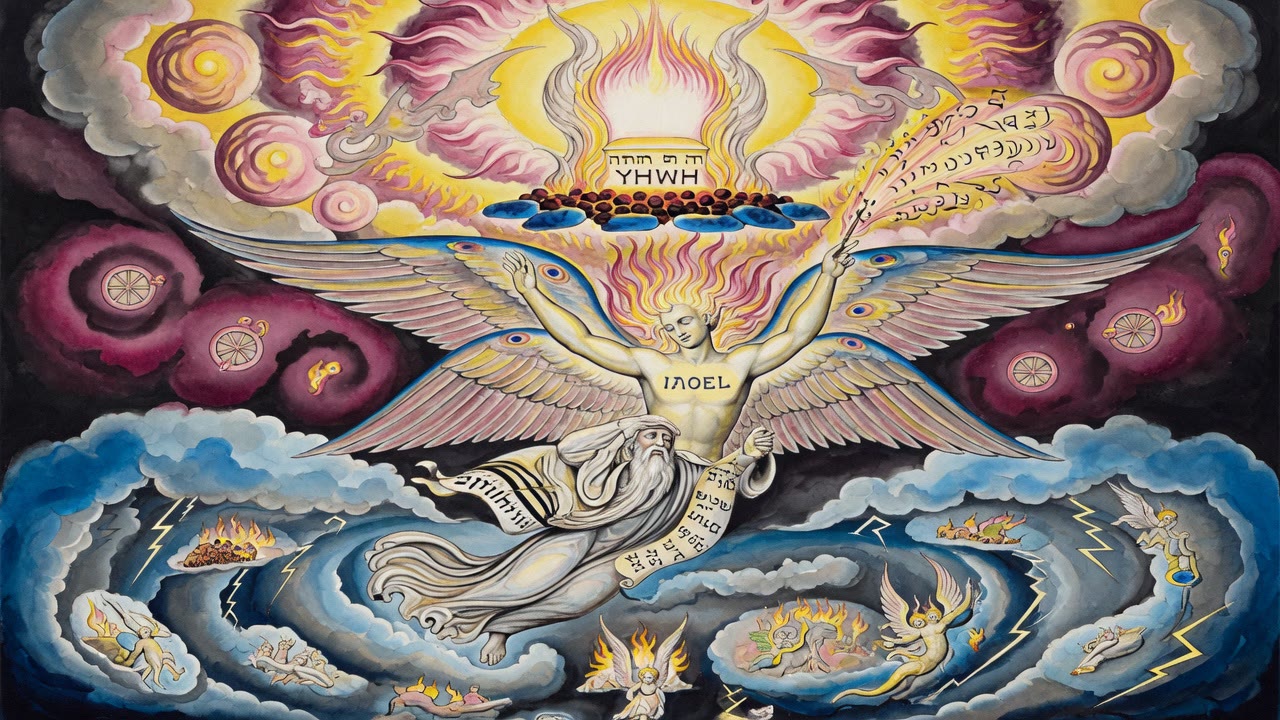
Mikhael and Gavriel asked to pull Abraham out of the furnace. God went Himself, and told them to wait for an errand of their own.
Table of Contents
The furnace at Ur was already roaring when Abraham started walking toward it. Two of the ministering angels broke rank.
 Click for full size
"We will go down and bring him out."
God said no.
The Condition Set at the Furnace
If he were going into that fire for the sake of one of you, He told Mikhael and Gavriel, you would be the ones to pull him out. He is going in for the sake of My name. I go down Myself.
There are things He speaks into being and things He will not hand off. The heavens were made with a word. The house on the mountain of His inheritance, when its turn came, He made with His hands.
Abraham came up out of Ur alive, and the matter looked closed.
It was not closed. Because you were willing, He told the two of them, I will set a time for each of you. You, Mikhael, against the camp of Assyria. You, Gavriel, against the camp of the Chaldeans. The errands were real. The dates were not given.
Angels had been refused before. When the Torah was still upstairs the ministering ones wanted it for themselves, and it went down instead to a people who would have to sweat for it, and heaven told them plainly that a father does not marry off a daughter to whoever happens to be standing there.
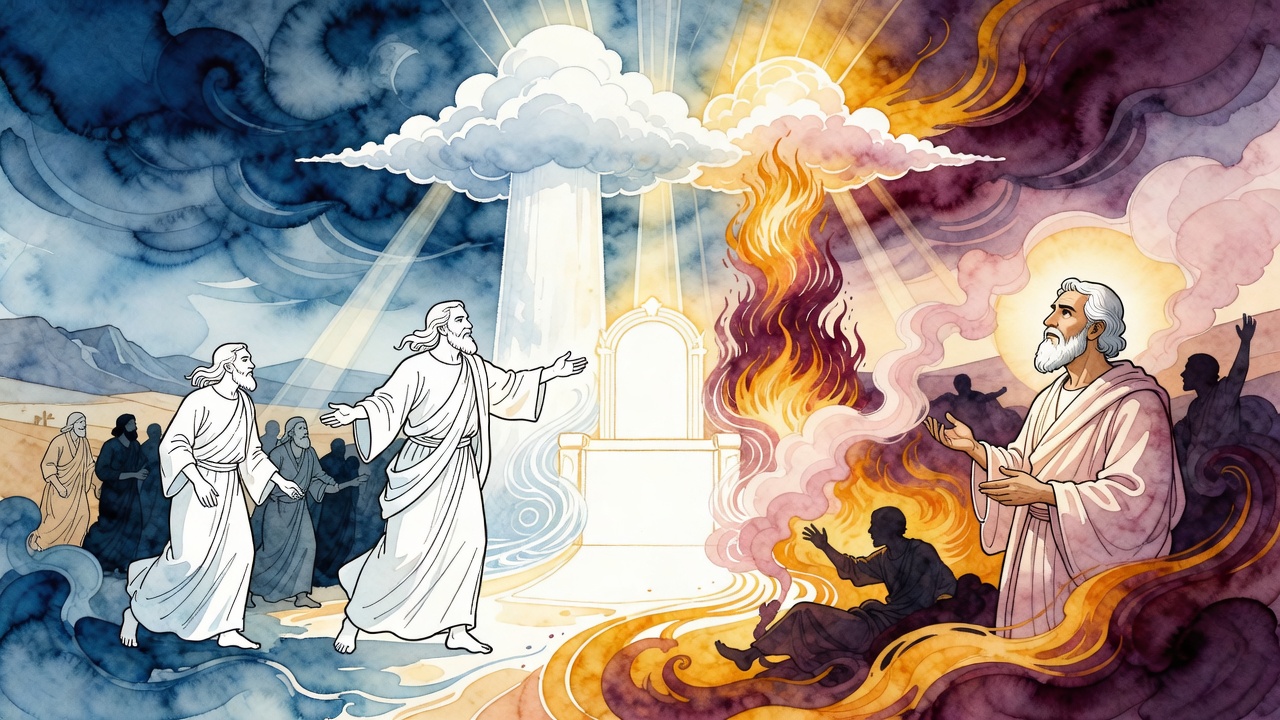
So they waited. Abraham died. Israel went down into Egypt and came out again, and in the wilderness two sparks of fire came out from between the staves of the Ark and burned the snakes and the scorpions off the road ahead of the camp, and the nations watching from the ridges said these people have gods who do everything by fire. Nobody called Mikhael's name.
Gavriel Collected First
Centuries down, in Babylon, three young men refused to bow to a statue on the plain of Dura and were tied and carried toward a furnace heated seven times past its usual heat.
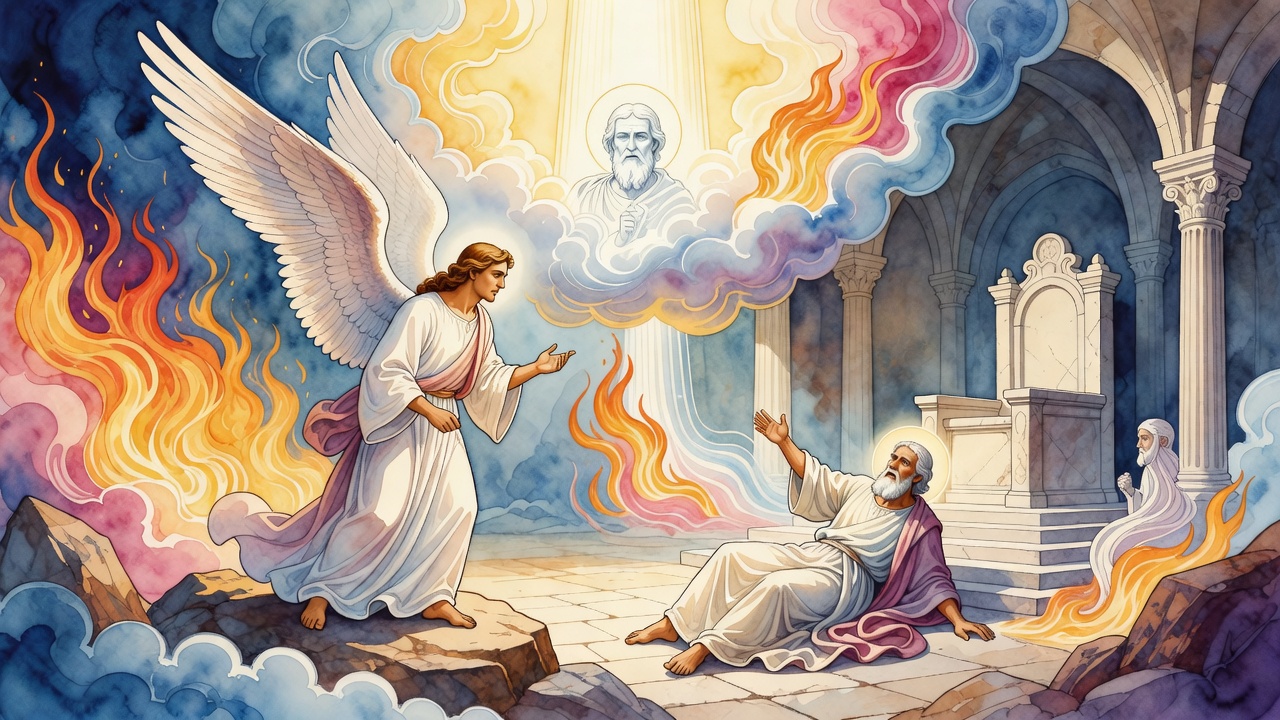
Gavriel went down. He did not put the fire out. He gave it an order, and the flame turned around on the men carrying the bundles and killed them where they stood. Four whole ranks of officials went missing from the register between the beginning of that day and the end of it.
Inside the fire Hananiah said, "Praise the Lord, all nations." Mishael said, "Laud Him, all the peoples." Azariah said, "For His mercy is great toward us."
The angel took the last line himself.
"And the truth of the Lord endures forever."
He had been holding that sentence since Ur. It is true, what He said to me when I went down to rescue Abraham.
Wine Jugs in the Assyrian Camp
Sennacherib worked by letter and by runner. His men came up under the wall of Jerusalem and shouted in Hebrew loud enough for the soldiers on the ramparts to hear it, mocking the God of a city he had already entered in his accounts as taken.
You did yours by messengers, God said. I will do Mine the same way.
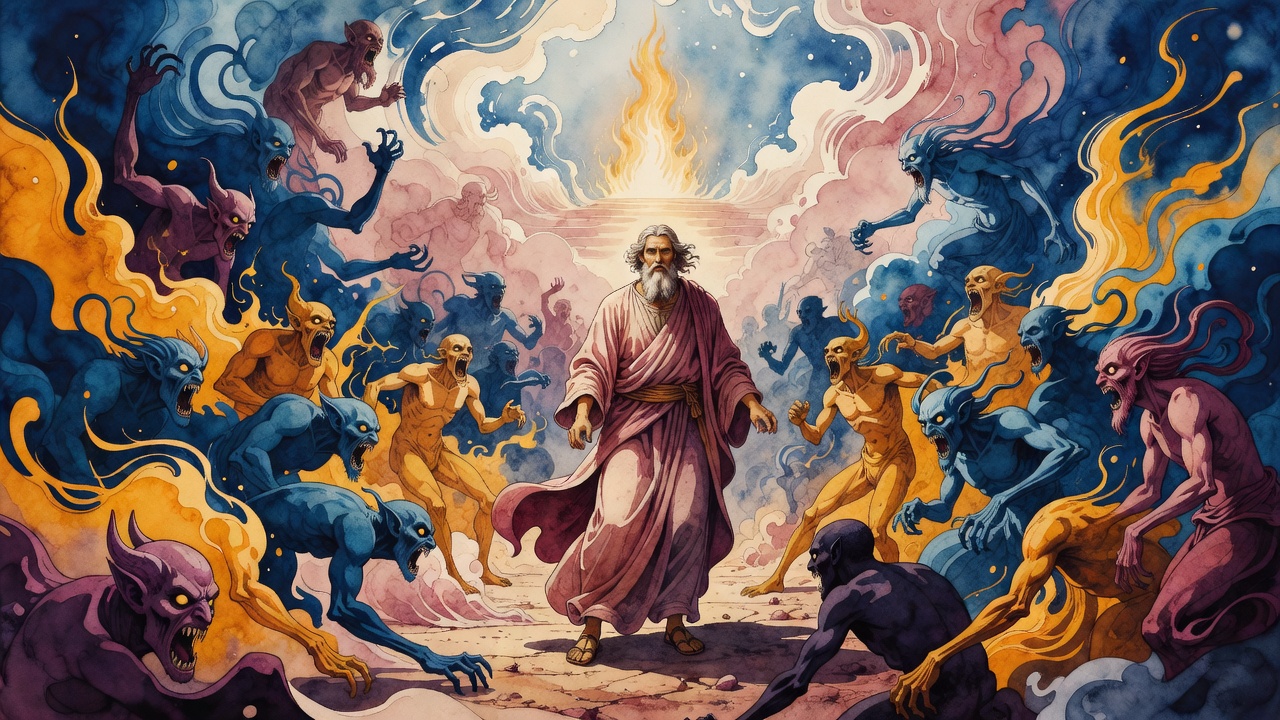
That night the generals and the commanders were drinking, and they left their jugs lying where they emptied them. Mikhael came into the camp at midnight carrying a date he had been given at a furnace nobody in that tent had heard of.
He burned them from the inside. The bodies went. The clothing stayed, every tunic and cloak whole on a dead man, because a man's glory is what he wears and there was an old debt outstanding in the matter of clothing.
The Assyrians came down from Shem. Long before, when Noah lay uncovered in his tent, Shem and Yefet had taken a garment between them, walked in backwards, and covered their father without looking at him. Burn their souls, Mikhael was told. Leave the garments.
Morning on the Walls of Jerusalem
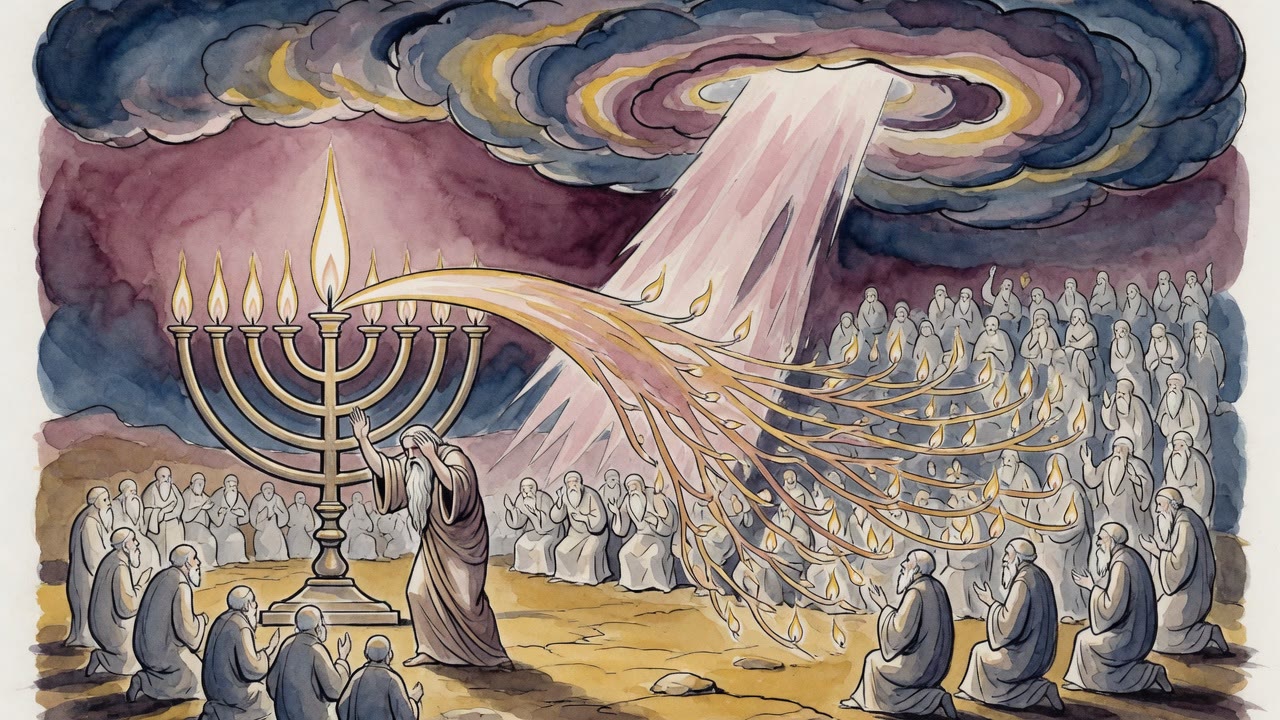
Inside the city, Hezekiah and the people had spent that night reciting hallel, because it was the first night of Passover, and they sang with their throats while their minds worked on the morning. By dawn Jerusalem falls, they said to each other between the verses.
They came out at first light to say the Shema (Hear O Israel) and pray, and looked over the wall, and the field was full of dead corpses in clean clothes.
No trumpet had sounded. No gate had opened. Down in the camp the jugs lay where the drinkers dropped them.
Isaiah had already named his sons for that day, years earlier: one Maher-shalal-hash-baz, plunder hastens and spoils quicken, and one Immanuel, God is with us. The names had been walking around Jerusalem for a long time ahead of the corpses.
The Advocate Who Silenced the Prosecutor
Mikhael did not go back into rank. He stands in a court where Samael prosecutes and he defends, the two of them trading arguments over Israel the way an advocate and an accuser trade them in front of a judge. When Mikhael knows he has won he stops arguing and begins praising the judge, and when the accuser opens his mouth to add one more thing, Mikhael tells him to be quiet so the ruling can be heard.
Nobody in Jerusalem knew about the furnace at Ur. They only knew that they had gone to bed expecting a siege and woke to a quiet field, and that somewhere beyond the wall a promise made to two angels over a burning pit had finally come due in full.
← All myths