Mikha's Idol Crossed the Split Sea With Israel
A father may carry a child who has grabbed a stone and will not let go. The rabbis proved it from God carrying a people that had packed an idol.
Table of Contents
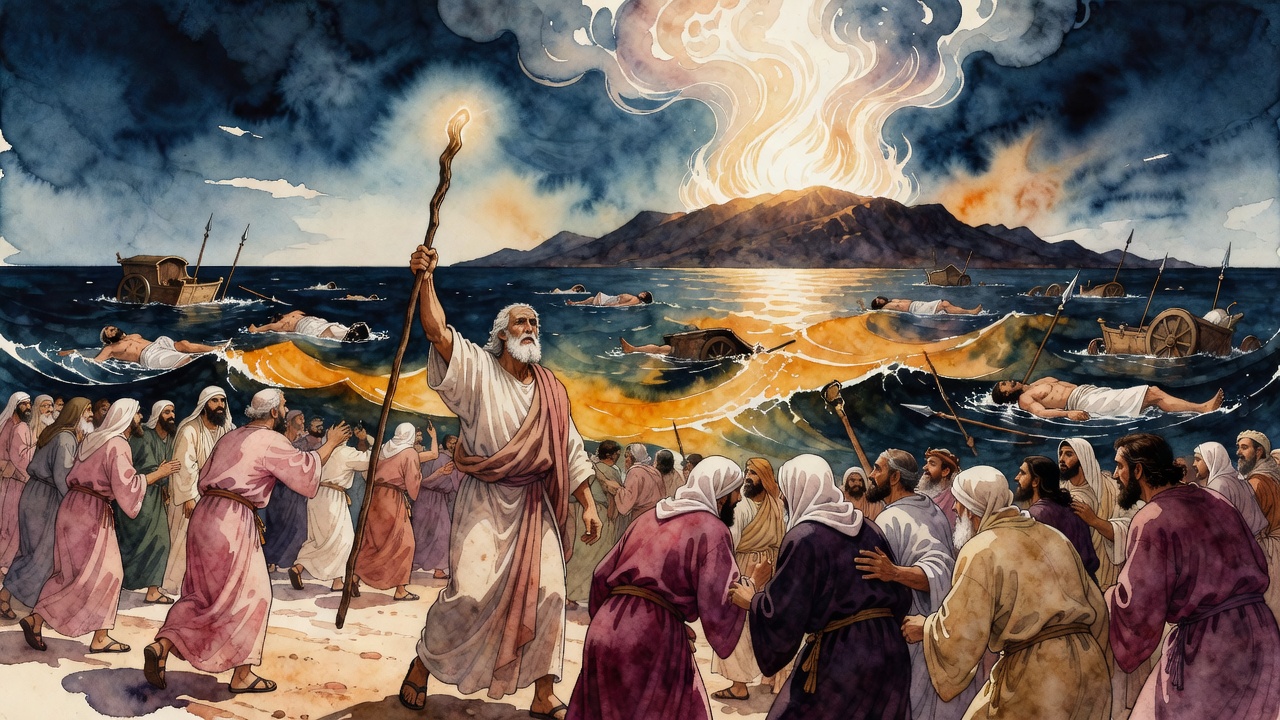
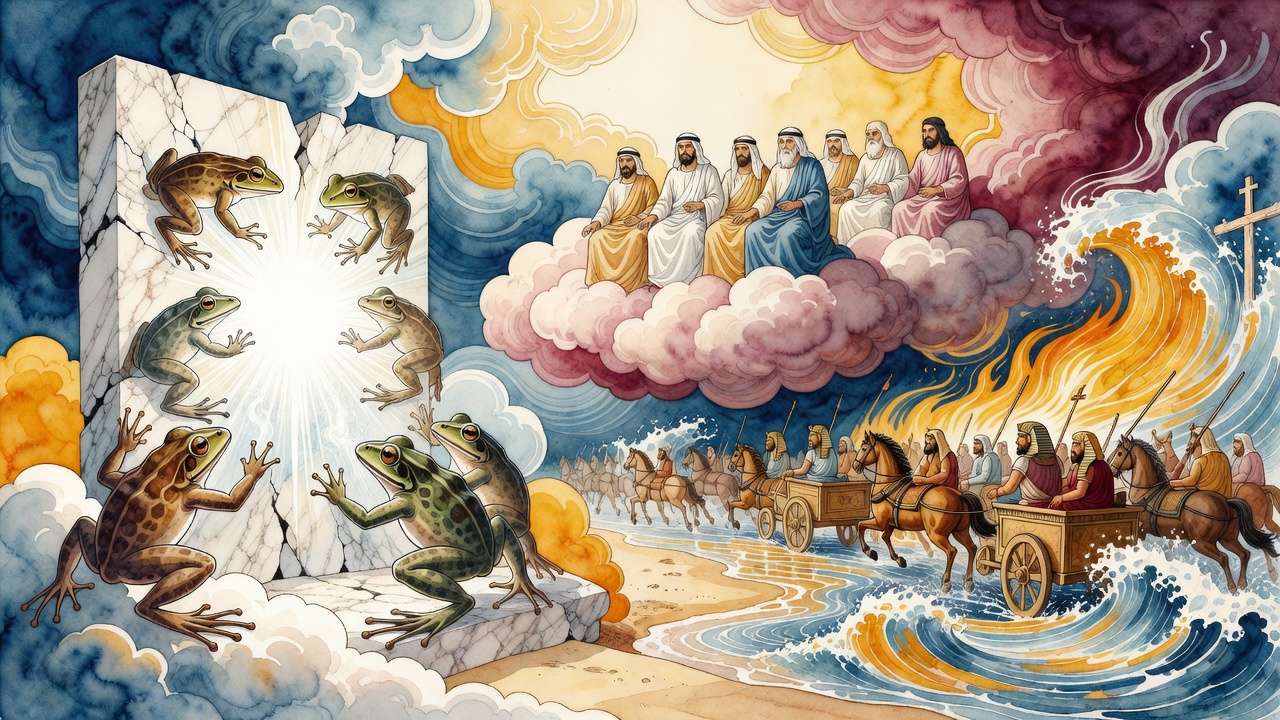
They went down between the walls of water carrying everything they owned, and somewhere in that column a man was carrying an idol.
 Click for full size
The image belonged to Mikha. It went through the sea with them, packed in beside the unrisen dough and the silver they had taken out of Egypt, on the same dry floor, under the same held-back water.
The sea split anyway.
A Rival Inside the Marriage
The word for what passed through the sea that day is tzara. It means trouble. It also means the other wife, the second woman in a house that was supposed to hold one.
That is the charge, and it is not that the people were slow or frightened. A rival had been brought into the marriage and walked through the miracle in the baggage train. Water stood up on both sides for a procession that had someone else's god in it.
The Baby With a Stone in His Fist
Long afterward, in a room of men working through the Shabbat rules, a small domestic question came up. A baby has picked up a stone and will not open his hand. May you carry the child?
You may. Lift him, stone and all. Lift the basket too if there is a stone lying in the basket.
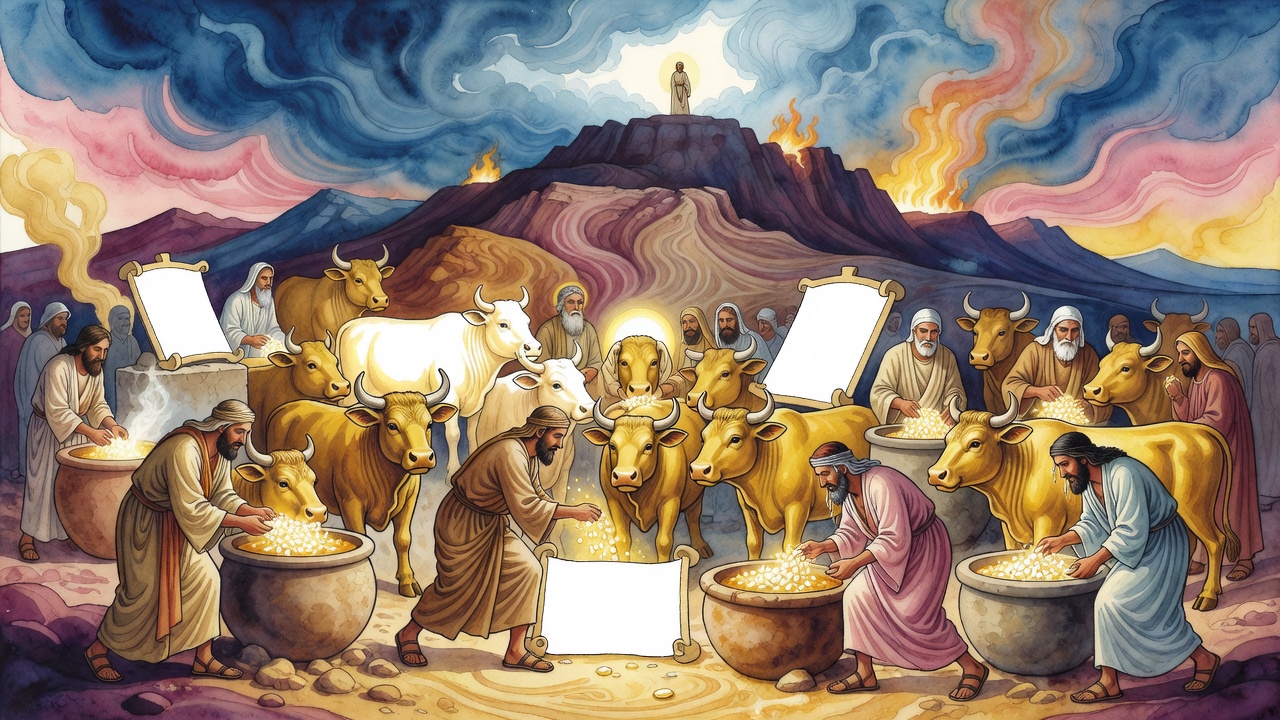
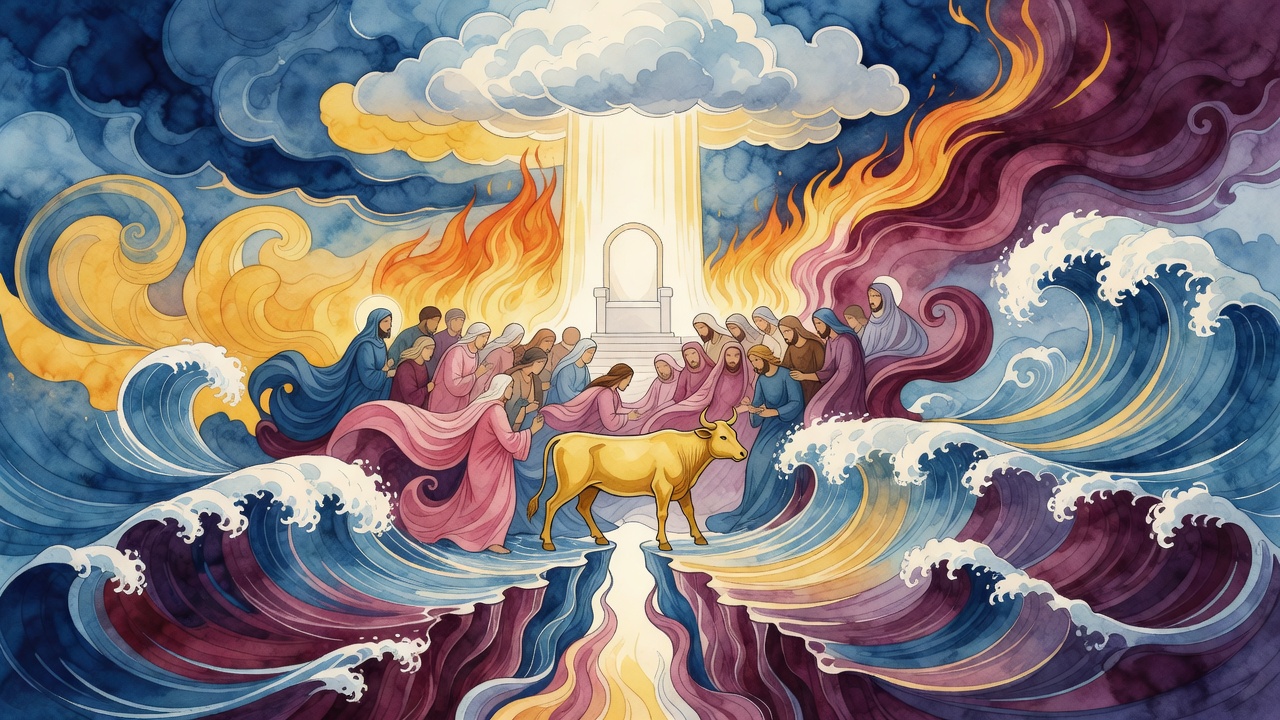
The proof they reached for was not a rule about stones. The Holy One carried this people through the wilderness as a man carries his son, and their hands were not empty either. They had poured themselves a calf out of melted jewelry. He carried them holding it.
A father does not set a child down over what the child has grabbed.
Until When
Then the spies came back and put the country on trial in front of the whole camp, and the people sat up all night weeping about a land they had not seen.
"Until when," God said to Moses. "Until when this evil congregation, that keeps bringing their complaints against Me. I split the sea for them and they infuriated Me. Now they spread slander about the Land. I cannot carry this."
The idol had crossed. The calf had been carried through sand for months. The patience in those arms was real, and it had an end written into it, and the end arrived on the night of the weeping. The generation would go into the ground where they stood, one funeral at a time, for thirty-eight years.
You Are No Better Than Your Brother
Late in that stretch, Moses was dividing up the country.
He had been handed the portions and told to assign them. This tribe on the ridge, that family along the river, boundaries, lots, inheritance for people who would walk in without him. While he worked he let himself think the obvious thing. A man is not made to draw the deeds for a house he has been forbidden to enter. The decree must have been lifted.
"My edict stands," God said. "Go up to Mount HaAvarim, to Nevo, and be gathered there as your brother Aaron was gathered. You are no better than your brother."
He went up with the whole map still in his head.
Adam Counts It Back at Them
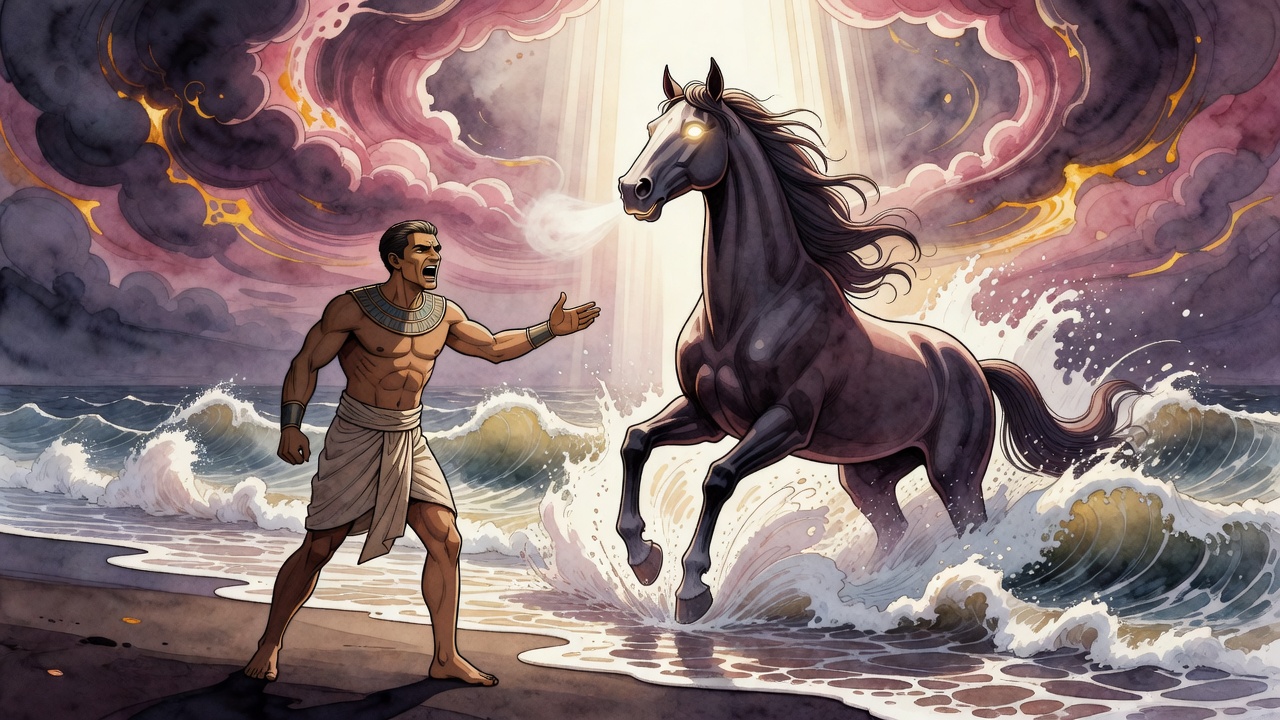
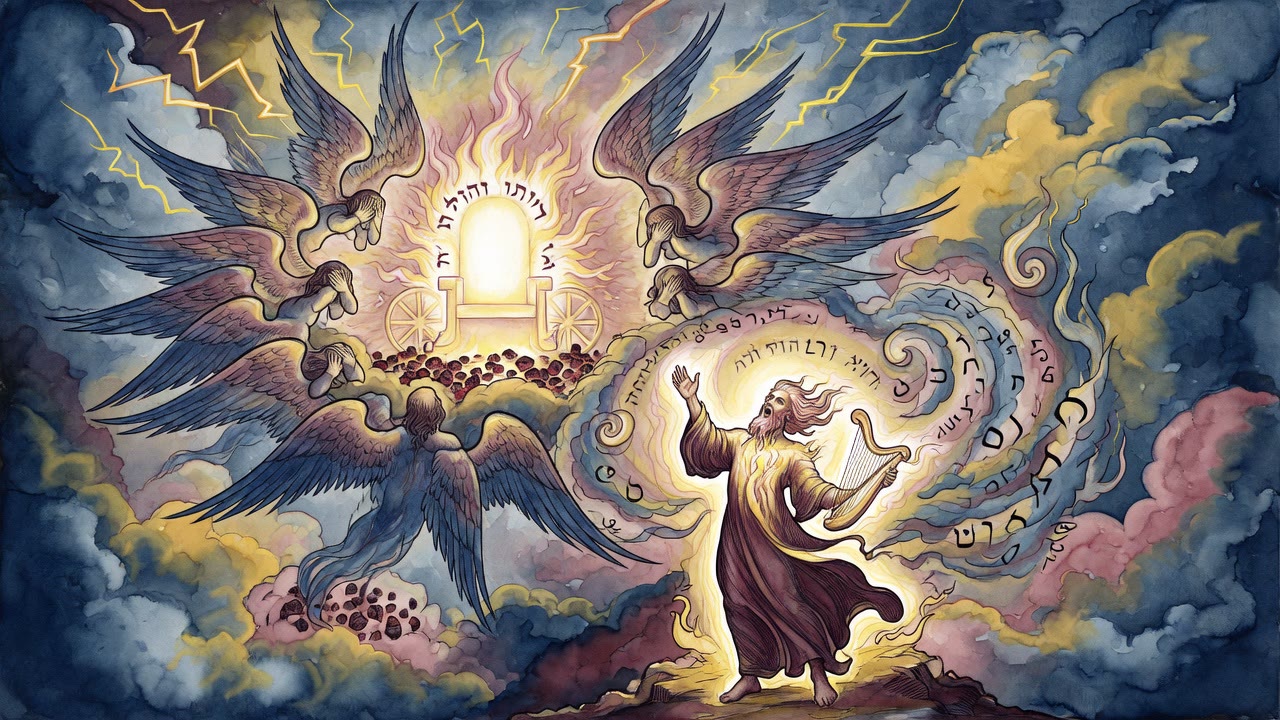
There is a place where the righteous stop before they finish dying. They see the face of the Presence, and then they turn on Adam.
"You did this to us. You caused death for us."
Adam does not claim to be innocent. He does not argue about the garden or the fruit or the woman. He counts.
"One sin is written against me," he says. "There is not one of you standing here with fewer than four."
So the ledger does not close with everything handed to the first man. Israel crossed the sea with an idol in the luggage and was carried anyway. Israel slandered the Land and heard how long the carrying would last. Moses drew the borders and climbed the mountain. The dead came up to complain about the first man's mistake and were handed back their own.
Moses went up. The generation stayed under the sand. Mikha's image crossed the sea with all of them, and not one of them got to put it down on somebody else's account.
← All myths