5 min read

Miriam Stood by the Nile and Would Not Take It Back

Light filled the house when Moses was born. Then the basket hit the Nile. Jochebed struck Miriam's head. The girl walked to the reeds and kept her prophecy.

Curated by Arthur · Told by Maggid ·
Table of Contents
  1. Light in a Slave House
  2. Where Is Your Prophecy Now
  3. Against the House-Wrecker
  4. Three Charges Placed in Women's Hands
Miriam Stood by the Nile and Would Not Take It Back Click for full size

Light in a Slave House

The midwife's hands were still wet when the room changed. Light flooded the walls of a Hebrew home under Egyptian decree, not torchlight, not sun through a crack, but a brightness the house had never earned by oil. Amram kissed his daughter's head and told Miriam her words had come true. She had prophesied that her mother would bear the one who would save Israel. The baby lay there, and the house knew it before any palace did.

Jochebed had built more than a cradle. From one mother would come three who would carry Israel through the wilderness: Moses with the manna, Aaron with the clouds of glory, Miriam with the well. All three prophets. The house was already a nation in miniature, still hidden under brick quotas and drowning laws, still answering to taskmasters who counted male infants the way other men count sheep for slaughter.

"The wisest of women builds her house," the proverb says. The midrash points at Jochebed and does not look away. Wisdom here is not theory recited in a study hall. It is a mother keeping three futures alive under a king who wants none of them born male. Beams and children and a prophecy spoken by a girl who is not yet tall enough to see over the reeds.

Where Is Your Prophecy Now

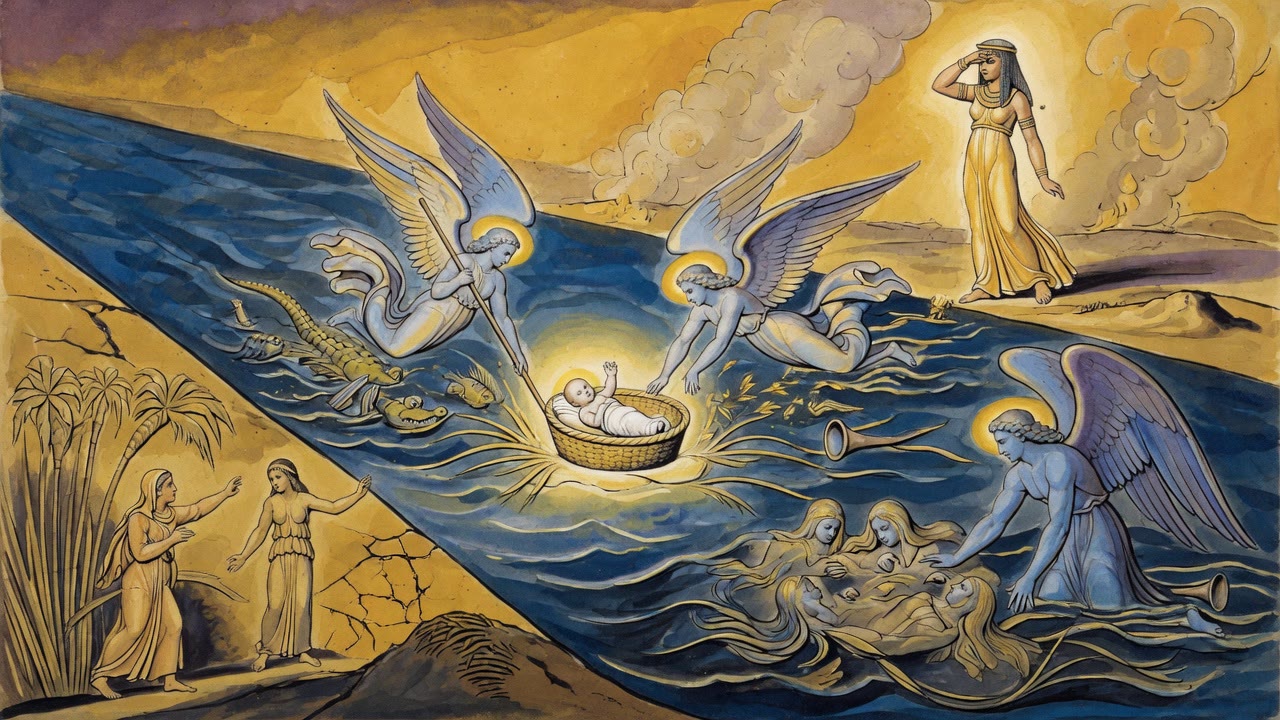
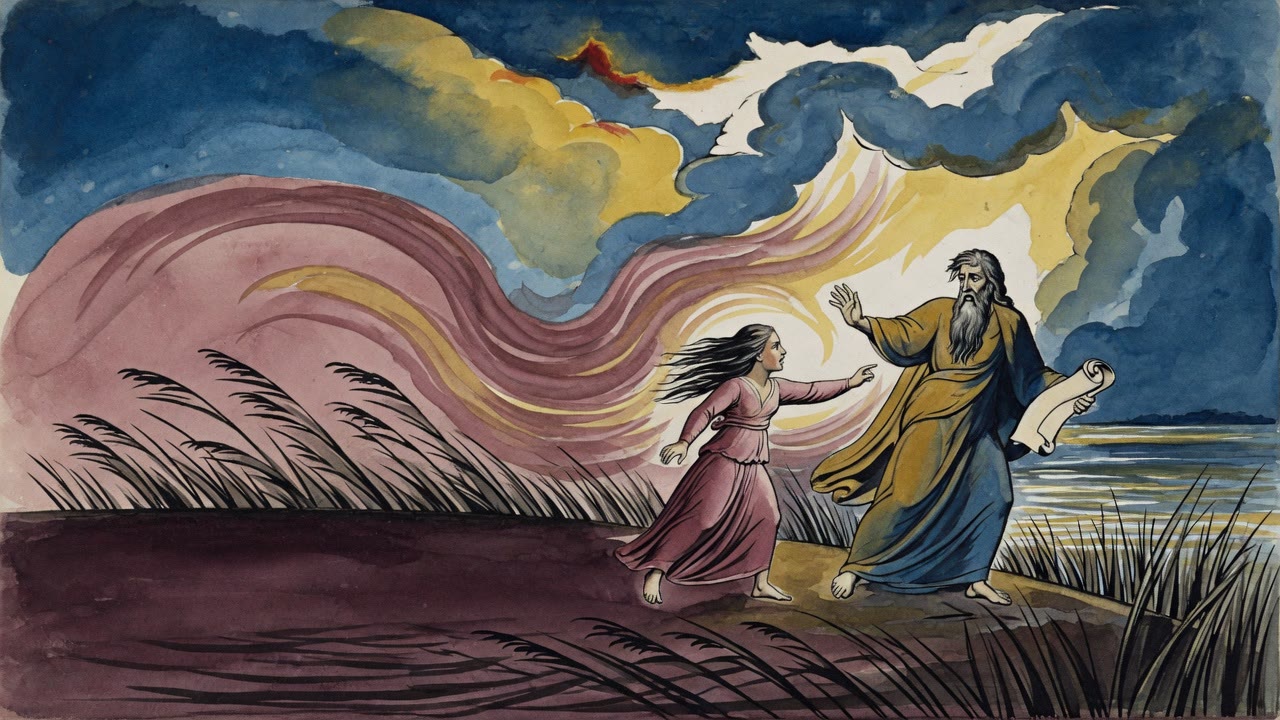
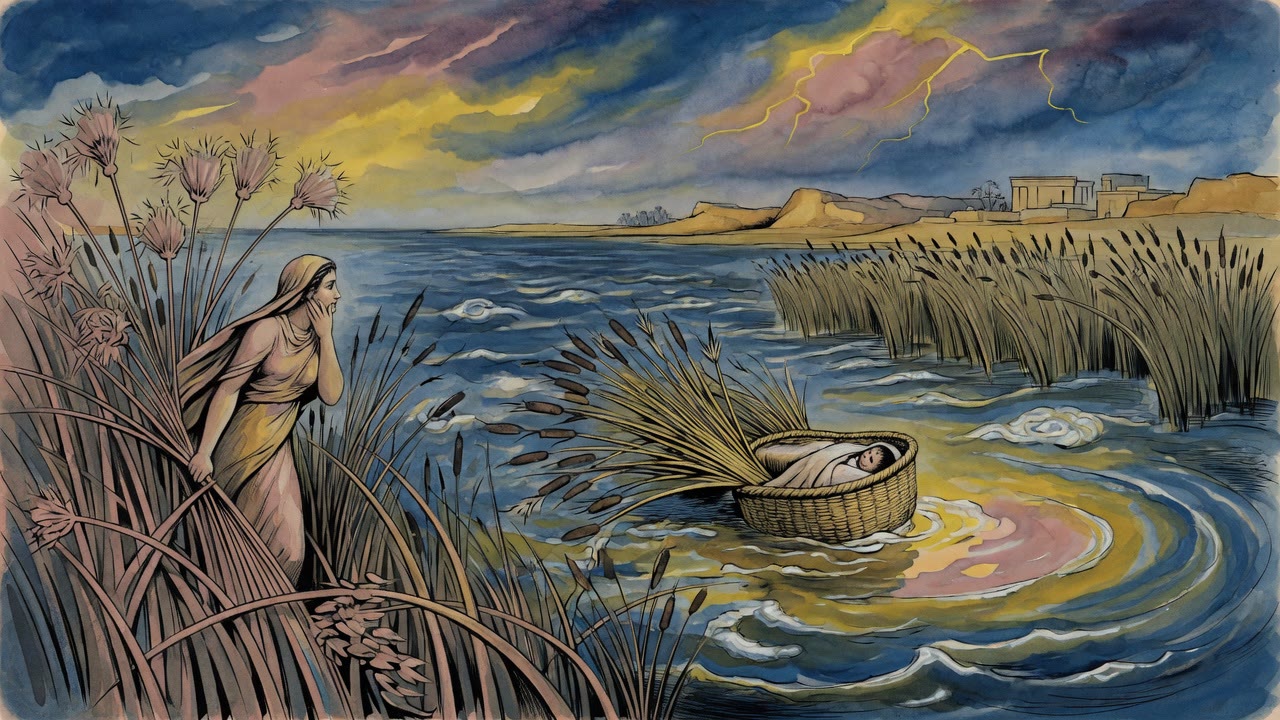
Then Pharaoh's decree forced the basket into the Nile. Pitch sealed the reeds. The current took the child with the indifference of water that has drowned others already. Jochebed's hand found Miriam's head and struck, grief speaking before comfort could form, the slap of a mother whose hope has just been set adrift.

"Where is your prophecy now?"

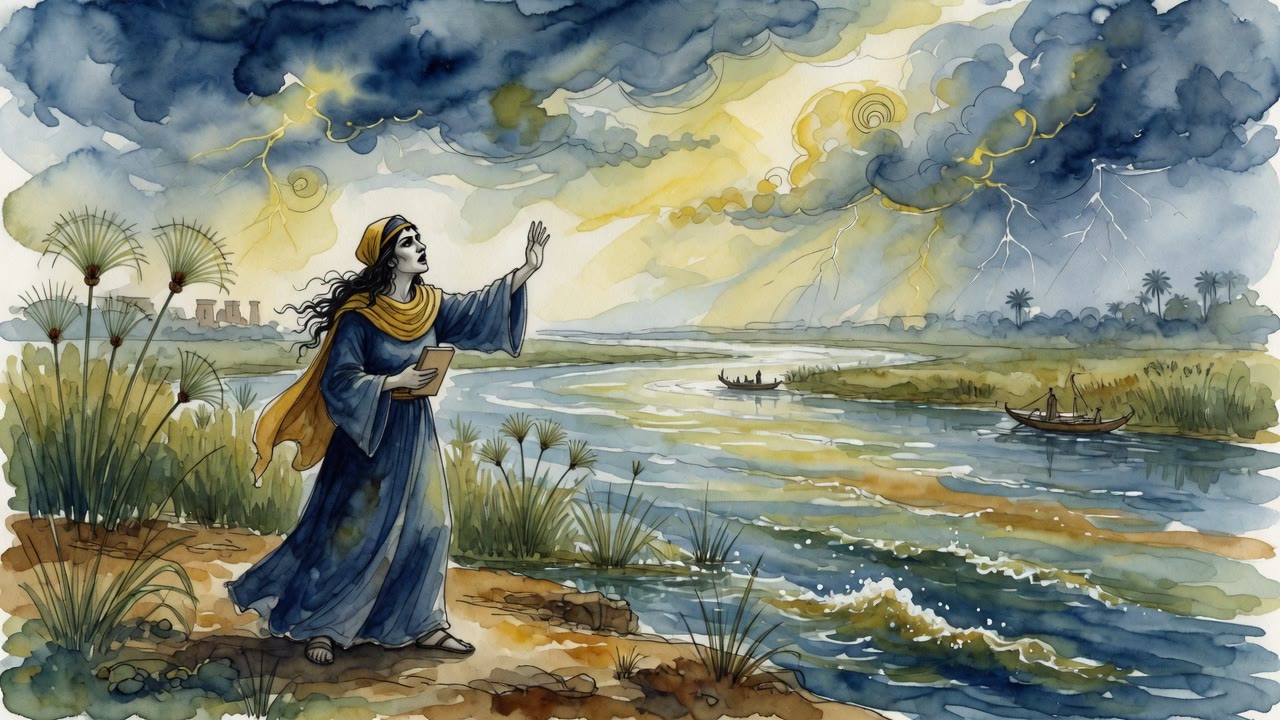
The question should have broken a girl. It was designed to. Miriam did not flinch. She stationed herself by the river and held firm to what she had spoken when the house was still full of light. Every word of the verse that places her there, the teaching says, is the Holy Spirit speaking through her. She did not edit the prophecy to match the water. She waited for the water to match the prophecy.

Sister as sentinel. Sister as stubborn mouth of Heaven. The reeds hid more than a basket. They hid a child prophetess refusing to take her words back because a mother in pain demanded proof on demand. Mud between the toes. Flies at the eyes. The long patience of someone who has already heard the ending and will not surrender the middle.

When Pharaoh's daughter later opens the little ark of reeds, the girl's watch will look like luck to anyone who never heard the earlier prediction. Miriam already knows better. She held the line between a slap of grief and a princess's curiosity, and the house her mother built did not fall into the river after all.

Against the House-Wrecker

Set opposite her stands Zeresh, wife of Haman, whose counsel tore her own house down board by board with advice that sounded clever until the gallows rose. One woman builds under a decree of death. Another dismantles under a decree of pride. The midrash draws the line without soft edges: whoever gains wisdom in this world secures it for the world to come; whoever refuses it builds only Gehinnom (the place of punishment after death) for himself.

Wisdom begins where Jochebed and Miriam began, in the fear of Heaven, a fountain of life and a path away from the snares of death. Miriam's feet in the mud are that fear made visible. She does not lecture the Nile. She stands where the basket went and keeps watch while empire assumes the river has finished the job and moved on to the next quota of dead boys.

Three Charges Placed in Women's Hands

The rabbis later ask why three commandments sit especially in a woman's keeping: the lamp, the dough-offering, and menstrual purity. Their answer reaches Eden without apology. When Eve drew Adam into sin, she dimmed the lamp of the world, for the soul of a human being is called the lamp of the LORD. She spoiled the dough of the first human. She spilled blood. So the three charges repair three damages, measure for measure, entrusted to the ones who can light a house again, separate dough again, and honor the blood that marks life and boundary.

Jochebed's house and Miriam's river stand inside that same economy of repair. A mother builds. A daughter refuses to abandon a word of salvation when the current looks like a verdict. The lamp that Eve dimmed will burn again in a people whose first great prophetess learned prophecy at the waterline, with a struck head and an unmoved mouth.

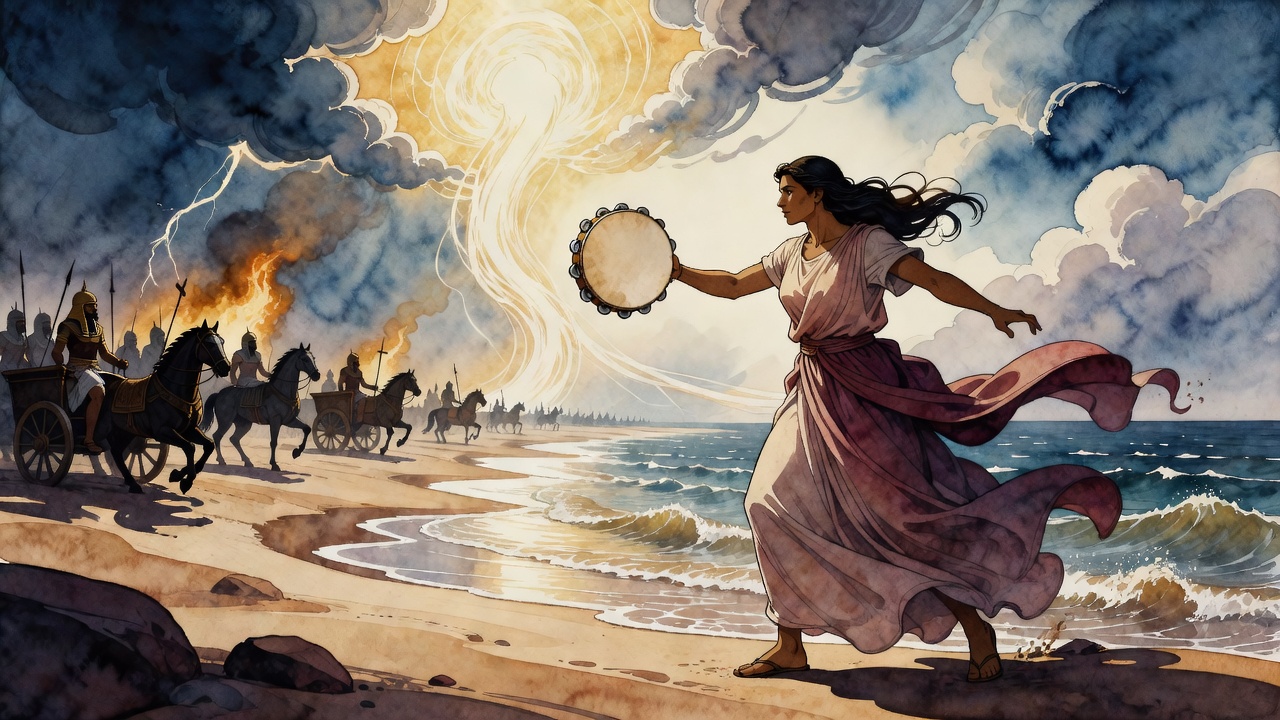
Years later Miriam will sing at another shore, timbrel in hand, water behind her that has finished a different work. The girl by the Nile is already practicing that stance: feet planted, voice sure, waiting for Heaven to catch up to what it already told her. The house holds. The prophecy holds. The basket rides the current toward a princess who does not yet know she is walking into someone else's word.


← All myths
From the tradition

Sources

2 sources

The texts behind this telling. Some cards carry a translation of the source; others are our own retelling of it, and each card says which. Every card links out to the original.

Midrash Mishlei 14:1Midrash Mishlei

Translation of the source text.Midrash Mishlei (Buber) · CC-BY

(Proverbs 14:1): "The wisest of women builds her house" - this is Jochebed, who raised up three righteous ones, Moses and Aaron and Miriam, and the three of them were privileged to serve Israel: Moses through the manna, Aaron through the clouds of glory, and Miriam through the well; and the three of them were prophets: Moses, from where? as it is said (Deuteronomy 34:10): "And there arose no prophet again in Israel like Moses"; Aaron, from where? as it is said (Exodus 7:1): "And Aaron your brother shall be your prophet"; Miriam, from where? as it is said (Exodus 15:20): "And Miriam the prophetess, the sister of Aaron, took." Rav Huna said: What prophecy did she prophesy? She said to her father: My mother is destined to bear a son who will deliver Israel. And when he was born, the whole house was filled with light, and her father arose and kissed her on her head and said to her: My daughter, your prophecy has been fulfilled! And when they cast him into the Nile, her mother arose and struck her on her head and said to her: Where is your prophecy now? Yet still she held firm in her prophecy, as it is said (Exodus 2:4): "And his sister stationed herself at a distance to know what would be done to him." And "stationing" is nothing other than the Holy Spirit, as it is said (Amos 9:1): "I saw the LORD stationed upon the altar"; and "his sister" is nothing other than the Holy Spirit, as it is said (Proverbs 7:4): "Say to wisdom, you are my sister"; and "at a distance" is nothing other than the Holy Spirit, as it is said (Jeremiah 31:3): "From a distance the LORD appeared to me"; and "to know" is nothing other than the Holy Spirit, as it is said (I Samuel 2:3): "For a God of knowledge is the LORD"; and "what" is nothing other than the Holy Spirit, as it is said (Deuteronomy 10:12): "And now, Israel, what does the LORD your God ask of you"; and "would be done" is nothing other than the Holy Spirit, as it is said (Amos 3:7): "For the Lord GOD does nothing unless He has revealed His secret"; and "to him" is nothing other than the Holy Spirit, as it is said (Judges 6:24): "And he called it the LORD is peace."

Rabbi Elazar said: Just as Moses spoke a song, so Miriam spoke a song: Moses, from where? as it is said (Exodus 15:1): "Then Moses and the children of Israel sang"; Miriam, from where? as it is said (Exodus 15:21): "And Miriam answered them, Sing to the LORD." "But folly tears it down with her own hands" - this is Zeresh the wicked, wife of Haman the wicked.

Another interpretation: "The wisest of women builds her house" - Rabbi Abbahu said: Anyone who acquires wisdom for himself in this world may be assured that he acquires wisdom for the world to come. "But folly tears it down with her own hands" - anyone who has not acquired wisdom in this world may be assured that he has acquired for himself Gehinnom in the time to come. Another interpretation: "The wisest of women builds her house" - because a person conducts himself in the fear of Heaven, the Holy One, blessed be He, gives him wisdom: (Proverbs 14:2): "He who walks in his uprightness fears the LORD, but he whose ways are crooked despises Him" - because a person merits the fear [of Heaven], he merits length of days, as it is said (Proverbs 14:27): "The fear of the LORD is a fountain of life," at the time when he distances himself from sin so that he will not be ensnared on the day of judgment, as it is said, "to turn away from the snares of death."

Full source
Yalkut Shimoni on Torah 32:1Yalkut Shimoni on Torah

Translation of the source text.Torat Emet (Yalkut Shimoni) · CC-BY-NC

Rabbi Chanan said: what is the verse [for being unworthy of kindnesses]? "I have become small from all the kindnesses" (Genesis 32:11). Rabbi Zeira on a windy day would not go out among the palm trees [lest one fall]. Rav Yitzchak bar Rav Yehudah said: a person should always pray that he not fall ill, for if he falls ill they say to him: bring merit and be acquitted, as it is said, "for the one who falls may fall from it" (Deuteronomy 22:8), "from it" [meaning] he must bring proof [of his merit to be saved].

Why were these [three commandments] entrusted to the woman? She extinguished the lamp of the world, as it is written, "the lamp of the LORD is the soul of man" (Proverbs 20:27); therefore let her keep the commandment of the lamp. She defiled the dough-offering of the world, this is Adam the first man, as it is written, "and a mist went up from the earth" (Genesis 2:6), and adjacent to it, "and the LORD God formed the man" (Genesis 2:7), like a woman who kneads her dough with water and afterward takes the dough-offering; therefore let her keep the commandment of challah. She spilled the blood of Adam the first man, as it is written, "whoever sheds the blood of man, by man shall his blood be shed" (Genesis 9:6); let her keep her menstrual laws, that it may be atoned for her.

Rabbi Yehoshua ben Levi said: a man is obligated to visit his wife at the hour he goes out on a journey, as it is said, "and you shall know that your tent is at peace, and you shall visit your dwelling and not sin" (Job 5:24). Is this derived from there? It is derived from here: "and to your husband shall be your desire" (Genesis 3:16), teaching that the woman longs for her husband at the hour he goes out on the road. This was needed only for [the time] close to her menstrual period; and although the Rabbis said a man must separate from his wife close to her period, this applies to a voluntary act, but for the sake of a commandment it does not apply.

Full source