Miriam Turned White as Snow Outside the Tent
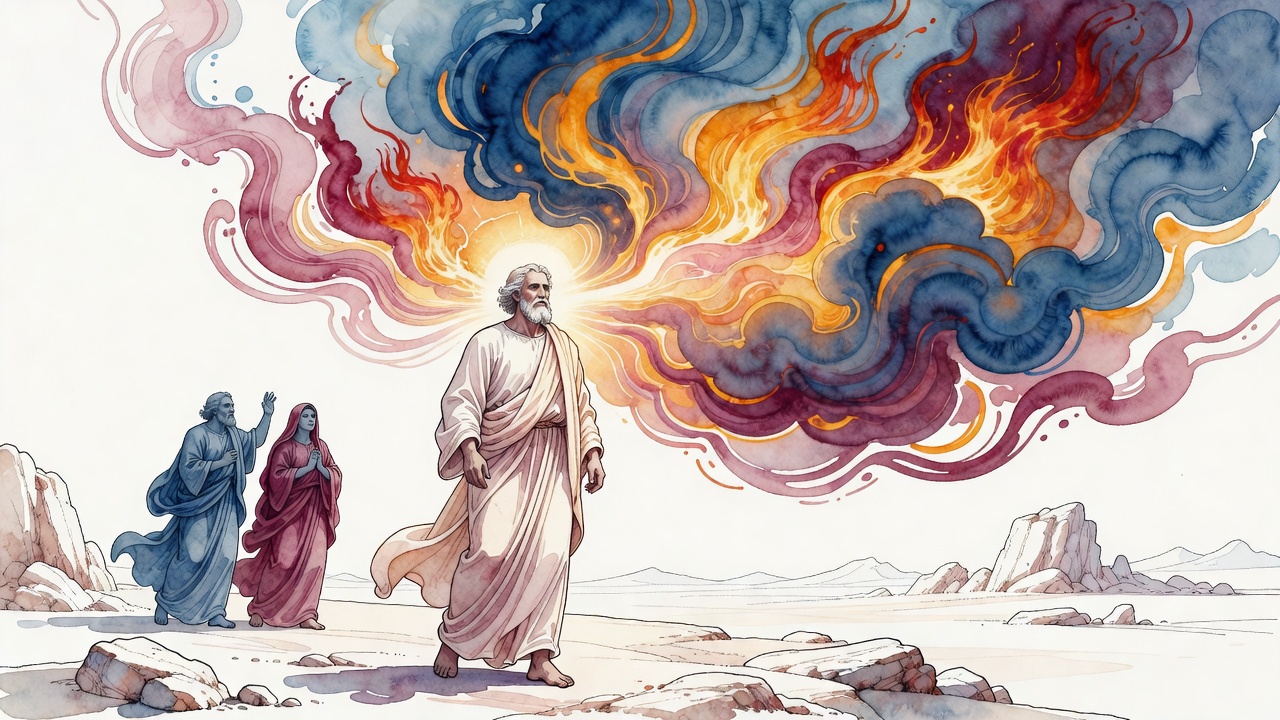
After Miriam and Aaron spoke against Moses, the cloud lifted from the tent. Miriam stood white as snow. Aaron turned, saw his sister, and begged for mercy.
Table of Contents
 Click for full size
The Cloud Went Up First
Miriam had said it and Aaron had agreed with it. The Cushite woman first, which was the small door in, and then the real question through it, whether the Lord had spoken only with Moses and not with the two of them as well.
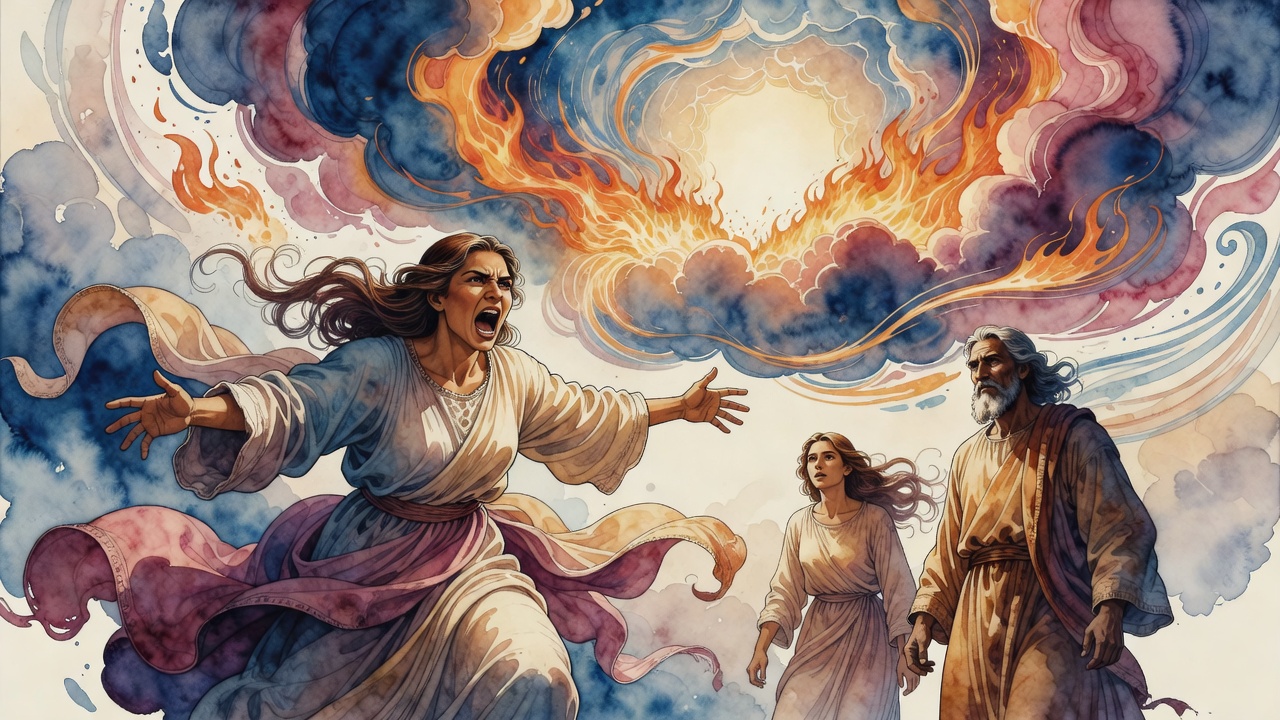
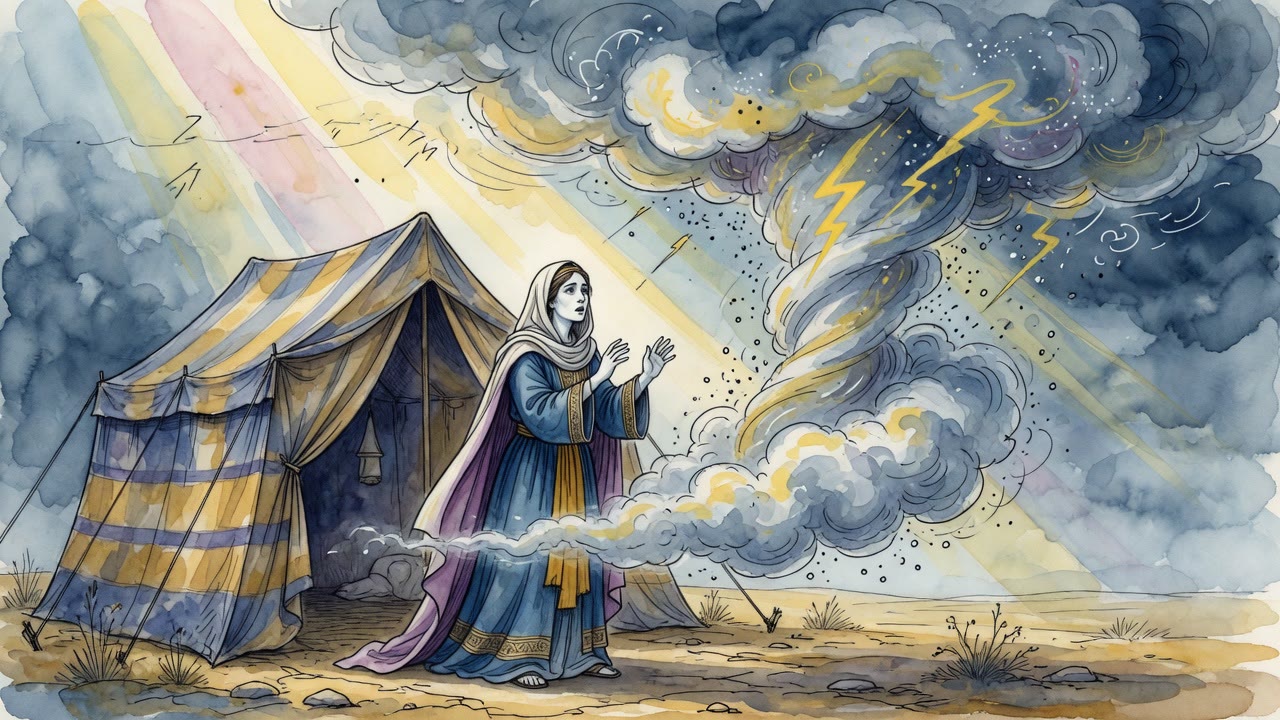
God called the three of them out to the Tent of Meeting and came down in the pillar of cloud and stood in the door of the tent, and said what He had to say about a prophet who gets visions and dreams and a servant who is spoken to mouth to mouth. Then the cloud lifted off the tent.
Aaron watched the shadow slide off the goat hair and off the sand and go up, and the ordinary sun came down on the three of them, and he knew what it meant before anything happened, since he had heard the parable all his life. A king tells the tutor to discipline his son and then leaves the room, because no father stands and watches the rod come down on his own child. The Presence had been in the doorway the whole time they were being answered. Nothing had fallen while it was there. It went up because the sentence was coming, so the sentence came.
Aaron Turned
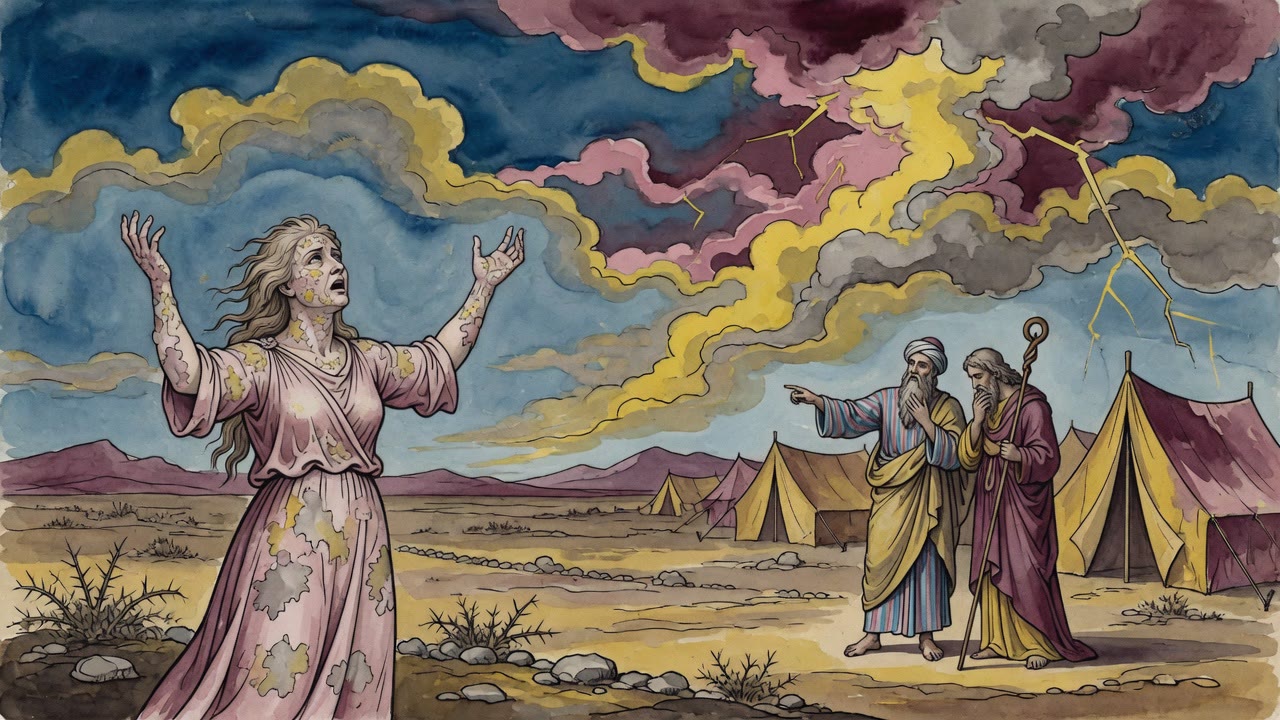
He turned toward his sister and she was white as snow.
He looked away, at the sand, at the tent, at nothing, and then he looked back to check what he had seen, and it was still on her, and it would be there the next time too. That was the shape the whole day took. Every time his eyes found her, the tzaraat (a withering affliction of the skin) was there, bright and wrong against desert skin, and there was no angle from which she looked like his sister and not like a verdict.
He had seen white like that once before, in Egypt, when Moses pulled his hand out of his cloak for a sign and it came out leprous as snow. Moses had put the hand back in his cloak and taken it out again and it was clean, and that had been the whole point of it, a sign that reverses. Miriam's did not reverse. She had watched a basket in the reeds for a brother's sake and sung at the sea with a drum in her hand, and she stood in the open camp now and said nothing at all.
The Priest Who Could Not Rule on Her
Aaron was the one this work belonged to. He was the one who looked at the skin and the hair in it and the depth of it, who said shut up seven days, who said clean or said unclean, and whose word moved a person out of the camp or back into it. The office was his and the hands were his, and he could not use either of them, because the woman standing in front of him was his sister and he was not free to sit in judgment on his own blood.
So the priest went to the prophet with nothing in his hands.
"Alas, my lord," he said, "do not lay this sin on us, in which we have done foolishly and in which we have sinned." He asked for the willful part of it to be counted as though they had blundered into it. Then he asked the thing he had come to ask. "Let her not be as one dead, of whom the flesh is half consumed when he comes out of his mother's womb."
He had used his mouth against Moses not an hour earlier. He was using the same mouth now, to Moses, for her.
Five Words
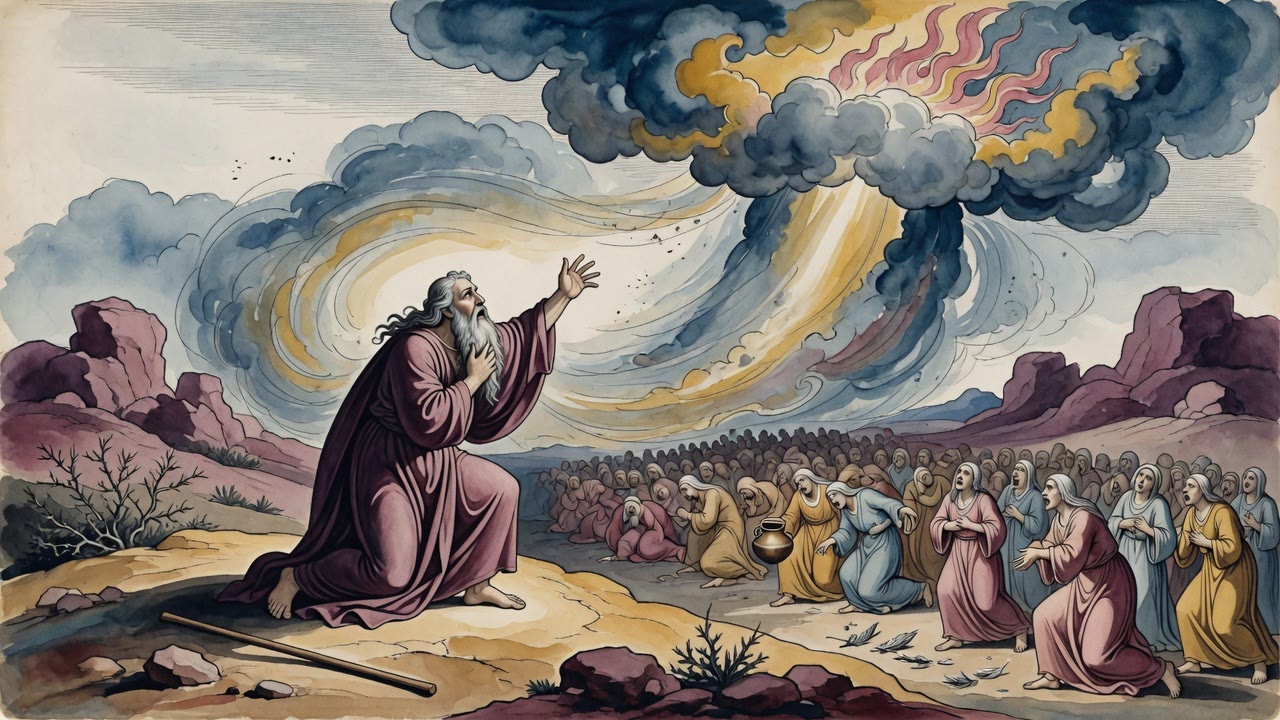
Moses did not answer him. He did not weigh the insult, and he did not say anything about the Cushite woman, and he did not stand there and price out what he was owed by the two of them. He cried out to the Lord, and the whole prayer was five words. Heal her now, O God, I pray.
The shortness was deliberate, because the camp was watching. They had just accused him of holding prophecy alone. If he had stood in front of the tent working a long prayer for his own sister while a whole people waited on it, the accusation would have looked true, and every man there would have gone home certain that the family kept its favors inside the family.
It was also true that Moses had asked for something worse than this not many weeks earlier, when the people wept for meat and he told God to kill him rather than make him watch it. A father led out to execution alongside his sons will beg the executioner to take him first, so as not to watch. The man who had said that could not stand and watch his sister rot at the edge of the camp for a word she said about him.
Seven Days Outside the Camp
The answer came back with a measure attached. If her father had spit in her face, would she not be ashamed seven days? Let her be shut out of the camp seven days, and after that let her be gathered in again.
They walked her out past the rows of tents, and Aaron could not walk out with her and still serve, so he went as far as the edge and stopped there. She sat down outside the standards with the wind on skin that did not feel like hers.
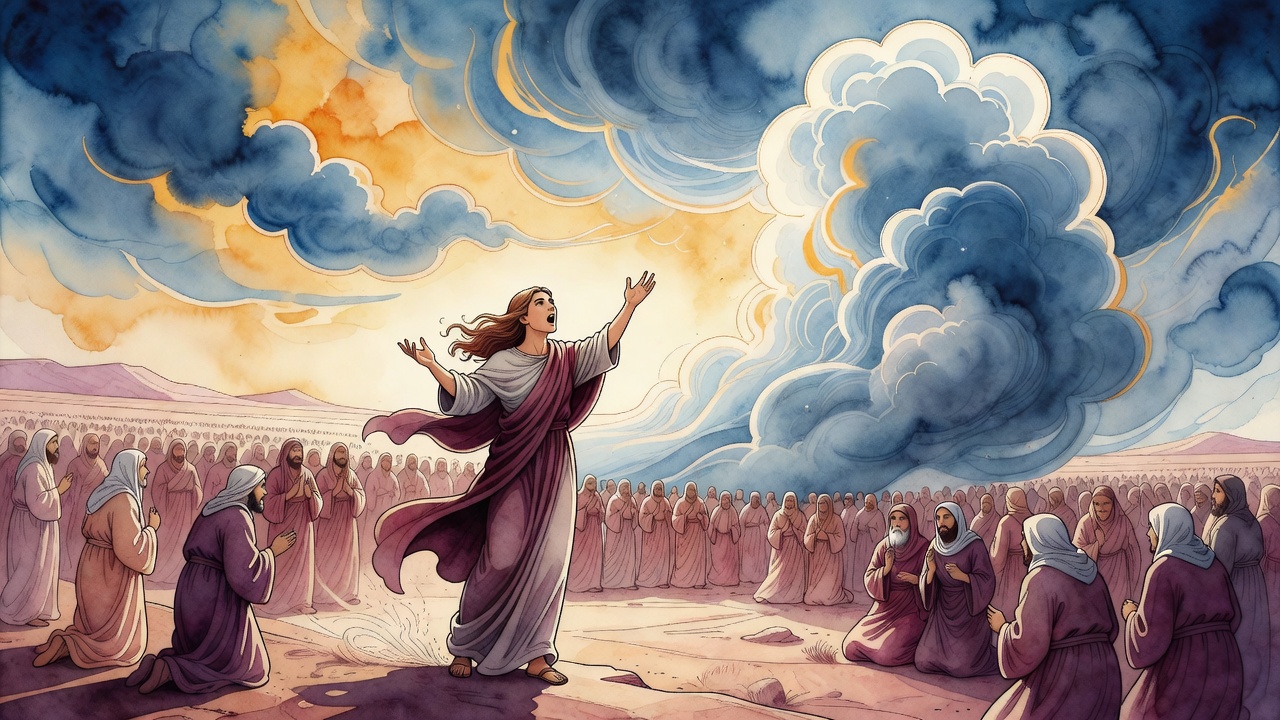
The camp did not move. The cloud was ready and the road was open and Israel, which had marched past its own hunger with complaints in its mouth, would not march past this. Standards stayed planted seven days. The livestock stayed tied. A nation that had wanted meat badly enough to weep about it sat in one place for a week for a woman who had said one thing about her brother.
On the seventh day they brought her back in through the rows. Then the cloud went up and the people went on to the wilderness of Paran, and Aaron walked where he could see her.
← All myths