Parshat Chukat5 min read

Miriam Walks in the Orchard of the Righteous Women

The prophetess who drew water from the rock vanished with her well, and the mystics found her again among the pomegranate trees of paradise.

Curated by Arthur · Told by Maggid ·
Table of Contents
  1. The Morning the Water Sank Into the Sand
  2. The Verse That Turned Desolation Into Fruit
  3. Six Palaces Behind the Curtain
  4. The Prophetess Among the Trees

One morning in the wilderness the water was gone.
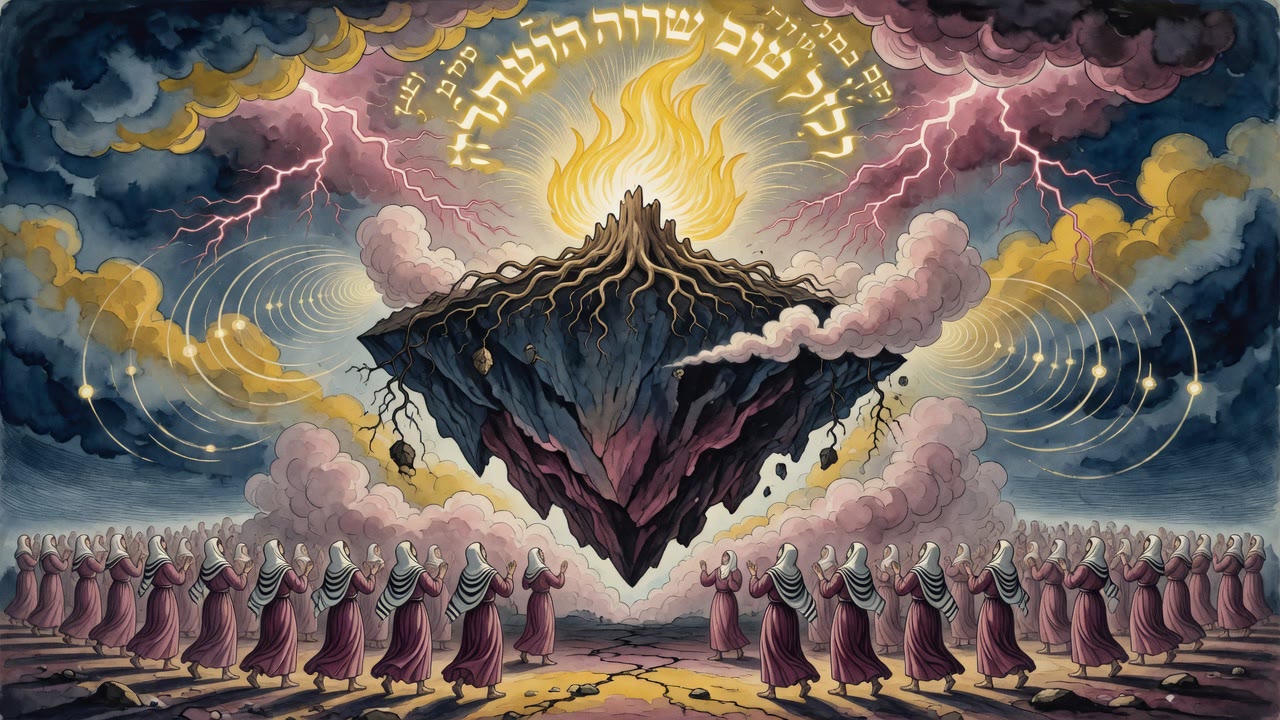
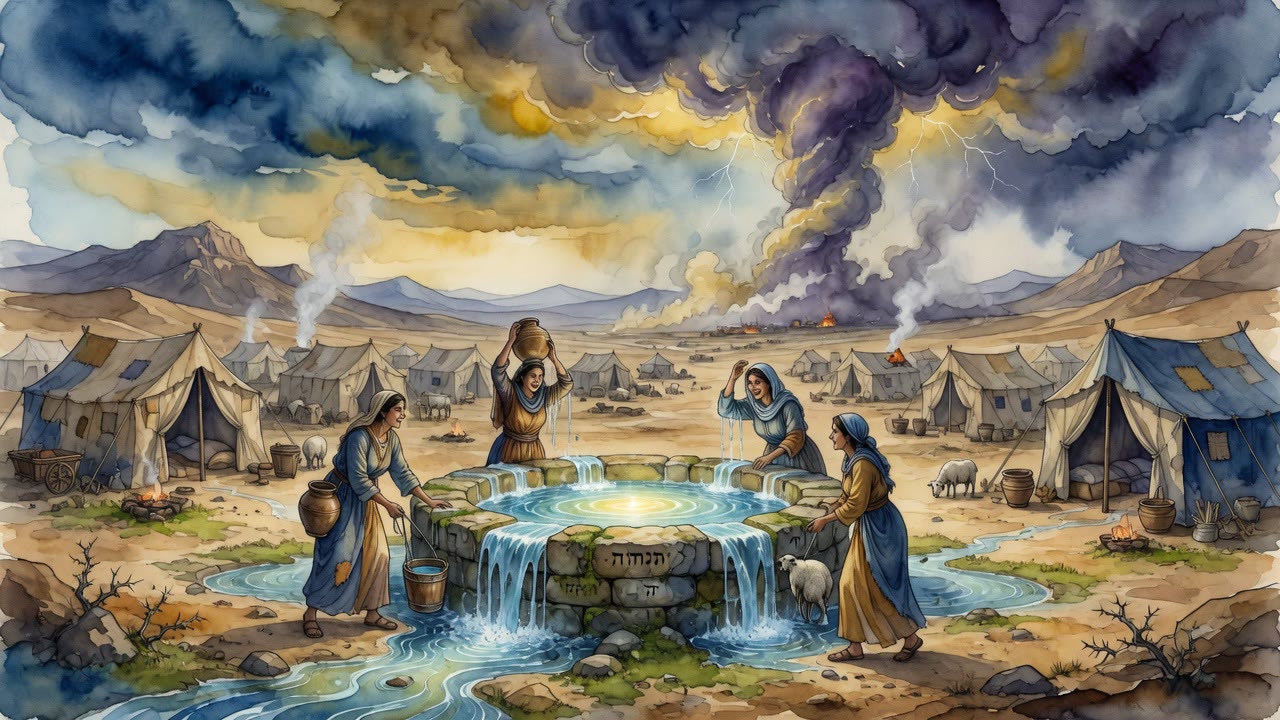
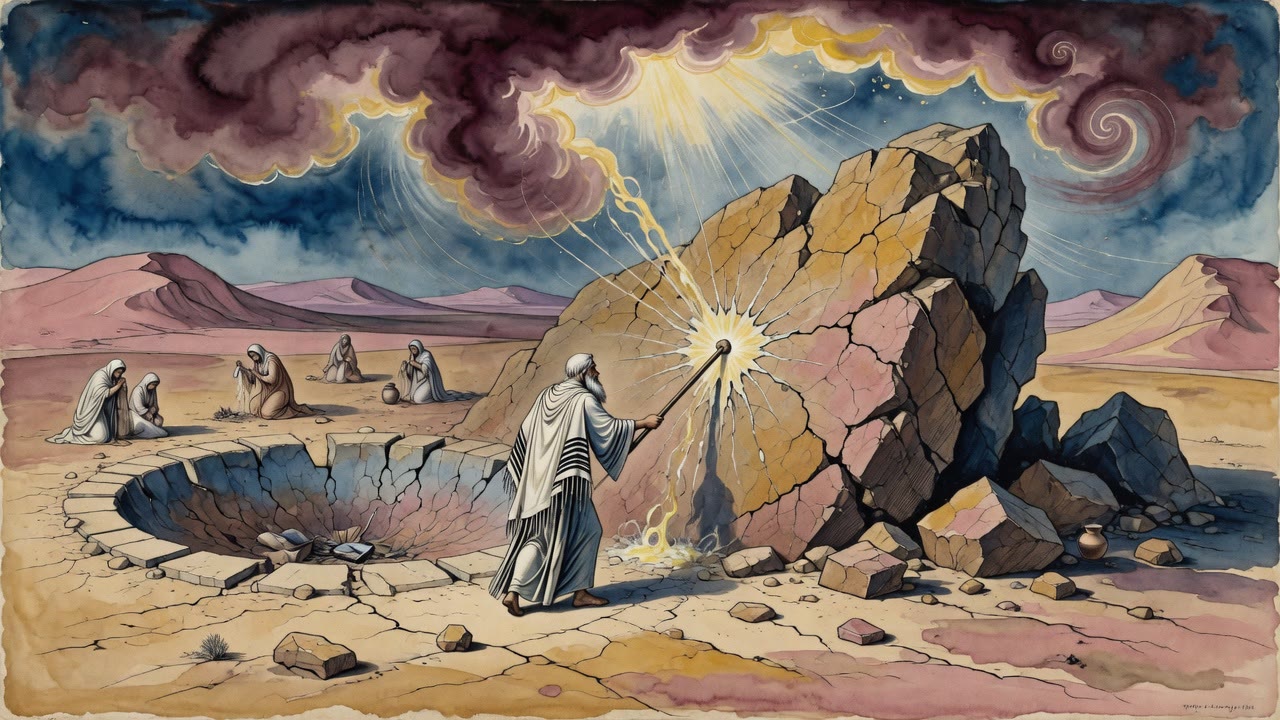
It had traveled with them forty years, a well that rolled over the sand wherever the camp moved, splitting into channels that ran to every tent flap. Vineyards had grown beside it. Fig trees, grain, sweet things in a place of no seed. Then Miriam died, and the well sank into the ground and did not rise.

The Morning the Water Sank Into the Sand

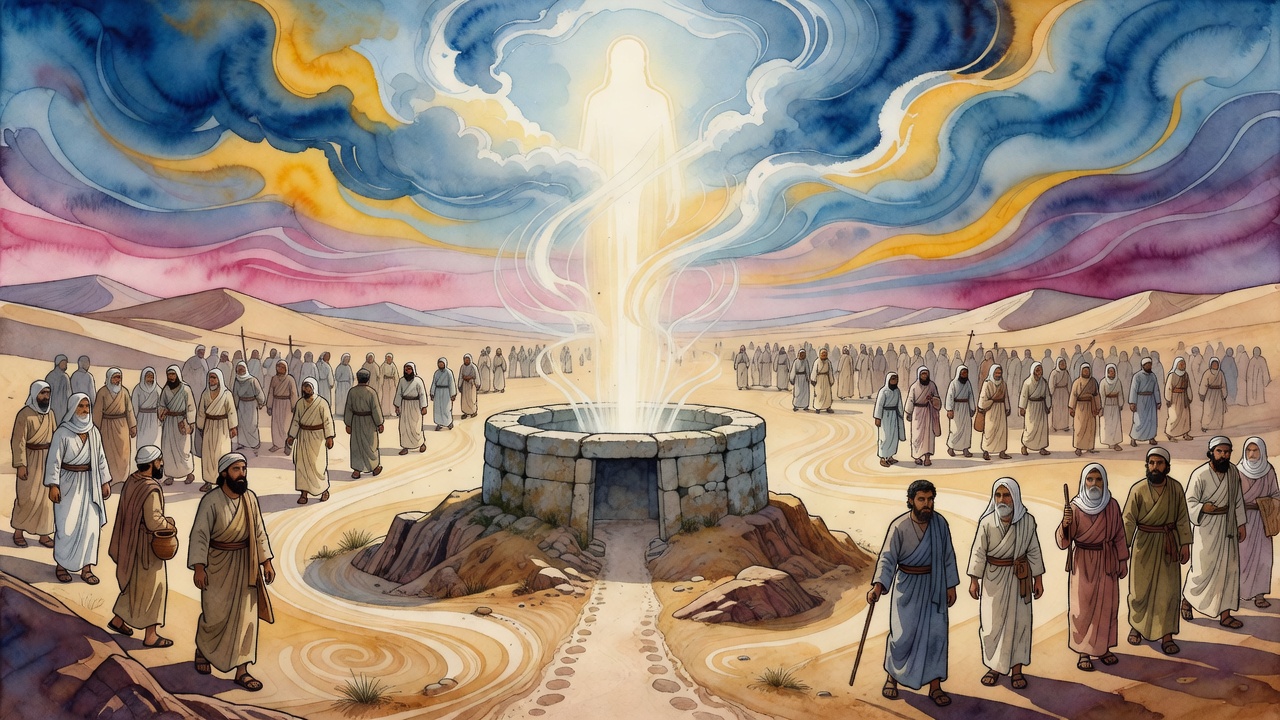
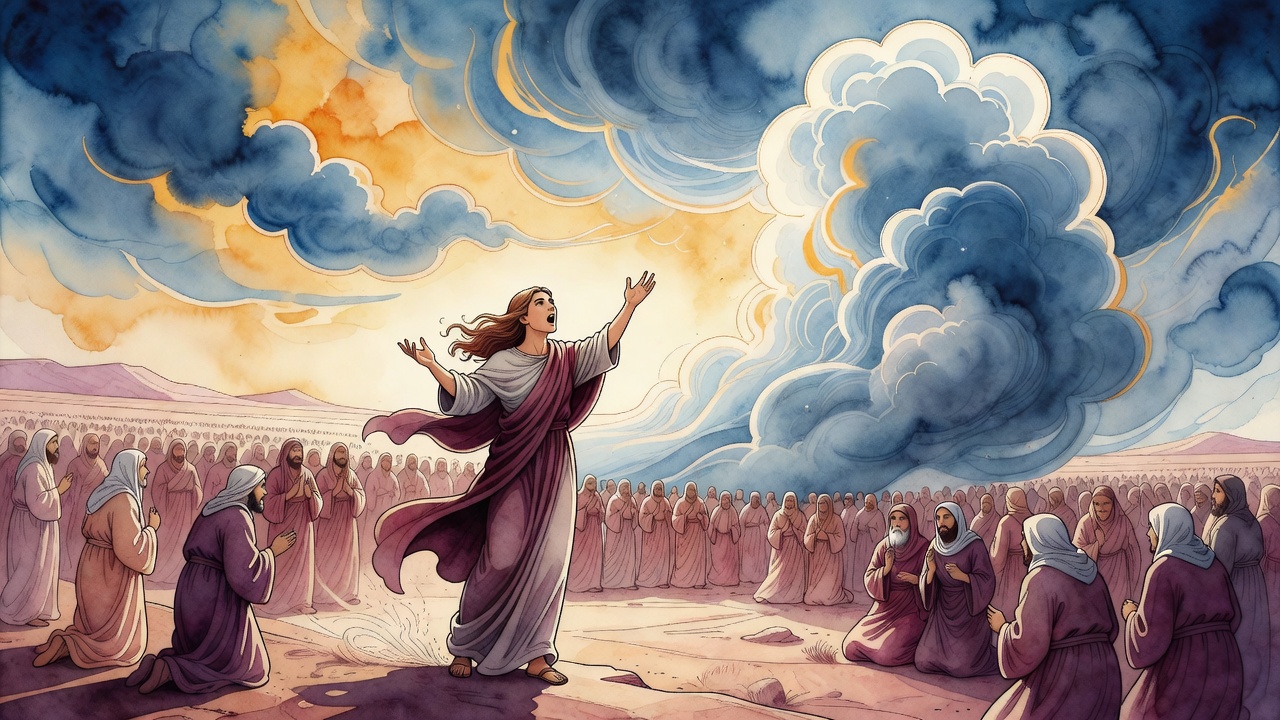
By midday the people were a wall of dust on the horizon, moving toward the two grieving brothers in ragged clumps.

Moses watched them come and did not soften. "What may all these multitudes desire?" he asked.

Aaron wanted to believe the best of them. "Are not the children of Abraham, Isaac, and Jacob kind-hearted people and the descendants of kind-hearted people? They come to express their sympathy."

Moses shook his head. "Thou art not able to distinguish between a well-ordered procession and this motley multitude. Were these people assembled in an orderly procession, they would move under the leadership of the rulers of thousands and the rulers of hundreds. But behold, they move in disorderly troops. How then can their intentions be to console with us?"

He was right. The grief in the crowd had already curdled into thirst, and the thirst into blame. Three gifts had carried Israel through the desert. Manna fell because of Moses. The cloud of glory spread because of Aaron. The water rose because of Miriam, and now one of the three was in the ground, and the people felt the whole sky tighten over them. They had not known how much one righteous woman was holding up until she let go.

The Verse That Turned Desolation Into Fruit

Generations later the sages bent over a line of the Song of Songs and would not let it rest.

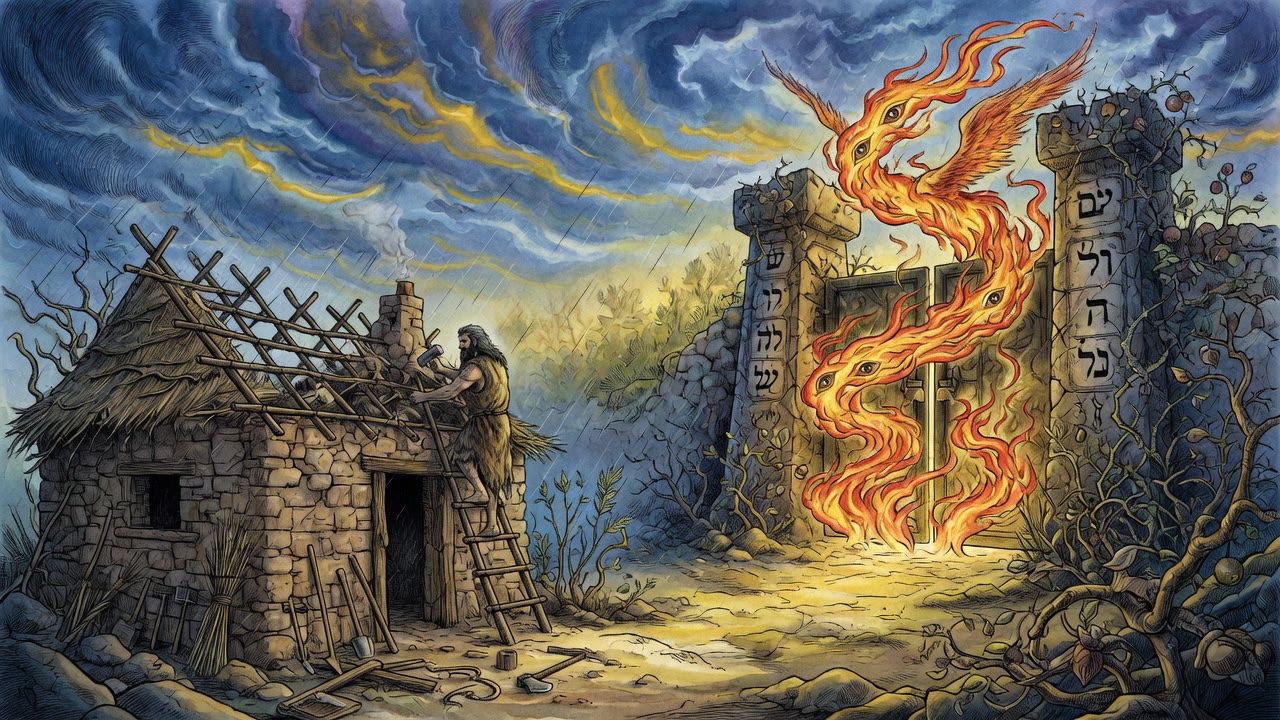
"Your branches are an orchard of pomegranates," the verse sang. The Hebrew word for branches, shelaḥayikh, can be turned with a small pressure of the tongue until it speaks instead of desolation, of a place laid waste. So the Rabbis read it twice at once, and the second reading was a promise. The barren stretch, the waste ground, the empty riverbed where a well had sunk, all of it God would one day turn into an orchard heavy with pomegranates.

How? Rabbi Yoḥanan answered with the well. From that water Israel poured their libations all those years. From that water the vineyards grew in the sand, the grain, every kind of tree. The proof was the cry the people raised when it vanished, the wail recorded after Miriam's death, "It is no place of seed, or figs, or vines, or pomegranates, and there is no water to drink." The absence named everything the well had been quietly giving. Desolation and orchard were the same ground. Only the water decided which.

Six Palaces Behind the Curtain

And the prophetess who had been that water was not gone.

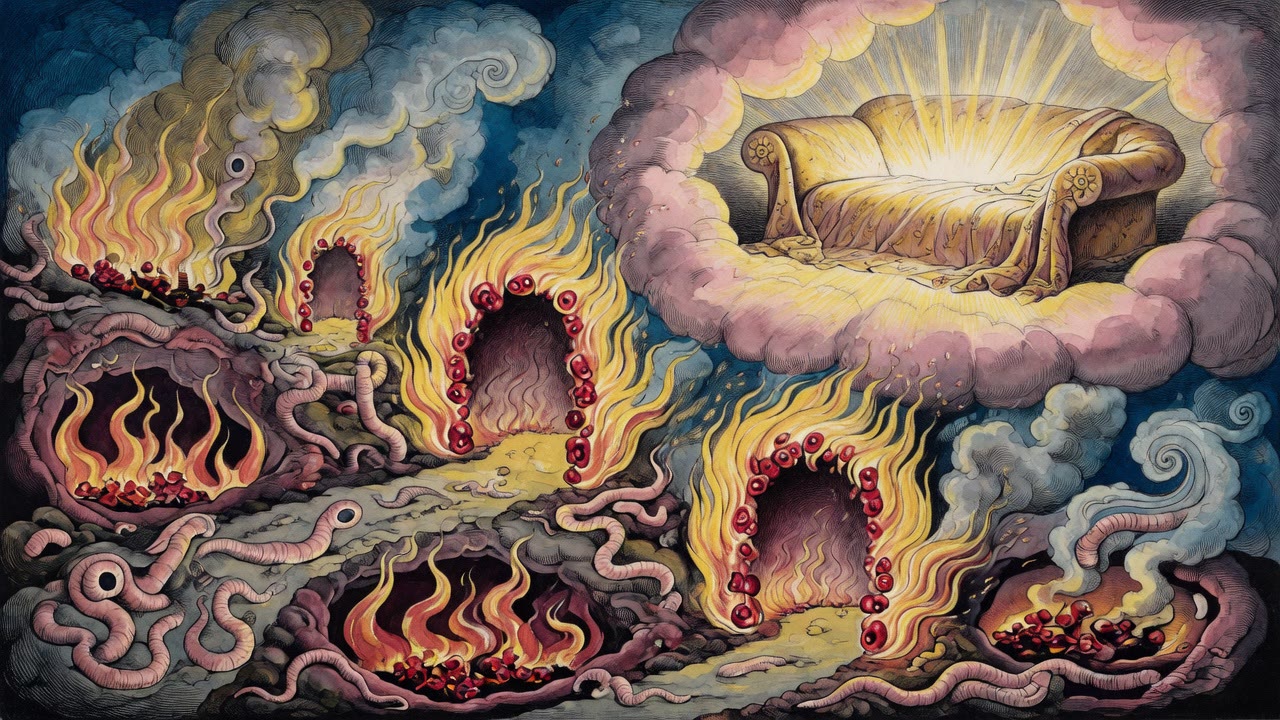
The mystics traced her past the grave into Gan Eden, the garden, and found there not one dwelling for the righteous women of Israel but six palaces, each a kingdom, each crowned every single day with the radiance of the Shekhinah. The women keep their human forms there. They wear garments of light. They do not rest so much as continue, learning Torah, teaching it, ruling.

In the first palace Bitiah, Pharaoh's daughter, instructs thousands of pious women in the commandments. Three times each day she goes to a curtain and bows before the image of Moses, the child she lifted from the river, and says, "Fortunate am I for drawing such a light out of the water." In another palace Serah bat Asher bows three times daily before the image of Joseph and says, "Happy was the day on which I gave the good news about Joseph to my grandfather, Jacob."

The Prophetess Among the Trees

And among these queens of light walks Miriam the prophetess, her palace set beside the palace of Yocheved her mother and the palace of Deborah the prophetess and judge.

The woman whose water had made vineyards in a wasteland now lives inside the orchard the sages had read out of the verse. The branches the prophets promised, the pomegranates that would replace the desolation, the trees standing where the dry riverbed had been, she walks among them. She had carried water on her shoulders for a wandering nation until the day she died and the ground drank it back. Here the water is hers again, and it does not sink.

By day a curtain divides the women from the men. But at midnight the curtain opens, and soul cleaves to soul, light to light, and from that joining come the souls of those who will one day choose to enter the covenant. So the orchard keeps bearing. The well that vanished from the desert pours, in the end, into a garden, and the prophetess who first opened it for thirsty Israel never has to lift the jar alone again.


← All myths
From the tradition

Sources

3 sources

The texts this telling draws on, in full. Open a card to read inline, or expand it for a wider, quieter read.

Shir HaShirim Rabbah 12:3Shir HaShirim Rabbah

The mystics of old certainly did. to a fascinating interpretation of a verse from the Song of Songs, a book overflowing with symbolism and hidden meanings.

"Your branches [shelaḥayikh] are an orchard of pomegranates," the verse sings. But the Rabbis in Shir HaShirim Rabbah see a double meaning here. The word shelaḥayikh can also refer to desolation. And so, they suggest, God is destined to transform your desolation [shelaḥayikh] into a pomegranate orchard in the future! It’s a powerful image, isn't it? Despair blooming into vibrant life. But how?

What's the source of this miraculous transformation, this life-giving water? The Rabbis point us to the well. Specifically, the well of Miriam, that miraculous source of water that sustained the Israelites during their forty years wandering in the wilderness.

Rabbi Yoḥanan asks, where did Israel pour libations all those years? From the well! Most libations in the Tabernacle and Temple were from wine, but the Midrash (rabbinic interpretive commentary) is telling us that the well facilitated the growth of vineyards even in the wilderness. And not just vineyards. Rabbi Yoḥanan goes on to say that the well would produce for them all kinds of vegetation, grains, and trees. In the middle of a desolate desert, this well wasn’t just providing water, it was providing abundance. Proof? As we read in (Numbers 20:5), when Miriam died and the well disappeared, the people cried out, "Not a place of seed, figs, or wine!" The absence of the well revealed just how much it had been providing.

But the well isn't the only source mentioned. Rabbi Levi suggests the cluster of grapes brought back by the spies: "They cut from there a vine with one cluster of grapes and they bore it upon a pole between the two" (Numbers 13:23). It’s hard to imagine a single cluster so large it took two men to carry!

Is that even possible? Rabbi Abba bar Kahana explains that fruits were simply larger back then. A simpler explanation, offered by the Rabbis, is that the Israelites got their wine from idolatrous merchants. Rabbi Yishmael adds a crucial detail: the wine of idolaters had not yet been forbidden to Israel.

So, what do we take away from all this? On the surface, it's about the miraculous provision for the Israelites in the desert. But on a deeper level, it's about the power of transformation. It’s about how even in the most desolate circumstances, hope, abundance, and even sweetness can emerge. The well, whether literal or symbolic, represents the source of that transformation. It's a reminder that even our own periods of "desolation" can, with the right "wellspring," blossom into something beautiful, something fruitful, something life-giving. The Zohar tells us that everything has an outer and an inner dimension. So, the next time you feel lost in the desert, remember the pomegranate orchard waiting to bloom. What's your well?

Full source
Zohar 1:8aZohar

What they've imagined is According to tradition, within Paradise – also known as Gan Eden (the Garden of Eden, paradise) – lie not just one, but six palaces, each a home for the souls of righteous women. That's what Howard Schwartz tells us in Tree of Souls, drawing from various mystical sources. Imagine: each woman, a palace of her own! And within those chambers? Beautiful canopies, angels standing guard, and every single day, they’re crowned with the radiance of the Shekhinah – the divine feminine presence. It's a vision of beauty and honor beyond our wildest dreams.

The first palace is ruled by Bitiah, Pharaoh's daughter. Remember her? The one who defied her father and raised Moses as her own son. What an act of defiance and compassion! In Paradise, Bitiah continues her role as a nurturer and teacher. She instructs thousands upon thousands of pious women in the commandments of the Torah, serving as their queen. These women, according to the tradition, retain their human forms, are clothed in garments of light, and experience unending joy. And get this: three times a day, Bitiah goes to a curtain – a symbolic barrier, perhaps? – and bows before the image of Moses, proclaiming, "Fortunate am I for drawing such a light out of the water." It's a powerful image of maternal pride and recognition.

Then there's Serah bat Asher, ruling over another vast multitude of righteous women. Their focus? Praises of God and contemplation of the Torah's commandments. Just like Bitiah, Serah also has a ritual. Three times a day, she bows before the image of Joseph, saying, "Happy was the day on which I gave the good news about Joseph to my grandfather, Jacob." This comes from Serah's role in folklore as the one who brought Jacob the news that Joseph was still alive in Egypt after his brothers sold him into slavery. (Ginzberg, Legends of the Jews). She was known for her wisdom and longevity, and in Paradise, she's forever celebrated for her act of bringing hope.

Who else has a palace? Yocheved, the mother of Moses; Miriam the prophetess, his sister; and Deborah the prophetess, the judge and warrior. Powerful, influential women, each a beacon of righteousness.

But here's where things get really interesting. During the day, the men and women in Paradise are separate, divided by a curtain. But every night, at midnight, they come together. Why midnight? Well, that's considered the hour of copulation, a time of intense spiritual connection. Soul cleaves to soul, light to light, and the Zohar tells us that the fruit of this union are the souls of those who will become converts to Judaism. It's a powerful and somewhat surprising image: the most intimate of acts leading to the expansion of the Jewish people.

What does it all mean? This vision of Paradise tells us a lot about the values of the tradition. Righteousness, compassion, learning, leadership – all are rewarded. And the inclusion of women like Bitiah, Serah, Yocheved, Miriam, and Deborah emphasizes their essential roles in Jewish history and spirituality. It's a reminder that Paradise isn't just a place of rest, but a place of continued learning, connection, and creation. As we find in Midrash Rabbah, the world to come is a place of great rejoicing and celebration.

So, the next time you think about Paradise, remember those six palaces, the righteous women within, and the powerful, transformative connections they make. It's a vision that challenges us to think about what it means to live a righteous life and the rewards that await us. It is also a reminder that women have always been essential and central to the Jewish tradition.

Full source
Legends of the Jews 5:36Legends of the Jews

Miriam wasn't just Moses' sister; she was a pivotal figure in her own right. She was a prophetess, a leader, and, perhaps most importantly, she was the reason the Israelites had water in the desert. The Talmud (Taanit 9a) actually identifies three great leaders and benefactors of Israel, each providing a specific, essential gift: Moses brought them manna from heaven, Aaron brought them the protective cloud of glory, and Miriam brought them water.

The passage of this desert water was no ordinary well. Legend tells of a miraculous well that travelled with the Israelites throughout their forty years of wandering. It was a gift, a blessing, a evidence of Miriam's righteousness. But the moment Miriam died, the well vanished. Just like that. Poof!

The impact was immediate. Suddenly, the land was parched. The people were thirsty. And they knew, deep down, that this wasn't just a coincidence. As Ginzberg retells it in Legends of the Jews, the disappearance of the well served as a stark reminder: it was only owing to the merits of the pious prophetess that they had been spared a lack of water during those long forty years.

The scene: Moses and Aaron, already grieving the loss of their sister, see a massive crowd approaching. According to (Numbers 20:2-5), the people gathered together against Moses and Aaron. Understandably, they are distraught and desperate for water. But Moses, ever the keen observer, isn't convinced by their show of grief.

"What may all these multitudes desire?" he asks Aaron.

Aaron, perhaps trying to see the best in people, replies, "Are not the children of Abraham, Isaac, and Jacob kind-hearted people and the descendants of kind-hearted people? They come to express their sympathy."

But Moses isn't buying it. "Thou are not able to distinguish between a well-ordered procession and this motley multitude," he retorts. "Were these people assembled in an orderly procession, they would move under the leadership of the rules of thousands and the rulers of hundreds, but behold, they move in disorderly troops. How then can their intentions be to console with us!"

Moses, in his wisdom, sees the chaos, the lack of structure. He understands that grief and desperation can easily turn into anger and blame. The seeds of discontent are already sown. This wasn't a peaceful gathering of mourners; it was a mob, and their thirst for water would soon turn into a thirst for answers. and someone to blame.

What does this ancient story tell us? Perhaps it is a reminder to appreciate the blessings in our lives while we have them. Maybe it's a lesson about the importance of recognizing true leadership and the dangers of succumbing to mob mentality. Or maybe, just maybe, it's a evidence of the power of one righteous person, and the profound impact their absence can have on the world.

Full source