Parshat Behaalotecha5 min read

Miriam's Well Followed Israel Through the Wilderness

A rock shaped like a sieve traveled with Israel for forty years, climbing every mountain, filling every camp, and stopping the day Miriam died.

Curated by Arthur · Told by Maggid ·
Table of Contents
  1. The Rock Waited by the Tent
  2. Miriam's Merit Became Water
  3. The Well Was Already Ancient
  4. What Happened When Miriam Died

The wilderness had no right to hold a nation alive for forty years. Sand does not feed children. Stone does not nurse flocks. A camp of tribes cannot cross heat, dust, and emptiness on memory alone. So the tradition gives Israel a stone that moved.

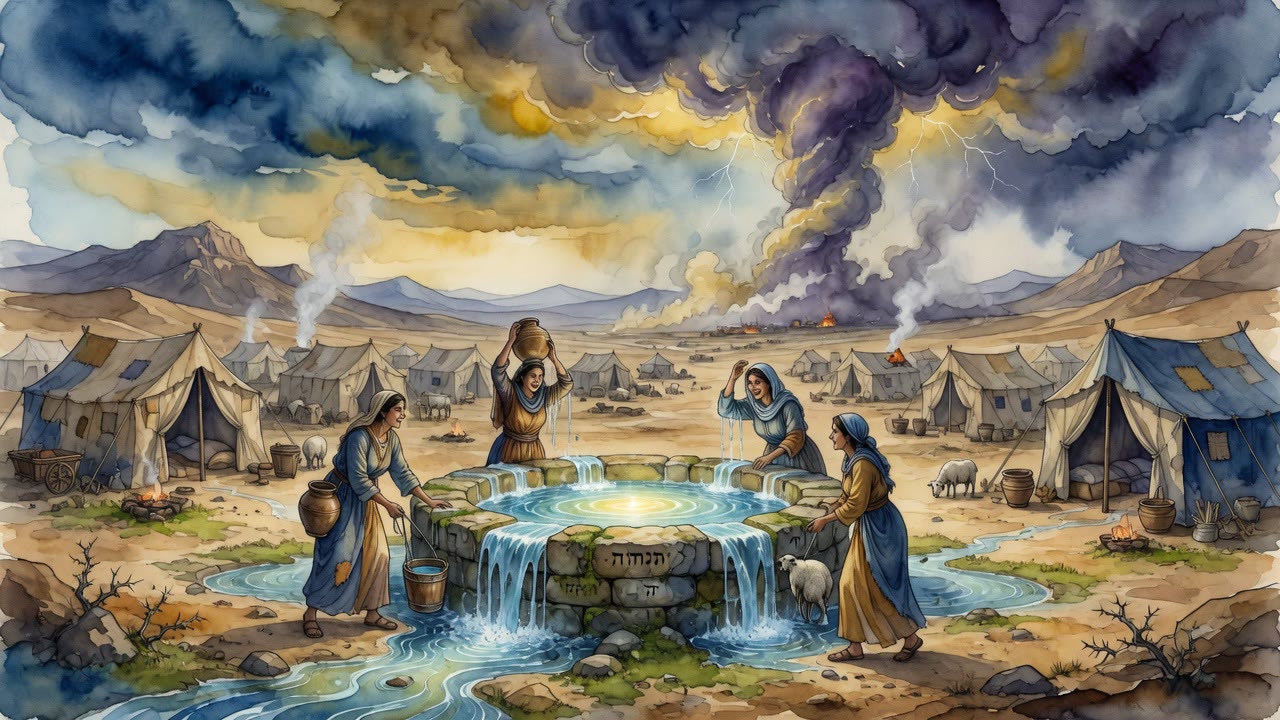
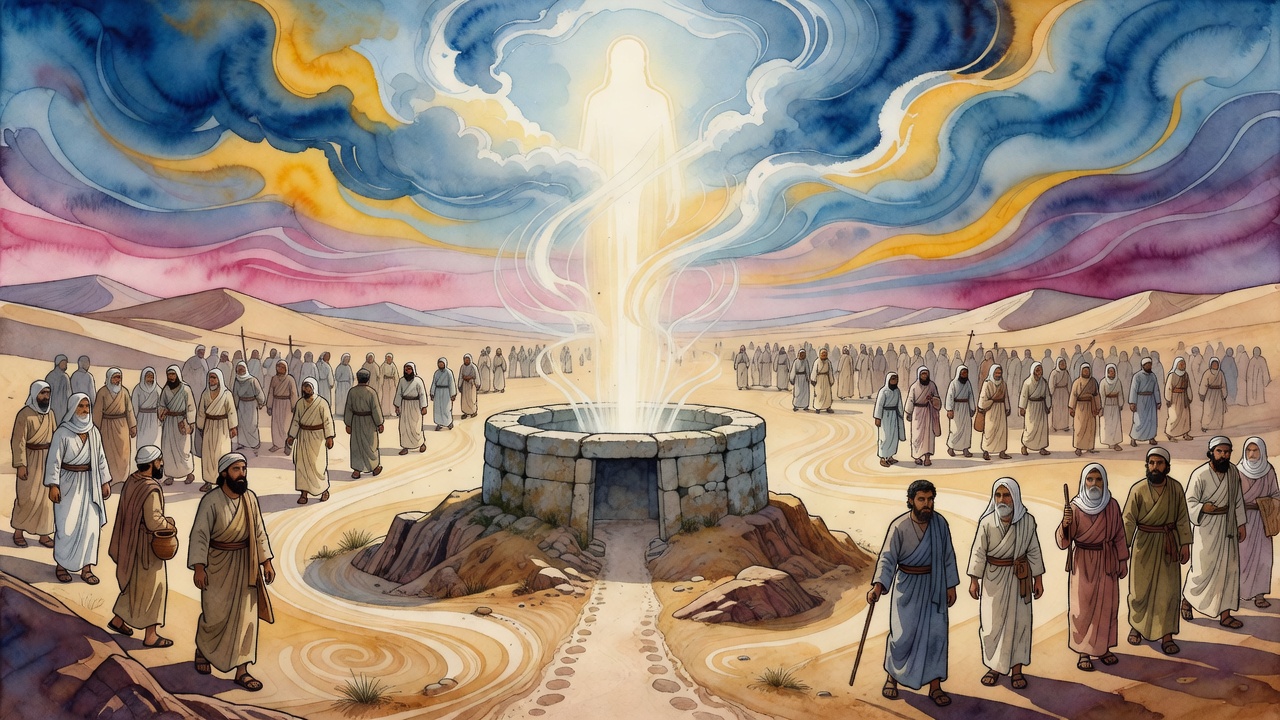
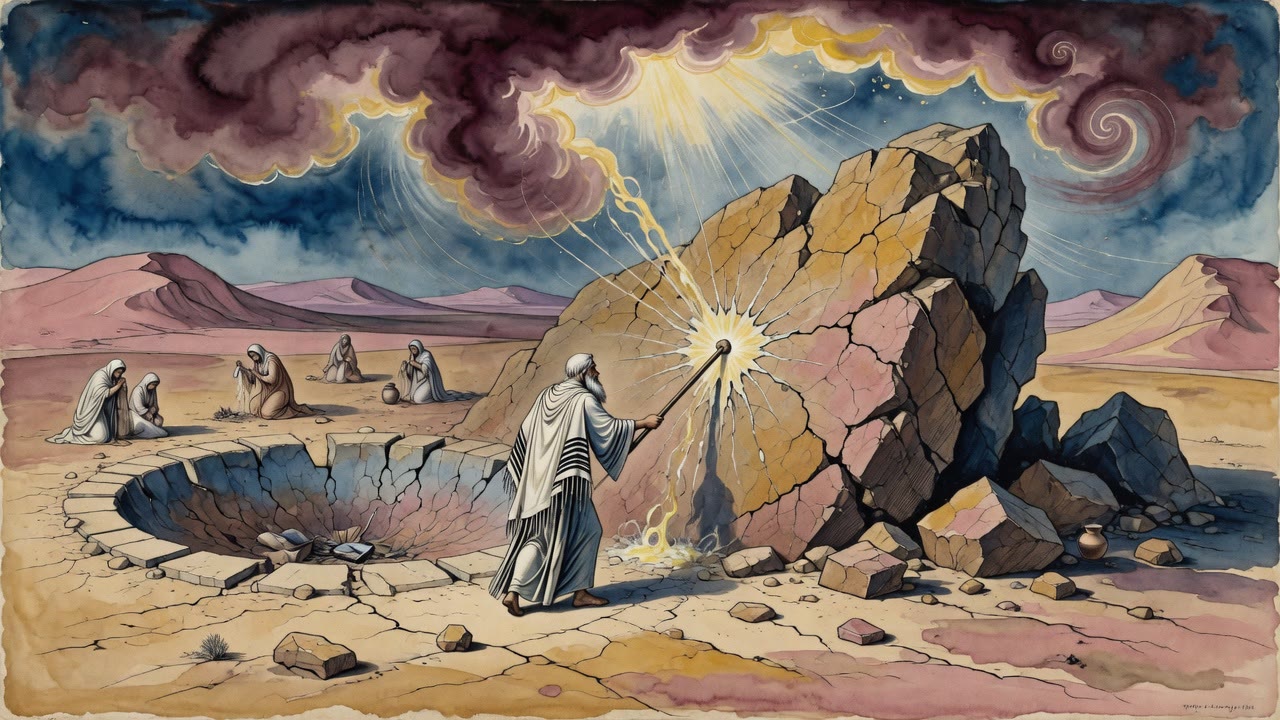
It was called Miriam's Well, and it was not a well in the sense of a hole dug into the ground with a bucket at the top. It was a rock, a specific rock shaped like a kind of sieve, and it traveled with the camp. When Israel marched, it marched. When they climbed a mountain, it climbed. When they came down into a valley, it came down. It did not sit in one place waiting to be found. It kept up with them.

The Rock Waited by the Tent

When Israel camped, the well came to rest in the court of the Tent of Meeting. The princes of each tribe gathered around it and called out to it. Come, O well, and give of your waters. Then the water rose from the stone and spread through the camp in channels that ran toward every tent. Each tribe received it separately. Each household could reach it from their own door.

That call mattered in the tradition. The well did not simply overflow on its own. It required song. The people who had sung at the sea now had to sing in the desert to survive. The miracle was not just liquid pressed out of rock. It was a nation learning that survival sometimes requires praise from parched mouths before the water comes.

Miriam's Merit Became Water

The rabbis divided the wilderness miracles among the three siblings. Manna came through Moses. The clouds of glory that protected Israel from sun and heat came through Aaron. Water came through Miriam. Each of the three great leaders had a gift attached to them, and the camp lived inside all three gifts simultaneously for forty years.

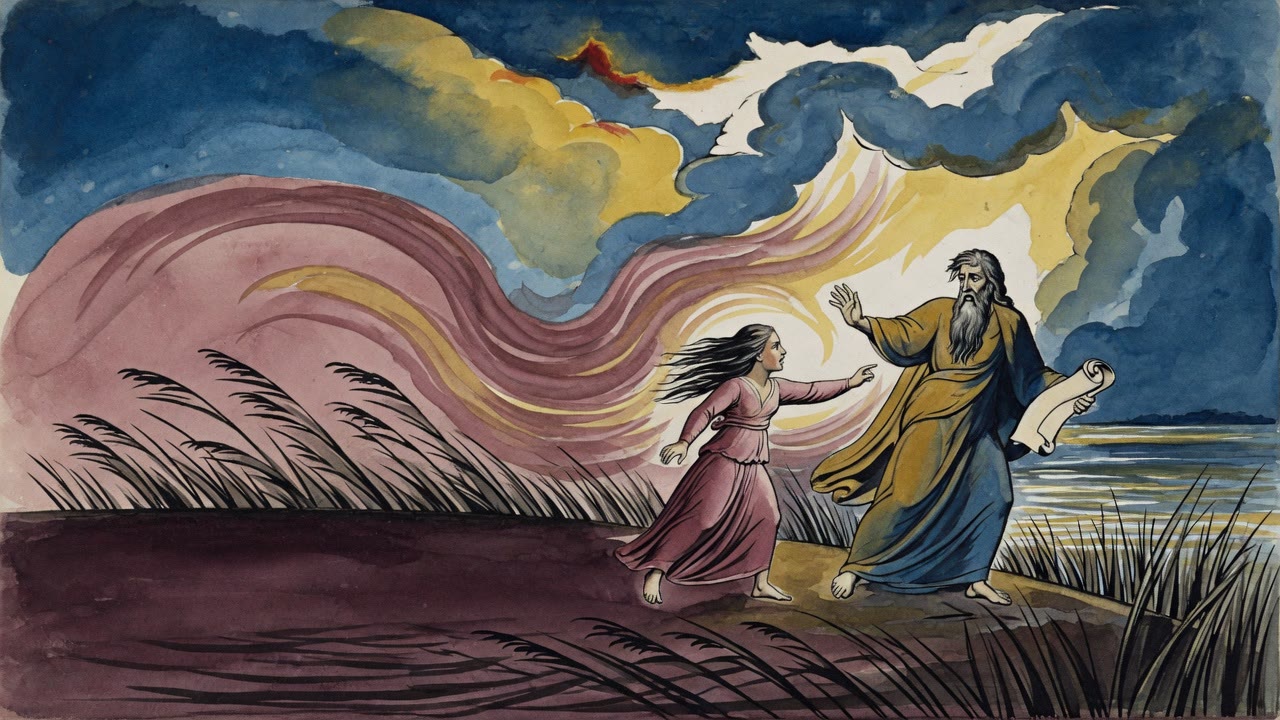
The logic was traced back through the river. Miriam had stood at the banks of the Nile as a child watching the basket that held her infant brother float downstream toward Pharaoh's daughter. She had waited and then offered. She had not run when danger pressed close. The merit of that watching, that waiting, that act of standing in danger beside a helpless brother, was what the tradition says God repaid to Israel for forty years in the form of water from rock.

The Well Was Already Ancient

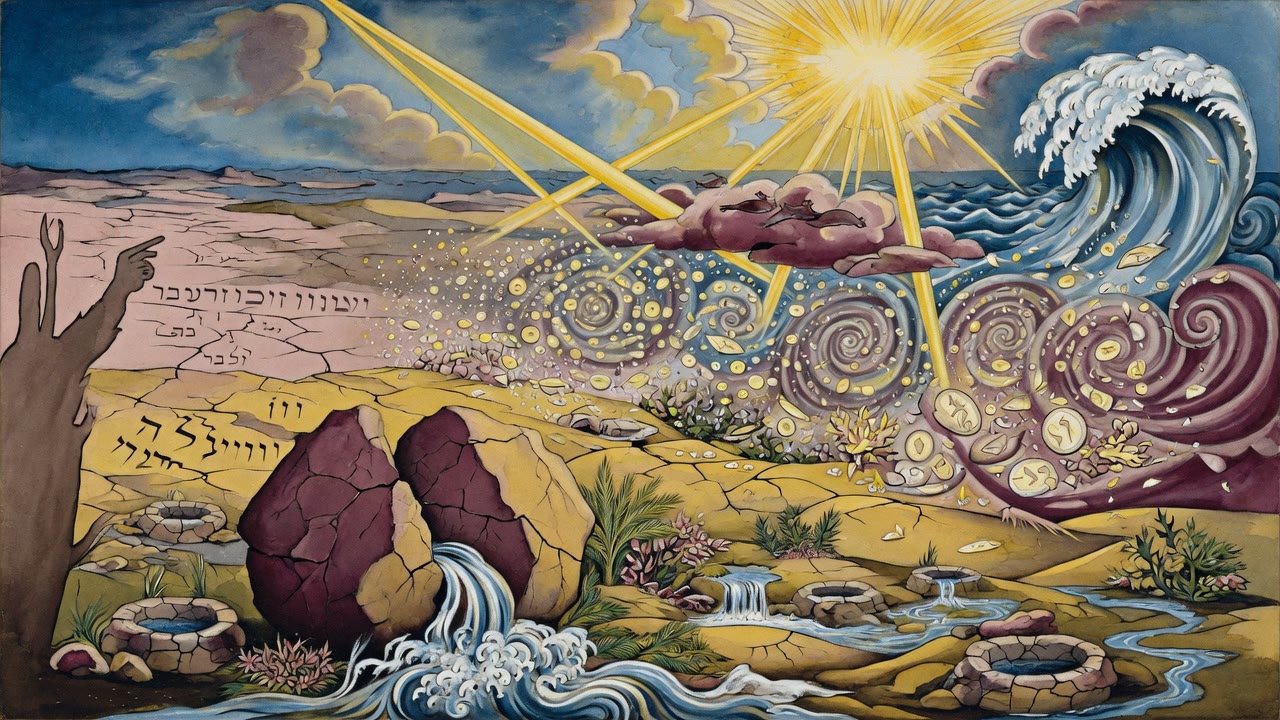
One tradition traces the rock's origins much further back than the wilderness. The six days of creation produced a list of things made on the sixth day in the final minutes before the first Shabbat, things that fit neither the natural world nor the miraculous world, things that existed to be brought out at specific moments in history when the ordinary rules would not serve. Miriam's Well was on that list. It had been waiting since before the first sunrise for the moment when a nation would need it in a desert.

It also appeared to Jacob. The stone he rolled away from the mouth of the well when he met Rachel in Padan-aram, the stone that was too heavy for the other shepherds and that Jacob moved alone without apparent effort, was this stone. The same rock that would follow his descendants through the wilderness had already given them water once, in the hands of their ancestor, on the day he first saw the woman he would spend his life trying to keep.

What Happened When Miriam Died

Miriam died in the wilderness of Zin in the first month. The text says the people had no water. It says this immediately after her death, and the rabbis read the sequence as exact cause and effect. The moment Miriam's soul left her body, the well stopped following the camp. The water dried up. The rock sat still. Israel looked around for the gift that had been with them the whole time and found nothing where it had always been.

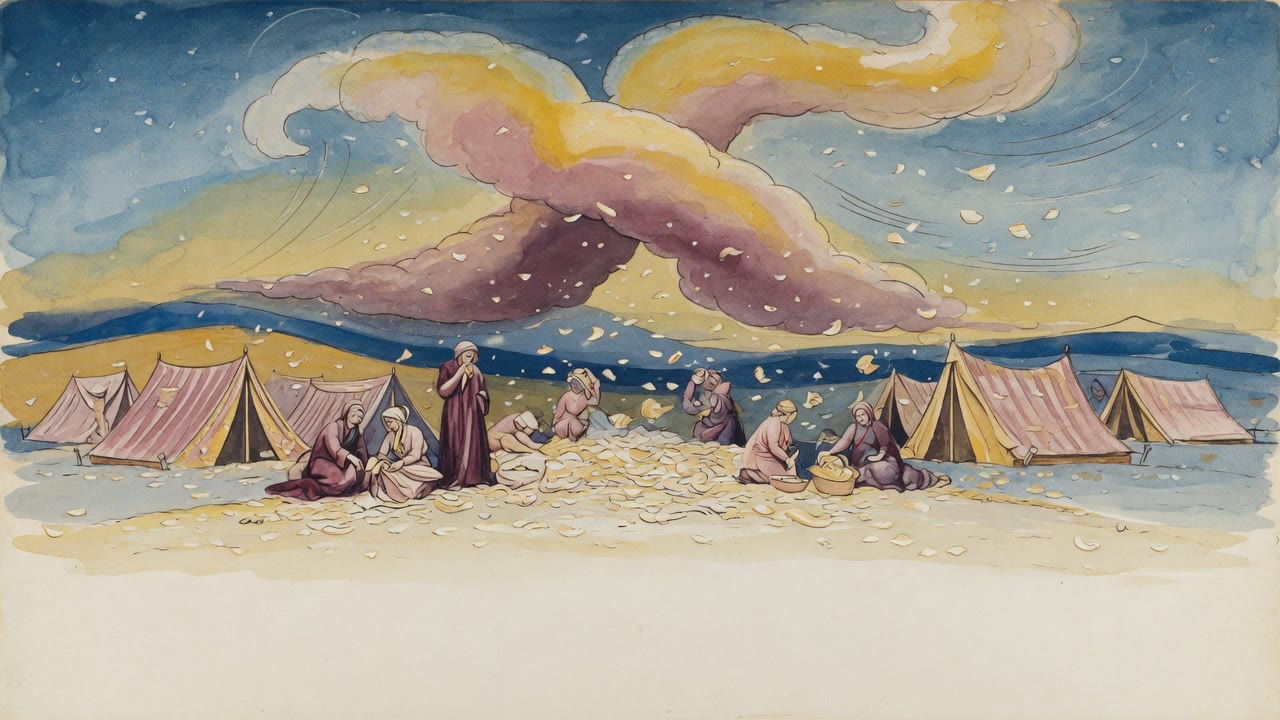
The Talmud recorded the connection in the name of Rabbi Yose bar Yehudah: three good providers rose for Israel in the wilderness, Miriam and Moses and Aaron, and three gifts came through them, and when they died the gifts departed with them. When Miriam died, the well was taken away. When Aaron died, the clouds of glory scattered. When Moses died, the manna stopped falling.


← All myths

From the tradition

Sources

4 sources

The texts this telling draws on, in full. Open a card to read inline, or expand it for a wider, quieter read.

Targum Jonathan on Numbers 21:16-20Targum Jonathan

The sun beats down, the sand stretches endlessly… and you’re thirsty. Really thirsty. What would you give for a cool, refreshing drink?

Well, according to tradition, the Israelites had a secret weapon against the desert’s harshness: Miriam’s Well. It was no ordinary well,. This was an enchanted, miraculous source of fresh water, a gift from God, bestowed upon them because of the merit of Miriam, the sister of Moses. Every single day, for forty years, wherever they went, water was available. How? The stories paint a wondrous picture. This well wasn't stuck in one place. It followed them! It ascended mountains with them, descended into valleys, circling the entire Israelite camp, providing water right at the entrance of each person’s tent. Can you picture that? It’s truly amazing.

The Targum Pseudo-Yonathan on Numbers tells us that the well even accompanied the children of Israel to the court of the Appointed Tent, where the princes of the congregation would approach it and say, "Come, O well, and give of your waters!" And the well, obligingly, would gush forth, quenching the thirst of the people and their livestock. What a sight!

Where did this amazing well come from? Some say it was created at the very beginning of Creation itself! Others believe that the patriarchs – Abraham, Isaac, and Jacob – dug it, only for it to be hidden away until Moses and Aaron rediscovered it and returned it to the children of Israel. Ginzberg, in his Legends of the Jews, explores these possibilities, painting a tradition of traditions surrounding its origin.

And what became of Miriam’s Well after their desert wanderings? Ah, that’s where the mystery deepens. Some say it disappeared the very day that Miriam died. Others claim it continued to accompany the people all the way to the Promised Land. Still others… well, they say the well can still be found, traveling from place to place, wherever Jews gather. According to one tradition found in Kelim, whenever a minyan, a quorum of ten Jews, assembles, it becomes possible to draw from Miriam’s Well.

This idea of a traveling, miraculous well is hinted at in the Book of Numbers (21:16-20), where the description of a well given by God is immediately followed by a list of places the Israelites traveled. It’s easy to read between the lines and imagine the well moving with them. Some even identify this well as the same water that came from the rock struck by Moses in Exodus (17:3-6).

The Midrash (rabbinic interpretive commentary) Tanhuma suggests that the well was lost after Miriam's death, then briefly restored thanks to the merit of Aaron and Moses, only to be taken away permanently after Moses’ death. But that's not the end of the story! Folktales persist, describing its continued existence in the Sea of Galilee. Imagine that – a hidden, holy well beneath the waters!

There's also a beautiful metaphorical layer to this story. Just as Miriam’s Well provided physical sustenance, the Torah, our sacred teachings, is seen as an inexhaustible resource, quenching our spiritual thirst for knowledge and understanding. Just as the well followed the Israelites, so too does the wisdom of Torah accompany us on our own journeys.

As we find in Midrash Rabbah, the story of Miriam's Well is more than just a legend of a miraculous water source. It’s a reminder of the power of faith, the importance of merit, and the enduring presence of the divine in our lives, even in the most barren of landscapes. It makes you wonder, doesn't it? What "well" sustains you on your own journey through the wilderness of life?

Full source
Legends of the Jews 1:110Legends of the Jews

It wasn't just any well; it was a spring that traveled with them! The water that flowed wasn't just a temporary relief. It was a well that, according to the legends, didn't abandon them for the entire forty years of wandering. It accompanied them on all their marches.

The tradition says God performed this miracle because of the merit of the prophetess Miriam, Moses' sister. She was a woman of great faith and leadership, and her righteousness earned the people this incredible gift. That's why it’s called “Miriam's Well," as recounted in (Numbers 20:2).

This well wasn’t just some random oasis that popped up out of nowhere. Oh no. The legends, elaborated upon by Louis Ginzberg in Legends of the Jews, trace it back to the very beginning of time!

The Zohar, the foundational text of Kabbalah, tells us that God created the well on the second day of Creation. Before mountains were formed, before rivers flowed in their courses, this well already existed in the divine plan.

And its story doesn't stop there.

Apparently, at one point, it was even in the possession of Abraham! The Genesis Rabbah 54:6 Midrash (rabbinic interpretive commentary) picks up the tale. Remember the story of Abraham and Abimelech, king of the Philistines? There was a dispute over a well, and Abraham claimed it was rightfully his.

According to this legend, this was the very same well. Abraham demanded it back after Abimelech's servants had seized it. When Abimelech feigned ignorance, Abraham proposed a test: He said, "Thou and I will send sheep to the well, and he shall be declared the rightful owner of the well, for whose sheep the water will spout forth to water them."

And then Abraham added an incredible prophecy: "From that same well shall the seventh generation after me, the wanderers in the desert, draw their supply."

So, this wasn't just a well; it was a promise, a link between generations, a source of life sustained by divine power and the merits of those who walked in faith.

Isn't it amazing how these ancient stories intertwine, connecting us to our past and reminding us that even in the driest of deserts, hope – and water – can be found? What "well" sustains you, even when the desert seems vast and endless?

Full source
Legends of the Jews 5:36Legends of the Jews

Miriam wasn't just Moses' sister; she was a pivotal figure in her own right. She was a prophetess, a leader, and, perhaps most importantly, she was the reason the Israelites had water in the desert. The Talmud (Taanit 9a) actually identifies three great leaders and benefactors of Israel, each providing a specific, essential gift: Moses brought them manna from heaven, Aaron brought them the protective cloud of glory, and Miriam brought them water.

The passage of this desert water was no ordinary well. Legend tells of a miraculous well that travelled with the Israelites throughout their forty years of wandering. It was a gift, a blessing, a evidence of Miriam's righteousness. But the moment Miriam died, the well vanished. Just like that. Poof!

The impact was immediate. Suddenly, the land was parched. The people were thirsty. And they knew, deep down, that this wasn't just a coincidence. As Ginzberg retells it in Legends of the Jews, the disappearance of the well served as a stark reminder: it was only owing to the merits of the pious prophetess that they had been spared a lack of water during those long forty years.

The scene: Moses and Aaron, already grieving the loss of their sister, see a massive crowd approaching. According to (Numbers 20:2-5), the people gathered together against Moses and Aaron. Understandably, they are distraught and desperate for water. But Moses, ever the keen observer, isn't convinced by their show of grief.

"What may all these multitudes desire?" he asks Aaron.

Aaron, perhaps trying to see the best in people, replies, "Are not the children of Abraham, Isaac, and Jacob kind-hearted people and the descendants of kind-hearted people? They come to express their sympathy."

But Moses isn't buying it. "Thou are not able to distinguish between a well-ordered procession and this motley multitude," he retorts. "Were these people assembled in an orderly procession, they would move under the leadership of the rules of thousands and the rulers of hundreds, but behold, they move in disorderly troops. How then can their intentions be to console with us!"

Moses, in his wisdom, sees the chaos, the lack of structure. He understands that grief and desperation can easily turn into anger and blame. The seeds of discontent are already sown. This wasn't a peaceful gathering of mourners; it was a mob, and their thirst for water would soon turn into a thirst for answers. and someone to blame.

What does this ancient story tell us? Perhaps it is a reminder to appreciate the blessings in our lives while we have them. Maybe it's a lesson about the importance of recognizing true leadership and the dangers of succumbing to mob mentality. Or maybe, just maybe, it's a evidence of the power of one righteous person, and the profound impact their absence can have on the world.

Full source
Yalkut Shimoni on Nach 15:13Yalkut Shimoni on Nach

Three good leaders were given to Israel. These are Moses, Aaron, and Miriam. And three good gifts were given through them: the manna, the pillar of cloud, and the well. The manna was in the merit of Moses, the pillar of cloud in the merit of Aaron, the well in the merit of Miriam. When Miriam died, the well ceased, as it is written, "And Miriam died there" (Numbers 20:1), and it is written afterward, "And there was no water for the congregation" (Numbers 20:2); and it returned in the merit of Moses and Aaron. When Aaron died, the pillar of cloud ceased, as it is written, "And all the congregation saw that Aaron had died" (Numbers 20:29). And Rabbi Abahu said: Do not read "they saw" but "they were seen" [the people were now exposed to view], for the cloud that had hidden them was gone. The two returned in the merit of Moses. When Moses died, all three ceased, as it is written, "And I cut off the three shepherds in one month" (Zechariah 11:8). But did they die in one month? Miriam died in Nisan, Aaron in Av, and Moses in Adar. Rather, the three good gifts that were given through them ceased in one month. And in the time to come, all three are destined to return, as it is said, "They shall neither hunger nor thirst, neither shall the heat nor the sun strike them" (Isaiah 49:10). "They shall not hunger," this is the manna. "Neither thirst," this is the well. "Neither shall the heat nor the sun strike them," this is the pillar of cloud. "And by springs of water shall He guide them" (Isaiah 49:10): it does not say "a spring" but "springs." In the time to come twelve springs are destined to come forth for Israel, corresponding to the twelve tribes.

Full source