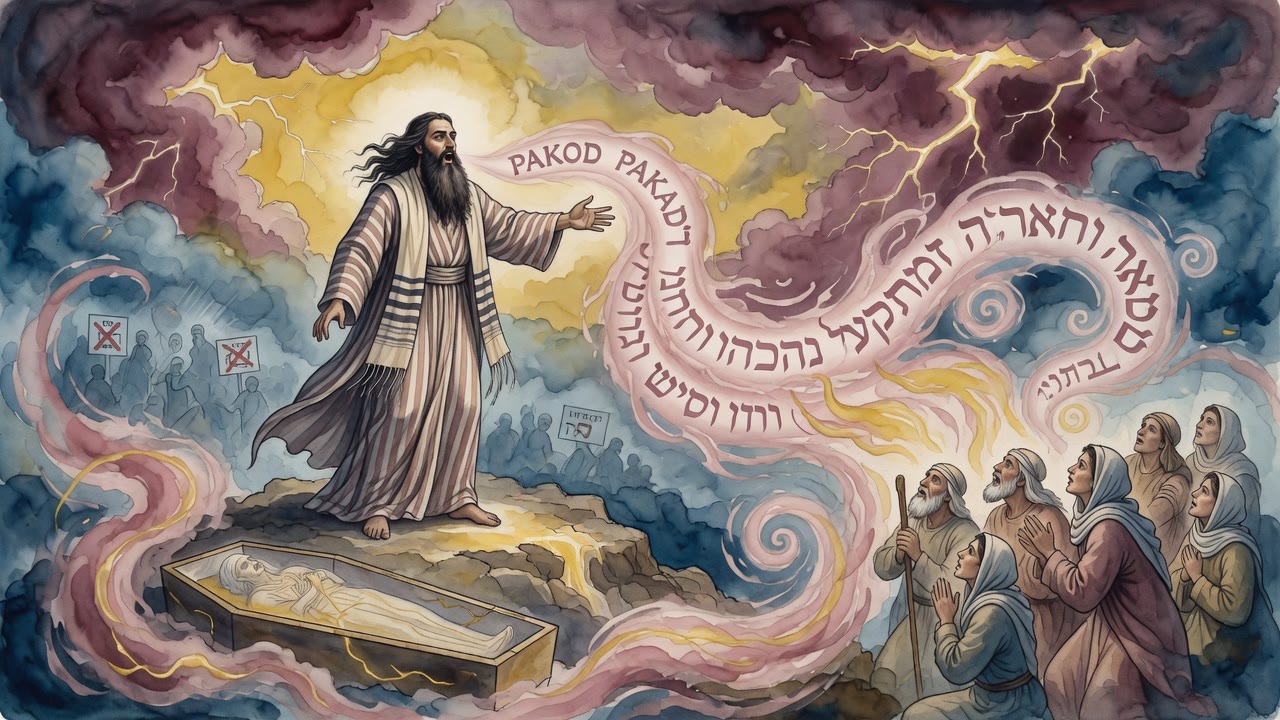
Moses Broke the Siege of Kush with Hungry Storks
The king of Kush died in the camp. His army crowned a Hebrew of twenty-seven and asked how to take a city ringed with serpents.
Table of Contents
Moses was eighteen when he fled Egypt and walked into a war that was not yet his. Konkos, king of Kush, had gone out against Aram and the people of the East and left the city in the care of Bilam the sorcerer and Bilam's two sons.
 Click for full size
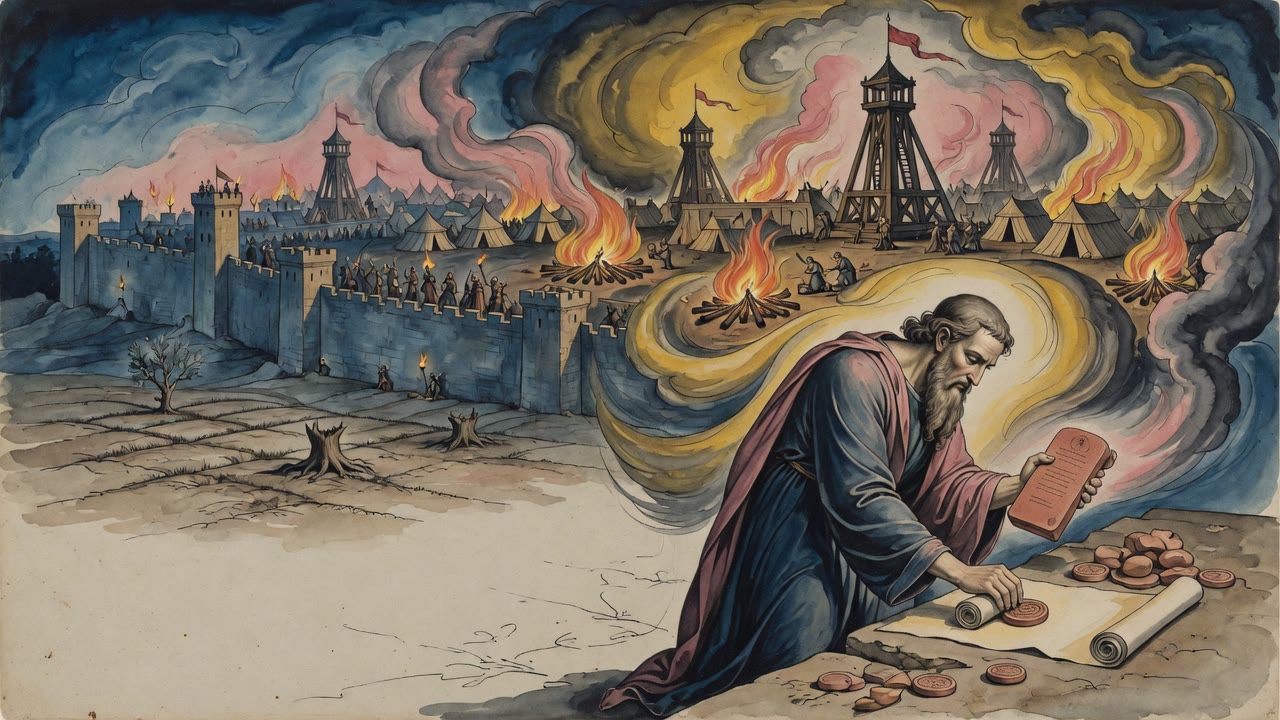
While the king was gone, Bilam turned the simple folk to revolt. He sealed the gates, raised the walls, flooded trenches from the river, and set enchanted serpents along the fourth side.
Nineteen Years at the Locked Gate
When Konkos returned, one hundred thirty of his men fell at the locked gates in a single day. Bridges sank. Serpents killed. The siege became a standing humiliation. Nineteen years it had already lasted when the young Hebrew arrived, tall as a cedar, face bright as sun, faithful in counsel.
Moses went in and out among the soldiers until the army loved him. After nine more years of watching a city that would not open, Konkos died in the camp. The generals and the people set the crown on Moses and swore him the Kushite queen as wife. He was twenty-seven. They had not seen their own wives and children for the long years of the siege, and they asked him what to do.
Starve the Storks
"If we fight as before, we fall as before," Moses said. "Go to the forest. Bring each man a young stork."
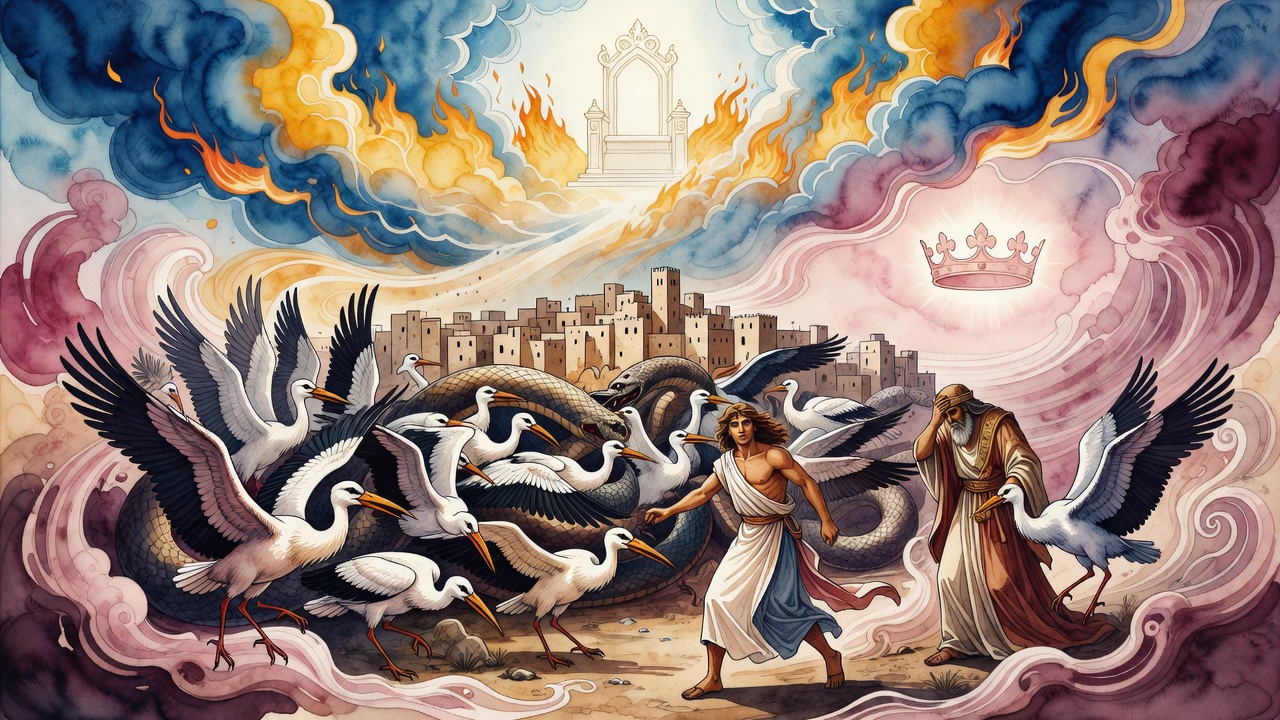
They obeyed. Nets came back full of awkward birds, still clumsy in the camp. The soldiers fed them. The storks grew. Then Moses ordered them starved for two days. On the third day each soldier took arms, horse, and a hungry stork, and they advanced on the serpent wall.
A stork's beak closed on a serpent. Then another. The wall that had eaten one hundred thirty men in a day became a feeding ground. The birds ate the serpents clean. The army raised a war cry and took the city. Bilam and his sons fled on horseback toward Egypt, toward Pharaoh and the magicians who would later try to erase the name of Jacob from the earth.
The Crown He Would Not Keep
They seated Moses on the throne and set the royal crown on his head. They gave him the queen. Moses feared the God of his fathers and did not approach her. He remembered Abraham's oath to Eliezer not to take a wife from the daughters of Canaan, and Isaac's charge to Jacob. He walked before God with a whole heart and would not turn from the path of the patriarchs.
For forty years he reigned and warred successfully, for the God of his fathers was with him. Victories stacked. The camp that had crowned him had learned to love his counsel before they loved his bloodline. Storks do not look like engines of war until serpents fill a wall. Then an ordinary bird becomes strategy. A Hebrew on a Kushite throne had earned the seat by surviving a siege that swallowed better men, by refusing panic, by inventing a weapon out of hunger and wings.
The Queen Speaks to the Ministers
In the fortieth year the queen spoke to the ministers.
"This man has reigned over Kush and has not come near me," she said. "He has not worshiped the gods of Kush. Let Munjam, son of Konkos, reign, for it is better to serve the son of your lord than a stranger, a servant of the king of Egypt."
Foreignness can be tolerated in a savior. It becomes intolerable in a long king who will not assimilate. They crowned Munjam, yet feared to harm Moses because of their oath. They loaded him with gifts and dismissed him with honor. He was sixty-seven when he left Kush. The story in the camp said it was already the season appointed for the redemption of Israel.
Forty years of victories could have excused a softer rule about foreign marriage. Moses remembered older oaths and treated them as still binding under a crown that was never meant to be permanent. He walked out with gold on the camels and no Kushite wife in the tent.
The God of the Hebrews
Years later Moses and Aaron stood before Pharaoh and spoke in the name of the God of the Hebrews (Exodus 5:3). The title was old. The first time anyone in the Torah is called a Hebrew at all, a fugitive arrives to tell "Abram the Hebrew" that Lot has been taken captive (Genesis 14:13).
Abraham wore that name as a lone man crossing into a new land. His descendants carried it as a nation crying out from slavery. The God who met Abram when he marched to rescue a captive kinsman was the same God meeting his children in Egypt. Moses was not introducing a stranger to Pharaoh. He was invoking a long memory.
In Kush he had opened a city with storks and refused a foreign bed. In Egypt he would open a nation with plagues and refuse to leave bones behind. Bilam had fled toward the court that would need him. Moses walked toward the court that would fear him. A man who once wore another nation's gold returned to the Name that had claimed Abram alone among the kings of the plain.
← All myths